
On this page
Start here
Quick answer
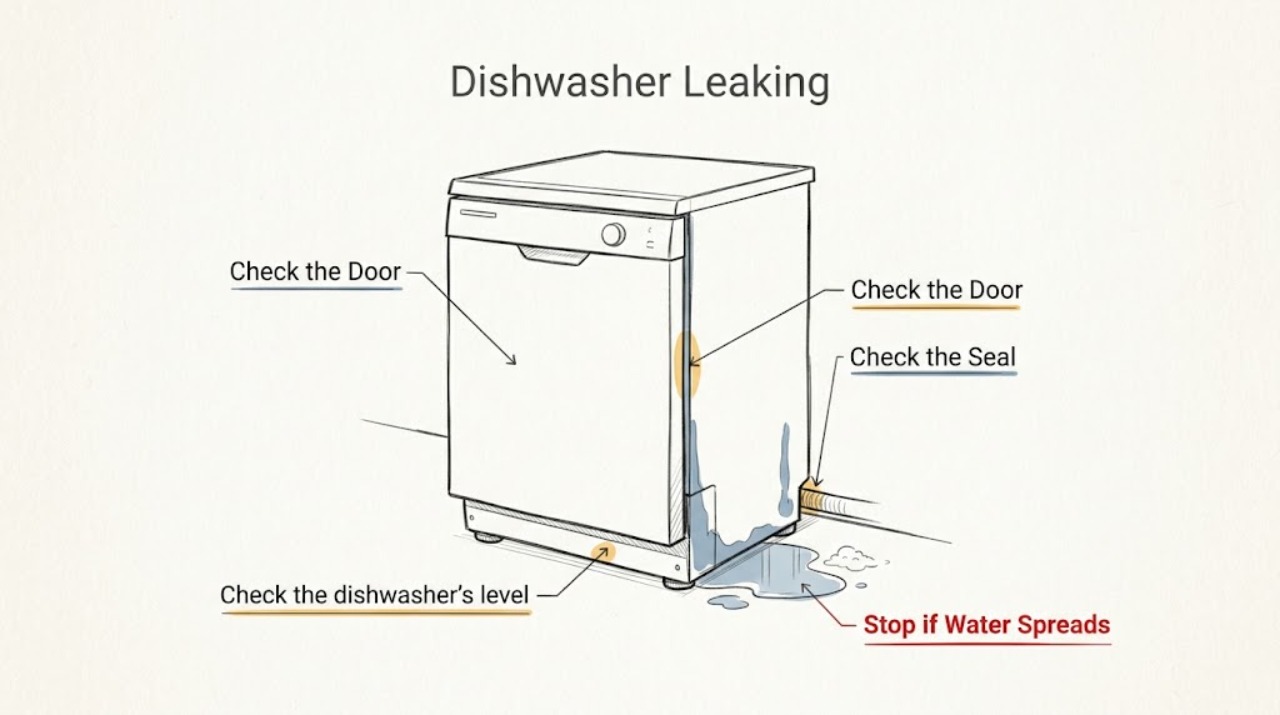
Stop the cycle and identify whether water is coming from the door, underneath the unit, or the plumbing connection. Maytag points to door obstructions or seal problems, excessive suds, leveling, and loose supply or drain connections as distinct paths. If water is actively reaching the floor or cabinet, shut off the dishwasher's water supply and electrical power safely and do not run it again until the source is corrected.
Work through in order
Diagnostic checks
Use only checks that match the exact appliance or system and its official guide.
-
Check 1
Cancel the cycle and trace the first wet point with the dishwasher empty and safe to inspect, distinguishing the door edge from beneath or behind the cabinet.
Expected result: Water begins at the door, underneath the center, or a rear hose/connection.
Next step: Use the matching check below and do not restart an active leak.
Why this matters
Why: The location separates seal, suds, leveling, inlet/drain connection, and pump-area possibilities.
-
Check 2
For a front or door-edge leak, remove protruding rack items, food residue, or debris from the gasket and check that the door closes squarely.
Expected result: The seal is obstructed or damaged, or the door closes evenly with an intact seal.
Next step: Clean the contact area and have a damaged gasket or persistent door leak serviced.
Why this matters
Why: An obstruction or damaged seal can let wash water escape at the front; an intact, aligned seal shifts attention to suds or installation.
-
Check 3
Check the dishwasher's level and inspect accessible water-supply and drain-line connection points for looseness, cracked tubing, or a kink.
Expected result: The unit is out of level or a connection is visibly loose/damaged, or both appear sound.
Next step: Correct only accessible installation issues according to the model instructions; use service for a damaged line or leak that persists.
Why this matters
Why: Maytag identifies leveling and connection routing as separate causes of poor sealing or an underneath leak.
-
Check 4
If bubbles or foam are present, stop the dishwasher, remove standing suds safely, and confirm that only automatic-dishwasher detergent is being used.
Expected result: Foam subsides and the next controlled rinse is dry, or suds and leaking return.
Next step: Do not keep running a leaking or foaming unit; follow the Maytag cleanup guidance and arrange service if the leak returns.
Why this matters
Why: Dish soap or excess detergent can push water out of the dishwasher and mimic a seal failure.
Use your observations
Decision map
Find the observation that best matches what you see, then follow the next safe action.
-
PATH 01Next step
What you see
Water starts at the door edge and an item or residue is found in the seal
Do this next
Clear it, inspect the gasket, and run only a supervised test once the seal sits evenly.
-
PATH 02Next step
What you see
Water is underneath or behind the unit near a supply or drain connection
Do this next
Keep the unit off and have the connection or damaged line repaired.
-
PATH 03Next step
What you see
Foam is present or the leak returns after detergent correction
Do this next
Stop operation, protect the floor and cabinet, and arrange qualified service.
Helpful context
Understand the symptom
Contain the leak before troubleshooting
Water location is more useful than guessing at a pump or gasket. Photograph the wet area, stop the cycle, and keep water away from cabinets and electrical components while making only external checks.
Only after diagnosis
Potential parts
- dishwasher door gasket or drain/supply hose
Only consider a replacement after the leak location and inspection identify a cracked gasket or hose rather than an obstruction, leveling, or detergent issue.
Verify the exact Maytag dishwasher model before ordering any part.
When checks do not resolve it
Need a professional?
Arrange service when the leak is active, reaches the floor or cabinet, returns after clearing obstructions or suds, or appears to come from a pump, valve, tub, or damaged connection. Shut off water and power safely before waiting for service.
Common questions
FAQ
Should I keep using a Maytag dishwasher that is leaking underneath?
No. Stop the cycle, protect the floor and cabinet, and shut off water and power safely if the leak is active. Arrange service for a persistent or underneath leak.
Can dish soap cause a dishwasher leak?
Yes. Maytag says dish soap or excessive detergent can create suds that push water out. Stop the cycle and use only automatic-dishwasher detergent afterward.
Read the exact guide
Official sources
- Leaking from DoorMaytag Product Help · Maytag dishwasher leaking from door
- Dishwasher Leaking Troubleshooting GuideMaytag Product Help · Maytag dishwasher leaking
- Leaking - Underneath - DishwasherMaytag Product Help · Maytag dishwasher leaking underneath or behind
Community feedback
Share a repair observation
Share a plain-text repair observation. Accepted observations are published automatically; this page may take a moment to update.