
On this page
Start here
Quick answer
Many Maytag refrigerator sounds are normal: a low hum from the compressor or fans, gurgling from refrigerant or defrost water, and brief clicks or buzzes during control or ice-maker operation. First match the sound to when it occurs, then check leveling, items vibrating on top, and an ice maker that is on without a water supply. A new loud sound accompanied by poor cooling, burning odor, grinding, or repeated electrical trips needs service.
Before you begin
Safety first
- Do not remove panels, reach into fans, or diagnose energized electrical components.
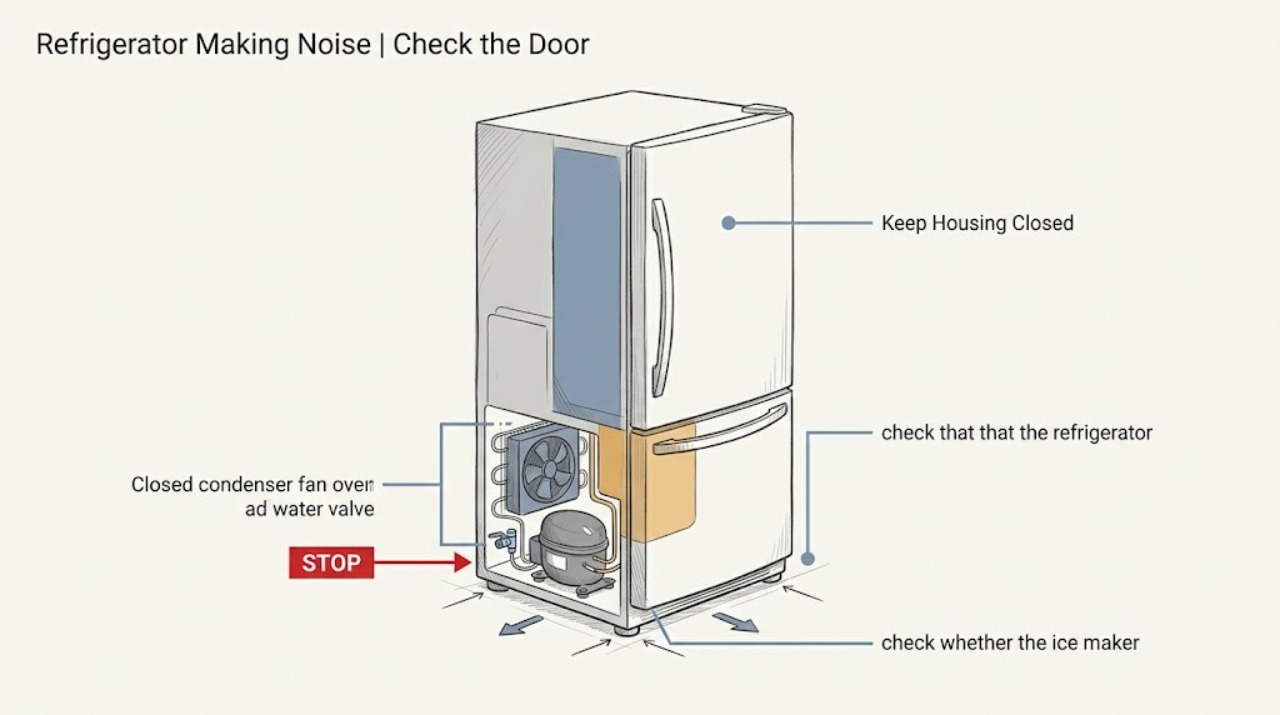
Work through in order
Diagnostic checks
Use only checks that match the exact appliance or system and its official guide.
-
Check 1
Listen for when the sound occurs: after a door opening, during cooling, during defrost, while dispensing water or ice, or continuously; note whether the cabinet is still cooling normally.
Expected result: The sound is brief and tied to a normal cycle, or it is continuous and paired with a performance change.
Next step: Record the timing and move to the matching check. Stop if the sound is accompanied by smoke, heat, or an electrical warning.
Why this matters
Why: Maytag lists cycle-related hum, gurgle, hiss, click, and water-valve sounds as common; continuous noise with poor cooling is a different pattern.
-
Check 2
Check that the refrigerator stands steadily on a level floor and that objects on top, nearby cabinets, and the toe grille are not vibrating against the cabinet.
Expected result: The cabinet rocks or an external object resonates, or the unit is stable with no contact noise.
Next step: Remove loose objects and use the model installation instructions to make small leveling corrections; do not dismantle the base.
Why this matters
Why: Maytag says leveling and external contact can amplify otherwise normal compressor, fan, and refrigerant sounds.
-
Check 3
If the sound is a buzz or click during ice making, check whether the ice maker is connected to water and whether the visible supply line is kinked.
Expected result: The ice maker is on without water, or the water supply is connected and unobstructed.
Next step: Turn the ice maker off when there is no water supply, using the Owner's Manual. For a connected unit, arrange service if the valve remains abnormally loud.
Why this matters
Why: Maytag says an unconnected ice maker can make the water valve buzz or click as it tries to fill.
-
Check 4
Check for a grinding, scraping, or harsh vibration that changes with the door or fan cycle, while keeping hands away from moving parts and panels.
Expected result: The sound is soft, brief, and cycle-linked, or it is harsh, new, and persistent.
Next step: Do not open panels or reach into a fan area. Request Maytag service for a persistent harsh sound or any loss of cooling.
Why this matters
Why: A soft cycle-linked sound can be normal; a persistent harsh sound may involve a fan, compressor, mounting, or another internal part.
Use your observations
Decision map
Find the observation that best matches what you see, then follow the next safe action.
-
PATH 01Next step
What you see
The sound is a soft hum, gurgle, or brief click and cooling remains normal
Do this next
Monitor the pattern and reduce amplification with leveling and clearances if needed.
-
PATH 02Next step
What you see
Buzzing occurs during ice-maker fill with no water connection
Do this next
Turn the ice maker off according to the model instructions and reassess.
-
PATH 03Next step
What you see
A loud or grinding sound persists and cooling, smell, or electrical behavior is abnormal
Do this next
Stop repeated testing and arrange qualified appliance service.
Helpful context
Understand the symptom
Timing is the fastest noise diagnostic
A sound during dispensing or after a cooling cycle has a different likely source from a vibration that never stops. Note the sound, location, duration, and whether temperature performance changed before touching a control.
When checks do not resolve it
Need a professional?
Request Maytag service for persistent grinding, harsh vibration, a sound with poor cooling, burning odor, heat, smoke, or repeated breaker trips.
Safety scope: Do not remove panels, reach into fans, or diagnose energized electrical components.
Common questions
FAQ
What Maytag refrigerator noises are usually normal?
Maytag lists hums from compressors and fans, gurgling from refrigerant or defrost water, brief clicks, and airflow sounds as possible normal operation. Judge the sound by timing and by whether cooling remains normal.
Why does my Maytag refrigerator buzz when it is not connected to water?
An ice maker left on can make its water valve buzz or click while trying to fill. Turn the ice maker off according to the Owner's Manual when there is no water supply.
Read the exact guide
Official sources
- Refrigerator Normal Sounds and NoisesMaytag Product Help · Maytag full-size refrigerators
- How to Level the RefrigeratorMaytag Product Help · Maytag refrigerator installation
- Ice Maker Not Working - TroubleshootingMaytag Product Help · Maytag refrigerator ice makers
Community feedback
Share a repair observation
Share a plain-text repair observation. Accepted observations are published automatically; this page may take a moment to update.