
On this page
Start here
Quick answer
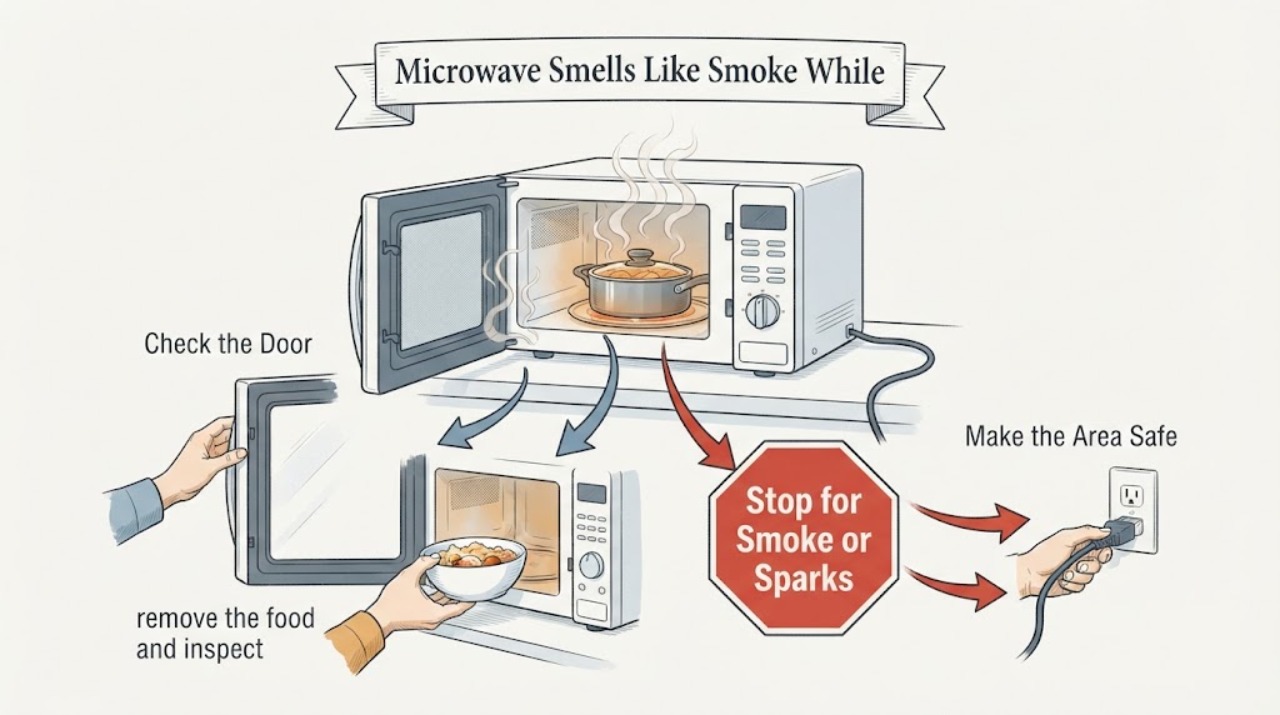
A smoky smell can come from overcooked food or residue, but smoke with flames, arcing, an electrical or chemical odor, cavity paint burns, a damaged door, or smoke from the plug or outlet is a stop-use condition. Stop the cycle and do not run the microwave again just to test it. If there is a fire, turn the oven off, keep the door closed, unplug it only if you can do so without approaching danger, and leave and call the fire department if the fire does not go out. Once there is no active smoke or fire and the cavity is cool, remove the food and inspect and clean only the accessible interior with a mild, non-abrasive cleaner. Do not remove the cabinet or open the high-voltage section; arrange model-specific service if the odor was electrical, the cavity or door is damaged, or the smell returns.
Work through in order
Diagnostic checks
Use only checks that match the exact appliance or system and its official guide.
-
Check 1
If the microwave is still running, press Stop or turn the control off. If you see a flame or active fire, keep the door closed. Turn off power and unplug the unit only if the plug is reachable without going through smoke or flames; otherwise leave the area and call the fire department.
Expected result: The smoke or fire stops with the door closed, continues, or spreads outside the microwave.
Next step: If the fire does not go out, evacuate and call the fire department. Do not open the door to check, add water, or restart the appliance after the event.
Why this matters
Why: A contained microwave fire can be oxygen-limited when the door stays closed, while continuing or escaping fire is an emergency. Opening the door can feed the fire and exposes you to heat and smoke.
-
Check 2
After there is no active smoke or fire and the cavity is completely cool, remove the food and inspect the food, container, turntable, cavity floor and side walls for a burned spill, charred food, foil or metal, melted packaging, sparks, brown or black marks, peeling paint, or a burned waveguide-cover area.
Expected result: The odor is limited to scorched food or residue, or there is arcing, a burn mark, damaged coating, melted material, or an unexplained odor from the appliance.
Next step: For a food or residue cause with no visible cavity or door damage, remove the residue after cooling and follow the model manual's cleaning instructions. If there was arcing, a burn-through, damaged coating, melted material, or an unexplained appliance odor, stop using the microwave and arrange service; do not power it again just to see whether it works.
Why this matters
Why: GE identifies overcooked food and smoke-related cavity staining as common food-related causes, while arcing, burned cavity paint, and an odor that is not from food are abnormal. Whirlpool also lists metal, foil, racks touching the cavity, vegetables that arc, and soil buildup as arcing triggers.
-
Check 3
With the microwave unplugged and cool, clean only the accessible cavity, door edge and turntable using a soft cloth and mild, non-abrasive detergent; keep liquid out of vents and do not use steel wool, bleach, solvents or other abrasive cleaners.
Expected result: The visible residue is removable and the cavity coating, door, latch and seal remain intact, or the residue is baked on, the coating is peeling, or the door does not close firmly.
Next step: If cleaning removes a clearly food-based residue and no damage is present, let all surfaces dry and consult the exact model manual before normal use. If the coating peels, the door or seal is bent or damaged, or the odor remains after manual cleaning, stop and request service. Do not use a powered steam-cleaning cycle as a diagnostic test.
Why this matters
Why: FDA recommends regular cavity, door-edge and door cleaning with water and mild detergent. Samsung warns that abrasives, solvents, bleach and steel wool can damage the finish; GE says arcing or burns in the cavity are not normal.
-
Check 4
Without opening the cabinet, look at the plug, power cord and wall outlet for scorching, melting, looseness or a chemical/electrical smell. Check the door, hinges, latch and seal for bending or damage without forcing the door.
Expected result: The smell or visible damage is at the plug, cord, outlet or controls, or the door does not close firmly; alternatively, those external parts look normal and the odor was clearly from food.
Next step: If any cord, outlet, control or door damage is present, leave the microwave unplugged if safe and arrange a qualified appliance/electrical inspection. Do not remove the outer cover or attempt a high-voltage repair. If the external checks are normal but the odor is unexplained or recurs, request microwave service rather than repeating a test cycle.
Why this matters
Why: GE says an electrical or chemical burning smell requires stopping the microwave and checking the outlet, with service recommended. FDA says a microwave with a damaged door, hinges, latch or seals should not be used because the safety enclosure may be compromised.
Use your observations
Decision map
Find the observation that best matches what you see, then follow the next safe action.
-
PATH 01Next step
What you see
There was a brief odor tied to visibly scorched food or a spill, with no sparks, flame, cavity damage, electrical smell, or door damage.
Do this next
Keep the microwave off until it is cool, remove the cause, clean the accessible surfaces manually, and use the exact model manual for any later operation. Do not run an empty or repeated test cycle.
Why this path and its safety boundary
Why it matters: The official guidance supports a food or residue source as the leading explanation, but the symptom alone does not prove that the appliance is repaired.
-
PATH 02Next step
What you see
Smoke was accompanied by sparks or popping that was not clearly caused by the food, metal or foil, a burned cavity spot, peeling paint, or a waveguide-cover burn.
Do this next
Do not energize the microwave again. Photograph the accessible damage for the service technician, keep the unit unplugged if safe, and arrange model-specific service or replacement advice.
Why this path and its safety boundary
Why it matters: Arcing or cavity damage can worsen and is outside a safe user diagnosis; GE says to stop when arcing or burns in the paint are present, and Whirlpool warns prolonged arcing can damage the oven.
-
PATH 03Next step
What you see
The smell is sharp electrical or chemical, comes from the plug, cord, outlet or control area, returns after the food is removed, or is accompanied by a damaged door or a microwave that operates with the door open.
Do this next
Stop using it, disconnect power only when safe, and have a qualified technician inspect it. Do not bypass the interlock or open the high-voltage cabinet.
Why this path and its safety boundary
Why it matters: This is an appliance or electrical safety signal, not a food-odor cleanup problem. FDA says not to use a microwave with a door that is bent, warped or does not close firmly, and to discontinue use if it operates with the door open.
-
PATH 04Next step
What you see
There is an active flame or fire inside the microwave, or smoke continues after the control is turned off.
Do this next
Keep the door closed, turn the oven off, unplug only if safely reachable, and leave and call the fire department if the fire does not go out. Do not reopen or reuse the appliance until it has been assessed.
Why this path and its safety boundary
Why it matters: This is a fire emergency rather than a troubleshooting step. Opening the door can supply oxygen and expose the user to flames and smoke.
Helpful context
Understand the symptom
Separate food smoke from an appliance warning
The original lead does not expose a readable post body in the research tool, so the checks below do not assume a particular food, container, model, or cavity condition. Treat the visible pattern as the decision point. A smell immediately associated with scorched food or a dirty cavity can be a residue problem; smoke with sparks, a sharp electrical or chemical smell, burned paint, or a damaged door needs service rather than another cooking cycle.
Do not open the cabinet to diagnose smoke
The magnetron and other high-voltage parts are behind the outer cabinet. The supported user checks are limited to stopping the appliance, observing the food and accessible cavity after it is safe, checking the plug and outlet from the outside, and checking the door and cavity for visible damage. Do not bypass the door interlock, remove the cover, or probe internal wiring.
When checks do not resolve it
Need a professional?
Stop and request service for electrical or chemical odor, arcing, cavity paint burns or peeling, melted or burned parts, a damaged door or seal, smoke from the plug or outlet, recurring unexplained smoke, or any microwave fire. Call the fire department if flames continue or escape the cavity.
Common questions
FAQ
Is a smoky smell from food always a microwave failure?
No. Overcooked food and residue can create smoke or a strong odor, and GE says to clean spills and the cavity. Smoke with sparks, cavity burns, an electrical or chemical smell, or a damaged door is different: stop using the microwave and arrange service.
What should I do if there is a flame inside the microwave?
Turn the microwave off and keep the door closed. Unplug it only if you can reach the plug safely; if the fire does not go out, leave and call the fire department. Do not open the door to inspect the fire or restart the microwave afterward.
Can I run a cup of water to test the microwave after it smoked?
Do not use a powered test cycle to clear an unexplained smoke event. First stop, cool and inspect the accessible cavity, food, container, door and external power connection. If smoke was electrical, involved arcing or left visible damage, keep the unit off and request service.
Is it safe to clean a smoky microwave with bleach or steel wool?
No. Samsung warns against bleach, steel wool, solvents and abrasive cleaners because they can damage the finish. When the oven is unplugged and fully cool, use a soft cloth and mild, non-abrasive detergent on accessible surfaces, keeping liquid out of the vents.
Read the exact guide
Official sources
- General Arcing and Sparking - Over-the-Range MicrowaveWhirlpool Product Help · Used only for general arcing causes and the warning that prolonged arcing can damage the oven; not used to assert a model-specific procedure.
- How to clean a Samsung microwaveSamsung Support US · Used only for mild/non-abrasive cleaning, avoiding bleach, solvents, steel wool and liquid in vents; no Samsung model identity is assigned to this topic.
- Microwave OvensU.S. Food and Drug Administration · Used for the damaged-door/hinge/latch/seal stop-use rule, door-open operation stop-use rule, manual/cleaning boundary and no internal repair instruction.
- Microwave - Staining or Browning Inside the CavityGE Appliances Support · Used for food overcooking as a cause of smoke-related staining and the instruction to stop for arcing or burned cavity paint.
- Pictograph: Microwave Oven SafetyU.S. Fire Administration · Used for turning off the microwave and never opening the door until a fire is out.
- Microwave Oven SafetyNational Fire Protection Association Public Education Division · Used for keeping the door closed, turning the oven off and unplugging only if safe during a microwave fire, plus the fire-department escalation.
- Microwave - Arcing or Making SoundsGE Appliances Support · Used for food and residue causes of popping, metal and empty-cavity hazards, electrical/mechanical service boundary, and cavity-hole guidance.
- Microwave - OdorsGE Appliances Support · Used for distinguishing burned-food odors from electrical or chemical odors, stopping for non-food burning smells, and service escalation.
Community feedback
Share a repair observation
Share a plain-text repair observation. Accepted observations are published automatically; this page may take a moment to update.