
Brand-independent appliance guidance
General Microwave Repair Guides
Brand-independent troubleshooting and repair guidance for common microwave problems and maintenance questions.
General microwave guides
Use these guides when the problem is not limited to a specific manufacturer.
-
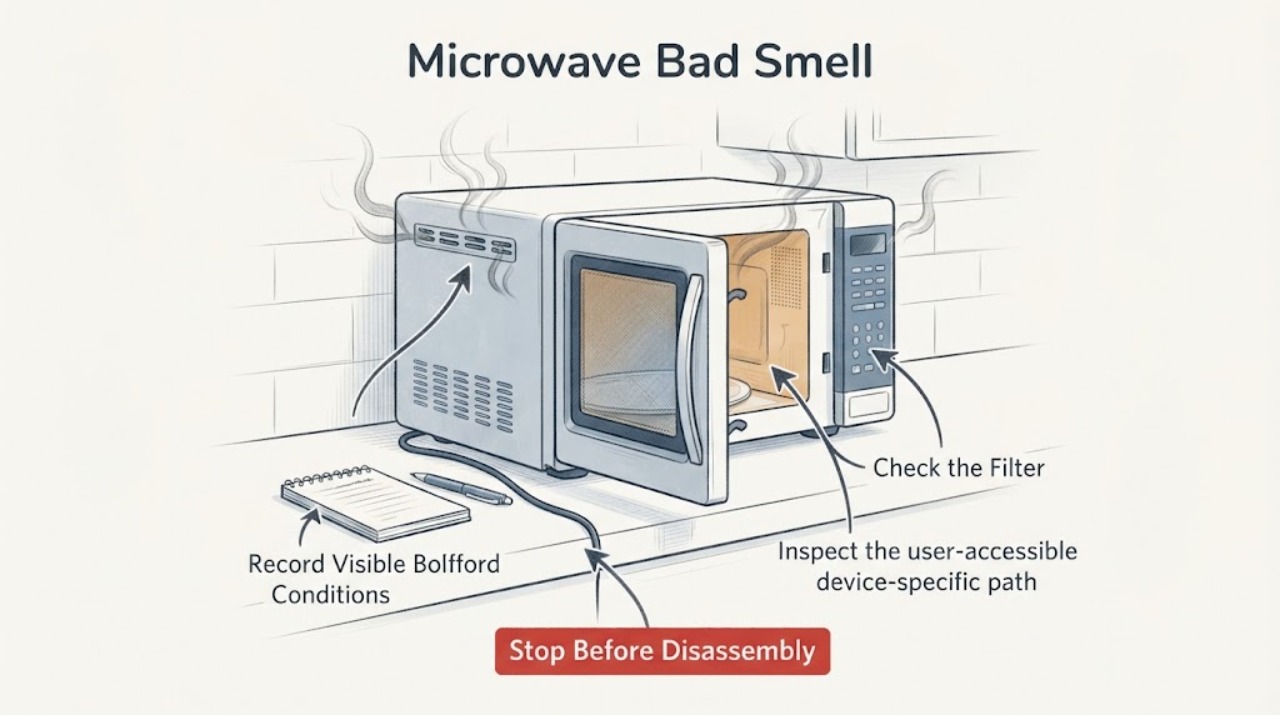
Microwave Bad Smell
For a microwave bad smell, stop for smoke, arcing, melted plastic, or a burning electrical odor. Otherwise unplug and cool it, remove food debris, clean the cavity with mild soap and water, and use the manufacturer-approved steam-clean method. Persistent odor or damaged waveguide cover needs service.
-
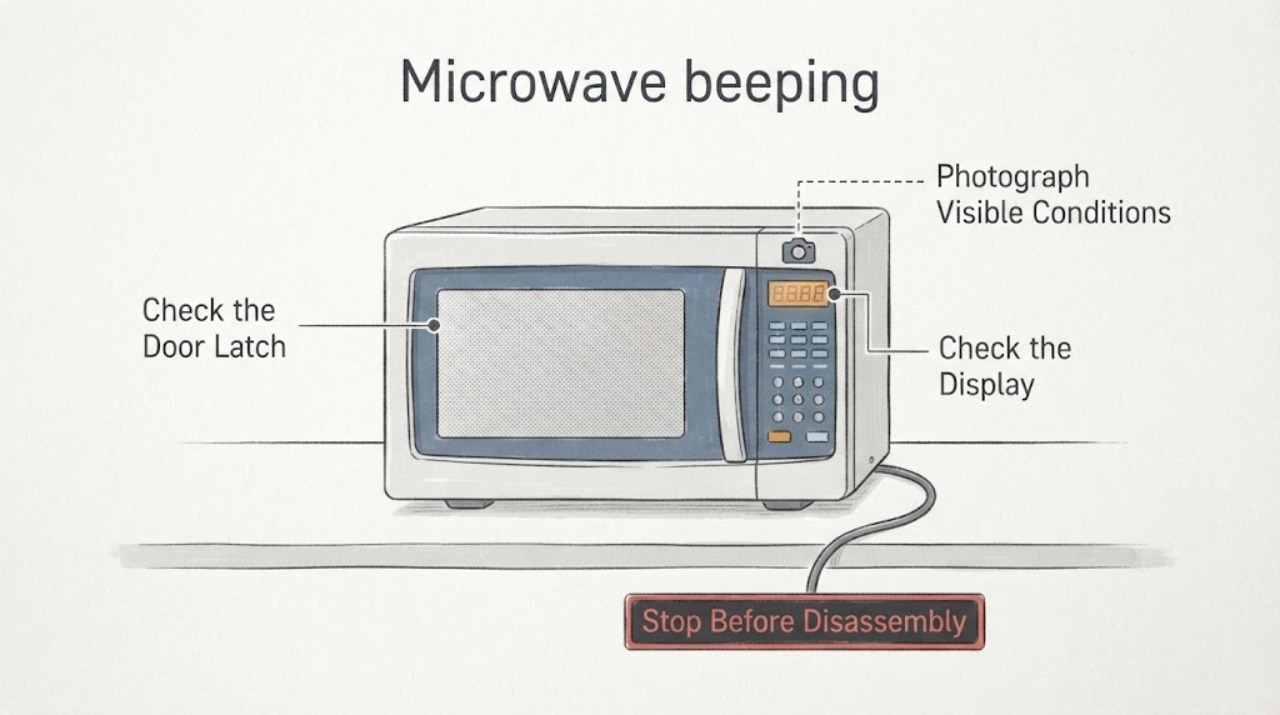
Microwave beeping
A microwave that keeps beeping should be separated into normal key/finish tones, a control or door-state alert, and an abnormal repeated alarm. Check the display message, door closure, timer/setting, and tone/energy-save options in the exact manual. If beeping continues with a stuck keypad, sparking, smoke, or an error that returns after one documented reset, stop using it and arrange service.
-
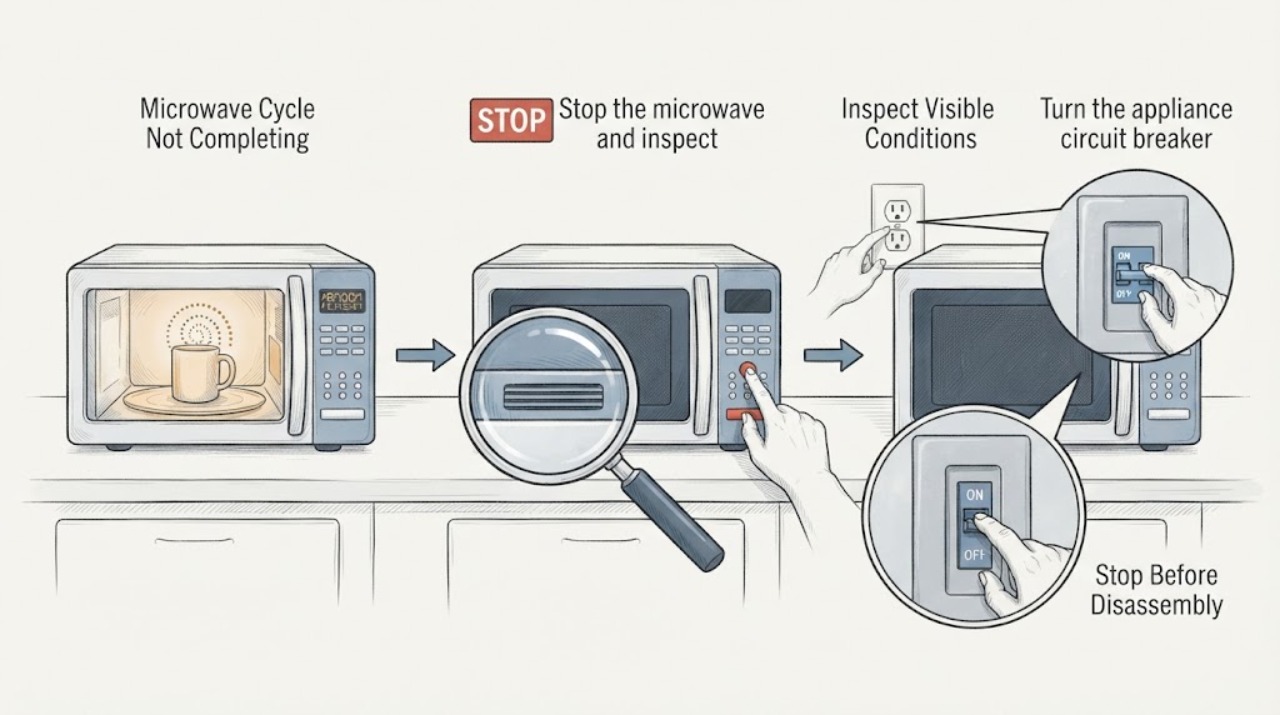
Microwave Cycle Not Completing
If a microwave starts but stops before the programmed time, first note whether the display also resets, whether the cooling fan is blocked, and whether the stop happens only on long or repeated cycles. Clear only accessible ventilation openings and reset the appliance circuit once for 30 seconds. Stop using it for smoke, burning odor, abnormal heat, sparks, or repeated premature stops; internal switches, thermal cutouts, wiring, and control faults require qualified service.
-
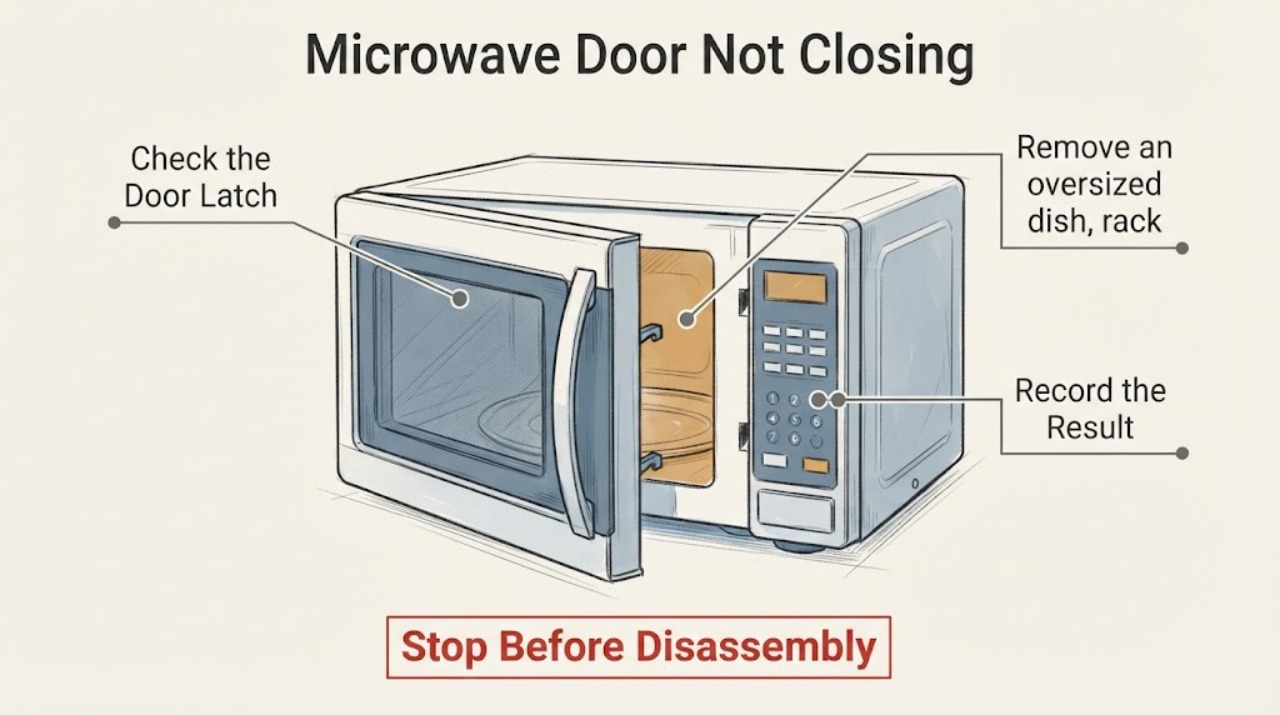
Microwave Door Not Closing
If a microwave door will not close, stop using it until it closes firmly and latches without force. Remove only an obvious dish, rack, packing piece, or residue blocking the latch/contact area; a bent door, damaged hinge/latch/seal, or persistent misalignment needs manufacturer service. FDA warns against operating a microwave whose door is not firm or is damaged.
-
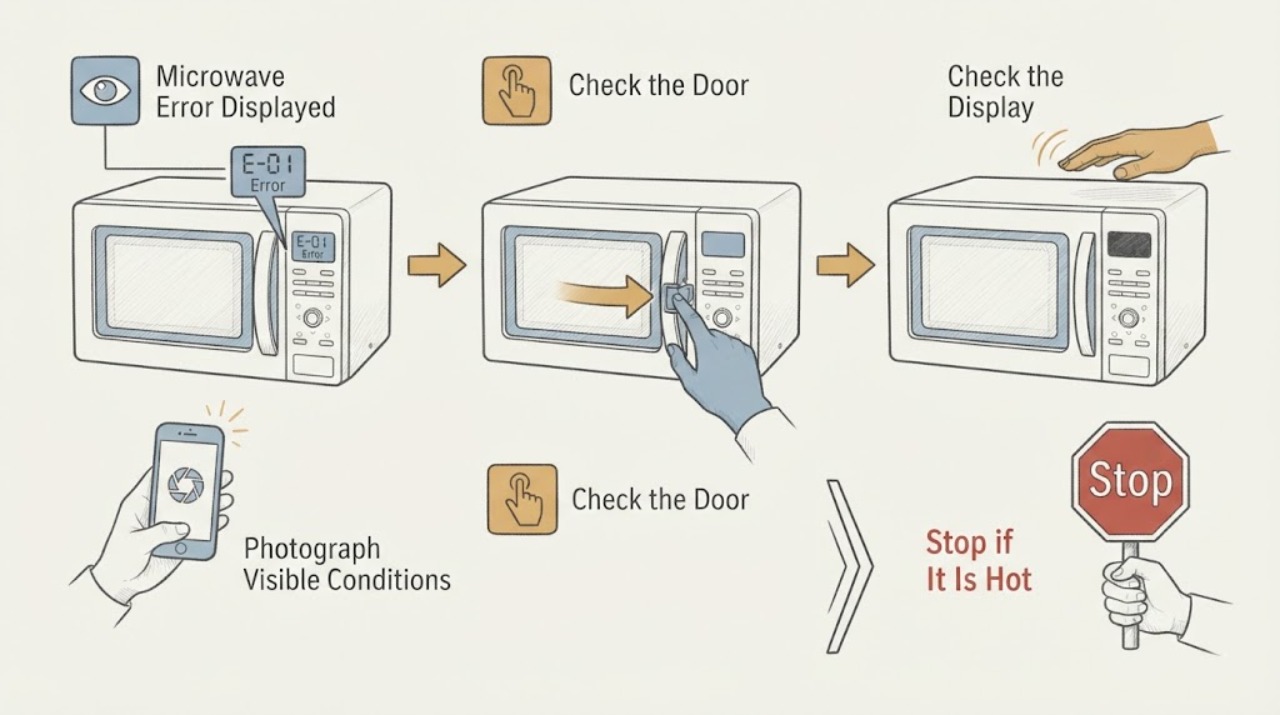
Microwave Error Displayed
Do not guess what a microwave code means from a generic list. Photograph the exact display, record whether it is a code, a flashing colon, PF, LOC/L, or Demo behavior, and identify the model before using its owner manual. A power-related PF/clock display or a documented control lock can have a simple model-specific reset, but an unknown or returning error should be left unused and serviced.
-
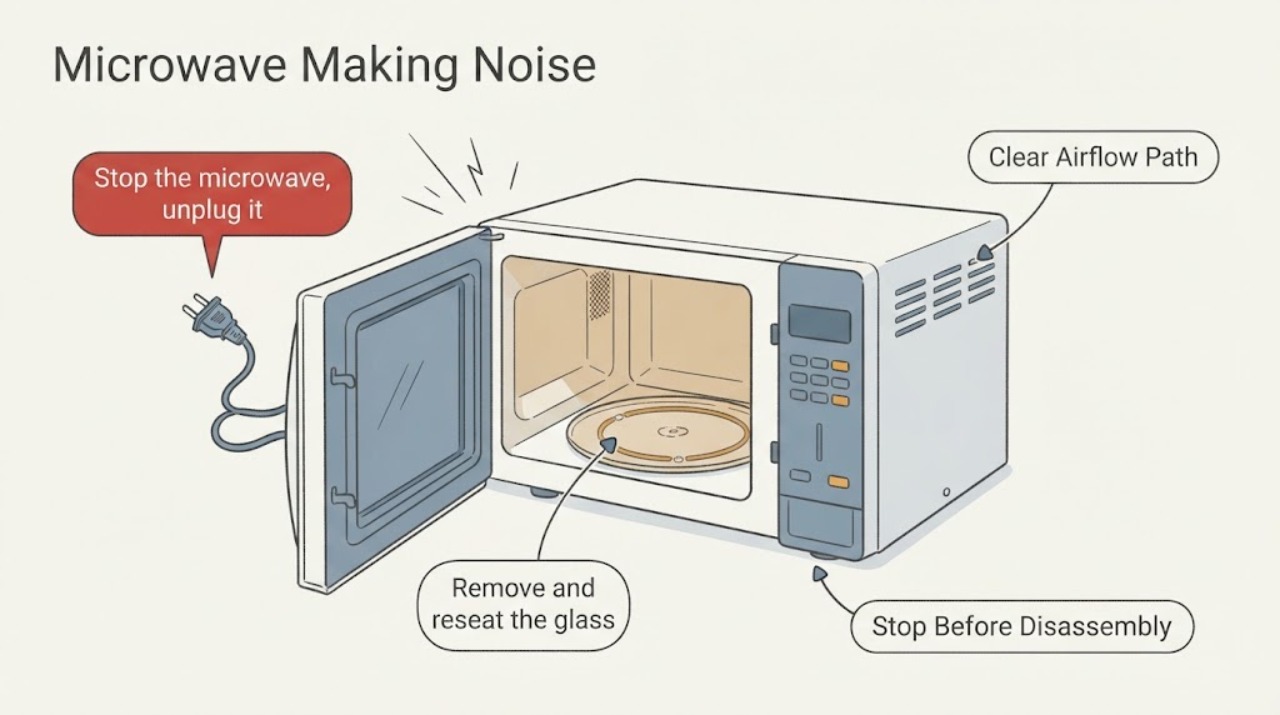
Microwave Making Noise
First locate the sound: a rhythmic thump usually follows the turntable or roller path, while a changing vent-fan sound can result from airflow back pressure. Reseat removable parts only after unplugging; persistent grinding, electrical buzzing, smoke, or sparking requires service.
-
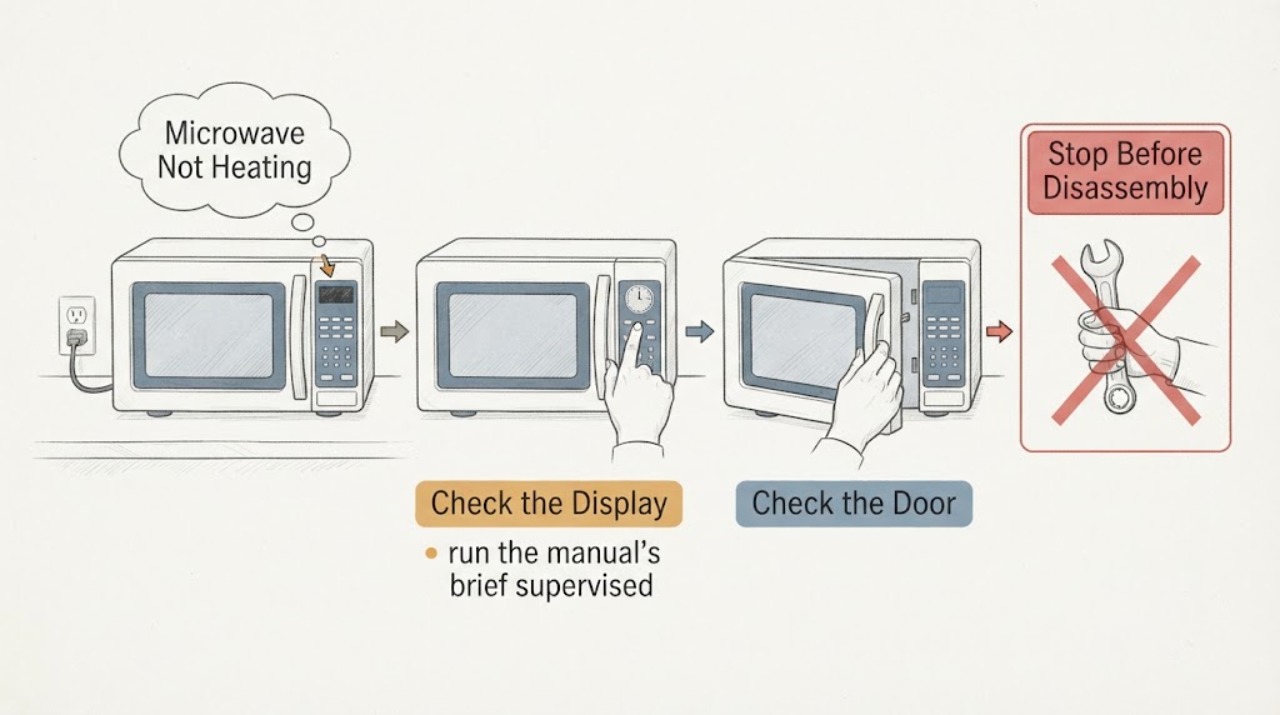
Microwave Not Heating
A microwave that runs but does not heat should first be separated from Demo mode, Control Lock, a low power setting, a door not fully closed, or an unsuitable power source. Whirlpool recommends a supervised water heat check and model-manual control checks. If controls and door are normal but food remains cold, stop owner troubleshooting because internal heating parts require professional service.
-
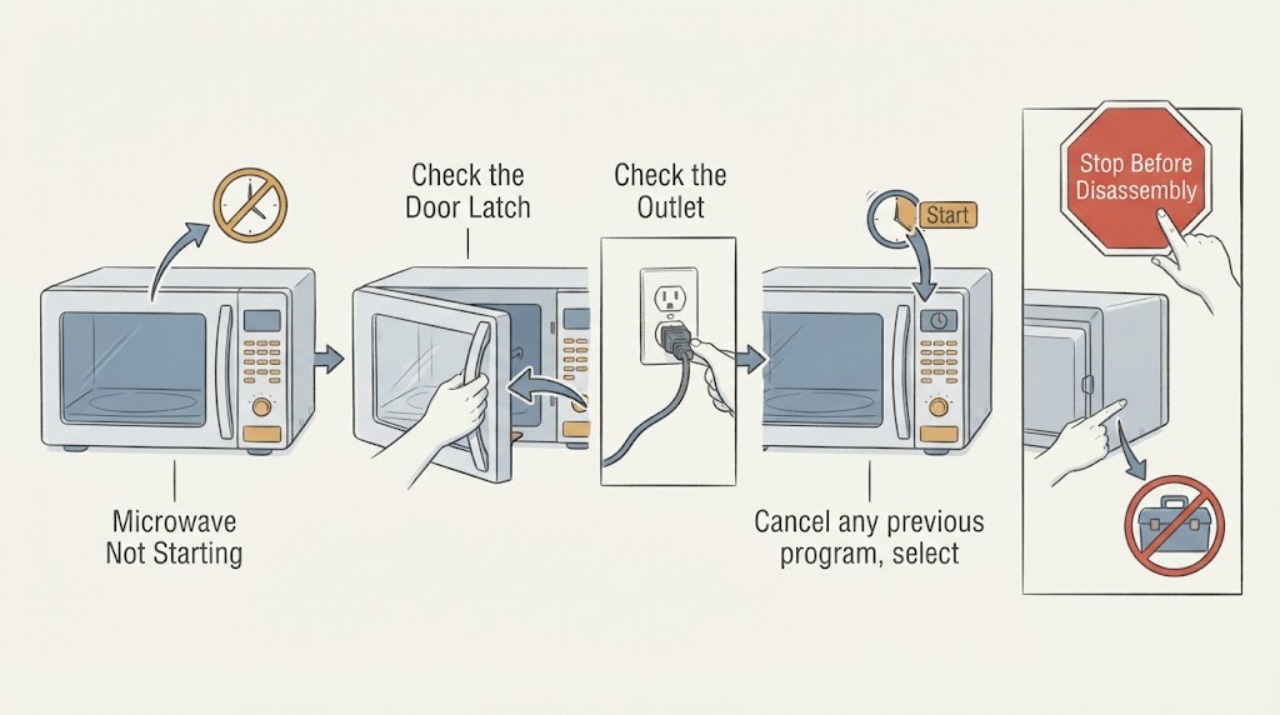
Microwave Not Starting
For a microwave that will not start, separate loss of power from a door or control condition. Check the outlet and breaker from outside, confirm the door closes fully and the program is selected, and use the exact manual for lock or reset steps. Do not bypass door interlocks or remove the cover.
-
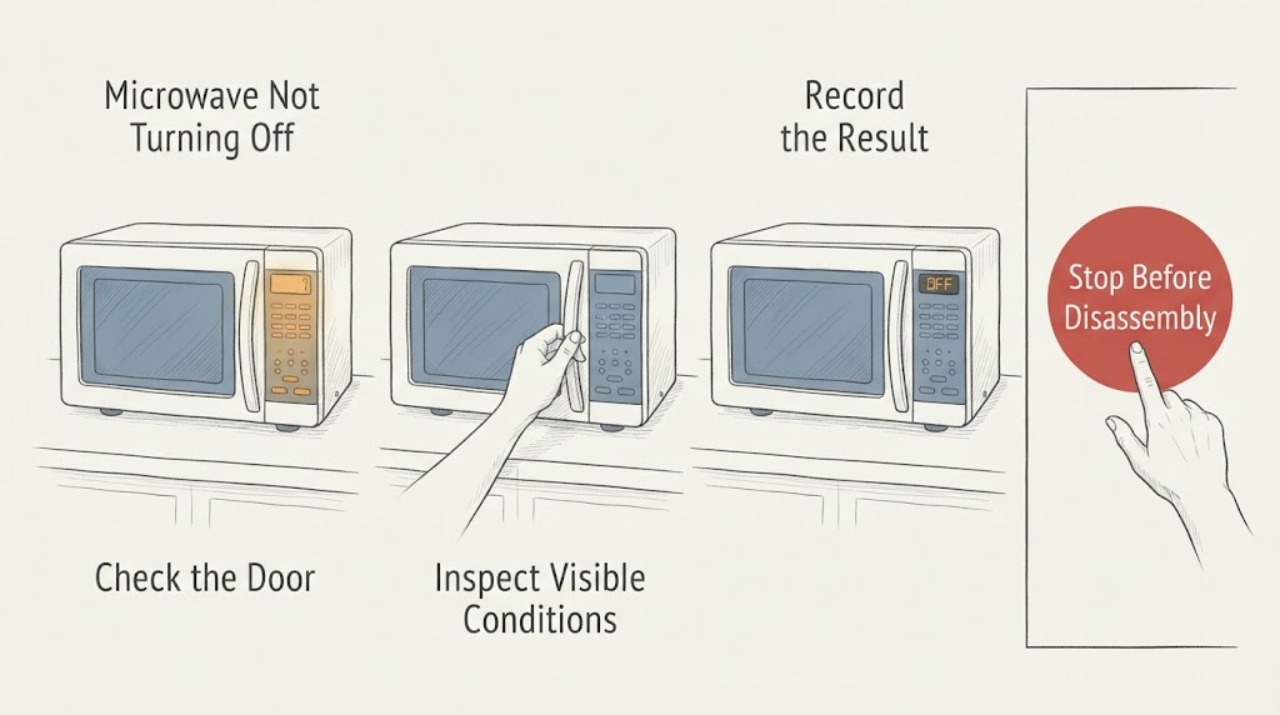
Microwave Not Turning Off
If a microwave appears not to turn off, first identify what is actually running: only the vent fan, the fan and light, or the cooking function with heat. A vent fan can run automatically to cool an over-the-range unit, but a microwave that continues heating with the door closed or starts cooking by itself must be unplugged or isolated at the breaker and serviced.
-
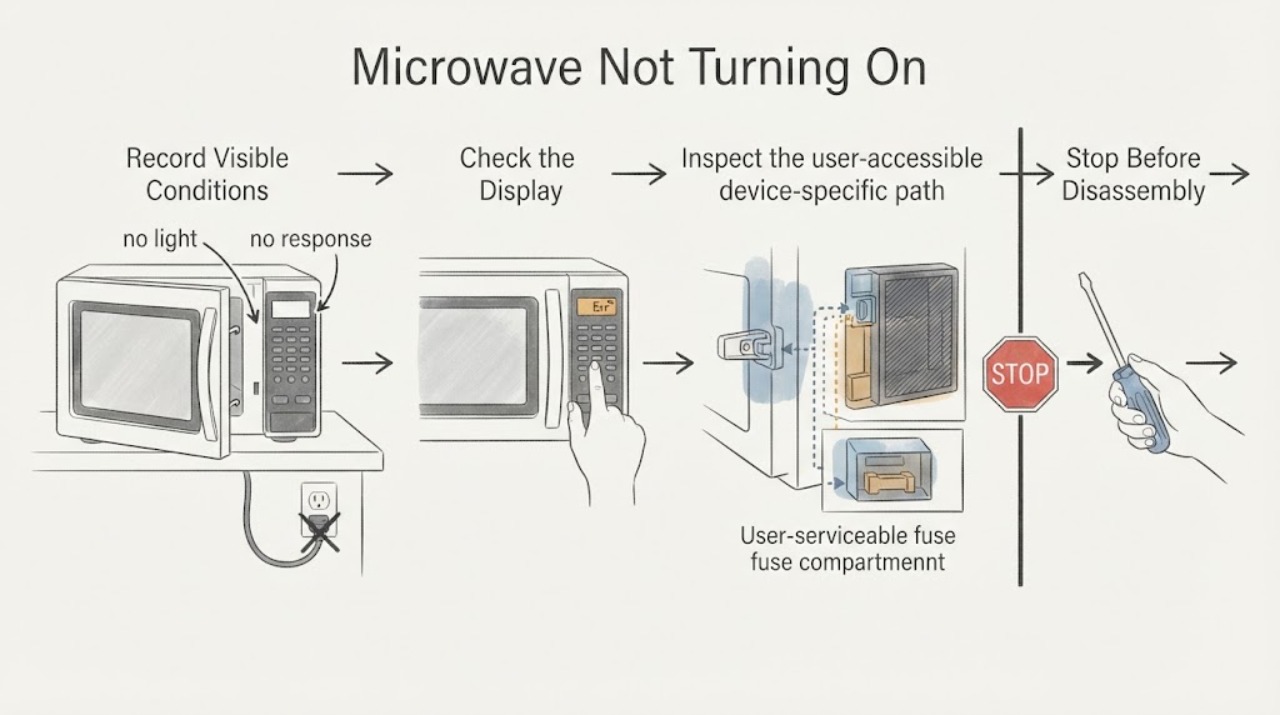
Microwave Not Turning On
For a microwave that will not turn on, check the outlet, breaker, door closure, control lock, and demo mode without opening the cover. Whirlpool notes Demo mode can make the light, fan, and turntable work without heating. Smoke, arcing, odor, or repeated trips requires service.
-
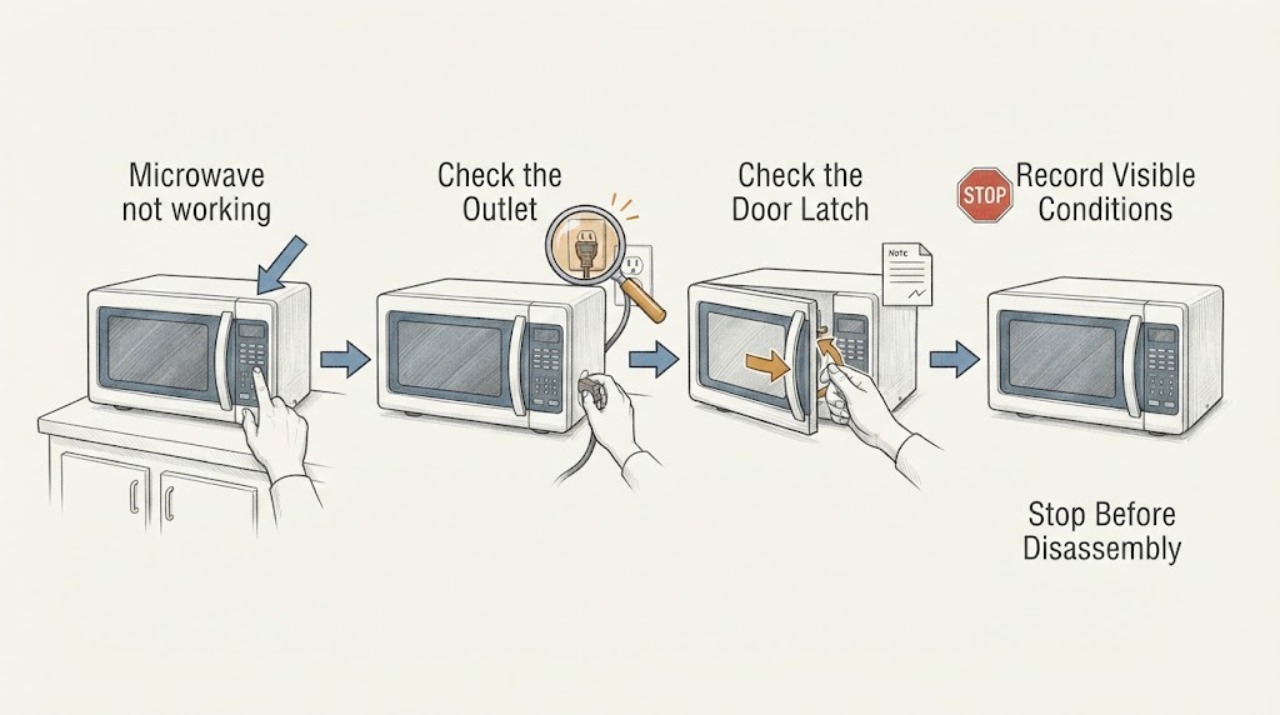
Microwave not working
A microwave that is not working should be checked for household power, the control/display state, door closure, and a model-specific error. Verify the outlet or breaker without repeatedly resetting it, then use the exact manual’s clear/reset procedure once. Never remove the cabinet. Stop for sparks, smoke, burning odor, damaged cord, or a unit that trips the breaker and arrange qualified service.
-
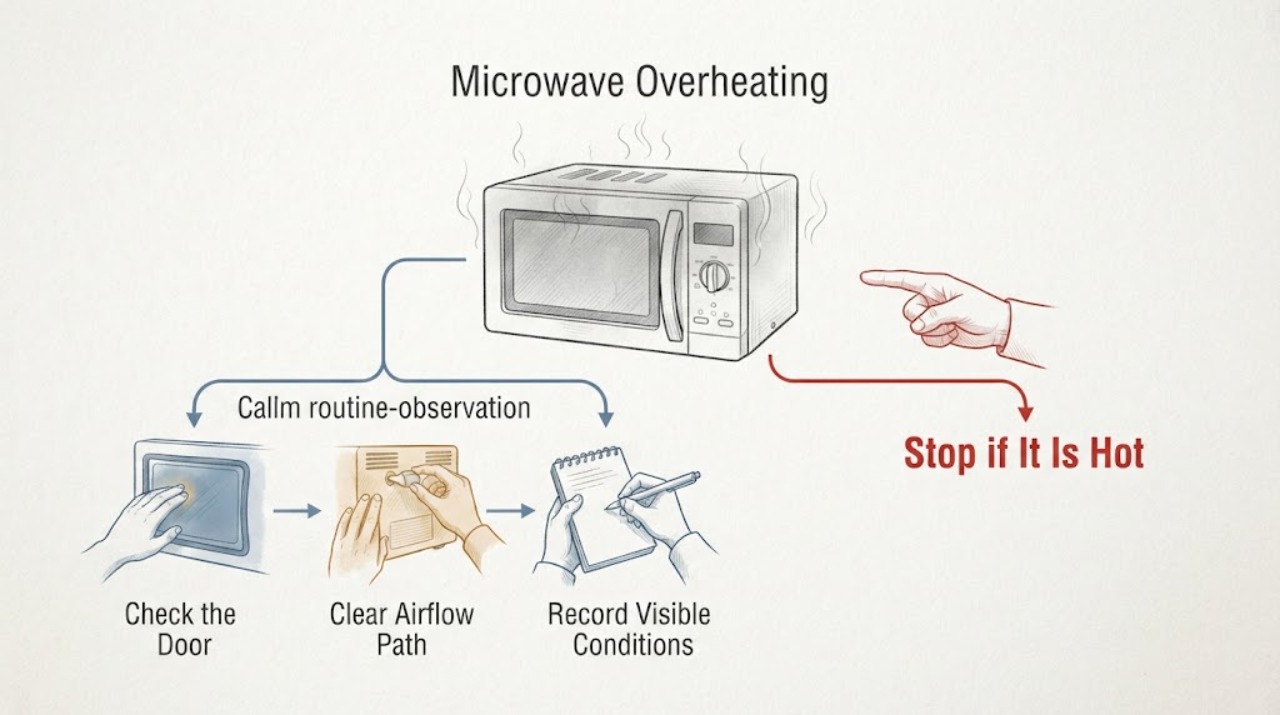
Microwave Overheating
Some warmth after cooking can be normal, especially after back-to-back cycles or in a hot room, but extreme heat, a burning smell, smoke, sparks, or a hot cord is a stop condition. Stop the microwave, disconnect power safely, and let it cool. Check only that accessible ventilation is clear and that the symptom is not caused by repeated heavy use; do not open the cabinet. Persistent or severe overheating needs qualified service.
-
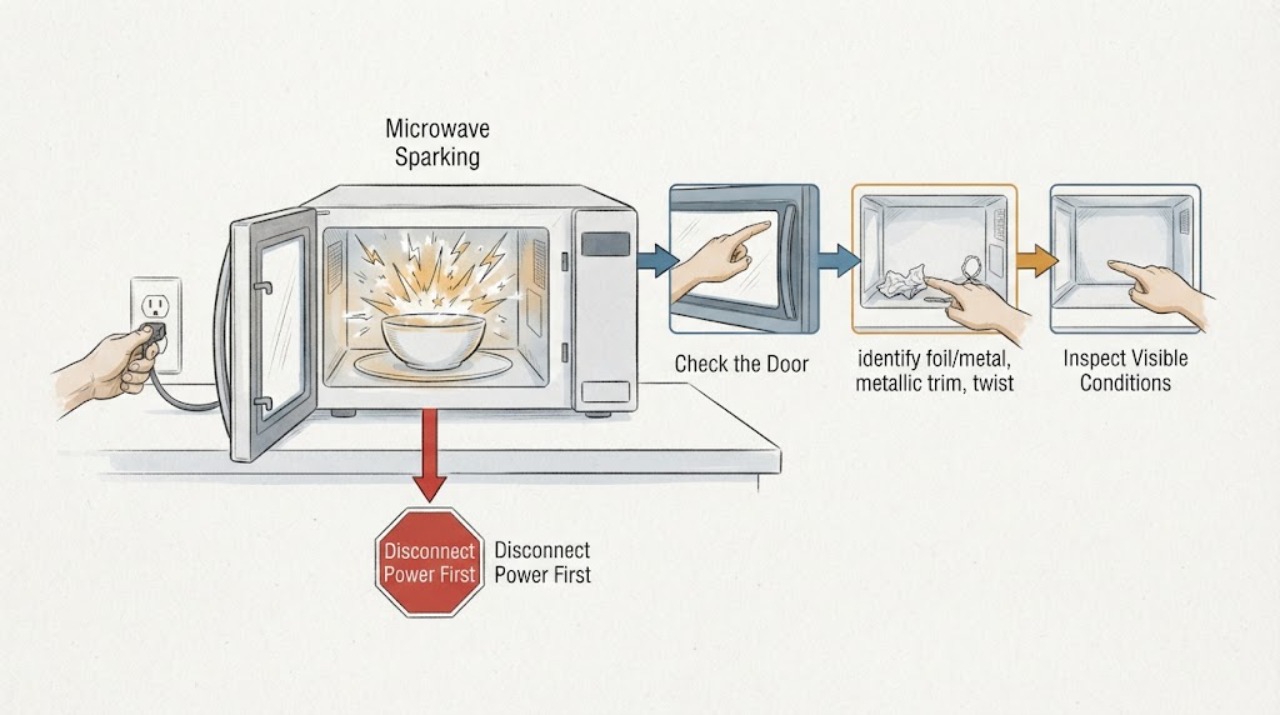
Microwave Sparking
If a microwave sparks, stop the cycle and inspect the food and cookware only after the oven is off. A one-time spark from unsuitable metal, dirty cavity, or food with intact skin differs from repeated arcing, scorch marks, smoke, or damage. Whirlpool gives food/cookware prevention guidance; GE directs internal microwave faults to service.
-
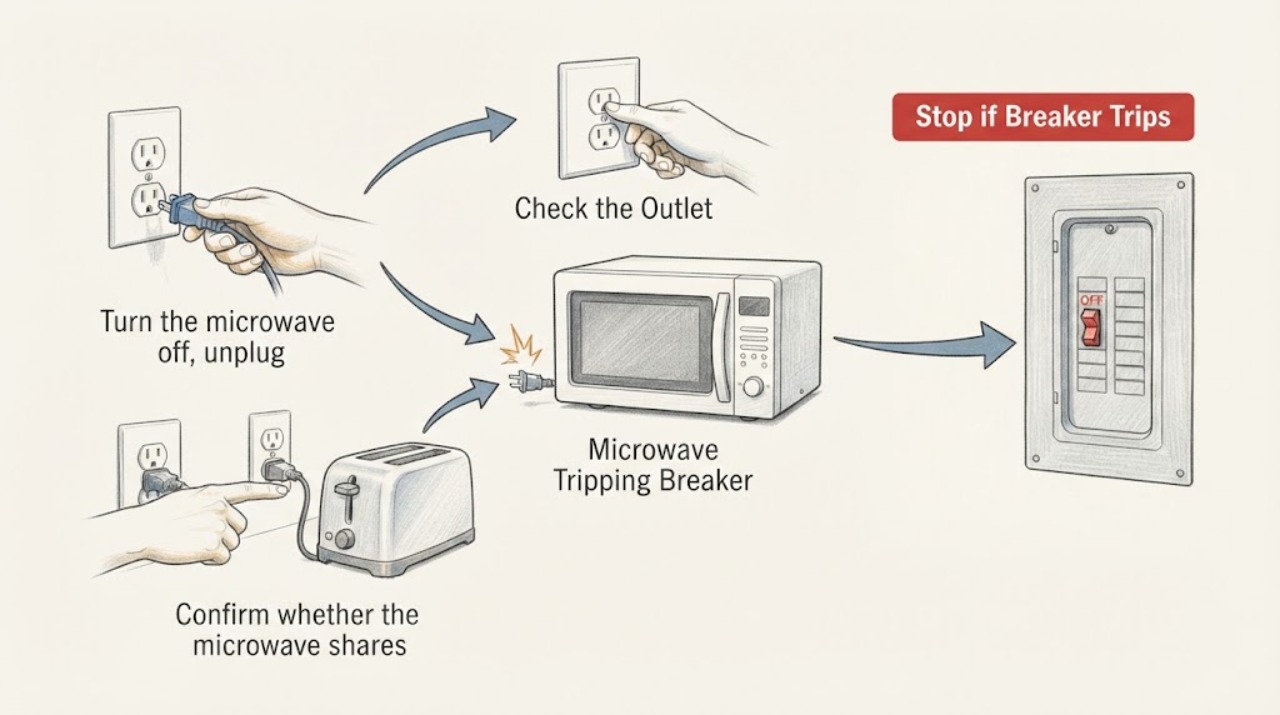
Microwave Tripping Breaker
A microwave that trips the breaker needs a controlled stop, not repeated resets. Unplug it, identify whether other high-load devices share the circuit, and check the cord and plug from a safe dry position. Reset the breaker only once if there is no visible damage and the circuit is suitable; if it trips again, unplug the microwave and arrange qualified appliance or electrical service.