
On this page
Start here
Quick answer
A bad smell in a Miele dishwasher usually calls for a cleaning-and-use check before a parts diagnosis. Do not leave dirty dishes inside for long periods; clean food residue from the door seal and door edges, clean the wash-cabinet filters and spray arms, and regularly run a higher-temperature program. If grease or limescale remains, use a machine cleaner exactly as its packaging directs. A persistent smell after these checks, standing water, or an installation concern deserves Miele service.
Before you begin
Safety first
- Switch the dishwasher off before cleaning. Do not reach into a running machine, mix cleaning chemicals, disconnect plumbing, or dismantle pumps, hoses, wiring, or the door assembly.
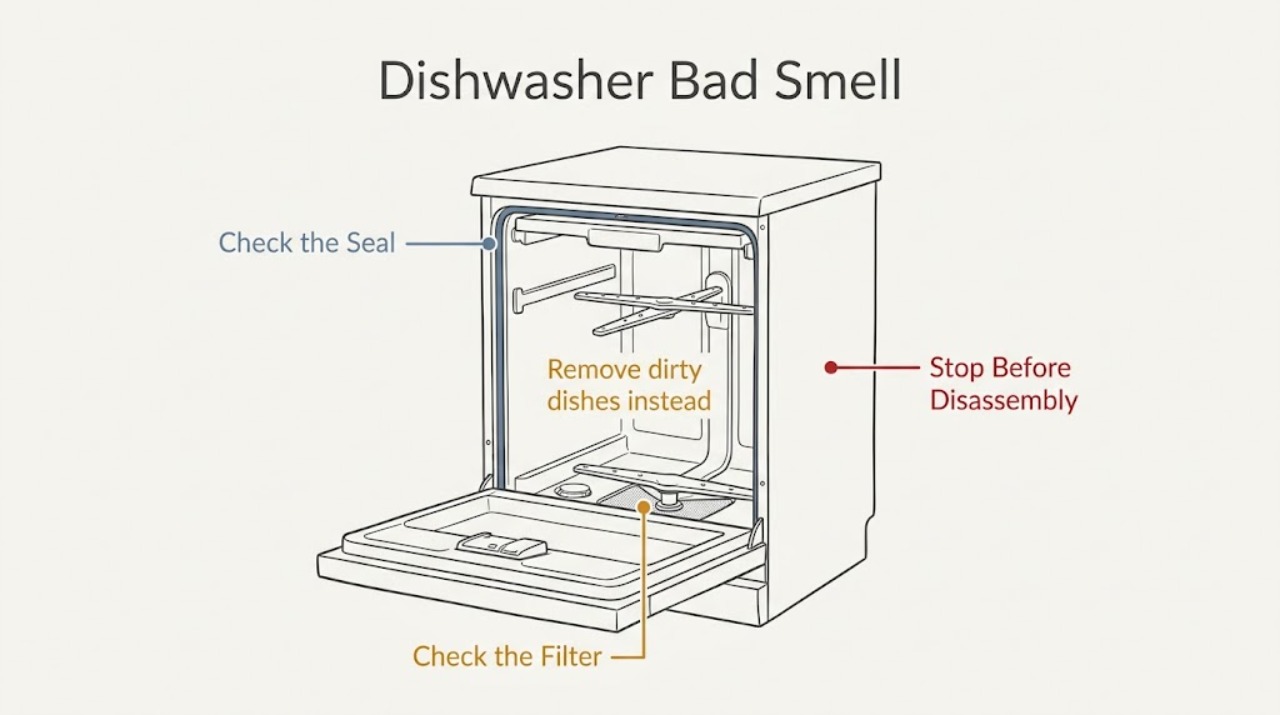
Work through in order
Diagnostic checks
Use only checks that match the exact appliance or system and its official guide.
-
Check 1
Remove dirty dishes instead of storing them in the closed dishwasher for prolonged periods, then note whether the smell is strongest before a cycle or after dishes have been left inside.
Expected result: The odor decreases when dirty dishes are not left in the cabinet, or it remains even when the cabinet is emptied.
Next step: Continue with the seal, filter, and spray-arm checks before deciding whether service is needed.
Why this matters
Why: Improvement supports retained food residue as a contributor; a persistent empty-cabinet odor shifts attention to the machine's accessible soil and drainage areas.
-
Check 2
With the dishwasher off and cool, wipe the door seal and the inside edges of the door to remove visible food or drink residue; check the full seal for trapped soil.
Expected result: Residue is present and the smell improves after cleaning, or the seal is clean and the odor remains.
Next step: Keep the seal clean and proceed to the wash-cabinet filter and spray-arm inspection.
Why this matters
Why: Food residue around the closing path can produce odor; a clean seal makes the filters, spray arms, temperature program, or drainage path more relevant.
-
Check 3
Remove and clean the accessible wash-cabinet filters according to the model instructions, then inspect the spray arms for food particles and clean only their accessible openings.
Expected result: The filters or spray arms contain food soil, or they are clear while the smell persists.
Next step: Refit every part correctly, run a complete cycle, and do not operate the dishwasher with a filter or spray arm omitted.
Why this matters
Why: Soil in these parts can be recirculated and create odor; clear parts point toward cycle temperature, machine-cleaner use, drainage, or a deeper service issue.
-
Check 4
Review recent programs and run a higher-temperature program regularly when the model permits; if limescale or grease deposits remain, use a dishwasher machine cleaner at the package's stated dosage.
Expected result: The odor and deposits improve after a higher-temperature cycle, or they persist despite a correctly completed cleaning cycle.
Next step: Do not mix cleaners or invent a stronger dosage. If the odor remains, inspect drainage symptoms and arrange service.
Why this matters
Why: Frequent low-temperature use can increase odor risk; persistent deposits after cleaning indicate that routine maintenance has not resolved the condition.
-
Check 5
After the next completed cycle, check whether water remains in the cabinet and review the visible inlet and drain-hose installation for kinks or an obvious routing problem without disconnecting plumbing.
Expected result: The cabinet drains normally and hoses look correctly installed, or standing water/installation concerns remain.
Next step: Arrange Miele service or qualified plumbing help for standing water, inaccessible blockage, leaks, or any hose correction that requires disconnection.
Why this matters
Why: Normal drainage makes a retained-water contribution less likely; standing water or a hose concern can keep food soil and odor in the machine.
Use your observations
Decision map
Find the observation that best matches what you see, then follow the next safe action.
-
PATH 01Next step
What you see
The odor fades after removing stored dirty dishes and cleaning visible seal, filter, and spray-arm soil
Do this next
Run the dishwasher regularly, clean accessible soil routinely, and avoid storing dirty dishes for prolonged periods.
Why this path and its safety boundary
Why it matters: The pattern supports a maintenance or retained-food cause rather than proving a failed component.
-
PATH 02Next step
What you see
The cabinet is clean but odor and deposits return after frequent low-temperature cycles
Do this next
Use a regular higher-temperature program when appropriate for the load and use a machine cleaner only as directed on its packaging.
Why this path and its safety boundary
Why it matters: Program temperature and recurring residue are more likely contributors than a one-time spill.
-
PATH 03Next step
What you see
The smell persists after accessible cleaning and a complete cycle, or standing water, a leak, or a hose concern is present
Do this next
Stop short of pump or hose disassembly and arrange Miele service; use qualified plumbing help where the building connection is involved.
Why this path and its safety boundary
Why it matters: A drainage, installation, or internal condition remains possible and is outside a safe surface-cleaning diagnosis.
Helpful context
Understand the symptom
Use the smell's location to choose the first check
A smell in the cabinet with residue on dishes points first to retained food soil, filters, spray arms, or seals. A smell that remains after cleaning and a complete cycle should be treated as a service clue, especially if water is not draining or hoses do not appear correctly installed.
Keep cleaning low-risk
The user checks here are limited to accessible surfaces and removable filter or spray-arm cleaning described by the appliance instructions. Do not reach into a running machine or dismantle pumps, hoses, wiring, or the door assembly.
When checks do not resolve it
Need a professional?
Arrange Miele service for an odor that returns after seal, filter, spray-arm, and appropriate cycle checks, or for standing water, leaks, abnormal drain behavior, or inaccessible buildup.
Safety scope: Switch the dishwasher off before cleaning. Do not reach into a running machine, mix cleaning chemicals, disconnect plumbing, or dismantle pumps, hoses, wiring, or the door assembly.
Have this ready
- Provide the model, odor timing, program temperatures used, filter and spray-arm condition, whether water remains after a cycle, and any hose or leak observation.
Common questions
FAQ
Why does a Miele dishwasher smell when it is not full?
Dirty dishes left inside for prolonged periods can develop odors. Remove them instead of storing them in the cabinet, and run a program regularly even when the dishwasher is not full.
Should I use a hotter program for a bad dishwasher smell?
Miele says frequent low-temperature programs increase the risk of bacteria and odors, so regularly run a higher-temperature program when appropriate for the model and load. If grease or limescale remains, use a machine cleaner only at its stated dosage.
Read the exact guide
Official sources
- Miele - G 7216 SCU CleanSteel front – DishwashersMiele USA · Miele G 7216 SCU dishwasher product example; program context only
- Dishwasher smellsMiele USA · Miele dishwashers
Community feedback
Share a repair observation
Share a plain-text repair observation. Accepted observations are published automatically; this page may take a moment to update.