
On this page
Start here
Quick answer
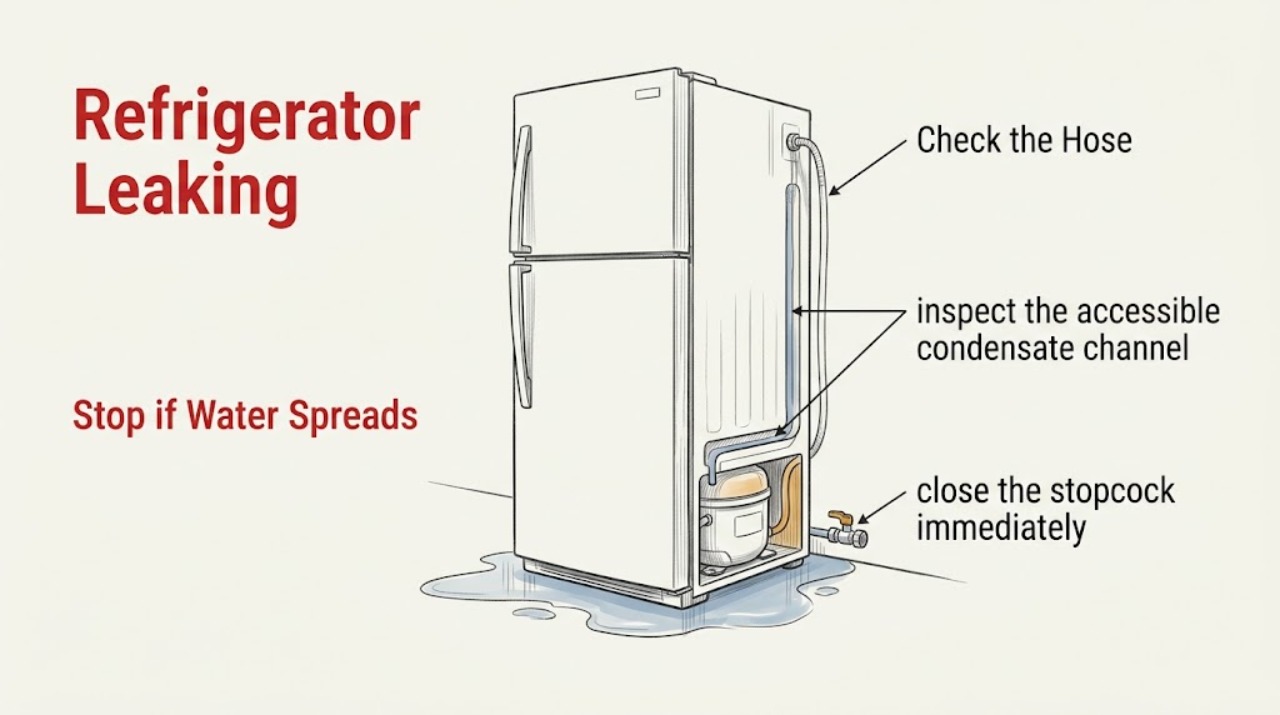
First identify whether water is inside the fridge compartment or flowing from a plumbed water connection. A wet fridge floor commonly points to a blocked condensate drain, while water actively flowing from a water-connected appliance requires the stopcock to be closed immediately. Do not remove sealed panels or continue using a pressurized connection that is leaking.
Work through in order
Diagnostic checks
Use only checks that match the exact appliance or system and its official guide.
-
Check 1
Dry the visible water and trace it to the refrigerator floor, a dispenser or water connection, or an external hose; do not pull a built-in appliance forward if doing so would strain the connection.
Expected result: Water is confined to the fridge floor, or it is actively entering from a plumbed connection.
Next step: Use the matching branch below; keep hands and plugs dry throughout.
Why this matters
Why: Miele treats a wet fridge floor as a condensate-drain issue and active water flow from a plumbed connection as a water-inlet fault.
-
Check 2
If water is on the fridge floor, inspect the accessible condensate channel and drain hole for food or ice blockage and clean only as the model manual permits.
Expected result: The drain opening is blocked and water clears, or it is clear but water returns.
Next step: Monitor after cleaning once; arrange service if water returns or the blockage is not safely accessible.
Why this matters
Why: A blocked drain can make condensate collect inside the compartment; recurrence with a clear drain suggests a model-specific fault or another source.
-
Check 3
If the appliance has a plumbed water connection and water is flowing out, close the stopcock immediately and inspect the supply pipe only for visible damage.
Expected result: The flow stops after closing the stopcock, or water continues or the pipe is damaged.
Next step: Leave the water supply closed and contact Miele Service; use a plumber when the installation-side pipe or valve is involved.
Why this matters
Why: Miele directs users to close the stopcock and contact Service for a faulty water inlet; continued flow can indicate another supply-side hazard.
-
Check 4
Check that the door seal is seated and that heavy frost or an obstructed door is not causing meltwater to run forward; avoid removing panels or thawing with a flame or heater.
Expected result: The seal is displaced or frost is concentrated near the door, or neither is present.
Next step: Reseat a displaced seal only if the manual allows; use service for damaged seals, recurring water, or hidden ice.
Why this matters
Why: A door-seal or icing condition can redirect moisture, but it does not explain active plumbing leakage.
Use your observations
Decision map
Find the observation that best matches what you see, then follow the next safe action.
-
PATH 01Next step
What you see
Water is pooled only on the fridge floor and the drain hole is visibly blocked
Do this next
Clean the accessible channel and drain as directed; escalate if it returns.
-
PATH 02Next step
What you see
Water is flowing from a plumbed inlet or hose
Do this next
Close the stopcock immediately and contact Miele Service; do not reopen it to test repeatedly.
-
PATH 03Next step
What you see
The source cannot be located or water reaches electrical parts
Do this next
Keep the area dry and power off only if this can be done without contact with water; arrange qualified service.
Helpful context
Understand the symptom
Contain the leak first
Protect the floor and nearby electrical equipment, then note the source and whether the appliance has a plumbed water connection. The safe next step is different for a blocked internal condensate drain and a failed water inlet.
Only after diagnosis
Potential parts
- condensate drain component
Consider only after the accessible drain is clear but a model-specific diagnosis identifies a failed drain component.
Confirm the exact Miele model and part fitment before ordering.
When checks do not resolve it
Need a professional?
Call Miele Service immediately for active plumbed-water leakage, damaged supply parts, water near electrical components, recurring leakage after a clear drain, or any required panel removal.
Common questions
FAQ
What should I do first if my Miele refrigerator is leaking?
Contain the water and identify whether it is on the fridge floor or coming from a plumbed connection. Close the stopcock immediately for active plumbing leakage.
Can I keep using the refrigerator while it leaks?
Do not keep using a pressurized water connection that is leaking. Arrange service if the source is unclear, recurring, or near electrical parts.
Read the exact guide
Official sources
- Ice deposits in refrigeration applianceMiele USA · Miele refrigeration ice or condensation buildup
- Water flowing out of refrigeration applianceMiele USA · Water flowing from a Miele refrigeration appliance with plumbed connection
- Floor of fridge zone wetMiele USA · Wet floor in Miele fridge zone
Community feedback
Share a repair observation
Share a plain-text repair observation. Accepted observations are published automatically; this page may take a moment to update.