
On this page
Start here
Quick answer
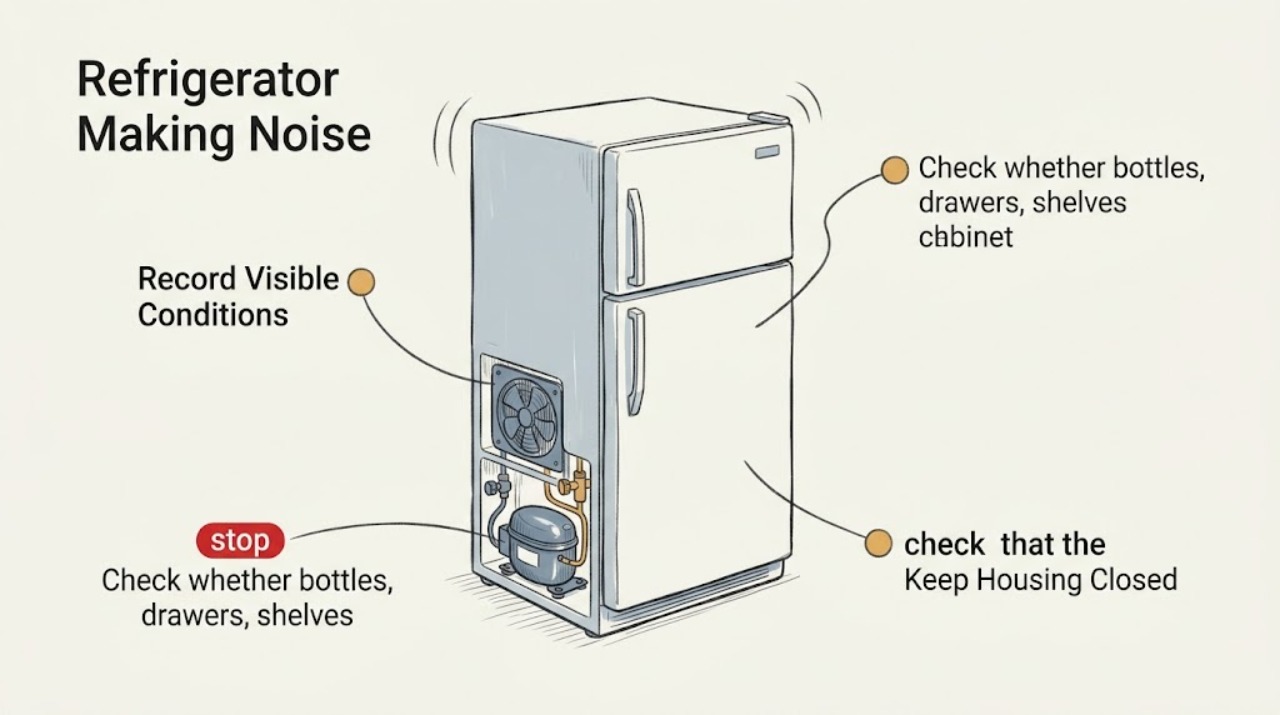
Record when the noise occurs and what it sounds like before assuming a failure. Miele says humming, bubbling, hissing, clicking, whirring, cracking, and valve rattling can be normal refrigeration sounds. A vibrating or rattling cabinet, a sudden change with poor cooling, or a damaged installation needs a separate check and possibly service.
Work through in order
Diagnostic checks
Use only checks that match the exact appliance or system and its official guide.
-
Check 1
Record the sound and its timing: during cooling, when a door opens, during water/ice operation, or continuously; keep hands away from fans and moving parts.
Expected result: The sound matches a cooling cycle, door mechanism, water system, or is present continuously.
Next step: Compare the sound with the official Miele noise descriptions before attempting any repair.
Why this matters
Why: Miele maps compressor, refrigerant, fan, door-opener, and water-container sounds to different normal operating functions.
-
Check 2
Check whether bottles, drawers, shelves, or containers are touching each other or the cabinet; separate them and refit removable parts correctly.
Expected result: The rattle stops after items are separated or refitted, or it continues with the interior clear.
Next step: Monitor after one adjustment; do not remove internal covers to chase a persistent sound.
Why this matters
Why: Miele identifies jiggling shelves/drawers and touching containers as sources of rattling; continued noise points elsewhere.
-
Check 3
From outside the appliance, check that the refrigerator is level and is not touching adjacent furniture or another appliance.
Expected result: The cabinet is uneven or touching another surface, or it is clear and level.
Next step: Correct only accessible leveling/contact issues as the installation instructions permit; use service for a built-in alignment problem.
Why this matters
Why: Miele links vibrating, rattling, and clinking to an uneven appliance or contact with surrounding furniture.
-
Check 4
Compare the noise with cooling performance, door closure, and any alarm or visible damage; do not open the compressor or sealed cooling circuit.
Expected result: Cooling is normal and the noise matches a documented operating sound, or cooling is poor/noise is new and severe.
Next step: Arrange Miele Service for poor cooling, repeat alarm, burning odor, scraping, or a noise that persists after external checks.
Why this matters
Why: Normal refrigerant/compressor sounds do not require a repair, while a changed sound plus poor cooling needs diagnosis.
Use your observations
Decision map
Find the observation that best matches what you see, then follow the next safe action.
-
PATH 01Next step
What you see
The hum, click, bubbling, or brief fan sound occurs only during normal cooling
Do this next
Monitor temperature and door operation; no repair is required if performance remains normal.
-
PATH 02Next step
What you see
Rattling changes after shelves, bottles, or cabinet contact is corrected
Do this next
Keep items separated and the cabinet level; escalate if it returns without contact.
-
PATH 03Next step
What you see
The sound is scraping, suddenly loud, continuous with poor cooling, or accompanied by odor/alarm
Do this next
Stop at external checks and contact Miele Service; do not access the compressor, fan housing, or refrigerant circuit.
Helpful context
Understand the symptom
Timing is the fastest discriminator
A hum during cooling, a click as the compressor switches, and a brief whirr from a fan can be normal. A vibration that changes when the cabinet or a shelf is stabilized is more likely mechanical contact than sealed-system trouble.
When checks do not resolve it
Need a professional?
Contact Miele Service for a severe or new scraping/buzzing sound, poor cooling, repeated alarm, burning odor, visible damage, or any repair requiring panels or the sealed system.
Common questions
FAQ
Are humming and clicking sounds normal on a Miele refrigerator?
Miele documents compressor humming and thermostat clicking as normal functions. Judge the sound together with cooling performance and any new alarm or damage.
Why does my Miele refrigerator rattle?
Separate touching bottles and refit shelves, then check that the cabinet is level and clear of surrounding furniture. Persistent severe noise needs service.
Read the exact guide
Official sources
- Noises from refrigeration appliance/wine unitMiele USA · Noises during Miele refrigerator operation
- Vibrating, rattling, or clinkingMiele USA · Miele refrigerator vibrating, rattling, or clinking
- Refrigeration appliance/wine unit not coolingMiele USA · Miele refrigeration not cooling with abnormal operation
Community feedback
Share a repair observation
Share a plain-text repair observation. Accepted observations are published automatically; this page may take a moment to update.