
On this page
Start here
Quick answer
A musty or sour smell from a Miele washing machine commonly comes from wet laundry left in the drum, detergent or fabric-softener residue, dirt or mildew, hard water, or infrequent hot washes. Remove laundry promptly, clean only the accessible drawer, siphon, door seal, drum, and filter areas with the method allowed by the exact Miele manual, and leave the door and drawer slightly open to dry. Then run the model-supported Clean Machine or other maintenance program with an empty drum and the cleaner or universal powder specified by Miele; do not add laundry, use Short or Quick Extra, or mix cleaning products. A sewage smell with standing water or gurgling points toward a drain-path or plumbing issue. Burning or electrical odor, smoke, arcing, overheating, a hot outlet, a water leak near electrics, or a repeated breaker trip is a stop condition: isolate the washer only from a safe, dry location and arrange qualified service.
Before you begin
Safety first
- Keep the washer off when a hazardous smell, leak, overheating, arcing, smoke, or repeated breaker operation is present. Do not open the cabinet, bypass an interlock, remove hidden hoses, or add more chemicals to reproduce the odor.
Work through in order
Diagnostic checks
Use only checks that match the exact appliance or system and its official guide.
-
Check 1
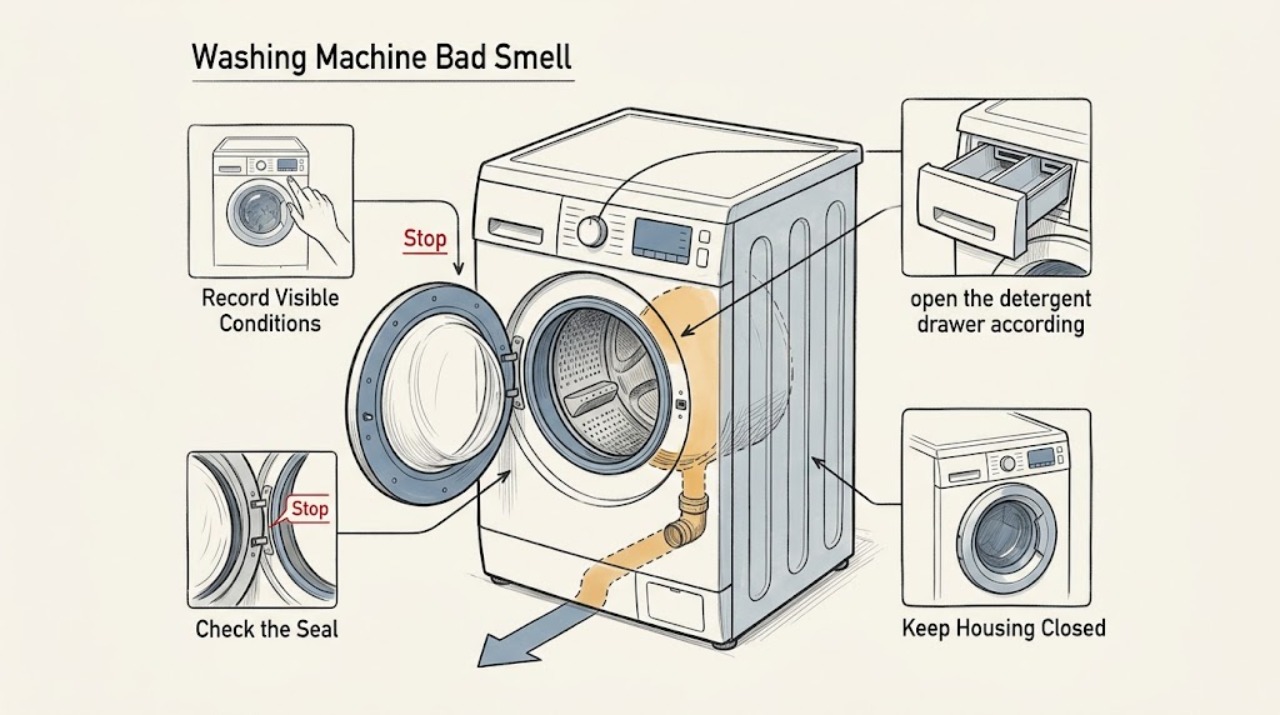
Stop using the washer and record the exact smell, its location, whether it appears before or after a cycle, the selected program, the model number, and any display message. Check from a safe dry position for smoke, a hot outlet or cord, visible water near electrics, arcing, uncontrolled operation, or a tripped breaker; do not run a cycle to reproduce a hazardous odor.
Expected result: There is smoke, a sharp burning or electrical odor, a hot outlet or cord, arcing, abnormal heat, a leak near electrics, repeated breaker operation, or an uncontrolled fill or drain.
Next step: Stop immediately. Keep people away, close the water tap if it is safe and dry to reach, and isolate power only from a safe dry location without touching wet equipment. Arrange qualified appliance service or emergency help as appropriate; do not restart the washer.
Why this matters
Why: This is an electrical, fire, water, or equipment-safety event rather than routine odor buildup.
-
Check 2
If no immediate hazard is present and the washer is cool, remove any wet load promptly. Wipe visible moisture from the door opening and accessible door-seal folds with a soft cloth, then leave the door and detergent drawer slightly open so the interior can dry; do not force the door or reach behind the seal.
Expected result: The smell follows laundry left in the drum or is strongest in damp seal folds, and it decreases after the washer is emptied and dried, or the odor remains unchanged.
Next step: Use the musty-odor branch if drying reduces the smell. Continue with the drawer, drum, and accessible drain checks if the smell remains or returns.
Why this matters
Why: Miele identifies wet laundry and retained moisture as common contributors; an unchanged odor points to residue or a drain path that still needs inspection.
-
Check 3
With the appliance off, open the detergent drawer according to the exact manual. Rinse the drawer and any removable siphon or softener insert with warm water, brush away visible residue, clean the accessible channel, and dry the pieces before refitting them; do not use solvents, abrasive products, or an improvised chemical mixture.
Expected result: There is slimy or hardened detergent or softener residue, a blocked siphon channel, or the drawer is clean and the odor is not concentrated there.
Next step: Refit the parts exactly as the manual shows and keep the drawer slightly open between uses. If water escapes from the drawer or residue returns despite correct dosing and cleaning, stop and arrange service.
Why this matters
Why: Residue in the dispenser can hold moisture and create odor. A clean drawer shifts suspicion toward the seal, drum, drain route, or internal component.
-
Check 4
Inspect the cool, empty drum, door glass, and visible seal contact area for lint, soil, trapped small items, detergent film, or damage. Wipe only accessible surfaces with a soft damp cloth or the mild method in the exact Miele manual; do not remove the seal, use a solvent, or pour liquid into the drum beyond a documented program.
Expected result: Visible residue is removed and the seal is intact, or the seal is torn, porous, persistently displaced, or the odor seems to come from behind the seal or cabinet.
Next step: Run only the documented maintenance procedure after safe surface cleaning. Keep the washer off and request service for a damaged seal, recurring residue behind it, or an odor that remains inside the cabinet.
Why this matters
Why: Surface residue can be user-cleanable, while a damaged seal or odor behind the accessible edge may require a part or internal inspection.
-
Check 5
If the model manual provides a user-accessible drain filter or pump access, switch the washer off, prepare towels and a shallow container, and inspect only that documented access point for standing water, lint, coins, or other debris. Open it slowly and only when the water is cool; do not loosen hidden hoses, remove the pump, or force a blocked cap.
Expected result: Standing water, debris, a sewage-like smell, or gurgling is present, or the documented filter area is clear but the odor and slow drain remain.
Next step: Clean and refit only the documented removable filter, then check for a safe drain improvement. If the cap is stuck, water will not drain, wastewater backs up, the leak returns, or the odor persists, leave the washer off and arrange appliance or plumbing service.
Why this matters
Why: A dirty filter or incomplete drain can retain wastewater and produce odor. Persistent symptoms after the documented user check may involve the pump, internal hose, or household drain.
-
Check 6
Run the exact Miele Clean Machine or maintenance program only after confirming it exists for the model. Use an empty drum, place Miele machine cleaner or the documented universal powder directly in the drum as instructed, and do not select Short or Quick Extra or add laundry; do not combine products.
Expected result: The maintenance program completes and the odor is gone, or it fails, the odor remains, or the odor returns quickly.
Next step: If the smell is gone, adopt the model manual's cleaning interval and drying routine. If it remains or returns, do not repeat hotter or more concentrated chemical treatments; proceed to the drain, dosing, seal, and service branches.
Why this matters
Why: Miele says Clean Machine should be run without Short or Quick Extra, with cleaner or universal powder directly in the empty drum. A persistent odor after a correct cycle points beyond ordinary drum residue.
-
Check 7
Review the detergent or automatic-dosing setting against the model manual and the load, soil level, and local water hardness. Look for excess suds, residue, an empty dosing cartridge, or a setting that does not match the detergent being used; do not compensate by adding several products to one cycle.
Expected result: The dose is excessive or incompatible with the setting and residue is visible, or the dose is correct and the smell still follows draining or the seal.
Next step: Correct only the setting and product combination documented for the exact model. If an automatic dispenser leaks, will not dose, or remains contaminated after the accessible clean, request service rather than opening it.
Why this matters
Why: Miele notes that dose depends on load, soiling, and water hardness. Incorrect dosing can leave residue, but correct dosing with persistent odor suggests another source.
-
Check 8
After safe checks, compare the odor with the household drain: note whether it appears only during draining, whether the sink or standpipe gurgles, whether wastewater rises, and whether the washer leaves water behind. Do not pour drain chemicals into the washer or disconnect a concealed drain connection.
Expected result: The odor tracks draining, wastewater backs up, the standpipe gurgles, or the washer cannot empty completely.
Next step: Stop using the washer if wastewater backs up or leaks. Have a qualified appliance technician or plumber identify the drain-path fault and correct it; keep the model-specific washer manual available.
Why this matters
Why: The source may be the drain hose, pump path, standpipe, trap, or household plumbing rather than the drum surface.
Use your observations
Decision map
Find the observation that best matches what you see, then follow the next safe action.
-
PATH 01Next step
What you see
The smell is musty or sour, follows wet laundry, and improves after the drum, seal, drawer, and accessible surfaces are dried.
Do this next
Remove wet laundry promptly, keep the door and drawer slightly open, use the correct dose, and follow the exact model's routine maintenance program.
Why this path and its safety boundary
Why it matters: Retained moisture and residue are the leading explanation supported by Miele's odor guidance.
-
PATH 02Next step
What you see
The odor is strongest at the detergent drawer or softener compartment and residue or a blocked siphon is visible.
Do this next
Remove and rinse only the documented removable parts with warm water, clear accessible residue, dry them, and correct the model-specific dose. Request service if residue or leakage returns.
Why this path and its safety boundary
Why it matters: Dispenser buildup is a plausible local source.
-
PATH 03Next step
What you see
The smell is sewage-like or occurs with gurgling, slow draining, standing water, or wastewater backflow.
Do this next
Stop if water backs up or leaks, avoid drain chemicals in the washer, and arrange appliance or plumbing service for the drain route.
Why this path and its safety boundary
Why it matters: A retained wastewater or household drain problem is more likely than ordinary drum odor.
-
PATH 04Next step
What you see
A correctly run empty Clean Machine or maintenance program removes the odor.
Do this next
Use the exact manual's maintenance interval, select a suitable detergent dose, and dry the door opening and drawer after use.
Why this path and its safety boundary
Why it matters: The smell was likely related to removable buildup or low-temperature use rather than an immediate component failure.
-
PATH 05Next step
What you see
The odor persists or returns quickly after correct surface cleaning and an empty documented maintenance wash.
Do this next
Do not escalate to hotter cycles, extra detergent, or mixed chemicals. Keep the washer off if water remains or the smell worsens and arrange qualified diagnosis with the model number and observations.
Why this path and its safety boundary
Why it matters: A hidden drain hose or pump path, damaged seal, dispenser component, or household plumbing problem may remain.
-
PATH 06Next step
What you see
The smell is burning, electrical, hot plastic, or fuel-like, or there is smoke, arcing, overheating, a hot outlet, a leak near electrics, or a repeated breaker trip.
Do this next
Stop immediately, keep clear, isolate power only from a safe dry location, and obtain qualified appliance or emergency help as appropriate. Do not restart to test.
Why this path and its safety boundary
Why it matters: Continued operation could create shock, fire, water damage, or an equipment hazard.
Helpful context
Understand the symptom
Start by identifying the odor and where it comes from
Musty, sour, or damp-cloth odor usually follows wet laundry, residue, or a closed drum. A smell concentrated at the detergent drawer suggests buildup there; an odor at the door seal suggests trapped soil or moisture; a sewage-like odor with slow draining or gurgling suggests the drain route or household plumbing. A sharp burning, hot-plastic, or electrical odor is not a cleaning problem. Keep the washer off until the hazard has been assessed. Exact Miele programs and access points vary by model, so confirm the model number before using a maintenance procedure.
Use cleaning chemicals conservatively
Miele manuals call for mild cleaning methods on accessible surfaces and warn against abrasive cleaners, solvents, and unsuitable all-purpose products. Use one product and one procedure at a time, following the exact manual or product label. Never combine bleach, acids, descalers, detergent, or other cleaners. Do not pour chemicals into an unknown opening, open the cabinet, or try to flush a hidden hose.
Why a clean washer can still smell
A successful maintenance wash may remove drum residue but not a blocked drain route, wastewater backflow, a damaged door seal, or buildup inside a component that cannot be reached safely. If the smell returns quickly after a correct empty maintenance wash, record when it returns and whether water remains after draining. That information helps service distinguish the dispenser, door seal, pump or drain path, and household plumbing.
Safety boundary
Stop conditions
- Stop immediately for smoke, burning or electrical odor, hot outlet or cord, arcing, abnormal heat, repeated breaker operation, or uncontrolled washer behavior; do not restart to reproduce the symptom.
- Stop for a leak, standing water near an outlet or control, wastewater backup, hot water, or a drain cap that cannot be opened safely. Isolate power only from a safe dry location and keep people away.
- Do not mix bleach, acids, descalers, detergent, or other cleaners; do not pour drain chemicals into the washer, use solvents or abrasive products, or apply a hotter or more concentrated treatment than the exact manual allows.
- Do not remove the cabinet, door seal, pump, internal hose, dispenser mechanism, or safety device. Stop and request service if the odor persists after the documented user checks or if a part is damaged.
Only after diagnosis
Potential parts
- washing-machine door seal or gasket
Consider this only if inspection finds a torn, porous, deformed, or persistently contaminated seal and the exact model diagnosis identifies it as the odor source.
Door seals are model-specific. Confirm the exact model and replacement method with Miele or qualified service before ordering or fitting a part. - detergent drawer or siphon assembly
Consider this only if the drawer, siphon, or dosing path is cracked, leaking, blocked after documented cleaning, or otherwise diagnosed as the source.
Drawer and dosing components vary by series and automatic-dosing configuration. Verify the exact model and detergent system first. - drain pump, filter, or internal drain hose
Consider this only when standing water, incomplete draining, gurgling, or a persistent drain odor leads qualified diagnosis to the pump or drain path.
Do not dismantle the drain system based on appearance. Confirm the exact model, fault evidence, and service procedure.
When checks do not resolve it
Need a professional?
Request service for a persistent or recurring odor, a damaged or porous door seal, an automatic dispenser that leaks or remains contaminated, a pump or internal drain concern, an unresolved code, or any hazardous electrical or water symptom.
Safety scope: Keep the washer off when a hazardous smell, leak, overheating, arcing, smoke, or repeated breaker operation is present. Do not open the cabinet, bypass an interlock, remove hidden hoses, or add more chemicals to reproduce the odor.
Read the exact guide
Official sources
- How to Eliminate Bad Odors from Your Washing MachineMiele USA · General Miele washing-machine guidance; exact cleaning access and programs remain model-specific.
- Troubleshooting for all problems with Miele WasherMiele USA · Miele USA washer support index; exact article and model selection is required for a fault.
- Washer W1119 operating instructionsMiele · Retired W1119 model manual; access points and cleaning methods may differ on current models.
- Hygiene info indicator light is illuminatedMiele USA · Miele washer models that display the hygiene information indicator; exact indicator behavior varies by model.
- WWF 060 WCS operating and installation instructionsMiele · WWF 060 WCS-US manual; use only the matching instructions for that model family and confirm differences for another model.
- Clean Machine not removing odorsMiele USA · Miele washer support guidance; program availability and controls vary by model.
- The laundry or the washing machine smells unpleasantMiele USA · Miele washer support guidance; use the exact model manual for controls and program names.
Community feedback
Share a repair observation
Share a plain-text repair observation. Accepted observations are published automatically; this page may take a moment to update.