
On this page
Start here
Quick answer
Find where the water starts before choosing a repair. On a Moffat refrigerator, water may be defrost water under a drawer, an external supply or fill line if the model has ice or water features, or a valve or drain problem. Keep water away from electricity, shut off an accessible refrigerator water supply if a pressurized line is leaking, and arrange service for a recurring leak or an inaccessible drain.
Before you begin
Safety first
- Do not work on wet electrical parts, remove panels, puncture ice, or open sealed components. Isolate power or water only from a dry, safe position.
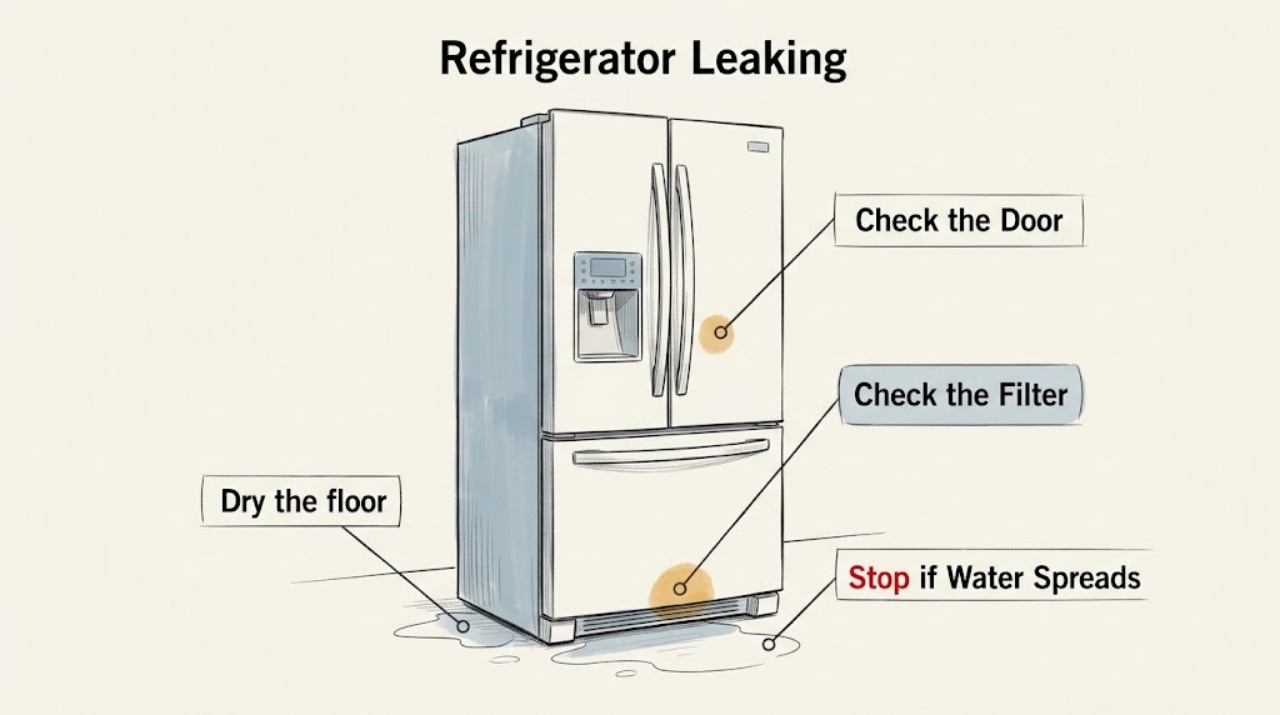
Work through in order
Diagnostic checks
Use only checks that match the exact appliance or system and its official guide.
-
Check 1
Dry the floor and the cabinet, then identify whether water first appears under the fresh-food drawers, in the freezer, at the front dispenser area, or behind the refrigerator. Do not pull the appliance through a wet area.
Expected result: Water begins inside a compartment or under drawers, or it starts at a rear connection or dispenser.
Next step: Keep food and electrical connections dry and continue only with the matching visible check below. Do not remove panels.
Why this matters
Why: Interior water or ice points toward defrost drainage; a rear or dispenser point makes a water line, filter housing, or valve more likely if equipped.
-
Check 2
Inspect the accessible drain opening, gutter, and area below the drawers for ice, food residue, or water that cannot drain. Check that doors close fully and that packages are not holding them open.
Expected result: Ice or water is pooled under a drawer or the accessible drain cannot carry water away, or the drain area is dry and clear.
Next step: Clean only an accessible opening as the exact Moffat manual permits. Do not push a tool into a hidden tube or melt ice with forced heat.
Why this matters
Why: A blocked defrost path or warm-air leak can overflow into the cabinet; a clear drain shifts suspicion toward a supply system or internal fault.
-
Check 3
If the refrigerator has an ice maker or water dispenser, inspect the visible supply tubing, fittings, filter area, and fill line for a split, loose joint, or water appearing while the feature is used. Keep hands dry.
Expected result: A fitting or tube becomes wet, or no pressurized line is present and the leak remains inside the cabinet.
Next step: Turn off the refrigerator water shutoff valve if it is safely accessible, then stop using the feature and arrange service. Do not tighten hidden fittings or open the cabinet.
Why this matters
Why: A wet supply path or fill line can explain a feature-linked leak; a cabinet-only leak should not be assigned to a water valve without model evidence.
-
Check 4
After the area is dry, observe whether the leak returns without using a dispenser, and whether the compressor or defrost cycle is accompanied by new water or ice.
Expected result: Water returns during ordinary operation or only after dispenser or ice-maker use.
Next step: Stop the affected feature and schedule model-specific service for any recurrence, water near electrical parts, or a leak that cannot be localized safely.
Why this matters
Why: A leak without feature use makes drain or cabinet causes more likely; a feature-linked leak narrows the path to its tubing, valve, filter, or fill assembly.
Use your observations
Decision map
Find the observation that best matches what you see, then follow the next safe action.
-
PATH 01Next step
What you see
Water or ice is under the drawers and the accessible drain does not clear
Do this next
Use only the exact model's documented accessible drain procedure; otherwise arrange service and do not remove panels.
Why this path and its safety boundary
Why it matters: A defrost-drain restriction or overflow is more likely than a dispenser leak.
-
PATH 02Next step
What you see
A visible supply tube, filter area, or fitting becomes wet when a dispenser or ice maker operates
Do this next
Turn off the refrigerator water supply if safe, stop using the feature, and request service or plumbing help for the exposed house line.
Why this path and its safety boundary
Why it matters: The pressurized water path is implicated.
-
PATH 03Next step
What you see
The leak recurs with no feature use, reaches electrical parts, or cannot be traced from outside
Do this next
Keep the appliance out of service as needed, isolate power only from a dry safe position, and arrange qualified service.
Why this path and its safety boundary
Why it matters: An internal drain, valve, pan, or cabinet fault remains unresolved and poses a water/electricity boundary.
Helpful context
Understand the symptom
Trace the first wet point
A puddle at the front can travel from a drain, pan, or supply connection. Dry the area, observe one normal cycle or one controlled dispenser use only if the model has that feature, and record the first place that becomes wet.
When checks do not resolve it
Need a professional?
Arrange service for a recurring leak, a wet valve or fill line, an inaccessible drain, water near electrical parts, or any leak that cannot be localized safely.
Safety scope: Do not work on wet electrical parts, remove panels, puncture ice, or open sealed components. Isolate power or water only from a dry, safe position.
Have this ready
- Provide the Moffat model, first wet location, whether the leak follows a dispenser or ice-maker cycle, and the condition of the drain and visible tubing.
Common questions
FAQ
Should I keep using a leaking Moffat refrigerator?
Stop the affected ice maker or dispenser and keep water away from electricity. Shut off an accessible refrigerator water supply for a pressurized leak and arrange service for a recurring or cabinet leak.
Why is there water under the drawers in a Moffat refrigerator?
A blocked defrost drain or overflow is one possibility. Check only the accessible drain and door/loading conditions from the model manual; persistent water needs service.
Read the exact guide
Official sources
- Moffat MBE19D* / UR-BCD520WE1-SQ Owner's ManualGE Appliances Canada / Moffat · This manual applies directly only to the models it lists. This article has no specific model, so it is used only for general visible checks and safety boundaries; use the appliance's own manual for specific controls and parts.
- Refrigerator - Water on FloorGE Appliances · Refrigerator defrost drains, water valves, supply lines, fill lines, and leak service guidance
Community feedback
Share a repair observation
Share a plain-text repair observation. Accepted observations are published automatically; this page may take a moment to update.