
On this page
Start here
Quick answer
A chemical smell from an oven while it is off should be classified before any cleaning or test-heating. If the odor is gas-like or sulfur/rotten-egg-like, or you hear hissing, feel dizzy or suspect a fuel leak, leave immediately, avoid switches/flames and contact emergency services or the gas utility from outside; do not troubleshoot the oven. If the odor is burning plastic, hot wiring, smoke or a sharp electrical smell, keep the oven off and arrange urgent qualified service. Only when there is no gas/electrical warning and the oven is cool should you inspect externally and, with the exact manual, look for leftover packaging, food/plastic residue or cleaning-product residue. A new-oven odor should fade after the first few uses; a chemical smell that persists while the oven is off or returns after the cavity is clean needs service rather than repeated heating.
Before you begin
Safety first
- Do not light burners, test gas fittings, open panels, perform live electrical checks, run self-clean or heat the oven to reproduce an unexplained odor.
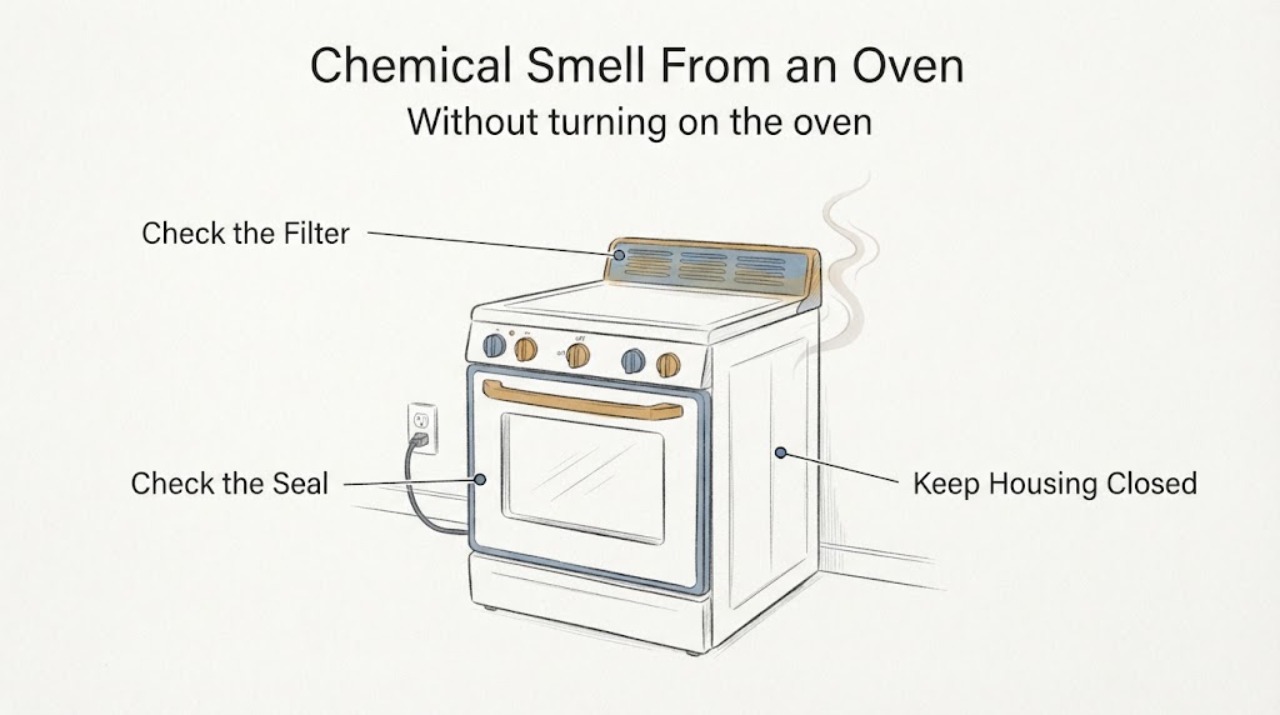
Work through in order
Diagnostic checks
Use only checks that match the exact appliance or system and its official guide.
-
Check 1
Without turning on the oven or using a flame, classify the odor from a safe position: gas/rotten-egg or sulfur-like, burning plastic/electrical, smoke/soot, or a mild new-oven/food/cleaner smell. Note hissing, heat, headache, dizziness or breathing irritation.
Expected result: The odor could be gas-like or electrical/burning, or it is a mild non-gas odor with no smoke, heat or symptoms.
Next step: For gas-like odor, hissing or symptoms, leave immediately without operating switches or flames and contact emergency services/gas utility from outside. For electrical/burning odor or smoke, keep the oven off and arrange urgent qualified service. Only the mild, non-hazard category may proceed to external checks.
Why this matters
Why: Gas-like odor, hissing or symptoms can indicate a fuel hazard; burning plastic/electrical odor or smoke can indicate an appliance or wiring hazard. A mild odor alone is not enough to identify the source.
-
Check 2
If there is no emergency odor or smoke condition and the oven is cool, verify externally that every oven and cooktop control is fully OFF, the oven has no active timer or self-clean setting, and the surrounding area is free of fresh paint, solvents, cleaners or stored materials that could be the actual odor source. Do not move or open the appliance.
Expected result: A control/timer is active, an adjacent product or surface is the likely source, or the oven is completely off and the smell remains localized to it.
Next step: Turn off an active control only from a dry, safe position. Remove people and pets from irritating vapors and ventilate only when doing so is safe. If the smell remains localized to the oven, keep it off and continue only with a cool external inspection.
Why this matters
Why: A control left active or an outside vapor source can mimic an oven fault. A smell that remains with the appliance off and no outside source needs model-specific inspection; it is not proved to be food residue or a harmless new-part smell.
-
Check 3
With the oven cool and power/fuel left off, inspect only the visible cavity and door area for forgotten packaging, melted plastic, foil or liner material, food spill, heavy grease, cleaner residue or a damaged gasket. Do not scrape hot residue, use an unapproved chemical, or remove panels.
Expected result: Visible residue/packaging is present, or the cavity is clean while the odor persists when the oven is not operating.
Next step: If the exact manual permits, clean only the accessible cool surface with the specified method and remove packaging. Do not use self-clean or heat the oven until the odor is classified and the manual allows it. If clean and persistent, arrange service.
Why this matters
Why: Samsung and Whirlpool identify packaging, protective coatings, food residue, plastic and trapped debris as possible odor sources during use or first use. A clean cavity with persistent off-state odor is outside a simple residue explanation.
-
Check 4
Record timing and context without operating the appliance: whether the oven is new or recently moved/cleaned, whether the odor is present only after heating or remains while cold and off, whether a cooktop burner or other nearby appliance was recently used, and whether anyone or any pet has symptoms.
Expected result: The smell is limited to the first few uses/after residue exposure and is fading, or it persists while cold/off, returns after cleaning, or is getting stronger.
Next step: For a fading, non-hazard first-use smell, follow the exact owner manual and ventilation instructions before the next use. For persistent, worsening or unexplained odor, leave the oven off and request qualified service; escalate immediately if it becomes gas-like or electrical.
Why this matters
Why: Manufacturer guidance treats fading first-use odor as different from persistent odor. An odor that is present with the oven off cannot be cleared by assuming that a normal burn-in cycle will fix it.
-
Check 5
Keep the oven out of use if the odor persists while off, returns after accessible residue is removed, is accompanied by smoke/heat, or cannot be safely classified. Give the service provider the appliance brand/model, fuel type, odor description, when it occurs and any recent installation or cleaning history.
Expected result: The odor is persistent, worsening, localized to the appliance or associated with a visible defect, or the oven is new but the smell does not fade as expected.
Next step: Arrange manufacturer or qualified appliance service and do not open the cabinet, test wiring, adjust gas components or repeatedly heat the oven to reproduce the odor. For suspected gas, use emergency/gas-service response from outside instead.
Why this matters
Why: The remaining possibilities require model-specific fuel, electrical and appliance inspection. No component, gas fitting or wiring fault can be identified safely from the word “chemical.”
Use your observations
Decision map
Find the observation that best matches what you see, then follow the next safe action.
-
PATH 01Next step
What you see
The odor is gas-like/rotten-egg or sulfur-like, a hiss is heard, a burner may be on, or anyone feels dizzy or unwell.
Do this next
Leave the home, avoid switches, flames and ignition sources, and call 911 or the gas utility from a safe distance. Do not return to test the oven until cleared.
Why this path and its safety boundary
Why it matters: Whirlpool treats gas odor while an oven is off as abnormal and says a leak must not be located or repaired by the homeowner.
-
PATH 02Next step
What you see
The odor resembles burning plastic, hot insulation or wiring, or there is smoke, soot, excessive heat or a tripped breaker.
Do this next
Keep the oven off and arrange urgent qualified service; if there is active smoke or fire, leave and contact emergency services. Do not open panels or reset power repeatedly.
Why this path and its safety boundary
Why it matters: This is a possible electrical/thermal hazard, not a routine first-use odor.
-
PATH 03Next step
What you see
The oven is new or recently unpacked, the odor is mild and non-gas, there is no smoke or symptom, and it fades after the first uses.
Do this next
Follow the exact model manual for first-use ventilation and burn-in instructions before cooking. Keep birds and sensitive people away from fumes and stop if the odor becomes sharp, persistent or hazardous.
Why this path and its safety boundary
Why it matters: Samsung and Whirlpool describe packaging, protective oils/new parts and initial residue as possible temporary first-use odors.
-
PATH 04Next step
What you see
The oven is cool and off but the chemical odor remains, returns after accessible residue/packaging is removed, or no safe cause can be identified.
Do this next
Keep the appliance out of use and request qualified service with the exact model and observations. Do not run self-clean, heat an empty oven or attempt gas/electrical repair to chase the smell.
Why this path and its safety boundary
Why it matters: The odor is not scoped as normal first use or a visible food/plastic residue and needs model-specific service.
Helpful context
Understand the symptom
“Chemical smell” is not a component diagnosis. An oven that is not in use should not be heated to identify an unknown odor. First separate a gas-like odor from burning plastic/electrical odor and from a mild new-oven or residue smell. The supplied topic has no brand or model, so cleaning, self-cleaning and first-use steps must remain conditional on the exact manual.
Keep all checks outside the appliance until the odor is classified and the oven is cool. Do not open panels, touch wiring, test a gas fitting, light a burner, or use a self-clean cycle to “burn off” an unexplained smell.
When checks do not resolve it
Need a professional?
Seek emergency/gas response immediately for gas-like odor, hissing or symptoms. Seek urgent qualified service for burning plastic/electrical odor, smoke, excessive heat or repeated breaker trips. For any persistent chemical smell while the oven is off, keep it unused and arrange model-specific appliance service.
Safety scope: Do not light burners, test gas fittings, open panels, perform live electrical checks, run self-clean or heat the oven to reproduce an unexplained odor.
Have this ready
- Provide the brand/model, fuel type, exact odor description, whether it is present while cold/off, smoke or heat observations, control/timer state, recent installation/move/cleaning and any visible residue or packaging.
Common questions
FAQ
Is a chemical smell from an oven while it is off normal?
Do not assume it is normal. A mild odor during the first few uses can come from new parts, packaging or protective coatings and should fade, but a gas-like odor while off is abnormal, and a persistent smell after the cavity is clean needs service.
Can I turn on the oven to burn off the smell?
Only follow a first-use procedure from the exact owner manual after you have ruled out gas, electrical and smoke hazards. Do not heat an oven to test an unexplained off-state odor, and do not use self-clean as a universal remedy.
What should I do if the smell may be gas?
Do not troubleshoot the appliance. Leave the home, avoid switches and flames, and contact 911 or the gas utility from a safe distance. Whirlpool specifically says not to locate or repair a suspected oven gas leak yourself.
Read the exact guide
Official sources
- There is smoke or an odor coming from Samsung ovenSamsung · Opened Samsung's official oven odor support guide. It separates first use, self-clean and normal-use odors, advises ventilation and cavity inspection, and directs service when odor/smoke persists after the oven is clean. It is used for general safety boundaries, not a claim about an unassigned model.
- Why Does My Oven Smell Like Gas?Whirlpool · Opened Whirlpool's official oven-gas-odor guide. It says gas smell while an oven is off is abnormal, and suspected leaks require leaving and calling 911 from a safe distance rather than homeowner troubleshooting. It also distinguishes first-use, residue and paint odors.
- Odors or Smells - RangeWhirlpool Product Help · Opened Whirlpool Product Help. It says new-part/packaging odors should dissipate after the first few uses, describes ventilation and manual-dependent first-use guidance, warns about fumes to birds and directs users to service for unresolved odors. It is not used to authorize a procedure on an unknown model.
Community feedback
Share a repair observation
Share a plain-text repair observation. Accepted observations are published automatically; this page may take a moment to update.