
Brand-independent appliance guidance
General Oven Repair Guides
Brand-independent troubleshooting and repair guidance for common oven problems and maintenance questions.
General oven guides
Use these guides when the problem is not limited to a specific manufacturer.
-
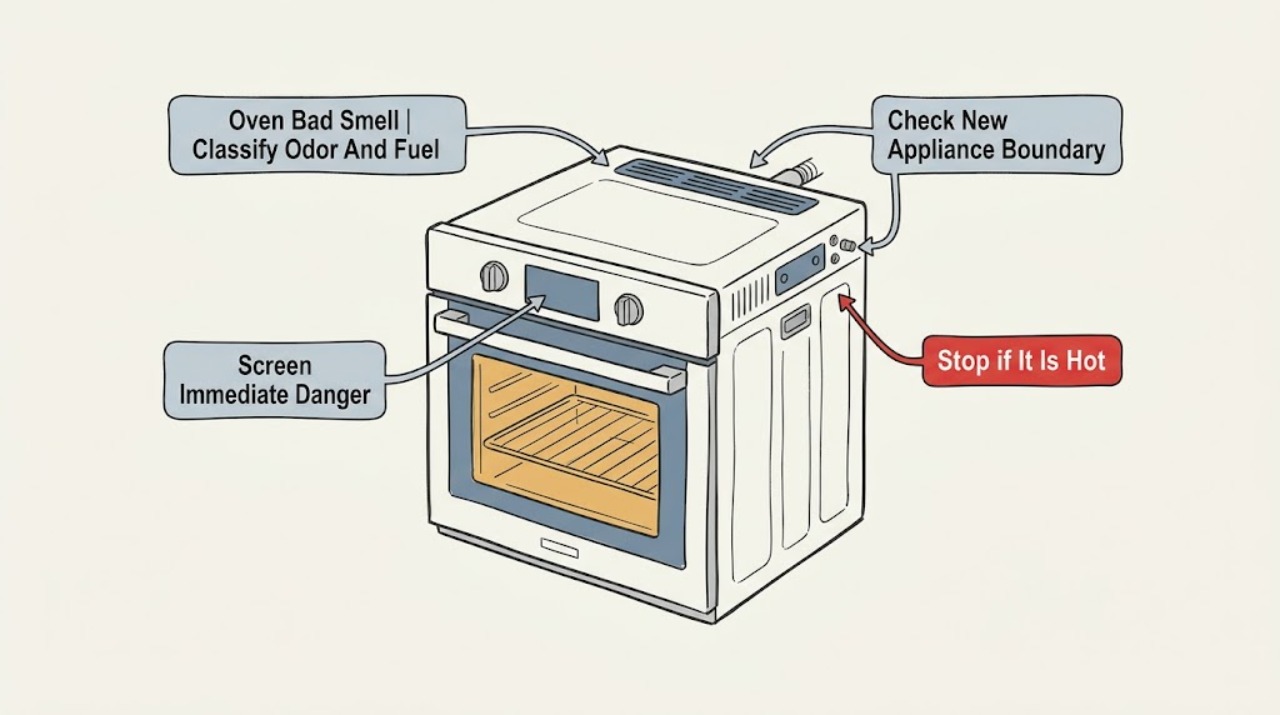
Oven Bad Smell: Identify Gas, Electrical, Food, and New-Oven Odors
Do not treat every oven smell as the same problem. First identify whether the oven is gas, electric, dual-fuel, or unknown, and whether the smell is gas-like, electrical or burnt plastic, food or grease, cleaning chemical, or a mild new-appliance odor.
-
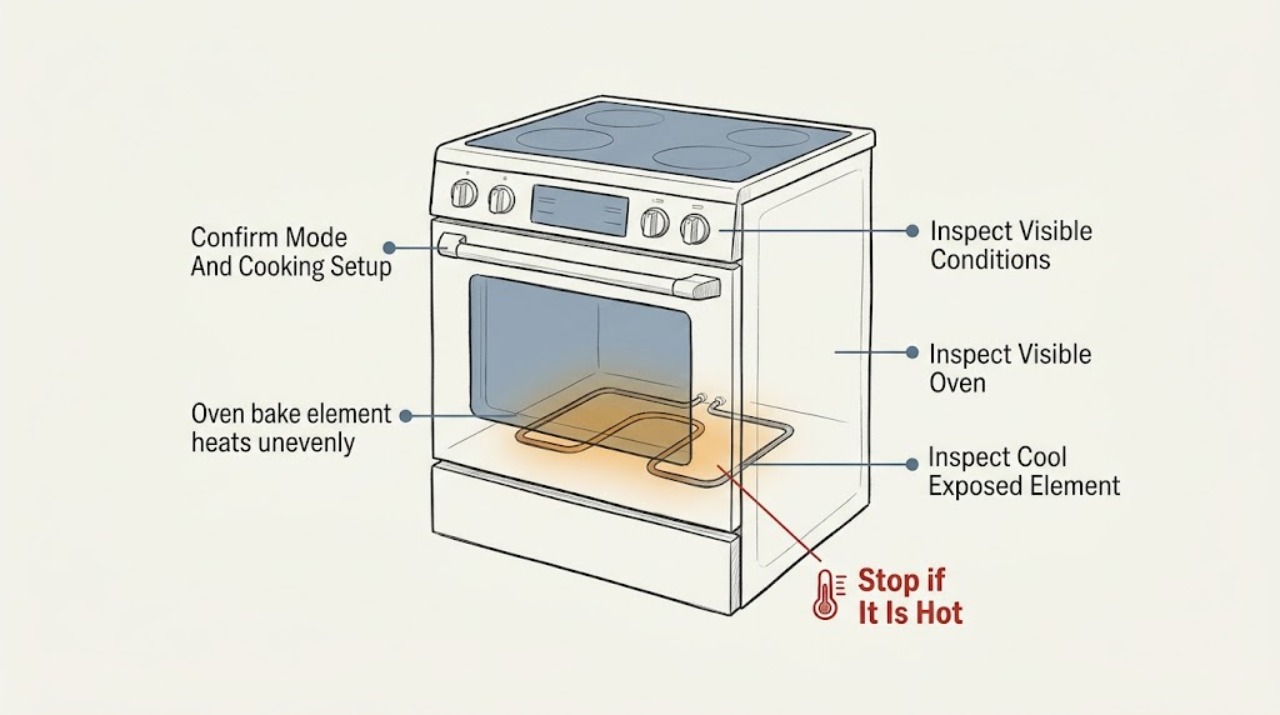
Oven bake element heats unevenly: What to Check and What to Do Next
An oven bake element that heats unevenly may have a visible element defect, a power or control problem, a temperature-sensor or calibration issue, a door-seal or airflow problem, or a cooking setup that makes heat look uneven. After the oven is fully cool, use only ordinary user access to check the selected bake mode, rack and pan placement, door closure, and any visible break, blister, or area of an exposed electric element that never glows during a normal preheat.
-
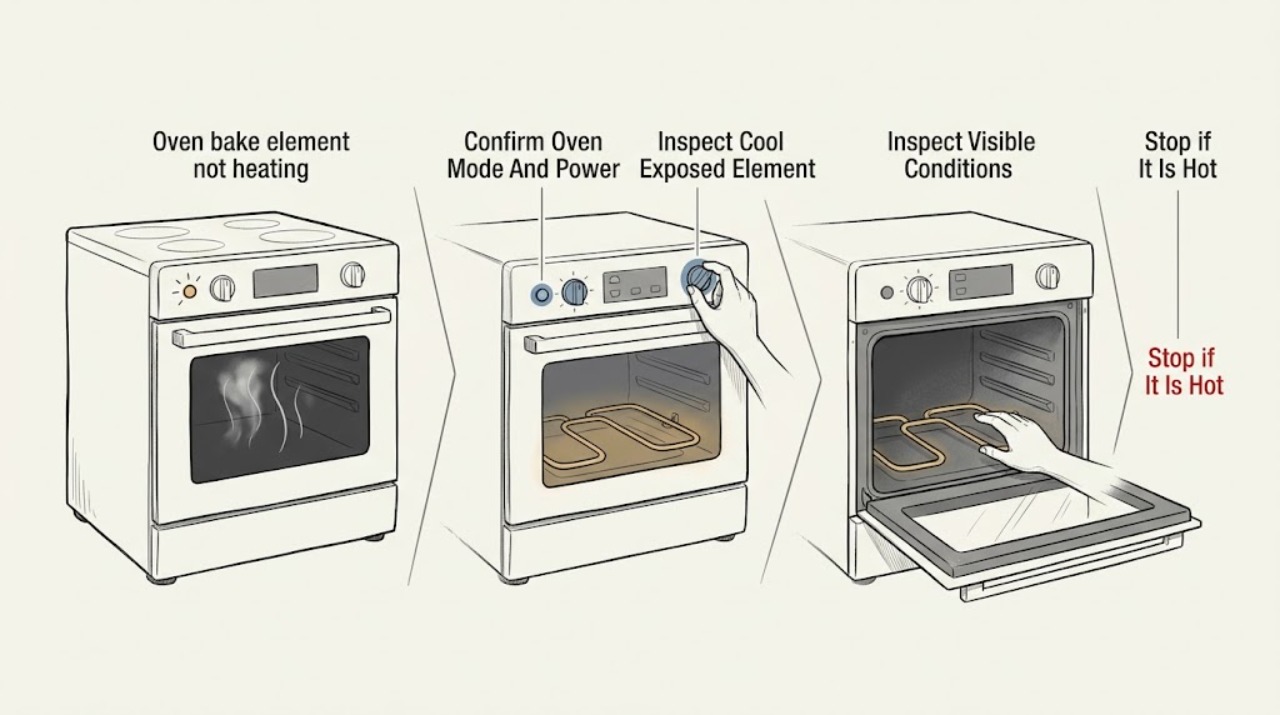
Oven bake element not heating: What to Check and What to Do Next
If an oven bake element is not heating, first confirm the Bake mode and temperature, check that the door closes, and observe from a safe position whether an exposed electric element ever activates during a normal bake request. After the oven is completely cool, look for a break, blister, hole, or severe damage without touching the element.
-
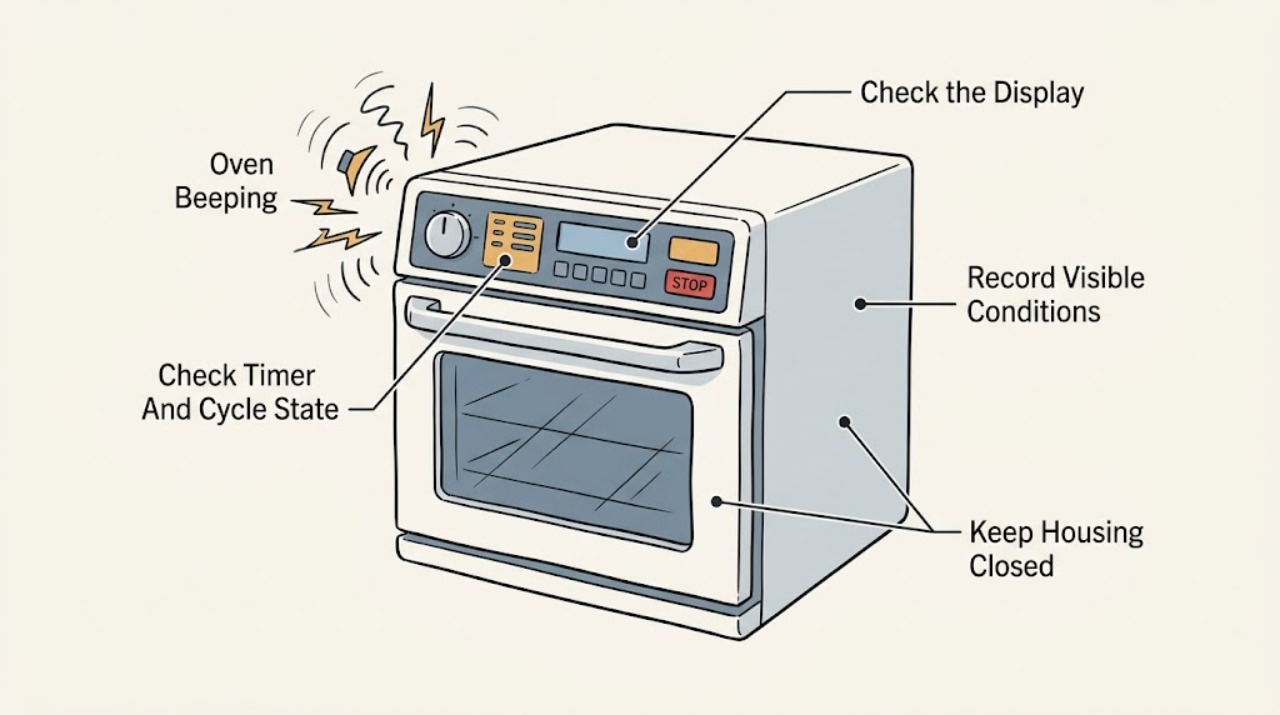
Oven Beeping: Identify Timer, Lock, Keypad, and Error Sounds
An oven that beeps may be announcing a timer or preheat/end-of-cycle event, rejecting a keypad entry, reporting a control lock, warning about a door state, or displaying a fault. Record the exact model, display text, beep pattern, and the stage when it starts: idle, while pressing a key, during preheat, at timer end, during cooking, or after the oven is turned off.
-
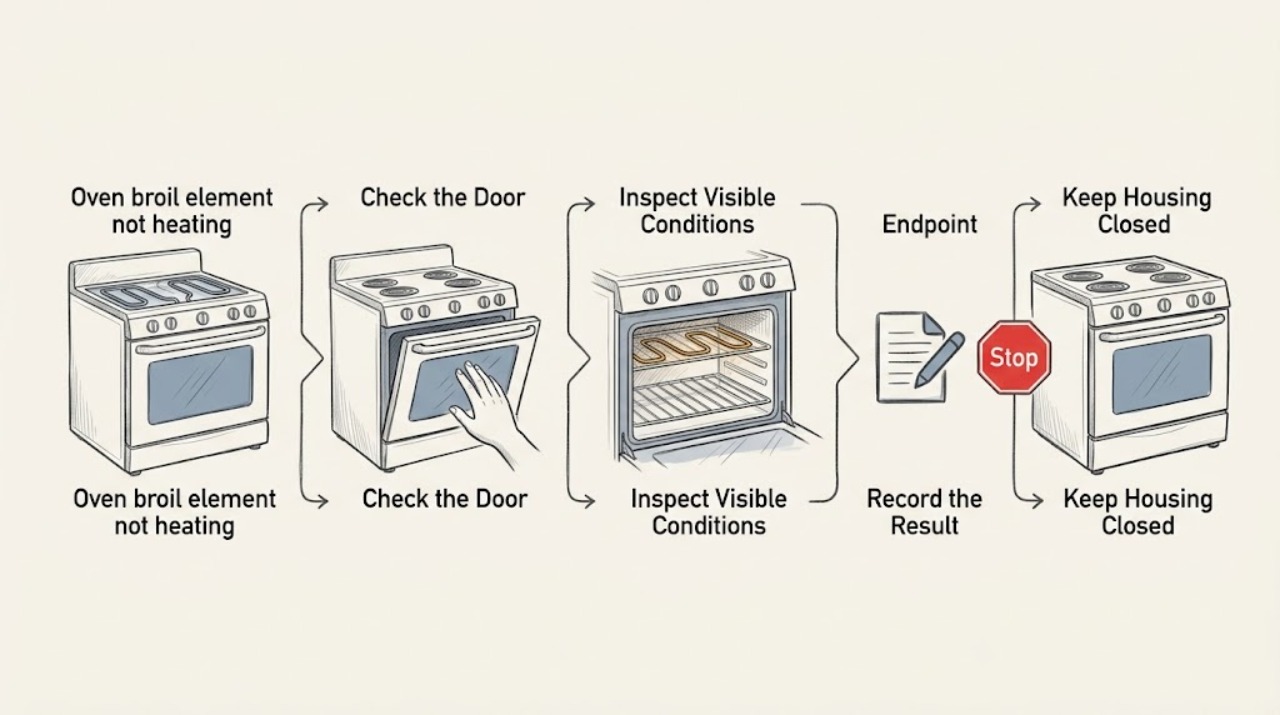
Oven broil element not heating: What to Check and What to Do Next
A broil element that appears not to heat may be operating in a cycle, may not glow even when it is producing heat, or may have a failed element, control, sensor, door-position, or power circuit. Select the exact broil mode and follow the model manual's door and start instructions; observe the upper element only after the oven is clear and without touching it.
-
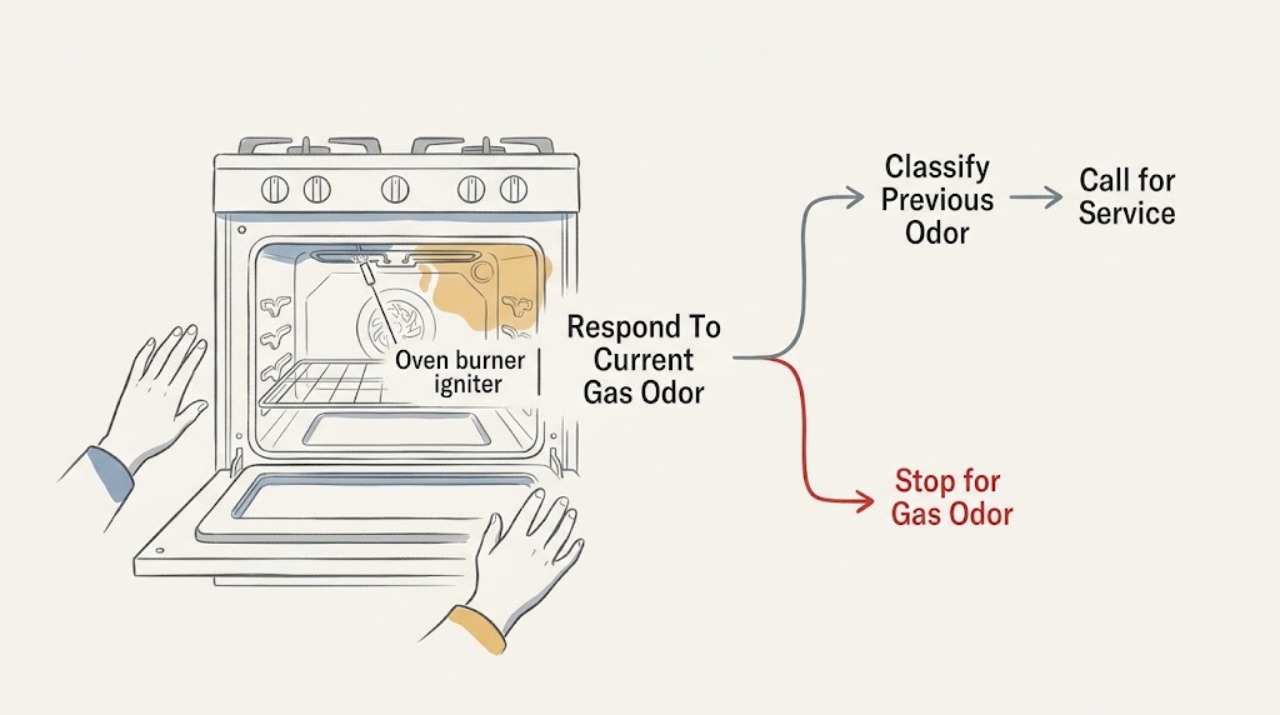
Oven burner igniter and a gas smell: What to Check and What to Do Next
A gas smell with an oven burner igniter is a safety decision before it is a repair diagnosis. If you smell unburned gas or a rotten-egg odor now, hear hissing, feel dizzy, or cannot tell whether gas is escaping, do not light the oven, touch electrical switches, use a phone inside, or move the range.
-
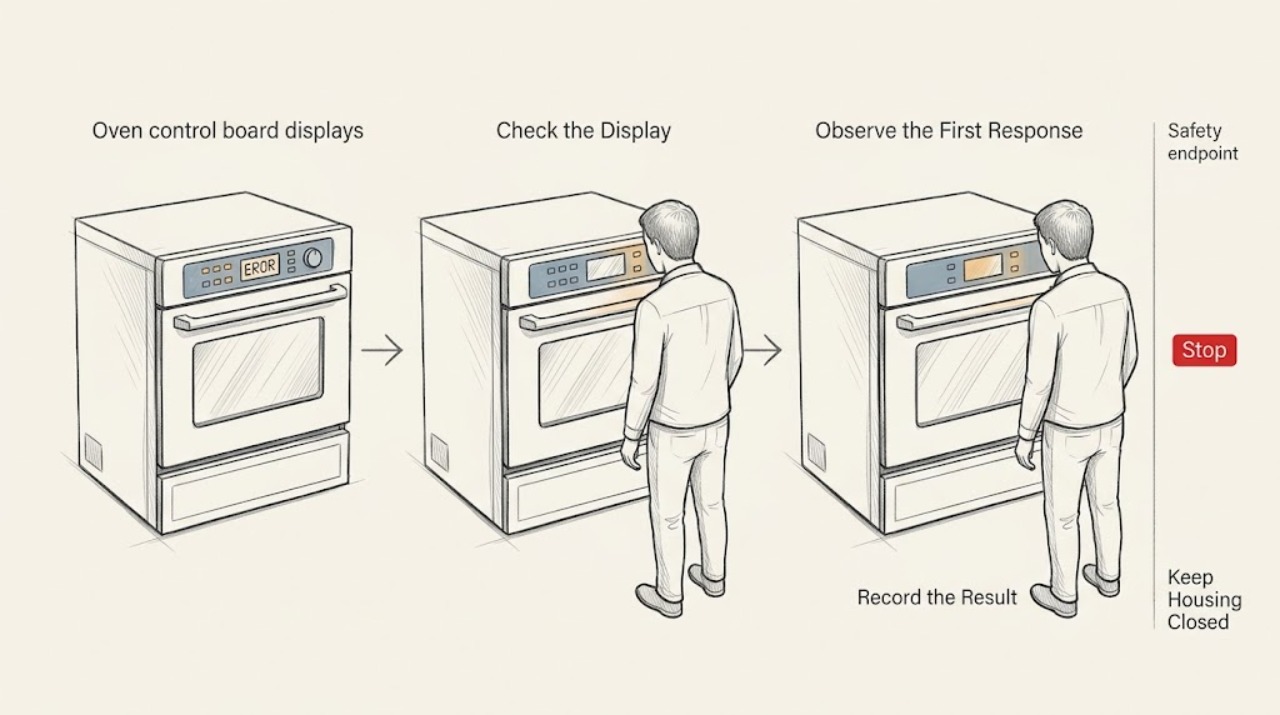
Oven control board displays an error code: What to Check and What to Do Next
An oven error code is a symptom reported by the electronic control, not proof that the control board itself has failed. Write down the complete code exactly as shown, note whether the oven heats and whether the keypad responds, and look up that code in the owner's manual for the precise model.
-
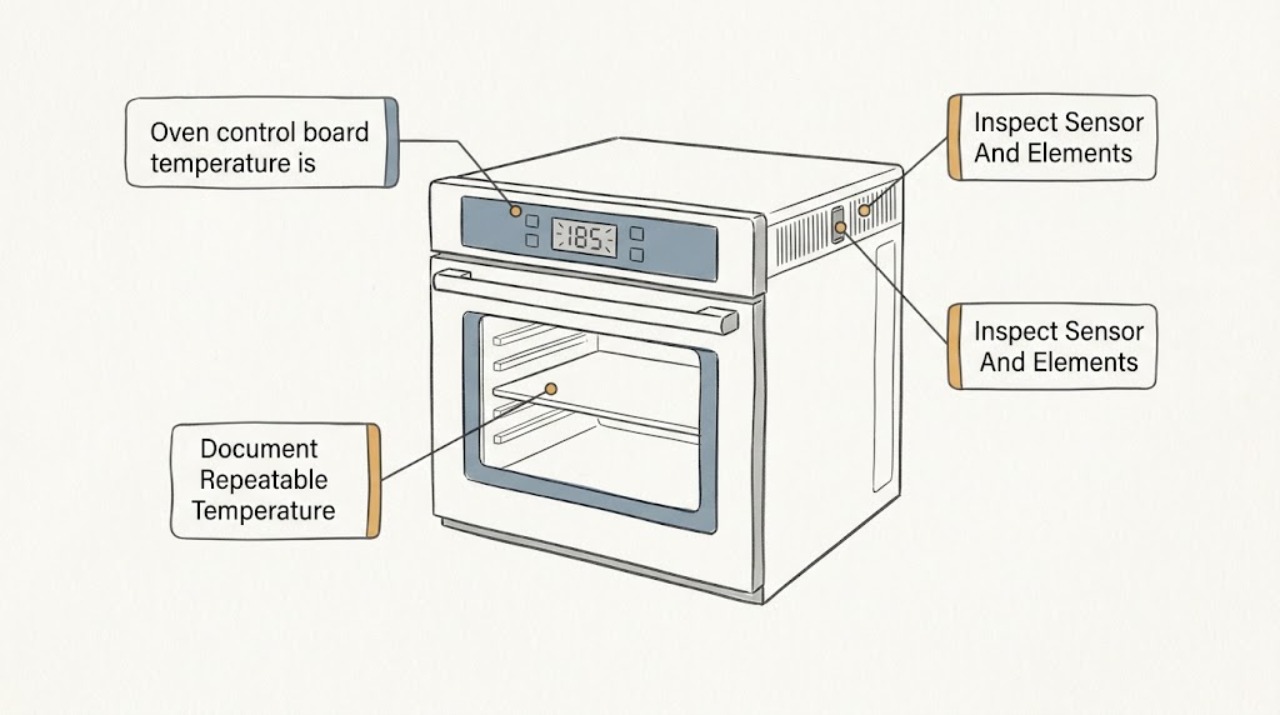
Oven control board temperature is inaccurate: What to Check and What to Do Next
An oven that appears to hold the wrong temperature is not automatically a failed control board. Ovens cycle their heating elements on and off, and readings vary with preheat, rack position, door openings, cookware, convection settings, and thermometer placement.
-
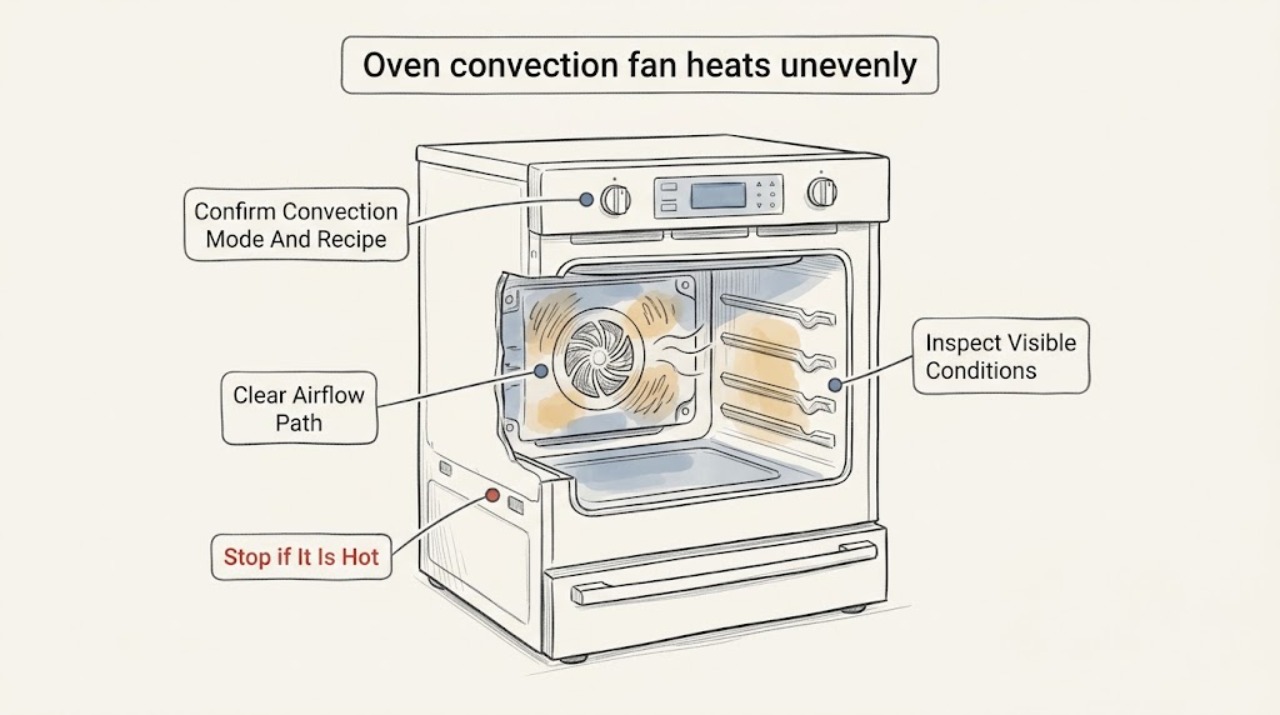
Oven convection fan heats unevenly: What to Check and What to Do Next
Uneven convection cooking does not automatically mean the fan motor has failed. First confirm that the selected mode actually uses convection, the rack and pan leave space for air to circulate, the food is not blocking the rear fan area, and the door is not being opened repeatedly.
-
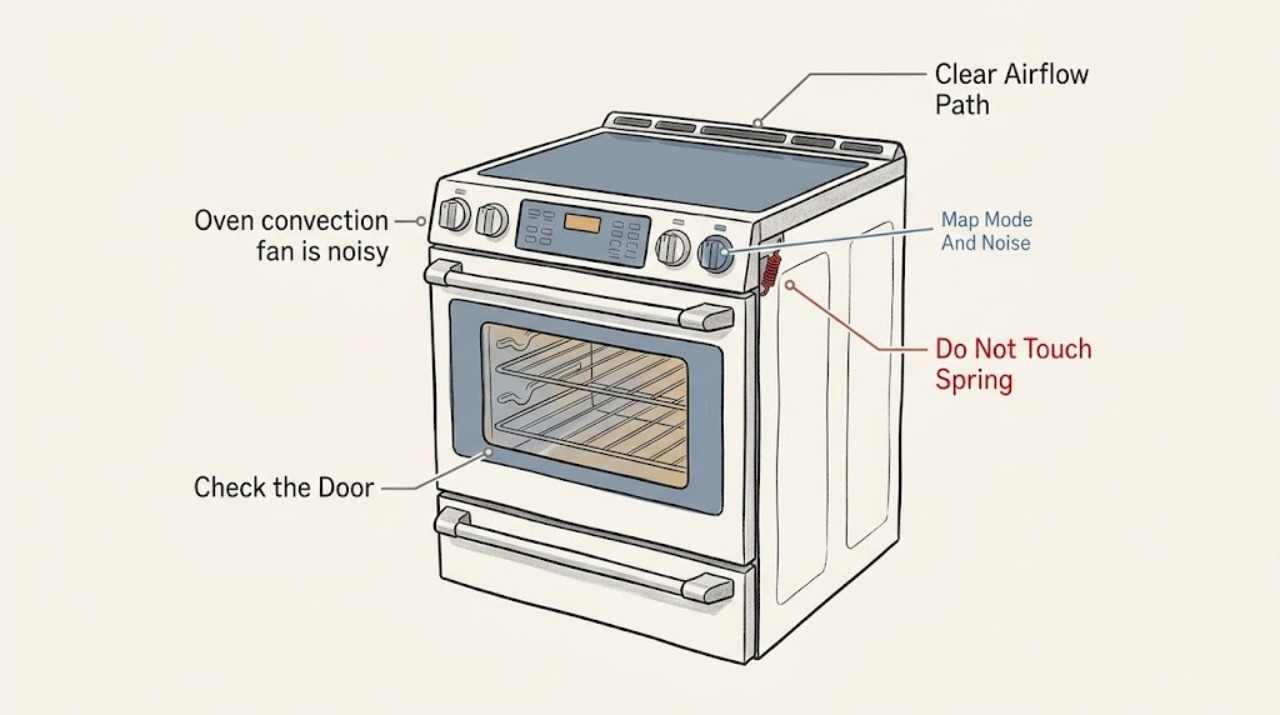
Oven convection fan is noisy and the noise occurs in convection mode: What to Check and What to Do Next
A convection fan can be audible by design, and some ovens run or cycle it during preheat or even during non-convection functions. First capture when the sound occurs: a smooth air-moving hum that follows the selected mode may be normal, while rubbing, metal-on-metal scraping, harsh rattling, or a fan that runs with the door open is not.
-
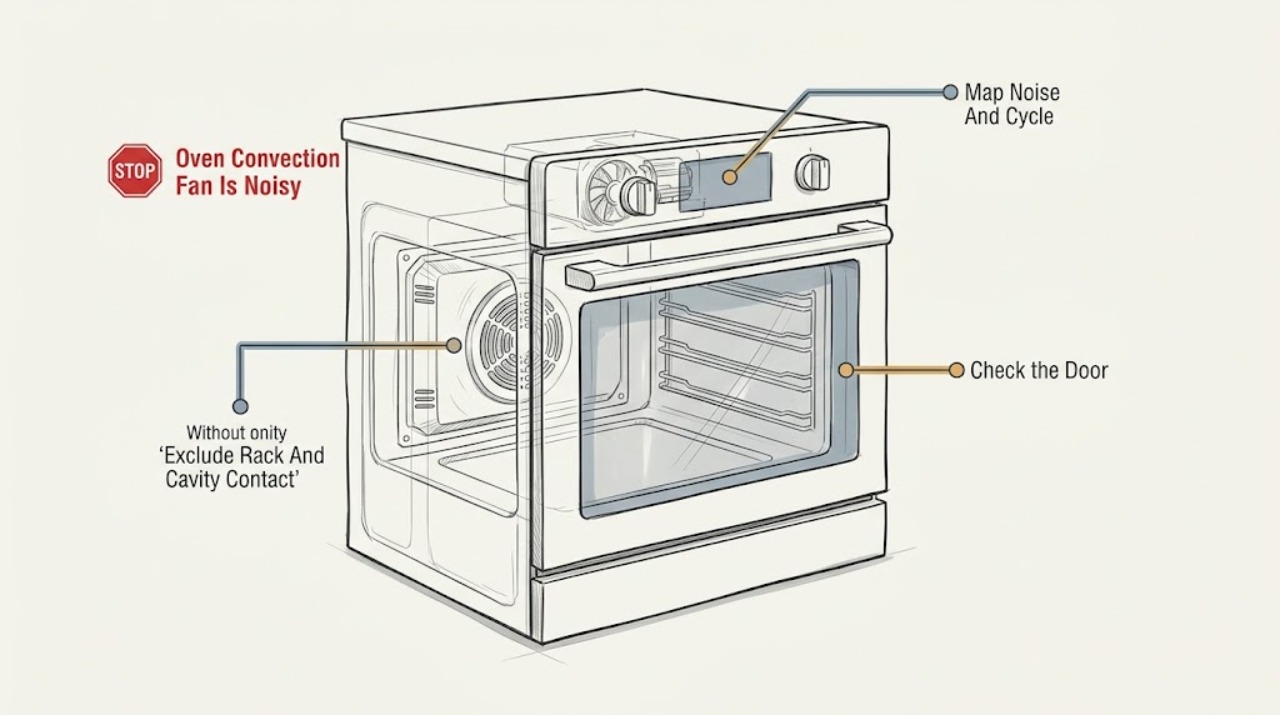
Oven Convection Fan Is Noisy, No Loose Rack: What to Check and What to Do Next
If an oven's convection fan is noisy and no rack is loose, first determine whether the sound is a normal fan or cooling-fan sound or a new rubbing, scraping, grinding, or strong vibration. Convection fans may run during preheat and some non-convection cycles, and a cooling fan may continue after cooking.
-
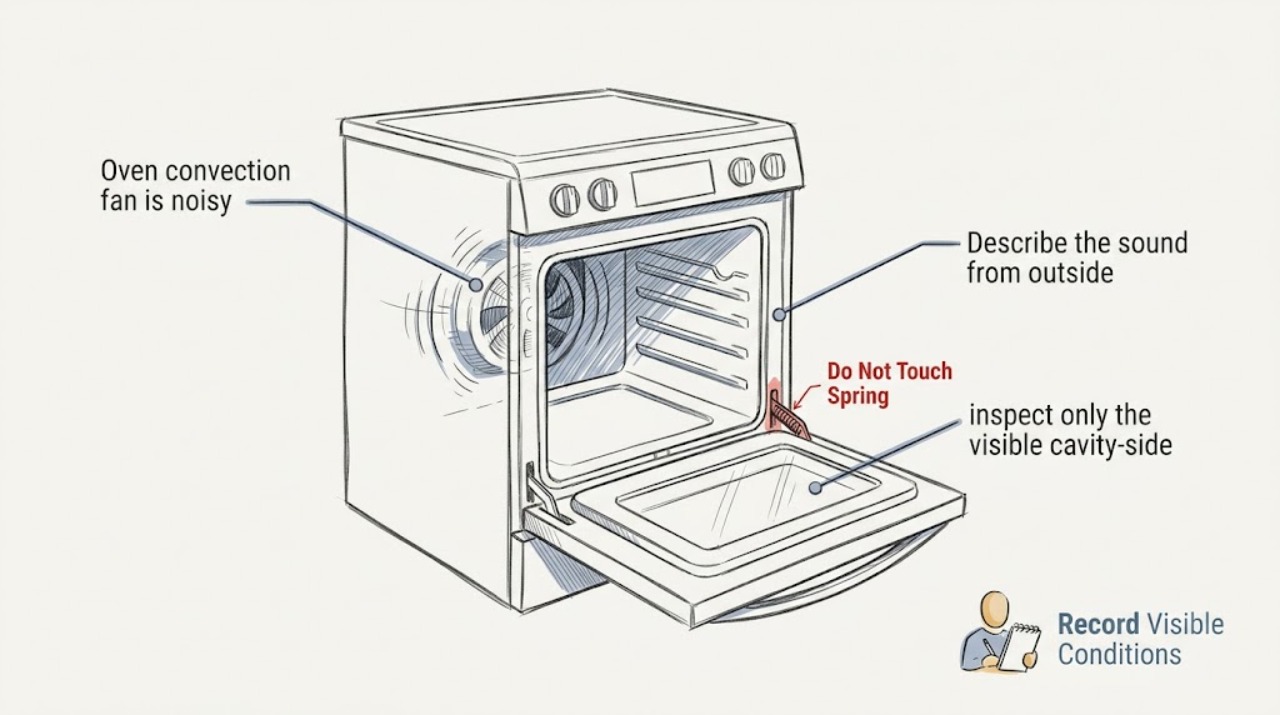
Oven convection fan is noisy: What to Check and What to Do Next
A light airflow hum or a fan that cycles during preheat can be normal, but grinding, rubbing, metal-on-metal, scraping, or a new rattle is not a normal convection-fan sound. Stop using the affected oven function, let the oven cool completely, and arrange appliance service.
-
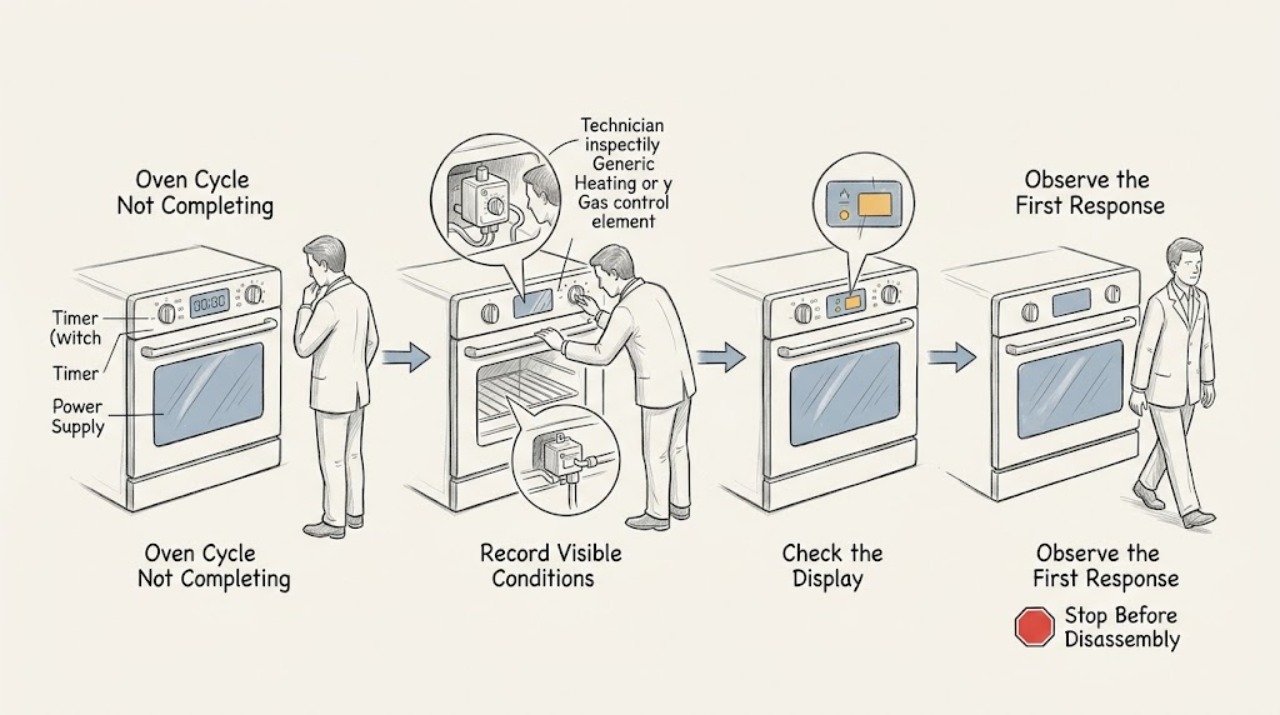
Oven Cycle Not Completing
An oven cycle that does not complete can be a setting or state issue, a normal cooling or door-lock delay, or a fault that stops the cycle. First note exactly where it stops: before starting, during delay, during preheat, while baking, during self-clean, or after the timer reaches its end.
-
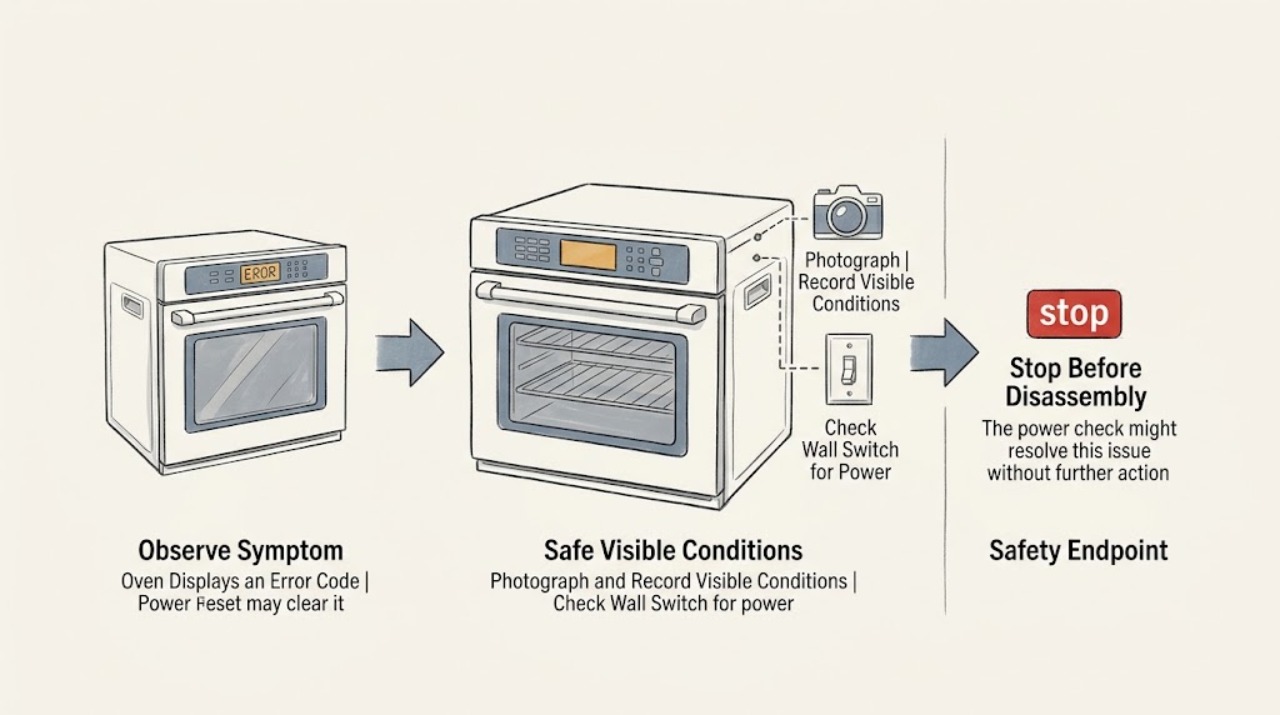
Oven Displays an Error Code and a Power Reset May Clear It: What to Check Next
A power reset can clear a temporary oven control fault, but it does not prove the underlying problem is fixed. Before switching power off, photograph the complete code, note whether the oven was heating, self-cleaning, or recovering from an outage, and find the exact model manual.
-
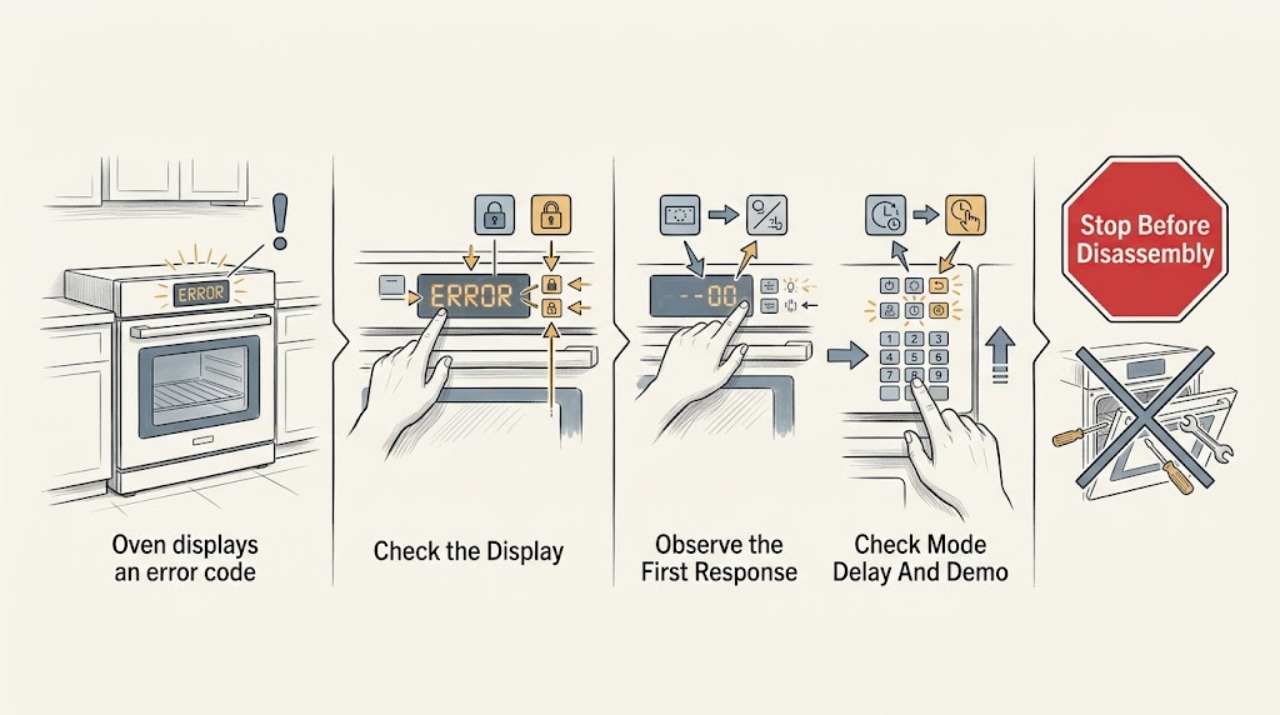
Oven displays an error code and may be locked: What to Check and What to Do Next
An oven message that looks like an error code may instead be a control-lock or door-lock status, but a code cannot be decoded safely without the exact model and display text. Photograph the full message, lock icon, and any flashing indicators, and note whether the oven is hot, in self-clean, delayed start, demo mode, or recovering from a power outage.
-
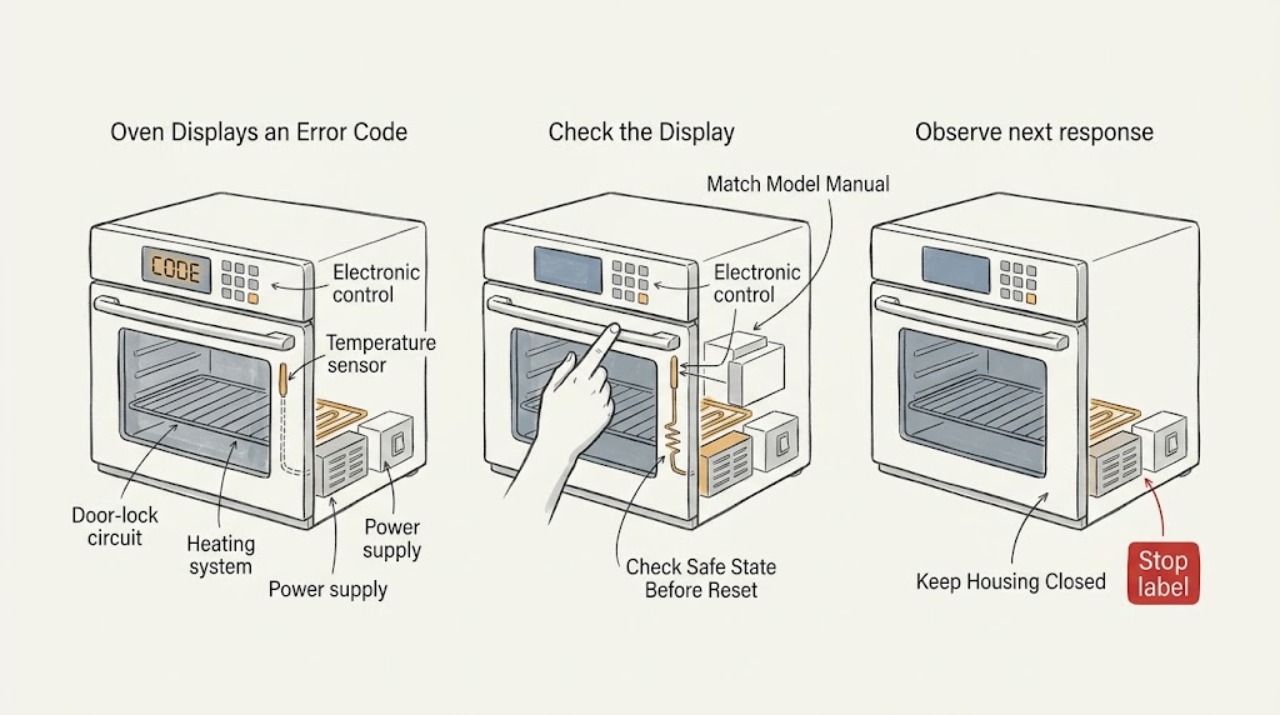
Oven Displays an Error Code: Code Appears on Display—What to Check and What to Do Next
An oven code is a symptom, not a universal diagnosis: the same-looking code can mean different things on different models. Photograph the complete display, note when it appeared and whether the oven is hot, locked, heating, or accompanied by odor or smoke, then use the exact model's owner manual or manufacturer code guide.
-
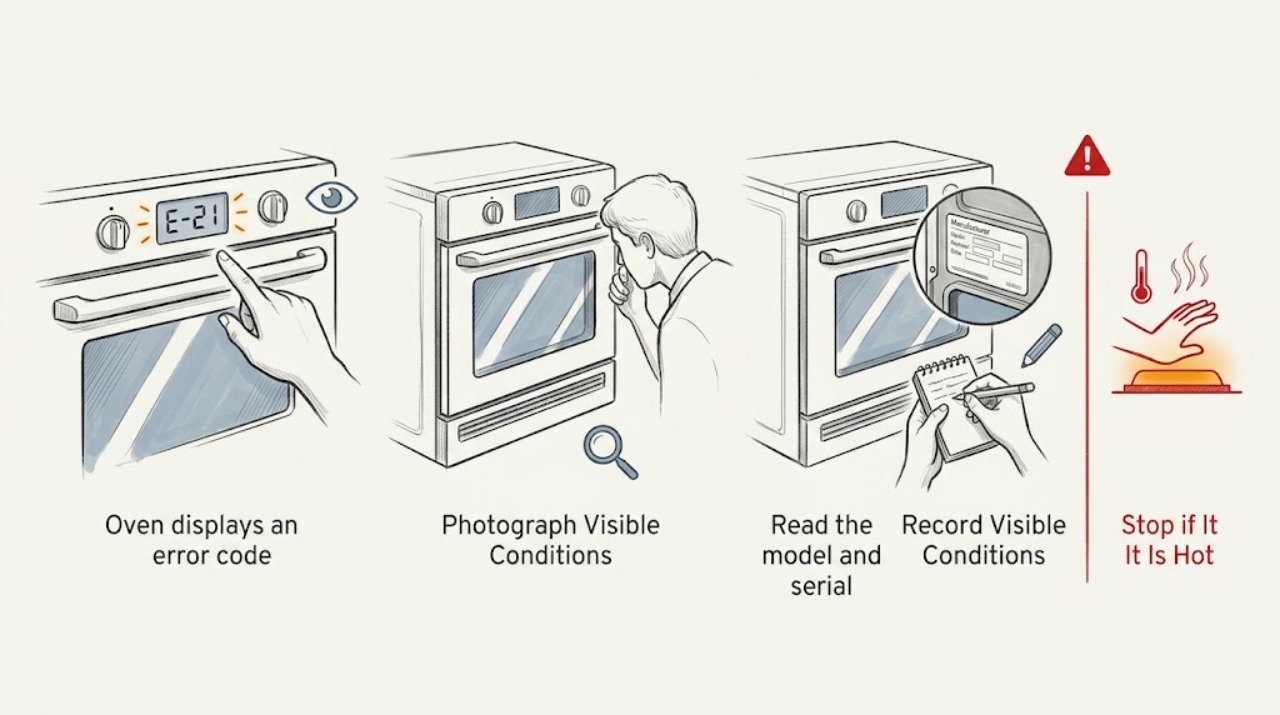
Oven displays an error code: What to Check and What to Do Next
Do not guess what an oven code means or keep cycling power to make it disappear. Photograph and transcribe the complete display, record the oven's exact model and what was happening when the code appeared, then use the documentation for that model or arrange appliance service.
-
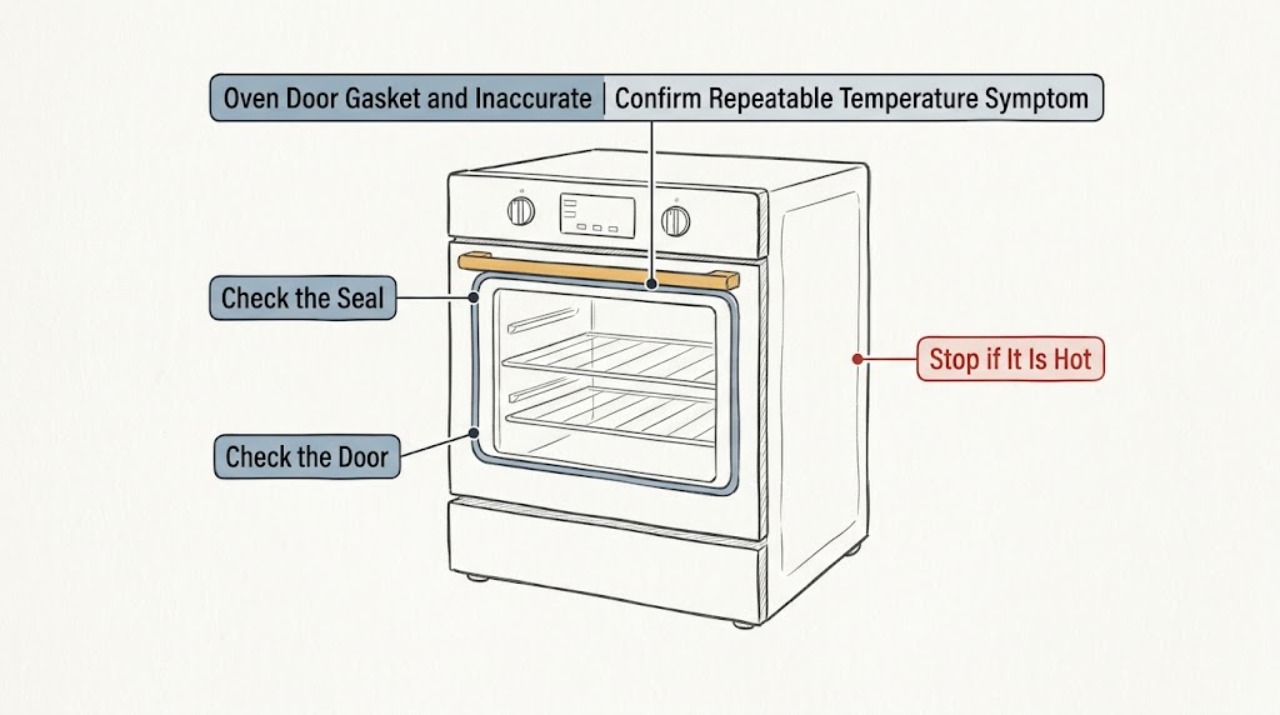
Oven Door Gasket and Inaccurate Temperature: What to Check and What to Do Next
A damaged or displaced oven door gasket can let heat escape and make an oven struggle to reach or hold temperature, but a temperature that seems inaccurate is not automatically a gasket failure. Ovens normally cycle above and below the set temperature, and readings change with rack position, pan placement, door openings, preheat time, and thermometer location.
-
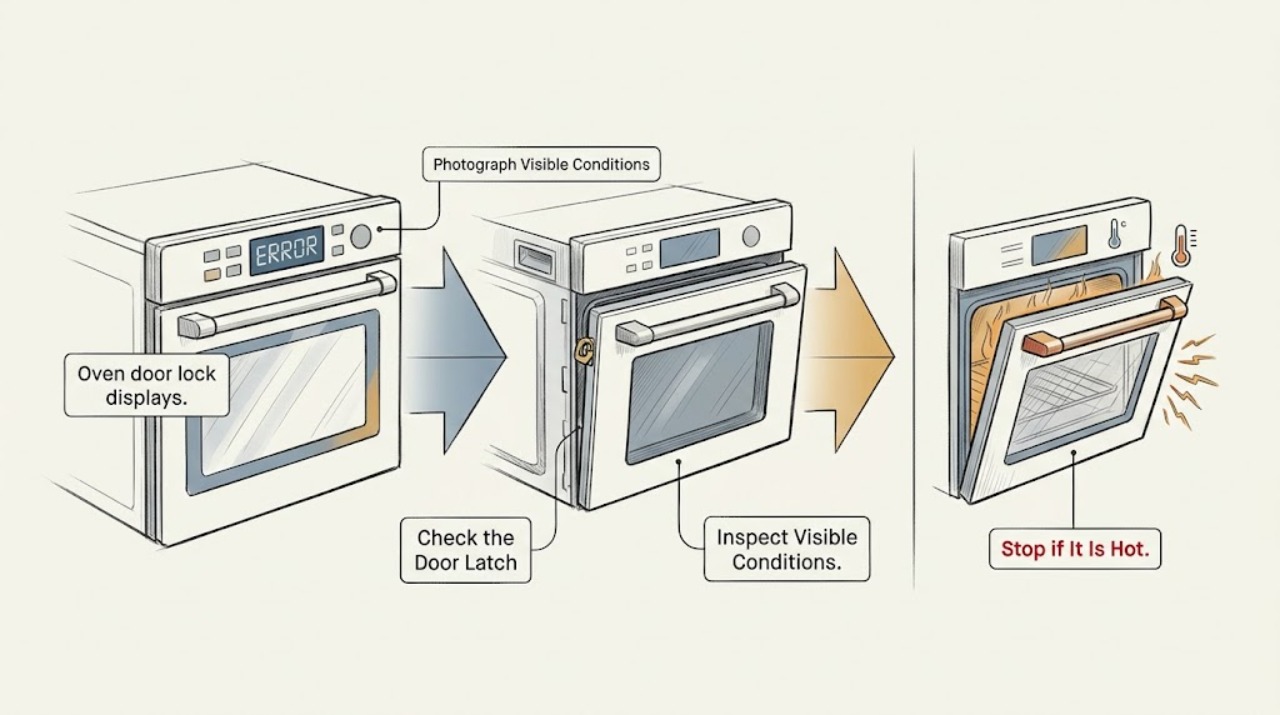
Oven door lock displays an error code: What to Check and What to Do Next
An oven door-lock error code is model-specific: it may reflect a hot or intentionally locked oven, a latch or door-switch position problem, wiring, or a control fault. Record the exact code and model, let the oven cool, and check that no self-clean cycle or control-lock feature is active.
-
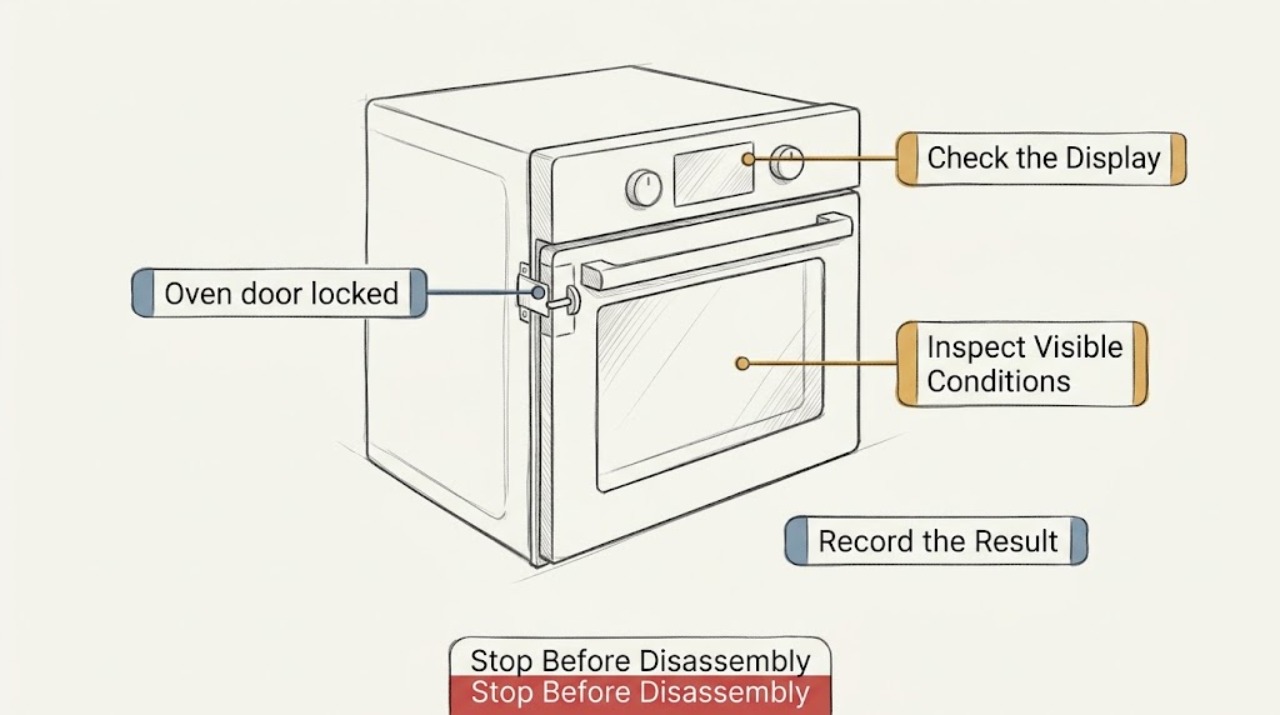
Oven door locked: safe checks before service
An oven door can remain locked normally during a self-clean cycle and while the cavity is still hot. Do not pull, pry, or bypass the latch.
-
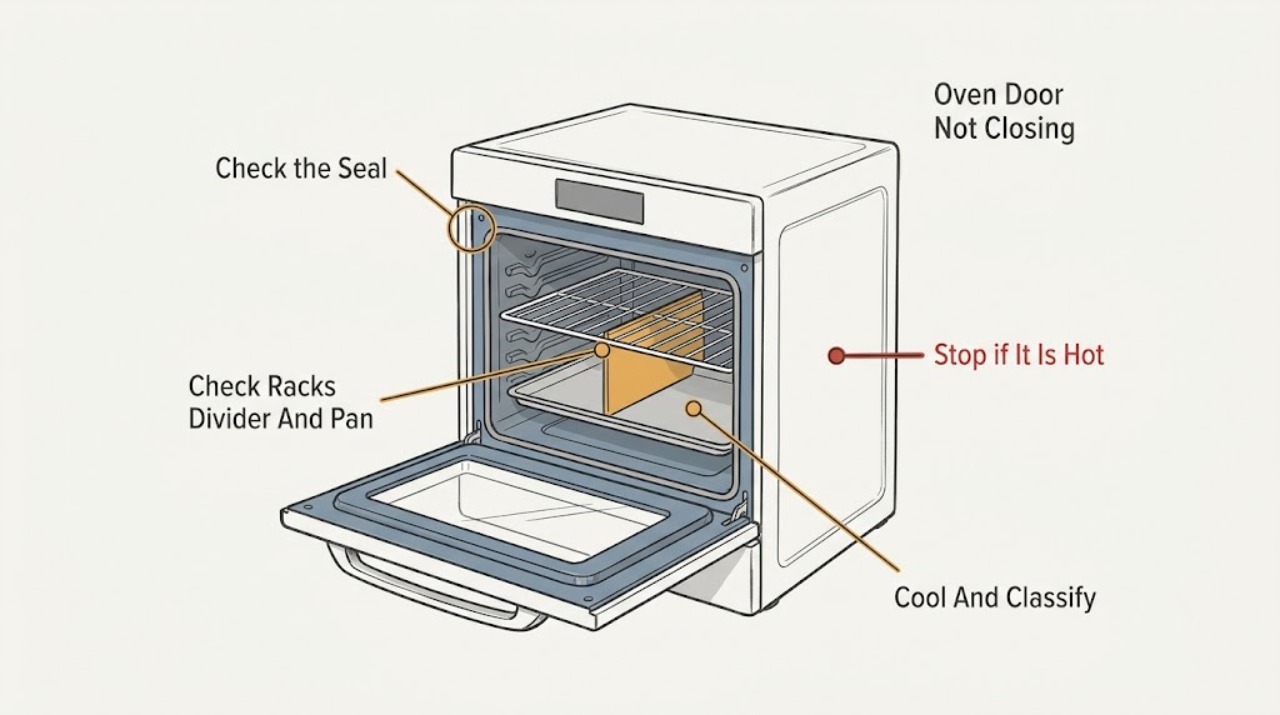
Oven Door Not Closing: Find the Block, Latch, or Hinge Problem Safely
If an oven door will not close, first stop using the oven and let it cool completely. With the appliance cool, remove or reposition only an obvious rack, divider, pan, or other obstruction and check that the door sits evenly in its hinges.
-
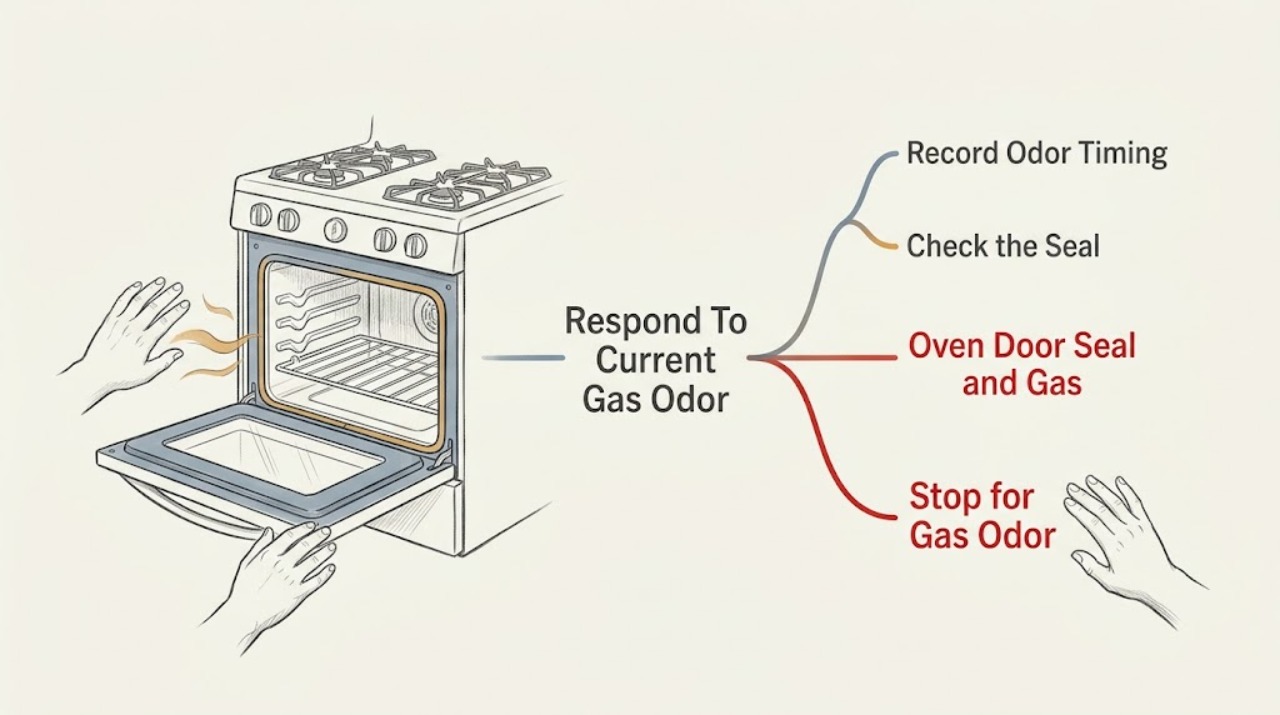
Oven Door Seal and Gas Smell: What to Check and What to Do Next
A gas smell at an oven door seal is not proof that the seal is the gas leak, because odor can travel from the burner, igniter, gas connection, vent, or another appliance. If you smell unburned gas now, do not troubleshoot or relight the oven: leave the building, avoid switches, flames, phones, and vehicles in the area, and call 911 or your gas utility from a safe location.
-
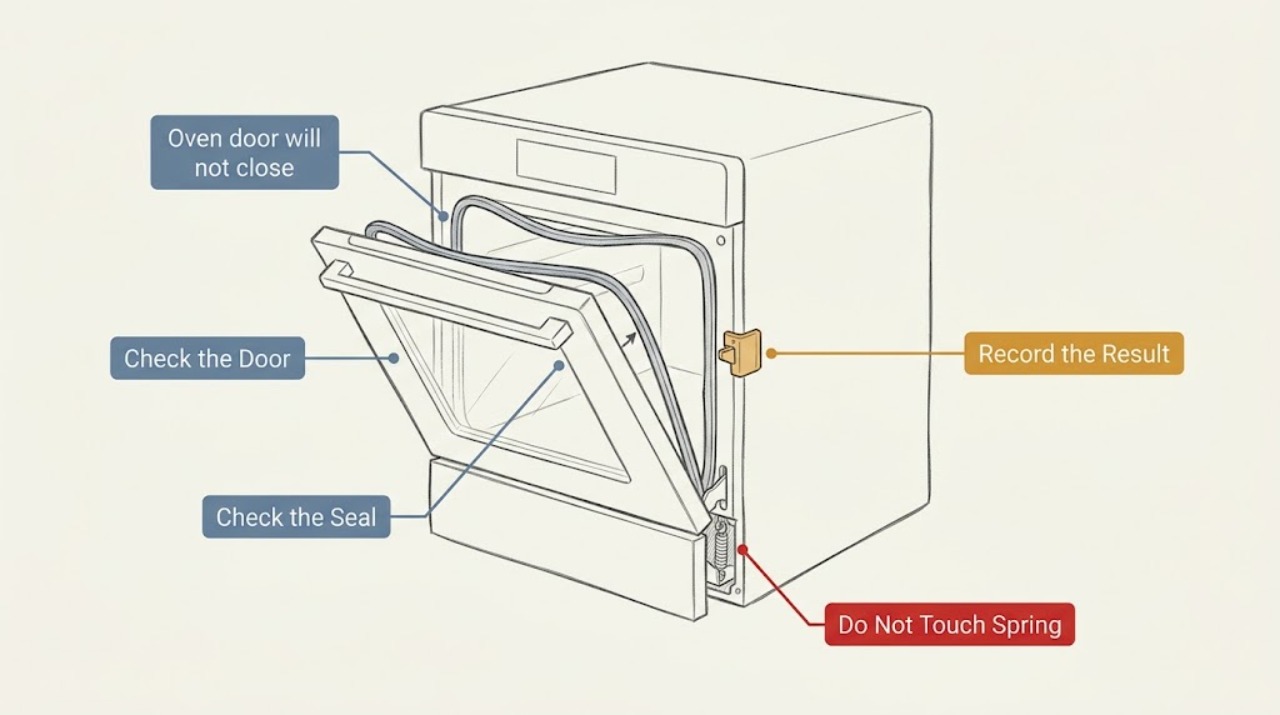
Oven door will not close gasket is displaced: What to Check and What to Do Next
Stop using the oven until it is cool and the door can close without force. Look for a rack, pan, latch, hinge, or trim obstruction, then inspect the gasket from the side and bottom without rubbing, wetting, pulling, or trying to stretch it.
-
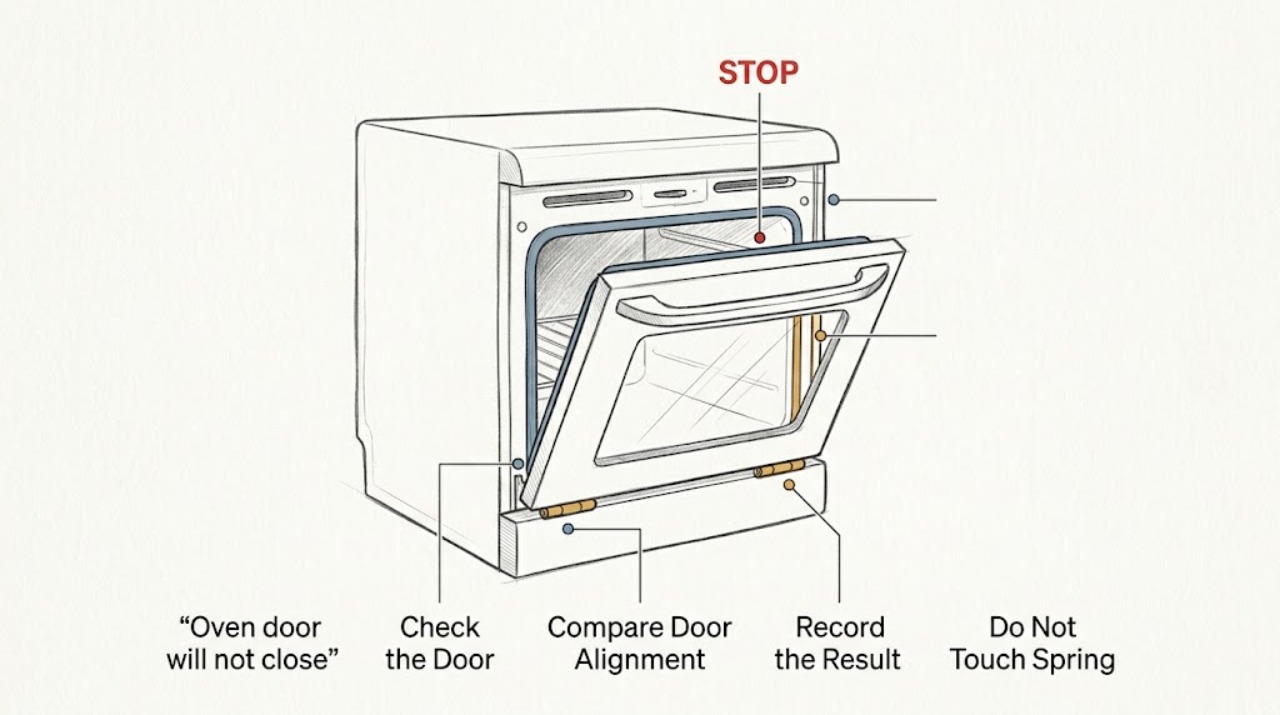
Oven door will not close is misaligned: What to Check and What to Do Next
An oven door that will not close because it is misaligned usually has an obstruction, a hinge that is not fully seated, a bent latch, a damaged gasket, or a door or frame that has shifted. Turn the oven off, let it cool completely, and do not use it while the door cannot seal.
-
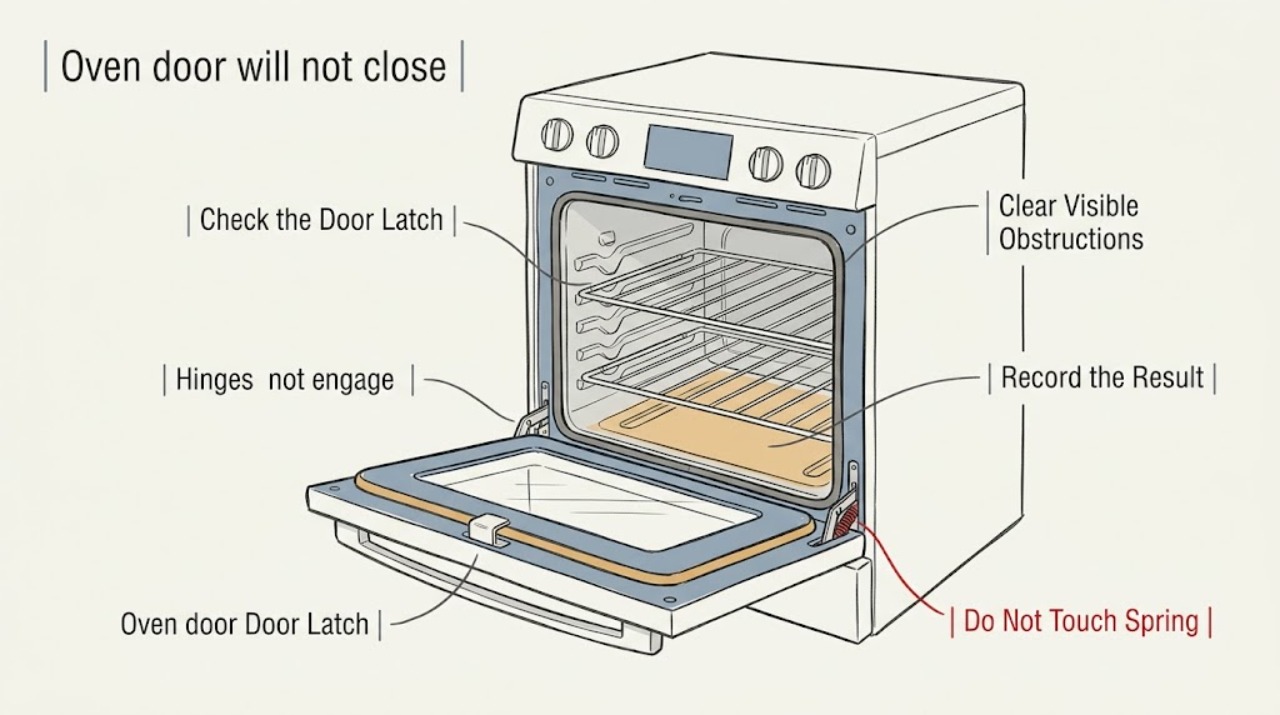
Oven door will not close, latch does not engage: What to Check and What to Do Next
If an oven door will not close and the latch does not engage, first let the oven cool completely and remove any rack, pan, foil, or debris that could hold the door open. Check whether the latch arm is already extended or bent, inspect the gasket and frame for an obstruction, and compare the door alignment and hinge position from both sides.
-
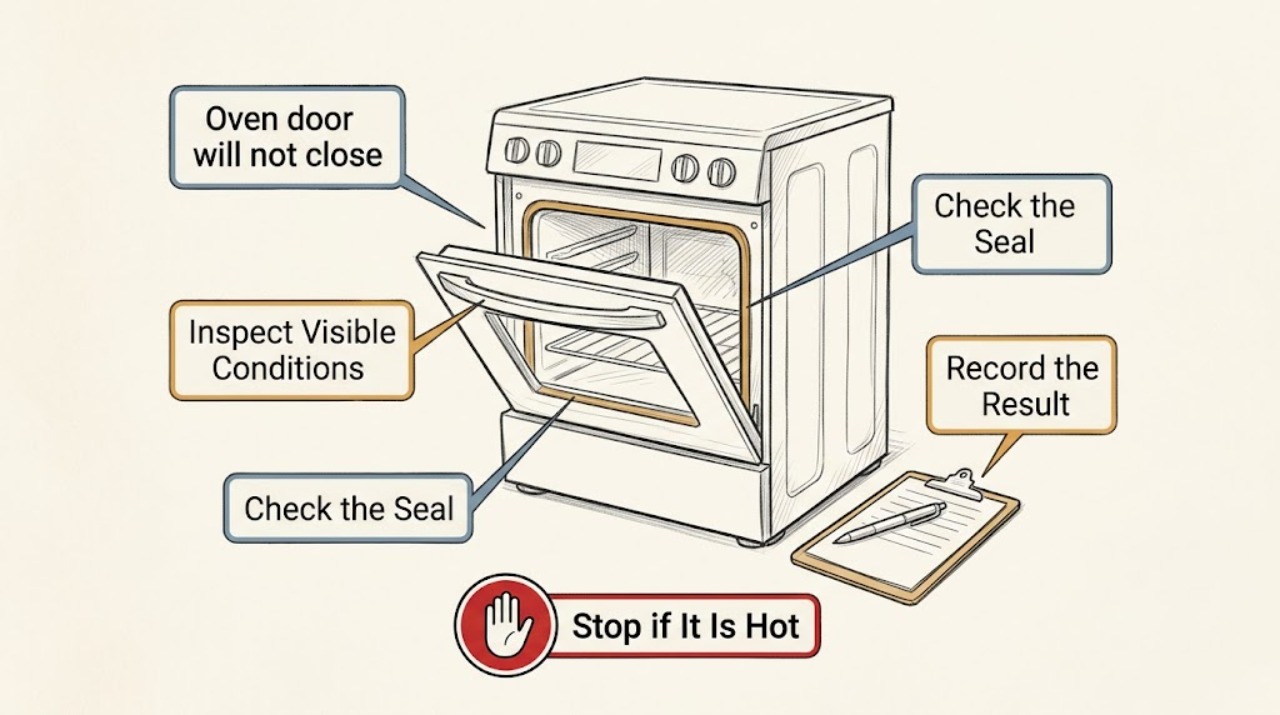
Oven door will not close: What to Check and What to Do Next
Keep the oven off and do not use it until the door closes and latches normally. Once the oven is fully cool, observe the door gap, frame, gasket, visible latch, hinges, racks, and cavity for an obstruction or misalignment without forcing the door, removing hinge hardware, or using the appliance with the door ajar. A crooked door, bent latch, damaged gasket, loose glass, or one side sitting lower needs model-specific service rather than pressure or a guessed adjustment.
-
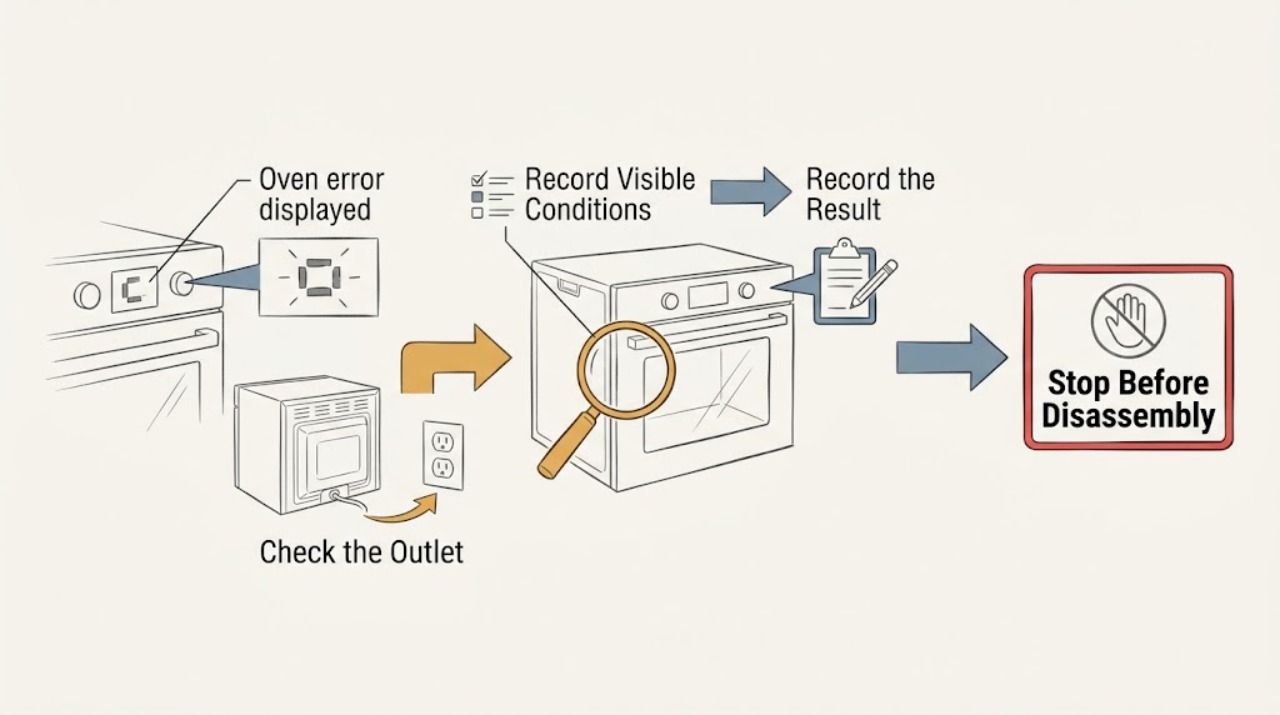
Oven error displayed: record the code before resetting
Do not apply a generic meaning to an oven error display. Photograph or write the complete code, symbols, model, fuel type, operating mode, and moment it appeared before clearing anything.
-
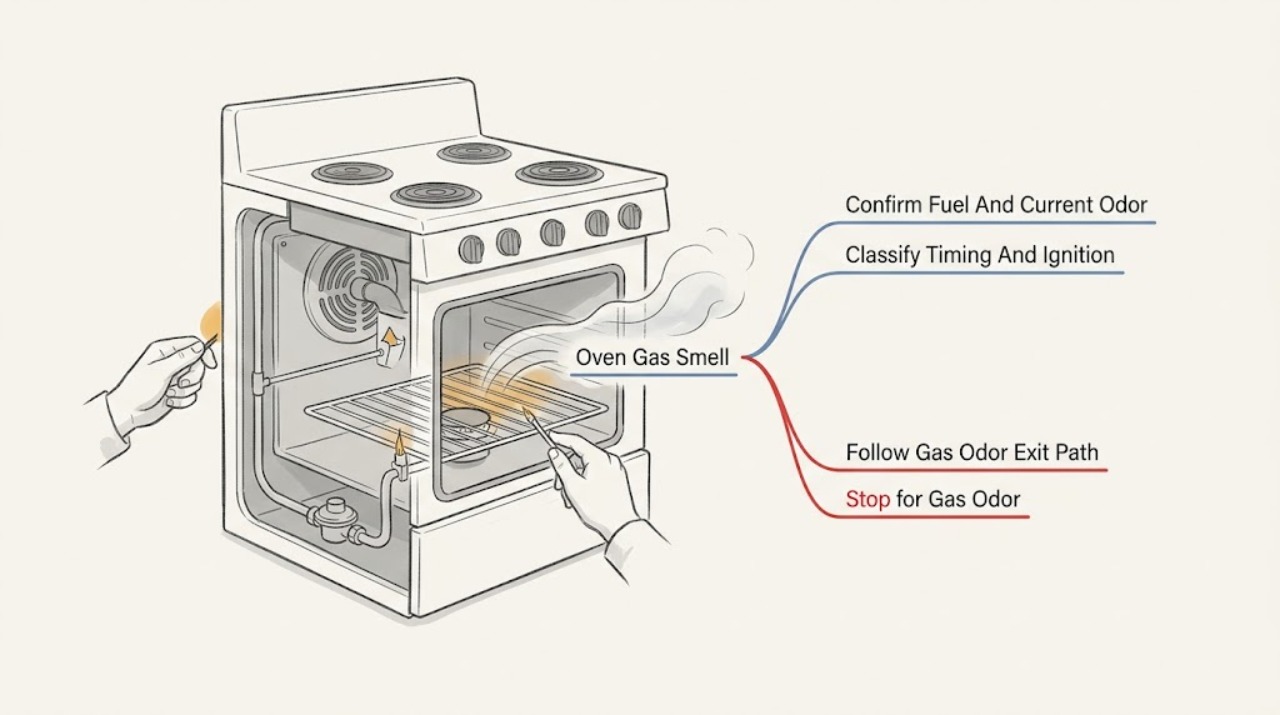
Oven Gas Smell: Confirm the Fuel Type and Follow the Safe Exit Path
Treat an oven gas smell as a possible gas leak until a qualified professional establishes otherwise. If odor is present now, do not light the oven, operate lights or other electrical controls, search for the leak, move the appliance, or repeat an ignition attempt: leave immediately and contact local gas authorities or emergency services from outside.
-
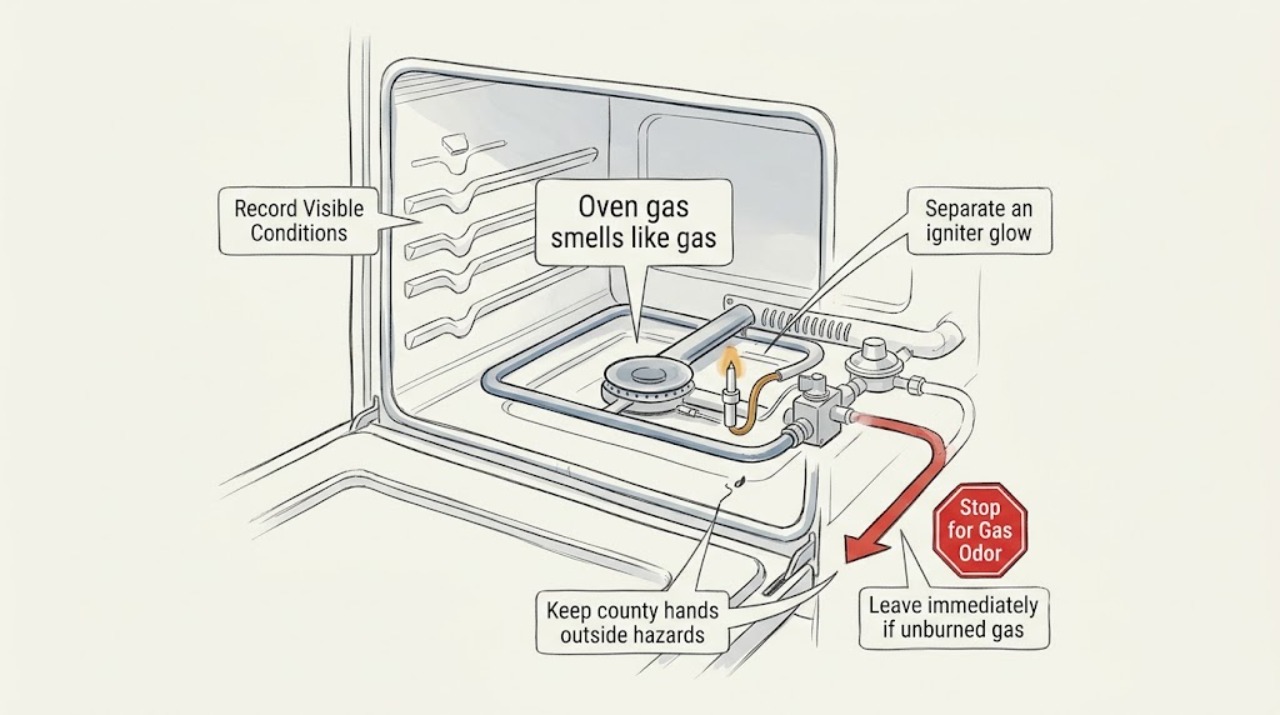
Oven gas smells like gas flame is absent or abnormal: What to Check and What to Do Next
Treat a gas smell from an oven with no flame, a flame that repeatedly goes out, or an abnormal flame as a safety issue until a qualified professional clears it. Do not relight the oven, use a match, touch electrical switches, use a phone inside, or keep testing; leave the building and call the gas supplier or emergency services from outside or a neighbor's location.
-
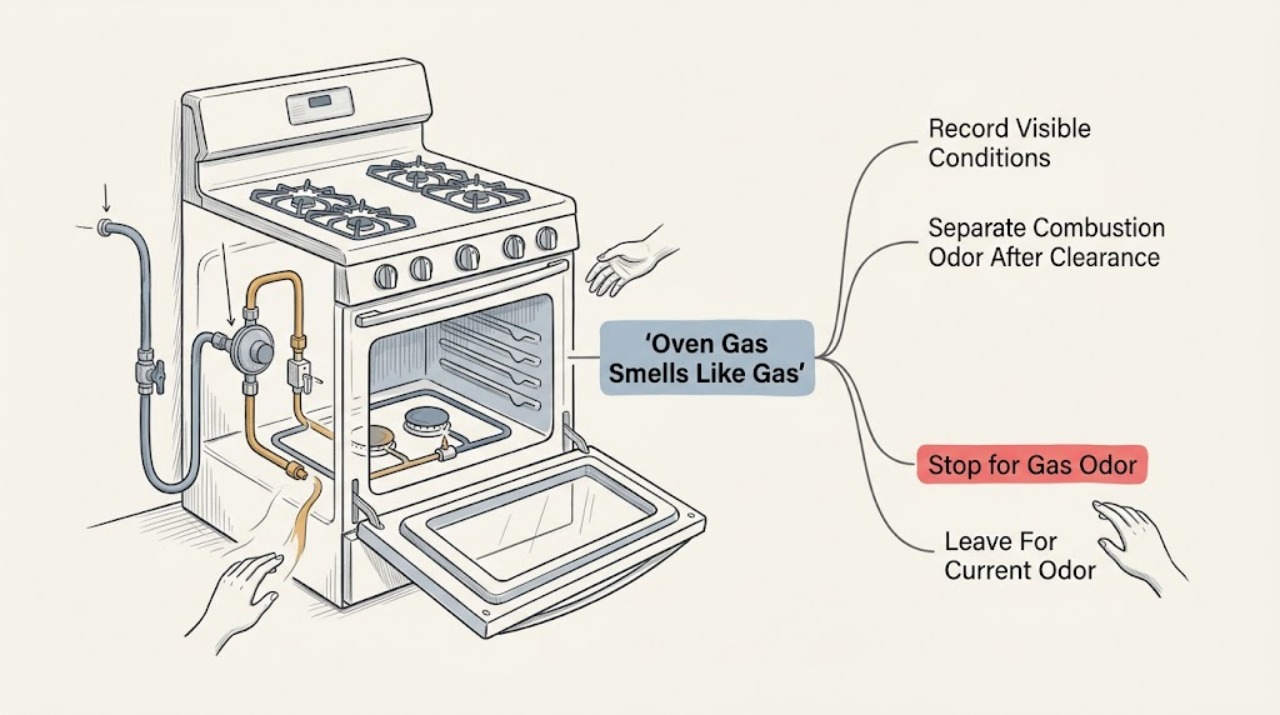
Oven Gas Smells Like Gas Before Ignition: What to Check and What to Do Next
A gas smell before the oven burner ignites is not a routine troubleshooting symptom. Stop trying to ignite the oven, do not operate lights, switches, controls, or other electrical equipment near the odor, and leave the home or affected area immediately.
-
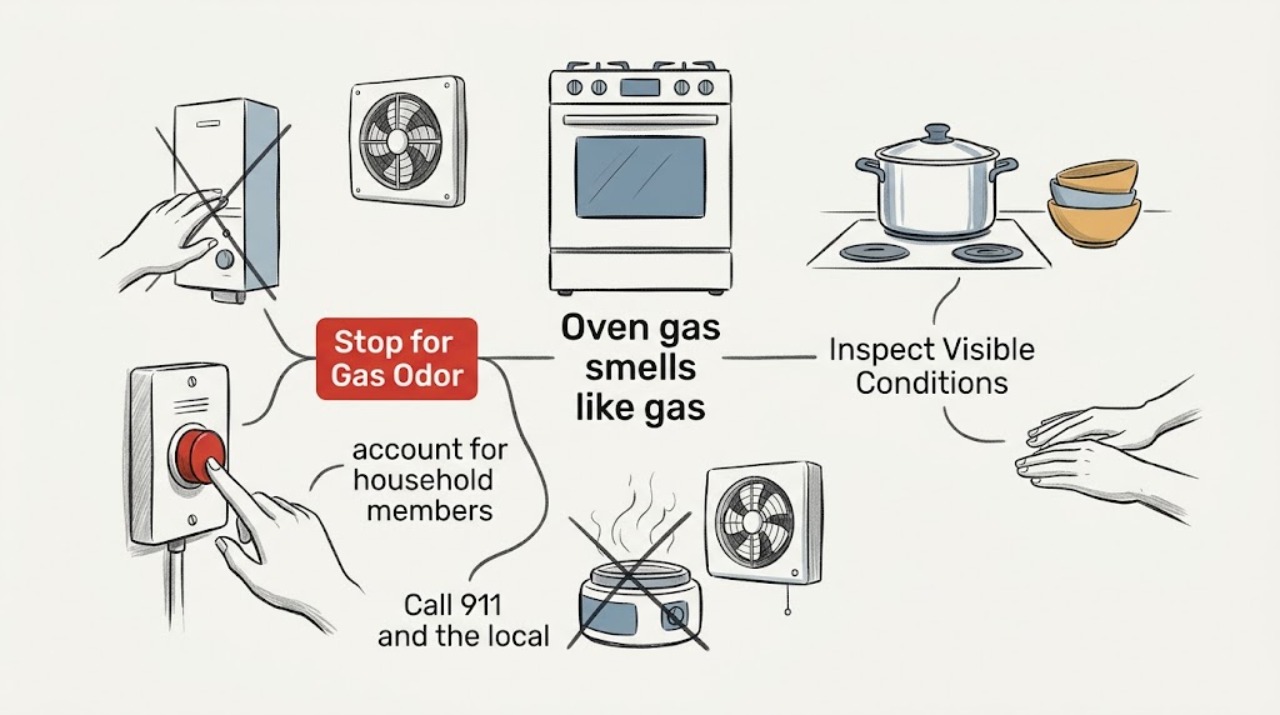
Oven gas smells like gas: What to Check and What to Do Next
Treat any unexpected gas odor from an oven or range as a possible gas leak. Do not keep using the oven, relight a burner, open the appliance, search for the source, operate switches, use a phone inside, or attempt a gas-part repair.
-
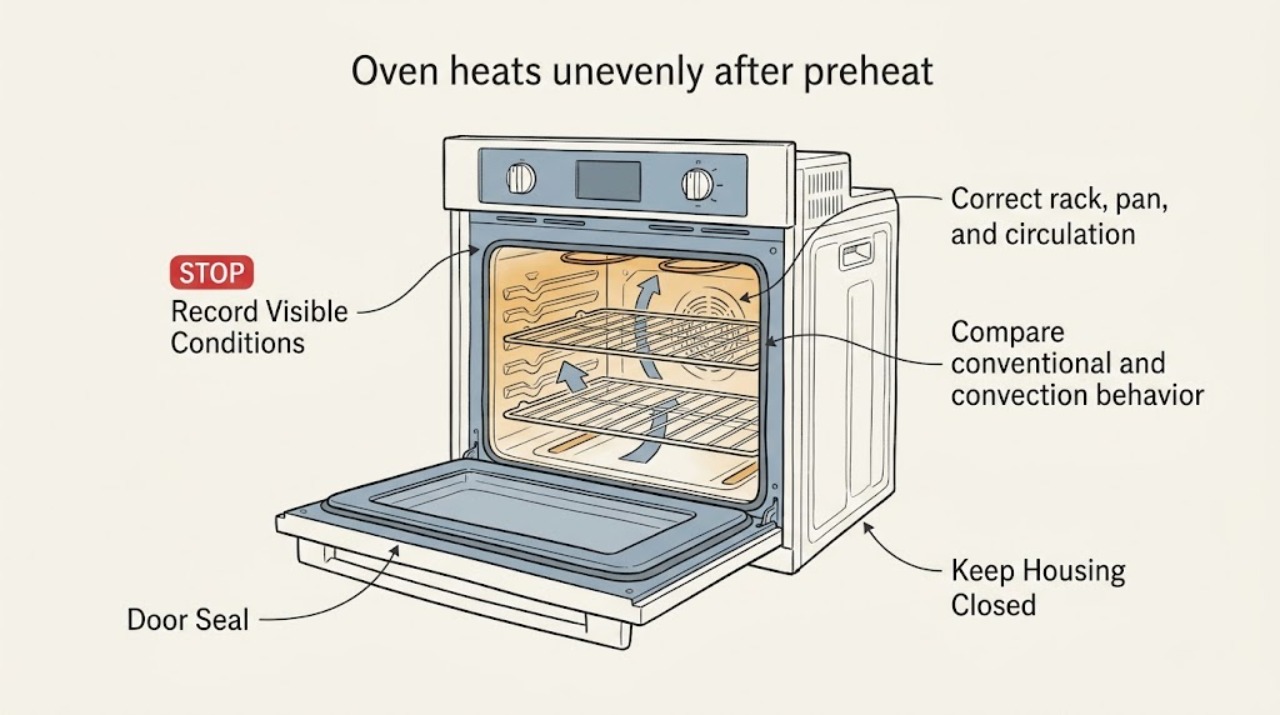
Oven heats unevenly after preheat completes: What to Check and What to Do Next
When an oven says preheat is complete but food still cooks unevenly, first separate a pan or rack effect from an oven fault. Use the recipe's intended mode and rack, a suitable pan with clear airflow, and one controlled bake test without repeatedly opening the door.
-
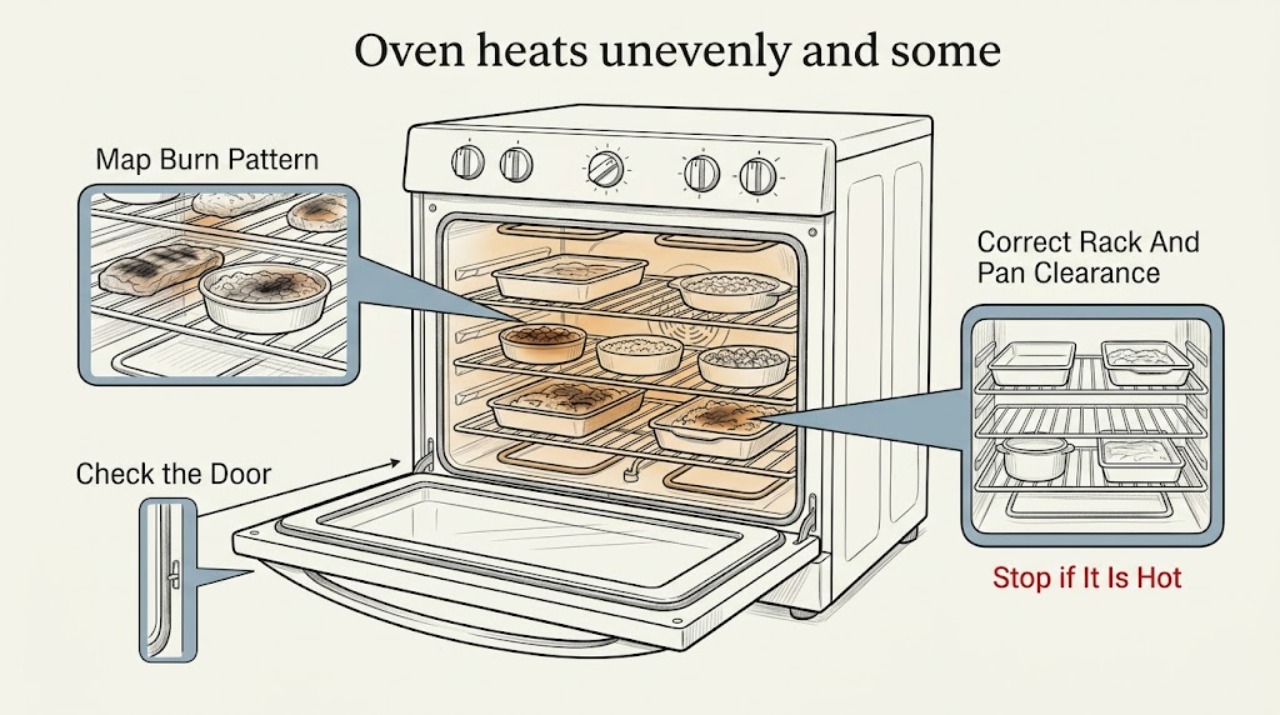
Oven heats unevenly and some foods burn: What to Check and What to Do Next
Some burned food with undercooked or pale food elsewhere does not automatically mean a failed oven. First record the mode, rack, pan, food position, and whether the browning is top, bottom, edge, or one-sided.
-
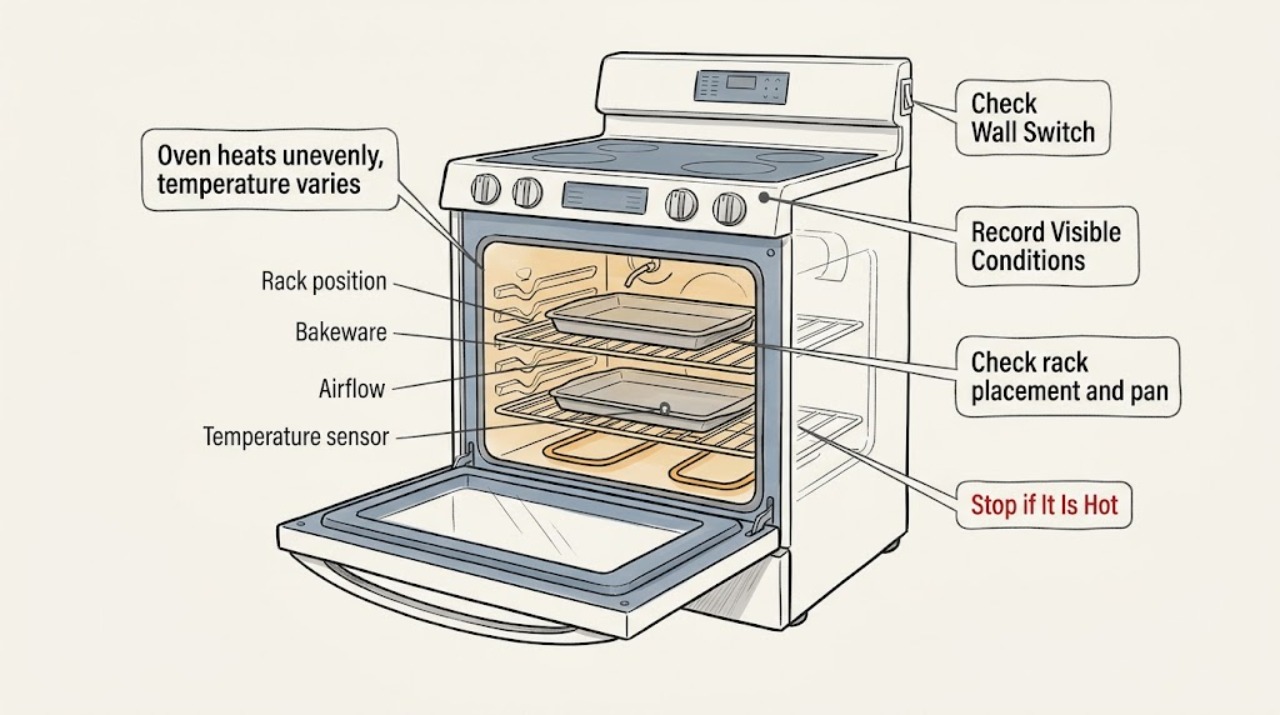
Oven heats unevenly, temperature varies by rack: What to Check and What to Do Next
Some temperature difference between the top, center, and bottom of an oven is expected because rack position changes distance from the heating source and airflow pattern. First test the complaint consistently: use the same recipe and pan, one rack in the center, the correct mode, a complete preheat, and a closed door.
-
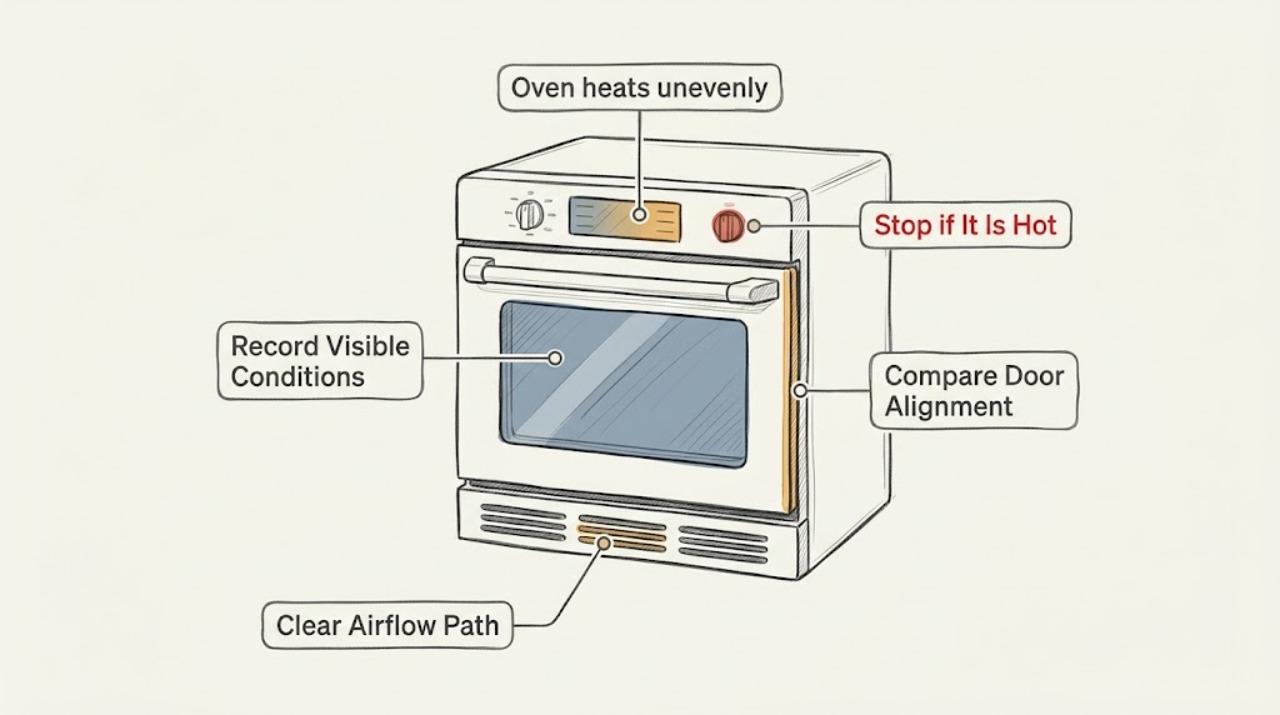
Oven heats unevenly: What to Check and What to Do Next
First separate a cooking-setup issue from an oven fault. Use the rack and pan position recommended for the recipe, allow the oven to finish preheating, keep the door closed during the bake, and note whether the same side or level is repeatedly over- or under-browning.
-
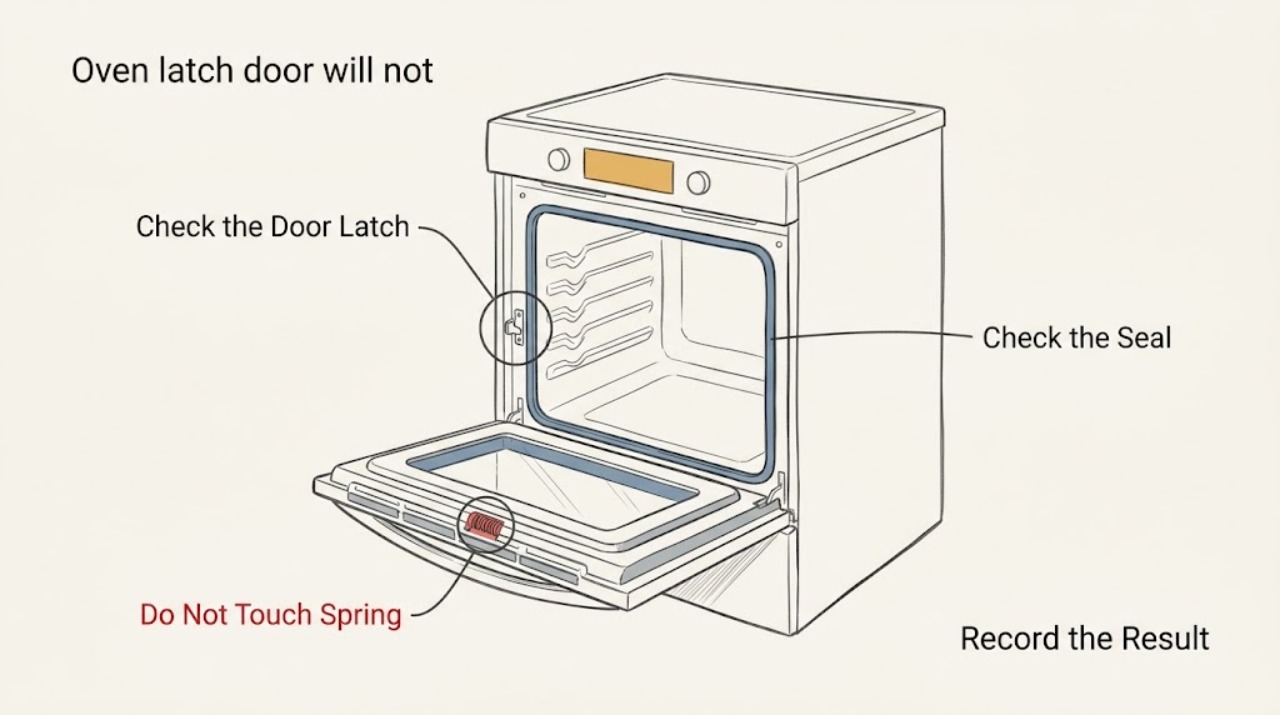
Oven latch door will not close: What to Check and What to Do Next
Stop using the oven until the door closes and seals normally. Turn the oven off and let it cool completely, then check from the outside for a rack, pan, foil, shipping material, or other obstruction; inspect whether the latch arm is left in a position that blocks the door, and look for a displaced gasket or a door that sits unevenly from a hinge problem.
-
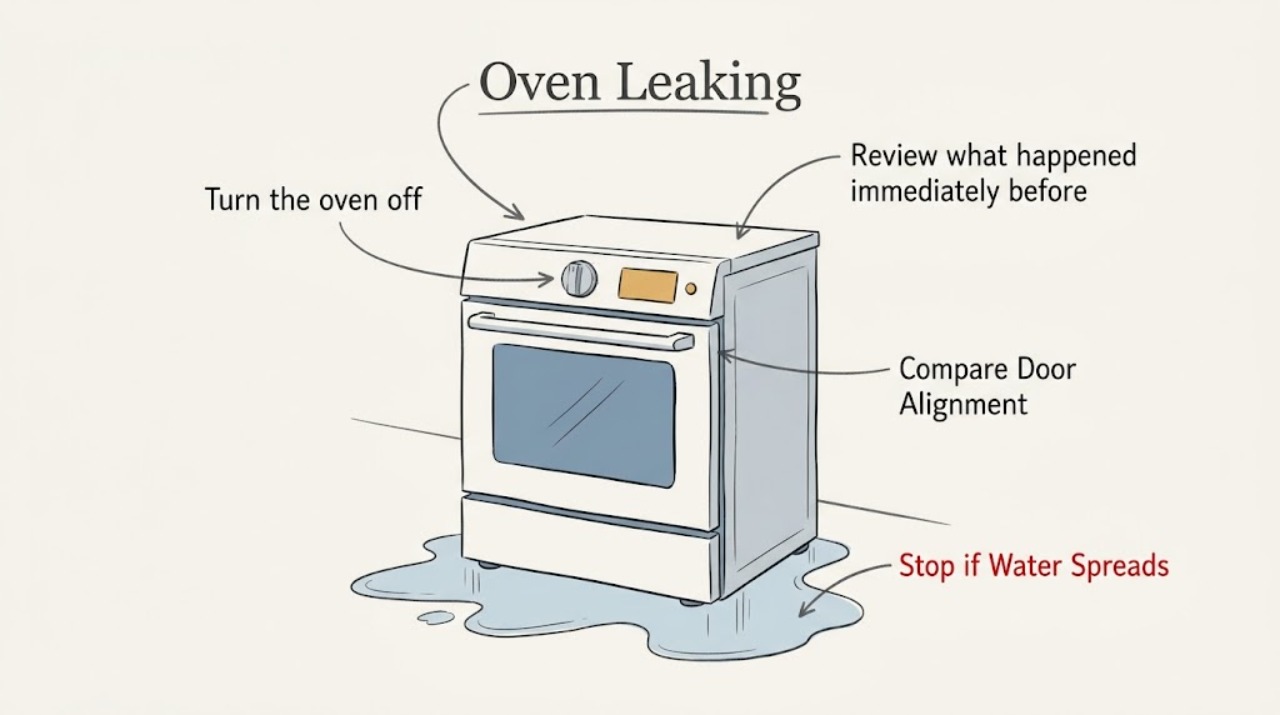
Oven Leaking: Tell Condensation, Spills, and Gas Odor Apart
An oven that appears to be leaking may be releasing food liquid, steam condensation, water from a model-specific steam or cleaning function, or a true leak from a door, reservoir, or internal component. Let the oven cool, identify the first wet point, and check whether the moisture appeared after high-moisture food, steam use, or cleaning.
-
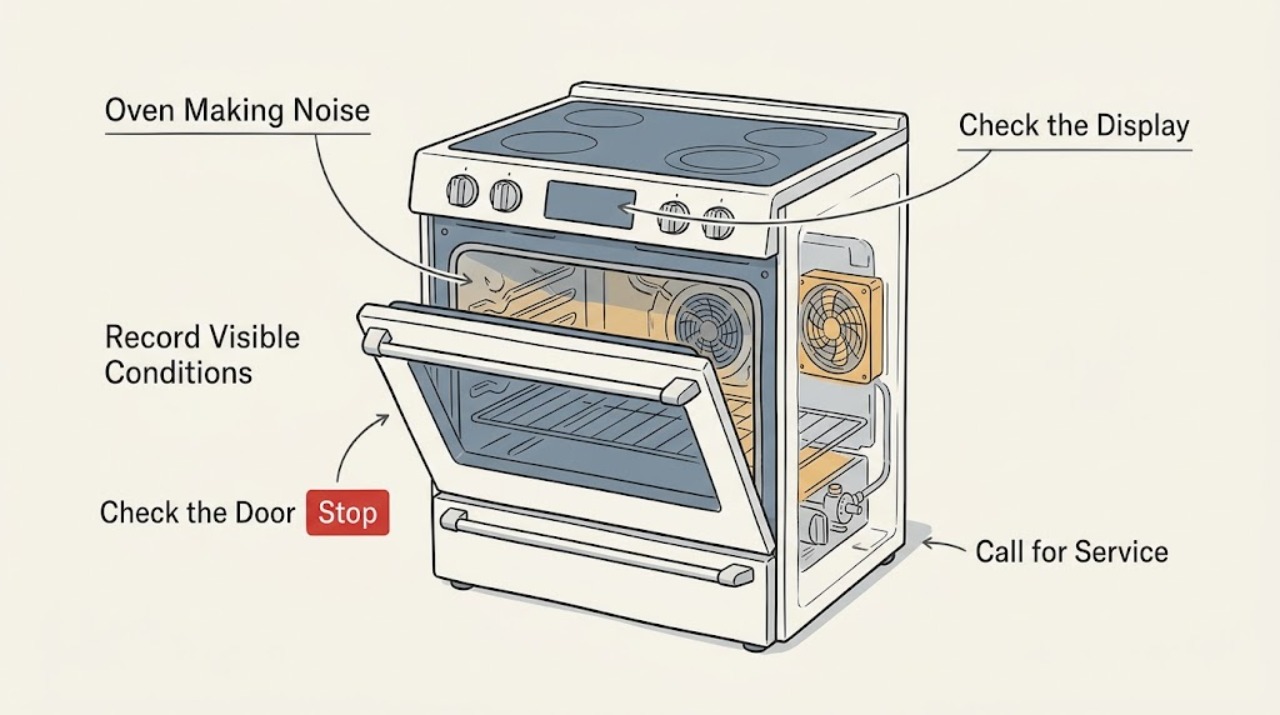
Oven Making Noise: Normal Fans, Clicks, Popping, and Warning Sounds
Some oven noise is designed operation: a cooling or convection fan can hum and continue after a cycle, relays can click as heating is controlled, and metal can crack or pop as it heats and cools. The useful first distinction is gas versus electric, then the sound's timing, location, and effect on cooking.
-
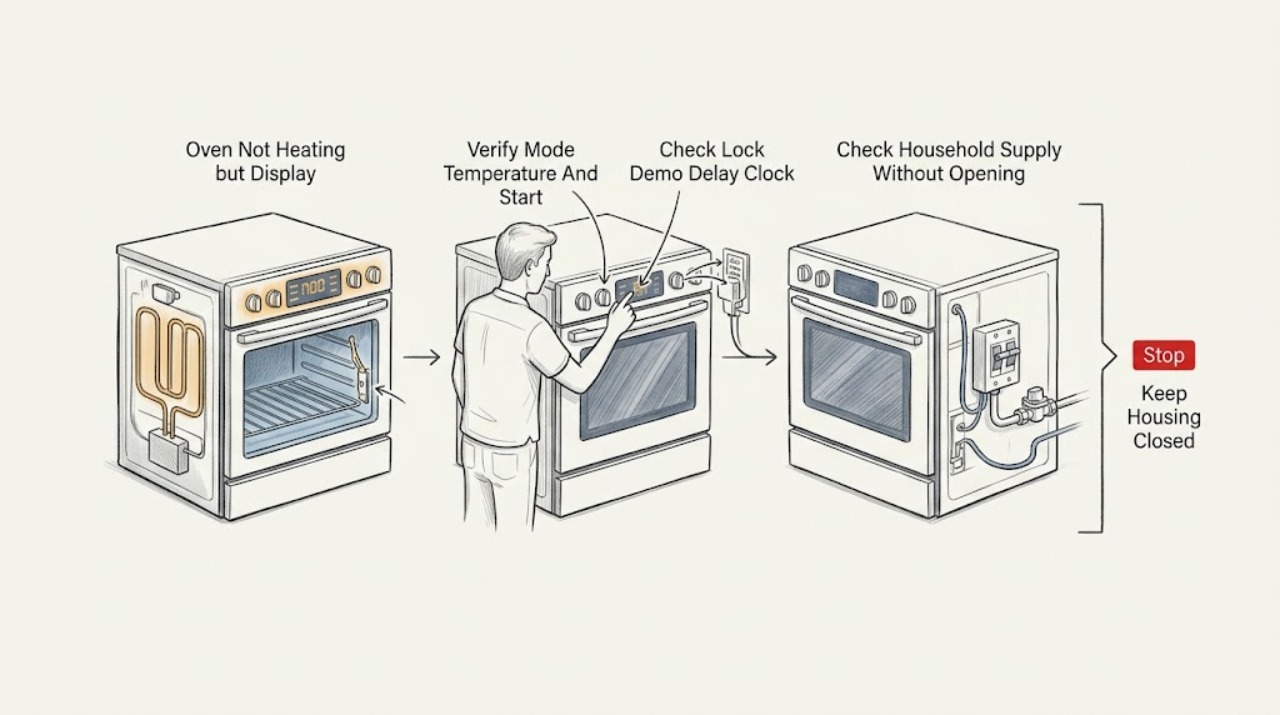
Oven Not Heating but Display Works: What to Check and What to Do Next
A lit display only proves that some oven controls have power; it does not prove that the heating circuit, igniter, sensor, door switch, or full electrical or gas supply is working. Confirm the correct cooking mode and temperature, press Start, cancel any delayed start, and check that control lock or demo mode is not active and the door is fully closed.
-
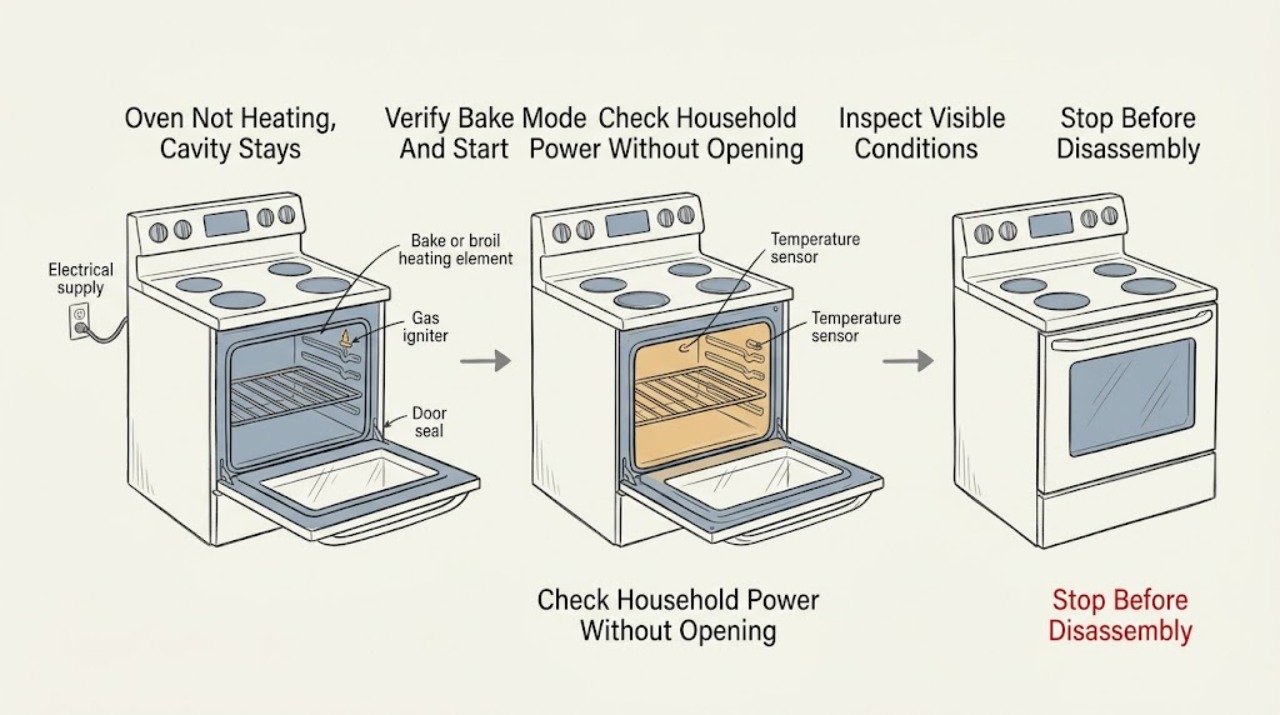
Oven Not Heating, Cavity Stays Cool: What to Check and What to Do Next
If an oven cavity stays cool, first confirm that a normal Bake or equivalent heating mode is selected, the temperature is set above the current cavity temperature, the door is fully closed, and a delayed-start, control-lock, demo, Sabbath, or twin-oven setting is not preventing heat. Check the household breaker or fuse only from a dry, safe position.
-
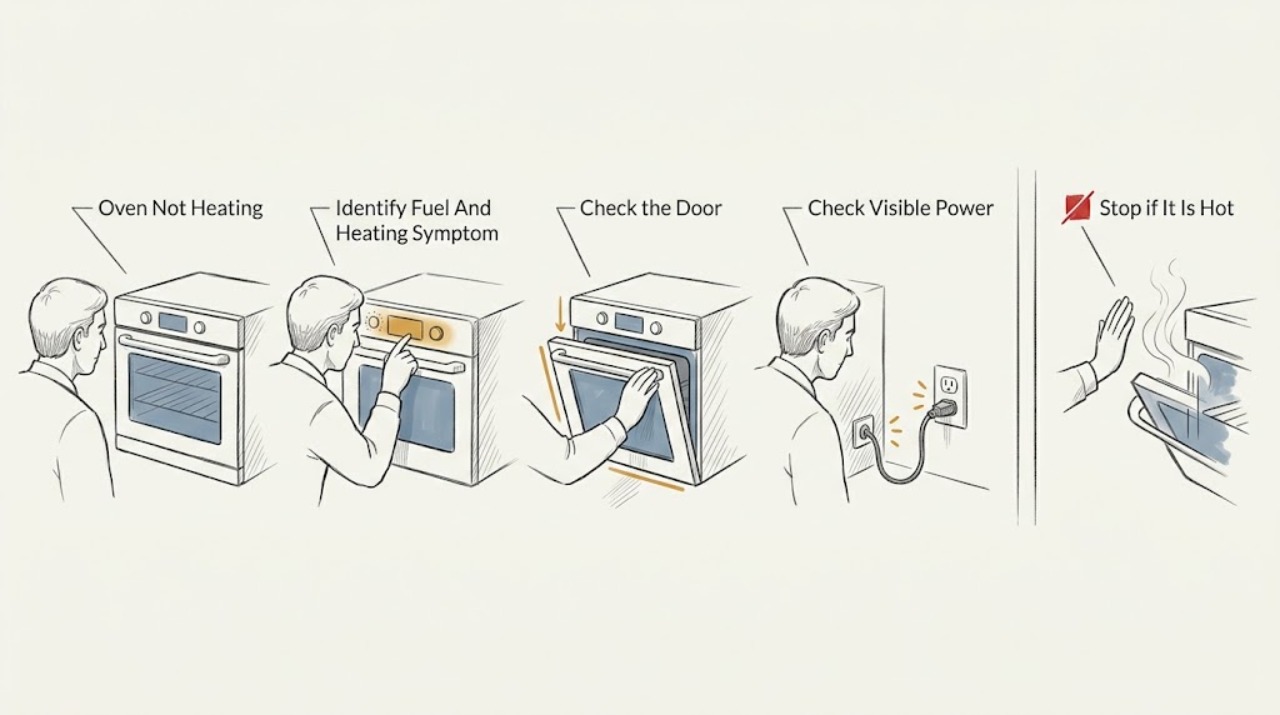
Oven Not Heating: Identify the Fuel Type and Check Safe Causes
First identify whether the oven is electric, gas, dual-fuel, or unknown, then distinguish no heat at all from slow or uneven heating. Check the selected cooking mode, temperature, clock or delayed-start state, control lock, door closure, and visible power condition using the model manual.
-
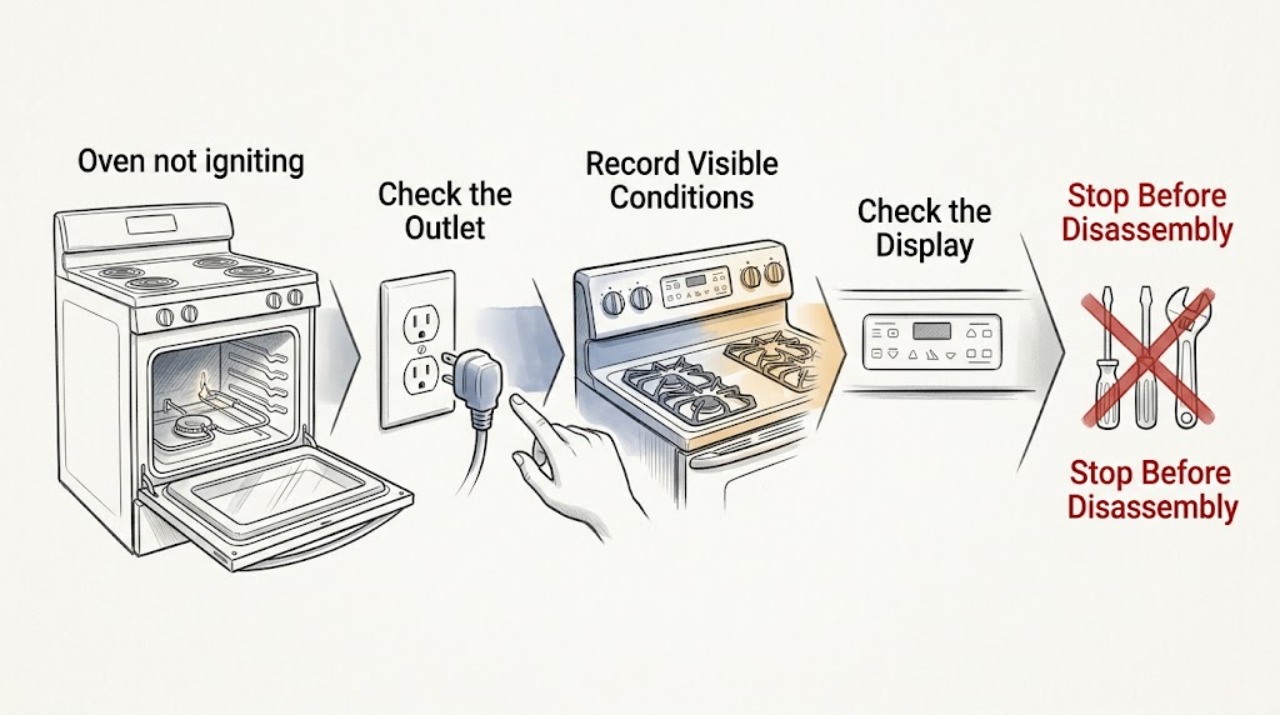
Oven not igniting: safe checks for a gas model
First confirm that this is a gas oven and separate no power, no start command, no gas or ignition response, and delayed ignition. If you smell gas, hear a delayed bang, see an abnormal flame, smoke, soot, arcing, or a carbon-monoxide alarm, turn the control off only if safe, leave the area, and contact gas or emergency help from outside; do not use a match, test for a leak, or retry the oven.
-
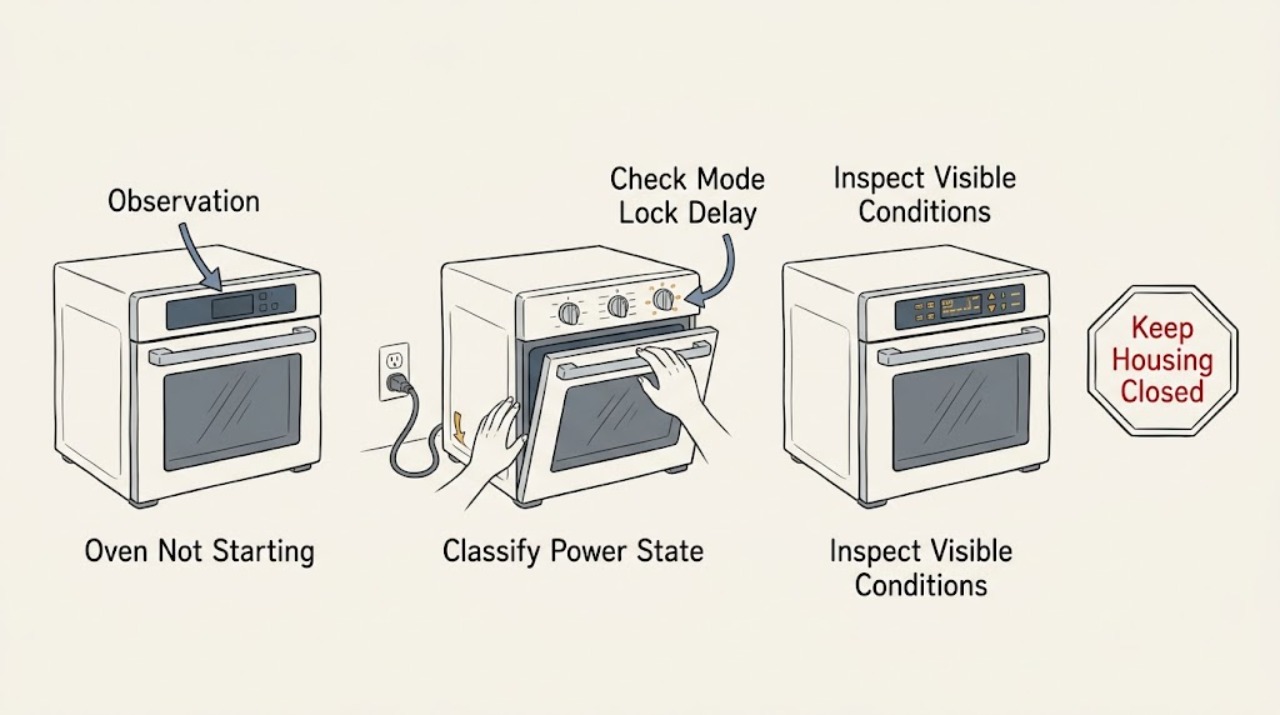
Oven Not Starting: Separate a Power Problem from a Setting or Safety Lock
When an oven will not start, first separate a blank display from a powered oven that ignores Start. With the oven safe and cool, check for a local power interruption, the correct cooking mode, an active Control or Child Lock, a delayed start or timer, and a door that is not fully closed.
-
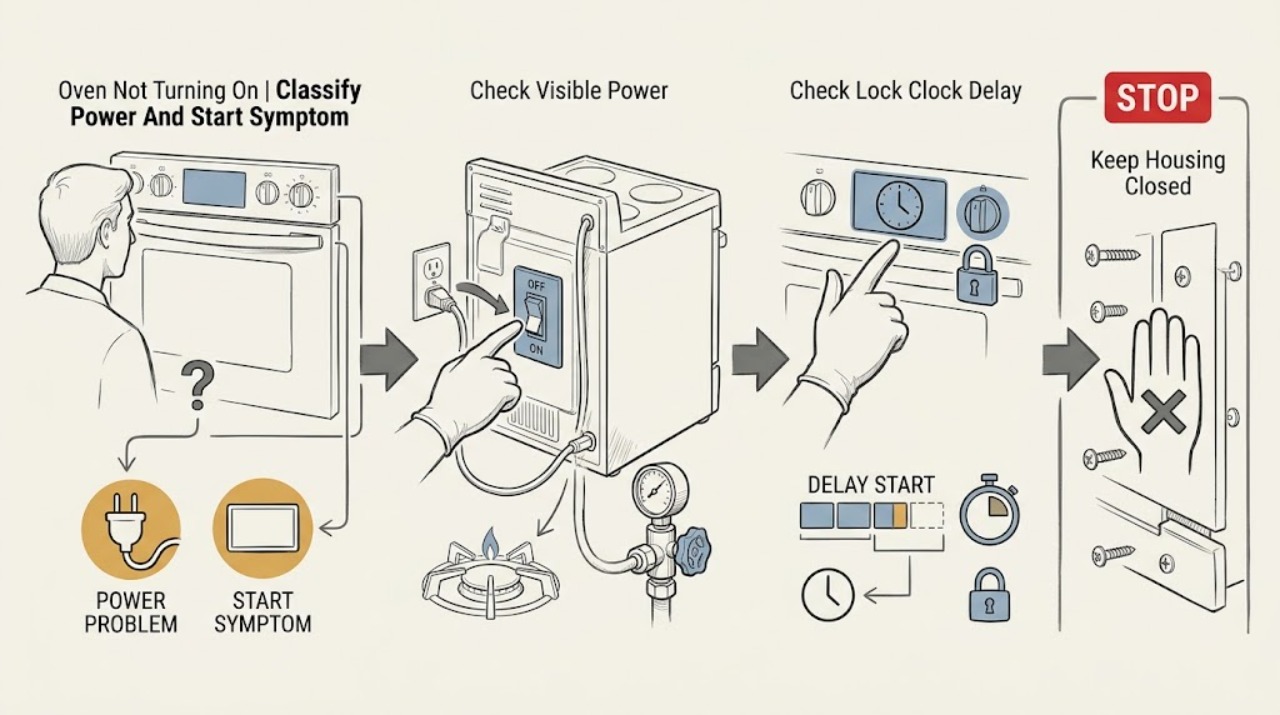
Oven Not Turning On: Separate No Power From a Control or Gas Start Issue
First determine whether the oven is completely without power or has a working display that will not start a cycle. Record the exact model, fuel type, display and clock state, lock or delay message, selected mode, door behavior, and whether the cooktop or another appliance still works.
-
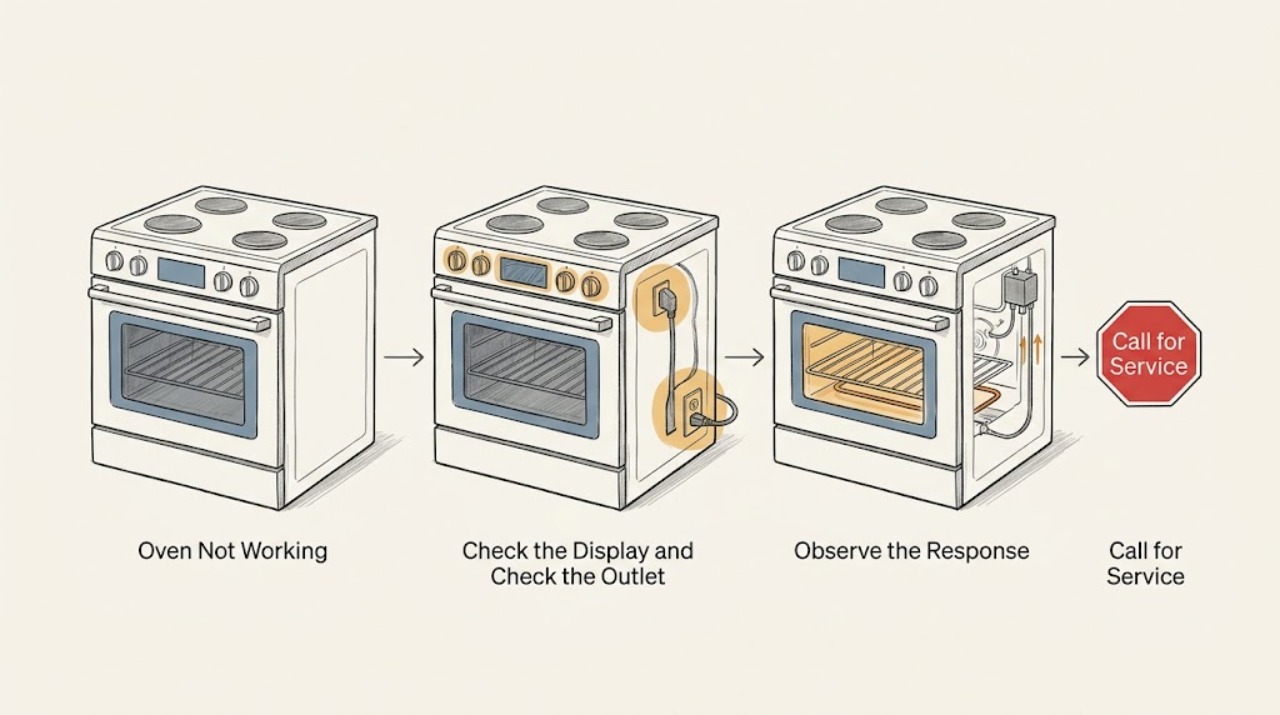
Oven Not Working: Safe Checks for Power, Heat, Ignition, Locks, and Errors
First identify whether the oven is electric, gas, or dual-fuel and describe what has failed: no display, no start, no heat, no ignition, a locked door, or an error message. From a safe position, check the user controls, clock or delay setting, control lock, door closure, and the breaker without opening the appliance.
-
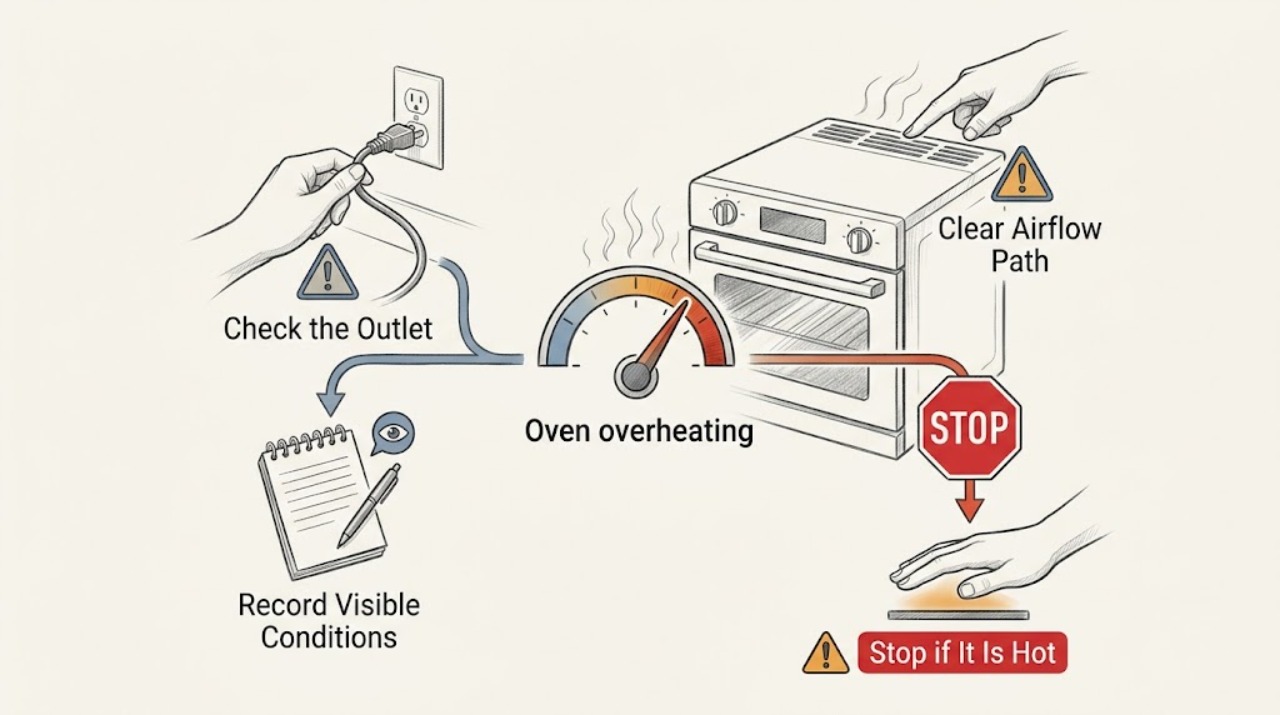
Oven overheating: separate normal cycling from a fault
First distinguish normal heat from uncontrolled overheating. Warm glass, an operating cooling fan, and elements cycling on and off can be normal for some models, while food burning at a normal setting, a temperature that keeps rising, an oven that continues heating after shutoff, smoke, an abnormal flame, gas odor, arcing, or a breaker trip is not.
-
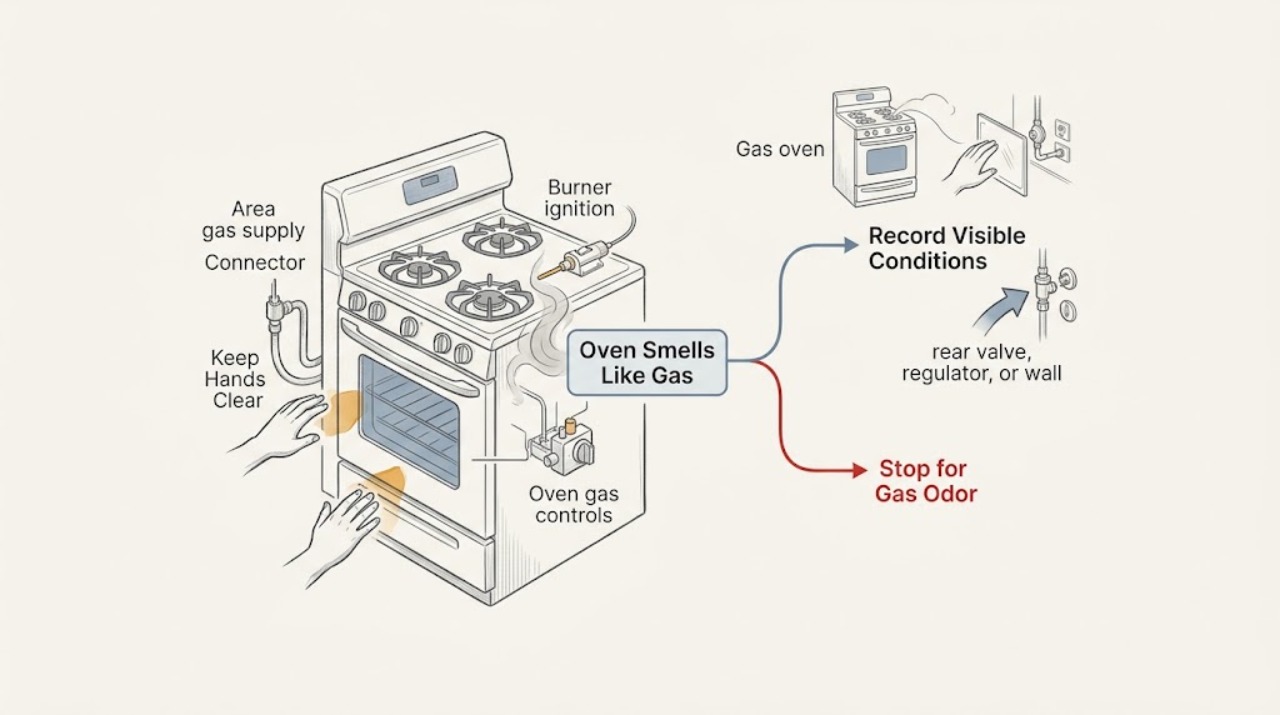
Oven Smells Like Gas and the Odor Persists After Shutoff: What to Check and What to Do Next
If a gas smell remains after the oven and burners are turned off, treat it as a possible gas leak, not as an oven-cleaning problem. Leave the building immediately, do not light anything, touch electrical switches, operate appliances, or use a device inside, and contact the gas supplier or emergency services from a safe location.
-
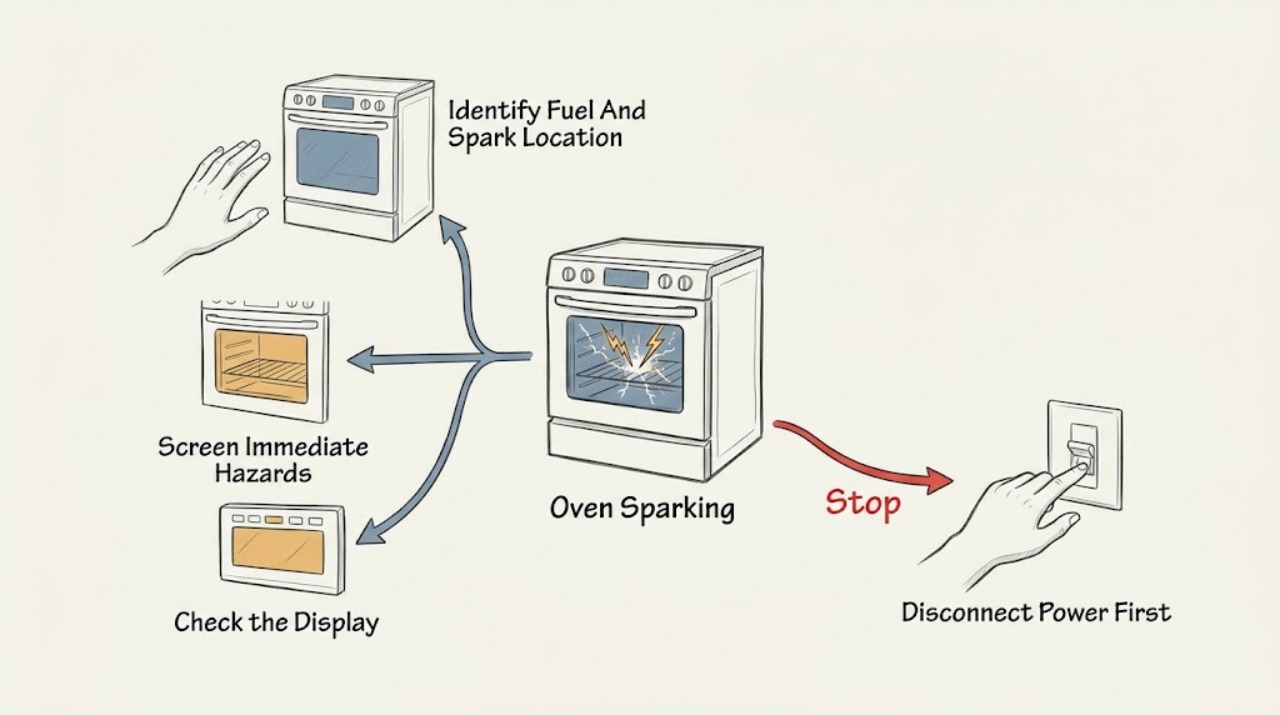
Oven Sparking: Separate Normal Gas Ignition From Dangerous Arcing
An oven spark can be normal only in a model-documented gas ignition sequence and only when it is brief, localized, and followed by stable combustion. A spark, flash, crackle, or arc from the cavity, control area, cord, outlet, element, or wiring is not a normal test result.