
On this page
Start here
Quick answer
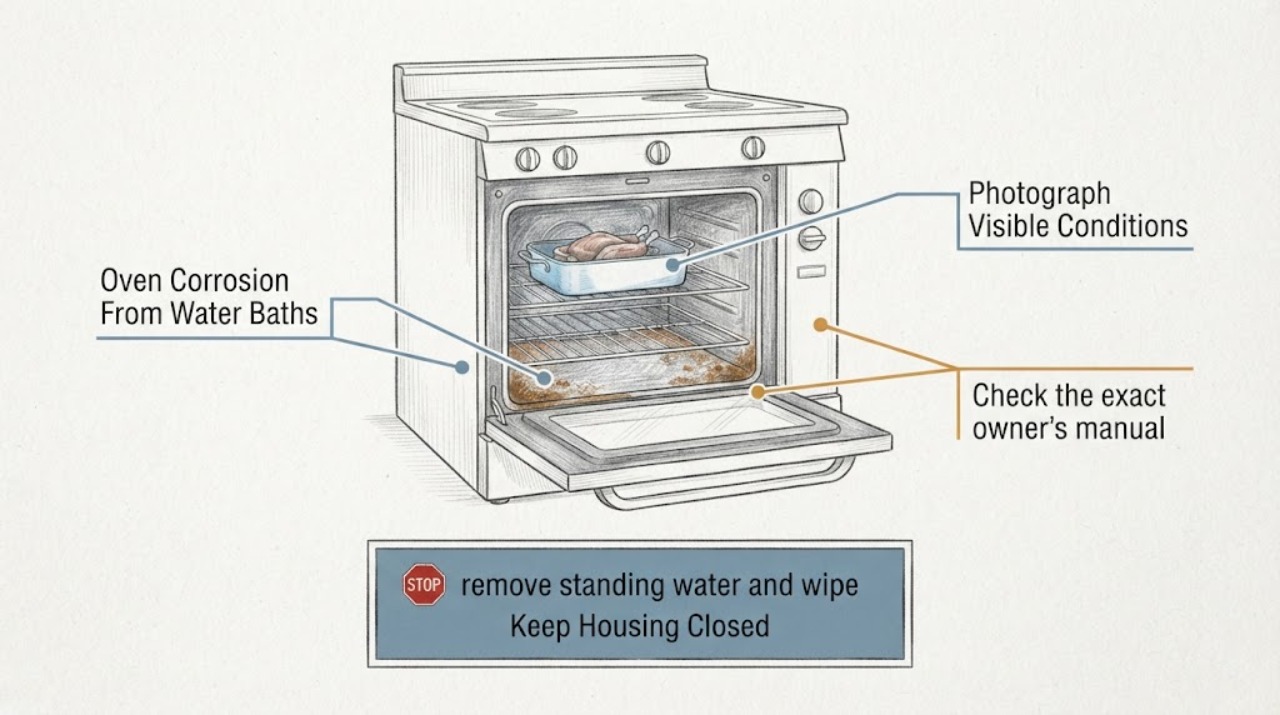
Using a water bath does not by itself prove that an oven is corroding, and the supplied topic has no brand or model to establish the cavity finish or an approved steam/water-bath procedure. Water left on a hot cavity floor can create steam and a temperature shock, while prolonged moisture can contribute to corrosion on some cooking compartments. After the oven and pan cool, remove standing water, wipe the cavity dry, and inspect the mark: a smooth ring may be mineral deposit, while pitting, flaking coating, exposed metal or a growing rust area needs service. Use only a heat- and steam-resistant pan and the exact owner's manual; do not pour water into a hot cavity or keep using an oven with water on its floor when the manual does not permit it.
Before you begin
Safety first
- Do not pour water into a hot cavity, leave standing water on the floor, scrape or sand the coating, repaint the cavity, open panels or continue heating an oven with flaking/exposed metal or water near electrical openings.
Work through in order
Diagnostic checks
Use only checks that match the exact appliance or system and its official guide.
-
Check 1
Let the oven and water-bath pan cool completely, then photograph and feel the affected area without scraping it. Record whether the mark is a smooth film/ring, orange staining, rough pitting, bubbling, flaking coating or exposed metal.
Expected result: The surface is smooth and removable-looking, or it is rough, lifting, pitted or exposing the substrate.
Next step: Treat a smooth mark as a conditional cleaning question under the exact manual. Keep an oven with pitting, flaking or exposed metal out of service and request model-specific assessment.
Why this matters
Why: A smooth ring is compatible with mineral residue; rough pitting or lifted coating is a possible cavity-finish damage condition. Neither observation alone proves that the water bath caused the damage.
-
Check 2
Check the exact owner's manual for the oven's cavity material and whether a water bath or steam-generating pan is permitted. Confirm that the bath vessel is heat- and steam-resistant and sits on an approved rack or tray rather than directly on the cavity floor.
Expected result: The manual permits the method with a specified vessel/rack, or the manual is silent/forbids water on the floor and the vessel/rack is unverified.
Next step: Follow the exact manual if it approves the setup. If it is silent or forbids the setup, stop using the water bath until the manufacturer confirms a safe arrangement; do not improvise a floor pan or pour water into the cavity.
Why this matters
Why: A water-bath method is appliance-specific. Bosch's steam guidance uses an approved tray/container arrangement and warns about water on the cooking-compartment floor; a conventional oven cannot inherit that arrangement without its own manual.
-
Check 3
After cooling, remove standing water and wipe the cavity floor and lower walls dry with a soft cloth. Do not pour cold water into a hot oven, flood the cavity, use a metal scraper or trap wet food residue inside a closed oven.
Expected result: The cavity dries fully with no new mark, or moisture remains, the mark grows, or the coating changes after drying.
Next step: Keep the door/cavity treatment within the exact manual and allow the cavity to dry. If water remains on the floor or the coating is deteriorating, stop using the oven and request service.
Why this matters
Why: Drying removes the ongoing moisture exposure. Persistent moisture, new coating change or a growing rough area raises the need for service rather than stronger cleaning.
-
Check 4
If the mark is smooth and the exact manual allows gentle cleaning, use only the manual-approved non-scratch method. For a Whirlpool-style mineral-ring instruction, the manufacturer describes a non-scratch sponge and a complete pure/distilled-water rinse after any vinegar-and-water treatment; do not transfer that mixture to an unverified finish.
Expected result: The mark lifts without abrasion and the coating remains uniform, or the mark does not lift, leaves pits or exposes metal.
Next step: Stop gentle cleaning at the manual's limit and contact the appliance manufacturer/service provider for a persistent, pitted or exposed area. Do not sand, repaint, re-enamel or apply an unapproved coating.
Why this matters
Why: A removable mark supports a surface-deposit explanation. Failure to lift or visible substrate damage means the issue is not safely solved by stronger scrubbing or acid.
-
Check 5
Before using another water bath, document the oven model, cavity finish, rack/tray arrangement, water amount, cookware, duration and the exact mark. If the oven has a smell, smoke, flaking lining, exposed metal, damaged seal or water near electrical openings, do not run another cycle.
Expected result: The concern is only a stable surface ring with an approved method, or there is structural/coating damage, smoke, odor, leakage or an unknown appliance boundary.
Next step: Use the exact manual or request service with the documentation. Keep the oven out of use for flaking, exposed metal, smoke, odor, damaged seals or water entering openings.
Why this matters
Why: A stable deposit can be a maintenance issue, while coating/structural damage or unknown compatibility needs a manufacturer decision before continued heating. Water and heat hazards cannot be diagnosed from a generic topic alone.
Use your observations
Decision map
Find the observation that best matches what you see, then follow the next safe action.
-
PATH 01Next step
What you see
The mark is a smooth ring or film with no pitting, bubbling, flaking, exposed metal or damaged seal.
Do this next
Follow the exact manual's gentle cleaning method; if it permits the Whirlpool-style approach, use a non-scratch sponge and rinse completely, then dry the cavity.
Why this path and its safety boundary
Why it matters: The appearance is more consistent with mineral residue than confirmed cavity corrosion, although the exact finish still controls the cleaning method.
-
PATH 02Next step
What you see
Water is on the hot cavity floor, the coating is pitted/flaking or metal is exposed, or water has reached an opening, seal or electrical area.
Do this next
Stop using the water bath, let the oven cool, isolate power if the appliance is defective and safe to do so, and contact qualified service. Do not scrape, repaint or flood the cavity.
Why this path and its safety boundary
Why it matters: There is a possible cavity-finish, steam or electrical safety problem. Continued water-bath use could worsen damage or create a burn/electrical hazard.
-
PATH 03Next step
What you see
The exact model/manual does not confirm a water-bath setup, the mark persists after gentle approved cleaning, or the cause cannot be separated from an already damaged cavity coating.
Do this next
Give the manufacturer/service provider the model, photos, cookware and water-bath details. Keep the appliance dry and out of service until the approved method or damage assessment is clear.
Why this path and its safety boundary
Why it matters: The generic topic does not establish appliance compatibility or a repairable surface condition, and manufacturer-specific finishes can react differently to water and cleaners.
Helpful context
Understand the symptom
A water mark is not automatically corrosion
A smooth white, chalky or light-colored ring can be a mineral deposit left when water evaporates. Whirlpool's official guidance says dissolved minerals can remain in an oven and that a reddish hint may be rust in the water supply. That observation does not establish that the cavity coating itself is corroded. Look for texture and damage: pitting, bubbling, flaking, exposed metal or a spreading rough area are more concerning than a removable surface ring.
Why standing water and heat need a manual-specific boundary
Bosch's steam-oven guidance warns not to pour water into a hot cooking compartment because it can create steam and a temperature change that damages the cavity. It also says prolonged moisture can lead to corrosion and that water on the cooking-compartment floor must be wiped away before use. This is a manufacturer-specific steam-appliance instruction, so a generic oven should be checked against its own manual rather than assumed to accept a water bath directly on the floor.
Clean only after cooling and only for the confirmed finish
Once the oven and water-bath vessel are cool, remove food residue and moisture with a soft or non-scratch cloth or sponge. Whirlpool's product guidance says to rinse a vinegar-and-water treatment completely with pure or distilled water to prevent damage to the coating, but that treatment is not a universal instruction for every enamel, stainless or specialty cavity. If the exact manual is unavailable or the surface is pitted or peeling, stop at gentle wiping and ask service.
When checks do not resolve it
Need a professional?
Contact the manufacturer or qualified appliance service when there is pitting, flaking, exposed metal, a damaged seal, persistent moisture, smoke/odor, water near electrical openings or no model-specific approval for the water-bath method.
Safety scope: Do not pour water into a hot cavity, leave standing water on the floor, scrape or sand the coating, repaint the cavity, open panels or continue heating an oven with flaking/exposed metal or water near electrical openings.
Have this ready
- Provide the complete model, cavity finish if known, photos of the mark, whether it is smooth or pitted, water-bath vessel/rack arrangement, water source, temperature, duration and any smoke, odor or leakage.
Common questions
FAQ
Does a water bath automatically cause oven corrosion?
No. The topic does not identify a model or confirm pitting. Water can leave mineral deposits, and Bosch warns that prolonged moisture can lead to corrosion in some cooking compartments. Use the exact manual and inspect the surface rather than treating every ring as rust.
Can I pour water into a hot oven to make or clean a water bath?
Do not do that. Bosch warns that water in a hot cooking compartment can create hot steam and a temperature change that may damage the cavity. Let the appliance cool and follow the model's approved water-bath or cleaning method.
How can I tell mineral residue from corrosion?
After cooling, a smooth removable ring is more compatible with mineral residue. Pitting, bubbling, flaking coating or exposed metal needs service. Whirlpool notes that a reddish hint may be rust in the water supply, so color alone does not prove cavity corrosion.
What should I do if the oven coating is peeling?
Stop using the water bath and do not scrape, sand, repaint or apply a coating. Photograph the area, keep the cavity dry and contact the manufacturer or qualified service for a model-specific safety assessment.
Read the exact guide
Official sources
- Cleaning Mineral Deposits on Oven Bottom - Product HelpWhirlpool Product Help · Opened Whirlpool's official oven-bottom guidance. It distinguishes mineral rings from a reddish rust hint and gives a non-scratch/complete-rinse method for Whirlpool finishes; it is kept conditional for an unbranded oven.
- Environmental protectionBosch Home Appliances · Opened the Bosch official steam-oven manual. It is used conditionally to explain manufacturer-specific moisture hazards: do not pour water into a hot compartment, prolonged moisture can lead to corrosion, wipe water from the floor and use approved heat/steam-resistant cookware. It is not presented as a universal manual for every oven.
- Cleaning and Maintenance of Range - Product HelpWhirlpool Product Help · Opened Whirlpool's official cleaning and maintenance guidance. It supports cool-oven spill cleanup, soft cloth/clean water/drying and model-specific manual/service routing; the exact cleaning chemistry remains finish-specific.
Community feedback
Share a repair observation
Share a plain-text repair observation. Accepted observations are published automatically; this page may take a moment to update.