
Brand-independent appliance guidance
General Oven Repair Guides – Page 2
Brand-independent troubleshooting and repair guidance for common oven problems and maintenance questions.
General oven guides
Use these guides when the problem is not limited to a specific manufacturer.
-
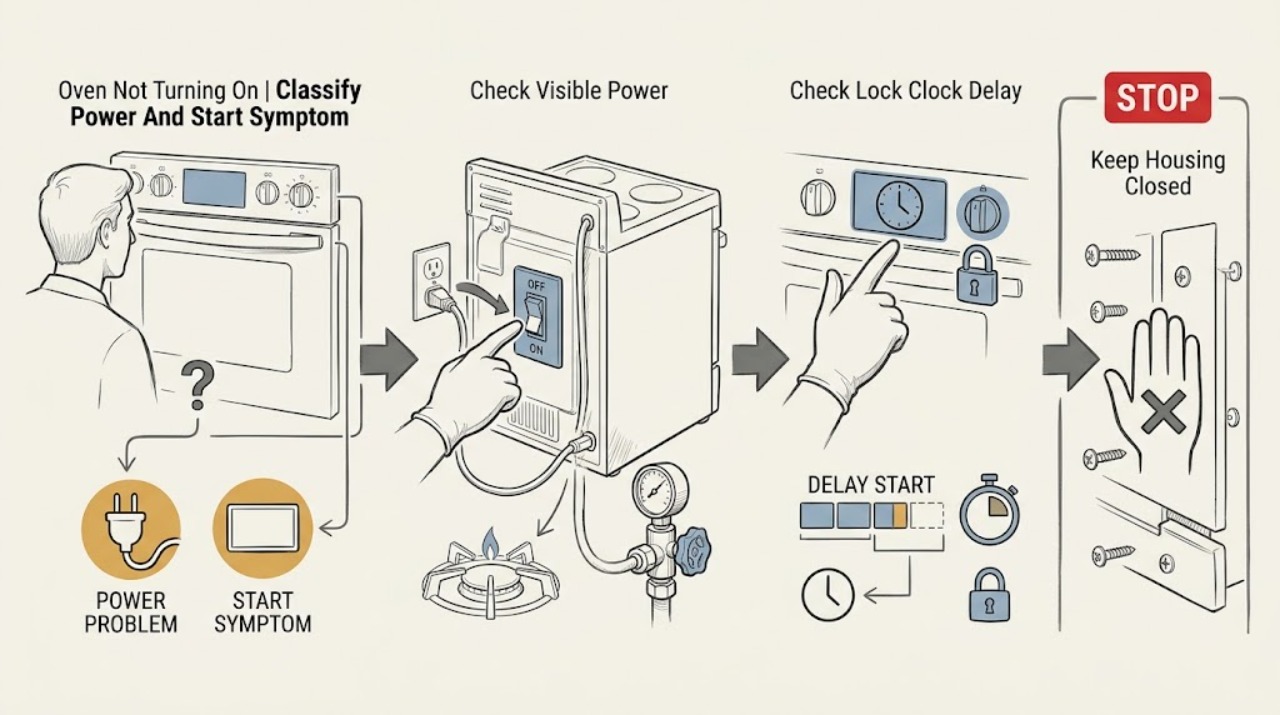
Oven Not Turning On: Separate No Power From a Control or Gas Start Issue
First determine whether the oven is completely without power or has a working display that will not start a cycle. Record the exact model, fuel type, display and clock state, lock or delay message, selected mode, door behavior, and whether the cooktop or another appliance still works.
-
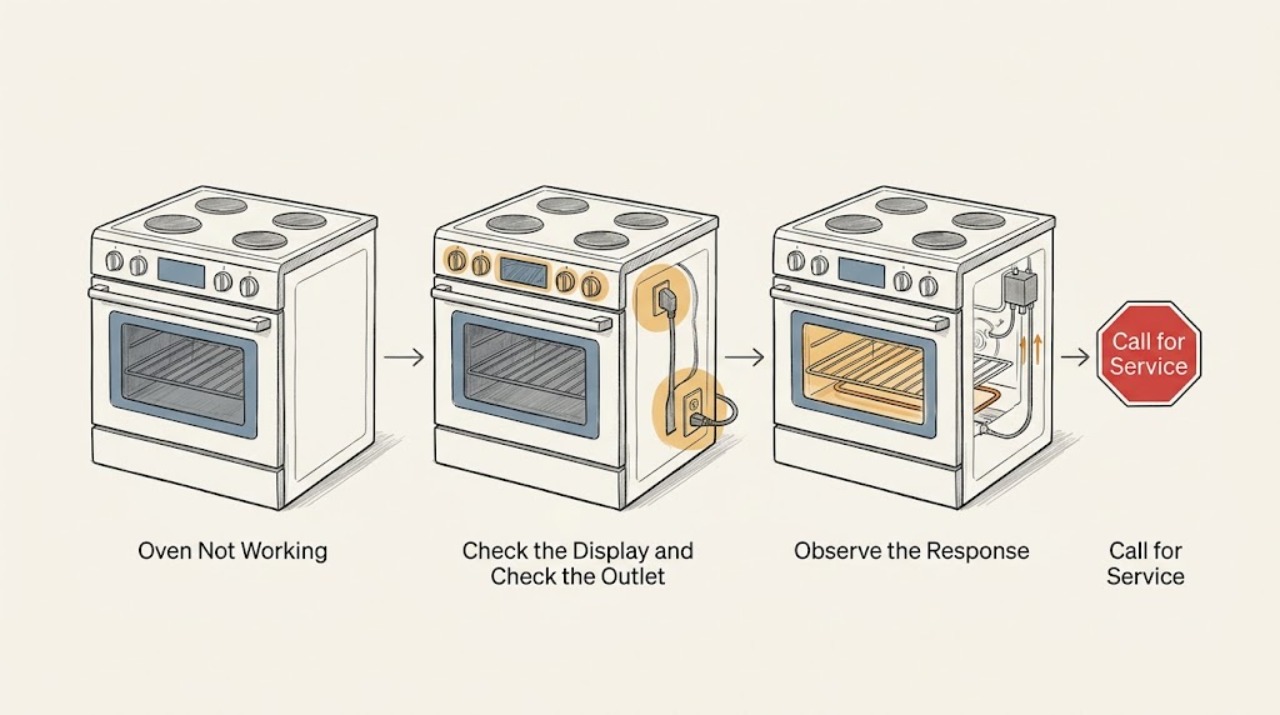
Oven Not Working: Safe Checks for Power, Heat, Ignition, Locks, and Errors
First identify whether the oven is electric, gas, or dual-fuel and describe what has failed: no display, no start, no heat, no ignition, a locked door, or an error message. From a safe position, check the user controls, clock or delay setting, control lock, door closure, and the breaker without opening the appliance.
-
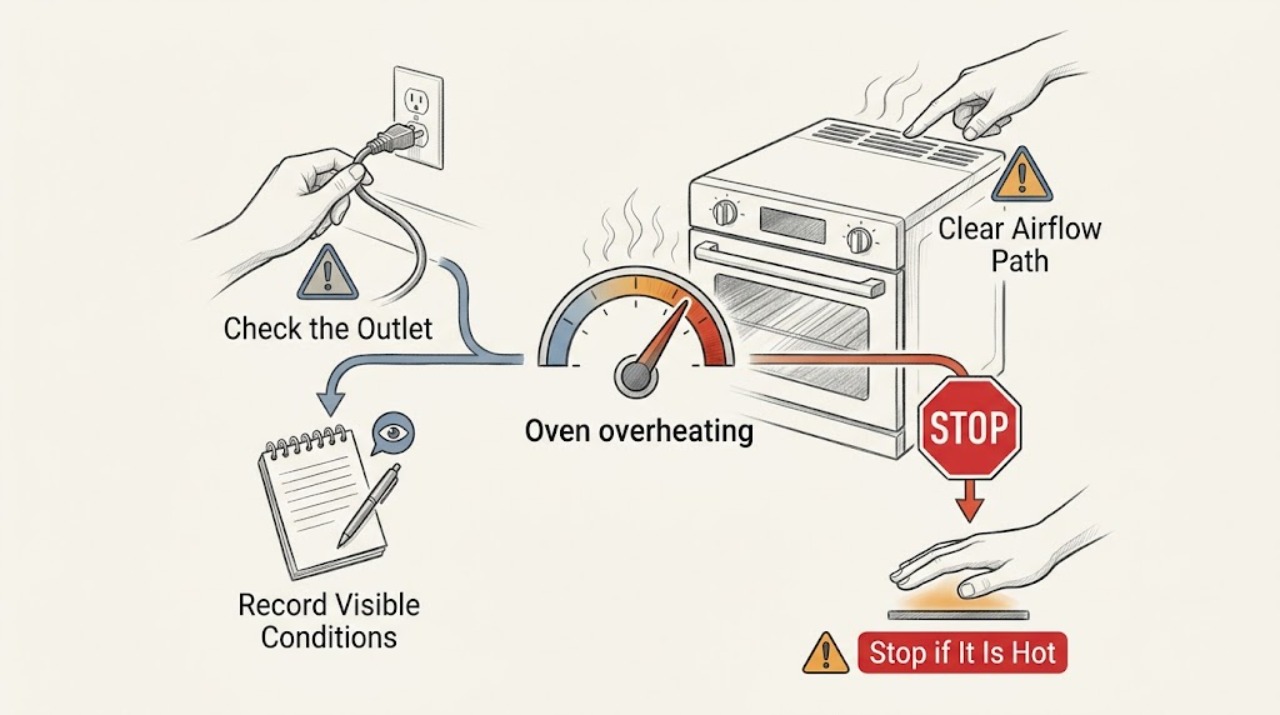
Oven overheating: separate normal cycling from a fault
First distinguish normal heat from uncontrolled overheating. Warm glass, an operating cooling fan, and elements cycling on and off can be normal for some models, while food burning at a normal setting, a temperature that keeps rising, an oven that continues heating after shutoff, smoke, an abnormal flame, gas odor, arcing, or a breaker trip is not.
-
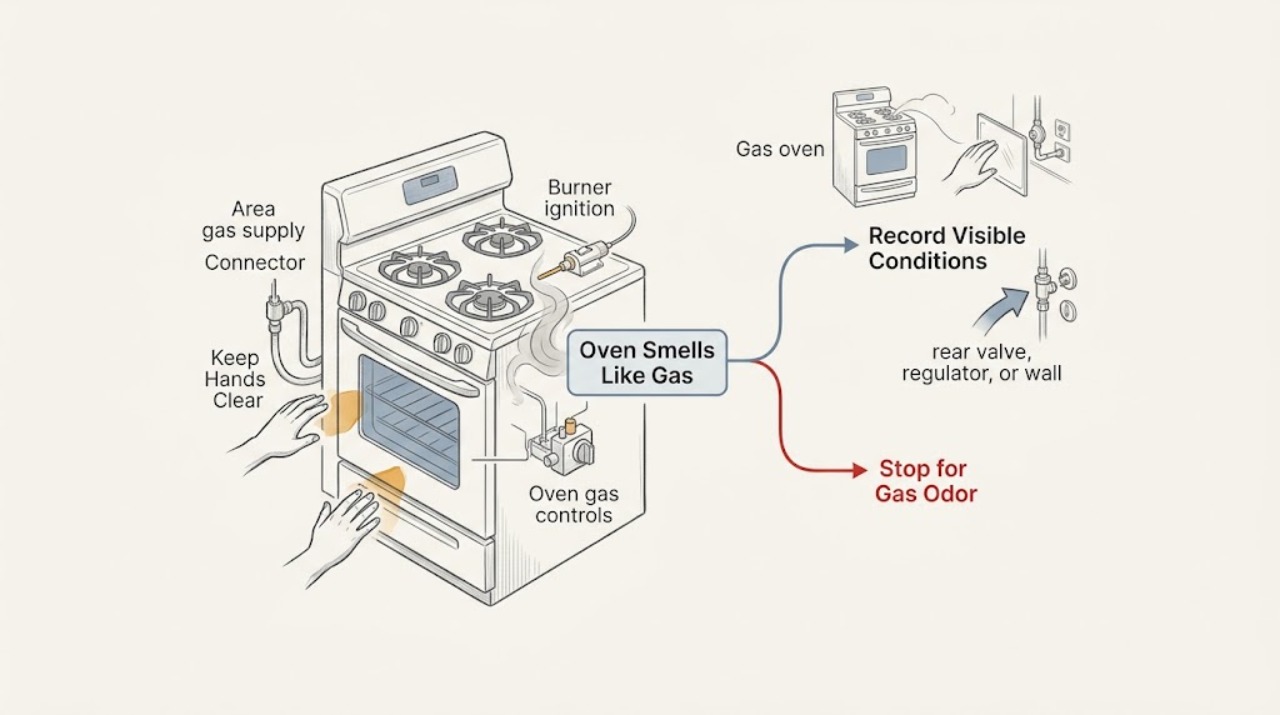
Oven Smells Like Gas and the Odor Persists After Shutoff: What to Check and What to Do Next
If a gas smell remains after the oven and burners are turned off, treat it as a possible gas leak, not as an oven-cleaning problem. Leave the building immediately, do not light anything, touch electrical switches, operate appliances, or use a device inside, and contact the gas supplier or emergency services from a safe location.
-
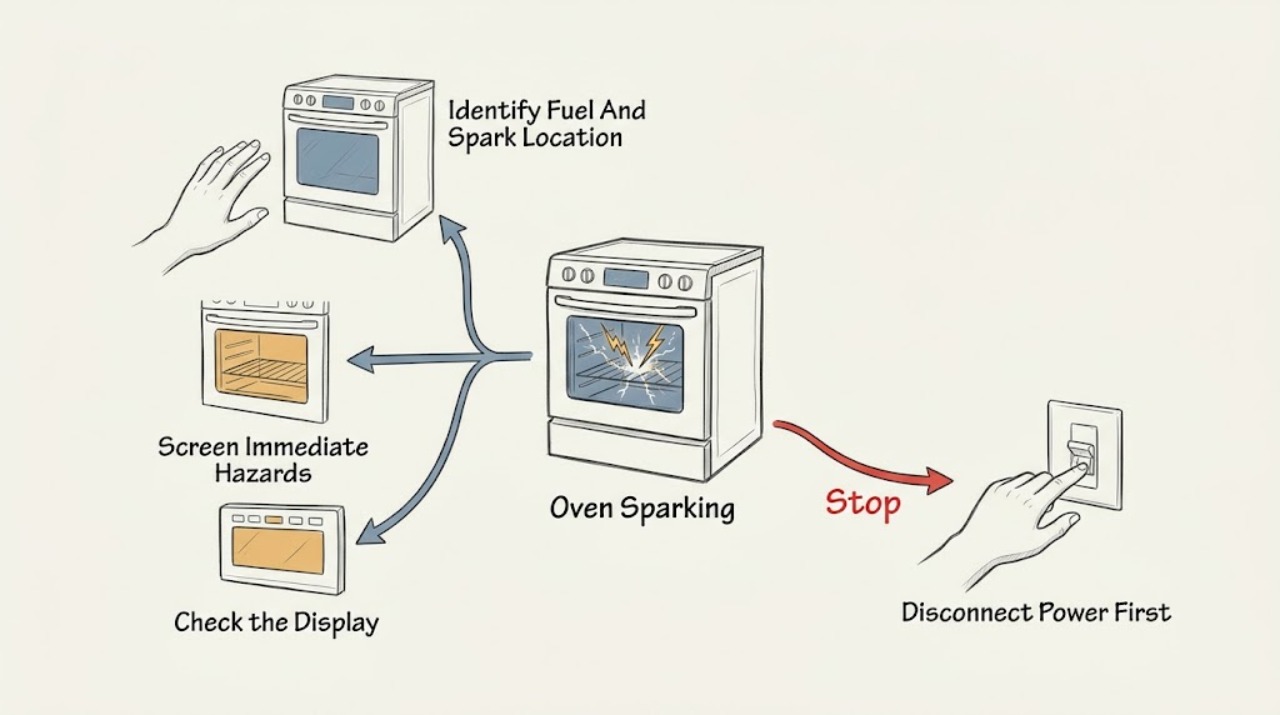
Oven Sparking: Separate Normal Gas Ignition From Dangerous Arcing
An oven spark can be normal only in a model-documented gas ignition sequence and only when it is brief, localized, and followed by stable combustion. A spark, flash, crackle, or arc from the cavity, control area, cord, outlet, element, or wiring is not a normal test result.
-
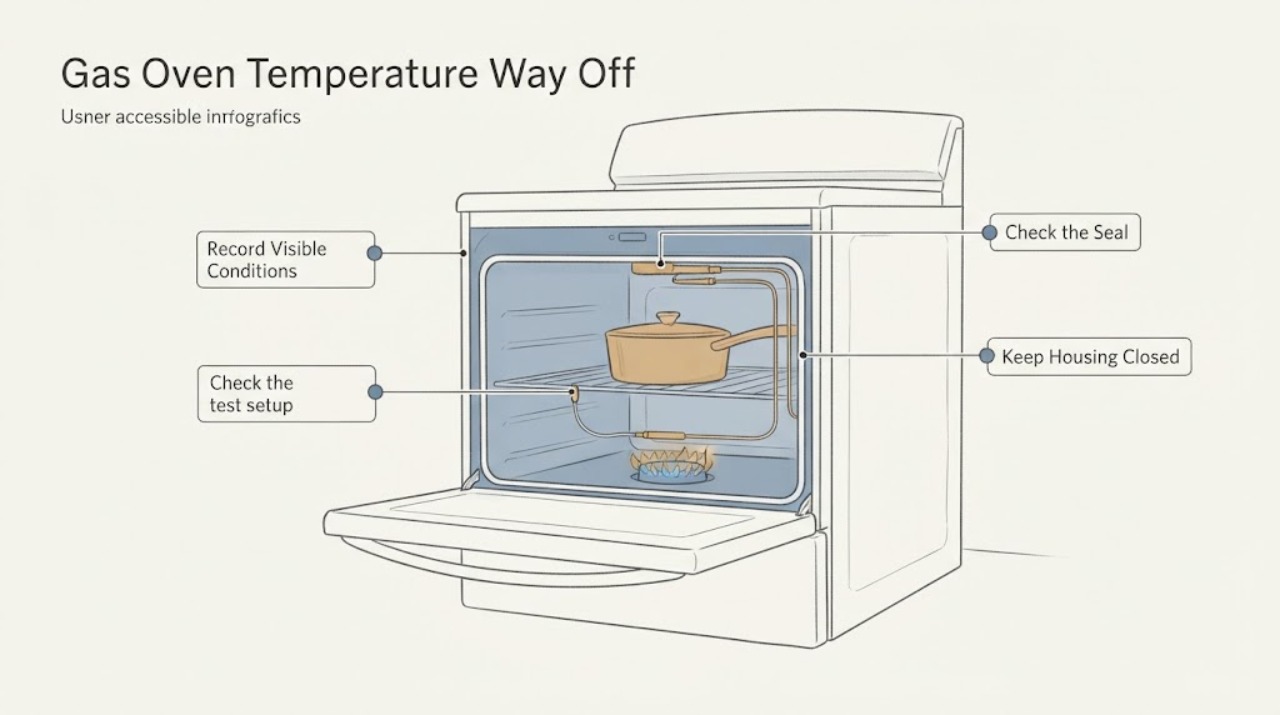
Gas Oven Temperature Way Off While Baking: Verify the Reading Before Calibration
A gas oven that seems far too hot or cold while baking should be measured and observed before anyone changes a calibration setting. Ovens cycle the burner on and off, so a single thermometer reading during preheat is not the same as the average baking temperature.
-
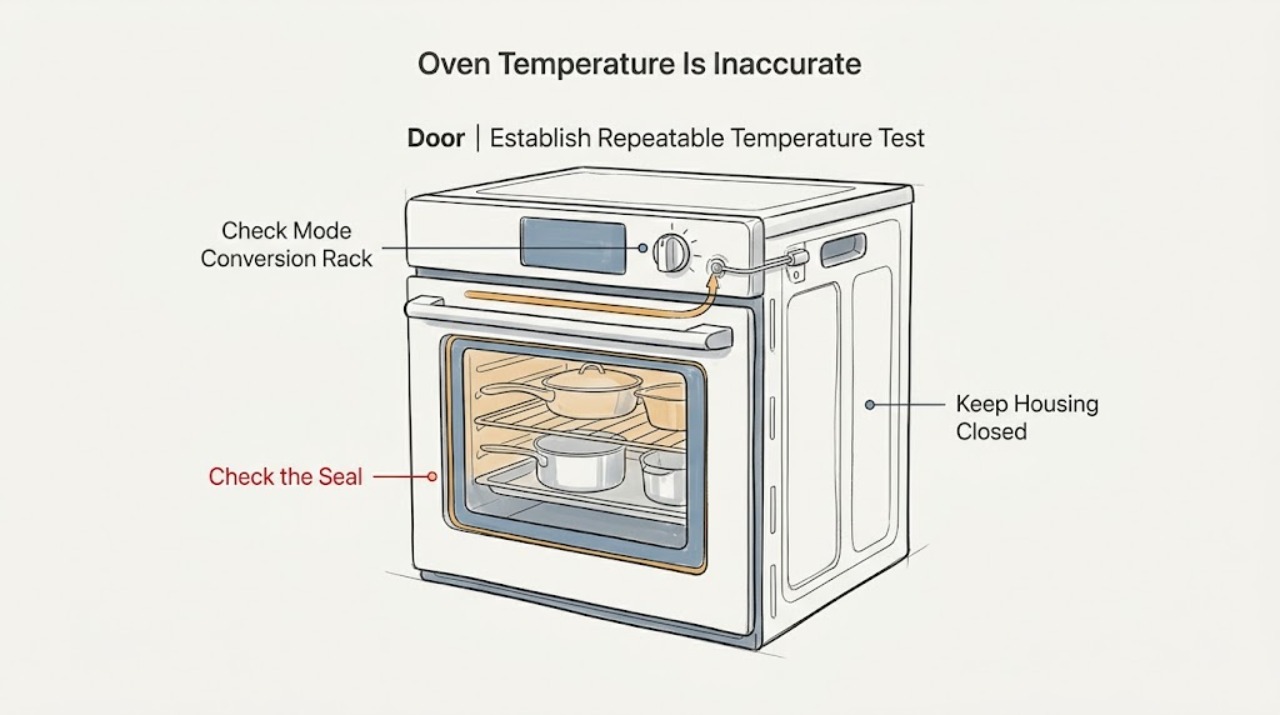
Oven Temperature Is Inaccurate, Door Closes: What to Check and What to Do Next
When an oven door closes normally but the temperature seems inaccurate, first distinguish normal cycling from a true fault. Let the oven fully preheat in the intended Bake or Convection mode, use the rack and cookware arrangement in the owner's guide, and avoid judging the cavity from a single thermometer reading or a single door opening.
-
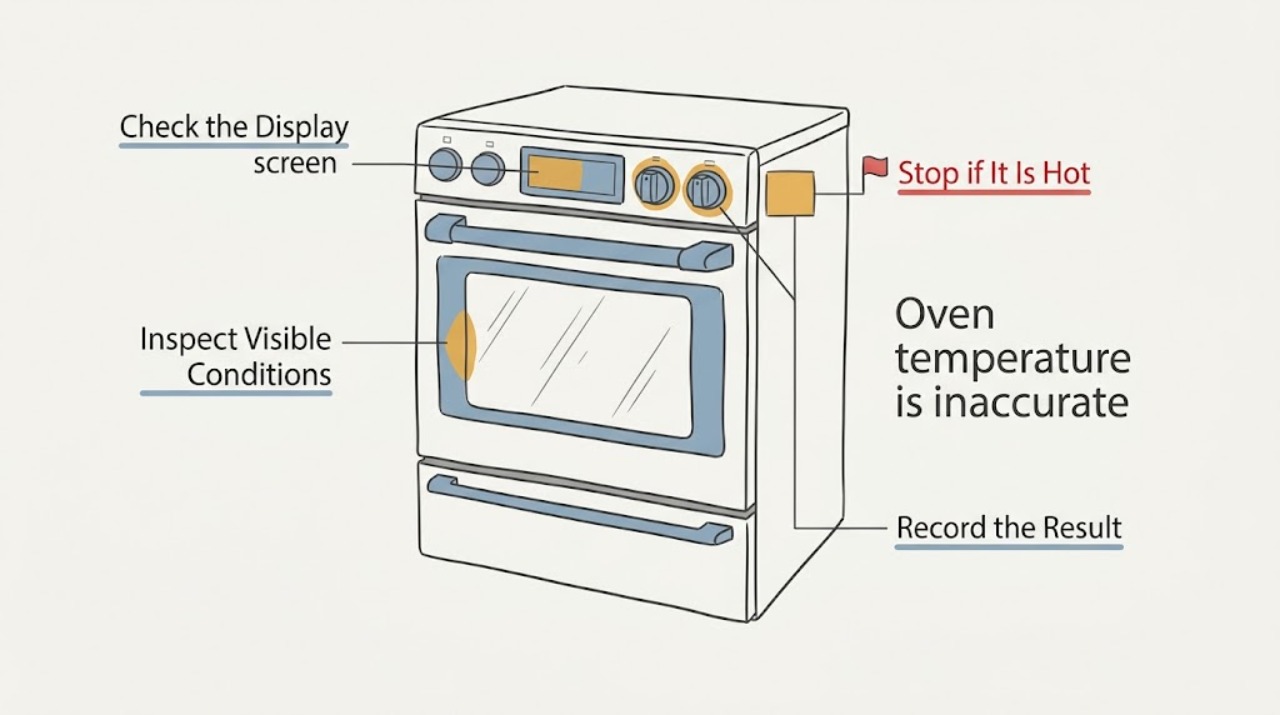
Oven temperature is inaccurate: What to Check and What to Do Next
First separate a real heating fault from a misleading thermometer, cooking method, or setting. Keep the same recipe, rack position, cookware, mode, and door-opening habits, then compare the result over normal use.
-
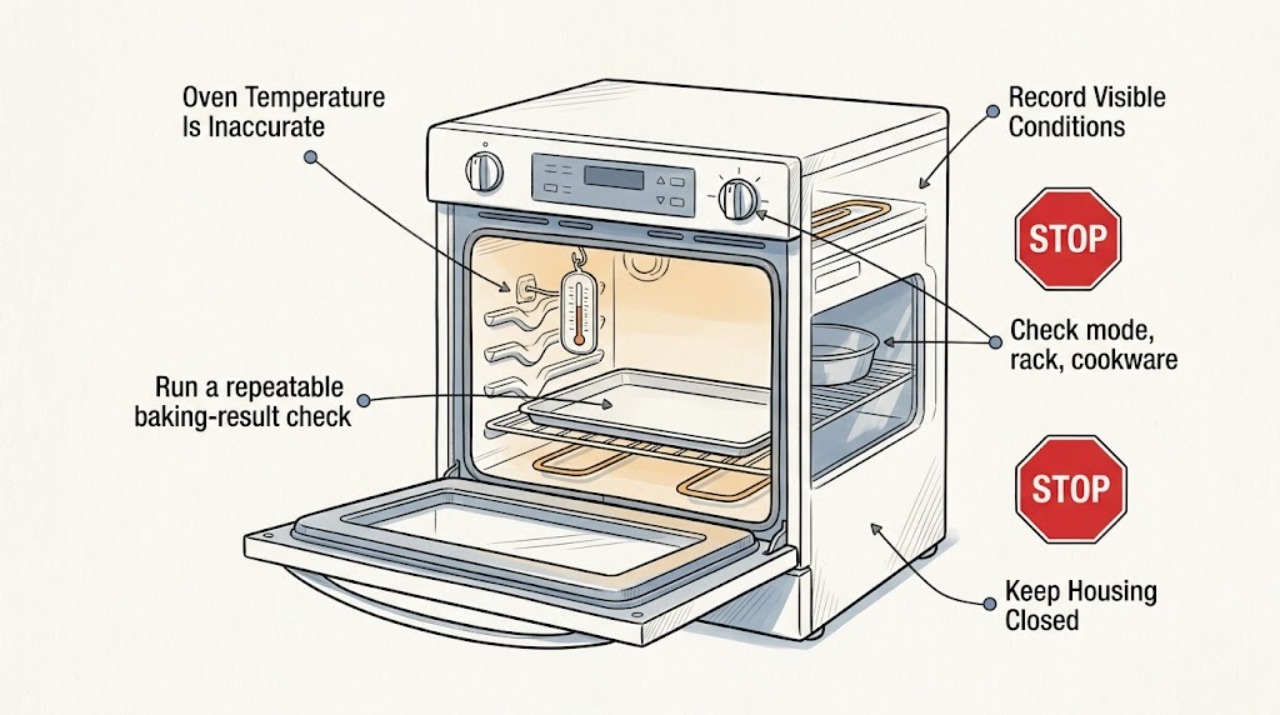
Oven Temperature Is Inaccurate: What to Check When an Independent Thermometer Differs
An independent oven thermometer reading that differs from the display does not by itself prove that the oven is faulty. Ovens normally cycle their heating elements, and the reading changes with thermometer quality, rack position, air movement, and whether the door was opened.
-
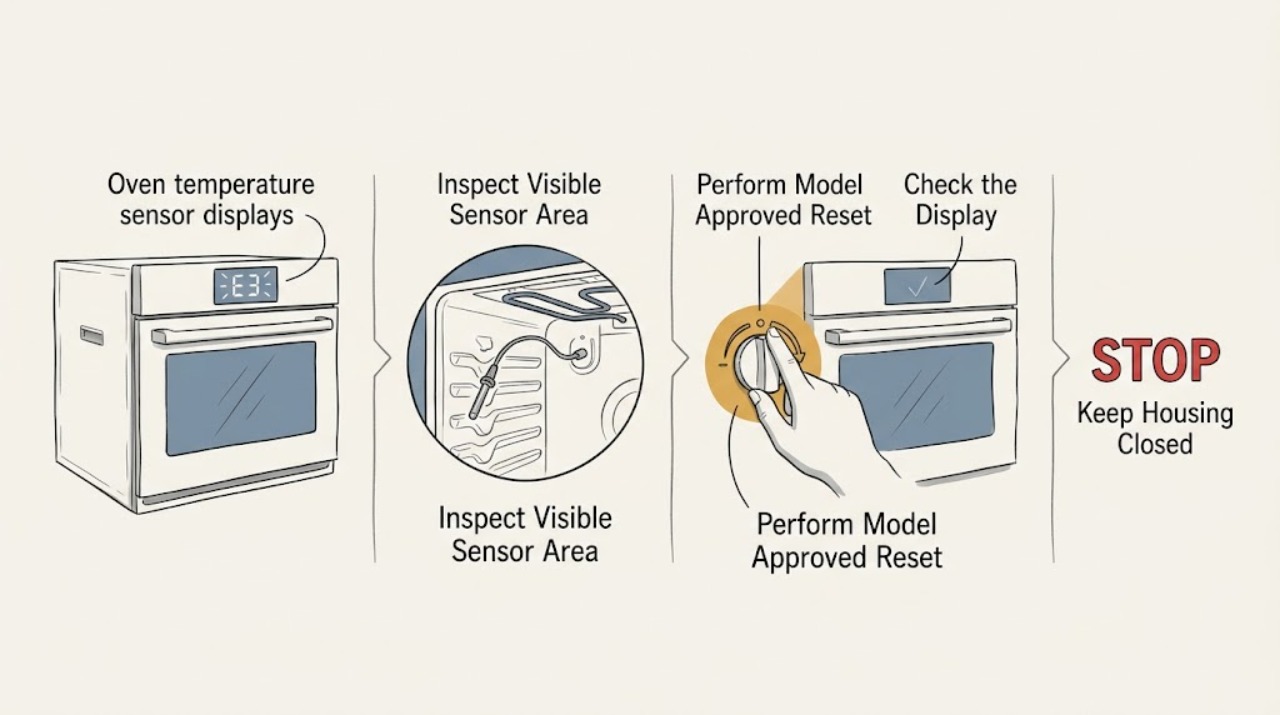
Oven temperature sensor displays an error code: What to Check and What to Do Next
An oven temperature-sensor error code does not prove that the sensor alone has failed. Depending on the model and code, the cause can be the sensor, its wiring, the control, an abnormal temperature, or a communication fault.
-
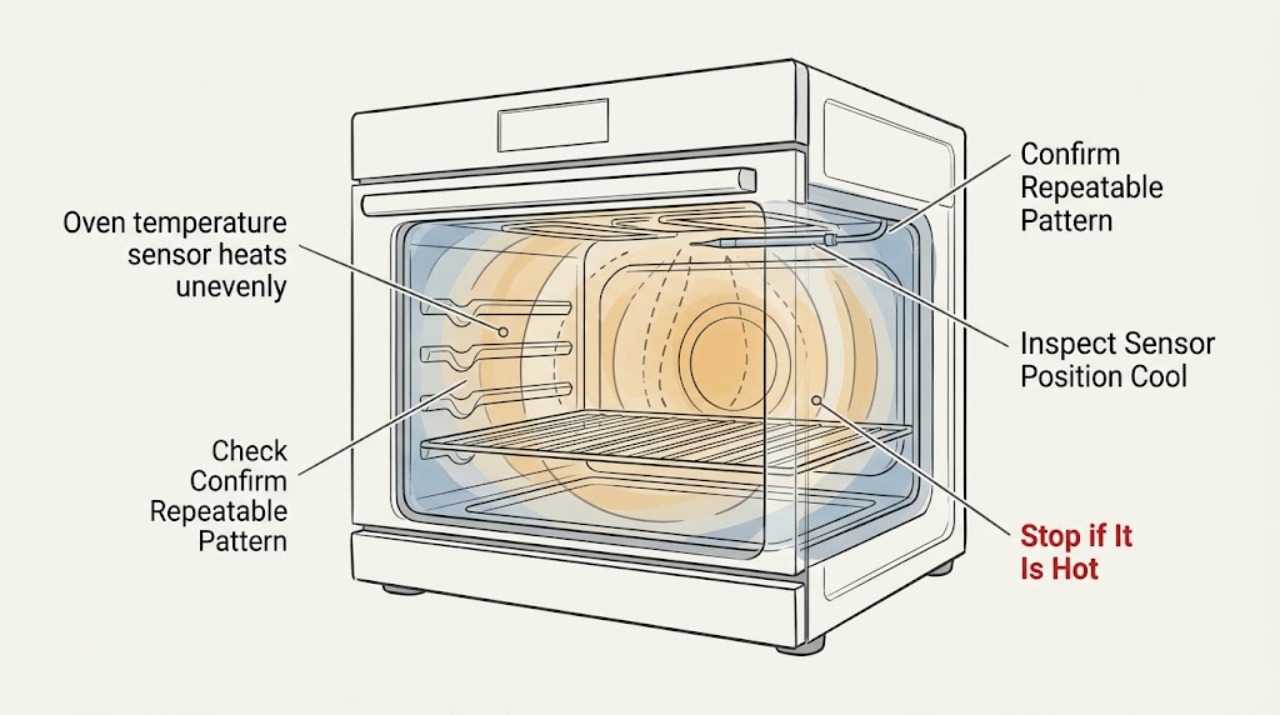
Oven temperature sensor heats unevenly: What to Check and What to Do Next
An oven that heats unevenly may have a temperature-sensor position or calibration problem, but the same symptom can come from the bake element, control, door seal, airflow, rack and pan placement, or normal temperature cycling.
-
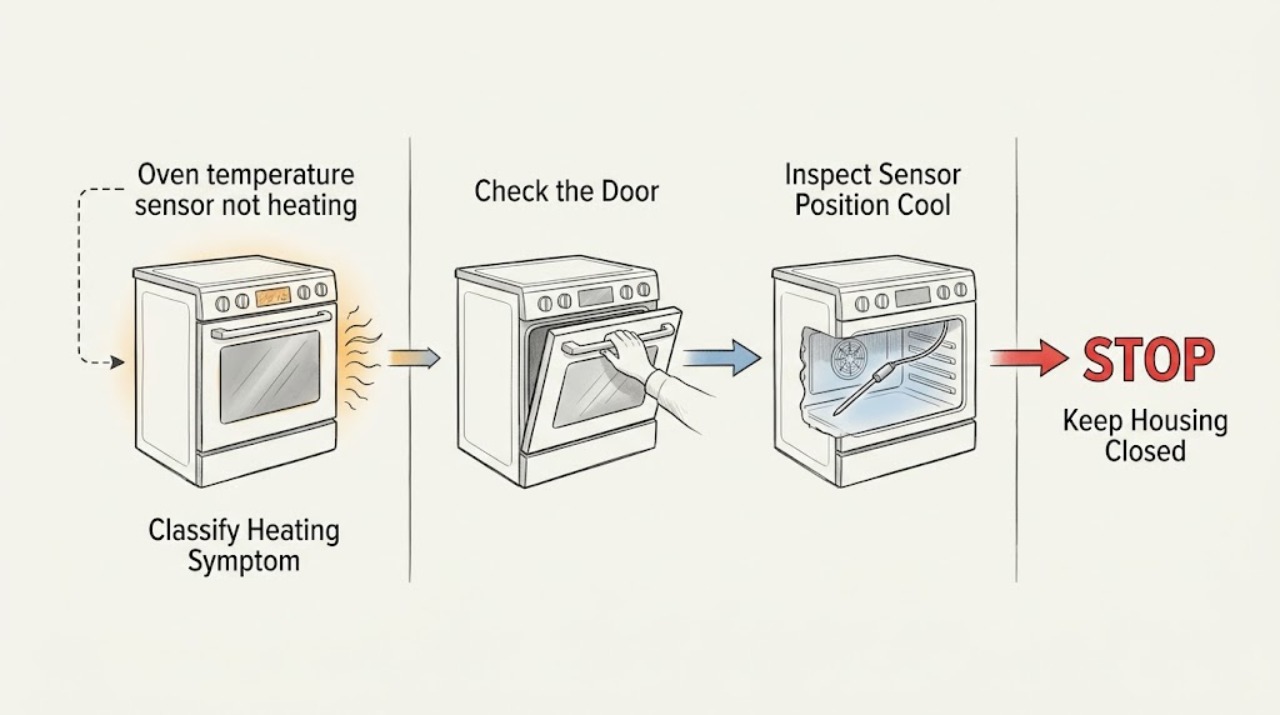
Oven temperature sensor not heating: What to Check and What to Do Next
An oven temperature sensor does not create heat; it reports oven temperature so the control can regulate the heating system. If the oven does not heat, first confirm the cooking mode, door, settings, power or gas symptoms, and whether a bake element or gas igniter visibly activates.
-
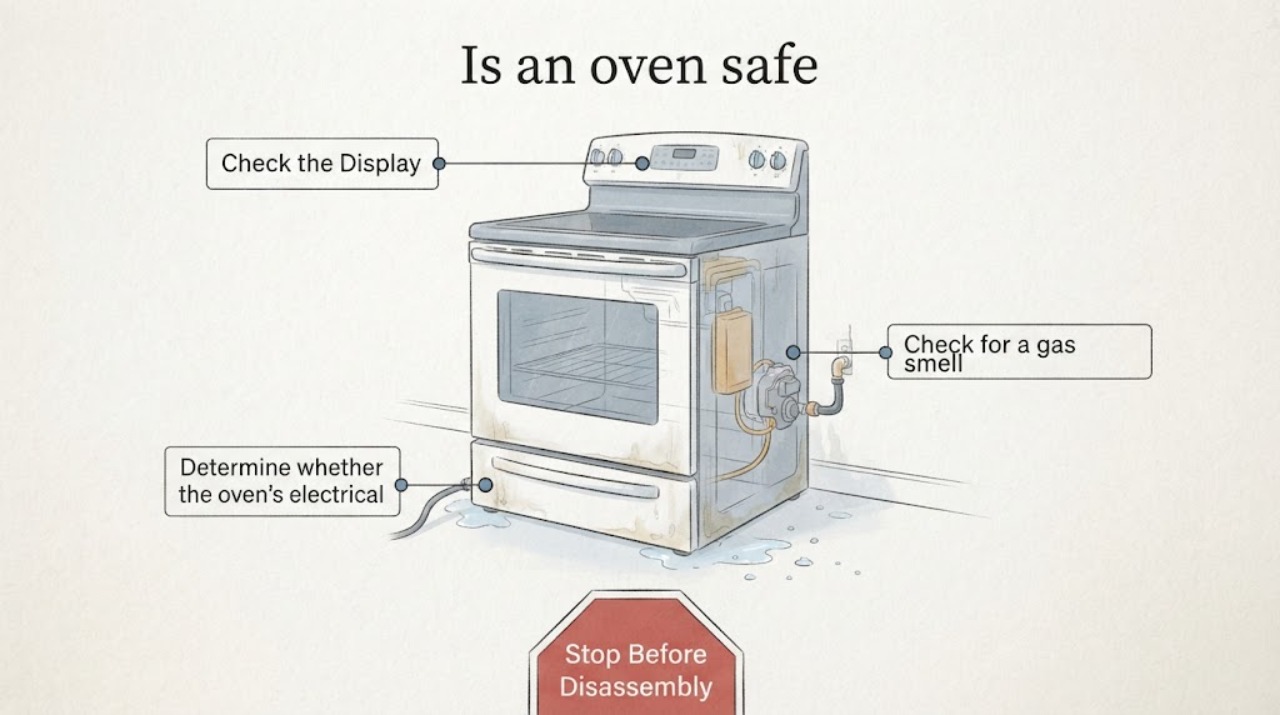
Is an oven safe to use after a minor flood? Stop-use checks
Do not decide that an oven is safe just because the flood was described as minor or the outside has dried. CPSC says not to use electrical or gas appliances that have been wet or turn on damaged appliances.