
On this page
Start here
Quick answer
Do not decide that an oven is safe just because the flood was described as minor or the outside has dried. CPSC says not to use electrical or gas appliances that have been wet or turn on damaged appliances. Keep the oven off and have a qualified appliance professional evaluate it; a gas oven may also require the gas utility or a qualified gas professional. If you smell gas or hear hissing, leave immediately without operating switches or flames and call emergency or gas services from outside. The exact water depth, oven type and model are needed before anyone can decide whether the appliance can be restored or must be replaced.
Work through in order
Diagnostic checks
Use only checks that match the exact appliance or system and its official guide.
-
Check 1
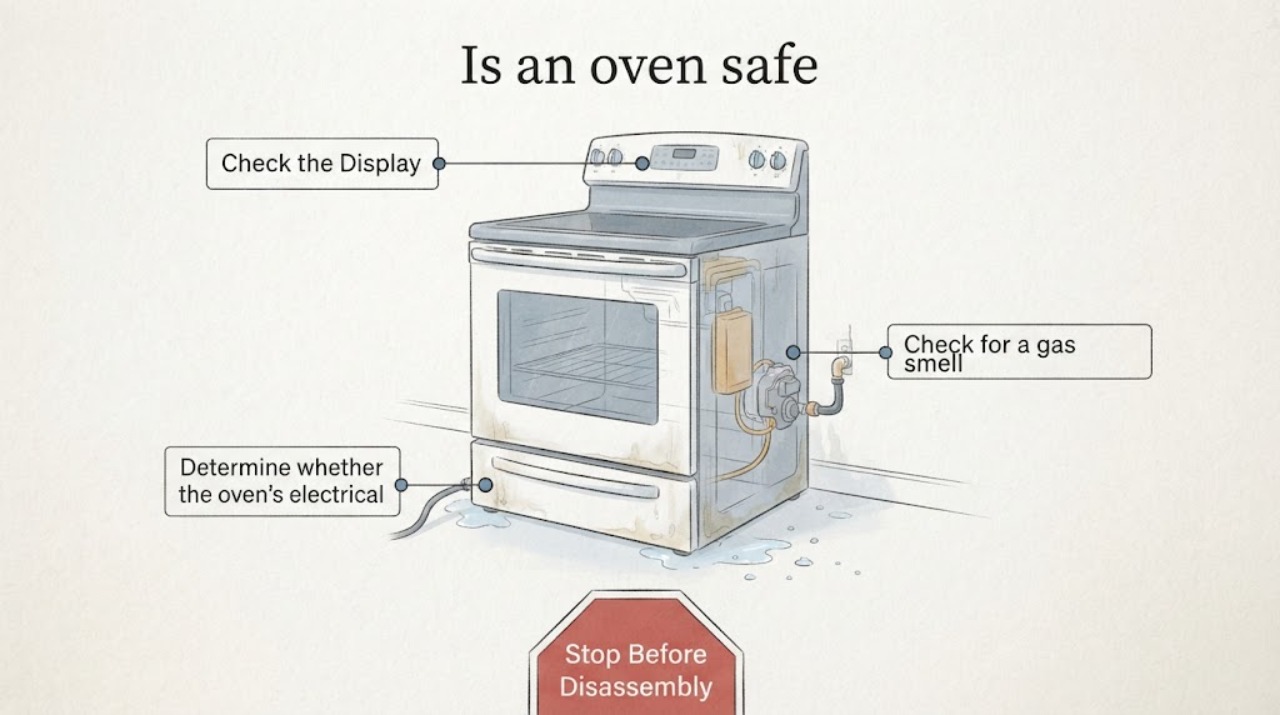
Keep the oven off. From a dry, stable position, note whether water reached the lower drawer, floor-level vents, power connection, controls, burners or any gas line, and do not pull the appliance out or remove a panel to look farther.
Expected result: There is standing water, silt, a visible waterline, wet wiring/connection, or any uncertainty about whether water reached the underside or controls.
Next step: Do not plug in, light, preheat or “test” the oven. Photograph the waterline and model/rating label from a dry position for the electrician or appliance professional.
Why this matters
Why: Any of these observations is treated as wet or potentially damaged appliance exposure; an intact-looking front does not clear hidden electrical or gas components.
-
Check 2
Check for a gas smell or hissing only from a safe location; do not lean into the oven, operate a knob, use a lighter, or make a phone call inside if gas may be present.
Expected result: Gas is smelled or hissing is heard, or a gas line/control may have been submerged.
Next step: Leave immediately, avoid switches, flames and electronics, and call the gas utility or emergency services from outside. Do not return until authorities or the gas professional says it is safe.
Why this matters
Why: This is a possible gas leak or damaged gas-control condition, not an ignition troubleshooting symptom.
-
Check 3
Determine whether the oven’s electrical equipment, receptacle, cord, breaker area or nearby floor was wet, and whether the oven was energized during the flood, without touching a wet appliance or standing in water.
Expected result: Electrical equipment is wet/near water, or access to the main disconnect would require standing water.
Next step: Keep clear and call an electrician to make the home safe. If the main disconnect is reachable from a dry location, follow the local emergency guidance; do not handle a breaker or plug while wet.
Why this matters
Why: The shock and fire risk must be controlled before any appliance assessment; moisture or silt can leave electrical devices unsafe even if they appear to work.
-
Check 4
Record the oven type (gas or electric), model and serial label, approximate water depth and whether the water was clean or floodwater; do not infer the internal water path from the word “minor.”
Expected result: The model/type or exposure history is missing, or the water reached the lower cabinet, controls, wiring, valve or venting.
Next step: Give the record and photos to a qualified appliance professional; for a gas oven, include the gas utility or qualified gas professional when the gas controls or line may have been wet.
Why this matters
Why: Without that identity and exposure information, no model-specific part, cleaning method, reset or restoration decision is supportable. CPSC says submerged appliance parts need qualified evaluation and some safety devices cannot be salvaged.
-
Check 5
After the professional has assessed the appliance and the home supply, ask whether the service report clears the exact model for use or calls for replacement of submerged controls, wiring, breakers/fuses or the appliance.
Expected result: The evaluator identifies submerged gas controls/electrical safety devices, corrosion, silt, contaminated insulation, damaged wiring, or an appliance that cannot be safely reconditioned.
Next step: Keep the oven out of service until the specified replacement or repair is completed and the professional provides a clear safe-use decision. Do not source a part by appearance or model family guess.
Why this matters
Why: CPSC says submerged gas control valves, breakers, GFCIs and fuses must be replaced; other submerged appliance parts may require replacement or qualified evaluation, so a simple dry-out is not an approved repair.
-
Check 6
If the professional clears the oven, follow the exact model manual and service instructions for cleaning and first use, and keep flood-exposed food or cookware out until it has been safely cleaned or discarded.
Expected result: The oven is explicitly cleared for use and the cleanup plan addresses both the appliance’s electrical/gas condition and floodwater contamination.
Next step: Use the documented first-use procedure. Stop and call the evaluator if there is gas odor, smoke, sparking, abnormal heating or a breaker trip.
Why this matters
Why: A professional clearance is different from the oven merely powering on; safe operation still depends on the identified model and completed remediation.
Use your observations
Decision map
Find the observation that best matches what you see, then follow the next safe action.
-
PATH 01Next step
What you see
Gas odor or hissing is present, or a gas valve/line may have been submerged.
Do this next
Leave without operating switches, flames or electronics, call emergency/gas services from outside, and wait for professional clearance.
Why this path and its safety boundary
Why it matters: Treat the situation as a possible gas leak or damaged gas-control condition; the oven must not be tested.
-
PATH 02Next step
What you see
The oven or its electrical connection was wet, or the home disconnect cannot be reached without standing water.
Do this next
Keep people away, have an electrician make the supply safe, and have the wet appliance inspected before any plug-in or test.
Why this path and its safety boundary
Why it matters: There is an electrical shock/fire exposure that cannot be cleared by drying the visible cabinet.
-
PATH 03Next step
What you see
No gas smell is present, but the waterline or depth is unknown or may have reached the lower cabinet, controls, wiring, venting or gas components.
Do this next
Leave the oven off and provide the exposure history, model label and photos to a qualified appliance professional; do not choose a part or reset procedure from a generic oven page.
Why this path and its safety boundary
Why it matters: The absence of odor does not prove that floodwater missed hidden parts or that a gas valve/electrical device remains reliable.
-
PATH 04Next step
What you see
A qualified evaluator documents that the exact oven is safe after the exposure has been assessed and any required replacements or cleaning are complete.
Do this next
Follow the documented model instructions for first use and stop immediately for odor, smoke, sparking, abnormal heat or a tripped breaker.
Why this path and its safety boundary
Why it matters: The safe-use decision comes from the model-specific inspection and completed remediation, not from the oven turning on.
Helpful context
Understand the symptom
Why “minor” does not clear the oven
“Minor flood” describes the event, not which parts got wet. Water can reach a cord, receptacle, terminal, control, ignition circuit, gas valve or wiring without leaving an obvious mark outside. CPSC says not to use wet electrical or gas appliances or turn on damaged appliances. Drying the door or wiping the cabinet is therefore not a safety test, and the article cannot identify a failed element, igniter, valve or control without the oven type, model and a professional inspection.
Floodwater is also a contamination issue
CDC says floodwater can contain bacteria and waste and recommends cleaning wet items and surfaces safely. That advice does not authorize heating food in an oven that has been exposed to floodwater. Keep food, cookware and racks out of the appliance until its water exposure and cleanability have been assessed; discard food that contacted floodwater rather than trying to make it safe by baking.
When checks do not resolve it
Need a professional?
Keep the oven off and call emergency or gas services from outside for gas odor or hissing. Call an electrician before approaching wet electrical equipment or a disconnect that requires standing water, and use qualified appliance service for any waterline, silt, corrosion, wet controls, wet wiring, submerged gas components or uncertainty about the oven’s internal exposure.
Common questions
FAQ
Can I use an oven after a minor flood if it still turns on?
No. CPSC says not to use wet or damaged electrical or gas appliances. Powering on is not a safety inspection; have the exact oven and its supply evaluated first.
What if the water only reached the bottom drawer or lower cabinet?
Do not assume the controls or wiring stayed dry. Record the waterline and model, keep the oven off, and have a qualified professional assess whether hidden components, insulation, gas controls or the electrical connection were affected.
Should I turn the breaker back on to see whether the oven works?
No. If electrical equipment is wet or near water, CDC and ESFI say power should remain off until the electrical system and appliance are inspected; call an electrician if reaching the disconnect requires standing water.
What should I do if I smell gas after the flood?
Leave immediately without operating switches, flames or electronics, then call emergency or gas services from outside. Do not return until professionals say it is safe.
Read the exact guide
Official sources
- Surviving the Aftermath of a Hurricane, Tornado, or Flood: CPSC Warns of Post-Storm Hazards from Generators, Candles, and Wet AppliancesU.S. Consumer Product Safety Commission · Opened official CPSC flood-safety release; applies as general wet-appliance safety guidance, not as a model-specific oven repair manual.
- Flood Electrical Safety: High Water, High StakesElectrical Safety Foundation International · Opened ESFI flood electrical-safety guidance; supports inspection and no-reenergization boundaries for wet appliances, not a model-specific oven procedure.
- Guidelines for Cleaning Safely After a DisasterCenters for Disease Control and Prevention · Opened official CDC guidance for post-disaster buildings and wet electrical equipment; it provides safety boundaries, not oven-specific diagnosis or restoration instructions.
- CPSC Warns Flood Victims: Replace All Gas Control Valves, Electric Circuit Breakers, GFCIs, and Fuses That Have Been Under WaterU.S. Consumer Product Safety Commission · Opened official CPSC release; supports the replacement/evaluation boundary for submerged controls and appliance circuits, not a specific oven part diagnosis.
Community feedback
Share a repair observation
Share a plain-text repair observation. Accepted observations are published automatically; this page may take a moment to update.