
On this page
Start here
Quick answer
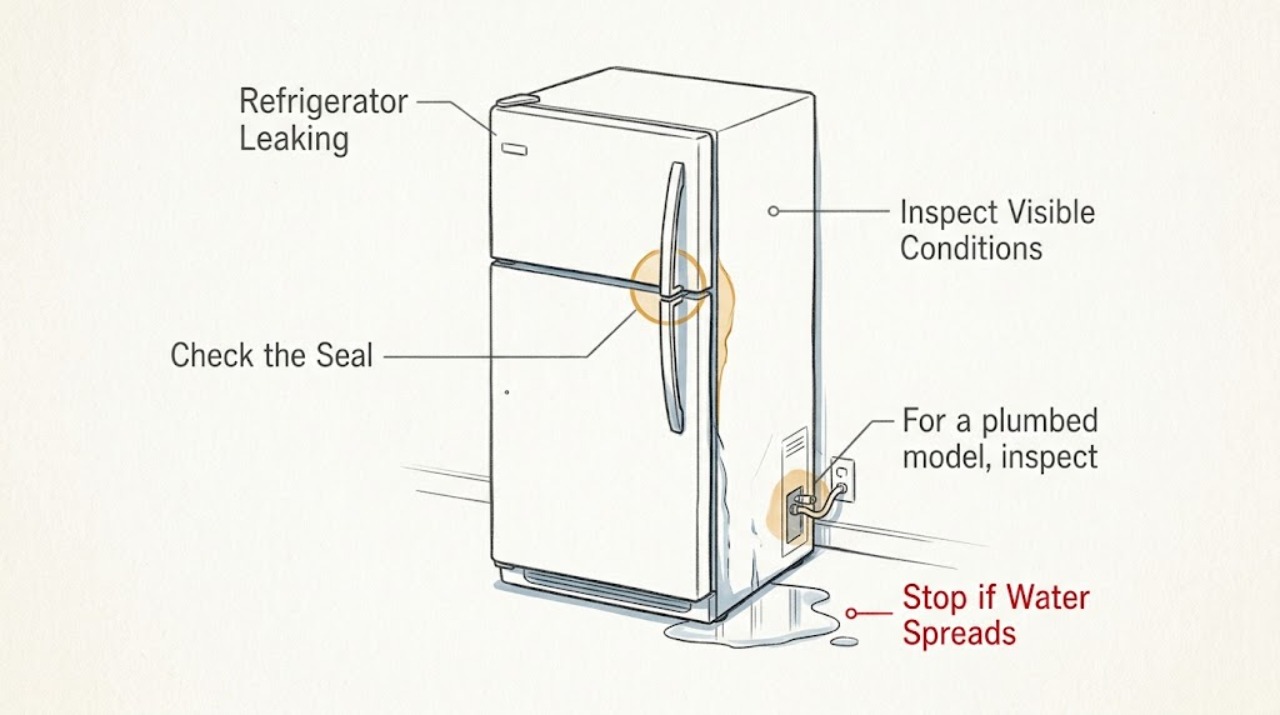
Find where water starts: inside under drawers, at the door, from the bottom cover, or behind the refrigerator. Dry the area and keep water away from electrical connections. Check only visible gasket, drainage, and supply conditions described by the model manual. If the leak is continuous, reaches electricity, or comes from a damaged line or cabinet, stop the water supply if safe and arrange Panasonic service.
Before you begin
Safety first
- Do not pull a loaded unit through water, remove covers, probe drains, or touch wet electrical parts.
Work through in order
Diagnostic checks
Use only checks that match the exact appliance or system and its official guide.
-
Check 1
Dry the visible water and observe the starting point without pulling a loaded refrigerator or touching wet electrical parts.
Expected result: Water starts inside under drawers, at the bottom cover, around the door, or from behind the unit.
Next step: Continue only with the matching safe visual check and protect food/electrical areas.
Why this matters
Why: The location narrows the path to internal drainage/tank, a seal, a bottom-cover seal, or a supply connection.
-
Check 2
Inspect the door gasket and closing path for dirt, gaps, or packages holding the door open; wipe the gasket with a soft damp cloth and dry it.
Expected result: A gap/obstruction is present, or the door seals evenly.
Next step: Correct only the accessible obstruction and arrange service for a damaged gasket.
Why this matters
Why: Warm air and condensation can create moisture; an even seal makes a drain, tank, or supply leak more likely.
-
Check 3
For a plumbed model, inspect the accessible supply connection and bottom-cover area for a loose fitting, split tube, or displaced rubber ring; do not remove covers.
Expected result: A visible connection or seal is damaged/misaligned, or the area is dry.
Next step: Stop the water supply only if the model arrangement permits and call service/plumbing support for damage.
Why this matters
Why: A damaged supply or bottom-cover seal can explain a localized leak; a dry visible area leaves hidden paths unresolved.
-
Check 4
Note whether water appears after defrost, door opening, or dispensing and whether frost/condensation or temperature problems accompany it.
Expected result: The leak is intermittent with condensation/defrost, or continuous/recurrent with a puddle.
Next step: Arrange service for recurrence, rapid accumulation, or water near electrical components.
Why this matters
Why: Intermittent moisture can follow documented condensation/defrost behavior; a continuous puddle needs a leak diagnosis.
Use your observations
Decision map
Find the observation that best matches what you see, then follow the next safe action.
-
PATH 01Next step
What you see
Water appears only with condensation or after defrost and the seal is good
Do this next
Monitor the amount and keep airflow/closure normal; service increasing or pooling water.
Why this path and its safety boundary
Why it matters: Moisture from operating conditions remains possible.
-
PATH 02Next step
What you see
Water starts at the bottom cover or a visible supply connection
Do this next
Do not open the cabinet; isolate water safely and arrange service.
Why this path and its safety boundary
Why it matters: A seal or water connection is implicated.
-
PATH 03Next step
What you see
Water collects under drawers or reaches electrical parts
Do this next
Stop use and arrange qualified service.
Why this path and its safety boundary
Why it matters: An internal tank/drain or electrical safety issue may be present.
Helpful context
Understand the symptom
Location separates spill from appliance leak
Water under a drawer, from the bottom cover, and at the door do not share the same likely cause. Note when it appears and whether it follows defrost, door opening, or water use.
When checks do not resolve it
Need a professional?
Arrange Panasonic service for continuous/recurrent leaks, water under drawers, a damaged supply line or bottom cover, water near electricity, or any cabinet/tank leak.
Safety scope: Do not pull a loaded unit through water, remove covers, probe drains, or touch wet electrical parts.
Have this ready
- Provide model number, leak location/timing, gasket condition, supply-line/bottom-cover observations, frost/condensation, and temperature symptoms.
Common questions
FAQ
Why is there water under the refrigerator drawers?
A drain, tank, or tubing path may be leaking, while condensation is another possibility. Observe the starting point and arrange service if water returns.
Can I reseat the refrigerator bottom cover seal?
Only follow the exact model instructions. Do not remove covers or work near wet electrical parts; a recurring leak needs service.
Read the exact guide
Official sources
- Panasonic Troubleshooting / refrigerator symptoms and remediesPanasonic · NR-D535 model family and similar documented symptoms; verify the exact model
- Panasonic - Water leaks from the bottom coverPanasonic · Panasonic models using the documented bottom-cover rubber ring
- Panasonic NRC387 Operating InstructionsPanasonic · Only models covered by the NRC387 manual family; use the exact model manual for other refrigerators
Community feedback
Share a repair observation
Share a plain-text repair observation. Accepted observations are published automatically; this page may take a moment to update.