
On this page
Start here
Quick answer
Find where a Performa refrigerator leak starts before moving anything: dispenser, filter area, rear water line, or inside/bottom cabinet. Empty a catch tray, keep water away from electricity, and check only accessible fittings and ice buildup. A leak from an internal cabinet, damaged line, or recurring water path needs qualified service.
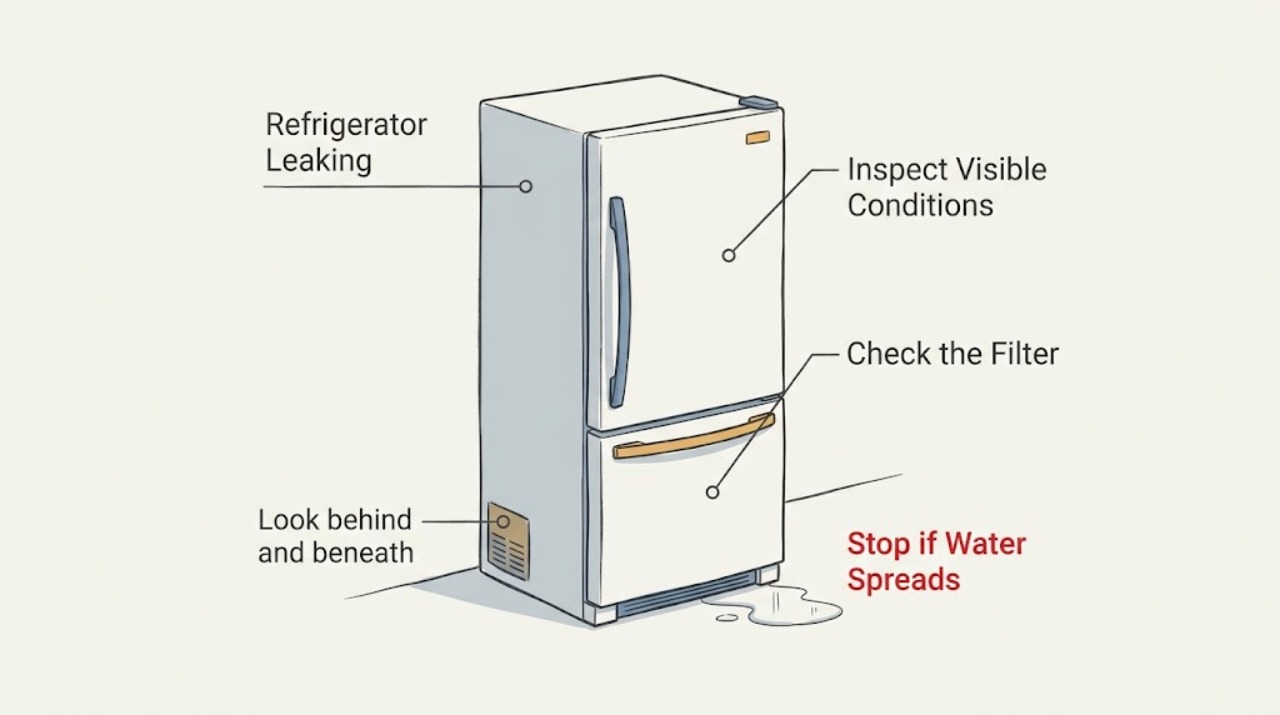
Work through in order
Diagnostic checks
Use only checks that match the exact appliance or system and its official guide.
-
Check 1
Dry the floor and cabinet, then dispense water and observe the dispenser tray and chute without reaching into moving parts.
Expected result: Water appears only at the tray/chute, or the tray stays dry while water appears elsewhere.
Next step: Empty and clean the tray and accessible chute with a warm damp cloth; if dripping continues after dispensing stops, stop using the dispenser and inspect the filter/line.
Why this matters
Why: A full tray, melting ice shavings, or a poorly seated glass can explain a front drip; a dry dispenser shifts suspicion to another path.
-
Check 2
If the refrigerator has a water filter, inspect the filter housing and seal for a crooked installation or visible moisture; do not force the cartridge.
Expected result: Water stops when the filter is removed for the model-approved check, or the housing remains wet with the filter correctly seated.
Next step: Reinstall the filter exactly as the manual describes; if the seal or housing is damaged, shut off the supply valve if accessible and arrange service.
Why this matters
Why: A filter that is not locked or sealed can restrict flow and leak; persistent wetness points to the housing or another connection.
-
Check 3
Look behind and beneath the unit for a kinked or wet accessible water-supply connection, keeping hands away from plugs and exposed wiring.
Expected result: The connection is visibly wet/loose, or no external connection is wet while water collects inside or under the cabinet.
Next step: If safe and accessible, close the water shutoff and arrange a technician for a loose connection or any internal leak; do not remove sealed panels.
Why this matters
Why: An external connection can be the source; an internal collection with dry accessible fittings suggests a drain, defrost, or internal hose issue.
Use your observations
Decision map
Find the observation that best matches what you see, then follow the next safe action.
-
PATH 01Next step
What you see
The drip appears only after dispensing and the tray is full or ice shavings are visible.
Do this next
Empty the tray, clean and dry the chute, and monitor the next dispensing cycle.
Why this path and its safety boundary
Why it matters: Dispenser overflow or melting residue is more likely than a cabinet leak.
-
PATH 02Next step
What you see
Water starts around the filter or rear connection and changes when the filter or supply is isolated.
Do this next
Use the model instructions to reseat the filter or close the supply valve, then schedule repair if moisture remains.
Why this path and its safety boundary
Why it matters: A filter seal or water-line connection is the leading suspect.
-
PATH 03Next step
What you see
Water returns with no dispenser use, or appears inside the cabinet, below the unit, or near electrical parts.
Do this next
Disconnect use, protect the floor and food, and call qualified appliance service; keep water away from the outlet.
Why this path and its safety boundary
Why it matters: An internal drain, hose, or structural leak is possible and is not a safe user repair.
Helpful context
Understand the symptom
Start at the source
Water can travel along a cabinet or floor, so the wettest point is not always the origin. Performa and Whirlpool guidance specifically distinguishes dispenser drips, filter seating, water-line connections, ice-chute residue, and internal leaks.
When checks do not resolve it
Need a professional?
Stop the refrigerator water supply and seek qualified service if water is continuous, reaches the electrical cord/outlet, comes from inside the cabinet, or returns after accessible seals and connections are checked. Do not open sealed refrigeration panels.
Common questions
FAQ
Why is the floor wet if the dispenser tray is not full?
Water may be traveling from a filter, rear supply connection, internal drain, or ice-maker line. Dry the area, identify the first wet point, and arrange service for any inaccessible source.
Should I keep using the refrigerator while it leaks?
Avoid using the water and ice functions until the source is known. If water approaches an outlet or electrical cord, stop and arrange qualified service.
Read the exact guide
Official sources
- Owner's ManualWhirlpool Corporation / Maytag Appliances · Maytag Performa refrigerator operation, care, temperature, leveling, and ice service
- Not Dispensing Ice or Water - RefrigeratorWhirlpool Corporation · refrigerator water filter installation, supply line, kinks, and water flow
- Leaking from Dispenser - Side by Side RefrigeratorWhirlpool Corporation · refrigerator dispenser tray, ice chute, filter, and connection leaks
Community feedback
Share a repair observation
Share a plain-text repair observation. Accepted observations are published automatically; this page may take a moment to update.