
On this page
Start here
Quick answer
When a Roper dishwasher leaks, stop the cycle, protect the floor, and identify whether water comes from the door, dispenser, sink connection, or underneath. Check the load and gasket, use only automatic dishwasher detergent, and inspect the external drain air gap or visible connections without opening panels. The Roper guide warns against excess suds and directs internal leaks or recurring water to qualified service.
Before you begin
Safety first
- Do not remove panels, touch the heating element, loosen pressurised fittings, or work around live wiring.
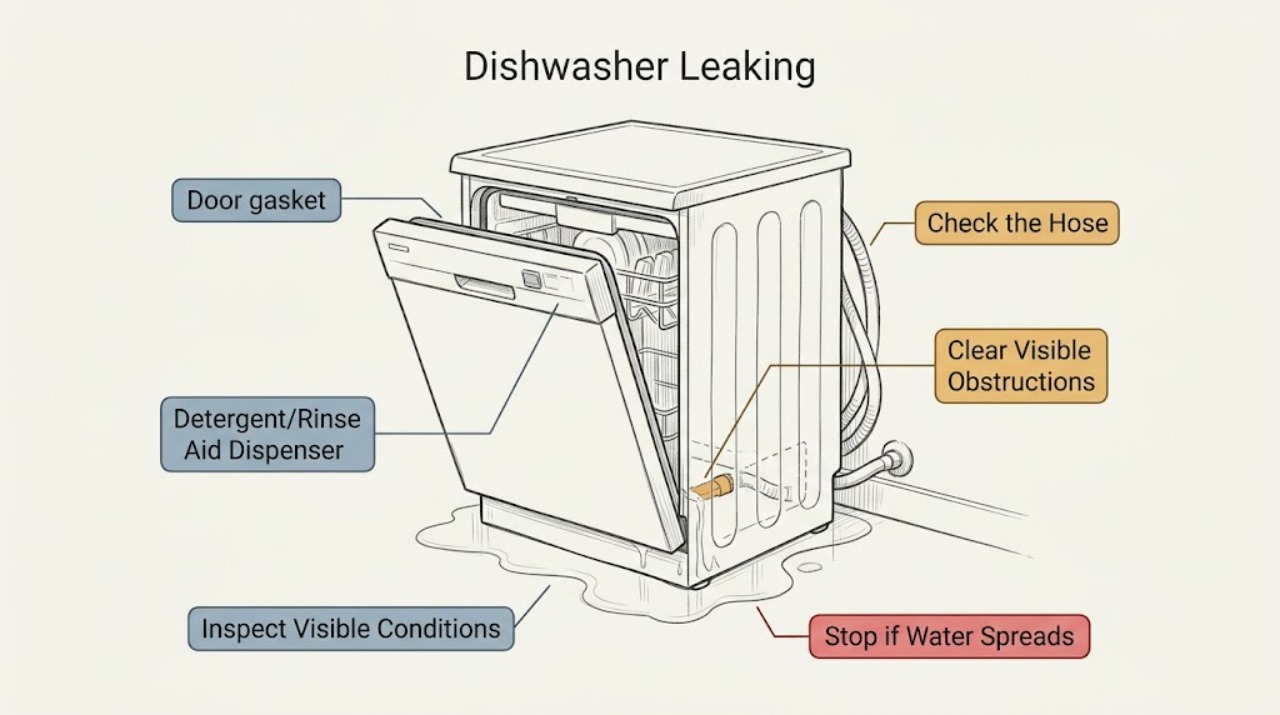
Work through in order
Diagnostic checks
Use only checks that match the exact appliance or system and its official guide.
-
Check 1
Stop/cancel the cycle, keep hands away from the heating element, and inspect the floor, door edge, dispenser area, and sink-side hose/air-gap area for the first wet point.
Expected result: Water is at the door/dispenser, external hose/air gap, or underneath the unit.
Next step: Dry the area and do not run another cycle until the external cause is clear.
Why this matters
Why: Location separates a front sealing/suds issue from external drainage or internal base leakage.
-
Check 2
Check that racks and dishes are not blocking the door, the door closes and latches evenly, and the gasket is clean and continuous.
Expected result: A rack/item prevents closure or the gasket is damaged, or closure appears normal.
Next step: Remove one obstruction and clean accessible gasket residue; do not force the door or glue the seal.
Why this matters
Why: Roper's guide identifies door closure and rack orientation as operating and leakage-relevant conditions.
-
Check 3
Confirm that only automatic dishwasher detergent is used and that rinse aid was not overfilled; look for excess suds without touching hot water.
Expected result: Excess suds or rinse aid is visible, or detergent use is correct and suds are absent.
Next step: Stop adding product and follow the manual's correction; request service if leaking continues.
Why this matters
Why: The Roper guide warns that non-dishwasher detergent can overflow and that rinse-aid overfill can leak and oversuds.
-
Check 4
After power is off and the sink area is dry, inspect the external drain air gap and visible hose connections for blockage or wetness; do not remove lower panels.
Expected result: The air gap/connection is visibly blocked or wet, or the accessible exterior is dry.
Next step: Clean only the external air gap according to its manufacturer's instructions and keep the dishwasher off if water returns.
Why this matters
Why: The guide treats the drain air gap as an external plumbing device; a dry exterior with under-unit water points to an internal service issue.
Use your observations
Decision map
Find the observation that best matches what you see, then follow the next safe action.
-
PATH 01Next step
What you see
Leak stops after a door obstruction or excess-suds condition is corrected
Do this next
Monitor one supervised cycle and stop immediately if water returns.
Why this path and its safety boundary
Why it matters: A front closure or detergent condition was supported.
-
PATH 02Next step
What you see
Water is at the external air gap/hose or backs up from the drain
Do this next
Keep the appliance off and have the connection or drain assessed.
Why this path and its safety boundary
Why it matters: An external plumbing/drain path issue is more likely.
-
PATH 03Next step
What you see
Water appears underneath or persists with normal loading, gasket, detergent, and external drain checks
Do this next
Close the water supply if safe and request Roper service; do not open panels.
Why this path and its safety boundary
Why it matters: An internal tub, pump, valve, or hose leak remains possible.
Helpful context
Understand the symptom
Locate the first wet point
Water at the door edge has a different next check from water below the machine or at the sink connection. Cancel safely, close the supply if accessible, and document the first wet point before another cycle.
When checks do not resolve it
Need a professional?
Keep the dishwasher off and close the water supply when safe after an under-unit or recurring leak.
Safety scope: Do not remove panels, touch the heating element, loosen pressurised fittings, or work around live wiring.
Have this ready
- Provide the model, first wet point, cycle stage, door/gasket result, detergent/suds, air-gap/hose observation, and whether water remains.
Common questions
FAQ
Can too much detergent make a Roper dishwasher leak?
Yes. The Roper guide says non-dishwasher detergent can create excessive suds that overflow; rinse-aid overfill can also leak and oversuds. Stop adding product and follow the manual.
Is the Roper dishwasher drain air gap part of the appliance?
The Roper guide describes it as an external plumbing device. Inspect and clean it only according to its own instructions; an under-unit leak still needs appliance service.
Read the exact guide
Official sources
- DIAGNOSTICS AND TROUBLESHOOTING (CONT.)Whirlpool Corporation · Whirlpool-family dishwasher service-level leak causes and technician boundary
- Use & Care GuideRoper Home Appliances / Whirlpool Corporation · Roper dishwasher leak, door, detergent, rinse-aid, drain-air-gap, and safety guidance
Community feedback
Share a repair observation
Share a plain-text repair observation. Accepted observations are published automatically; this page may take a moment to update.