
On this page
Start here
Quick answer
Protect the floor, trace the first wet point, and shut off the refrigerator water supply if the leak is active. Water at the filter, behind the cabinet, or under a door points to different checks; inspect only accessible connections and call service for a cracked line, persistent leak, or water near electrical parts.
Before you begin
Safety first
- Keep water away from electricity; do not pull a wet refrigerator, remove covers, or handle damaged tubing.
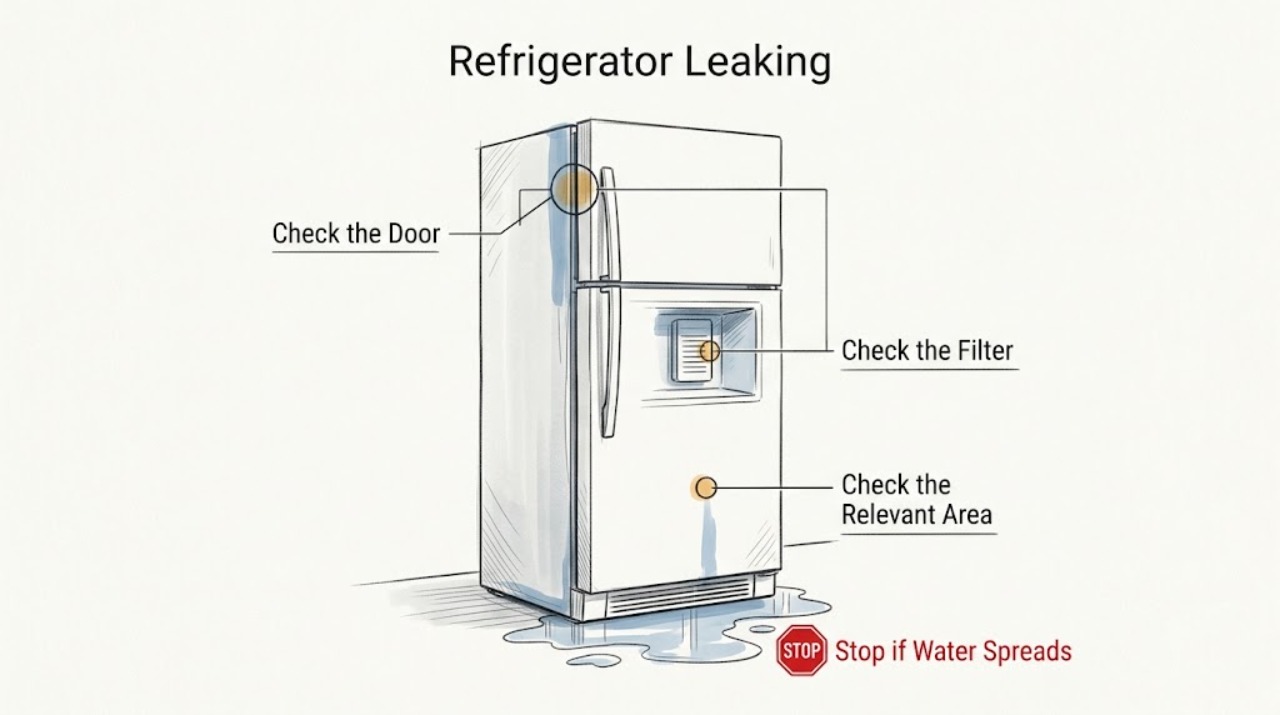
Work through in order
Diagnostic checks
Use only checks that match the exact appliance or system and its official guide.
-
Check 1
Unplug only if it can be done without touching water, protect the floor, and close the refrigerator water shutoff if the leak is active. Trace from the puddle toward the cabinet, filter, and door.
Expected result: Water is near an outlet or wiring, or the first wet point is safely visible.
Next step: Keep power and water isolated when unsafe and call service; otherwise continue with the matching location check.
Why this matters
Why: Water near electricity is an immediate safety boundary; a visible first point enables a targeted check.
-
Check 2
If wetness is at the filter head, confirm the filter is the correct type for the model and fully installed and locked as the manual directs.
Expected result: The filter is loose, incompatible, overdue, or the filter area remains dry.
Next step: Reseat or replace only according to the model guide, then reopen water briefly and observe; stop if it drips.
Why this matters
Why: A filter that is not seated or compatible can drip at the head; a dry filter shifts attention to supply or drain paths.
-
Check 3
Inspect the accessible water line and connection points behind the refrigerator and under the door for cracks, kinks, or moisture.
Expected result: A line is cracked or a connection is wet, or those areas are dry.
Next step: Keep the water supply closed and arrange service for a damaged line or connection; do not force fittings.
Why this matters
Why: Supply and dispenser tubing can leak at damaged or loose connection points; a dry line makes drainage or condensation more likely.
-
Check 4
After an accessible filter or connection check, dry the area and observe one normal water/ice use, if safe, without leaving the appliance unattended.
Expected result: The first wet point returns, or the floor stays dry.
Next step: Close the water supply and call service for any returning leak; document the location and timing.
Why this matters
Why: A returning wet point confirms the source remains active; no return supports monitoring but does not rule out an intermittent drain leak.
Use your observations
Decision map
Find the observation that best matches what you see, then follow the next safe action.
-
PATH 01Next step
What you see
Water starts at the filter head or under-door dispenser line
Do this next
Close the water supply, verify only the accessible seating described in the manual, and arrange service if wetness returns.
Why this path and its safety boundary
Why it matters: The leak is in a water-delivery component, so continuing to dispense or make ice can add water until it is isolated.
-
PATH 02Next step
What you see
Water is behind the refrigerator at a cracked or wet supply line
Do this next
Keep the supply closed and request plumbing or qualified appliance service.
Why this path and its safety boundary
Why it matters: The household supply or its refrigerator connection is the active leak source and needs isolation before further use.
-
PATH 03Next step
What you see
No supply point is wet and the leak appears intermittently from below
Do this next
Arrange service to diagnose drain or defrost drainage; do not open sealed or electrical panels.
Why this path and its safety boundary
Why it matters: The visible puddle is not explained by the accessible supply points, leaving a drain or defrost path that requires internal diagnosis.
Helpful context
Understand the symptom
Trace upstream, not just the puddle
Dry the floor and watch for the first wet point. Water can travel from a filter head, supply connection, dispenser line, or drain area before appearing at the front.
Only after diagnosis
Potential parts
- water filter
Only if the model-approved filter is incorrect, overdue, or will not seat correctly.
- water tubing or fitting
Only after the leak is traced to a damaged line or connection and service confirms the replacement.
When checks do not resolve it
Need a professional?
Leak returns after an accessible seating check or cannot be traced safely.
Safety scope: Keep water away from electricity; do not pull a wet refrigerator, remove covers, or handle damaged tubing.
Common questions
FAQ
Why is there water under the refrigerator door?
It can come from a dispenser water line, but trace the first wet point rather than assuming the puddle location is the source. Close the water supply if it returns.
Can I keep using the refrigerator while it leaks?
Only if the area is safe and the leak is fully stopped; water near electrical parts or a returning leak requires isolation and service.
Read the exact guide
Official sources
- What to Do if There is Water on the FloorWhirlpool Product Help (Whirlpool Corporation) · Legacy Roper refrigerators using the documented Whirlpool-family water system; verify the exact Roper model manual before applying.
- Home | Roper AppliancesRoper Appliances · Roper appliances; exact product documentation is model-specific
Community feedback
Share a repair observation
Share a plain-text repair observation. Accepted observations are published automatically; this page may take a moment to update.