
On this page
Start here
Quick answer
Stop putting valuable white clothes through the Samsung DVG45N5300W/A3 until you determine whether the tan lines are transferring from the drum or were already present before drying. Turn the gas dryer off, unplug it, and let it cool before inspecting the drum. Samsung says a pen, crayon, or other spilled item can stain a dryer drum, and its cleaning guidance supports a suitable non-abrasive cleaner followed by clean old towels to collect residue. If a mark follows a visible drum residue or damaged area, stop using the dryer and arrange service; if the drum and clean-towel check are clean, the dryer has not been shown to be the source. Any gas smell, smoke, burning odor, or scorch-like damage requires immediate stop-use and the gas/smoke safety response rather than another test load.
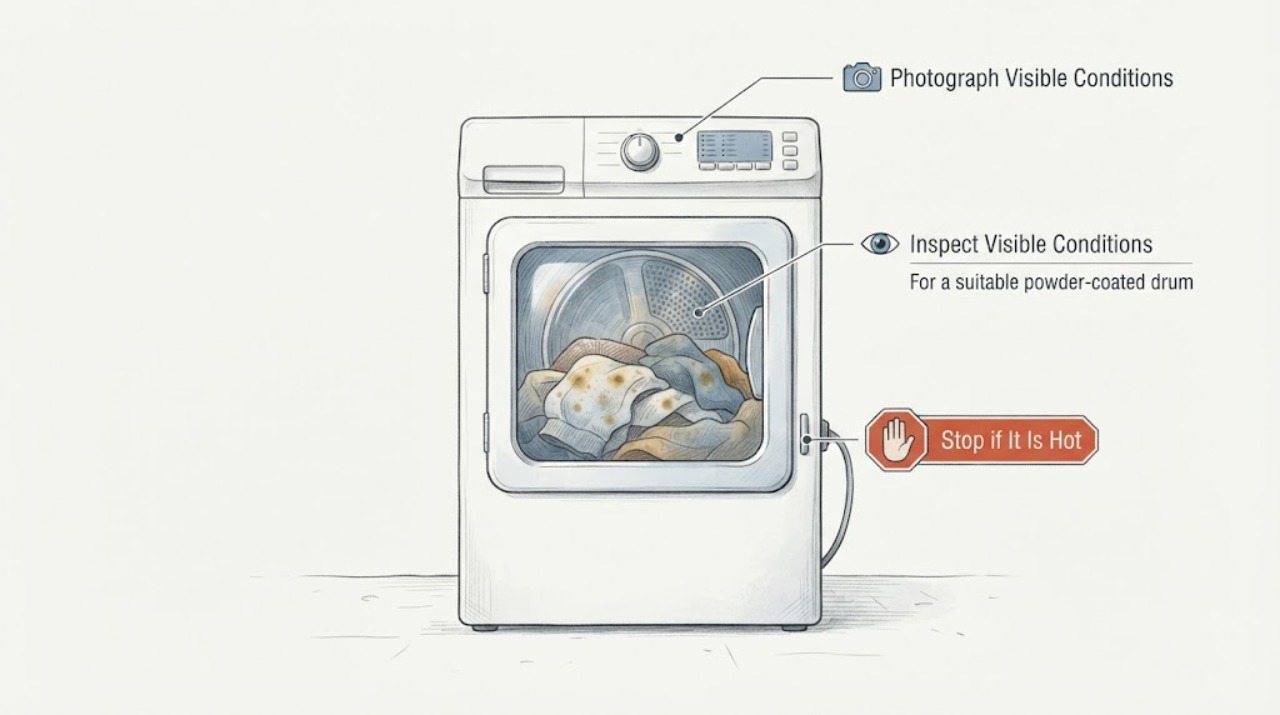
Work through in order
Diagnostic checks
Use only checks that match the exact appliance or system and its official guide.
-
Check 1
Stop the gas dryer, unplug it, and let the drum cool completely. Photograph the tan line, record which load and cycle produced it, and note whether the mark is on one item or several.
Expected result: The clothing is scorched, the mark has an oily or waxy feel, the line repeats on several items, or the mark appears only once without a visible dryer symptom.
Next step: Do not run another valuable load. Continue only with the cool, unplugged external inspection when there is no gas smell, smoke, or continuing burning odor.
Why this matters
Why: A scorch, repeated transfer, or visible residue requires a safety and drum check; one isolated mark does not establish that the dryer caused it.
-
Check 2
With gas off at the appliance controls, power unplugged, and the drum fully cool, inspect only the visible drum and door area with a flashlight. Look for pen, crayon, wax, oily residue, a foreign object, or a localized damaged or rough area; do not scrape or remove panels.
Expected result: Residue or a visible contact area is found, or the drum looks clean and intact.
Next step: If residue is found, follow the limited cleaning check below and keep the dryer out of service if the surface is damaged. If the drum is clean, preserve the evidence and avoid repeated test loads.
Why this matters
Why: Samsung identifies spilled pocket items such as pens or crayons as a reason a drum may become stained. A clean visible drum does not rule out every internal issue but gives no supported basis for a component diagnosis.
-
Check 3
For a suitable powder-coated drum, use Samsung's compatible all-purpose cleaner; for stainless steel, use a damp cloth and mild non-abrasive cleaner suitable for easily marred surfaces. Remove all cleaner residue and dry the drum.
Expected result: The visible residue comes off without damaging the surface, or it remains, spreads, or sits on a rough or damaged area.
Next step: Do not use solvents, abrasives, blades, or internal disassembly. Arrange Samsung or qualified gas-appliance service for persistent residue, coating damage, or a suspected contact point.
Why this matters
Why: Removable residue may have been the transfer source. Persistent material or surface damage is outside a normal cleaning result and should not be polished or scraped by the user.
-
Check 4
Only after the drum is clean, dry, cool, and free of cleaner residue, run the manufacturer-described check with old clean towels or rags rather than white clothing. Stop the cycle if there is odor, smoke, scorching, unusual heat, or a gas smell.
Expected result: The towels pick up tan material, or they remain clean while the original garment mark cannot be reproduced.
Next step: If material transfers, stop using the dryer and request service. If towels remain clean, do not keep testing valuable clothing; preserve the garment and review pre-dryer causes or seek textile-care advice.
Why this matters
Why: Material on the towels supports ongoing transfer from the drum or accessible residue. Clean towels do not prove the dryer is perfect; they mean the clothing stain was not reproduced under this limited check.
-
Check 5
Check only for visible smoke, gas odor, persistent burning or electrical odor, scorching, or a hot connection from outside the appliance. Do not open the burner cabinet, adjust the gas line, or continue a cycle to reproduce a mark.
Expected result: Gas is smelled, smoke is visible, burning or electrical odor continues, or no safety symptom is present.
Next step: For gas odor or smoke, clear the building and contact emergency services without operating switches or a phone inside. For continuing burning or electrical odor, turn the dryer off and arrange service. Otherwise use the evidence from the drum and towel checks to decide whether service is needed.
Why this matters
Why: Samsung treats gas odor or visible smoke from a gas dryer as an emergency and treats continuing burning or electrical odor as a stop-use service condition.
Use your observations
Decision map
Find the observation that best matches what you see, then follow the next safe action.
-
PATH 01Next step
What you see
A cool, unplugged inspection finds pen, crayon, wax, oily residue, or a repeatable contact area, and clean towels pick up the same tan material after the drum is cleaned.
Do this next
Stop using the dryer and request Samsung or qualified gas-appliance service. Do not scrape, sand, replace internal parts, or run more clothing loads.
Why this path and its safety boundary
Why it matters: The appliance is still transferring material to fabric or the surface is damaged; the evidence does not identify a hidden internal part.
-
PATH 02Next step
What you see
The drum is visibly clean and intact, and old clean towels remain clean in the limited manufacturer-described check.
Do this next
Stop using valuable white items for testing, retain photos and the marked item, and review the garment's prior wash, storage, and care-label history or seek textile-care advice. Request service if the mark repeats or a physical drum defect appears.
Why this path and its safety boundary
Why it matters: The dryer has not been shown to be the source of the isolated clothing mark; this result does not prove every internal condition is normal.
-
PATH 03Next step
What you see
The line is accompanied by scorching, a rough or damaged drum area, unusual heat, smoke, or a continuing burning or electrical odor.
Do this next
Stop the dryer and request qualified service; for smoke or an electrical odor follow Samsung's stop-use instructions. Do not run another load or open the cabinet.
Why this path and its safety boundary
Why it matters: This is a potential appliance or fire safety condition rather than a routine stain-cleaning problem.
-
PATH 04Next step
What you see
A gas odor or visible smoke comes from this gas dryer or its area.
Do this next
Clear the building of all occupants and contact emergency services. Do not turn on appliances or electrical switches and do not use a phone inside the building.
Why this path and its safety boundary
Why it matters: Samsung treats gas odor or visible smoke from a gas dryer as an emergency with possible fire or explosion risk.
Helpful context
Understand the symptom
Treat tan lines as possible transfer, not a confirmed dryer defect
A line on a white item can come from residue on the dryer drum, a damaged surface that contacts the fabric, a mark already present before drying, or a heat or chemical effect on the textile. The title does not prove which one occurred. Photograph the item and the mark before rewashing it, and note whether the line repeats at the same drum position or appears on more than one item.
Inspect and clean only after the gas dryer is cool
Samsung says to turn a gas dryer off and unplug it before vent-cleaning work, and its drum guidance says a pen or crayon left in a pocket can stain the drum. With the drum completely cool and power disconnected, look with a flashlight for ink, wax, oily residue, a foreign object, or a visibly damaged area. Do not scrape the coating, remove a panel, reach into the burner area, or use a solvent that the model manual does not approve.
Use Samsung's limited drum-cleaning check
For a powder-coated drum, Samsung describes using an appropriate all-purpose cleaner and then tumbling old towels or rags through a dry cycle to collect remaining residue. For a stainless drum, it specifies a damp cloth and mild non-abrasive cleaner suitable for easily marred surfaces. Remove cleaner residue and dry the drum before any test; the goal is to see whether residue transfers, not to scrub a suspected defect into the coating.
Interpret the clean-towel result carefully
If clean old towels pick up the same tan material, the dryer still has a transfer source that needs cleaning or service. If the drum and towels remain clean, the dryer has not been shown to cause the clothing mark; preserve the photographs and review the garment's prior washing, storage, and care-label history rather than repeatedly heating white clothing. A clean test does not diagnose a hidden internal defect, and a repeating line at one drum position merits service inspection.
Stop immediately for gas, smoke, or scorching
Samsung says a gas smell or visible smoke from a gas dryer requires clearing the building and contacting emergency services; do not turn on appliances or electrical switches or use a phone inside. For a continuing burning or electrical smell, Samsung directs the owner to stop the dryer and request service. Scorch-like clothing damage, a hot spot, smoke, or a gas odor is not a stain-cleaning experiment—keep the appliance out of service.
When checks do not resolve it
Need a professional?
Request Samsung or qualified gas-appliance service when residue transfers after cleaning, the drum has a rough or damaged area, tan lines repeat with a clean test, the item is scorched, or a burning or electrical odor continues. Gas odor or visible smoke requires emergency response.
Have this ready
- Provide model DVG45N5300W/A3, photographs of the tan lines and drum, the cycle and load used, whether clean towels picked up residue, and any odor, smoke, heat, or visible surface damage.
Common questions
FAQ
Can a Samsung DVG45N5300W/A3 dryer leave tan lines on white clothes?
Samsung says a pen, crayon, or other spilled item can stain the drum and transfer residue, so inspect and clean the cool drum and use clean old towels as a limited transfer check. A clean drum and clean towels do not prove that every clothing mark came from the dryer.
How can I check the dryer without damaging more clothes?
Turn the gas dryer off, unplug it, let it cool, photograph the mark, inspect the visible drum without scraping, clean only with a suitable non-abrasive product, and use old clean towels rather than white clothing for the first check.
When are tan marks a safety issue?
Scorching, smoke, gas odor, continuing burning odor, electrical odor, or a damaged drum surface requires stop-use. Samsung says to clear the building for gas odor or smoke from a gas dryer and contact emergency services; persistent burning or electrical odor requires service.
Read the exact guide
Official sources
- How to clean your Samsung dryerSamsung Support US · Samsung dryer lint, vent, gas-safe cleaning, drum residue, and old-towel transfer-check guidance
- DVG45N5300VSamsung Electronics America · Samsung DVG45N5300 gas-dryer family feature and interior-surface context; used conditionally for the assigned W/A3 variant
- DVG45N5300W/A3 | Soporte Samsung LatinoaméricaSamsung Support Latin America · Exact Samsung DVG45N5300W/A3 model identity and model-linked user manual/support path
- Cycles, settings, and features on your Samsung dryerSamsung Support US · Samsung dryer model-variation and cycle-setting scope used to avoid assuming an unverified control or fabric-care setting
- Samsung dryer smells or smokesSamsung Support US · Samsung gas-dryer gas odor/smoke emergency response and burning/electrical odor service boundary
Community feedback
Share a repair observation
Share a plain-text repair observation. Accepted observations are published automatically; this page may take a moment to update.