
On this page
Start here
Quick answer
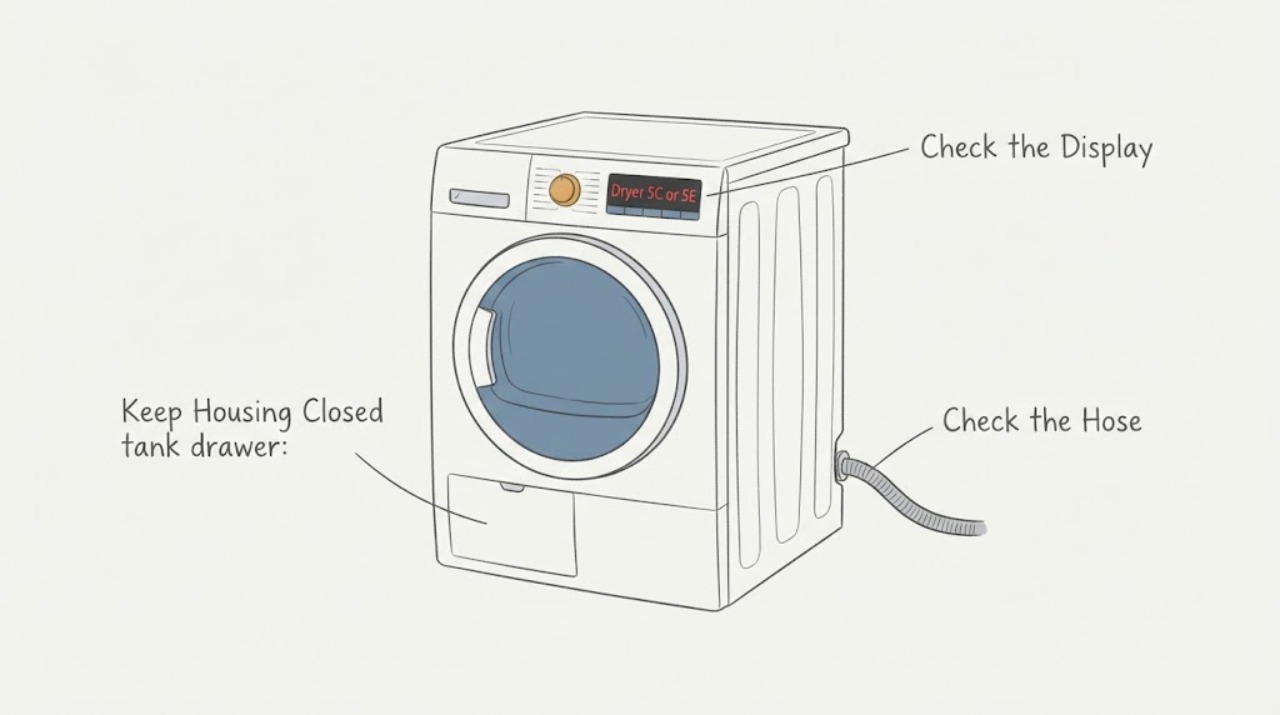
On Samsung's official tumble-dryer information-code page, 5C and 5E are listed together as a drainage check. Samsung names a draining or drain-pump malfunction, a frozen or damaged drain hose, and a full water tank as possible causes; its first supported checks are to inspect the hose, empty the water tank, and start the dryer again. Confirm the exact model and whether the display is 5C or 5E, because code behavior can vary by model. If the code remains, water leaks, the hose cannot be safely checked, or the dryer has smoke, burning smell, abnormal heat, or electrical damage, stop using it and arrange Samsung or qualified service. Do not open the pump or cabinet based on the code alone.
Before you begin
Safety first
- Do not open the cabinet or pump housing, test live wiring, bypass a water-level or drain sensor, force the tank, use boiling water, or order a drain pump, board, or hose from 5C/5E alone. Stop immediately for smoke, burning smell, abnormal heat, sparks, a hot or damaged cord or plug, water near electrical parts, or repeated breaker operation.
Work through in order
Diagnostic checks
Use only checks that match the exact appliance or system and its official guide.
-
Check 1
Copy the complete display exactly as shown, including whether it is 5C, 5E, 5c, or another character pattern. Photograph the display and rating label, and record the full Samsung model and country or market before applying a code table.
Expected result: The display is clearly 5C or 5E on a Samsung dryer, or the display/model identity is uncertain or different.
Next step: If the dryer identity and code are confirmed, continue to the external tank and hose checks. If not, stop using this procedure and find the exact model manual.
Stop if: Do not transfer Samsung washing-machine 5C/5E instructions to a standalone dryer, or use a similar-looking code from another product.
Why this matters
Why: Samsung groups 5C and 5E as a drainage check on its tumble-dryer guide, but also says an unlisted code may differ by model. A washer, washer-dryer, dishwasher, or different display pattern must use its own documentation.
-
Check 2
Stop the cycle and let the dryer become safe to handle. From a dry position, check for smoke, burning smell, scorching, abnormal cabinet heat, sparks, a hot or damaged plug or cord, water on the floor, or a repeated electrical trip before touching the tank or hose.
Expected result: The dryer is cool enough for an external check and there is no hazard, or a heat, water, electrical, or fire warning is present.
Next step: For a hazard, keep the dryer off, isolate power only from a dry safe location, close any nearby water source if appropriate, and arrange qualified service. If the area is dry and safe, continue without opening panels.
Stop if: Do not touch a wet plug, force a hot tank or door, move the dryer through standing water, or restore power to damaged wiring.
Why this matters
Why: A drainage code does not override an electrical, fire, or water hazard. A wet connection or overheated dryer requires professional handling rather than a tank reset.
-
Check 3
Check the condensed-water tank using the exact model's normal user procedure. If it is full, empty it completely, refit it securely, and check for visible overflow, cracks, or a tank that will not seat. Do not spill water near the plug or controls.
Expected result: The tank is full or not seated correctly, or it is empty and appears intact while 5C or 5E remains.
Next step: After safely emptying and refitting the tank, proceed to the visible hose check and then make only one model-authorized restart. If the tank fills unusually quickly, leaks, or the code remains, stop and request service.
Stop if: Do not dismantle the tank housing, reach into the pump area, or run the dryer with a cracked tank or water near electrical parts.
Why this matters
Why: Samsung lists a full water tank as a possible 5C/5E condition and separately describes a tank-full indication on some dryers. An empty, correctly seated tank with a recurring code shifts attention to the hose, pump, sensor, or service diagnosis.
-
Check 4
Inspect only the accessible drain hose and its visible connection for a kink, flattening, damage, disconnection, or ice. If the model uses a hose and it is visibly frozen, follow Samsung's external thaw guidance by wrapping the hose with a towel soaked in warm water for about ten minutes; do not pour boiling water on the appliance or hose.
Expected result: The hose is kinked, damaged, disconnected, frozen, or visibly clear and correctly routed.
Next step: Correct only an accessible kink or connection that the manual permits, or thaw the visible hose using the safe model guidance. Recheck the tank and make one supervised restart; recurring 5C/5E requires service.
Stop if: Do not disconnect sealed connections, push tools into the hose, remove cabinet panels, or continue if the hose needs wall, drain, or electrical disassembly to inspect.
Why this matters
Why: Samsung lists a bent or damaged hose and a frozen draining hose among the 5C/5E causes. A clear, intact visible hose does not rule out a concealed pump, sensor, or internal drainage fault.
-
Check 5
After the tank is empty, the hose is visibly safe, and the dryer is dry and cool, start the dryer once as the model manual allows. Note whether 5C/5E clears, whether water collects normally, and whether the code returns immediately or after a cycle.
Expected result: The dryer resumes normally, or 5C/5E returns despite an empty tank and clear visible drainage path.
Next step: If the code returns, stop repeating resets and request Samsung or qualified appliance service. Provide the model, code, tank level, hose findings, water leakage, and when the code returns.
Stop if: Do not open the pump, test live wiring, bypass a water-level sensor, or order a drain pump or board from 5C/5E alone.
Why this matters
Why: A one-time full tank or accessible hose condition may be resolved by the supported check. A recurring code indicates an unresolved drainage, pump, sensor, or control issue that the public user checks cannot identify safely.
Use your observations
Decision map
Find the observation that best matches what you see, then follow the next safe action.
-
PATH 01Next step
What you see
The display is 5C or 5E, the dryer is the matching Samsung tumble-dryer model, and the water tank is full or not seated correctly.
Do this next
Empty and refit the tank using the model's user procedure, keep water away from electrics, and make one supervised restart.
Why this path and its safety boundary
Why it matters: This pattern matches Samsung's listed water-tank-full possibility for the drainage code.
-
PATH 02Next step
What you see
The tank is empty but the visible hose is bent, damaged, disconnected, or frozen.
Do this next
Correct only the accessible condition allowed by the exact manual, thaw a visible frozen hose with the stated warm-towel method, and retry once after the dryer is safe and dry.
Why this path and its safety boundary
Why it matters: Samsung lists the drain hose condition as a possible 5C/5E cause, so the drainage path remains more likely than a proven pump failure.
-
PATH 03Next step
What you see
The tank is empty, the visible hose is intact, and 5C/5E returns immediately or during the next cycle.
Do this next
Keep the dryer off and arrange Samsung or qualified service with the model, code, tank and hose findings, and timing of recurrence.
Why this path and its safety boundary
Why it matters: The fault is not resolved by the supported external checks; a concealed drainage pump, sensor, hose, or control problem remains possible, but the code does not select a part.
-
PATH 04Next step
What you see
5C/5E is accompanied by smoke, burning smell, abnormal heat, sparks, a hot or damaged plug or cord, a leak near electrics, or repeated breaker operation.
Do this next
Do not restart or touch the hazardous connection. Isolate power only from a dry safe location, keep clear, and obtain qualified service or emergency help for immediate danger.
Why this path and its safety boundary
Why it matters: The situation has crossed the ordinary drainage-check boundary and may involve a fire, electrical, water, or heat hazard.
Helpful context
Understand the symptom
What 5C or 5E means on a Samsung dryer
Samsung's UK tumble-dryer information-code page groups 5C and 5E under Check drainage. The listed possibilities are a drainage malfunction, drain-pump malfunction, frozen draining hose, or full water tank. This is a drainage-path signal, not a confirmation that a particular pump or electronic board must be replaced. Samsung also warns that information codes can differ by model, so the exact manual still controls.
Why a dryer can show a drainage code
A condenser or heat-pump dryer collects extracted water in a tank or sends it through a drain hose. Samsung's troubleshooting guidance describes a full water tank as one way a dryer can indicate that drainage needs attention. A tank or hose check is therefore different from the lint and exhaust checks used for heating or vent codes; do not substitute a vent-code procedure for 5C or 5E.
When checks do not resolve it
Need a professional?
Call Samsung or qualified appliance service if 5C/5E remains after the model-authorized tank and visible hose checks, the tank leaks or will not seat, the hose is inaccessible or requires disassembly, water does not collect or drain normally, the code returns during a cycle, or any electrical, heat, fire, or water hazard occurs.
Safety scope: Do not open the cabinet or pump housing, test live wiring, bypass a water-level or drain sensor, force the tank, use boiling water, or order a drain pump, board, or hose from 5C/5E alone. Stop immediately for smoke, burning smell, abnormal heat, sparks, a hot or damaged cord or plug, water near electrical parts, or repeated breaker operation.
Have this ready
- Provide the full Samsung model and market, exact display text, whether the tank was full, whether the tank was emptied and refitted, the visible hose condition, any freezing or leak, the cycle stage, and whether the code returned immediately or after drying began.
Common questions
FAQ
What does 5C or 5E mean on a Samsung dryer?
Samsung's official tumble-dryer information-code guide groups 5C and 5E under Check drainage. It lists a drainage or drain-pump malfunction, a frozen or damaged draining hose, and a full water tank as possible causes. Confirm the exact model because information codes can vary by model.
Can I clear Samsung dryer 5C or 5E by emptying the water tank?
If the tank is full, empty and refit it using the exact model's normal user procedure, then make one supervised restart while the dryer is cool and dry. If the code returns, do not keep resetting it; Samsung directs users to service for a persistent code.
Does 5C or 5E prove that the drain pump needs replacement?
No. Samsung lists several possible drainage causes, including a full tank, hose condition, and pump malfunction. A recurring code after the supported tank and visible hose checks needs qualified diagnosis before a pump or control part is selected.
Read the exact guide
Official sources
- Samsung Tumble Dryer error codes - what do they mean?Samsung UK Support · Directly supports the 5C/5E dryer entry: Check drainage; draining or pump malfunction, frozen or damaged hose, or full water tank; inspect the hose, empty the tank, restart, and contact service if the code remains. The page notes that codes can differ by model.
- My Samsung tumble dryer is not drying my clothesSamsung UK Support · Supports the water-tank and drainage context and the boundary to professional assistance; it does not replace the 5C/5E code table.
- Help & Support for Samsung Home Appliances | Samsung UKSamsung UK Support · Supports using Samsung's model-specific dryer help and manual/support routes; it does not define 5C/5E itself.
Community feedback
Share a repair observation
Share a plain-text repair observation. Accepted observations are published automatically; this page may take a moment to update.