
On this page
Start here
Quick answer
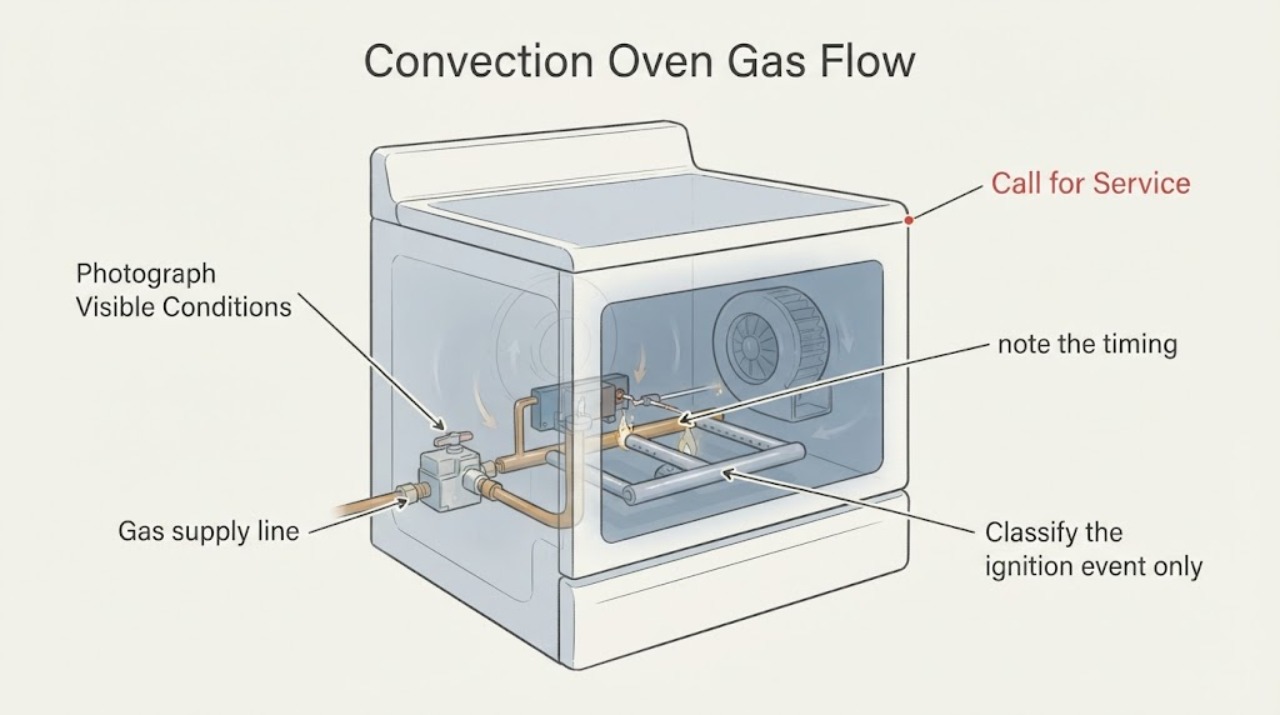
On the Samsung NX58M6650S family, gas flow that appears to stop and restart during convection can be normal temperature control: Samsung says the oven burner ignites and turns off multiple times while cooking to maintain temperature, and its specification identifies this family as a true-convection freestanding gas range. The convection fan also runs in intervals during convection. It is not normal if the burner fails to ignite, lights late, makes a pop or boom, produces a weak or misplaced flame, leaves a persistent fuel odor, or the oven cannot maintain heat. Record the full model suffix and when the event occurs, but do not repeat ignition to test it, adjust gas pressure, open the burner, or bypass a safety device. Stop using the range and arrange qualified gas-appliance service for any abnormal ignition, flame, odor, or recurring heating failure.
Work through in order
Diagnostic checks
Use only checks that match the exact appliance or system and its official guide.
-
Check 1
From outside the cooking area, photograph the rating plate and record the complete model suffix and market. Write down whether the event occurs in Convection Bake or Convection Roast, the set temperature, the approximate time after starting, whether the display reaches the set point, and whether the cooktop burners behave normally. Do not remove panels or alter the gas connection to read the identity.
Expected result: The plate identifies NX58M6650WS/AA, NX58M6650WG/AA, NX58M6650WS/AC, or another suffix, and the event is tied to one mode; or the suffix cannot be read.
Next step: Use the exact model record for the local manual and service request. If the suffix is missing or the manual does not match, keep the oven off when the symptom is abnormal and ask Samsung or a qualified gas technician to identify the platform.
Stop if: Stop if the rating plate is damaged, the model is only inferred from a retailer description, or the range has been converted between natural gas and LP without documented installation information.
Why this matters
Why: Samsung's opened support page is suffix- and market-specific, and its specification lists WS and WG variants. A bare NX58M6650S label is not enough to select a manual, pressure setting, or replacement component.
-
Check 2
With no gas odor or smoke and without opening the door repeatedly, note the timing of the apparent interruption during one already-planned convection use: does the oven maintain heat while the burner cycles, or does heating stop and the cavity remain cold? Also note whether the sound is a quiet fan interval rather than a flame event.
Expected result: The oven reaches and maintains heat while the burner and fan cycle quietly, the fan runs then rests at regular intervals, or the oven loses heat and does not recover.
Next step: If heat is maintained and there is no odor, pop, or abnormal flame, record the pattern rather than changing gas settings. If heat is lost, the burner does not re-ignite, or the cycle becomes erratic, cancel the mode and arrange qualified service without another ignition attempt.
Stop if: Do not use a thermometer, open the burner area, or repeat a bake cycle solely to force an interruption; stop for any fuel odor, smoke, delayed ignition, or unusual flame.
Why this matters
Why: Samsung describes burner cycling as normal temperature control and the convection fan as intermittent during convection. A cold cavity or failure to recover is not explained by normal fan timing and needs service assessment.
-
Check 3
Classify the ignition event only from the safe observations already available: normal immediate ignition and contained flame, no ignition, ignition after a noticeable delay, a pop or boom, a weak or unstable flame, or flame outside the intended burner area. Do not relight the oven, adjust a valve, or remove burner hardware to make this comparison.
Expected result: Ignition is immediate and contained, or any delayed ignition, popping, weak or misplaced flame, repeated failed ignition, or fuel odor is reported.
Next step: For any abnormal ignition, flame, or odor, turn the oven control off if it is safe to do so, leave the range unused, and arrange qualified gas-appliance service. If a strong odor is present, leave the area without operating switches and follow the local gas-emergency procedure.
Stop if: Stop immediately for persistent gas odor, hissing, smoke, a pop or boom, symptoms, or a flame outside the burner area; do not make another ignition attempt.
Why this matters
Why: Immediate contained ignition is consistent with the intended operating pattern; delayed or abnormal combustion is a gas-appliance safety boundary, not proof of a dirty burner or a user-adjustable pressure issue.
-
Check 4
Check the control display and operating context from the front panel only: confirm the range is not showing tESt/tE 5t or a D/demo indicator, note any other information code, and record whether the door was fully closed and whether a hood or downdraft was running. Do not use a demo-mode change or reset to dismiss a fuel symptom.
Expected result: A demo indicator or code appears, the door was open, the hood was running, or no control-state explanation is present.
Next step: Use only the exact manual for a non-hazardous display issue. If the code returns, heating remains abnormal, or any gas symptom occurred, leave the oven off and request Samsung or qualified service; provide the hood status and full code.
Stop if: Do not bypass a door or safety switch, alter venting, change gas pressure, or keep operating with an active fuel odor or abnormal combustion.
Why this matters
Why: Samsung says demo mode prevents oven heating and that available settings vary by model. A control-state or airflow correlation may explain a no-heat report, but it does not explain away gas odor, delayed ignition, or abnormal flame.
-
Check 5
Prepare a service handoff with the complete model and suffix, fuel type, market, mode, set temperature, timing of each interruption, heat result, flame or odor observations, display codes, recent installation or gas work, and whether the convection fan sound followed the published interval.
Expected result: The pattern is a quiet, heat-maintaining cycle with no hazard signs, or it includes heat loss, delayed ignition, odor, abnormal flame, repeated codes, or recent installation work.
Next step: For normal cycling with stable cooking, use the matching manual and monitor. For any abnormal sign or unresolved heat loss, leave the oven off and ask Samsung or a qualified gas professional for a model-specific diagnosis; do not order a generic igniter, valve, or burner.
Stop if: Stop using the range until service if the symptom is recurring, the model or fuel configuration is uncertain, or the range has any fuel, flame, smoke, or electrical safety warning.
Why this matters
Why: The record lets a technician distinguish normal temperature/fan cycling from an ignition, gas-supply, installation, or control fault without asking the user to reproduce a hazardous condition.
Use your observations
Decision map
Find the observation that best matches what you see, then follow the next safe action.
-
PATH 01Next step
What you see
During convection, the burner cycles quietly, the convection fan runs and rests at regular intervals, the oven maintains heat, and there is no gas odor, pop, or abnormal flame.
Do this next
Record the model suffix and mode, use the matching manual, and monitor cooking results. Seek service if the timing changes, heat is lost, or a fuel or flame warning appears.
Why this path and its safety boundary
Why it matters: This pattern is consistent with Samsung's described temperature-control and convection-fan operation rather than proven intermittent gas delivery.
-
PATH 02Next step
What you see
The oven loses heat, fails to ignite or re-ignite, ignites late, pops, or shows a weak, unstable, or misplaced flame during convection.
Do this next
Turn the control off if safe, stop using the oven, and arrange qualified gas-appliance service. Do not relight, adjust gas pressure, open the burner, or bypass a safety control.
Why this path and its safety boundary
Why it matters: This is not explained by normal burner cycling. It may involve ignition, gas supply, combustion, or another appliance-side fault, but the observation does not identify a user-replaceable part.
-
PATH 03Next step
What you see
The model plate shows only NX58M6650S without a confirmed suffix or market, or the manual does not match the range.
Do this next
Stop model-specific troubleshooting and provide a clear rating-plate photo to Samsung support or a qualified technician. Do not use a WS, WG, or another range manual by visual similarity.
Why this path and its safety boundary
Why it matters: The NX58M6650 family has documented suffix variants, so a generic series label cannot establish the fuel configuration, control behavior, or compatible part.
-
PATH 04Next step
What you see
A strong or persistent gas odor, hissing, smoke, symptoms, or a fuel smell outside a normal brief ignition moment is present.
Do this next
Do not operate flames, electrical switches, or the oven in the affected area. Move people away, follow the local gas-emergency instructions, and wait for qualified help before returning or using the range.
Why this path and its safety boundary
Why it matters: The immediate decision is gas and life safety, not diagnosing convection flow. Samsung distinguishes ordinary food or first-use odor from a deeper issue during normal use and directs professional service when the clean oven has unexplained odor or smoke.
-
PATH 05Next step
What you see
The event began after installation, movement, gas-type conversion, gas-supply work, or use of a hood/downdraft, while no active odor or abnormal flame is present now.
Do this next
Leave the oven unused until a qualified installer, gas professional, or Samsung technician reviews the connection, fuel configuration, clearances, and hood context. Provide the timing and model suffix.
Why this path and its safety boundary
Why it matters: Installation and fuel-configuration history is relevant evidence, but it is not a home adjustment path. Samsung directs gas-line and model-specific installation work to the installation manual and qualified professionals.
Helpful context
Understand the symptom
The assigned model name needs one identity check before a part or adjustment is considered. Samsung's opened support record is for NX58M6650WS/AC, and the specification sheet lists the related WS and WG finishes. The task's NX58M6650S omits that suffix and market, so keep the exact rating-plate model and country with the service request. Do not use a manual for another suffix just because the series text looks similar.
Convection creates two different intermittent patterns. Samsung describes the gas oven burner cycling on and off to hold the selected temperature, while its separate fan guidance says the convection fan runs for about 10 seconds and then rests for roughly 40 to 60 seconds during convection. That normal timing is different from delayed ignition, a pop, an unstable flame, gas odor, or a cold oven. Classify the pattern from a safe position; do not keep relighting the oven to reproduce it.
When checks do not resolve it
Need a professional?
Contact qualified gas-appliance service when the intermittent event is more than quiet temperature/fan cycling, when any abnormal ignition or flame occurs, when the exact NX58M6650 suffix or fuel configuration is uncertain, or when the symptom follows installation or gas work.
Have this ready
- Provide the complete rating-plate model and serial, market, natural-gas or LP configuration, convection mode, set temperature, timing, heat result, flame and odor observations, display codes, hood status, and any installation or prior service history.
Common questions
FAQ
Is gas flow stopping and restarting during convection always a fault on the Samsung NX58M6650S?
No. Samsung says a gas oven can ignite and turn off multiple times while cooking to maintain temperature, and the convection fan also runs at intervals. It becomes a service issue when heat is lost, ignition is delayed or fails, the flame is abnormal, or there is fuel odor.
What is the full model for NX58M6650S?
The bare name is incomplete for service matching. Samsung's opened support record is NX58M6650WS/AC, and its specification sheet lists NX58M6650WS and NX58M6650WG variants. Read the rating plate and confirm the suffix and market before using a manual or ordering a part.
Can I adjust the gas pressure if the convection burner seems intermittent?
No. A quiet temperature-control cycle is normal, but abnormal ignition, a weak or misplaced flame, odor, or heat loss needs qualified gas-appliance diagnosis. Do not adjust a valve or pressure setting as a user test.
Could the convection fan sound like intermittent gas flow?
Yes, the two events should be separated. Samsung says the convection fan runs for about 10 seconds and rests for about 40 to 60 seconds during convection, while burner cycling controls oven temperature. A quiet, regular fan sound with stable heat is different from delayed ignition, popping, odor, or a cold oven.
Read the exact guide
Official sources
- NX58M6650WSSamsung Electronics America · Samsung NX58M6650S family specification, true-convection gas-range identity, suffix variants and fuel-related specifications
- NX58M6650WS Gas Range with 20 K BTU Dual Burner 5.8 cfSamsung Support Canada · Samsung NX58M6650S family support identity; opened page specifically identifies NX58M6650WS/AC and its model-specific manuals
- Samsung oven temperature issuesSamsung Support · Samsung gas-oven temperature behavior, normal burner cycling, demo mode and service boundary
- Install your Samsung gas or electric rangeSamsung Support · Samsung gas-range fuel configuration, installation boundaries, gas supply and qualified installation context
- Samsung oven fan is making a noise or will not turn offSamsung Support · Samsung convection-fan timing and abnormal-noise service boundary for gas ovens
- Odor or smoke from Samsung ovenSamsung Support Canada · Samsung oven odor and smoke distinctions, normal-use residue boundary and professional-service escalation
- What is the meaning of the error codes displayed on your Samsung range or wall ovenSamsung Support Canada · Samsung range display states, demo mode, model-specific manual and code-return service guidance
- Guide to finding the model and serial numbers of your Samsung rangeSamsung Support Canada · Samsung range model and serial identity locations and market-specific identification caveat
Community feedback
Share a repair observation
Share a plain-text repair observation. Accepted observations are published automatically; this page may take a moment to update.