
On this page
Start here
Quick answer
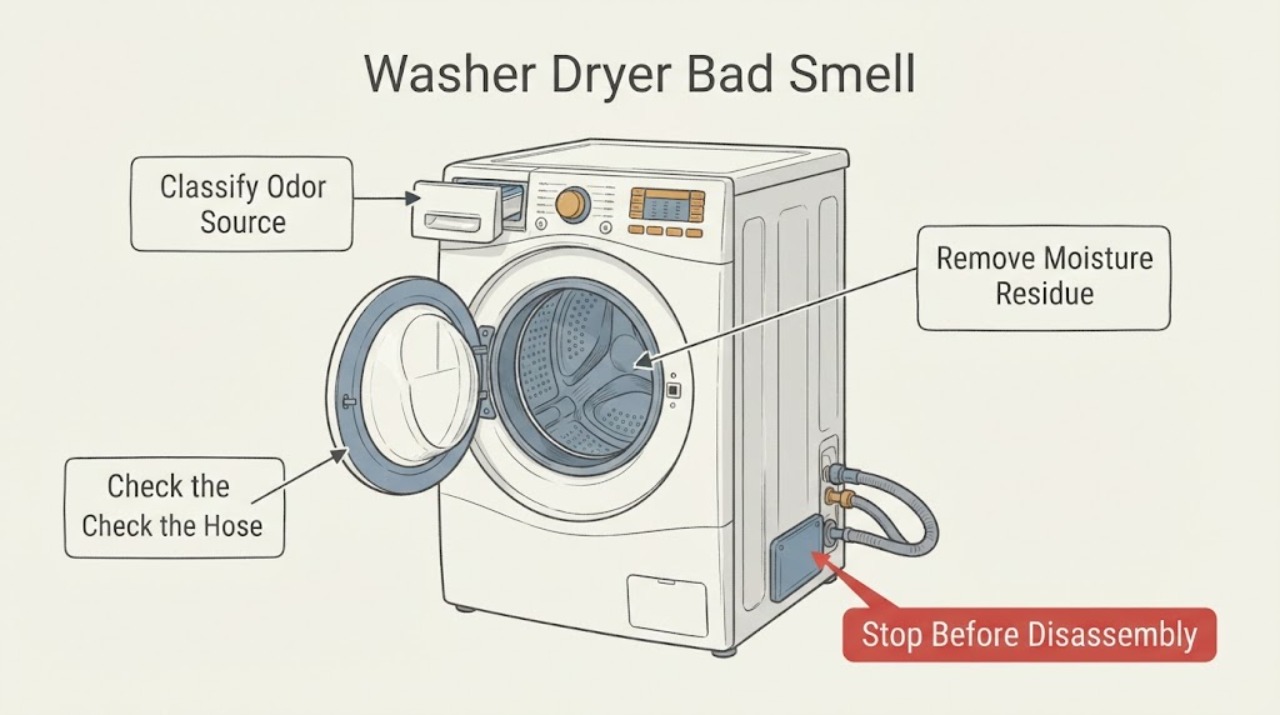
Identify the odor before cleaning. A musty, moldy, or sour smell usually points to trapped moisture, detergent residue, wet laundry, the door seal, drawer, or a dirty pump filter; a sulfur or sewage smell makes the drain-hose setup a priority. Run the Samsung Self Clean, Self Clean+, or Pure Cycle only with an empty tub and use the exact model instructions for any cleaning additive. If the smell is burning, electrical, smoke, or gas-related, stop the appliance immediately and follow the emergency or service boundary instead of running another cycle. If a mildew odor remains after the documented cleaning and drying steps, arrange Samsung or qualified appliance service.
Work through in order
Diagnostic checks
Use only checks that match the exact appliance or system and its official guide.
-
Check 1
With the appliance off and the laundry removed, identify the odor as musty or moldy, sour, sulfur or sewage, burning or electrical, or gas-related. Compare the empty washer tub, damp clothes, door seal, detergent drawer, and dryer or exhaust area without dismantling panels.
Expected result: The odor is strongest in the damp washer; follows wet laundry into the dry phase; smells like sulfur or sewage; or smells like burning, electricity, gas, or comes with visible smoke.
Next step: Follow the matching maintenance branch only for mildew, sour, or residue odors. For smoke, gas, electrical odor, or continued burning, stop using the appliance and follow the emergency or service guidance immediately.
Why this matters
Why: A damp-washer smell points to moisture or residue maintenance. A sulfur or sewage smell makes drain-hose placement more likely. A burning, electrical, gas, or smoke symptom is a safety or service issue, not a reason to run a cleaning cycle.
-
Check 2
After a cycle, remove laundry promptly and wipe the accessible tub rim, rubber door seal, door glass, and detergent drawer with a clean, dry cloth. Leave the washer door and detergent drawer open when the model and surrounding space allow it; do not leave pooled water or wet laundry inside.
Expected result: The odor is concentrated in damp residue or the door seal and decreases after drying, or the odor remains even after the accessible surfaces are clean and dry.
Next step: Continue with the empty self-cleaning cycle and configuration-specific filter or drain checks if the odor is mildew-like. Do not use fragrance to mask a persistent odor.
Why this matters
Why: A reduction after drying supports trapped moisture or residue as the source. A persistent odor suggests buildup deeper in the tub, a drain path, a pump filter, the water supply, or another part of the laundry system.
-
Check 3
For a sulfur or sewage odor, inspect the visible drain-hose entry and confirm it has not slipped too far into the standpipe or drain; secure it according to the Samsung model instructions. Also check for detergent residue or suds in the drawer and tub, without removing the rear retaining screw or altering hidden plumbing.
Expected result: The hose is inserted too far, loose, or able to siphon; the tub or drawer has detergent buildup or suds; or the hose and accessible detergent areas appear correct.
Next step: Correct only the visible hose placement described by the model instructions and run an appropriate empty rinse if needed. If the odor returns or the retaining hardware is missing, stop and request service.
Why this matters
Why: Samsung identifies an overly inserted drain hose as a possible siphon-back source for sulfur or sewage odor. Detergent buildup and excess suds can retain moisture and create a musty smell. A normal visible setup makes a hidden drain or internal issue more likely.
-
Check 4
When the smell is mildew-like and there is no smoke, gas, or electrical symptom, check that the tub is completely empty and run the Samsung Self Clean, Self Clean+, or Pure Cycle available on the model. Follow the official model-specific instructions for any additive; never combine cleaning chemicals or run the cycle with laundry inside.
Expected result: The cycle completes without unusual noise, smoke, or fault and the visible residue or odor decreases; suds or residue remain; or the odor is unchanged after the documented cycle.
Next step: Wipe away visible residue, run the model-directed follow-up rinse if required, and keep the door and drawer open to dry. If the odor remains after several documented attempts, contact Samsung Support or qualified service.
Why this matters
Why: A clean empty cycle followed by a drier tub supports routine moisture or residue buildup. Remaining suds or odor means another rinse, accessible maintenance, a drain or filter check, or service may be needed; it does not identify a replacement part by itself.
-
Check 5
If the configuration is a front-load washer, inspect the pump-filter access instructions and clean the filter only after any hot cycle has cooled and the model manual permits it; prepare for residual water. If the smell appears only when drying, check the accessible lint filter and exhaust path and determine whether the washer or laundry is the actual source.
Expected result: The pump filter contains debris, the dryer lint or exhaust path is restricted, the smell is present in the washer before drying, or the dryer produces burning smoke or a gas odor.
Next step: Clean only user-accessible filters according to the model instructions and keep the exhaust path unobstructed. For smoke, gas, electrical odor, persistent burning, or an internal restriction, stop and arrange service; do not open the appliance casing.
Why this matters
Why: Samsung says a dirty front-load pump filter can cause odors and affect draining, while dryer odors can originate in the lint or exhaust path, the washer, laundry, or water. Smoke or gas is an immediate safety condition.
Use your observations
Decision map
Find the observation that best matches what you see, then follow the next safe action.
-
PATH 01Next step
What you see
The odor is musty, moldy, sour, or caused by damp laundry, with no burning, electrical, smoke, or gas symptom.
Do this next
Remove laundry promptly, dry the tub, door seal, and drawer, then run the model's empty Self Clean, Self Clean+, or Pure Cycle as directed.
-
PATH 02Next step
What you see
The odor is sulfur or sewage-like and the drain hose is inserted too far or can siphon back.
Do this next
Correct the visible drain-hose placement and secure it according to the model instructions. If the odor returns or retaining hardware is missing, request service.
-
PATH 03Next step
What you see
The odor is strongest only when the dryer heats the load.
Do this next
Check the accessible lint filter and exhaust path, and confirm the washer or wet laundry is not the source. Persistent burning or electrical odor requires service.
-
PATH 04Next step
What you see
The odor remains after several documented cleaning and drying attempts, or visible mold-like residue continues.
Do this next
Stop repeating improvised chemical treatments and contact Samsung Support or qualified appliance service with the model and odor history.
-
PATH 05Next step
What you see
There is smoke, a gas smell, an electrical smell, persistent burning, unusual heat, or visible damage.
Do this next
Stop using the appliance. For a gas smell or gas-dryer smoke, clear occupants and follow local emergency guidance without operating switches or using a phone inside; otherwise arrange service when safe.
Helpful context
Understand the symptom
Separate the odor type first
A washer-dryer can make laundry smell bad even when the dryer is not the source. Samsung distinguishes routine mildew or sour odors from sulfur or sewage odors and from burning, electrical, smoke, or gas symptoms. Note whether the smell is strongest in the empty tub, on wet laundry, only when the drying heat starts, or around the drain and exhaust path. That observation determines whether to clean and dry the washer, correct a drain path, or stop immediately.
Moisture and residue are common maintenance causes
Samsung's washer guidance focuses on removing wet laundry promptly, drying the tub and rubber door seal, wiping the detergent drawer, using the correct detergent amount, and running the model's self-cleaning cycle. A front-load pump filter can also retain debris and contribute to odors. These are model- and configuration-dependent checks, so use the exact manual where the control names or filter access differ.
Do not treat a burning or gas smell as a cleaning problem
A burning smell after the first couple of cycles may be related to a new appliance, but Samsung directs owners to service when it continues. Smoke, an electrical smell, or a gas smell needs an immediate stop; gas-dryer guidance calls for clearing occupants and following emergency guidance without operating switches or using a phone inside. Keep those cases outside the ordinary odor-cleaning path.
Only after diagnosis
Potential parts
- washer door seal
Consider this category only if qualified diagnosis finds a damaged seal that retains moisture or leaks after cleaning and correct door operation is confirmed.
Confirm the complete washer-dryer model and manufacturer fit information before ordering. - washer pump filter
Consider this category only if the model has a pump filter and service confirms it is damaged or cannot seal after accessible cleaning.
Top-load configurations may not have this filter; verify the exact model and approved fitment. - dryer lint or exhaust component
Consider this category only when the odor is isolated to drying and qualified diagnosis finds a damaged or restricted accessible airflow component.
Confirm the exact washer-dryer configuration and manufacturer compatibility before ordering; do not substitute a component that restricts airflow.
When checks do not resolve it
Need a professional?
Stop and arrange service for smoke, a gas or electrical smell, burning odor that continues beyond the first couple of cycles, unusual heat, visible damage, a missing drain-hose retaining screw or holder, a persistent door or filter leak, or an odor that remains after the documented cleaning and drying steps. Do not open the casing, bypass a safety device, mix cleaning chemicals, or continue operating a smoking or gas-smelling appliance.
Common questions
FAQ
Why does my Samsung washer-dryer smell bad?
The source may be trapped moisture, detergent residue, wet laundry, a door seal or drawer, a front-load pump filter, an incorrect drain-hose setup, or the dryer lint and exhaust path. Classify the odor first because burning, gas, electrical, and smoke symptoms require a safety response.
How do I remove a mildew smell from a Samsung washer-dryer?
Remove the laundry, wipe and dry the tub, door seal, and detergent drawer, then run the model's empty Self Clean, Self Clean+, or Pure Cycle. Follow the model-specific instructions for any additive and keep laundry out of the tub during the self-cleaning cycle.
What causes a sulfur or sewage smell in a Samsung washer?
Samsung identifies drain-hose placement as a possible cause when drained water siphons back into the washer. Inspect the visible hose entry and correct it only according to the model instructions; request service if the odor returns or retaining hardware is missing.
Is a burning smell from a Samsung washer-dryer dangerous?
Treat continuing burning, electrical odor, smoke, unusual heat, or gas odor as a stop condition. Turn the appliance off and follow Samsung's service or emergency guidance; do not run another cleaning cycle or open the casing.
Read the exact guide
Official sources
- Samsung washing machine or laundry smells badSamsung Support US · Samsung washers and washer-dryer odor troubleshooting
- How to clean your Samsung washerSamsung Support US · Samsung washer self-cleaning, drawer, door-seal, and front-load pump-filter maintenance
- Cycles, settings, and features on your Samsung washing machineSamsung Support US · Samsung washer and washer-dryer cycle names and model-dependent controls
- Samsung dryer smells or smokesSamsung Support US · Samsung dryer odor, smoke, gas, electrical, lint, and exhaust troubleshooting
Community feedback
Share a repair observation
Share a plain-text repair observation. Accepted observations are published automatically; this page may take a moment to update.