
On this page
Start here
Quick answer
First classify the odor from your Samsung washing machine: musty or moldy usually points to trapped moisture or detergent residue; sulfur or sewage odor can point to drain-hose installation or drain water siphoning back; and a burning or electrical odor is a stop-use condition rather than a cleaning task. Remove wet clothes promptly, dry the accessible tub, door seal, and dispenser, and leave the door or lid and drawer open when the exact manual allows. Use only the detergent and amount specified for the model, do not mix cleaners, and inspect the visible drain-hose arrangement without opening the cabinet. If your exact Samsung manual provides Self Clean, Pure Cycle, or another maintenance cycle, run it only empty and exactly as documented; do not transfer bleach or cleaner instructions from another model. Stop immediately for smoke, sparks, hot wiring or outlet, a melting smell, active leakage, water near electrical parts, or a burning smell that is not limited to the documented first couple of cycles, and arrange qualified appliance or electrical service.
Before you begin
Safety first
- This article covers ordinary-access observation and the exact Samsung manual’s maintenance steps only. Do not mix chemicals, reproduce burning or electrical odors, open panels, bypass interlocks, handle wet electrical parts, or perform hidden drain or pump work without qualified service.
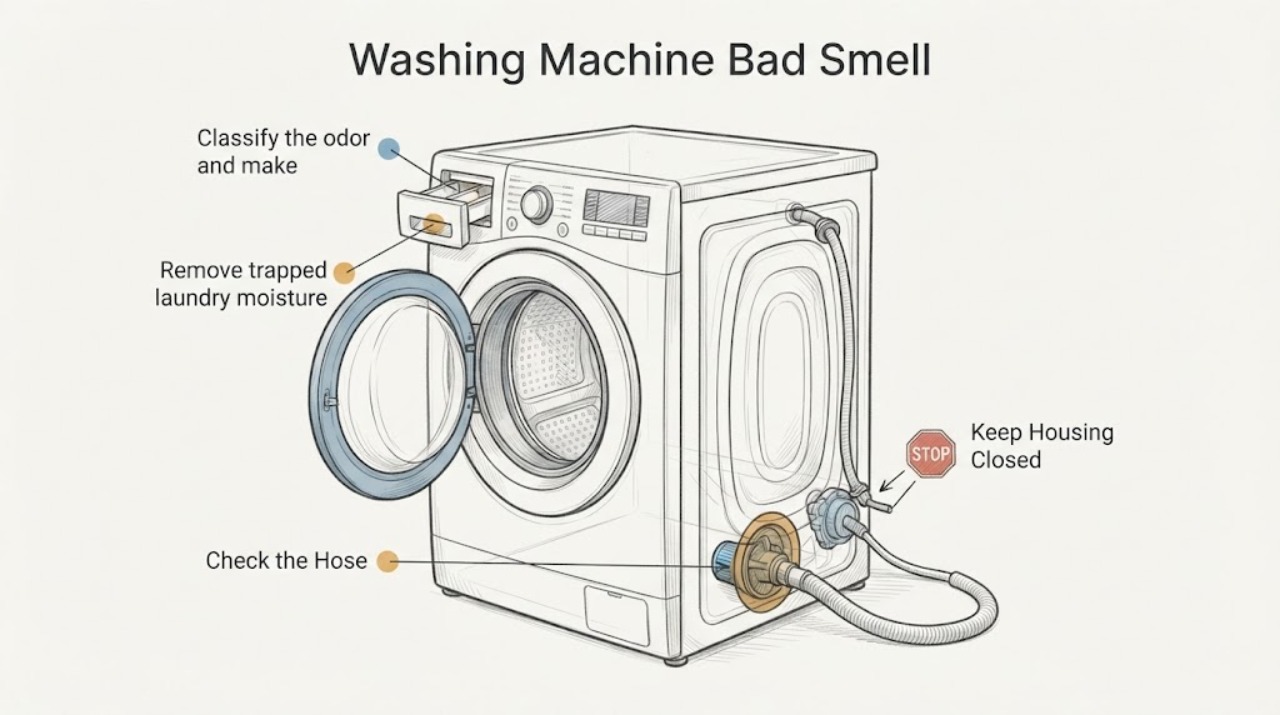
Work through in order
Diagnostic checks
Use only checks that match the exact appliance or system and its official guide.
-
Classify the odor and make the washer safe
Stop the current cycle if safe to do so and note whether the smell is musty or moldy, sulfur or sewage-like, detergent or chemical, burning or melting, or accompanied by smoke, sparks, heat, or a leak. Do not lean into fumes or touch wet electrical parts to identify the smell.
Expected result: The odor is damp or moldy with no heat or smoke, sulfur or sewage-like, a chemical residue smell, a burning or electrical smell, or unknown and strong.
Next step: For a burning or electrical odor, smoke, sparks, hot wiring or outlet, active leak, or water near electrical parts, stop use and arrange qualified appliance or electrical help. Otherwise follow the matching odor check below.
Stop if: Do not restart to reproduce an odor, open panels, handle wet plugs or wiring, or use chemicals while the cause is unknown.
Why this matters
Why: The first three categories can lead to different maintenance or drain observations. Burning, electrical, smoke, spark, water-contact, or unknown strong odors cannot safely be classified by continuing to run the washer.
-
Remove trapped laundry moisture
When the washer is off and safe, remove wet clothes promptly. From ordinary access, inspect the tub, door seal if present, lid area, and detergent drawer for standing water, lint, visible residue, or mold; wipe accessible surfaces with a clean cloth and leave the door or lid and drawer open to dry when the manual permits.
Expected result: Wet clothes sat in the washer, moisture or residue is visible in the seal or drawer, the washer dries between uses, or the odor returns despite a dry accessible interior.
Next step: Remove laundry promptly after each cycle and repeat the documented surface-drying routine. If mold is visible or the odor persists, use the exact model’s maintenance guidance and the service branch.
Stop if: Do not scrape mold aggressively, reach behind seals or panels, run the washer with a damaged seal or lid, or continue if water is near electrical parts.
Why this matters
Why: Samsung identifies wet laundry and moisture trapped around the tub, drawer, and seal as common odor contributors. A dry, clean accessible area with a returning odor shifts attention to drainage, hidden buildup, or a non-maintenance fault.
-
Check the visible drain-hose arrangement for sewage odor
If the odor is sulfur or sewage-like, inspect the drain hose from safe external access. Note whether it has slipped too far into the standpipe, is unsecured, visibly kinked, or has a dirty end; use the exact Samsung manual to restore the permitted insertion depth and support rather than guessing a universal measurement.
Expected result: The hose is inserted farther than the manual allows, has slipped or is unsecured, the drain path is visibly restricted, or the arrangement appears correct but the odor remains.
Next step: Correct only the visible hose position or support documented for the exact model, then monitor one normal cycle. Request appliance or plumbing service if the odor returns, the hose holder is missing, or any disassembly is required.
Stop if: Do not remove a retaining screw or holder, push the hose deeper by guesswork, open the drain system, handle contaminated standing water, or continue with a leak.
Why this matters
Why: Samsung says an incorrectly inserted drain hose can allow siphoning or drain water to return and create a sulfur or sewage smell. A correct visible arrangement with persistent odor can indicate a hidden drain, standpipe, or washer issue.
-
Check detergent, softener, and additive residue
Identify the detergent and additives used, confirm the exact model’s HE and dispenser requirements, and compare the dose with the product directions and the washer’s MAX line. With the washer off, clean only accessible drawer or dispenser parts as the manual directs; never add a second cleaner to neutralize the first.
Expected result: The dose exceeded the documented amount or MAX line, non-HE detergent or frequent softener was used, the drawer has buildup, suds remain in an empty cycle, or the dose and dispenser are correct.
Next step: Use the measured product and documented compartment for a controlled load, and follow the manual for any empty rinse or maintenance cycle. Do not use bleach, vinegar, acids, ammonia, or another product unless the exact procedure calls for it, and never combine them.
Stop if: Stop for chemical fumes, skin or eye irritation, a locked dispenser, water near controls, or any need to remove the console or internal hoses.
Why this matters
Why: Samsung links excess detergent, non-HE detergent, softener, and buildup with soap scum and odor. Persistent residue after correct dosing and accessible cleaning suggests deeper buildup, drainage, or a model-specific fault.
-
Run a maintenance cycle only when documented for this model
Check the exact Samsung Use and Care manual for Self Clean, Self Clean+, Pure Cycle, Sanitize, or another washer-cleaning procedure. If the feature exists, run it only with the tub empty and only with the product, compartment, temperature, and follow-up specified by that manual; if it does not exist, do not invent a substitute cycle.
Expected result: The manual documents the cycle and procedure, documents a different cleaning method, or does not provide a matching feature.
Next step: Follow one documented maintenance procedure and reassess the odor after the washer dries. If visible mold or odor remains after the manual’s attempts, stop repeating chemicals and request service.
Stop if: Never run a Self Clean or similar cycle with laundry in the tub, an active leak, water near electrical parts, smoke, sparks, burning odor, or a damaged door or lid. Never mix cleaning products.
Why this matters
Why: Samsung describes documented Self Clean or Pure Cycle maintenance as a way to address moisture and detergent-residue buildup on applicable models, but feature names and chemical directions are not interchangeable across washers.
-
Check a pump filter only when the model provides one
If the Samsung washer is a front-load model and its manual identifies a user-accessible pump or debris filter, follow that manual’s power-off, cooling, drainage, and filter-cleaning procedure. If the model has no documented filter, do not open a panel or assume a top-load washer has one.
Expected result: The exact manual identifies a pump filter and it contains lint or debris, the washer has standing water or a drain error, or there is no applicable filter or safe access.
Next step: Complete only the documented filter and drain procedure, then allow the washer to dry. Request service for persistent water, a blocked internal path, a damaged filter, or any mismatch with the manual.
Stop if: Hot water may remain after a hot maintenance cycle; allow the manual’s cooling period. Do not remove a filter with power connected, standing water near electricity, a leak, or an unknown model procedure.
Why this matters
Why: Samsung says a dirty pump filter on applicable front-load washers can contribute to odor and poor draining, while top-load models do not use that same filter arrangement. Standing water can make a cleaning cycle unsafe or ineffective.
-
Escalate burning odor or persistent foul smell
If the odor is burning, melting, or electrical, stop using the washer and record when it occurred, whether the tub was moving or draining, and any smoke, heat, spark, trip, or visible damage from a safe distance. For musty or sewage odor, escalate when the manual’s cleaning, drying, drain, and filter checks do not resolve it.
Expected result: A burning odor occurred only during the documented first couple of cycles and disappeared, the odor returns after that period, or a foul odor remains after model-approved maintenance.
Next step: Leave the washer out of service for a later burning odor or any electrical symptom and arrange qualified appliance or electrical diagnosis. For persistent foul odor, provide the model, hose arrangement, products, maintenance steps, and result to service.
Stop if: Do not restart to reproduce the smell, open panels, test live wiring, bypass a door lock, or keep adding chemicals to a washer with a persistent odor.
Why this matters
Why: Samsung notes that a temporary motor-coil odor can occur during the first couple of cycles, but a later burning odor needs service. A persistent non-burning odor can indicate hidden buildup or a drain or installation problem beyond safe ordinary checks.
Use your observations
Decision map
Find the observation that best matches what you see, then follow the next safe action.
-
PATH 01Safety boundary
What you see
The odor is musty or moldy, and wet laundry, damp seal or drawer, residue, or visible mold is present.
Do this next
Remove laundry promptly, dry accessible areas, leave the door or lid and drawer open when allowed, and follow the exact model’s empty maintenance cycle if documented.
Why this path and its safety boundary
Why it matters: Trapped moisture or detergent and additive residue is a plausible source.
Safety stop: Do not run with laundry in a Self Clean cycle, mix cleaners, scrape internal mold, or continue with a leak or water-contact electrical hazard.
-
PATH 02Safety boundary
What you see
The odor is sulfur or sewage-like, and the drain hose is too deep, unsecured, kinked, or otherwise inconsistent with the exact manual.
Do this next
Restore only the documented hose depth and support from safe access, then observe one cycle; request plumbing or appliance service if the odor returns.
Why this path and its safety boundary
Why it matters: Samsung identifies incorrect hose placement as a possible route for siphoning or drain water returning to the washer.
Safety stop: Do not push the hose deeper by guesswork, remove its holder, open the drain, or handle contaminated standing water unsafely.
-
PATH 03Safety boundary
What you see
The washer uses excess or non-HE detergent, frequent softener, an overfilled dispenser, or shows persistent suds or residue.
Do this next
Use the measured model-approved product and clean the accessible dispenser as documented; use a model-approved empty maintenance procedure if available.
Why this path and its safety boundary
Why it matters: Buildup and oversudsing can retain moisture and create odor or poor draining.
Safety stop: Do not mix bleach, vinegar, ammonia, acids, detergent, softener, or other cleaners, and stop for fumes or irritation.
-
PATH 04Safety boundary
What you see
The smell is burning, melting, or electrical, or smoke, sparks, abnormal heat, or a breaker event is present.
Do this next
Stop use, disconnect power only if safely reachable without touching water or damaged wiring, and arrange qualified appliance or electrical help.
Why this path and its safety boundary
Why it matters: This is a stop-use condition, not a tub-cleaning problem. Samsung’s routine odor guidance sends a burning smell after the initial couple of cycles to service.
Safety stop: Do not restart, run Self Clean, open panels, test live parts, or touch a hot or wet cord or outlet.
-
PATH 05Safety boundary
What you see
The applicable front-load manual identifies a pump filter, or the washer has standing water, a drain error, or recurring wet loads.
Do this next
Follow the manual’s power-off and cooling procedure for the filter only when it matches the model; request service for hidden blockage, persistent water, or unsafe access.
Why this path and its safety boundary
Why it matters: A dirty filter or drain-path problem can retain odor and prevent the washer from drying properly, but the safe procedure is model-specific.
Safety stop: Do not open a filter or panel with power connected, hot water, a leak, or water near electrical parts.
-
PATH 06Safety boundary
What you see
The washer is correctly loaded and maintained, the drain arrangement and applicable filter are correct, and the foul odor remains after the exact manual’s procedures.
Do this next
Keep the model and maintenance record and request qualified appliance or plumbing service.
Why this path and its safety boundary
Why it matters: Hidden buildup, drain or standpipe conditions, or an appliance fault remains possible; repeated chemicals are not a diagnosis.
Safety stop: Do not keep repeating cleaning chemicals, disassemble the washer, or run it when any electrical or water hazard is present.
Helpful context
Understand the symptom
Classify the smell before cleaning
A musty, moldy, or damp-cloth smell usually calls for a moisture and residue check. A sulfur or sewage smell calls for a drain-path check. A burning, melting, or electrical smell calls for stopping the washer and preserving the evidence for service. Samsung’s guidance separates these odor families, and its model-specific procedures vary between front-load and top-load machines.
Moisture and residue are common odor sources
Wet clothes left in the tub, detergent or softener buildup, a damp door seal or dispenser, and incomplete drainage can keep moisture in the machine. Remove laundry promptly, wipe accessible surfaces dry, and leave the door or lid and dispenser drawer open only when this is safe and allowed by the manual. Use the correct HE detergent and measured amount; more product can create more residue rather than a cleaner wash.
Treat cleaning cycles and chemicals as model-specific
Samsung documents Self Clean, Self Clean+, and Pure Cycle features on applicable models, but the product, compartment, cycle name, and follow-up can differ. Run a documented maintenance cycle empty and exactly as the manual says. Never mix bleach, vinegar, detergent, softener, acids, ammonia, or other cleaners, and do not substitute a recipe from another model.
A persistent burning smell is not a mildew problem
Samsung notes that a new washer may have a temporary motor-coil odor during the first couple of cycles, but a burning smell afterward needs service. Smoke, sparks, hot wiring or an outlet, a melting odor, or water contacting electrical parts requires immediate stop-use. Do not run an empty cleaning cycle to see whether an electrical smell disappears.
Safety boundary
Stop conditions
- Stop using the washer for smoke, sparks, arcing, burning or melting odor, a hot or damaged cord or outlet, repeated breaker trips, or abnormal heat.
- Stop for an active leak, standing water near a plug, outlet, cord, or appliance wiring, or any water-contact electrical hazard. Disconnect power only when safely reachable without touching water or damage.
- Do not mix bleach, vinegar, ammonia, acids, descalers, detergent, softener, or other cleaners, and do not transfer a cleaning recipe from another Samsung model.
- Do not run Self Clean, Pure Cycle, Sanitize, or another maintenance cycle with laundry in the tub, an active leak, a damaged lid or door, smoke, sparks, or a burning odor.
- Do not open panels, bypass a door lock, reach into moving parts, remove a pump filter without the exact manual’s procedure, or handle hot or contaminated standing water unsafely.
- Do not restart to reproduce a burning smell, persistent gas-like or sewage-like odor, electrical odor, smoke, or a recurring drain failure.
Only after diagnosis
Potential parts
- door seal or gasket
Consider this category only when the exact model’s seal is visibly damaged or service diagnosis confirms it retains water or leaks after ordinary cleaning.
Confirm the complete Samsung model and seal design with qualified service; do not pry the seal off or treat a leak as a cleaning issue. - pump filter or drain assembly
Consider this category only for a model that documents the applicable filter or when service confirms a drain-path component fault after safe external checks.
Verify front-load or top-load configuration and exact model fit through the manual or technician; do not order from odor alone. - drain hose or hose support
Consider this category only when the exact installation diagnosis confirms a damaged hose or missing support is allowing leakage, siphoning, or odor recurrence.
Confirm the model’s installation requirements and safe hose arrangement; do not alter insertion depth or remove retaining hardware by guesswork.
When checks do not resolve it
Need a professional?
Request qualified appliance or plumbing service when a sulfur or sewage odor returns after the exact drain-hose setup is restored, a musty odor or mold remains after model-approved cleaning and drying, the washer has persistent standing water or a drain problem, or a pump filter or hidden path needs disassembly. Treat burning or electrical odor after the initial couple of cycles, smoke, sparks, hot wiring or outlet, active leaks, water near electrical parts, or repeated breaker trips as stop-use conditions requiring immediate qualified help.
Safety scope: This article covers ordinary-access observation and the exact Samsung manual’s maintenance steps only. Do not mix chemicals, reproduce burning or electrical odors, open panels, bypass interlocks, handle wet electrical parts, or perform hidden drain or pump work without qualified service.
Common questions
FAQ
Why does my Samsung washing machine smell musty?
Trapped moisture, wet clothes left in the tub, detergent or softener buildup, a damp seal or dispenser, and incomplete draining can all contribute. Remove laundry promptly, dry accessible areas, use the correct detergent amount, and follow the exact model’s maintenance procedure.
How do I remove a sewage smell from a Samsung washer?
Inspect the visible drain-hose placement and support against the exact manual. Samsung identifies an incorrectly inserted hose as a possible source of siphoning or drain water returning to the washer. Do not guess a universal depth or remove retaining hardware; request service if the odor returns.
Can too much detergent cause a bad smell?
Yes. Samsung links excess detergent, non-HE detergent, and softener buildup with soap scum and odor. Measure the model-approved product and keep below the documented MAX line. Do not add another cleaner to counteract residue.
Can I run Self Clean with clothes in the Samsung washer?
No. Samsung warns that Self Clean must be run empty on applicable models. Check the exact manual for the cycle name, product, compartment, and follow-up procedure, and never substitute another model’s chemical directions.
Does every Samsung washer have a pump filter?
No. Samsung describes a pump or debris filter for applicable front-load models and a different arrangement for top-load models. Open or clean one only when the exact manual identifies it and gives the safe power-off, cooling, and drainage procedure.
Is a burning smell from a Samsung washer normal?
Samsung notes that a new washer may have a temporary motor-coil odor during the first couple of cycles, but a burning smell afterward should be sent for service. Smoke, sparks, melting odor, hot wiring or outlet, water near electrical parts, or repeated trips requires immediate stop-use.
Should I use bleach and vinegar together to clean the washer?
No. Never mix bleach, vinegar, ammonia, acids, descalers, detergent, softener, or other cleaners. Use only the product and sequence specified by the exact Samsung manual, and stop for fumes or irritation.
When should a bad-smelling Samsung washer be serviced?
Request service when a foul odor remains after model-approved cleaning, drying, drain-hose, dispenser, and applicable filter checks; when standing water or a drain issue persists; or whenever the smell is burning or electrical. Do not keep repeating chemical cycles to diagnose it.
Read the exact guide
Official sources
- Samsung washing machine has a mildew smell or visible moldSamsung Support · Official Samsung guidance for applicable models; use the exact model manual for cycle name, product, compartment, and safety steps.
- Samsung washing machine or laundry smells badSamsung Support · Official Samsung washer guidance; exact Roper or Samsung model manual and safe installation conditions govern feature and measurement applicability.
- How to clean your Samsung washerSamsung Support · Official Samsung washer-cleaning guidance; exact model manual overrides feature, temperature, product, and access differences.
Community feedback
Share a repair observation
Share a plain-text repair observation. Accepted observations are published automatically; this page may take a moment to update.