
Samsung appliance guidance
Samsung Washing Machine Repair Guides
Troubleshooting and repair guidance for published Samsung Washing Machine problems, symptoms, and maintenance questions.
Published Samsung Washing Machine guides
Choose the guide whose symptom or condition most closely matches what you are seeing.
-
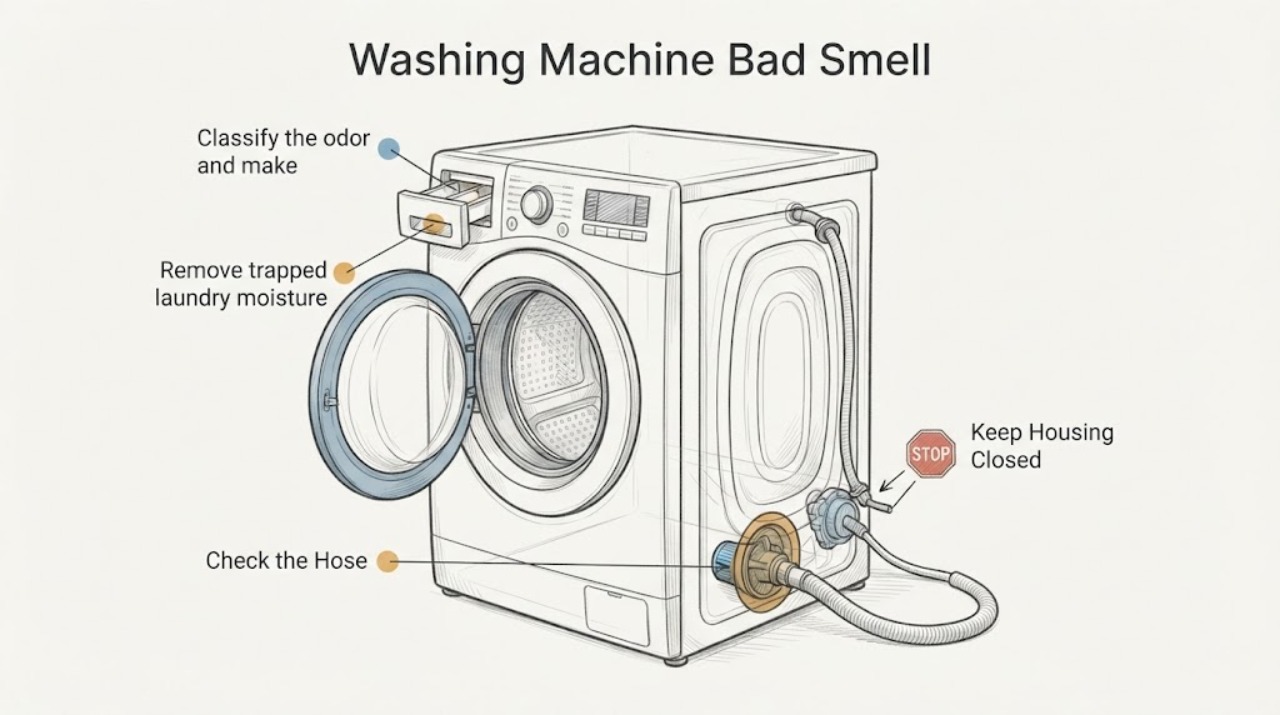
Samsung Washing Machine Bad Smell: Find the Odor Source Safely
First classify the odor from your Samsung washing machine: musty or moldy usually points to trapped moisture or detergent residue; sulfur or sewage odor can point to drain-hose installation or drain water siphoning back; and a burning or electrical odor is a stop-use condition rather than a cleaning task. Remove wet clothes promptly, dry the accessible tub, door seal, and dispenser, and leave the door or lid and drawer open when the exact manual allows.
-
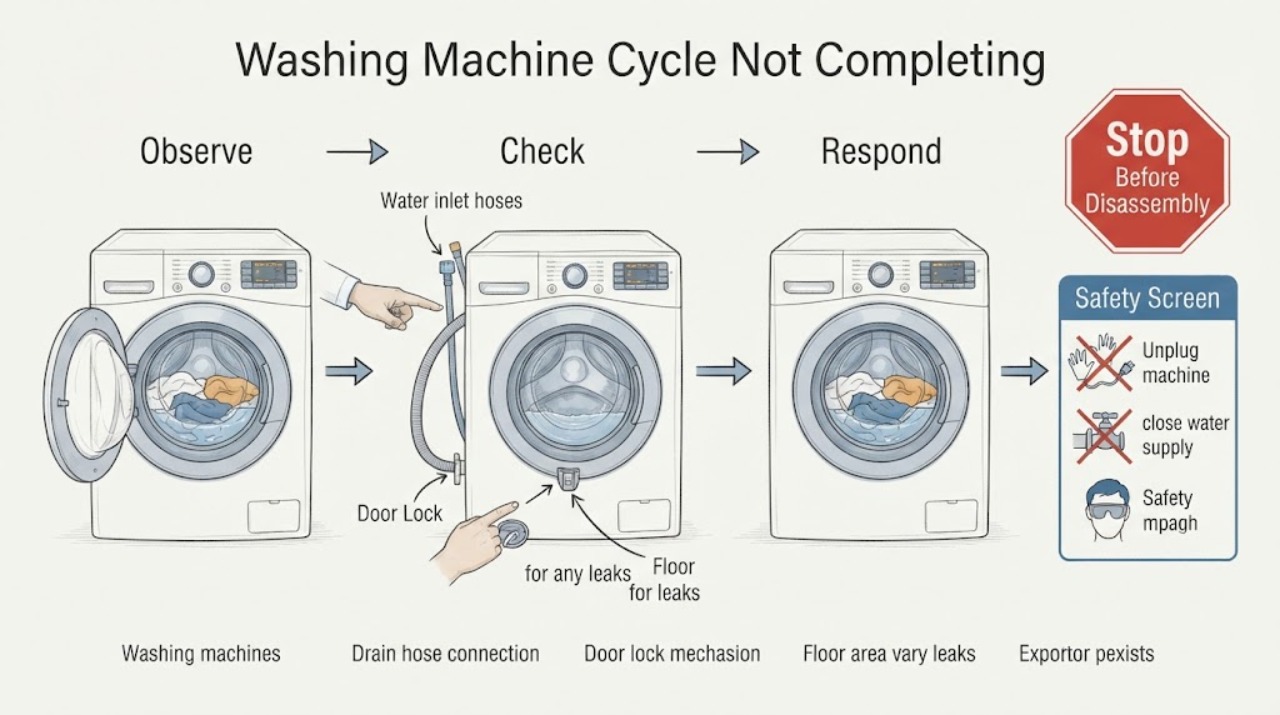
Samsung Washing Machine Cycle Not Completing
Start by recording the exact stage where the Samsung washer stops: filling, washing, rinsing, draining, or final spin. A timer that pauses or returns to a higher value near spin often reflects an unbalanced load, while water left in the drum points toward a drain path or pump-filter issue and a fill pause points toward water supply.
-
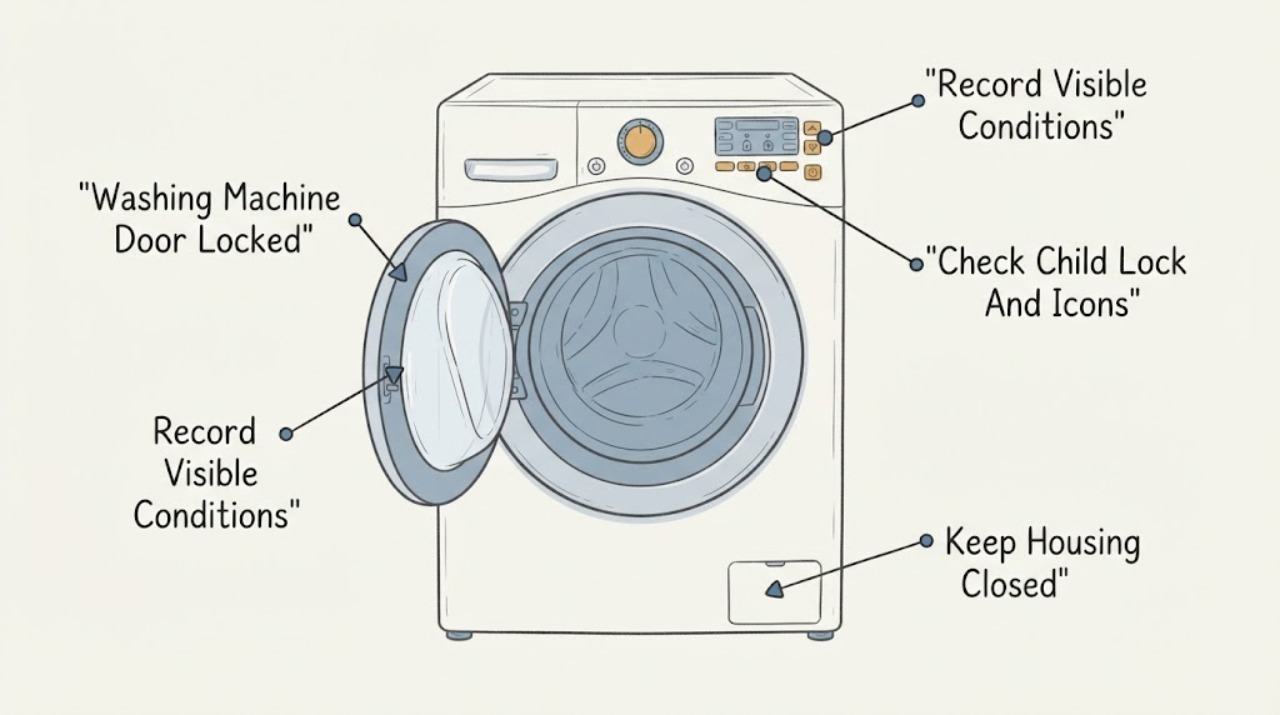
Samsung Washing Machine Door Locked: Drain Safely and Check the Lock State
Do not pull a locked Samsung washer door. The lock normally stays engaged while a cycle is running or while water is detected, because opening it could release water.
-
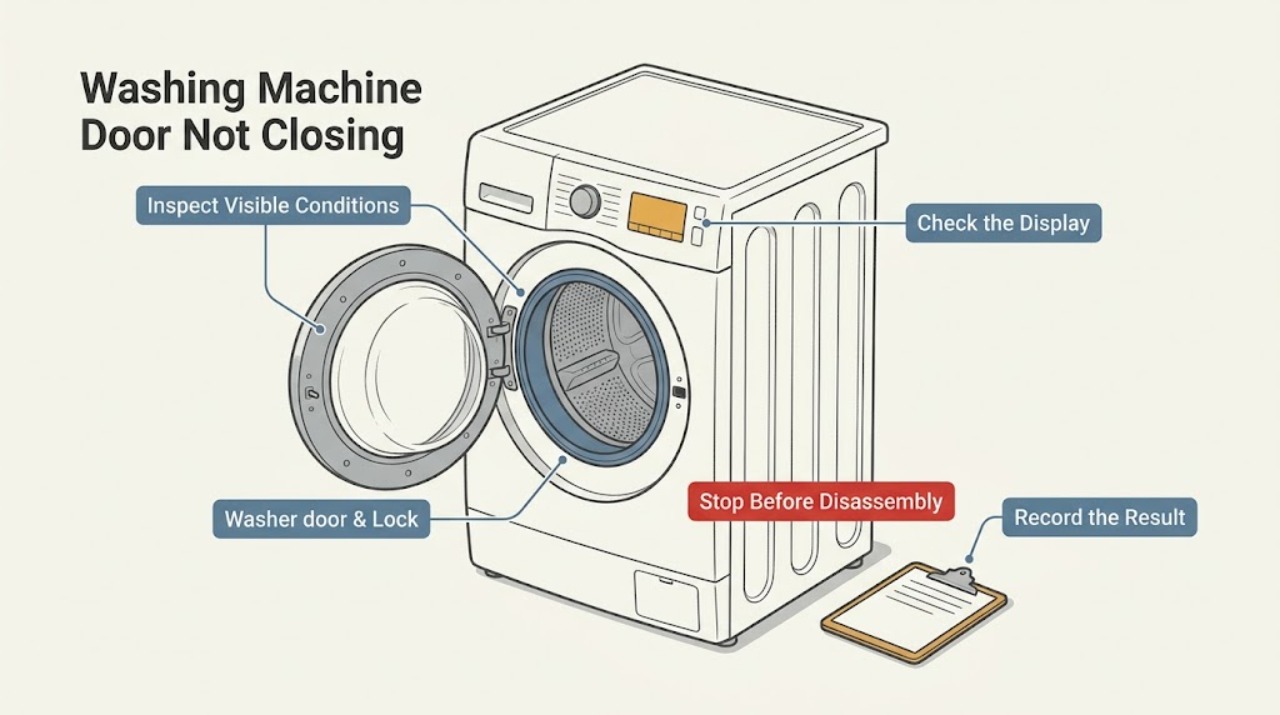
Samsung Washing Machine Door Not Closing: Check the Seal, Latch, and Cycle State
Do not force a Samsung washer door closed. First stop for water near electricity, broken glass, a damaged hinge or latch, smoke, burning smell, or a repeated power trip.
-
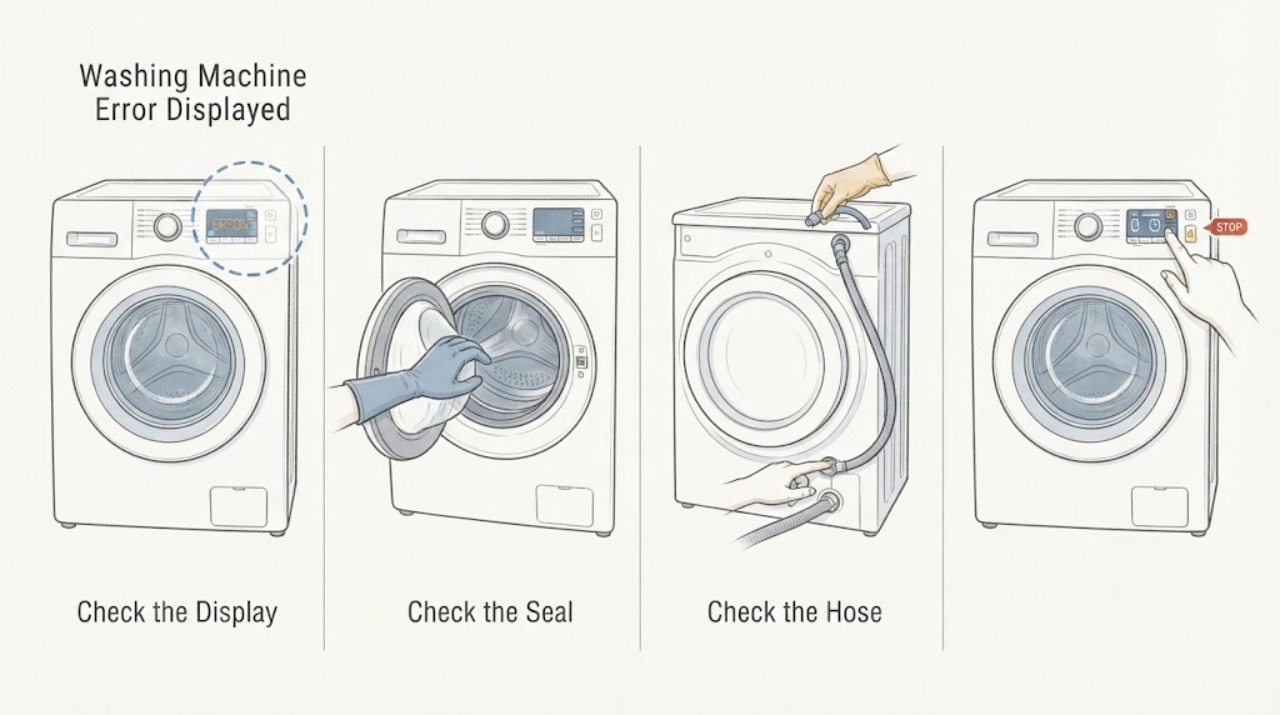
Samsung Washing Machine Error Displayed: Record the Code, Model, and Cycle Stage
Stop trying random button combinations and record the complete code exactly as shown, including letters, numbers, punctuation, alternating displays, or flashing lights. Also record the model, whether the washer is front-load or top-load, and the point in the cycle when the code appeared.
-
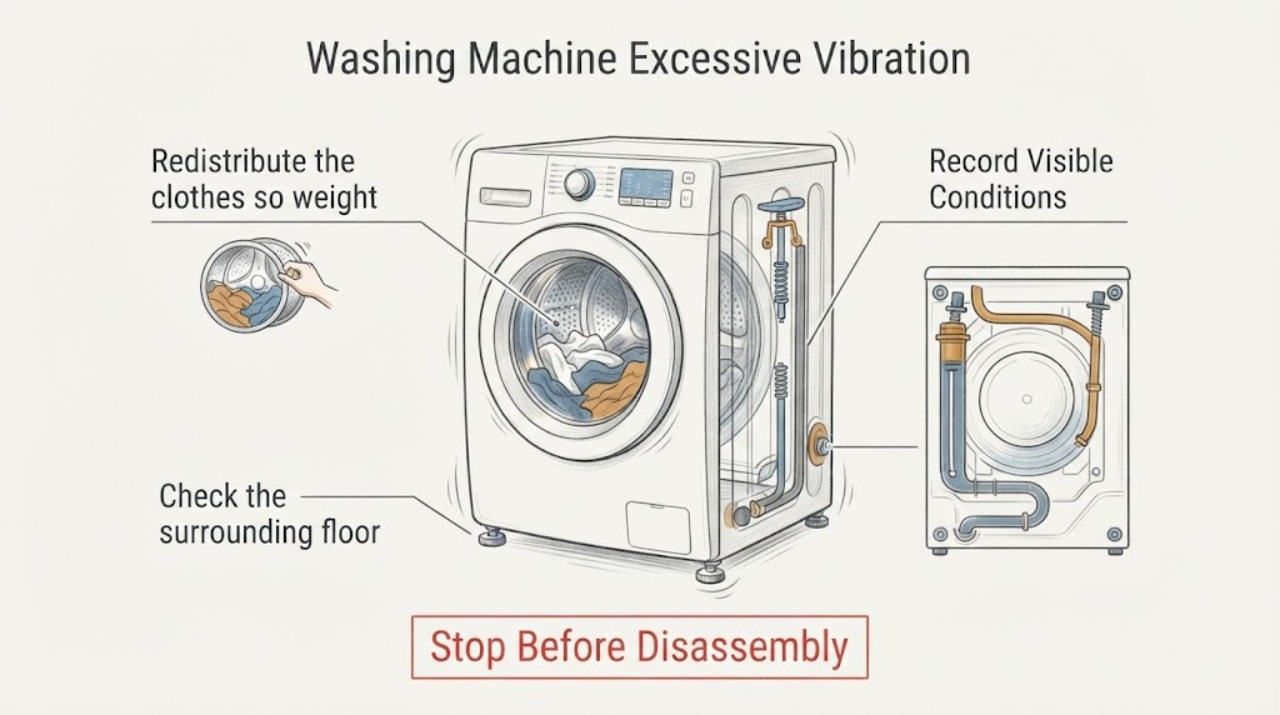
Samsung Washing Machine Excessive Vibration: Load, Level, and Shipping Checks
A Samsung washer may move briefly while it senses weight, but walking, repeated hard impacts, or severe shaking during spin is not something to ignore. Stop the cycle and first separate a tangled or very small load from an installation problem: confirm the load is distributed, the floor is solid, all feet contact the floor, and a new front-load machine has had its shipping bolts removed.
-
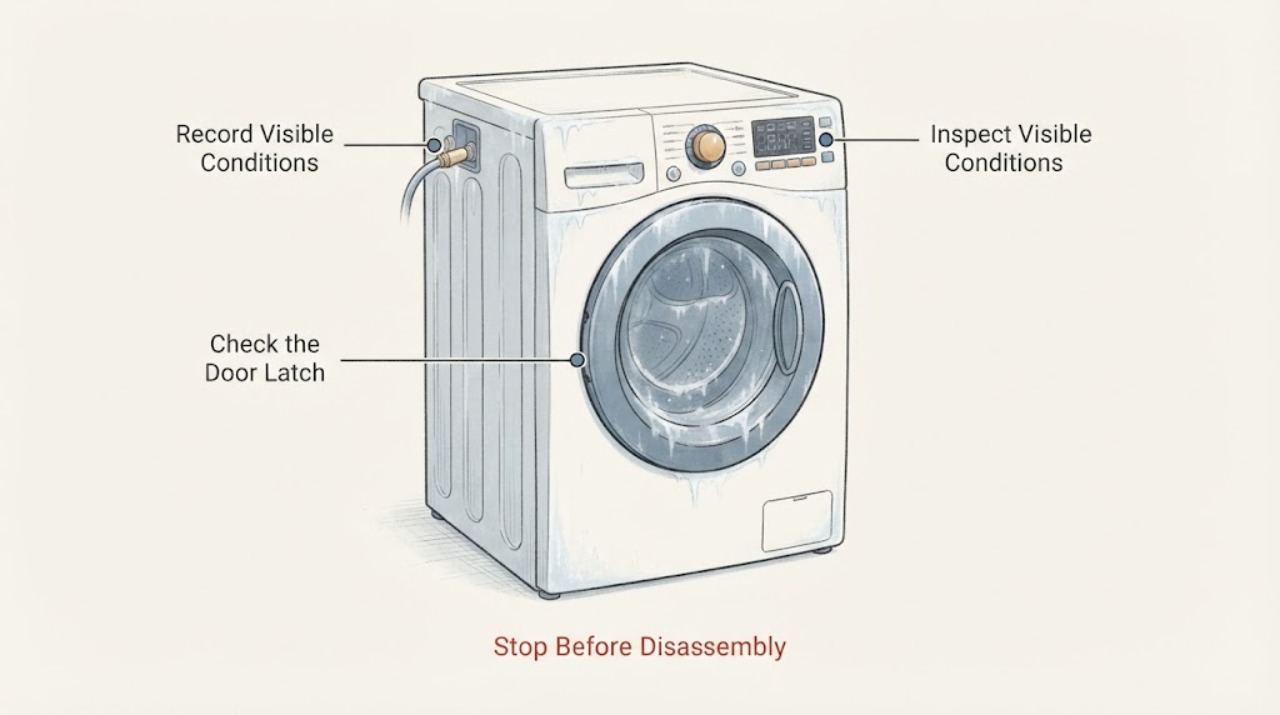
Samsung Washing Machine Freezing: Safe Checks Before Service
“Freezing” can mean a Samsung washer is literally iced up in a cold room, or that its display or cycle has stopped responding. First note whether the display is dark, whether the Child Lock icon is lit, whether water remains, and whether a code or blinking light is shown.
-
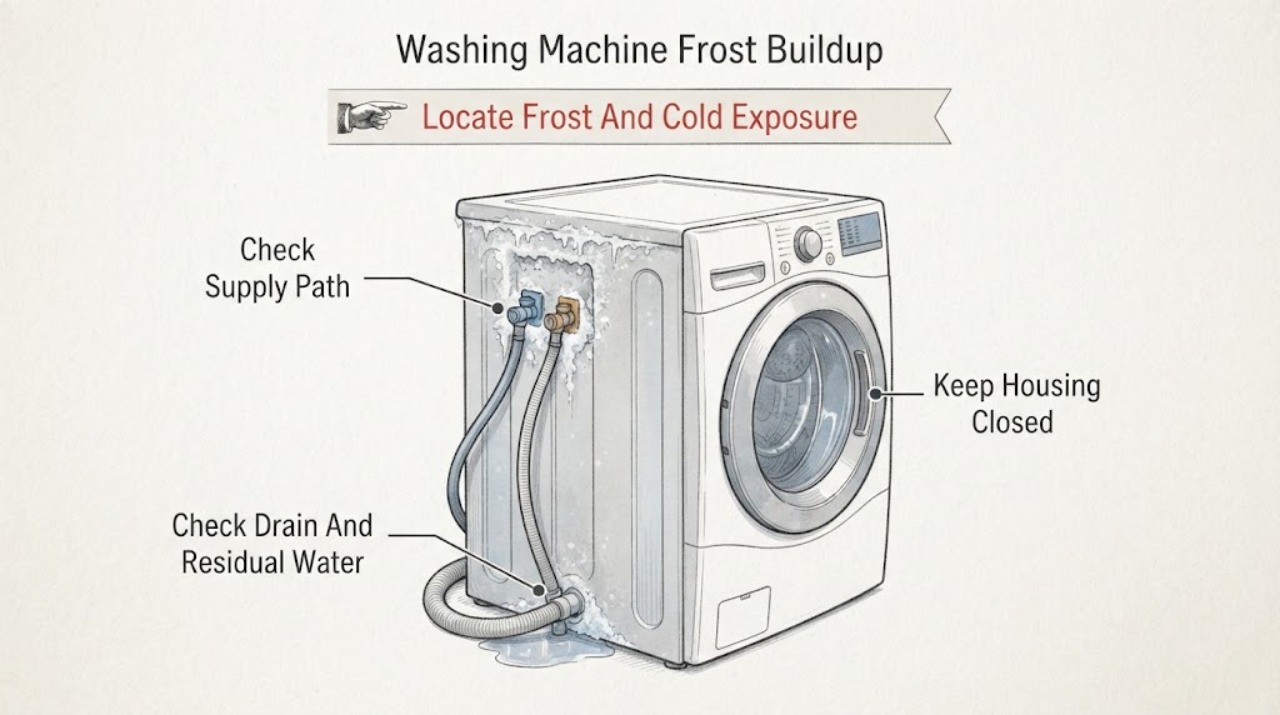
Samsung Washing Machine Frost Buildup: Find Frozen Water Paths Safely
A Samsung washing machine should not develop refrigerator-style frost during normal indoor use. Visible frost or ice around a washer usually means water left in an exposed supply hose, drain hose, residual-water hose, or tub has frozen because the installation became too cold.
-
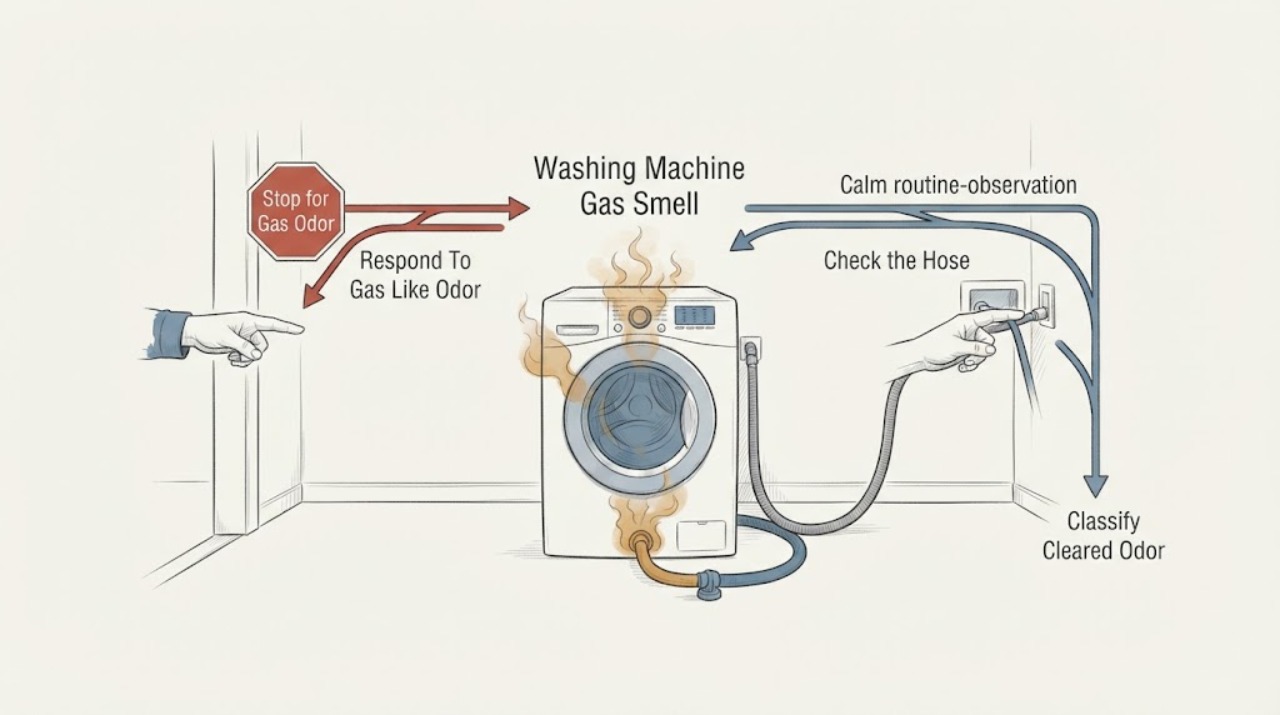
Samsung Washing Machine Gas Smell
Treat a true gas or rotten-egg smell around a Samsung washing machine as a possible natural-gas emergency, not as an ordinary washer-cleaning problem. Leave everyone out of the building, do not operate lights, the washer controls, phones, engines, or flames inside, and call 911 and the gas utility from a safe location.
-
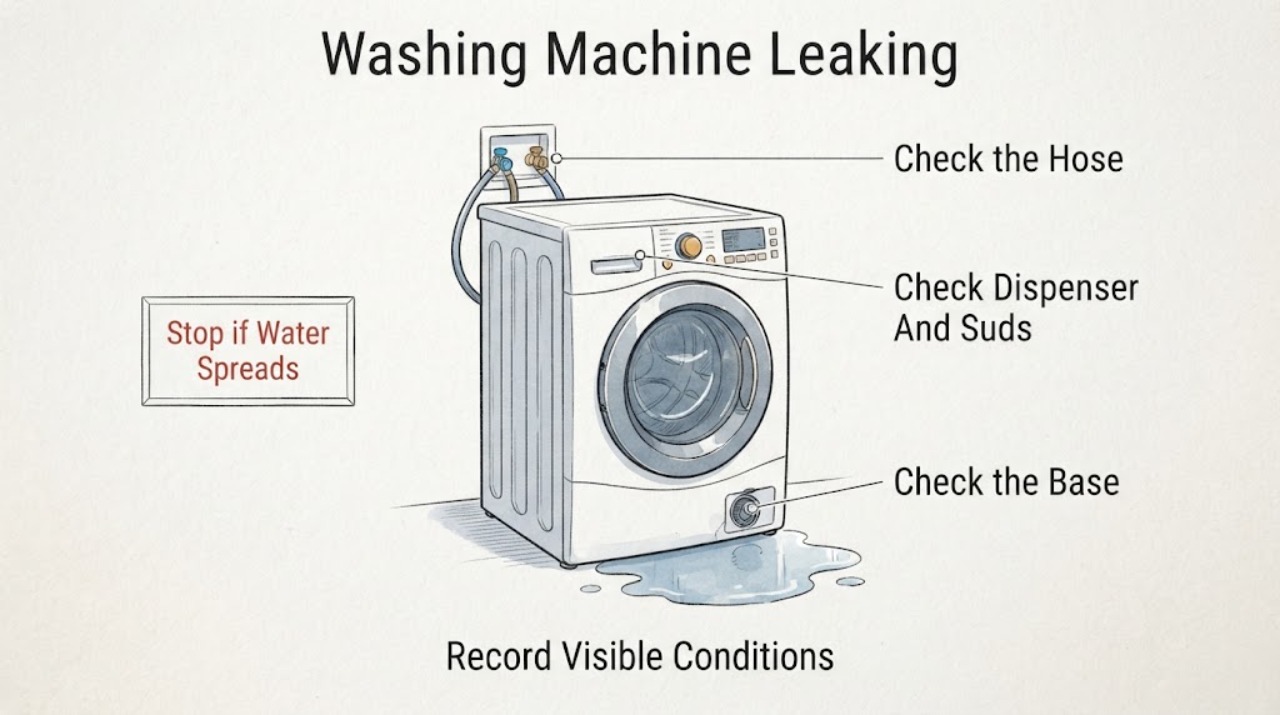
Samsung Washing Machine Leaking: Find the First Wet Point Safely
Stop the Samsung washer, keep water away from the plug and outlet, and close both household water valves if the leak is active. Find the first wet point rather than assuming the puddle's location is the source: check the supply hose and inlet connections, dispenser and suds, front-load door gasket, drain hose and pump-filter area, then the underside only from a safe standing position.
-
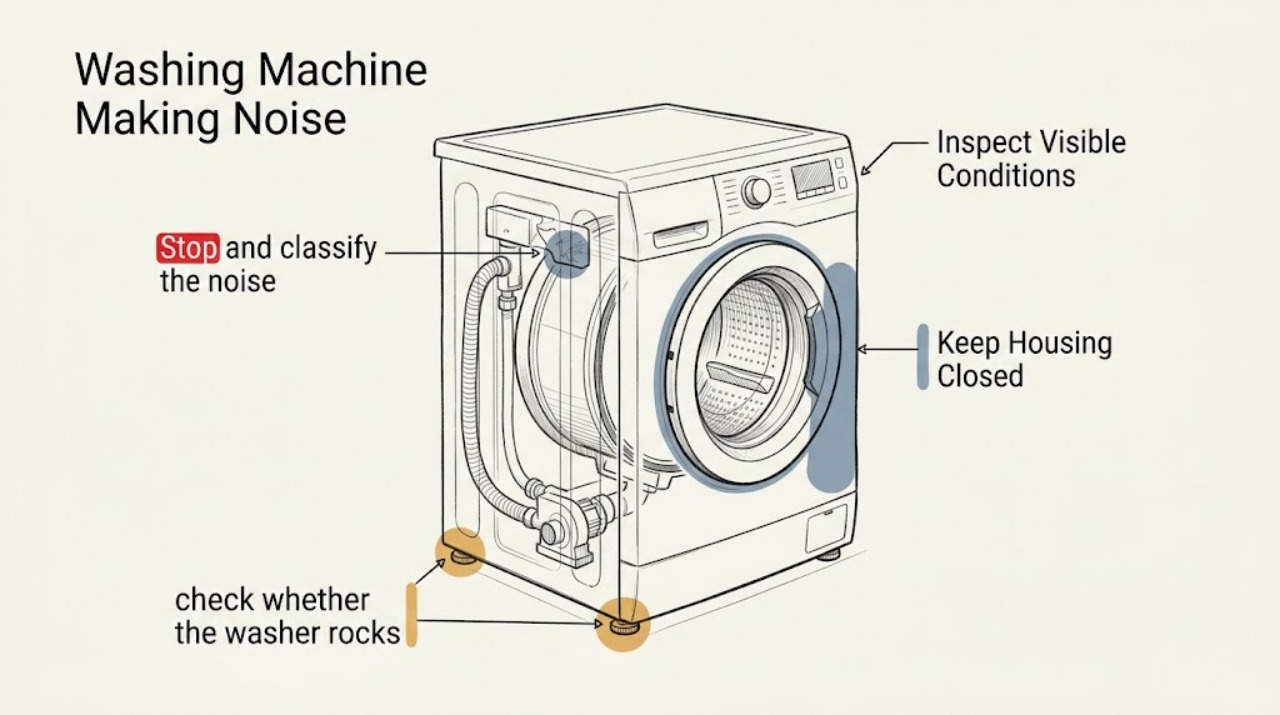
Samsung Washing Machine Making Noise: Identify the Sound by Stage
First match the Samsung washer noise to its cycle stage and pattern. A brief click followed by a short thump, a quiet drain hum, or a pop as the inlet valve opens can be normal on some models.
-
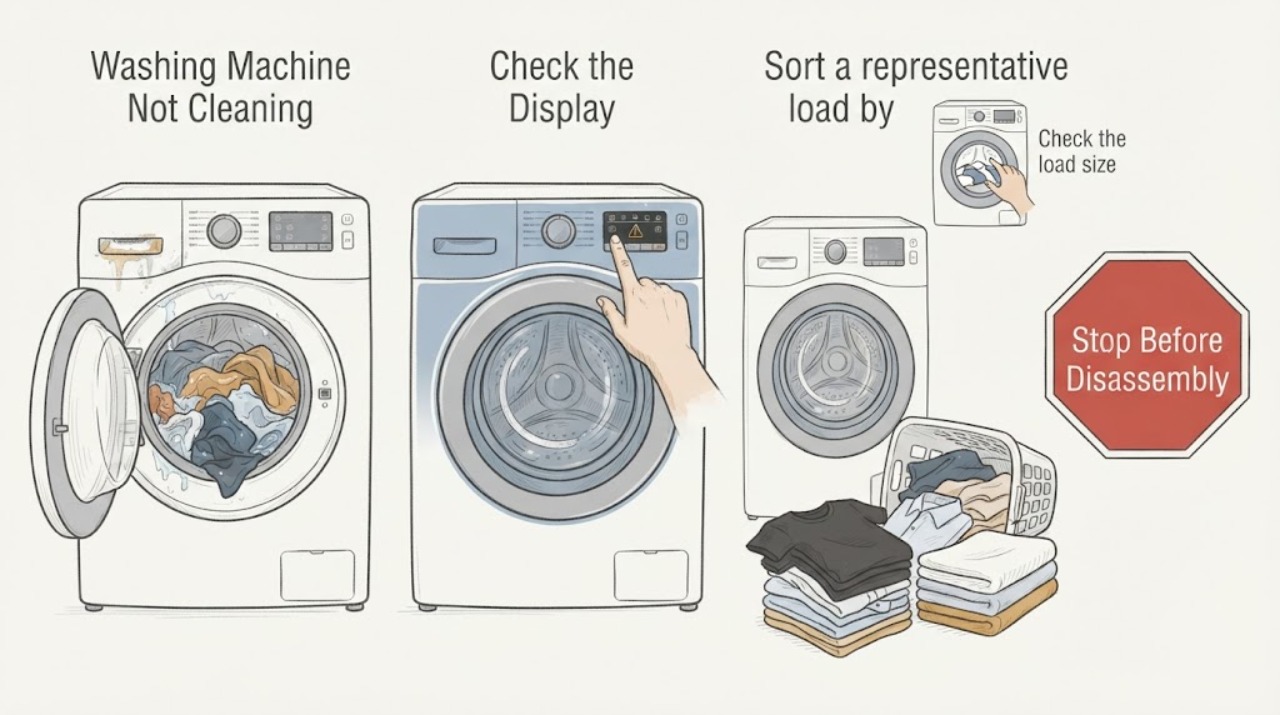
Samsung Washing Machine Not Cleaning: Fix the Cycle, Load, Detergent, and Water Path
First decide whether the issue is dirty clothes, residue or odor in the washer, or a real filling, draining, spinning, or error problem. For dirty clothes, use a cycle and temperature suited to the fabric, sort and pretreat stains, avoid overloading, and use the correct amount of HE detergent in the model's correct compartment.
-
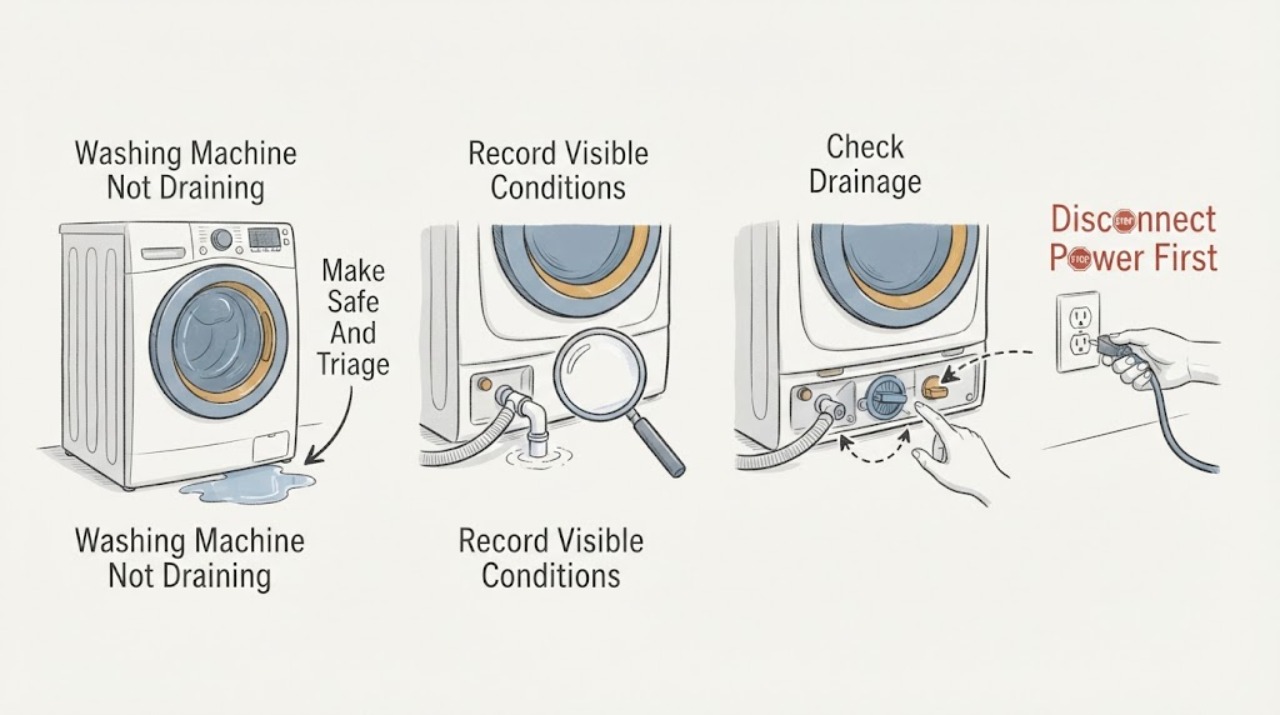
Samsung Washing Machine Not Draining: Find the Blocked Path Safely
A Samsung washer that leaves water in the tub may be paused in a rinse-hold or soak stage, blocked by a kinked or badly positioned drain hose, slowed by excess suds, or reporting a model-specific no-drain code such as 5C, 5E, or nd. First note the washer type, cycle stage, exact code, and whether the door or lid is locked; do not keep restarting a machine that is leaking, hot, or electrically unsafe.
-
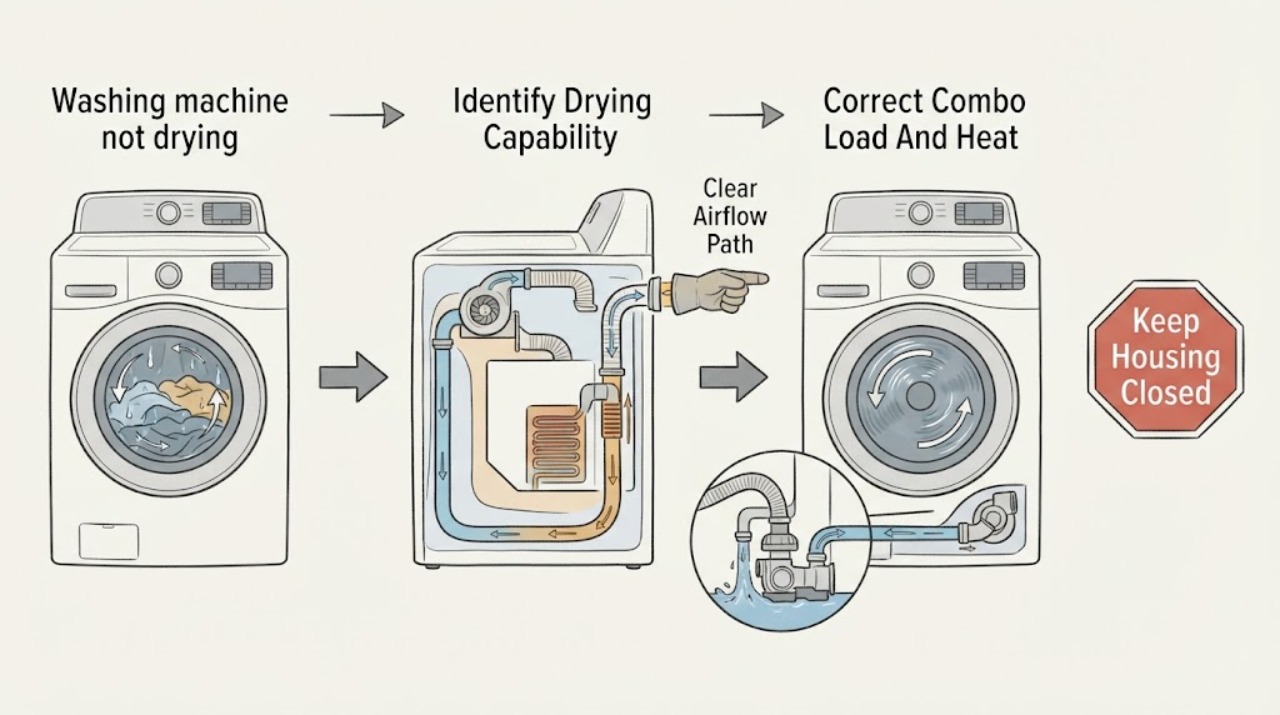
Samsung washing machine not drying: separate combo drying from wet-spin problems
First determine whether the Samsung appliance is a washer-dryer combo or a washer that only washes and spins. A washer without a Dry or drying cycle cannot heat-dry clothes; if the clothes are wet after washing, troubleshoot the final spin and drain instead.
-
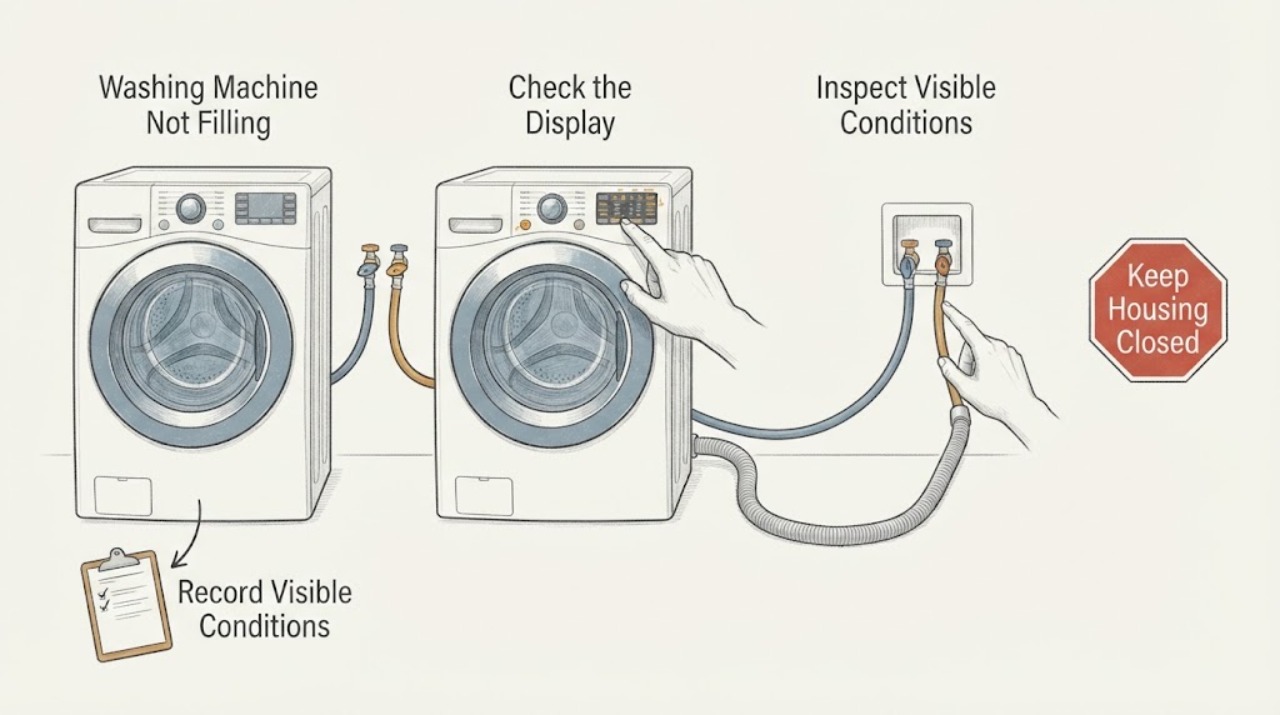
Samsung Washing Machine Not Filling: Check Water Supply, Drain Routing, and Cycle State
A Samsung washer may appear not to fill while it is sensing the load, but a true no-fill condition usually involves the home water supply, kinked or incorrectly connected hot and cold hoses, an installation-related drain siphon, a door or lid that is not latched, or a displayed code. Confirm whether water is entering at all and whether the washer is continuously filling.
-
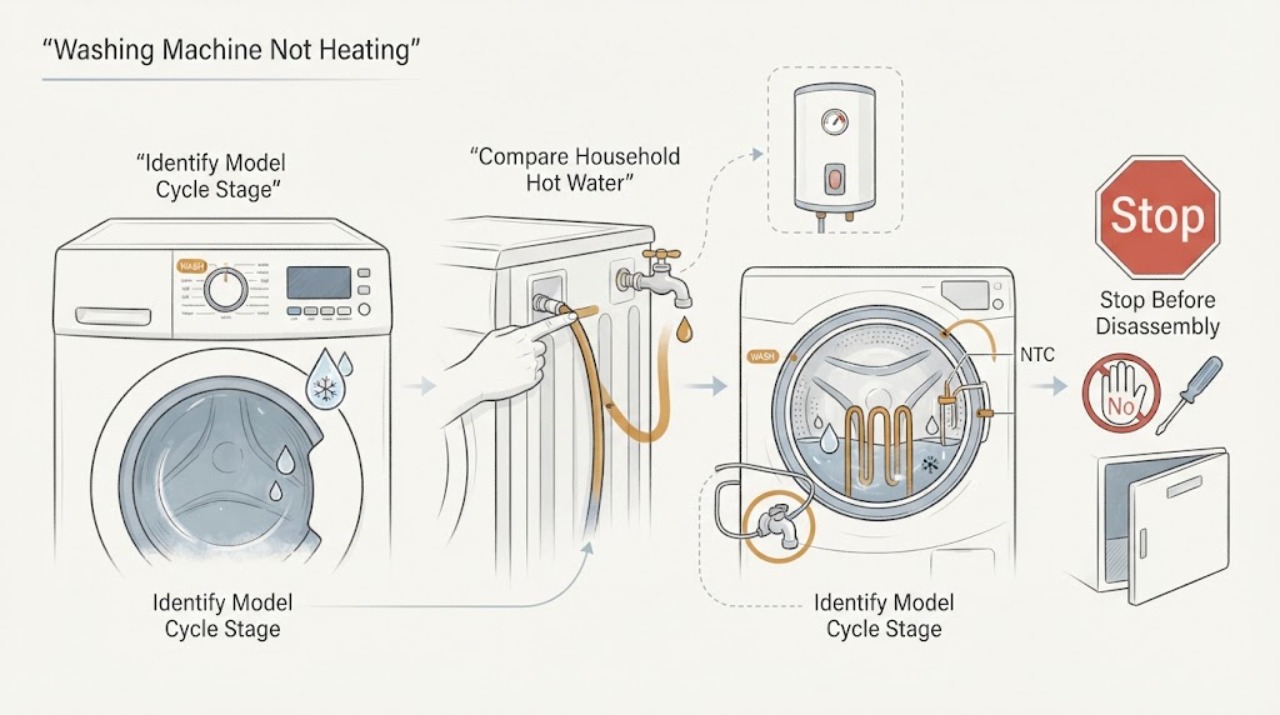
Samsung Washing Machine Not Heating
A Samsung washer that seems not to heat may be working normally: many cycles use cold water for part of the program, Samsung washers mix hot and cold with Auto Temperature Control, and the final rinse may be the only warm part of a Warm cycle. First record the exact model, cycle, temperature setting, and stage, then compare the water only during a stage that should use hot water.
-
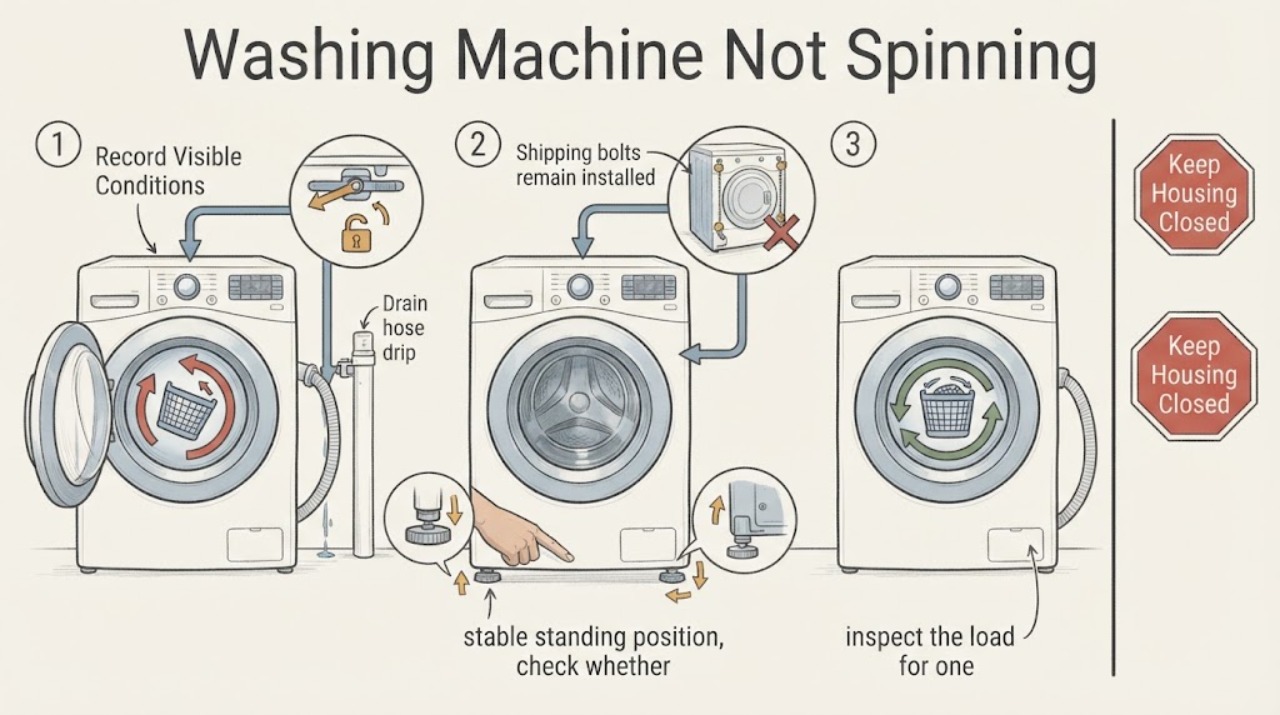
Samsung Washing Machine Not Spinning: Check Drain, Balance and Lock Conditions
A Samsung washer can refuse to spin because it has not drained, the door or lid is not locked, the load is unbalanced, the machine is not level, or a model-specific fault is present. First note whether there is standing water and whether the drum ever begins to turn.
-
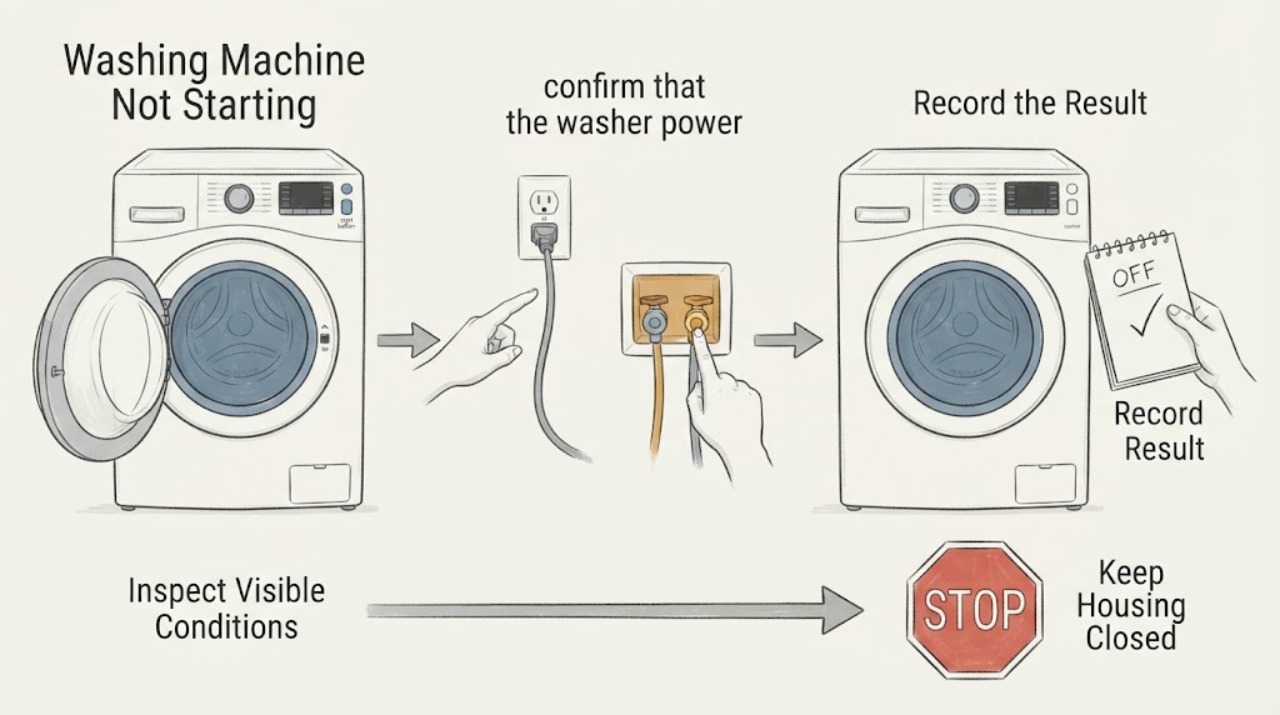
Samsung Washing Machine Not Starting: Power, Lock, and Cycle Checks
If a Samsung washer will not start, first separate a completely dark panel from a washer that has power but will not begin a cycle. Check the normal power supply, Child Lock, door or lid closure, cycle status, and any displayed code.
-
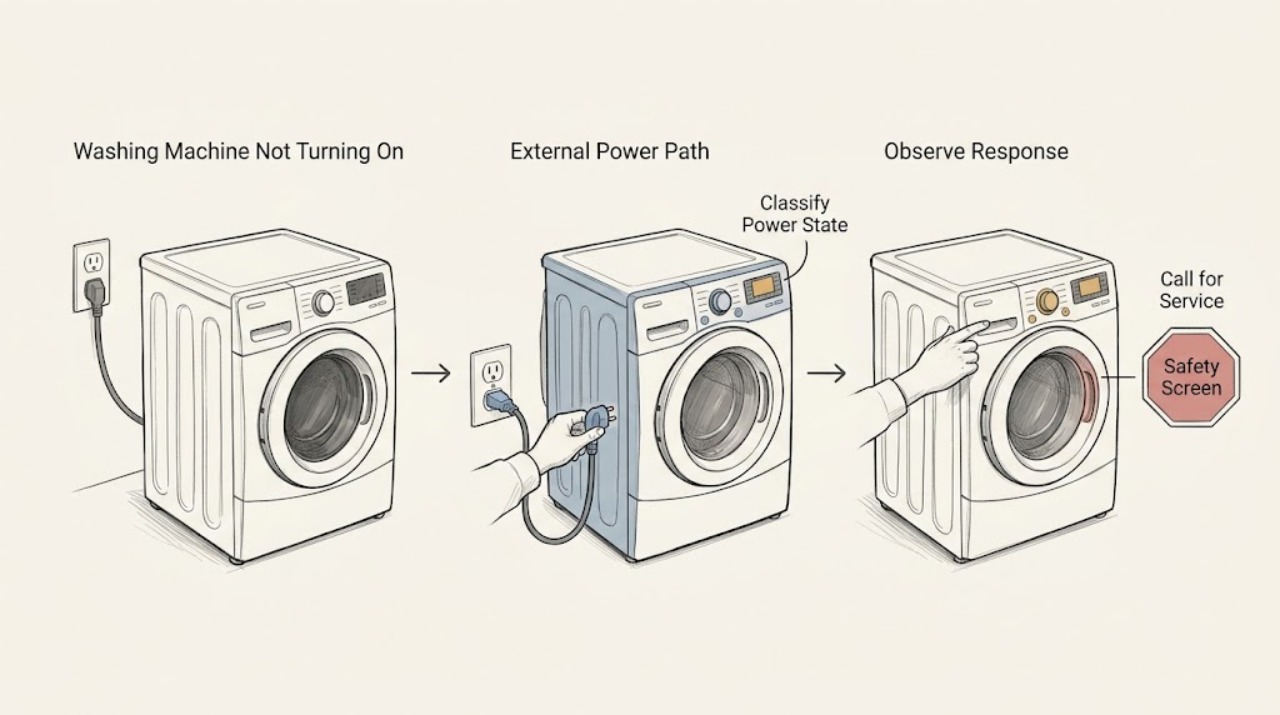
Samsung Washing Machine Not Turning On: Separate a Power Problem from a Start Lock
First decide whether the Samsung washer has no display at all or has a lit display that will not start a cycle. With no hazard present, check the correct Power control for the model, the visible power cord and outlet, the household breaker, and whether a surge protector is involved.
-
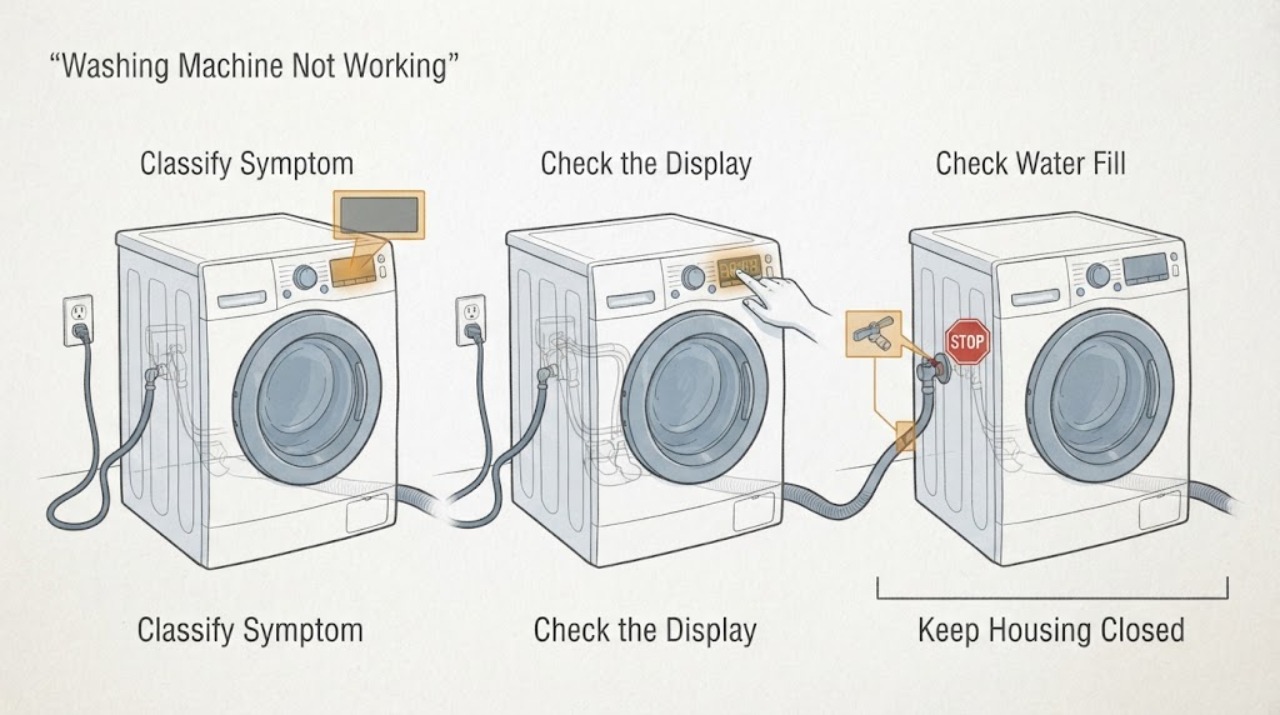
Samsung Washing Machine Not Working: Split No-Power, Fill, Drain, Spin, and Leak Faults
A Samsung washing machine that is not working needs to be split into a symptom, not treated as one generic failure. First record whether the display is blank, the controls respond but a cycle will not start, water will not enter, the washer will not drain or spin, or water is leaking.
-
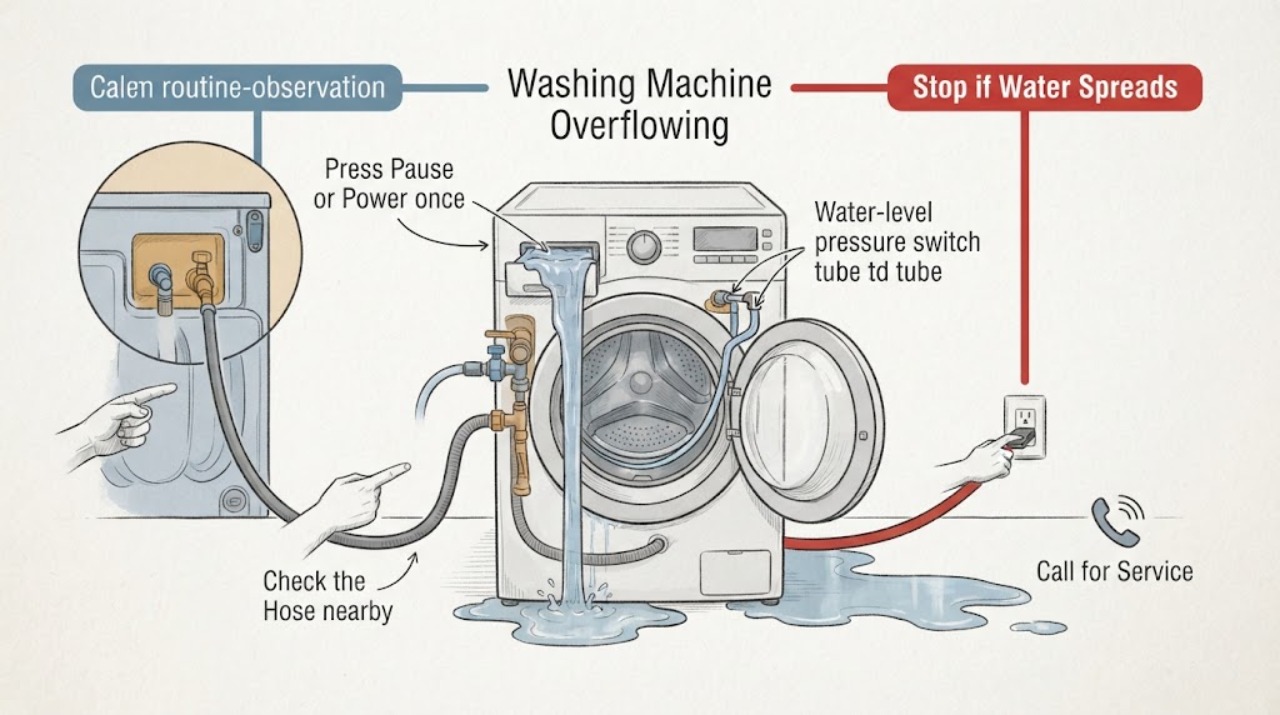
Samsung Washing Machine Overflowing: Stop the Water and Find the Cause
If a Samsung washer is actively overflowing, pause it and close the water valves immediately if they are safely reachable, then isolate power only from a dry, safe location. Keep clear of standing water near electrical equipment and hot water.
-
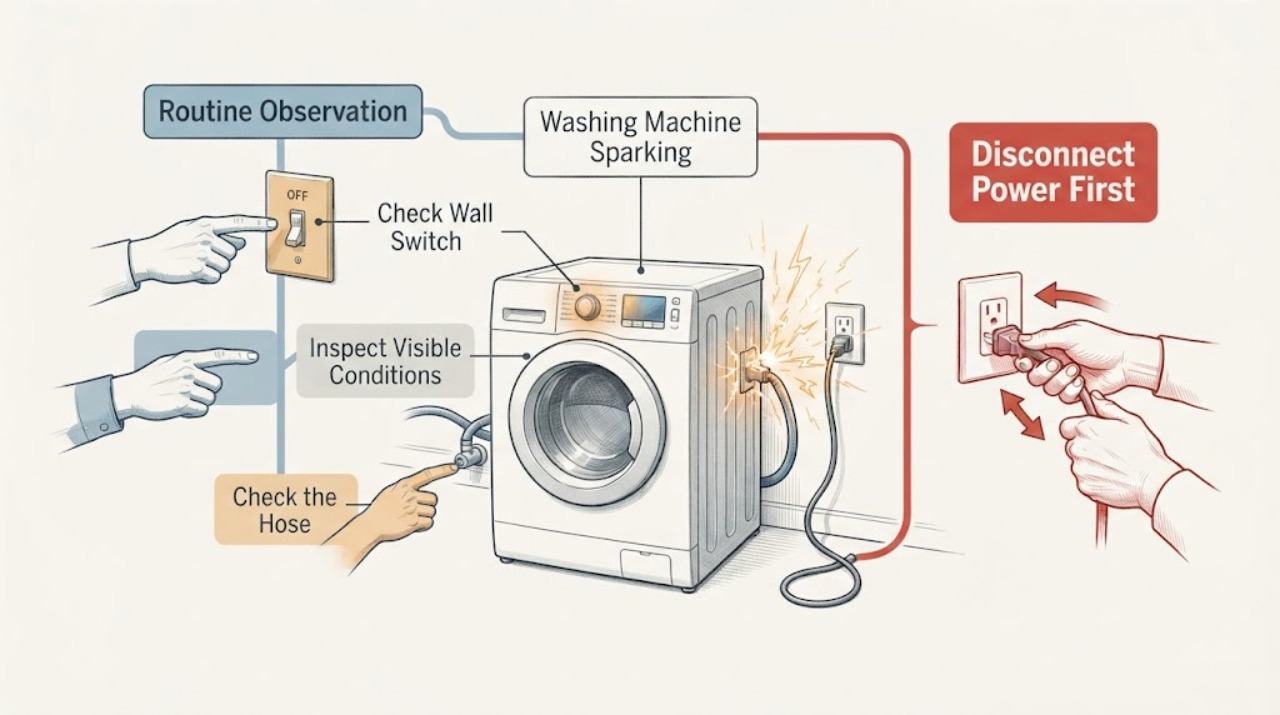
Samsung Washing Machine Sparking: Stop Safely and Locate the Risk
Treat any visible spark from a Samsung washer as an abnormal electrical event until its location and cause are clear. Stop the cycle, keep away from water and moving parts, and disconnect power only from a dry, safe position.