
On this page
Start here
Quick answer
Treat a true gas or rotten-egg smell around a Samsung washing machine as a possible natural-gas emergency, not as an ordinary washer-cleaning problem. Leave everyone out of the building, do not operate lights, the washer controls, phones, engines, or flames inside, and call 911 and the gas utility from a safe location. Only after emergency responders or the gas utility say the area is safe should you distinguish a sulfur/sewage drain odor from a burning appliance odor and perform the limited external checks below.
Before you begin
Safety first
- This article supports evacuation and emergency reporting for a possible gas leak, followed only after official clearance by ordinary-access odor classification and visible drain-hose observation. It does not authorize gas, electrical, appliance-cabinet, plumbing-disassembly, or live testing.
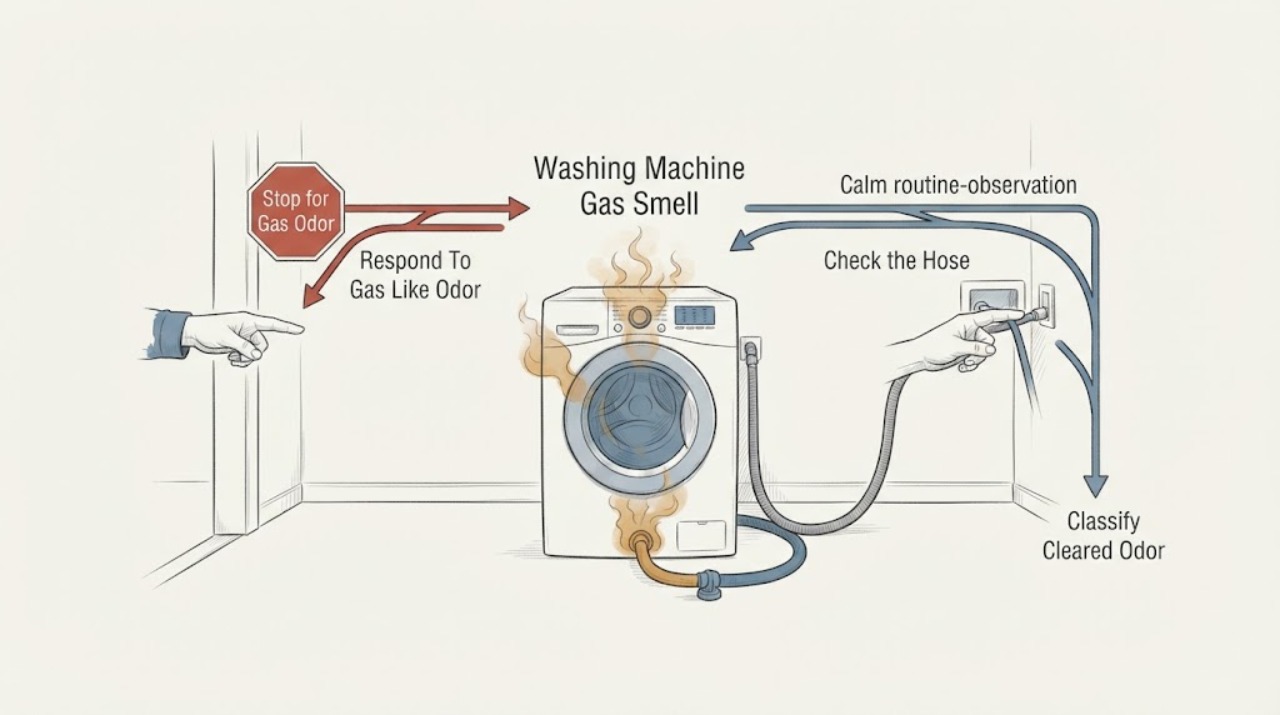
Work through in order
Diagnostic checks
Use only checks that match the exact appliance or system and its official guide.
-
Check 1
If the laundry area has a rotten-egg or other gas-like smell, hissing, or a strong unexplained odor, leave the building with everyone else immediately; do not press the washer controls or operate any switch, phone, engine, or flame inside.
Expected result: The smell is present now, is strong or spreading, or is accompanied by hissing; alternatively, no gas-like odor is present after reaching a safe location.
Next step: From a safe distance, call 911 and the natural-gas utility, describe the odor and location, and do not re-enter until the responsible responders or utility say it is safe.
Stop if: Do not troubleshoot, restart, unplug, switch off, or investigate the washer while a gas leak is possible; do not use a phone or create an ignition source in the affected area.
Why this matters
Why: A current gas-like odor is a possible natural-gas leak whose source cannot be safely assigned to the washing machine. The absence of odor after leaving does not prove that the building is safe.
-
Check 2
Only after emergency personnel or the gas utility has cleared the area, identify the remaining odor from ordinary access without opening the washer cabinet, removing panels, or deliberately running the machine; record whether it is rotten-egg/gas-like, sulfur or sewage-like at the drain, burning/electrical, or a different laundry odor.
Expected result: The odor is still gas-like or returns, is confined to the drain or tub and smells sulfurous/sewer-like, comes from the washer or cord as a burning odor, or cannot be classified safely.
Next step: Repeat the gas emergency response for any gas-like return. For a clearly drain-like odor, continue with the external drain-hose check; for burning or an unclassified persistent odor, keep the washer out of use and arrange qualified service.
Stop if: Do not sniff closely, use an ignition source to locate the odor, open the cabinet, or operate the washer to reproduce a smell.
Why this matters
Why: A returning gas-like odor remains an emergency. A sulfur/sewage odor can fit Samsung's drain-siphoning guidance, while a burning odor is a separate washer-service condition; an unclassified odor should not be treated as harmless.
-
Check 3
For a clearly sulfur or sewage-like odor localized to the washer after the gas hazard is cleared, inspect only the visible drain hose and standpipe area for a hose inserted unusually far, a loose hose, standing water, or residue; follow the exact Samsung model manual for the permitted hose position.
Expected result: The hose is too deeply inserted or unsecured, and standing water or residue is present; alternatively, the hose appears correctly positioned, or the odor is not actually drain-like.
Next step: After confirming the area remains safe, reposition and secure the hose only as the exact Samsung instructions allow, then monitor an empty drain operation without entering a gas-suspect area. If the odor remains, stop and request washer or plumbing service.
Stop if: Do not remove the rear hose-retaining screw, open the washer, dismantle the drain, mix cleaning products, or continue if any gas-like smell returns.
Why this matters
Why: Samsung says a drain hose inserted too far can allow siphoning and return sulfur or sewage odors to the washer. A correctly positioned hose or a non-drain odor makes this explanation less likely and does not establish a gas or internal appliance fault.
-
Check 4
If the odor is clearly burning or electrical after the gas hazard is cleared, leave the washer unused and arrange Samsung or qualified appliance service without removing a cover or testing wiring.
Expected result: The burning odor occurs only during the first couple of cycles on a new installation, persists beyond the first two cycles, returns on an established washer, or is accompanied by smoke, heat damage, or a tripped breaker.
Next step: Keep the washer out of service and provide the model, odor timing, cycle, visible damage, and any electrical symptoms to Samsung Support or a qualified technician; repeat the gas emergency response if the odor is gas-like rather than burning.
Stop if: Do not run another cycle to test the smell, open the cabinet, probe electrical parts, bypass a breaker, or assume a burning odor is a gas leak that can be fixed with drain cleaning.
Why this matters
Why: Samsung notes that motor-coil insulation can produce an unusual smell during the first couple of cycles, but a burning smell after that requires service. Smoke, heat damage, or electrical symptoms are stop conditions regardless of the washer's age.
Use your observations
Decision map
Find the observation that best matches what you see, then follow the next safe action.
-
PATH 01Safety boundary
What you see
A rotten-egg or gas-like odor is present now, returns after evacuation, or is paired with hissing or an unexplained strong smell in or near the laundry area.
Do this next
Evacuate, avoid switches, phones, flames, engines, and washer controls, then call 911 and the gas utility from a safe location. Re-enter only after official clearance.
Why this path and its safety boundary
Why it matters: Possible odorized natural gas is more likely than a Samsung washer odor category, and the leak source cannot be safely located by operating the appliance.
Safety stop: Do not continue with washer, drain, or electrical checks while this pattern exists.
-
PATH 02Safety boundary
What you see
The gas hazard has been cleared, the remaining odor is localized to the washer drain or tub and is sulfur/sewage-like, and the visible drain hose is inserted too far, loose, or associated with standing water or residue.
Do this next
Use the exact Samsung model instructions to correct hose placement and securement, then monitor from a safe position. Arrange appliance or plumbing service if the odor persists or the hose cannot be corrected without disassembly.
Why this path and its safety boundary
Why it matters: A drain-hose installation or siphoning problem is more likely than a gas leak or internal washer gas source; Samsung documents this as a cause of sulfur or sewage odor.
Safety stop: Stop immediately if the odor becomes gas-like, the area is not officially cleared, or correcting the hose requires opening the washer or drain system.
-
PATH 03Safety boundary
What you see
The gas hazard has been cleared, but a burning or electrical odor comes from the washer or its cord, especially after the first two cycles or with smoke, heat damage, or breaker trips.
Do this next
Do not run the washer. Arrange Samsung or qualified appliance service and provide the model, cycle, timing, and any visible electrical symptom.
Why this path and its safety boundary
Why it matters: The Samsung washer service path is more likely than a drain-odor explanation; Samsung says a burning smell beyond the first two cycles requires service.
Safety stop: Do not open the cabinet, test live parts, bypass protection, or restart the washer to reproduce the odor.
-
PATH 04Safety boundary
What you see
Responders have cleared the area, the odor is not clearly drain-like or a brief new-appliance burning smell, and it remains or returns around the washer.
Do this next
Keep the washer unused and arrange qualified appliance service, plumbing assessment, or gas-utility follow-up as appropriate. Repeat emergency evacuation for any gas-like return.
Why this path and its safety boundary
Why it matters: The source is unresolved; ordinary odor-maintenance advice cannot safely distinguish a washer fault, plumbing issue, nearby gas appliance, or recurring gas hazard.
Safety stop: Do not purchase or replace a part based only on the smell, and do not keep testing the appliance.
Helpful context
Understand the symptom
Handle a gas-like smell before troubleshooting the washer
A distinctive rotten-egg smell, hissing, or a strong unexplained odor in the laundry area can indicate odorized natural gas even when the odor seems to be coming from the washer. The source cannot be safely identified by restarting the machine or switching equipment on and off. Leave the building and call 911 and the gas utility from well away from the suspected leak. Do not use a telephone, electrical switch, washer control, engine, match, or other ignition source in the area.
After clearance, separate gas, drain, and burning odors
Once emergency personnel or the gas utility has cleared the area, note where the odor remains without opening the washer cabinet or deliberately operating the appliance. Samsung's washer guidance treats sulfur or sewage odor as a drain-path problem and burning odor as a separate condition; neither category should be used to dismiss a current rotten-egg gas smell. If the gas-like odor returns, stop and repeat the emergency response rather than continuing washer checks.
Use only ordinary-access checks after the area is safe
For an odor that is clearly sewer-like and localized to the washer after the gas hazard is cleared, inspect the visible drain-hose insertion and securement, and look for standing water or residue. A hose inserted too far can let drained water siphon back into the washer. For a burning odor, stop using the washer and arrange Samsung service; do not remove covers or test live electrical parts.
Safety boundary
Stop conditions
- For any rotten-egg or gas-like odor, evacuate and call 911 and the gas utility from a safe location; do not use switches, phones, flames, engines, or washer controls in the affected area.
- Do not re-enter or resume washer checks until emergency responders or the gas utility has cleared the area.
- Do not open the Samsung washer cabinet, probe electrical parts, bypass a breaker, or run a cycle to reproduce a burning or gas-like odor.
- Do not treat a sulfur/sewage odor as proof that a gas hazard is absent; repeat the emergency response if the odor is gas-like, strong, spreading, or unexplained.
- Arrange qualified appliance or plumbing service when the odor persists after permitted external checks, the hose requires disassembly, the washer has burning/electrical symptoms, or the source remains uncertain.
When checks do not resolve it
Need a professional?
Use emergency services and the natural-gas utility from a safe location for any current or returning rotten-egg or gas-like smell. After official clearance, arrange Samsung or qualified appliance service for a persistent burning odor, smoke, heat damage, electrical symptoms, or an unresolved odor; arrange plumbing assessment when a drain-hose correction does not resolve a clearly sulfur/sewage-like smell.
Safety scope: This article supports evacuation and emergency reporting for a possible gas leak, followed only after official clearance by ordinary-access odor classification and visible drain-hose observation. It does not authorize gas, electrical, appliance-cabinet, plumbing-disassembly, or live testing.
Common questions
FAQ
Can a Samsung washing machine itself create a natural-gas smell?
Do not assume it can or cannot while a gas-like odor is present. Treat a rotten-egg smell as a possible natural-gas emergency, evacuate, and call 911 and the gas utility from a safe location. Samsung's washer guidance covers sulfur/sewage, mildew, and burning odors as separate categories after the area is safe.
What should I do if the smell is sulfur-like but the gas utility finds no leak?
After the area is officially cleared, inspect the visible Samsung drain hose and standpipe for excessive insertion, poor securement, standing water, or residue, following the exact model manual. Samsung identifies drain-hose siphoning as a cause of sulfur or sewage odor. Arrange appliance or plumbing service if the odor remains.
Is a burning smell from a Samsung washer the same as a gas smell?
No. Samsung treats burning odor as a separate washer condition and says a burning smell after the first two cycles requires service. Keep the washer out of use for a persistent burning odor, and repeat gas-emergency precautions if the odor is actually rotten-egg or gas-like.
Can I run the washer to see whether the gas smell returns?
No. Do not run, unplug, switch, or open the washer while a gas hazard is possible. Only after emergency personnel or the gas utility clears the area should you make the limited external observations described here.
Read the exact guide
Official sources
- Recognizing and Responding to Pipeline EmergenciesPipeline and Hazardous Materials Safety Administration · Official US Department of Transportation pipeline-safety guidance for suspected natural-gas emergencies; follow local emergency instructions.
- Samsung washing machine or laundry smells badSamsung · Official Samsung US troubleshooting guidance for Samsung washing machines; exact installation and service instructions vary by model and manual.
- Natural Gas AlarmsNational Transportation Safety Board · Official US transportation-safety guidance for residential and commercial natural-gas leak awareness; local emergency and utility procedures may add requirements.
Community feedback
Share a repair observation
Share a plain-text repair observation. Accepted observations are published automatically; this page may take a moment to update.