
On this page
Start here
Quick answer
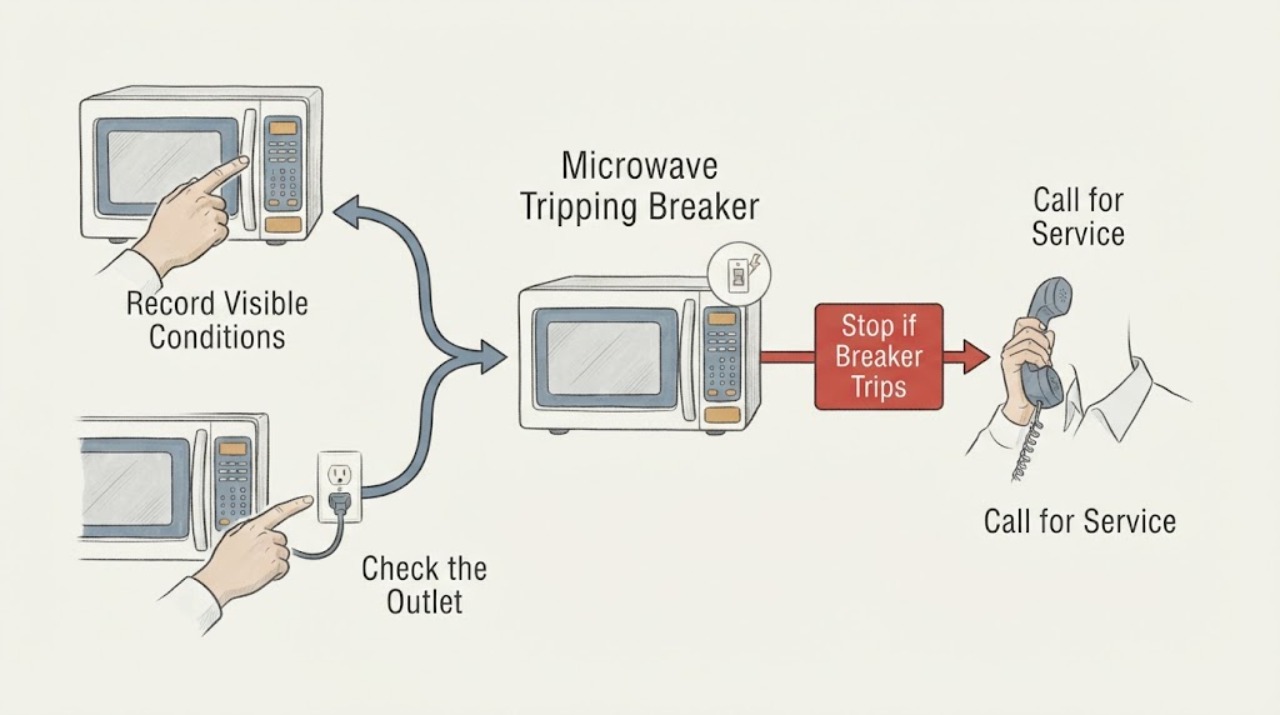
If a Sharp microwave trips the breaker, stop using it and first note exactly when the trip occurs: as soon as it is plugged in, when cooking starts, or when the door is opened or closed. Check the cord, plug, outlet, and model manual from a safe, dry position. Sharp manuals require qualified service for a damaged or malfunctioning microwave; do not keep resetting the breaker or open the cabinet.
Work through in order
Diagnostic checks
Use only checks that match the exact appliance or system and its official guide.
-
Check 1
Turn the Sharp microwave off and record whether the breaker trips at plug-in, when a cooking cycle starts, during the cycle, or when the door moves.
Expected result: The trip is immediate, occurs only during heating, occurs when the door is opened or closed, or does not recur on the next normal use.
Next step: Leave the oven disconnected after any repeat trip and give the exact timing and model number to Sharp service.
Why this matters
Why: The timing tells the service technician which operating state is involved, but it does not identify a safe user-replaceable part.
-
Check 2
From a dry, safe position, inspect the plug, cord, outlet, and visible installation for looseness, scorch marks, melting, moisture, or a damaged ground connection; do not remove covers.
Expected result: The supply or plug is damaged, wet, hot, loose, or visibly normal.
Next step: Keep the microwave off for damage or moisture and arrange a qualified electrician or Sharp service inspection.
Why this matters
Why: A visible electrical problem can make continued testing unsafe; a normal-looking outlet does not clear an internal microwave fault.
-
Check 3
Check the model manual for the required electrical supply and confirm that no extension cord, overloaded outlet, or unapproved installation is being used.
Expected result: The installation matches the manual, or the breaker trips again with the documented supply.
Next step: Do not substitute a larger breaker or bypass protection; stop testing and request Sharp-certified service.
Why this matters
Why: Installation and supply must be model-appropriate; a repeat trip with a suitable supply points to a fault needing service rather than a cooking setting.
-
Check 4
If there is smoke, a burning smell, sparking, fire in the cavity, or a hot or damaged connection, keep the door closed when applicable and isolate power only from a safe location.
Expected result: A safety symptom is present, or the microwave is cool, dry, and free of abnormal odor or damage.
Next step: Keep the microwave unused and obtain qualified service before reconnecting it.
Why this matters
Why: Sharp safety instructions treat fire, electrical damage, and a malfunctioning oven as stop-use conditions.
Use your observations
Decision map
Find the observation that best matches what you see, then follow the next safe action.
-
PATH 01Next step
What you see
The breaker trips as soon as the microwave is connected or during any operation.
Do this next
Leave it disconnected and arrange Sharp-certified service or a qualified electrician.
Why this path and its safety boundary
Why it matters: The fault is not limited to a particular cooking setting, and repeated energizing can increase electrical risk.
-
PATH 02Next step
What you see
The breaker trips only when heating starts, while the clock or controls remain on.
Do this next
Stop using the oven and report the timing and model to Sharp service.
Why this path and its safety boundary
Why it matters: The symptom is tied to the high-power heating state; the microwave manual does not make this a user part-replacement diagnosis.
-
PATH 03Next step
What you see
There is smoke, burning odor, sparking, water, a damaged cord, or a hot plug/outlet.
Do this next
Isolate power only if safe, keep the door closed if there is an interior fire, and obtain qualified service.
Why this path and its safety boundary
Why it matters: This is an immediate electrical or fire hazard.
Helpful context
Understand the symptom
Breaker timing matters
Sharp’s official microwave material supports documenting the operating moment and using the model manual. A breaker trip is not a reason to repeatedly reset protection or open the high-voltage cabinet.
Use qualified service
The official manual says a malfunctioning microwave should be serviced by qualified personnel. Visible damage, smoke, moisture, or a repeat trip requires stop-use handling.
When checks do not resolve it
Need a professional?
Contact Sharp-certified service when the breaker trips again, when the trip occurs during heating or door operation, or when the model-specific manual does not resolve the issue. Supply, outlet, or installation concerns belong with a qualified electrician. Do not open the microwave or order a magnetron, diode, fuse, relay, or board from the symptom alone.
Common questions
FAQ
What should I check first when my Sharp microwave is tripping breaker?
If a Sharp microwave trips the breaker, stop using it and first note exactly when the trip occurs: as soon as it is plugged in, when cooking starts, or when the door is opened or closed. Check the cord, plug, outlet, and model manual from a safe, dry position. Sharp manuals require qualified service for a damaged or malfunctioning microwave; do not keep resetting the breaker or open the cabinet.
Can I replace an internal part based on this symptom alone?
No. The official guidance supports model-specific user checks and service escalation, but the symptom does not establish a compatible internal part. Record the model, exact display or operating pattern, and the result of the permitted checks for service.
When should I stop using the appliance?
Contact Sharp-certified service when the breaker trips again, when the trip occurs during heating or door operation, or when the model-specific manual does not resolve the issue. Supply, outlet, or installation concerns belong with a qualified electrician. Do not open the microwave or order a magnetron, diode, fuse, relay, or board from the symptom alone.
Read the exact guide
Official sources
- OPERATION MANUALSharp USA · Sharp microwave electrical safety, qualified service, and breaker guidance
- Microwave FAQs | Sharp Microwave Frequently Asked QuestionsSharp Electronics Corporation · Sharp microwave reset, model-specific manual, and certified-service guidance
Community feedback
Share a repair observation
Share a plain-text repair observation. Accepted observations are published automatically; this page may take a moment to update.