
On this page
Start here
Quick answer
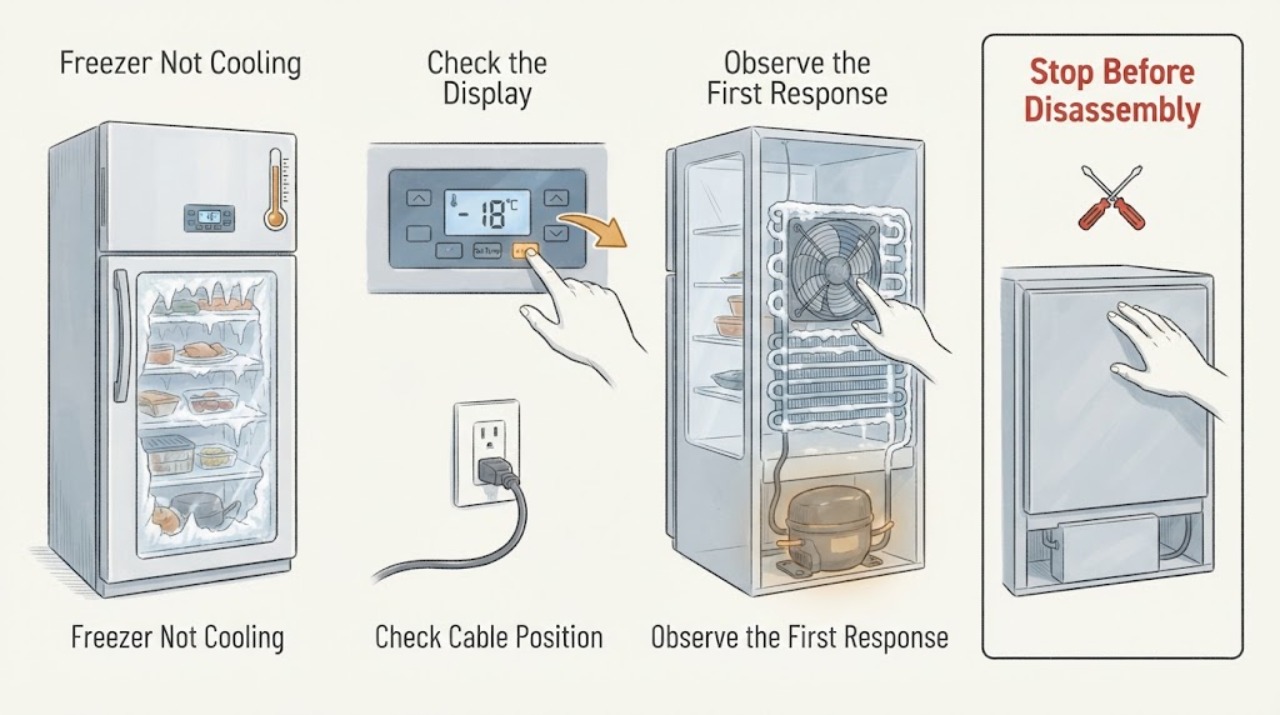
Protect the food and check safety first when a Smeg freezer is not cooling. If there is a burning smell, smoke, sparking, a hot or damaged plug, water at an electrical part, abnormal overheating, or a breaker that trips, stop the appliance and isolate power only from a safe, dry position; do not open panels. If there is no hazard, record the display and alarm, confirm the freezer has not been switched off or put into a special mode, and check the door, gasket, food load, vents, and visible frost. Smeg documentation notes that settings, a door left ajar, an uneven or poorly installed appliance, frost or condensation, and power conditions can affect operation, while its product pages show that lighting, alarms, controls, and no-frost behavior vary by model. Keep the door closed, move food to safe cold storage if temperature is uncertain, and arrange qualified Smeg service when these checks do not restore cooling.
Work through in order
Diagnostic checks
Use only checks that match the exact appliance or system and its official guide.
-
Check 1
Screen for an immediate safety condition before touching the controls. If there is smoke, burning odor, sparking, a hot or damaged connection, water near electrical parts, abnormal cabinet heat, or a repeated breaker trip, move clear and isolate power only from a safe, dry location; do not open the cabinet or keep testing.
Expected result: The freezer has an electrical, fire, moisture, or overheating warning, or it is cool and dry with no visible damage or hazardous odor.
Next step: Use local emergency procedures for fire, smoke, or escalating electrical danger. Otherwise keep the appliance out of service and arrange qualified appliance or electrical inspection.
Why this matters
Why: A safety warning changes the task from cooling diagnosis to hazard control. A stable, undamaged freezer may proceed to low-risk external checks.
-
Check 2
Read the model label and inspect the display, temperature setting, power indicator, alarm indicator, and any holiday, fast-freeze, energy-saving, or control-lock state. Use the exact Smeg manual to confirm that the freezer compartment is enabled and that the displayed setting is intended for freezing.
Expected result: The freezer was switched off, in a special mode, set incorrectly, showing a temperature or door alarm, or showing a normal setting with no improvement.
Next step: Correct only a clearly identified setting using the manual and avoid repeated changes. If the alarm remains or the freezer does not begin recovering, keep the door closed and continue with external checks.
Why this matters
Why: A control or mode state can make a functioning freezer appear warm. A normal setting with an active alarm or continued warming shifts attention to the door, power, airflow, or cooling system.
-
Check 3
From a safe position, check that the power plug is seated in the intended grounded outlet and that the breaker or fuse has not opened. Do not touch a wet, loose, hot, or discolored plug, outlet, or cable, and do not use an extension lead or multi-plug to bypass a suspected supply problem.
Expected result: The display and interior light are dark, the breaker is open, the connection is visibly damaged, or the freezer has power but remains warm.
Next step: Do not reset a repeatedly tripping breaker or operate damaged wiring. Arrange qualified electrical service for the supply and qualified Smeg appliance service for a powered freezer that remains warm.
Why this matters
Why: No power can stop cooling entirely. A damaged connection or repeated breaker trip indicates a supply or appliance fault, while power with no cooling points toward settings, airflow, defrost, fan, compressor, or sealed-system service.
-
Check 4
With the door closed as much as possible, inspect the gasket, cabinet frame, hinges, drawers, shelves, and food load for a package holding the door open, frost at the mating edge, dirt, a fold, a displaced seal, or a visible gap. Check that internal vents are not covered by food and that the external installation has its required clearance.
Expected result: The door is ajar or misaligned, the gasket is damaged or not seated, food blocks airflow, frost surrounds the edge, or the door and load appear normal.
Next step: Remove only a plainly accessible obstruction and rearrange food without overpacking. If the door cannot seal, the gasket is damaged, or the cabinet lacks installation clearance, request qualified service rather than forcing or lifting the door.
Why this matters
Why: A door or gasket gap admits warm moist air and can create frost that further blocks airflow. Overloading or blocked vents can reduce circulation even when the compressor is running.
-
Check 5
If frost or ice is visibly blocking an airflow path or the door edge, disconnect the freezer before cleaning or defrosting and protect the floor from meltwater. Use only the exact model's approved method; never use a heat gun, open flame, knife, screwdriver, or other sharp or mechanical tool to accelerate defrosting.
Expected result: The frost is limited to an accessible edge and clears with the approved method, or it is thick, returns quickly, or appears around an internal panel or duct.
Next step: Dry the area and close the door. If frost returns, the freezer remains warm, or water reaches electrical parts, keep the freezer off and arrange qualified service.
Why this matters
Why: Clearing an edge may remove an obstruction, but recurring or inaccessible frost can indicate a seal, airflow, defrost, sensor, or cooling-system problem. Smeg documentation distinguishes no-frost models from models that may require a specified defrost method.
-
Check 6
From outside the appliance, note whether the compressor or fan sounds normal for the model, is silent, runs continuously, clicks repeatedly, or becomes unusually hot. Do not remove a rear cover, touch refrigerant tubing, or place hands near a moving fan.
Expected result: There is no operating sound, repeated clicking, continuous operation without cooling, unusual heat, or a normal sound with a gradually improving temperature.
Next step: Do not attempt component or refrigerant work. Keep food protected and request qualified Smeg appliance service for abnormal sound, heat, or no improvement.
Why this matters
Why: Silence can follow loss of power or a control fault; repeated clicking or excessive heat requires service; continuous running without cooling can accompany a door, frost, airflow, sensor, or sealed-system fault. Some flow and compressor sounds are normal for refrigeration and do not prove cooling performance.
-
Check 7
Prepare a service handoff without opening the appliance: record the exact model, display and alarm state, temperature trend, door and gasket condition, frost pattern, food load and vent condition, room or installation context, power behavior, and compressor or fan observation. Limit door opening while waiting.
Expected result: Cooling returns after a clearly permitted setting or obstruction correction, or the freezer remains warm or the cause is uncertain.
Next step: Keep the freezer closed and arrange qualified Smeg service. Move food to safe cold storage and follow local food-safety guidance if temperature or thawing history is uncertain.
Why this matters
Why: A freezer that remains warm after external checks needs a diagnosis of controls, fan, sensor, compressor, defrost, or sealed-system behavior; a visible frost or door issue does not prove which part failed.
Use your observations
Decision map
Find the observation that best matches what you see, then follow the next safe action.
-
PATH 01Next step
What you see
There is smoke, burning odor, sparking, a hot or damaged connection, water at electrical parts, abnormal overheating, or a repeated breaker trip.
Do this next
Stop immediately, move clear, and use local emergency procedures when needed. Isolate power only from a safe, dry location and arrange qualified inspection; do not open the cabinet.
-
PATH 02Next step
What you see
The display is dark, the power indicator is off, or the breaker or fuse is open without visible damage.
Do this next
Check the intended grounded supply from a safe position and follow the model manual's external power guidance once. If the supply is present but cooling does not return, request qualified appliance service; do not repeatedly reset the breaker.
-
PATH 03Next step
What you see
The display is normal but the setting, special mode, alarm, or control state is inconsistent with freezing.
Do this next
Correct the clearly identified setting using the exact manual and keep the door closed. If the alarm or warming remains, continue to service rather than changing settings repeatedly.
-
PATH 04Next step
What you see
The door is blocked, the gasket is damaged or open, the cabinet is misaligned, or internal vents are covered.
Do this next
Remove only accessible load obstructions and rearrange food without overpacking. Request service for a damaged seal, hinge, unstable cabinet, persistent gap, or continued warming.
-
PATH 05Next step
What you see
Frost blocks the edge or vents, or thick frost returns after an approved defrost.
Do this next
Disconnect power before permitted defrosting and never use a sharp tool, flame, or heat gun. Keep the freezer off and arrange service if frost returns or the appliance remains warm.
-
PATH 06Next step
What you see
The compressor or fan is silent, repeatedly clicking, unusually hot, continuously running without cooling, or otherwise abnormal.
Do this next
Do not remove covers or touch refrigerant or moving parts. Protect the food and request qualified Smeg appliance service.
-
PATH 07Next step
What you see
The freezer remains warm after safe external checks or food temperature is uncertain.
Do this next
Keep the door closed, move food to safe cold storage, follow local food-safety guidance, and arrange qualified service.
Helpful context
Understand the symptom
Start with temperature evidence
“Not cooling” can mean the cabinet is warm, the freezer is only partially cold, the display shows an alarm, or the compressor appears quiet. Avoid judging by one item or by a short period after loading. Read the model label and manual, note the display and alarm state, and use the same observation point when recording whether the freezer is improving. Smeg models differ in controls, lighting, alarms, and defrost systems.
Keep food and the appliance safe
Repeated door opening raises the load and makes a marginal cooling problem harder to assess. Keep the door closed and move food to a functioning freezer or other safe cold storage when the temperature or time out of cooling is uncertain. Follow local food-safety guidance for thawed or questionable food rather than tasting it.
When checks do not resolve it
Need a professional?
Stop and seek urgent help for smoke, fire, burning odor, sparking, a hot or damaged electrical connection, water at electrical parts, abnormal overheating, or a repeated breaker trip. For persistent no cooling, recurring frost, door-seal failure, abnormal compressor or fan behavior, or uncertain food temperature, keep the freezer closed and arrange qualified Smeg service.
Common questions
FAQ
Why is my Smeg freezer running but not getting cold?
Check the selected mode and temperature setting, door seal and load, blocked vents, visible frost, and whether the compressor or fan behaves abnormally. Continuous running without cooling needs qualified service; do not open the rear cover or work on refrigerant parts.
Can I use a heat gun or knife to defrost a Smeg freezer?
No. Disconnect power before cleaning or defrosting and follow the exact model manual. Do not use a heat gun, flame, knife, screwdriver, or other sharp or mechanical tool to accelerate defrosting.
What should I do with food while the Smeg freezer is not cooling?
Keep the door closed and move food to a functioning freezer or other safe cold storage when temperature or thawing history is uncertain. Follow local food-safety guidance for food that has softened or thawed.
Read the exact guide
Official sources
- FZU36L FreezersSmeg USA · Smeg FZU36L freezer; no-frost system, compressor, power indicator, temperature alarm, door alarm, lighting, and installation context
- KOELKASTEN EN VRIEZERSSmeg Belgium · Smeg refrigerators and freezers FAQ; no-frost behavior, temperature settings, door-ajar frost, and food-preservation context
- Instruction ManualSmeg · Smeg refrigerator and freezer manual; settings, door, power, frost, ventilation, installation, compressor, food, and service safety
- FZU18L FreezersSmeg USA · Smeg FZU18L freezer; no-frost system, LED lighting, door-open and temperature alarms, controls, gasket, and freezer preservation features
Community feedback
Share a repair observation
Share a plain-text repair observation. Accepted observations are published automatically; this page may take a moment to update.