
On this page
Start here
Quick answer
A natural-gas surface burner should normally be soft blue, although GE says an occasional orange tint or flicker can come from particles in the gas or air. A steady mostly orange or yellow flame, soot, lifting or wavering flame, or a flame that affects every burner is not something to correct by adjusting a gas valve yourself. With the burner off and cool, check that the removable cap is seated and the visible ports are not clogged; Whirlpool also notes that an ultrasonic humidifier can carry minerals into the air and temporarily change flame color. If the color remains abnormal after safe external cleaning, or there is a gas smell, smoke, soot, carbon-monoxide alarm or illness, stop using the stove, leave the area for a gas emergency when applicable, and use a licensed gas professional.
Before you begin
Safety first
- Do not adjust gas valves, air shutters, orifices or pressure, bypass safety devices, open the gas line, or dismantle the burner. A gas odor, CO alarm or illness requires leaving first and contacting emergency or gas utility support from outside.
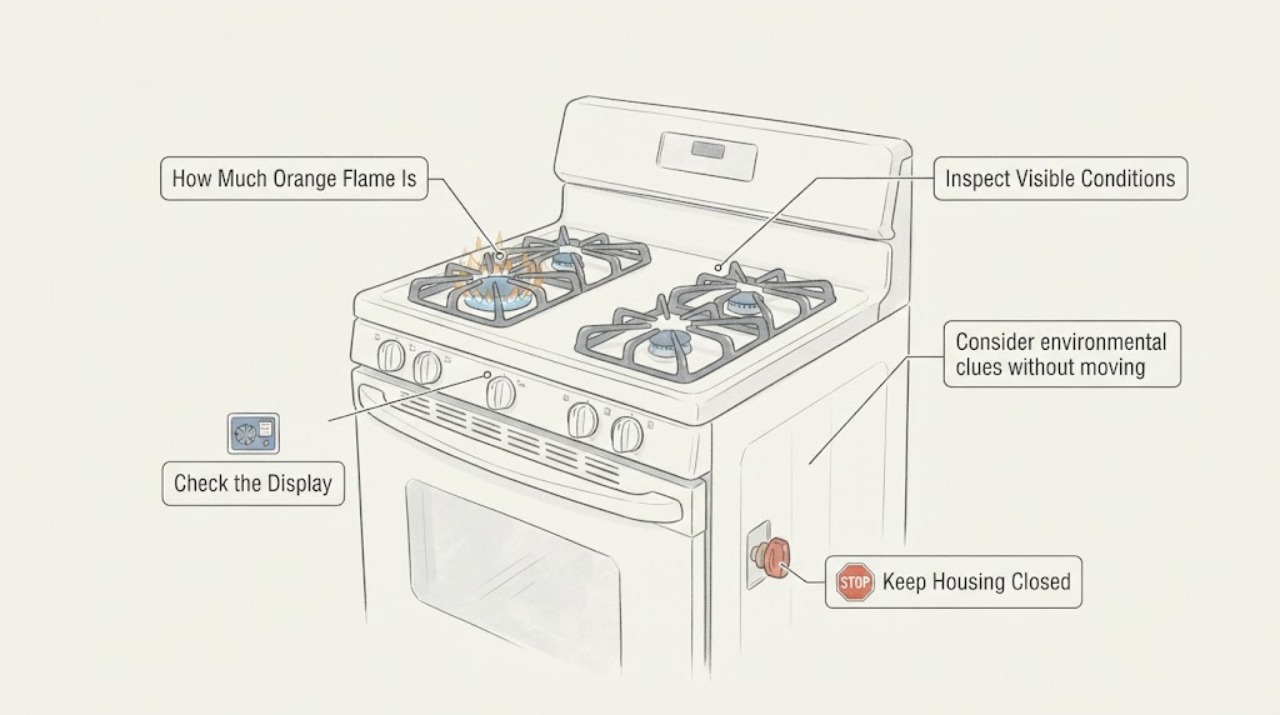
Work through in order
Diagnostic checks
Use only checks that match the exact appliance or system and its official guide.
-
Check 1
From a safe standing position, observe one burner briefly only when there is no gas odor, smoke or alarm. Note whether the flame is mostly blue with an occasional orange flicker, steadily yellow/orange, lifting or wavering, and whether the appearance is limited to one burner or present on several.
Expected result: The flame is stable blue with only brief orange flickers, or it is steadily yellow/orange, wavering/lifting, sooty, or abnormal on multiple burners.
Next step: Monitor only a brief isolated flicker with no other warning sign. Stop using the stove and arrange licensed gas service for a persistent, mostly yellow/orange, wavering, lifting or sooty flame.
Why this matters
Why: GE allows occasional orange tint/flicker from particles in gas or air but says a mostly yellow flame needs a gas professional. A multi-burner or soot condition cannot be assigned to one dirty cap from appearance alone.
-
Check 2
Turn the control off and let the burner and grate cool completely. Remove only the removable cap if it lifts normally, check that it is seated flush on the burner base and that visible ports are free of food residue; do not use a drill, enlarge a port, adjust the valve, remove an orifice or dismantle the gas line.
Expected result: The cap was misaligned or a visible port was clogged, or the cap was already seated and the visible ports were clear.
Next step: Correct only the plainly visible cap/port condition using the appliance manual, then stop and reassess without changing gas adjustments. If the color persists, use a gas professional.
Why this matters
Why: Whirlpool says cap position and clogged ports can affect abnormal flame color, but a correctly seated clean burner does not prove the gas pressure, air mixture or conversion is correct.
-
Check 3
Consider environmental clues without moving or opening the appliance: note whether an ultrasonic humidifier is operating, whether the flame changed after cleaning or a spill, and whether mineral residue or soot is visible on the burner or cookware. Do not assume dry climate, humidity or dust is the diagnosis.
Expected result: An ultrasonic humidifier or recent residue is present, or there is no plausible external environmental change and the flame remains abnormal.
Next step: Stop using the humidifier as a flame-color experiment and follow its manufacturer guidance; clean only cool removable burner surfaces. If the burner remains abnormal or soot appears, arrange licensed gas service rather than compensating at the valve.
Why this matters
Why: Whirlpool says minerals carried by an ultrasonic humidifier can change flame colors, including orange/red from calcium. Persistent abnormal flame without that clue still requires appliance/fuel-system assessment.
-
Check 4
Check the stove's label/manual externally for the intended fuel type and record whether the abnormal flame affects one burner or all burners. If there is a rotten-egg gas odor, smoke, a carbon-monoxide alarm, headache, nausea, or other illness, do not continue observing the flame.
Expected result: The fuel type is uncertain, the flame is fully yellow/orange or sooty, or an emergency gas/CO symptom is present.
Next step: For gas odor, do not operate electrical switches or flames; leave first and contact the gas utility/emergency service from outside. For a CO alarm or illness, leave and seek emergency help. Otherwise keep the stove off and arrange licensed gas service; do not adjust the gas valve.
Why this matters
Why: GE says fully yellow/orange flames can involve airflow, gas pressure or improper conversion and require service; FortisBC lists yellow/wavering flame, soot, gas odor and possible CO symptoms as reasons to call a licensed gas contractor or leave for a gas emergency.
Use your observations
Decision map
Find the observation that best matches what you see, then follow the next safe action.
-
PATH 01Next step
What you see
The natural-gas flame is stable blue with only occasional brief orange flickers and there is no soot, gas odor, smoke or alarm.
Do this next
Monitor without changing the gas adjustment. Arrange service if the flame becomes steady yellow/orange, wavering, sooty or accompanied by another warning sign.
Why this path and its safety boundary
Why it matters: GE describes an orange tint or flicker from particles in gas or air as a possible normal appearance when the burner is hot.
-
PATH 02Next step
What you see
The flame remains mostly yellow/orange, lifts or wavers, leaves soot, or appears abnormal on multiple burners after cool-cap/visible-port checks.
Do this next
Keep the stove off and call a licensed gas professional. Do not adjust the gas valve, air shutter or orifice and do not dismantle the burner.
Why this path and its safety boundary
Why it matters: This exceeds GE's described occasional orange flicker and may involve airflow, gas pressure, fuel conversion or another gas-appliance condition that cannot be diagnosed visually.
-
PATH 03Next step
What you see
An ultrasonic humidifier is operating or recent mineral/cleaning residue is visible, and the flame color changes without soot or gas odor.
Do this next
Stop using the humidifier as a test, follow its maintenance guidance, clean only cool removable surfaces, and seek service if the abnormal color persists.
Why this path and its safety boundary
Why it matters: Whirlpool documents airborne humidifier minerals as a possible source of orange or red flame color; this clue does not authorize burner or gas adjustment.
-
PATH 04Next step
What you see
There is a rotten-egg gas odor, smoke, a CO alarm, headache/nausea, or another immediate safety warning.
Do this next
Leave the area without operating switches or making a flame, then contact the gas utility/emergency service and follow emergency instructions from outside. Do not re-enter to inspect the burner.
Why this path and its safety boundary
Why it matters: Unburned gas or possible carbon-monoxide exposure is an emergency condition, not a flame-adjustment problem.
Helpful context
Understand the symptom
Judge the pattern, not one brief orange flicker
GE describes a normal surface-burner flame as blue or blue with yellow tips and says an orange tint or flicker can occur when the burner is hot because of particles in the gas or air. That does not mean a steady mostly orange flame is normal. Compare how the flame behaves over time and across burners, without opening the gas controls or changing an air shutter or orifice.
Start with the cool, removable burner pieces
After the burner is off and completely cool, check that the cap sits flush on its base and that visible ports are not clogged. Whirlpool says a cap that is not positioned correctly or clogged ports can affect flame appearance, and it warns not to enlarge or distort a port. This is an external cleaning and seating check, not permission to adjust the gas valve or dismantle the burner assembly.
Dry air does not prove the cause
A dry climate alone does not establish why a flame is orange. Whirlpool documents a different environmental clue: an ultrasonic humidifier can carry minerals into the air, and calcium can produce an orange or red color at the flame. If no humidifier or recent cleaning/food spill is involved and the flame remains abnormal, treat it as a gas-appliance service issue rather than trying to compensate with a valve adjustment.
When checks do not resolve it
Need a professional?
Call a licensed gas professional for persistent mostly yellow/orange, wavering or sooty flames, abnormal color on multiple burners, uncertain natural-gas/LP conversion or no improvement after safe external cleaning. For gas odor, smoke, CO alarm or symptoms, leave immediately and contact the gas utility or emergency service from outside; do not operate switches or relight the stove.
Safety scope: Do not adjust gas valves, air shutters, orifices or pressure, bypass safety devices, open the gas line, or dismantle the burner. A gas odor, CO alarm or illness requires leaving first and contacting emergency or gas utility support from outside.
Have this ready
- Provide the stove model if available, natural-gas or LP fuel, which burners are affected, a description of flame behavior, photos taken only from a safe distance, and whether there is soot, humidifier use, recent cleaning or a gas/CO warning.
Common questions
FAQ
Is any orange in a natural-gas stove flame dangerous?
Not every brief flicker is abnormal. GE says a normal flame is blue or blue with yellow tips and that an orange tint or flicker can come from particles in the gas or air. A steady mostly yellow/orange flame, soot, lifting or wavering flame requires licensed gas service.
Can dry climate or a humidifier change flame color?
Dry climate alone does not prove a cause. Whirlpool says an ultrasonic humidifier can carry minerals into the air and that calcium can create an orange or red flame color. Stop treating the flame as an experiment and seek service if the color persists or other warning signs appear.
Can I adjust the gas valve to make the flame blue?
No. Do not adjust the gas valve, air shutter, orifice or pressure without model-specific licensed gas service. First check only a cool, removable cap and visible ports; persistent abnormal flame color needs professional diagnosis.
Read the exact guide
Official sources
- Gas Range - What is Normal Operation vs What Requires ServiceGE Appliances · Opened official GE safety/service guidance. It supports the boundary for completely yellow/orange flames, gas/rotten-egg odor, service and gas-professional escalation; it does not authorize valve or burner adjustment on an unbranded appliance.
- Gas Range & Cooktop - Burner Size and Normal OperationGE Appliances · Opened official GE surface-burner guidance. It is general gas-range guidance used for the visual distinction between stable blue/blue-yellow-tip flames, occasional orange tint/flicker and long bright yellow flames; it does not identify a fault in an unbranded stove.
- Surface Burner Flames Abnormal Colors - LP Gas - CooktopWhirlpool Product Help · Opened official Whirlpool Product Help. It is not a model-specific source for this unbranded stove; it is used only for general, explicitly scoped observations that a cap must seat correctly, visible ports can clog, and ultrasonic-humidifier minerals can alter flame color. It does not support gas-valve adjustment here.
- Gas Burner Normal Flame AppearanceGE Appliances · Opened official GE flame-appearance guidance. It supports a blue flame with slight yellow tip as normal and says a mostly yellow flame needs a gas professional; it is not used to assign an internal cause to the unbranded stove.
- Appliance maintenance and safetyFortisBC · Opened official FortisBC natural-gas safety guidance. It supports use of licensed gas contractors, yellow/wavering-flame and soot escalation, possible CO symptoms, and leaving first for a rotten-egg gas odor. The emergency contact details are region-specific; the article uses the general leave-and-contact-local-utility principle.
Community feedback
Share a repair observation
Share a plain-text repair observation. Accepted observations are published automatically; this page may take a moment to update.