
Brand-independent appliance guidance
General Stove Repair Guides
Brand-independent troubleshooting and repair guidance for common stove problems and maintenance questions.
General stove guides
Use these guides when the problem is not limited to a specific manufacturer.
-
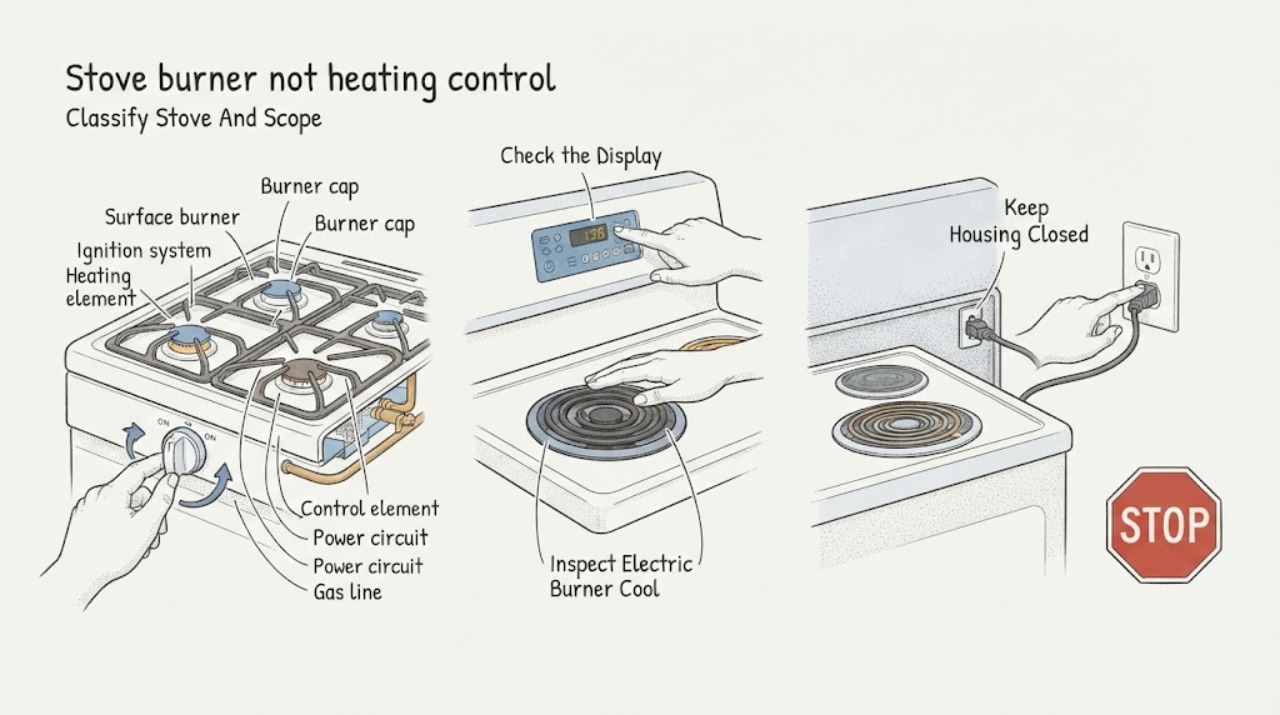
Stove burner not heating control is on: What to Check and What to Do Next
If a stove burner is not heating while its control is on, first identify whether the stove is gas or electric and whether one burner or all burners are affected. For an electric stove, confirm the affected control is the correct one, check the power supply and breaker from a safe position, and after the surface is fully cool inspect only for an obviously displaced removable coil or visible damage; do not open the appliance.
-
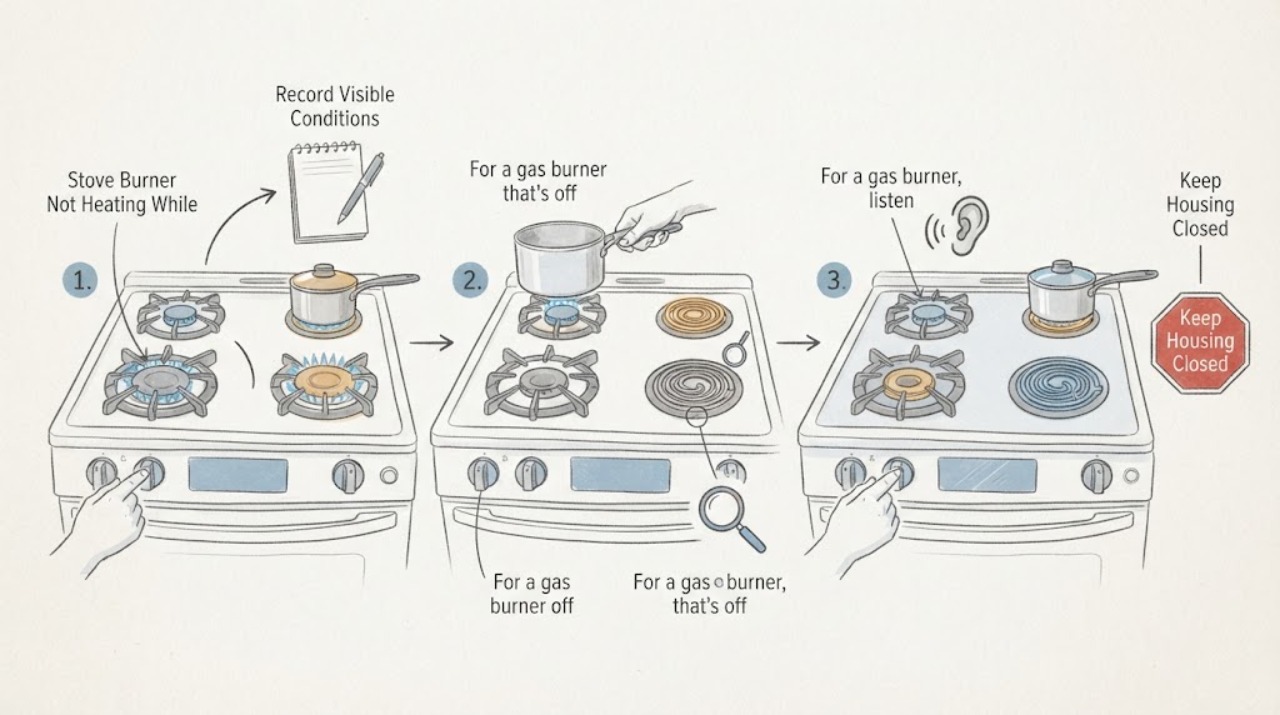
Stove Burner Not Heating While Other Burners Work: What to Check and What to Do Next
Because the other burners work, start by separating the stove type and the failed burner's symptom. On a gas stove, a cap that is wet, misplaced, or not seated can stop one burner from lighting, while no clicking points toward ignition power or control and clicking without flame points toward the burner, ports, or gas path.
-
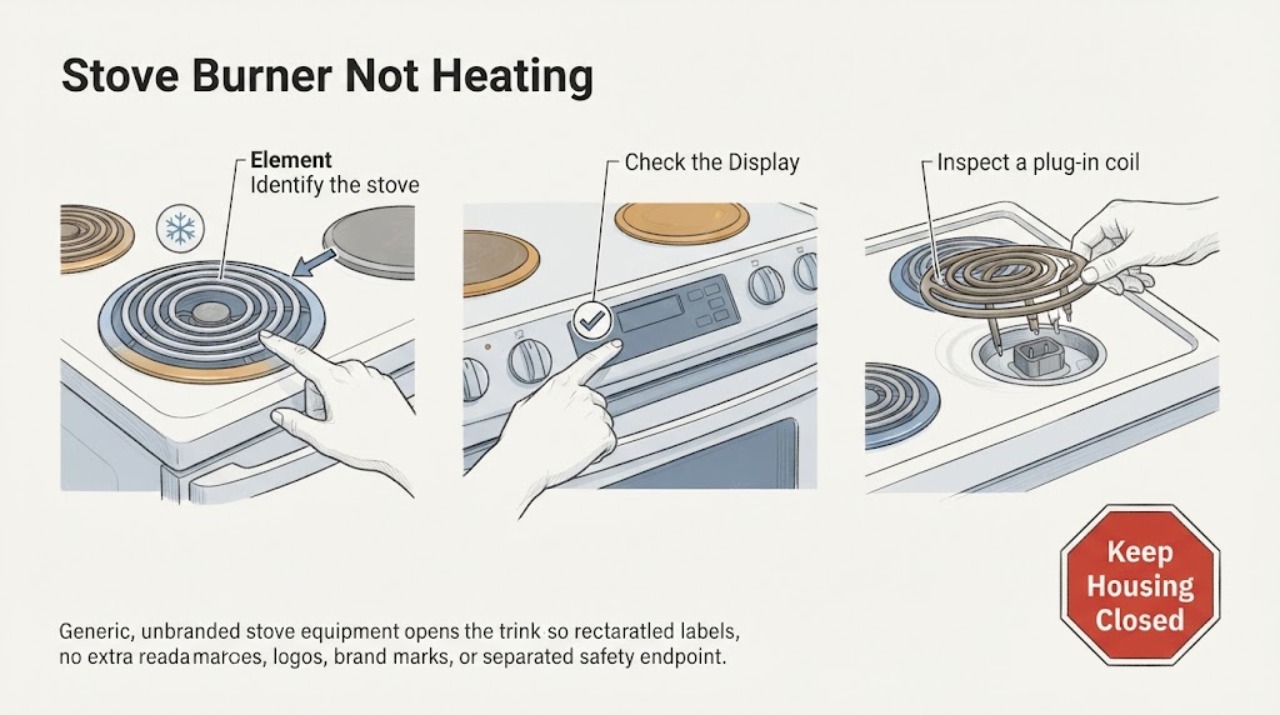
Stove Burner Not Heating, Element Stays Cold: What to Check and What to Do Next
For an electric stove, first determine whether one surface burner is cold or all burners are cold, and whether it is a plug-in coil, a radiant element beneath glass, or an induction element. From a cool, dry range, confirm the correct control is selected and check the external breaker or fuse without opening the appliance.
-
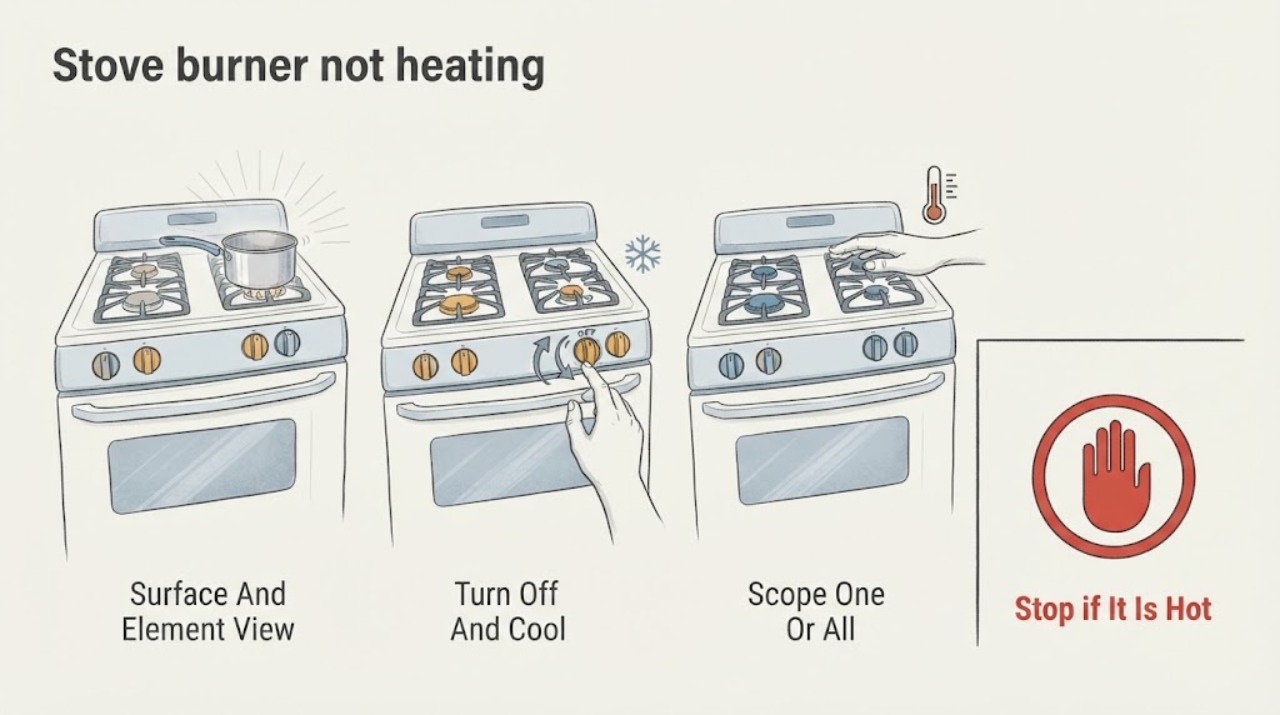
Stove burner not heating: What to Check and What to Do Next
Turn the affected burner off and let the cooktop cool completely. Then identify whether the symptom affects one burner or the whole stove, and record any visible crack, scorching, loose coil seating, breaker trip, spark, smoke, or burning odor without opening the appliance or performing a live electrical test.
-
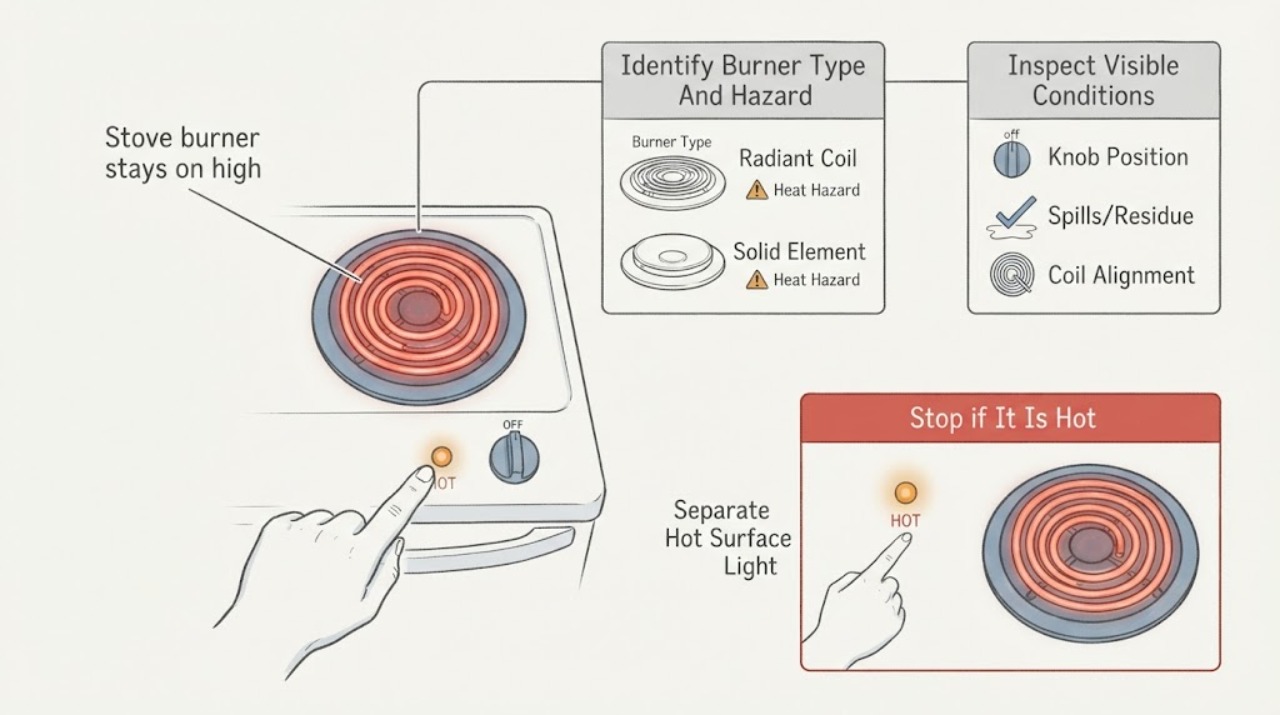
Stove burner stays on high indicator remains lit: What to Check and What to Do Next
First distinguish a normal hot-surface light from a burner that is actually still heating. On radiant electric stoves, an element can cycle on and off even at High, and a hot-surface indicator can remain lit while the glass is still hot.
-
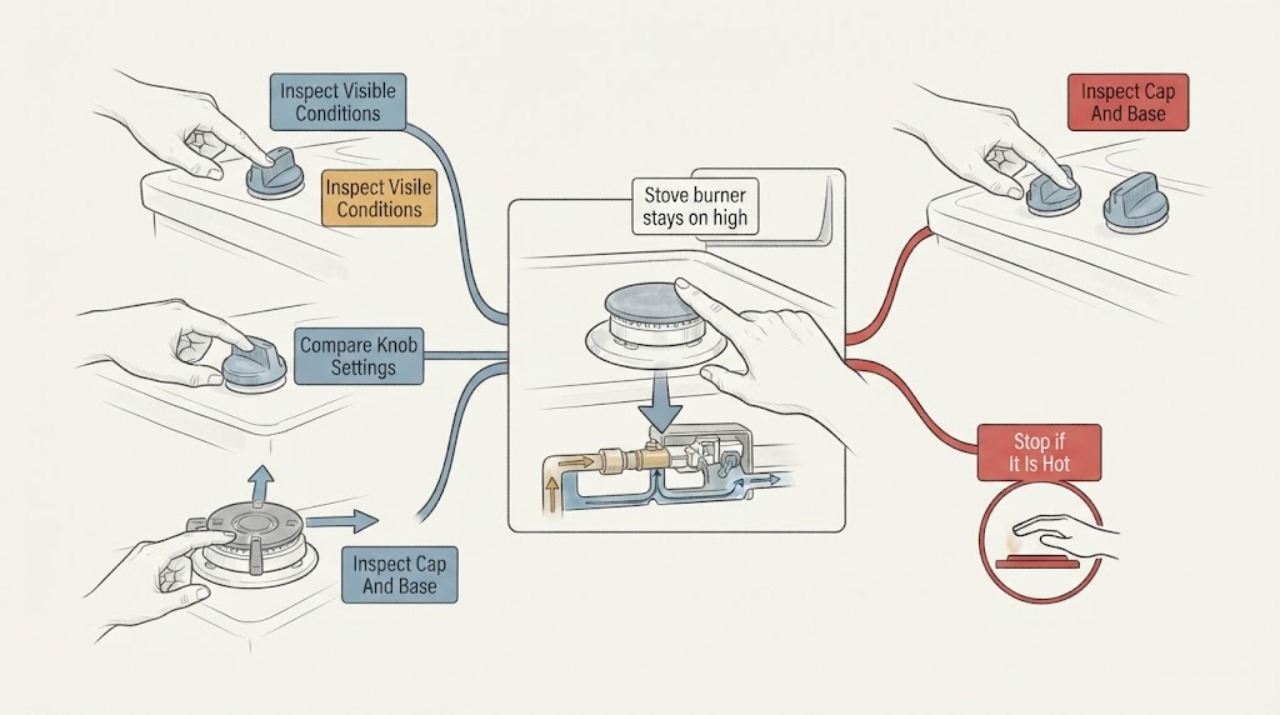
Stove burner stays on high, but other burners work: What to Check and What to Do Next
If one stove burner remains on high while the other burners adjust normally, first turn that burner off and confirm whether the flame actually goes out and whether it responds at all to the low setting. A knob that is set low but produces a full flame can have a binding or damaged control, while a flame that changes with the knob but looks too large or uneven can involve a mis-seated cap, moisture, clogged ports, or a model-specific low-flame adjustment.
-
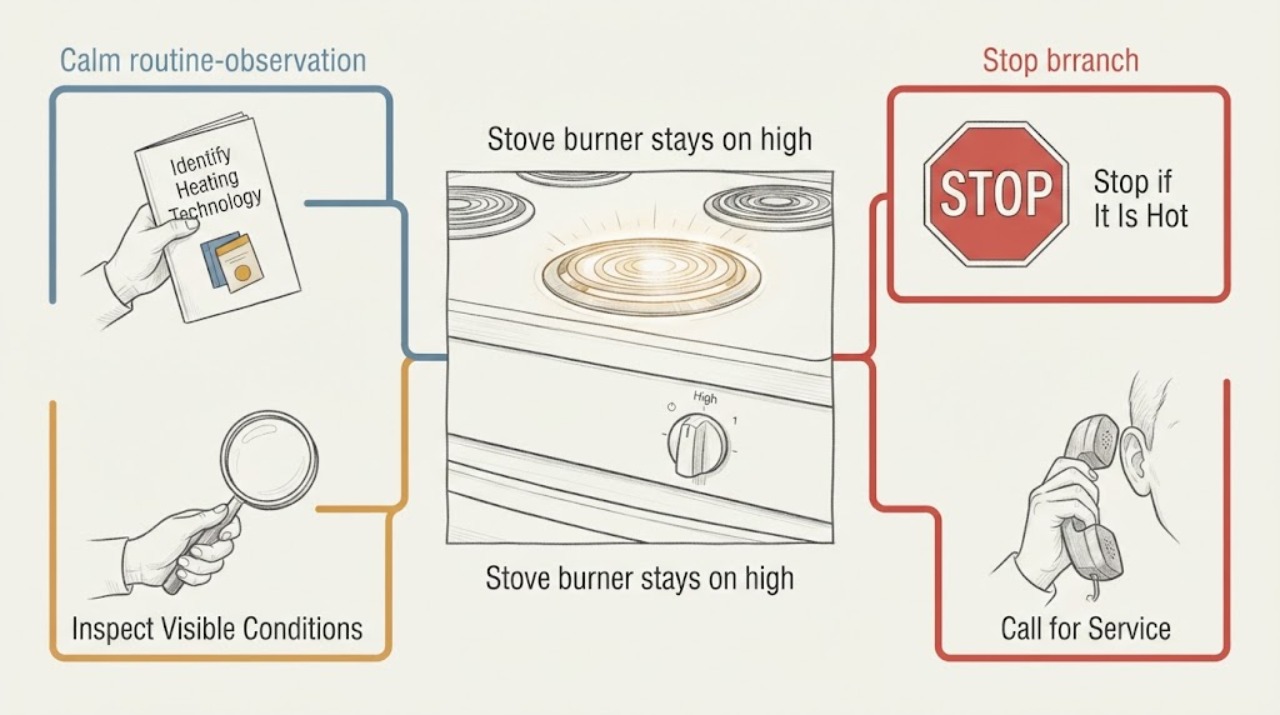
Stove burner stays on high when setting changes do not change heat: What to Check and What to Do Next
First identify whether this is a gas flame, an electric radiant/coil element, or an induction zone, because the normal response is different. On a gas stove, the flame should respond to the control; if it remains high when the knob is lowered or turned off, turn the control to OFF, keep the stove out of use, and arrange service rather than adjusting the valve yourself.
-
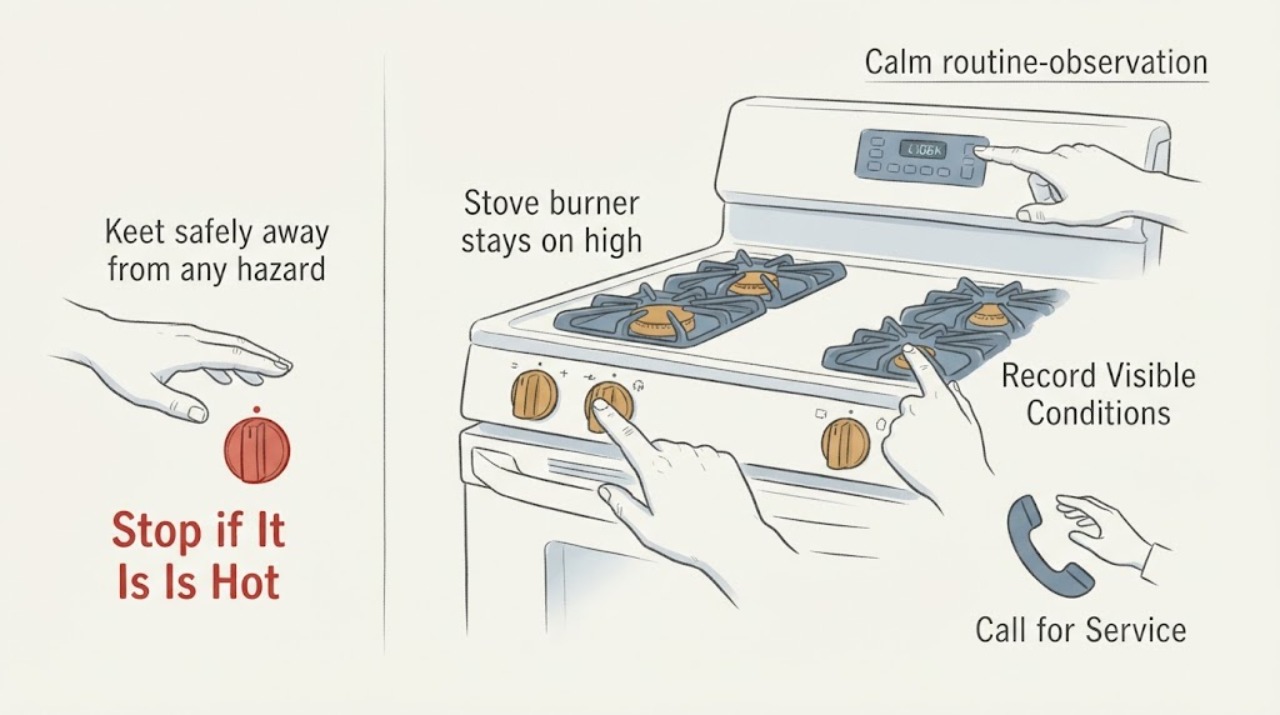
Stove burner stays on high: What to Check and What to Do Next
Turn the affected control to OFF immediately. If an electric burner remains visibly energized or continues heating, and the breaker is safely reachable, switch off the range circuit at the breaker and stop using the appliance.
-
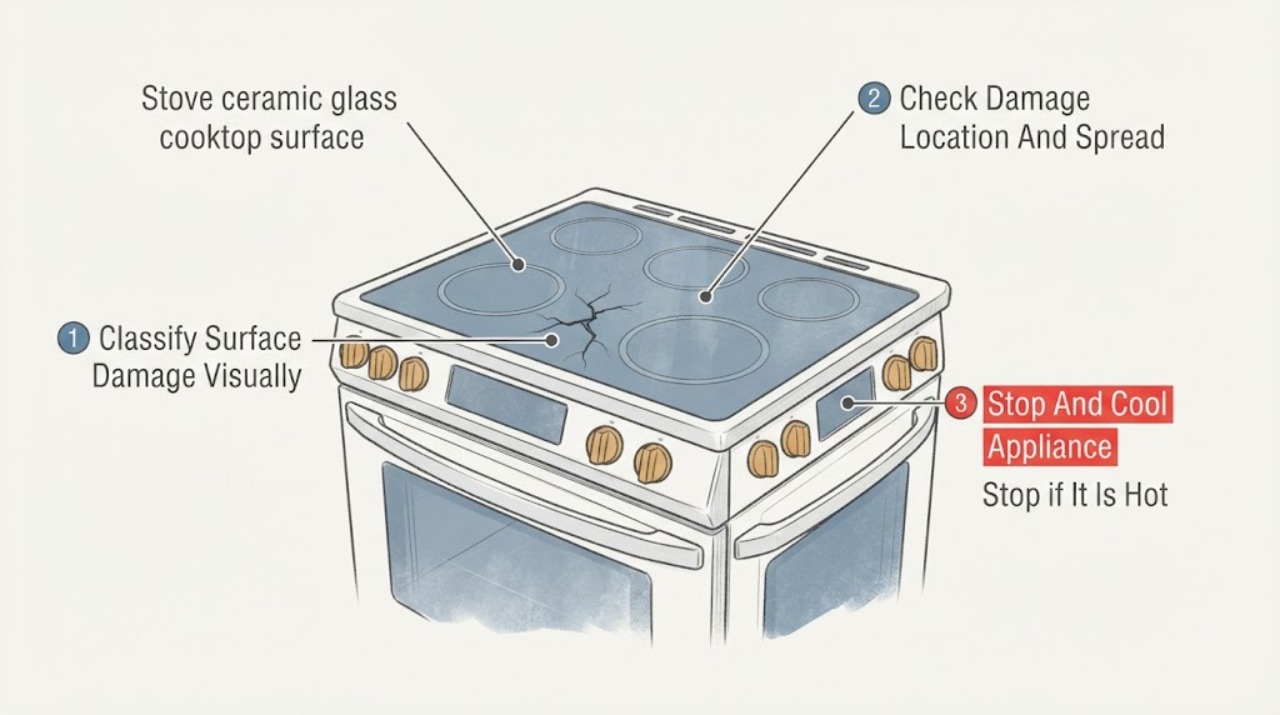
Stove ceramic glass cooktop surface is cracked: What to Check and What to Do Next
Treat a real crack, chip that exposes or separates the glass, or a spreading line in a ceramic-glass cooktop as a repair condition, not a cleaning problem. Turn all surface controls off, keep people away from the damaged area, and let the appliance cool without pouring water on it or pressing the glass.
-
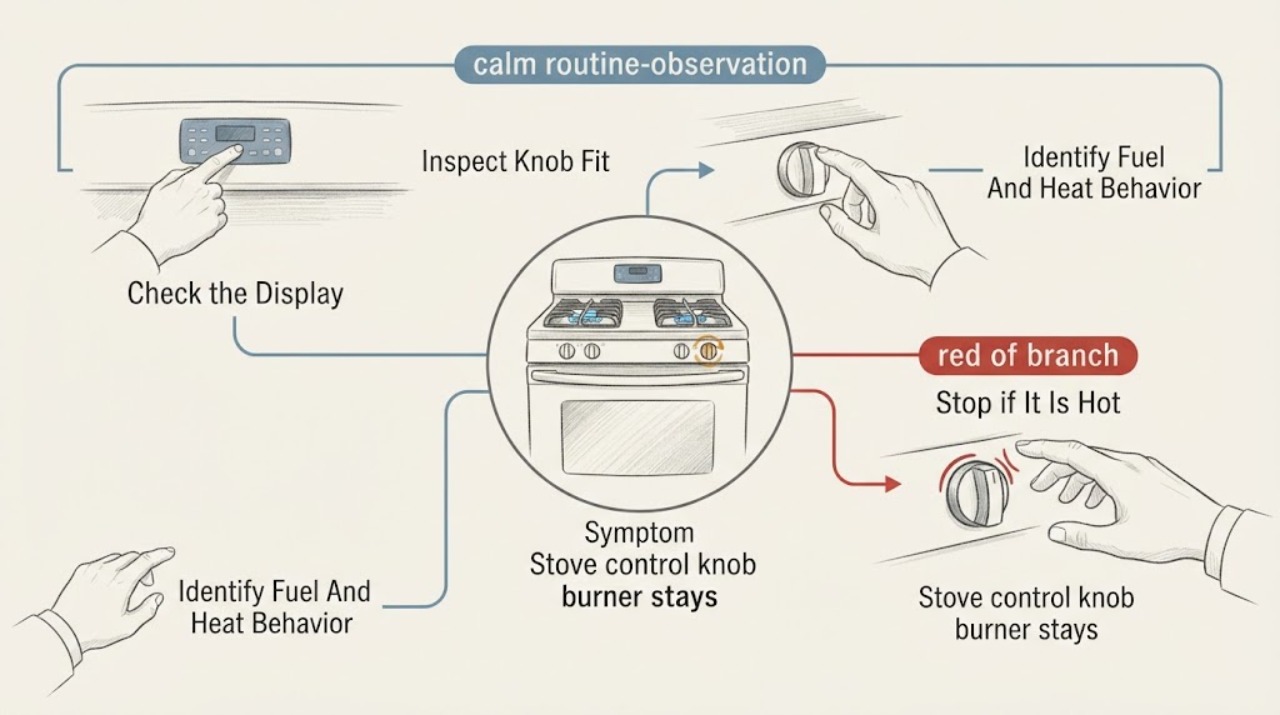
Stove control knob burner stays on high: What to Check and What to Do Next
A burner that remains on high after you lower the control knob is a heat and fire hazard, not a setting to work around. First turn the control to OFF if it responds normally, keep hands and cookware away, and stop using the affected burner.
-
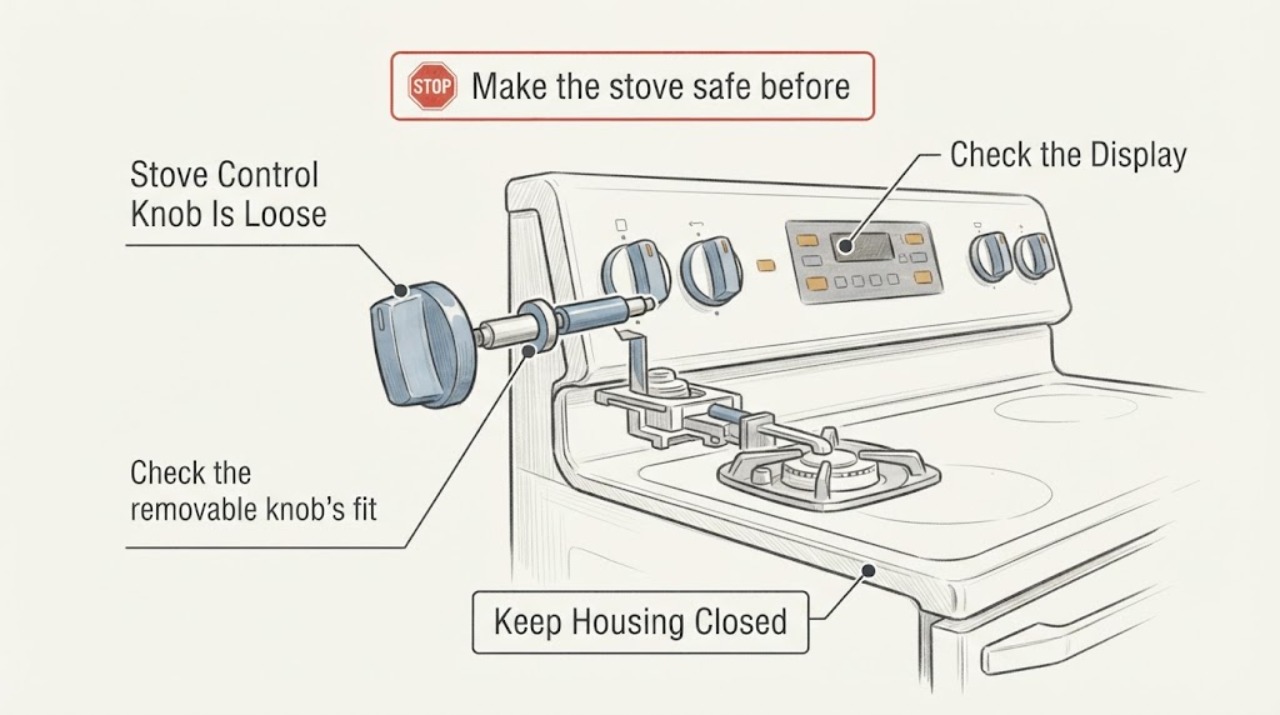
Stove Control Knob Is Loose and Turns Without a Setting Change: What to Check and What to Do Next
A loose stove control knob that turns without changing the burner setting usually is not engaging the control shaft, or the shaft, switch, or gas valve is no longer transferring the knob movement. Turn every control off and stop using the affected burner until you can confirm the appliance is not heating or producing a flame.
-
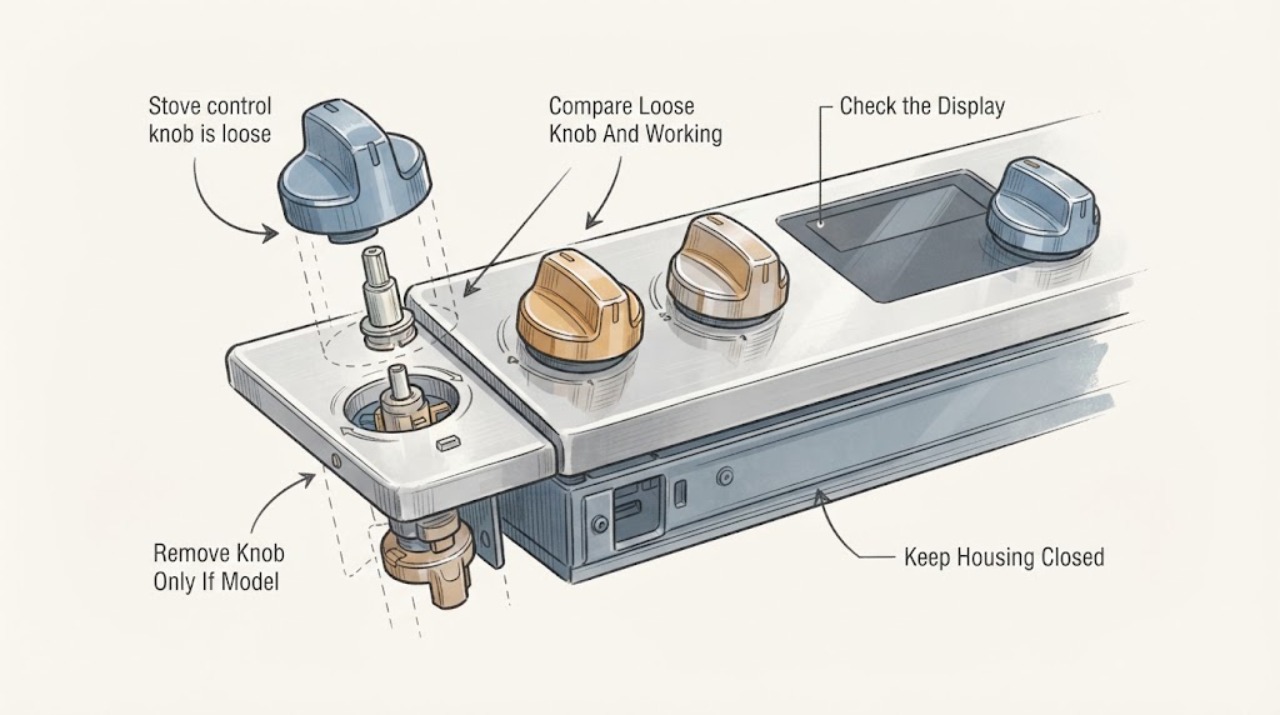
Stove control knob is loose other controls work: What to Check and What to Do Next
When one stove control knob is loose but the other controls work, the problem is often limited to a cracked or worn knob socket, a knob that is not seated, a misaligned knob, or damage at the control stem; the underlying gas valve or electrical switch can also be affected. Turn every control to Off and let the cooktop cool before any ordinary knob inspection.
-
Stove control knob is loose shaft worn: What to Check and What to Do Next
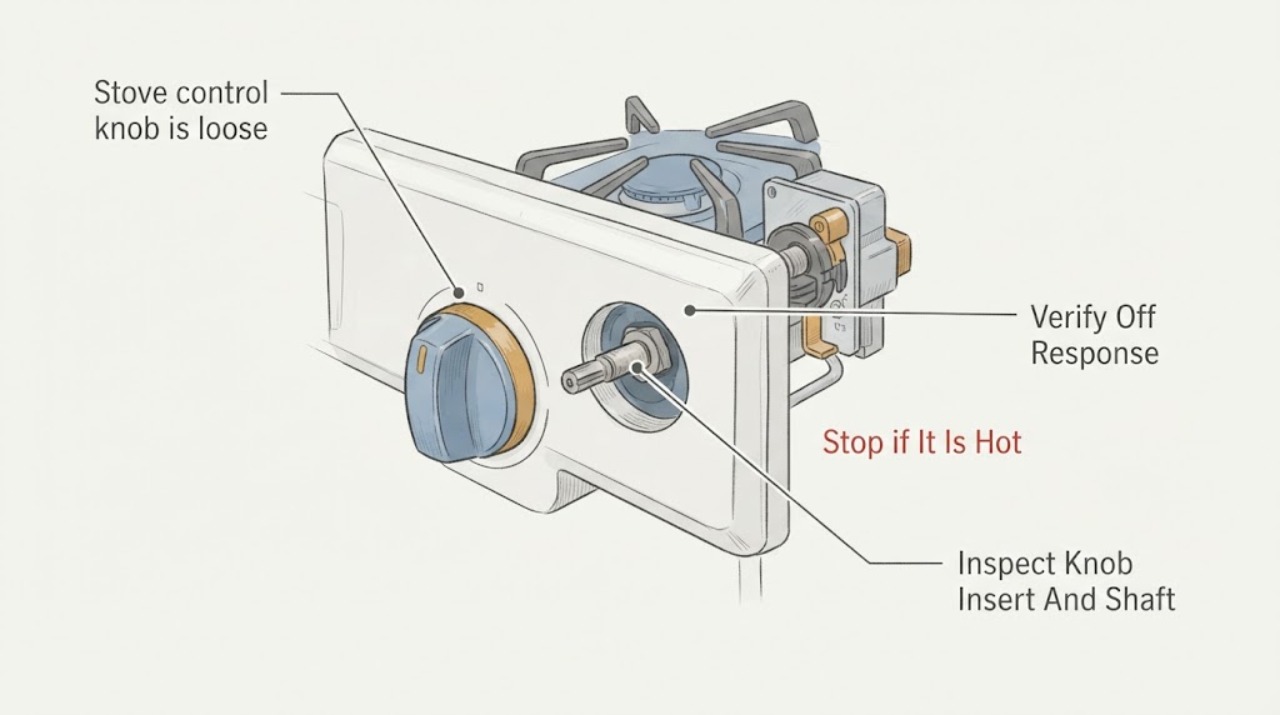
A loose stove control knob may have a cracked or worn knob insert, but a visibly worn, rounded, bent, slipping, or damaged control shaft is a separate control fault. Turn the control to Off and confirm that the burner actually stops; if the knob spins without reliably changing or shutting off the burner, stop using that burner and arrange qualified appliance service.
-
Stove control knob is loose: What to Check and What to Do Next
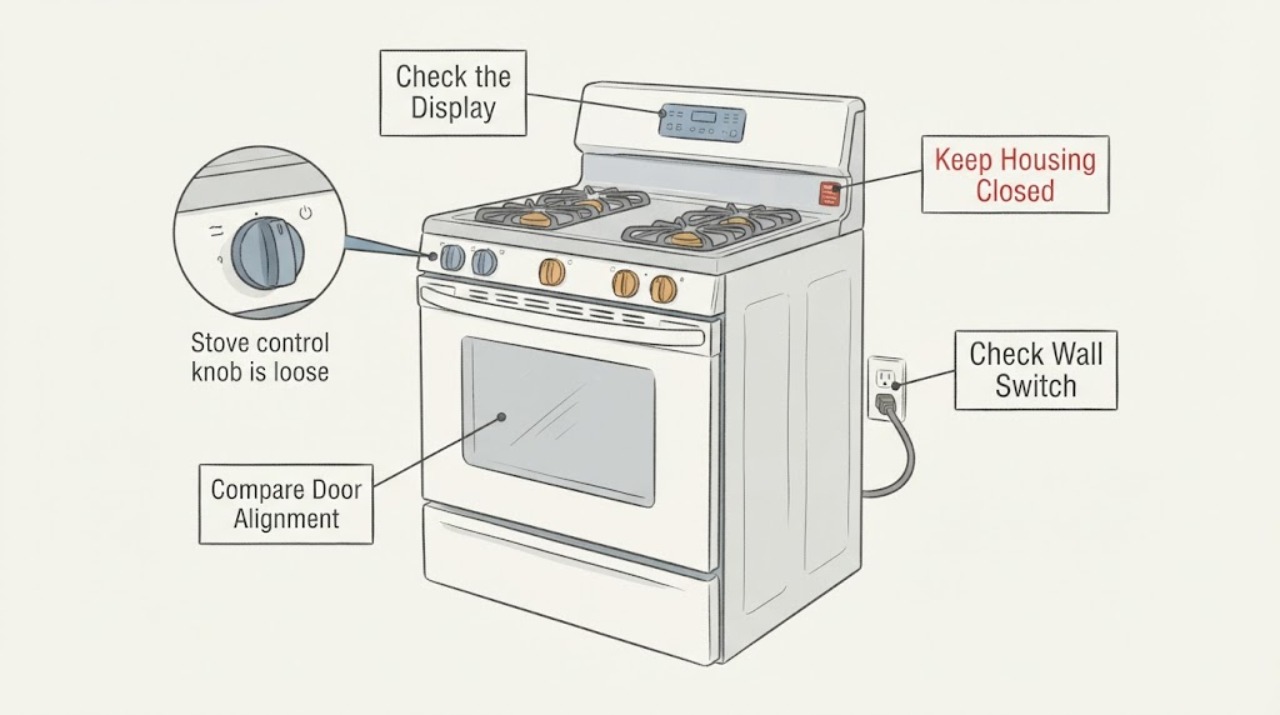
Treat a loose stove control knob as a possible loss of reliable OFF and heat control, not just a cosmetic fit issue. Stop cooking, turn every control to OFF, let the cooktop cool, and isolate electrical power as the owner manual directs before any authorized access; do not test a loose knob by energizing the burner.
-
Stove control panel glass surface is cracked: What to Check and What to Do Next
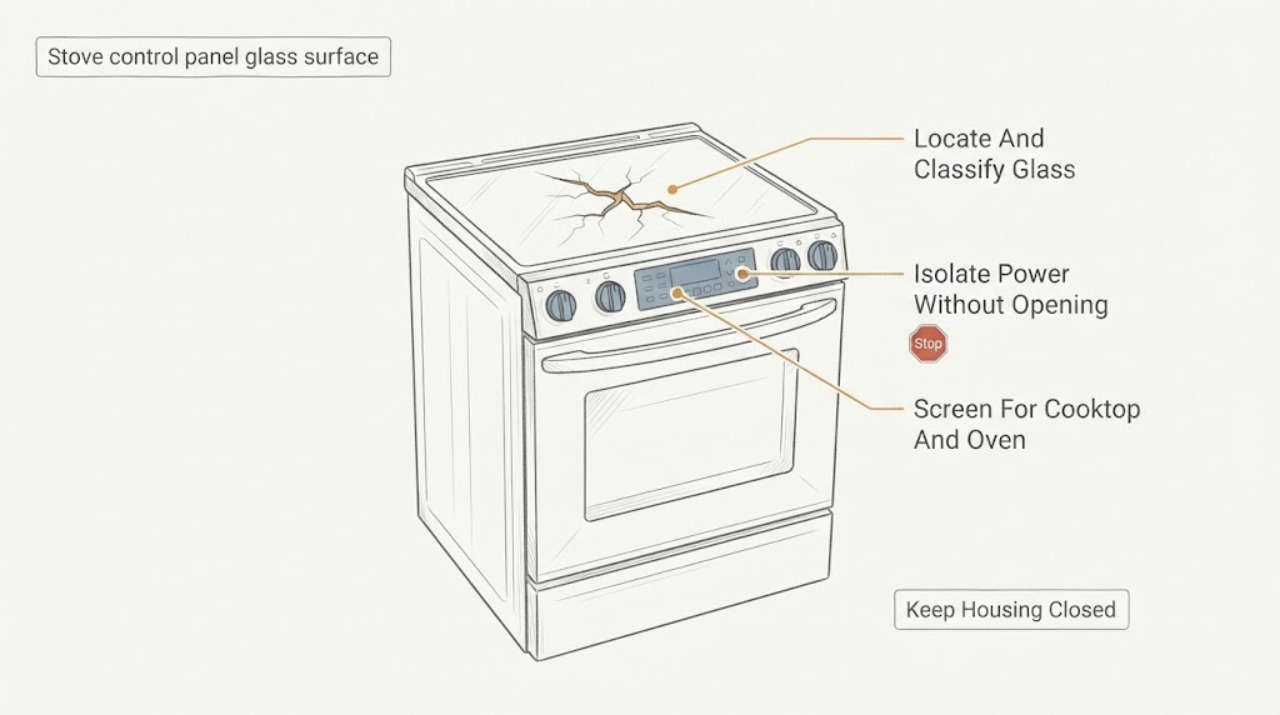
First determine whether the crack is in the stove's control-panel glass or in the load-bearing glass cooking surface. Do not operate or clean a broken control panel or cooktop, and do not touch loose shards.
-
Stove gas burner will not light: What to Check and What to Do Next
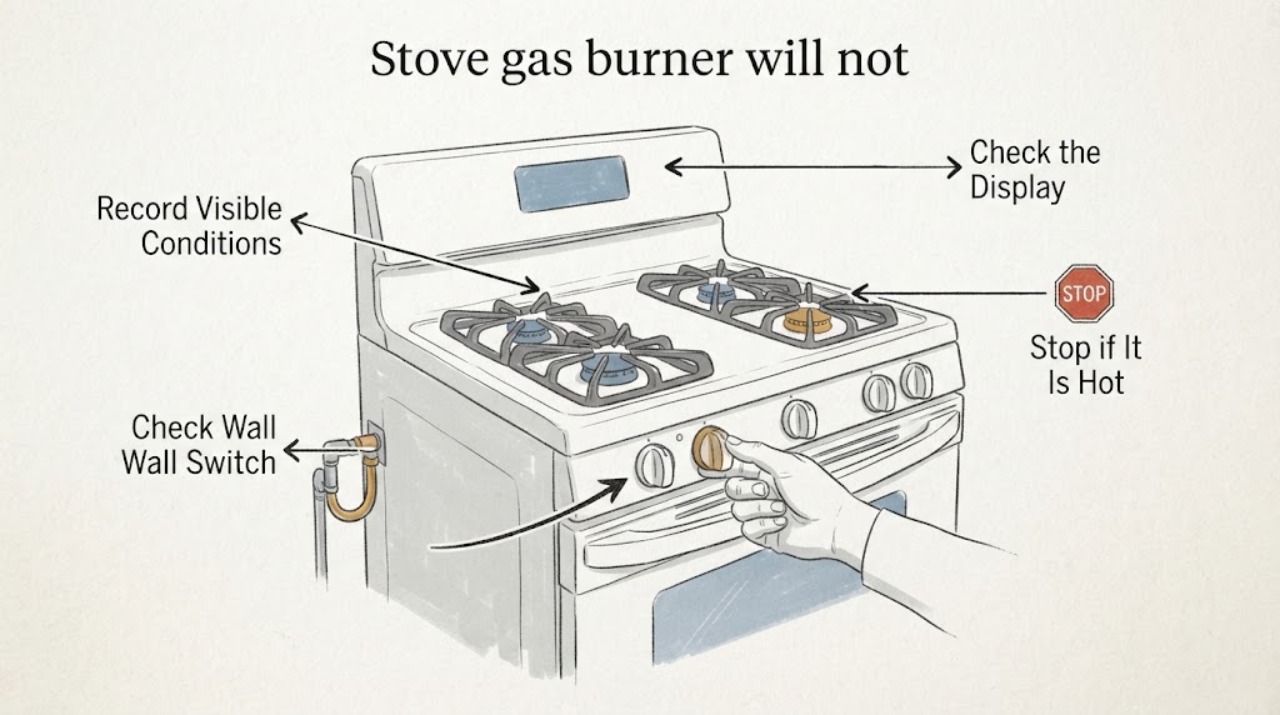
If a gas stove burner did not light, turn that control to OFF immediately and stop trying to ignite it. If you smell gas, do not operate electrical switches, flames, or other ignition sources; leave the area and follow the gas utility or emergency instructions.
-
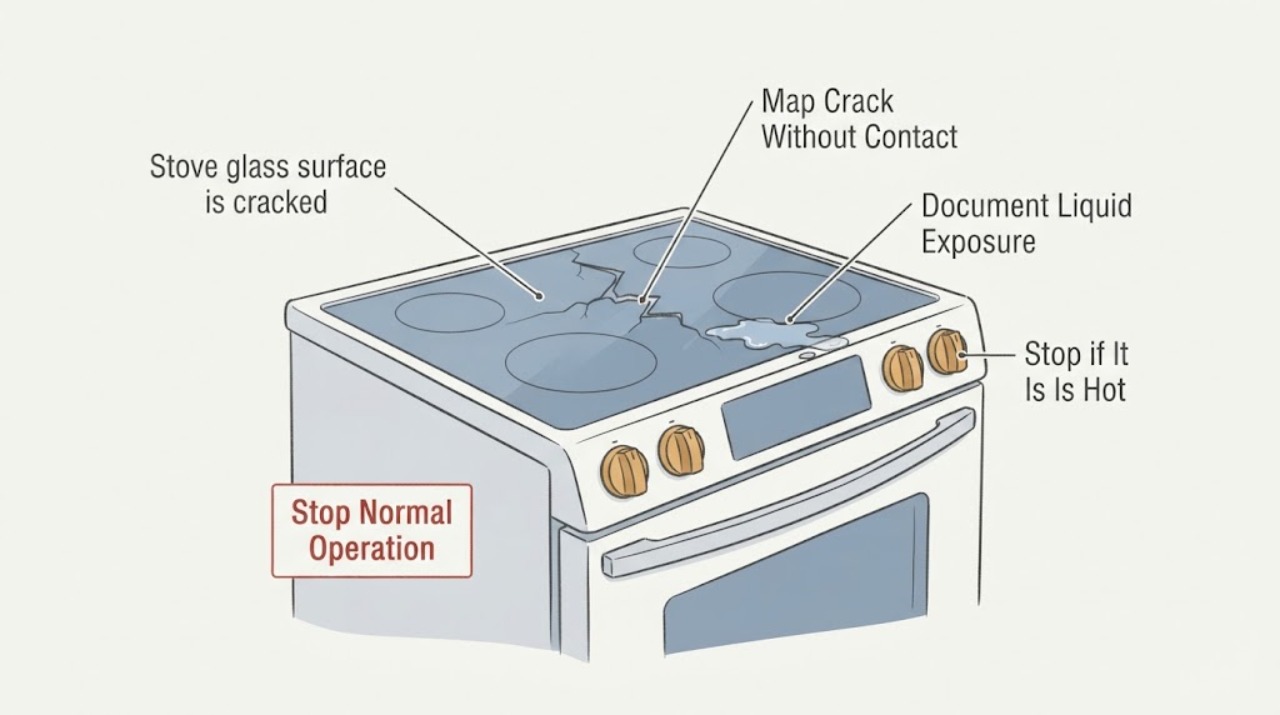
Stove glass surface is cracked and liquid can reach controls: What to Check and What to Do Next
Treat a cracked glass stove surface as a stop-use condition, especially when liquid can reach the controls or the area beneath the glass. Turn every control OFF using only the normal control, keep people away from the crack and any spilled liquid, and do not cook, clean into the crack, or test the burners.
-
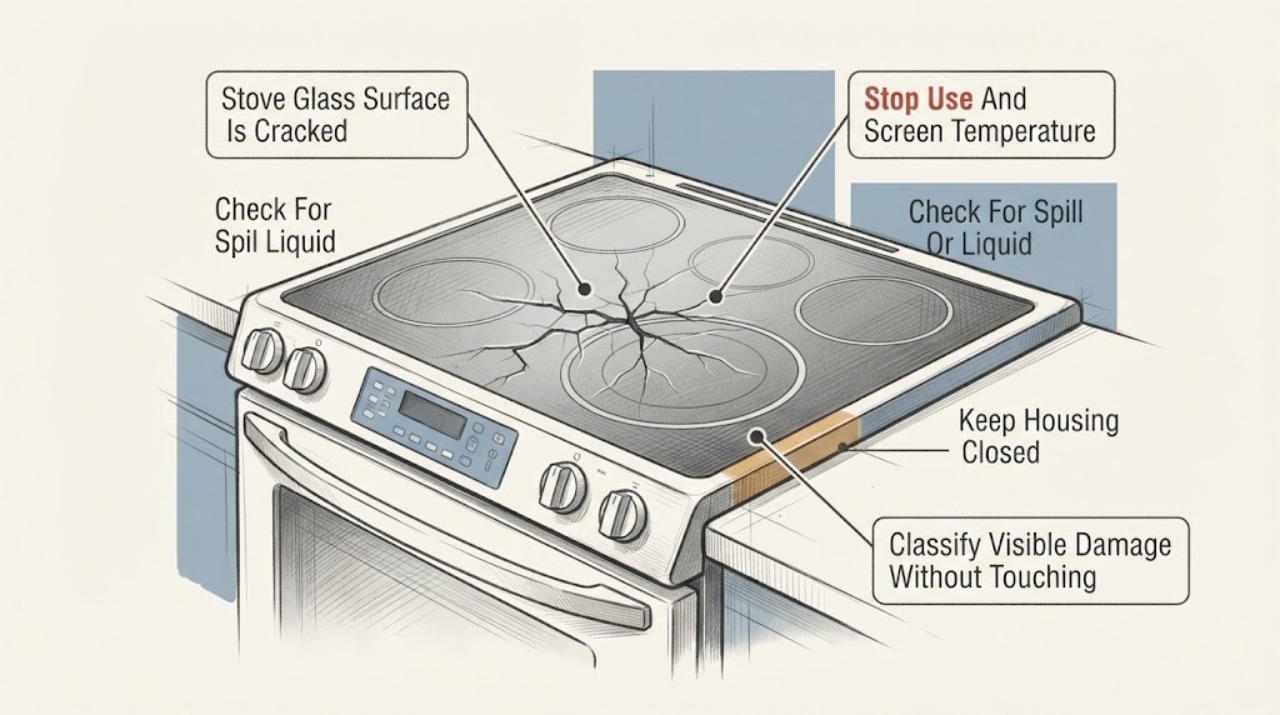
Stove Glass Surface Is Cracked, Hot or Cold: What to Check and What to Do Next
Do not use a stove or range with a cracked or broken glass cooktop, whether the surface is hot or cold. A hot surface can burn you and may worsen the damage if you pour liquid on it or move cookware across it; a cold-looking surface can still have an opening through which spills or cleaner reach electrical parts.
-
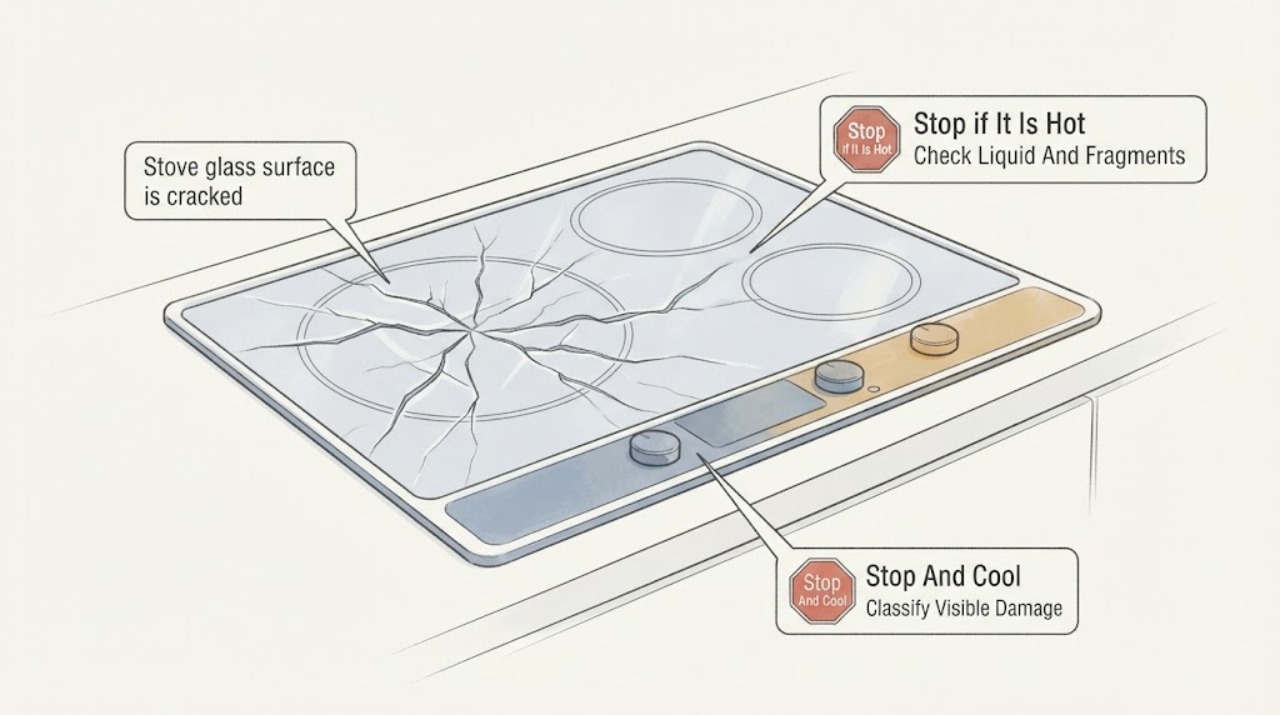
Stove glass surface is cracked: What to Check and What to Do Next
Stop cooking, turn every control to OFF, and do not use any cracked glass stove surface again. Let it cool without touching or moving cookware, then make only a safe visual record of the crack, the appliance model, and any liquid or fragments.
-
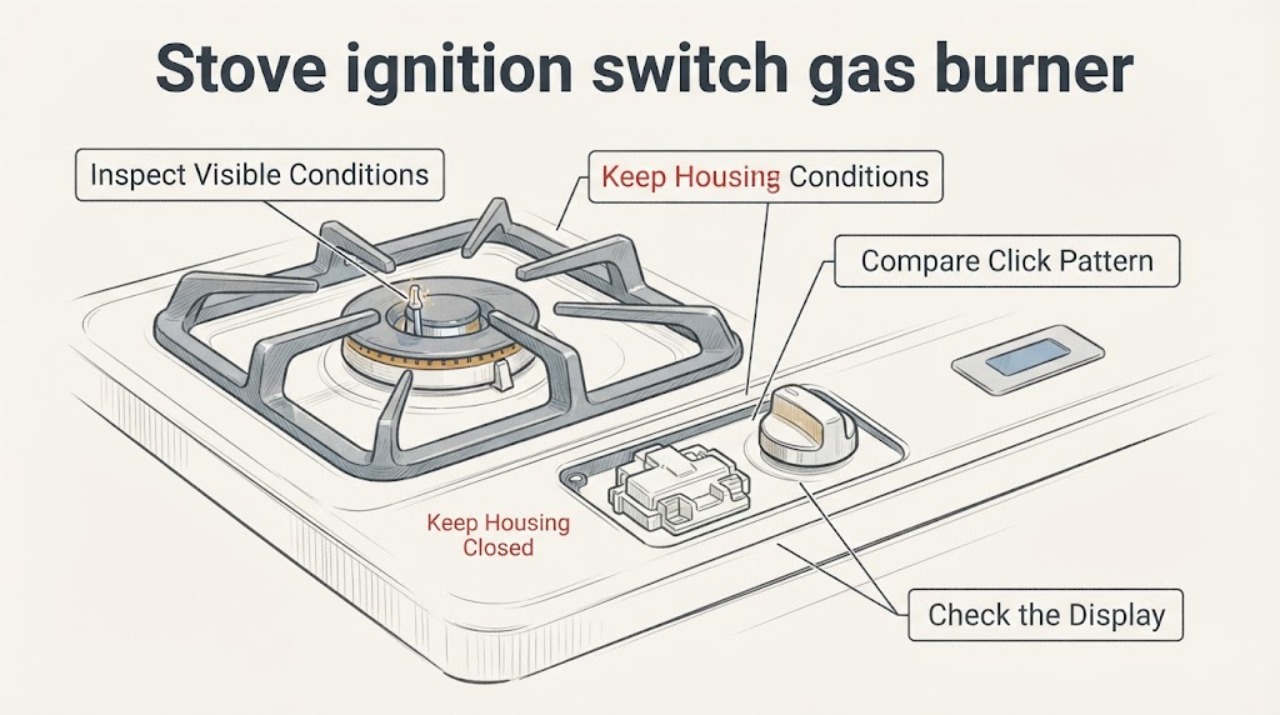
Stove ignition switch gas burner will not light: What to Check and What to Do Next
A gas stove burner that will not light may have no spark from the ignition switch, lost appliance power, a knob that is not reaching the Lite or Ignite position, a wet or dirty burner, a misplaced cap or head, blocked ports, a closed gas supply, or a failed ignition or gas-control part. Turn the knob back to OFF promptly; do not keep releasing gas while waiting for a spark.
-
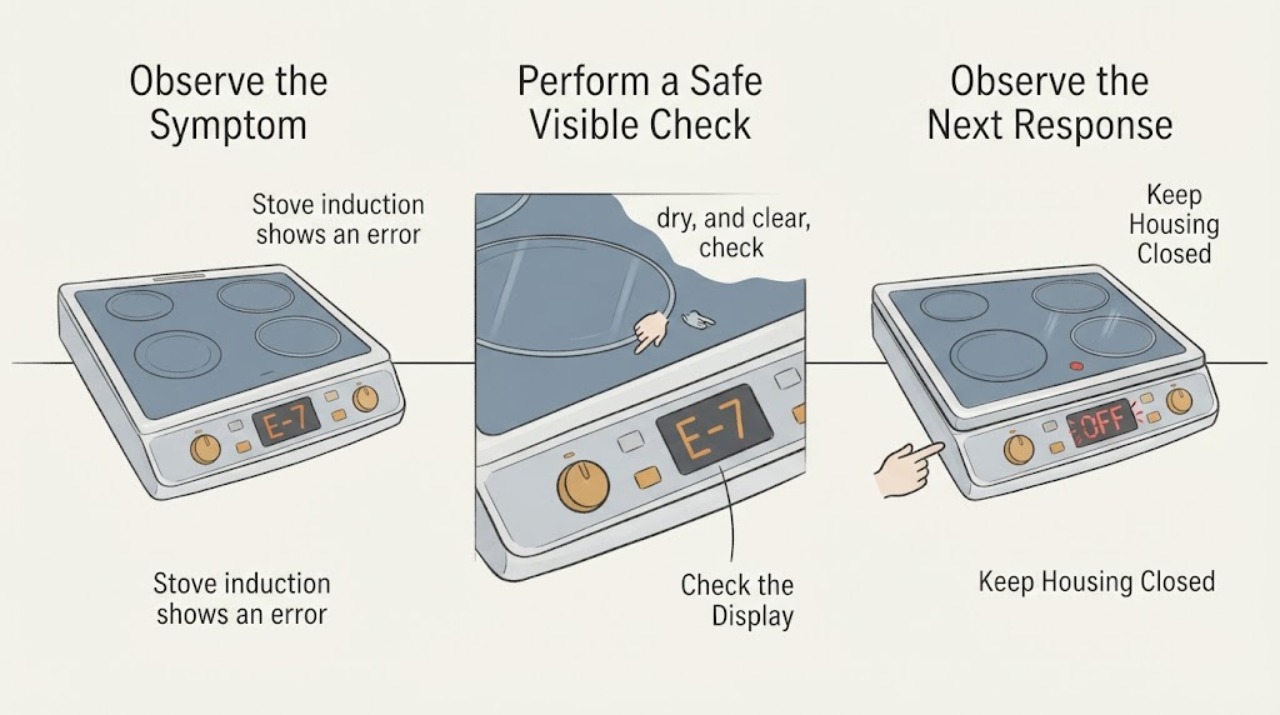
Stove induction shows an error: What to Check and What to Do Next
Write down the complete displayed code or symbol, the affected cooking zone, and when it appears before trying to clear it. Without the make, model, and exact code, do not assign a code meaning.
-
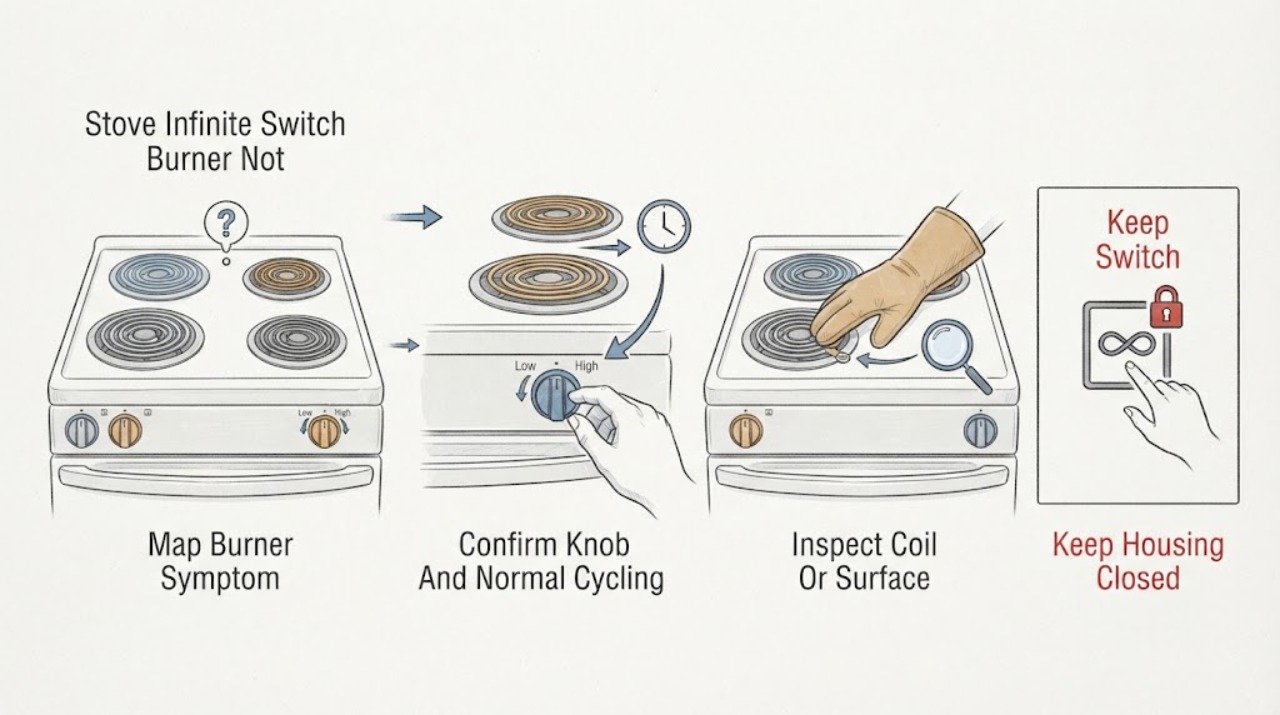
Stove Infinite Switch Burner Not Heating: What to Check and What to Do Next
If one electric stove burner stays cold, first confirm that the correct knob is controlling that location, then turn the stove off and let it cool before checking a removable coil for a loose fit or visible damage. Traditional knob controls use an infinite switch that cycles power on and off, so an element going dark briefly can be normal; a burner that never heats, while another burner works, is not explained by normal cycling.
-
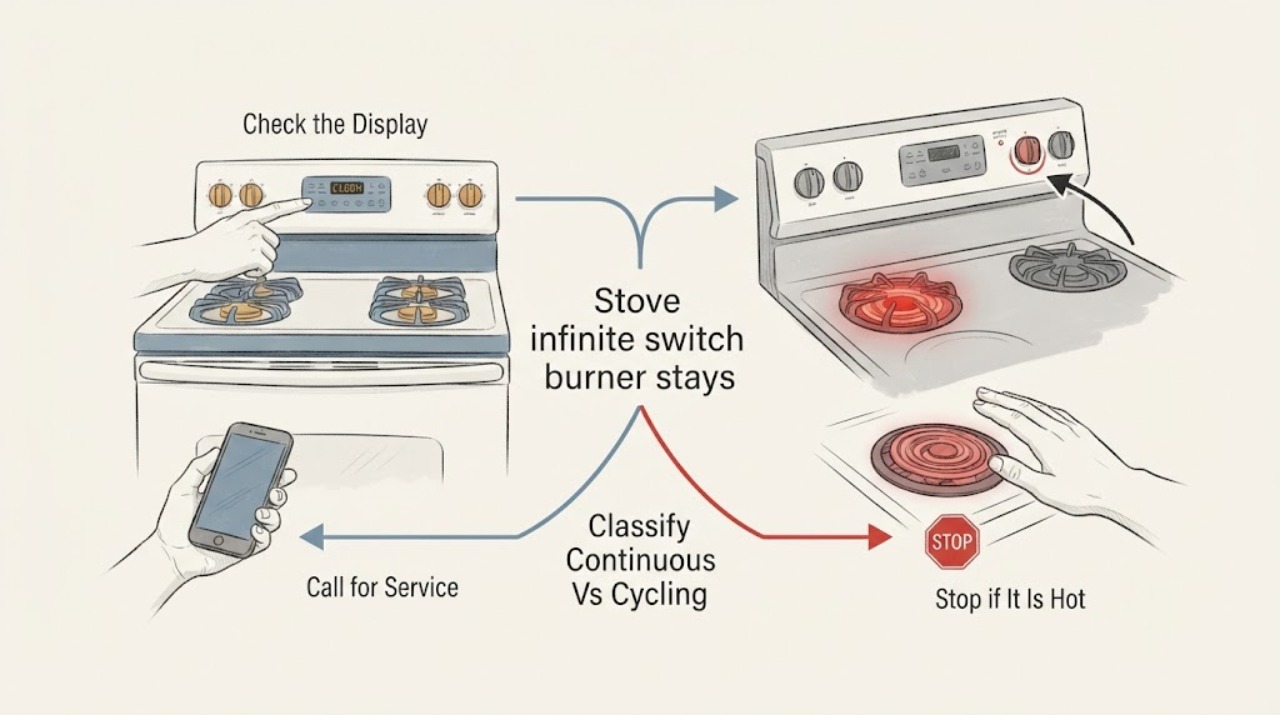
Stove infinite switch burner stays on high: What to Check and What to Do Next
First determine whether the electric burner is actually heating continuously or is cycling normally. Radiant and coil elements can switch fully on and off—even on High—as the control maintains heat; the red glow and hot-surface indicator alone do not prove an infinite-switch failure.
-
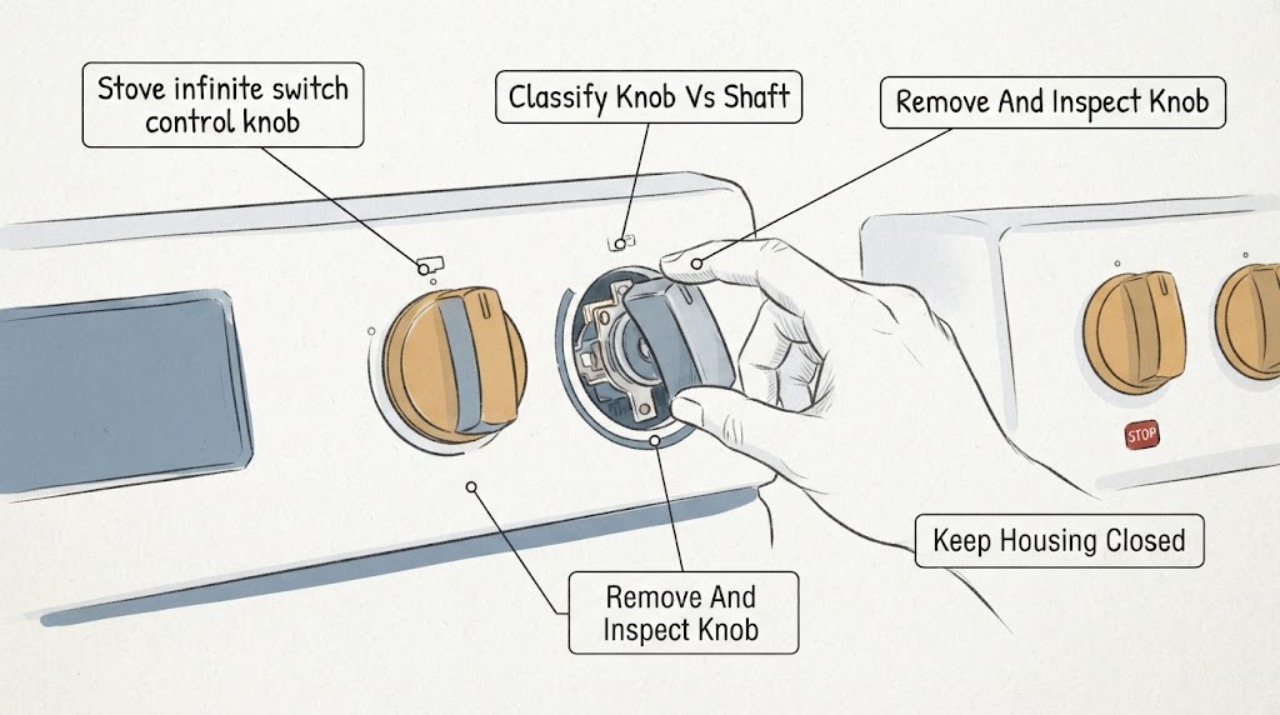
Stove infinite switch control knob is loose: What to Check and What to Do Next
A loose stove control knob may be only a cracked or poorly seated knob cap, or it may indicate a damaged insert, worn infinite-switch shaft, loose control-panel mounting, or a switch that no longer follows the markings. Turn the burner control to Off and let the cooktop cool.
-
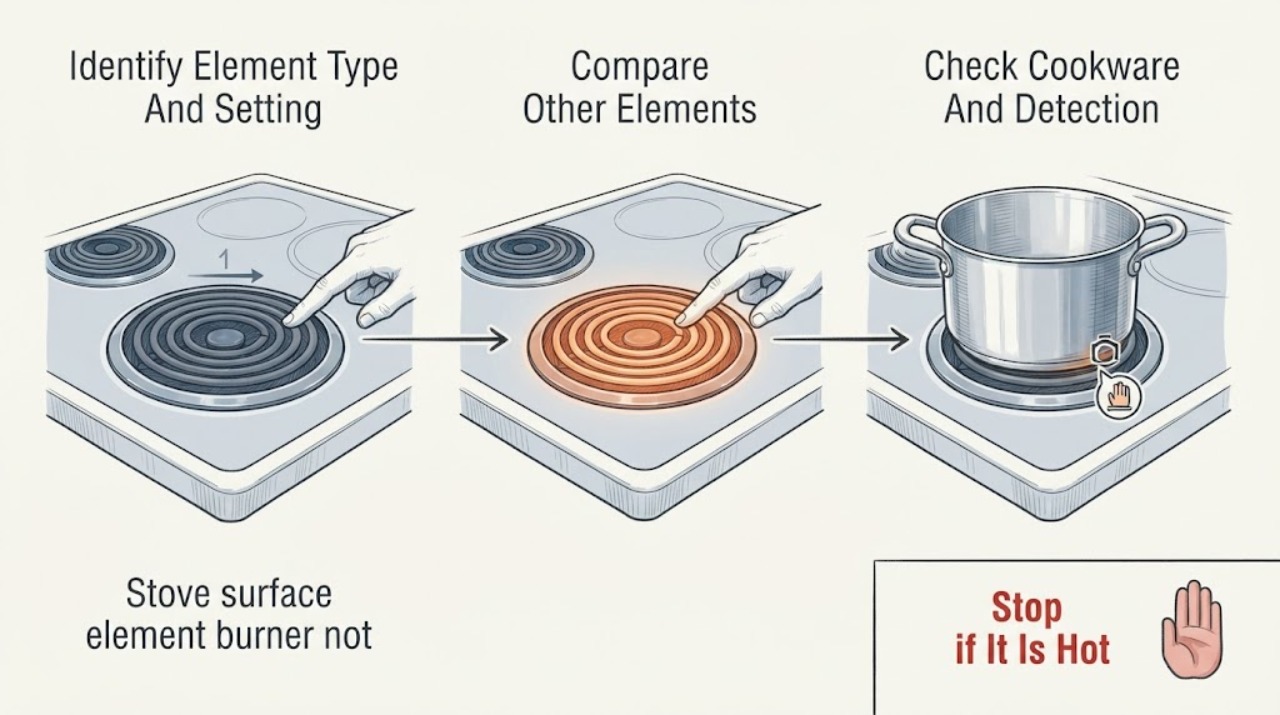
Stove surface element burner not heating: What to Check and What to Do Next
First determine whether the stove is electric coil, smooth-top radiant, or induction, because a coil that is not seated, a radiant element that cycles, and induction cookware that is not detected can look similar. Confirm the correct control and setting, let the surface cool, check only normal user-accessible seating or visible damage, and compare the affected element with another element.
-
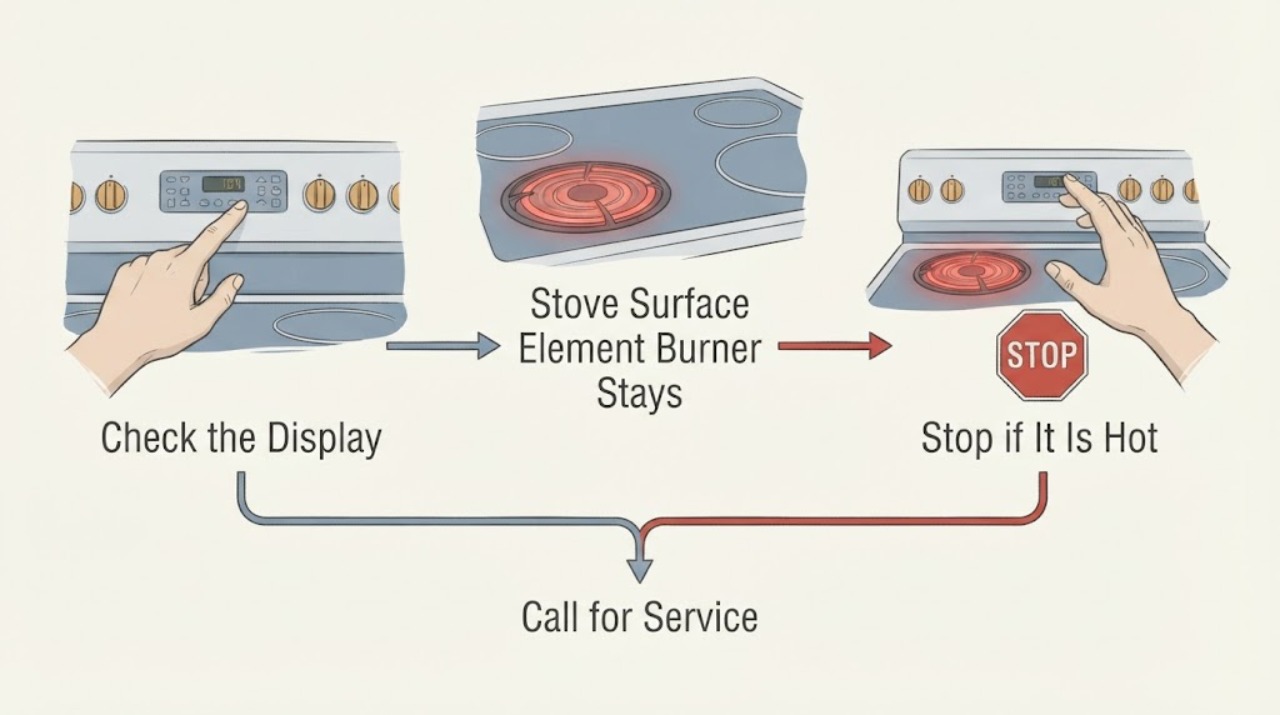
Stove Surface Element Burner Stays on High: What to Check and What to Do Next
First separate normal high-setting cycling from a burner that is truly stuck on. Electric surface elements, including radiant elements beneath glass, can cycle on and off even at High as the control maintains heat; the surface may remain hot while the element is temporarily dark.
-
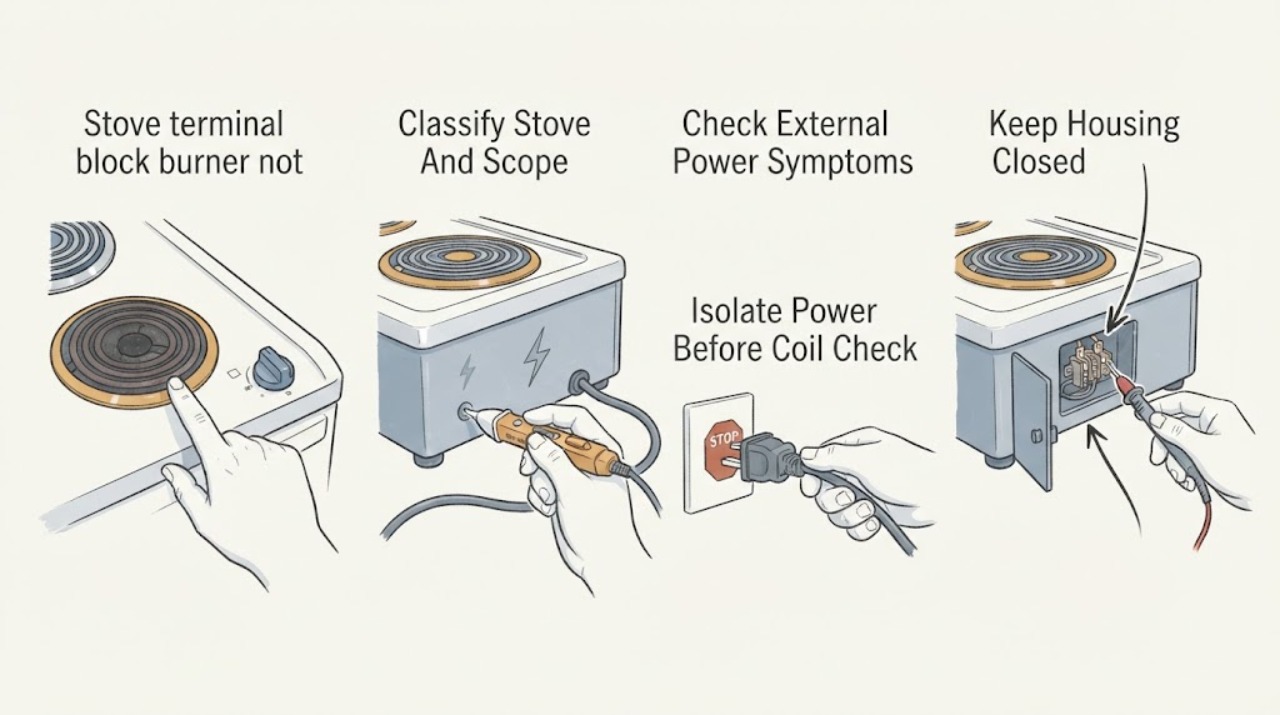
Stove terminal block burner not heating: What to Check and What to Do Next
A stove terminal block or burner receptacle can interrupt power to a plug-in electric coil, but the same symptom can come from a failed coil, control switch, wiring, partial household power, or normal cycling on a radiant or sensor-equipped surface. First confirm that this is an electric coil burner and whether one burner or several are affected.