
On this page
Start here
Quick answer
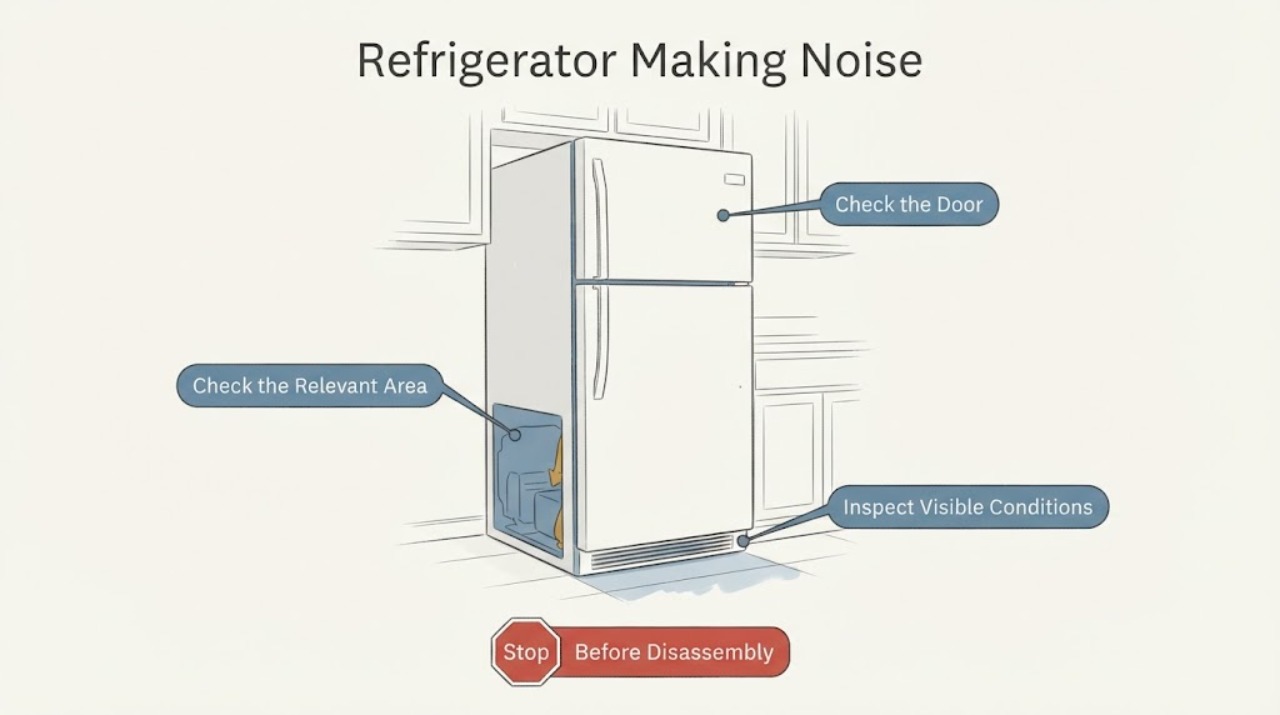
A Sub-Zero refrigerator can make normal operating sounds from its fans, compressor, refrigerant flow, or defrost cycle, so first identify the sound and whether it changes when each door or drawer is opened. If the noise stops with all doors open and returns when only the refrigerator door is closed, Sub-Zero's guide points toward the refrigerator evaporator fan, unless an air-purification fan is the source; if it returns when only the freezer is closed, the freezer evaporator fan is implicated. If the sound continues with doors open, check for packaging touching a fan, visible ice, a due condenser cleaning, or a shelf that is not seated on applicable models. Hissing, gurgling, and occasional sizzling can be normal, but a new, louder, changing noise, a grinding sound, a burning odor, damaged food, or a temperature problem needs Factory Certified Service. Do not reach behind covers or attempt to repair a fan, compressor, sealed system, or wiring yourself.
Work through in order
Diagnostic checks
Use only checks that match the exact appliance or system and its official guide.
-
Check 1
Describe and locate the sound from a safe standing position: note whether it is humming, buzzing, rattling, vibrating, clicking, grinding, hissing, gurgling, or sizzling; whether it is at the top grille, inside a section, near the compressor area, or at a shelf; and whether cooling, temperature, ice, or door operation has changed.
Expected result: The sound is a familiar intermittent operating sound with normal temperatures, or it is new, louder, changing, grinding, or accompanied by a cooling or odor problem.
Next step: Continue with the door and visible-obstruction checks only when the unit is otherwise safe. Arrange service promptly for a grinding or changing sound, burning odor, or loss of cooling.
Why this matters
Why: Sub-Zero identifies many fan, compressor, defrost, refrigerant, and drain sounds as normal possibilities. A new, louder, changing sound or a performance or burning-odor symptom makes a fault more likely and shortens the safe troubleshooting path.
-
Check 2
Perform the fan-location door test without reaching into the appliance: open all refrigerator and freezer doors or drawers and listen for whether the noise stops; then close only the refrigerator section and listen, reopen it, close only the freezer section or drawer, and listen again. Close all doors after the observations.
Expected result: The noise stops with all doors open, returns only when the refrigerator section is closed, returns only when the freezer section is closed, or continues with all doors open.
Next step: If the refrigerator or freezer fan pattern repeats, stop at the observation and contact Factory Certified Service; do not remove a fan cover or try to clear hidden ice. If it continues with doors open, use the non-fan checks below.
Why this matters
Why: A noise that stops with doors open is likely door-switch or evaporator-fan related. Return with the refrigerator section closed points toward its evaporator fan unless an air-purification fan is responsible; return with the freezer closed points toward the freezer evaporator fan. Continuation with doors open makes a fan-motor door response less likely.
-
Check 3
If the noise continues with the doors open, inspect only the visible interior for food packaging or a container pushed against an air opening or fan area, and look for visible ice buildup. Do not chip ice, insert tools, or remove an internal fan cover.
Expected result: Packaging is touching or obstructing a visible airflow area, visible ice is present, or the interior is clear without visible ice.
Next step: Move only the accessible packaging so it is no longer pressing on the airflow path. For ice buildup, follow the exact model's defrost or section-disable instructions; if the noise persists or the ice returns, arrange certified service.
Why this matters
Why: Sub-Zero lists over-filling or packaging pushed into a fan and ice buildup on a freezer fan as possible noise causes. A clear interior makes those visible obstructions less likely but cannot clear a hidden fan or evaporator fault.
-
Check 4
Check the condenser-care interval and cabinet surroundings using the model's use-and-care guide: look for an accessible condenser that has not been cleaned in the recommended period, and confirm the grille or nearby items are not vibrating against the cabinet. Do not dismantle the grille or sealed-system area.
Expected result: The condenser is overdue for the model's documented cleaning, the grille or nearby object vibrates, or the condenser and surroundings are clean and stable.
Next step: Perform only the condenser cleaning described for the exact model and keep the area accessible for airflow. If the noise changes over time, temperatures suffer, or cleaning does not resolve it, stop troubleshooting and schedule certified service.
Why this matters
Why: Sub-Zero directs owners to clean the condenser when a compressor-area noise is loud, new, or increasing, and lists grille vibration as a separate possible source. A clean, stable exterior with a persistent abnormal sound makes professional diagnosis more appropriate.
-
Check 5
Classify fluid and defrost sounds separately: listen for a brief gurgle or hiss during cooling or drainage, or a crackle or sizzle during a defrost period, and compare it with whether the sound is new, persistent, or getting louder.
Expected result: The sound is intermittent and tied to defrost or normal cooling, or it is persistent, new, louder, or accompanied by water, frost, odor, or temperature change.
Next step: Do not add refrigerant, probe a drain, or dismantle the evaporator area. Use the model guide for any documented drain or defrost procedure, and contact Factory Certified Service when the symptom persists or performance changes.
Why this matters
Why: Sub-Zero says gurgling or hissing can come from a partially plugged drain tube, defrost drainage, or evaporator operation and is usually normal; it also says moisture near a defrost heater can cause sizzling or crackling. A persistent or worsening sound needs the source professionally confirmed.
-
Check 6
For applicable Classic CL or Designer DET/DEC models, verify from the front that refrigerator shelves are fully seated and making their intended contact; also note whether an air-purification system is installed. Do not force a shelf or change a sensor connection.
Expected result: A shelf is not seated, the model has a lighted shelf or air-purification system relevant to the sound, or shelves and optional systems do not explain it.
Next step: Reseat only a shelf that the model guide says is user-removable. If the sound remains, or the model does not match those families, use the fan and service branches rather than assuming a shelf or air-purification fault.
Why this matters
Why: Sub-Zero says lighted shelves on those listed model families can buzz when they are not making proper contact with the shelf-ladder sensor, and its fan procedure says an air-purification fan can be mistaken for the refrigerator evaporator fan. These details are model-scoped and do not explain every buzz.
-
Check 7
Apply the service boundary before further testing: check for burning odor, smoke, unusual heat, leaking water, damaged wiring, grinding, repeated alarm or service indications, or a temperature change. Keep hands away from live or concealed parts.
Expected result: The noise is accompanied by burning odor, smoke, heat, water, an alarm or service icon, worsening temperature, or none of those warnings.
Next step: Stop using the unit and arrange Factory Certified Service for any warning or worsening pattern. Record the sound, location, door-test result, model and serial information, and temperature symptom for the appointment.
Why this matters
Why: A noise with another unusual symptom is outside routine sound identification. Sub-Zero directs owners to service for burning odor, abnormal noise after checks, or a service indication; a normal temperature and familiar intermittent sound may be monitored only while it remains stable.
Use your observations
Decision map
Find the observation that best matches what you see, then follow the next safe action.
-
PATH 01Next step
What you see
The sound stops with all doors open and returns only when one section is closed, while there is no burning odor or temperature change.
Do this next
Keep the doors closed after the test and arrange Factory Certified Service if the sound is abnormal, recurring, or worsening. Do not remove the hidden fan or try to melt or chip concealed ice.
Why this path and its safety boundary
Why it matters: This pattern makes a door-controlled evaporator-fan or optional air-purification fan sound more likely than a general cabinet vibration. The refrigerator-door result points toward the refrigerator fan unless the air-purification fan is the source; the freezer-door result points toward the freezer fan.
-
PATH 02Next step
What you see
The noise continues with all doors open, and packaging, visible ice, a grille, or an overdue condenser-cleaning condition is found.
Do this next
Remove only accessible packaging, perform only the exact model's documented condenser or defrost care, and schedule certified service if the sound remains, changes, or affects temperatures.
Why this path and its safety boundary
Why it matters: The result makes a direct door-switch fan response less likely and leaves a visible obstruction, condenser, or cabinet-vibration cause more plausible. It does not prove that a compressor or condenser fan has failed.
-
PATH 03Next step
What you see
The sound is a brief gurgle, hiss, crackle, or sizzle during normal cooling or defrost, with stable temperatures and no leak, odor, or increasing loudness.
Do this next
Monitor the sound without opening the sealed or evaporator areas. Contact certified service if it becomes persistent, louder, new, or linked to frost, water, odor, or a temperature problem.
Why this path and its safety boundary
Why it matters: Sub-Zero considers these sounds usually compatible with refrigerant or evaporator operation, defrost drainage, or moisture near a defrost heater. The timing and stable performance make a normal operating sound more likely than an immediate component failure.
-
PATH 04Next step
What you see
The noise is new, grows louder, changes character, sounds like grinding, or occurs with burning odor, smoke, water, a service indication, or a cooling problem.
Do this next
Stop further sound tests, keep the unit safe, and schedule Factory Certified Service. If smoke, sparking, or dangerous heat is present, disconnect power only if it can be done safely and seek urgent qualified help.
Why this path and its safety boundary
Why it matters: The symptom has crossed Sub-Zero's normal-sound boundary; an internal fan, compressor-area, electrical, sealed-system, or other fault cannot be identified safely from sound alone.
Helpful context
Understand the symptom
Sound alone is not enough to diagnose a Sub-Zero refrigerator. Fans, compressors, defrost components, refrigerant flow, a drain, a shelf sensor, and cabinet vibration can sound different, and Sub-Zero notes that normal operating noises may be more noticeable at night or in an open room. The useful evidence is the character of the sound, where it seems to come from, whether it changes with the doors, and whether temperature or other appliance performance has changed.
Use the door test only as an observation, not as a reason to remove a panel. The published fan procedure assumes a standard refrigerator and freezer combination and says to adjust it for all-refrigerator, all-freezer, or wine-storage units. Model families also differ in shelf, air-purification, condenser, and zone controls, so the exact use-and-care guide governs any model-specific cleaning or zone-disable step.
When checks do not resolve it
Need a professional?
A certified technician may need to inspect the evaporator or condenser fan, compressor area, defrost system, drain path, shelf or air-purification components, grille mounting, or sealed-system performance. The sound location and door-test result can narrow the visit, but they do not establish a compatible replacement part without the exact Sub-Zero model and serial information.
Common questions
FAQ
Are humming and buzzing noises normal on a Sub-Zero refrigerator?
Some humming, buzzing, clicking, rattling, vibration, fan, compressor, gurgling, hissing, sizzling, or crackling sounds can be normal during operation or defrost. A sound that is new, louder, changes over time, or affects temperature needs certified service.
What does it mean if the noise stops when I open the refrigerator door?
If the noise stops with all doors open and returns when only the refrigerator section is closed, Sub-Zero's guide points toward the refrigerator evaporator fan unless an air-purification fan is the source. If it returns only when the freezer is closed, the freezer evaporator fan is more likely. Do not remove the fan cover; arrange certified service if the sound is abnormal.
Can ice or food packaging cause a Sub-Zero refrigerator to make noise?
Yes. Sub-Zero lists ice buildup on a freezer fan and packaging pushed into a refrigerator or freezer fan as possible causes. Move only accessible packaging, and follow the exact model guide for any defrost step; do not chip ice or reach into a concealed fan.
Why does my Sub-Zero make a gurgling or hissing noise?
Sub-Zero says gurgling or hissing can come from drain water during defrost, evaporator operation, or a partially plugged drain tube and is usually normal. If it is new, louder, persistent, or paired with water, frost, odor, or a temperature change, contact certified service.
When should a Sub-Zero refrigerator noise be treated as urgent?
Stop using the unit and seek qualified service for a burning odor, smoke, sparking, damaged wiring, unusual heat, water near electrical parts, a grinding or rapidly worsening sound, a service indication, or a temperature problem. A stable familiar operating sound can be monitored while it remains unchanged.
Read the exact guide
Official sources
- Noise from Compressor AreaSub-Zero Group, Inc. · Use for banging, buzzing, clicking, rattling, vibration, humming, or fan-motor noise near the compressor area; the page states these can be normal but worsening or changing noise needs service.
- Sub-Zero Refrigerator or Freezer NoisesSub-Zero Group, Inc. · Primary source for Sub-Zero standard refrigerator/freezer combinations; the page says to adjust the procedure for all-refrigerator, all-freezer, and wine-storage units and to use the model guide for model-specific operations.
- Sub-Zero Gurgling or Hissing NoiseSub-Zero Group, Inc. · Use when the reported noise is gurgling or hissing; the page describes these as usually normal while limiting the guidance and directing service for new, louder, persistent, or unresolved noise.
- Sub-Zero BeepingSub-Zero Group, Inc. · Use only when the reported noise includes beeping or a service/wrench icon; it is not a diagnosis for mechanical humming or fan noise.
Community feedback
Share a repair observation
Share a plain-text repair observation. Accepted observations are published automatically; this page may take a moment to update.