
On this page
Start here
Quick answer
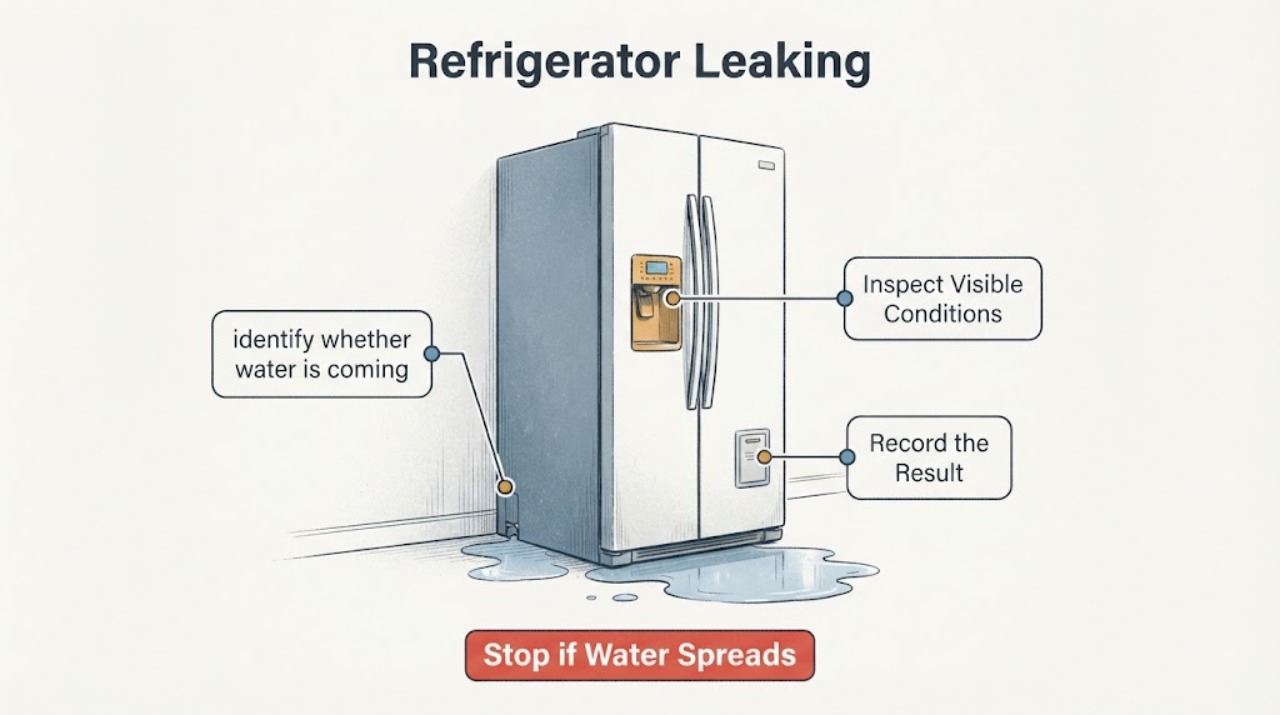
For a leaking Tappan refrigerator, first locate whether water is on the floor, inside the cabinet, or at the dispenser. Check only accessible connections, the filter fit, door closure and visible ice or frost; the exact model manual controls any filter or dispenser procedure. Tappan provides customer support for problem solving, while the manufacturer leak guidance used here routes unresolved leaks to service. Stop if water is near electrical connections or the leak is heavy.
Work through in order
Diagnostic checks
Use only checks that match the exact appliance or system and its official guide.
-
Check 1
From the front and the accessible rear area, identify whether water is coming from the floor, a rear connection, inside the cabinet, or the dispenser. Dry the area and watch one short interval without dismantling anything.
Expected result: The rear line or valve is wet; the dispenser drips; water is inside near the filter or ice maker; or the source is not visible.
Next step: Stop the water supply if the exact installation allows it and the leak is active. Keep electrical areas dry and arrange service when the source is unclear.
Why this matters
Why: The location separates connection, dispenser, filter or ice-related branches; an unseen source needs model-specific service diagnosis.
-
Check 2
If the refrigerator has a water filter, check from outside that it is fully seated according to the manual. Look for cracks or a wet filter housing; do not force the cartridge.
Expected result: The filter is loose, cracked or wet; or the filter area is dry.
Next step: Use the exact manual’s filter installation method or arrange service if the housing or cartridge is damaged.
Why this matters
Why: A damaged or incorrectly installed filter can leak inside the cabinet. A dry filter area shifts attention to another source.
-
Check 3
Check that the doors close and seal normally and that no door was left open for an extended period. Look for visible frost around the relevant compartment or ice chute.
Expected result: A door was left open and frost is present; the door seals normally with no frost; or water is specifically at the chute.
Next step: Close the doors and follow the model manual for defrost or chute care. Do not chip ice with a sharp tool.
Why this matters
Why: Extended door opening can ice the evaporator and lead to meltwater; frost in a chute can melt and drip.
-
Check 4
If water is near a plug, outlet, control, or damaged cord, stop and isolate the appliance only if safe to do so. Otherwise keep clear and call for qualified appliance or electrical help.
Expected result: Water remains away from electrical parts and is minor; or water reaches electrical parts, the leak is heavy, or cooling is affected.
Next step: Stop use and arrange service; do not reconnect or repeatedly operate the dispenser to reproduce the leak.
Why this matters
Why: A minor identified water path may be addressed by model instructions. Water near electricity or a heavy leak is an immediate professional boundary.
Use your observations
Decision map
Find the observation that best matches what you see, then follow the next safe action.
-
PATH 01Next step
What you see
The leak is at a visible rear connection or correctly identified filter area and stops after the model-specific safe correction.
Do this next
Monitor for recurrence and arrange Tappan support if it returns.
Why this path and its safety boundary
Why it matters: A loose connection or filter fit is more likely than an internal cabinet fault.
-
PATH 02Next step
What you see
Water appears after a door was left open, with frost or meltwater but no wet connection.
Do this next
Keep doors closed and follow the manual’s defrost or chute guidance; arrange service if water continues.
Why this path and its safety boundary
Why it matters: Door-open icing or an ice-chute path is more likely.
-
PATH 03Next step
What you see
The source is unclear, the leak persists, or water reaches electrical parts.
Do this next
Stop use, keep clear of wet electrical areas, and contact Tappan support or qualified service.
Why this path and its safety boundary
Why it matters: The symptom does not identify a safe repair part and has crossed the service boundary.
Helpful context
Understand the symptom
The location and timing of the water matter more than the amount. A leak that starts after dispensing, after a filter change, or after a door was left open points to different accessible checks. Tappan model layouts vary, so use the rating-plate model in the owner manual.
Keep towels and food away from water and electrical areas. Do not pull a built-in refrigerator farther than the installation permits or loosen a pressurized line.
When checks do not resolve it
Need a professional?
Provide the exact model and a concise record of what happened, which controls or indicators responded, and which safe checks changed the symptom.
Common questions
FAQ
Should I keep using a leaking refrigerator?
Stop if water is near electrical parts, the leak is heavy, cooling changes, or the source is unclear. Otherwise use the exact model guidance and monitor once.
Can a refrigerator filter cause a leak?
The opened leak guidance says a cracked or incorrectly installed filter can leak. Check fit and damage using the model manual.
Read the exact guide
Official sources
- Refrigerator Water LeaksElectrolux · refrigerator water-leak troubleshooting
- Contact Us – Tappan AppliancesTappan · Tappan appliance support and problem assistance
Community feedback
Share a repair observation
Share a plain-text repair observation. Accepted observations are published automatically; this page may take a moment to update.