
On this page
Start here
Quick answer
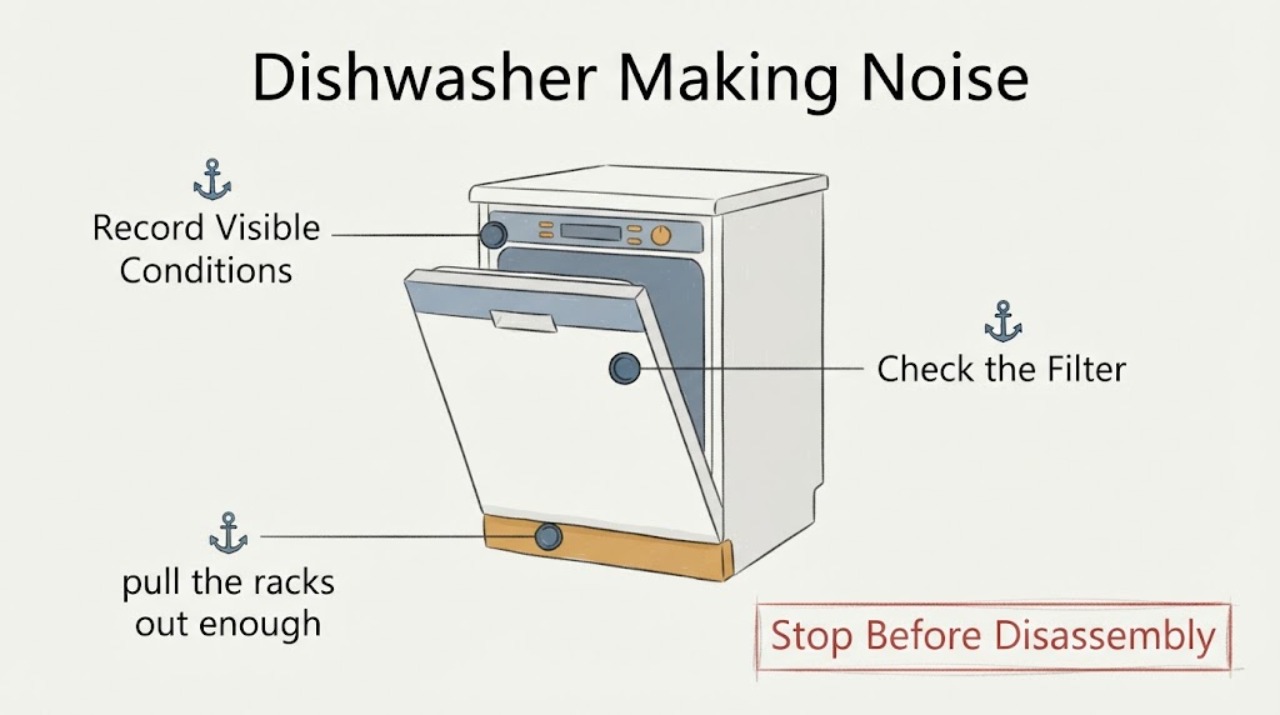
A Thermador dishwasher can make normal water-circulation sounds during a wash. First note whether the sound is water, a beep at cycle completion, or repeated banging, then check the load, spray-arm clearance, filter, and drain path from outside. If the noise is harsh, continues with a leak or standing water, appears with a burning odor or electrical symptom, or remains after the documented loading and cleaning checks, stop using the dishwasher and arrange qualified Thermador service.
Work through in order
Diagnostic checks
Use only checks that match the exact appliance or system and its official guide.
-
Check 1
Record when the sound occurs: while filling, during spray circulation, during draining, at the end-of-cycle beep, or when the dishwasher is idle. Note whether the sound is a steady water sound, clicking, scraping, or dishes banging.
Expected result: The sound is limited to wash circulation, follows draining, occurs only at completion, or continues between cycles.
Next step: Continue with the load and spray-arm checks for wash-only sound. Stop repeated cycles and arrange service for idle, harsh, or worsening noise.
Why this matters
Why: Water circulation and a completion beep can be normal operating sounds. A sound tied to draining or one that continues while idle points to a drain, installation, control, or mechanical issue rather than ordinary spray noise.
-
Check 2
With the dishwasher stopped, pull the racks out enough to inspect the load. Make sure tall plates, utensils, and loose items do not touch the spray arms or each other, and manually turn each accessible spray arm to confirm it moves freely.
Expected result: An item touches a spray arm or another item, a spray arm is obstructed, or the load and arms are clear.
Next step: Rearrange only the loose load and run one controlled cycle. Do not force a spray arm or remove a sealed component.
Why this matters
Why: Contact explains rhythmic tapping or banging that follows spray-arm rotation. A clear load makes a pump, drain, inlet, or installation source more likely if the noise remains.
-
Check 3
Inspect the bottom filter and visible sump area after the cycle is cool. If the manual permits filter removal, rinse the filter and its components under lukewarm water and reinstall them correctly; do not probe the pump housing.
Expected result: The filter is coated with debris, the sump has visible residue, or the filter and accessible area are clear.
Next step: Run one normal cycle after a correctly seated filter. Arrange service if noise, standing water, or poor drainage returns.
Why this matters
Why: Thermador says a blocked filter can affect operation and directs owners to clean it as described in the manual. A clear filter does not rule out a hidden pump or drain fault.
-
Check 4
If the sound occurs while draining, look under the sink at the accessible drain hose, air gap, and garbage-disposal connection for a kink or visible blockage. Do not disconnect plumbing while water is present or alter the high loop without the installation guide.
Expected result: The drain path is visibly obstructed, water remains in the tub, or the accessible path is clear and the dishwasher drains normally.
Next step: Clear only a safe, visible obstruction, then select CANCEL/DRAIN once as the manual describes. Use qualified service for hidden blockage, leaks, or repeat noise.
Why this matters
Why: Thermador lists blocked drain lines, air gaps, disposal connections, and a blocked drain pump as causes of drainage problems. A clear path with recurring noise leaves an internal pump or valve issue possible.
-
Check 5
Check the dishwasher's level and cabinet contact from outside. Look for vibration against surrounding cabinetry and confirm the door closes without a rack or panel rubbing; do not remove a custom panel or adjust concealed installation hardware.
Expected result: The unit rocks, contacts the cabinet, the door rubs, or the installation is stable and the noise remains.
Next step: Remove only a loose external obstruction and use the installation manual or qualified installer for leveling. Do not run repeated cycles if the dishwasher leaks or contacts live parts.
Why this matters
Why: A vibration or rubbing pattern can amplify otherwise normal pump or motor sound. A stable installation makes the wash-load, drain, or internal mechanical path more likely.
-
Check 6
After one controlled retest, record whether water fills, sprays, drains, and the cycle completes normally. Stop immediately for smoke, burning odor, a hot cord, water near electrical parts, repeated breaker trips, or a strong leak.
Expected result: The sound matches normal circulation and all functions complete, or noise returns with drainage, leakage, incomplete operation, or a safety symptom.
Next step: Monitor only a stable, documented pattern. Otherwise stop use and contact qualified Thermador service with the sound timing, load, filter, drain, and installation observations.
Why this matters
Why: Normal operation with a load-related sound supports monitoring. Recurrence with another functional or safety symptom is outside owner-level sound diagnosis.
Use your observations
Decision map
Find the observation that best matches what you see, then follow the next safe action.
-
PATH 01Next step
What you see
The sound occurs only while the spray system circulates water and stops when the cycle pauses, with no leak or performance change.
Do this next
Monitor the normal pattern and use the owner manual if load contact is suspected.
Why this path and its safety boundary
Why it matters: This fits Thermador's description of normal water-circulation sound.
-
PATH 02Next step
What you see
Rhythmic tapping or scraping follows a rack position, utensil, or spray-arm rotation and disappears after rearranging the load.
Do this next
Keep the spray arms and load clear; arrange service if the sound returns with a clear load.
Why this path and its safety boundary
Why it matters: An accessible loading obstruction is more likely than an internal motor fault.
-
PATH 03Next step
What you see
Noise occurs during drain-out and is accompanied by standing water, a blocked filter, or a visible hose or air-gap restriction.
Do this next
Clean the filter and clear only the visible, safe obstruction as documented, then run one drain cycle. Use service for recurrence or hidden blockage.
Why this path and its safety boundary
Why it matters: A restricted drain path or pump load is more likely than ordinary wash circulation.
-
PATH 04Next step
What you see
Noise persists while idle, returns with a clear load and drain path, or occurs with a leak, smoke, burning odor, hot cord, or repeated breaker trip.
Do this next
Stop using the dishwasher and arrange qualified Thermador service; isolate power only when safe and do not open panels.
Why this path and its safety boundary
Why it matters: A mechanical, electrical, installation, or water fault needs model-specific diagnosis.
Helpful context
Understand the symptom
Separate normal circulation from contact noise
Thermador identifies water-circulation sound during a wash as normal. A different pattern occurs when dishes or utensils strike one another or a spray arm, which is why the owner manual's loading arrangement matters. A completion beep is also a documented cycle signal. Sound that persists outside a wash or appears with poor draining, leaking, or an electrical symptom needs a wider diagnosis.
Keep checks external
Do not reach into a running dishwasher or remove a pump, heater, or wiring cover to locate a noise. Stop the cycle normally, let hot water and steam clear, and use the model manual for filter, spray-arm, drain, and reset procedures. Thermador directs model-specific internal faults to qualified service.
When checks do not resolve it
Need a professional?
Arrange qualified Thermador service for persistent or harsh noise, noise while idle, repeat noise after a clear load and drain path, leaks, incomplete cycles, or electrical or burning symptoms. Do not order a pump, motor, valve, or control from sound alone.
Common questions
FAQ
Is water noise during a Thermador dishwasher cycle normal?
Thermador says water-circulation sound during the wash cycle is normal. Contact or scraping from dishes and spray arms is a separate loading issue.
Why does my Thermador dishwasher bang?
Check whether dishes, utensils, or a spray arm touch during the wash. If the load is clear and banging continues, stop repeated cycles and use qualified service.
Could a blocked filter cause dishwasher noise?
A blocked filter can affect drainage and operation. Clean and reinstall it only as the owner manual describes, then arrange service if noise or standing water returns.
When should a Thermador dishwasher noise be serviced?
Use service for persistent or idle noise, recurrence after safe checks, leaks, incomplete drainage, smoke, burning odor, hot cords, or repeated breaker trips.
Read the exact guide
Official sources
- Dishwashers - TroubleshootingThermador · Thermador dishwasher noise, filter, drainage, cycle, and service troubleshooting
- Dishwashers - Cleaning & CareThermador · Thermador dishwasher filter, cleaning, and descaling guidance
Community feedback
Share a repair observation
Share a plain-text repair observation. Accepted observations are published automatically; this page may take a moment to update.