
On this page
Start here
Quick answer
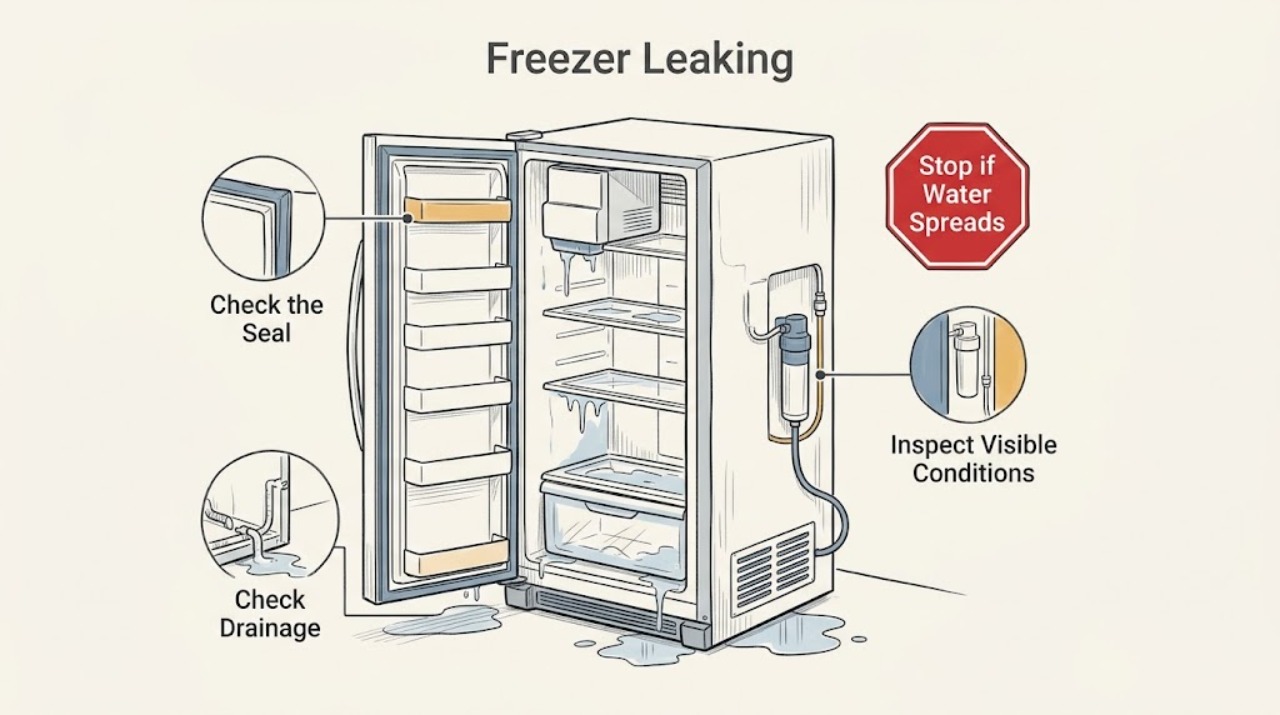
First separate condensation or a defrost-related wet spot from an active water-supply leak. Stop the water supply and stop using the freezer if water is reaching electrical parts, there is smoke, burning smell, sparking, abnormal heat, a damaged cord, or a breaker trips again; isolate power only from a safe dry position and use qualified help. For a cool, safe inspection, look for a door left ajar, a damaged or dirty seal, frost or ice blocking the drain or air path, and water coming from an ice maker, filter, dispenser line, or connection. On models with ice or water, check only the accessible shut-off, filter seating, and visible line for a kink or damage, and turn off the water if a line is leaking. Wipe condensation and dry the seal with a soft cloth, but do not pour water into the drain, remove panels, chip ice with a sharp tool, or keep operating through a growing puddle. Protect frozen food in another reliably cold location if the freezer is warming, and arrange qualified service for persistent water, a blocked internal drain, a damaged seal, or any electrical or refrigeration fault.
Work through in order
Diagnostic checks
Use only checks that match the exact appliance or system and its official guide.
-
Check 1
From a safe, dry position, identify where the first moisture appears and how quickly it is spreading. Look for water inside the freezer, under a drawer, at the door edge, beneath the cabinet, or behind the appliance. Stop immediately for water near electrical parts, smoke, burning smell, sparks, abnormal heat, a damaged cord, or a repeat breaker trip.
Expected result: The water is a small isolated damp spot, an active growing puddle, or clearly coming from a water or electrical area; the freezer is also warming or food is softening.
Next step: For an electrical or fire symptom, do not touch wet parts or operate unsafe switches; leave immediate danger and use appropriate emergency help. If a water line is visibly leaking, close its accessible shut-off from a safe position. Move vulnerable frozen food to another reliably cold location and continue only with safe external observations.
Why this matters
Why: Location and rate separate condensation or a contained defrost event from a supply-line, filter, valve, drain, or cabinet problem. Water near electricity and a warming freezer increase the consequence of continued operation.
-
Check 2
Check the door and seal without removing them. Make sure the door or drawer closes fully, no package is holding it open, and the visible gasket is clean, continuous, and contacting the frame. Wipe the seal with water only and dry it thoroughly; do not use a scraper, solvent, or force a misaligned door.
Expected result: The seal has frost, food residue, a gap, a tear, or misalignment, or it is clean and closes evenly while moisture returns elsewhere.
Next step: Remove only loose visible residue, close the door normally, and monitor whether moisture stops. If the gasket, frame, hinge, or drawer alignment is damaged, keep the freezer unused as far as food safety allows and arrange model-specific service.
Why this matters
Why: A poor seal can allow humid room air to create condensation and frost, while a clean, even seal makes an external water source or internal drainage path more likely. A torn or displaced gasket is not corrected by continued cooling.
-
Check 3
Inspect accessible interior airflow and frost without dismantling anything. Look for a solid frost sheet, ice covering an air outlet, a blocked drainage opening, or food pressed against vents. Do not chip ice with a knife, pour hot water into a drain, or remove an interior panel; record the location and photograph the pattern for service.
Expected result: Frost or ice blocks the air or drain area, only a light localized frost pattern is present, or there is no visible frost explanation and water continues.
Next step: Keep the door closed as much as practical, preserve food safely, and use the exact model manual for any approved defrost or drain function. If the frost returns, the drain remains blocked, or the cabinet warms, stop and arrange service.
Why this matters
Why: A blocked airflow or drainage path can redirect meltwater and raise the freezer temperature, but an internal blockage cannot be safely cleared by probing or heating the cabinet. Persistent water without an accessible cause needs diagnosis.
-
Check 4
If the freezer has an ice maker or water dispenser, check only the accessible filter compartment, shut-off position, and visible water connection line. Confirm the filter is fully seated according to the exact model instructions, look for a kink or wet fitting, and turn off the water supply before handling a visibly leaking line. Do not loosen fittings or pull a built-in freezer out of its enclosure.
Expected result: The filter is not seated, the shut-off is not fully open or is difficult to reach, the line is kinked or wet, or no supply-side issue is visible.
Next step: If the filter is visibly mis-seated and the compartment is dry, reseat it only as the exact model instructions describe and monitor for new moisture. If a line or fitting leaks, keep the water supply off and arrange qualified service; do not substitute an unverified part or attempt an internal valve repair.
Why this matters
Why: Thermador identifies filter seating, shut-off position, and kinked or damaged water connections as distinct water-system checks. A wet fitting or damaged line can cause an active leak even when the freezer itself is cooling normally.
-
Check 5
Compare the moisture with recent use and the room conditions. Note whether the door was left ajar, warm food was loaded, the room is unusually humid, the ice maker was recently enabled or used heavily, or the freezer was moved or serviced. Check the display for a door, temperature, filter, or ice-maker alert and record it exactly.
Expected result: Moisture follows a door or humidity event and dries, or it returns independently of use; the freezer temperature or an alert also changes.
Next step: For a one-time condensation event, dry the area, close the door fully, and monitor without obstructing airflow. For a returning leak, temperature alert, or ice-maker problem, stop using the affected water feature and arrange service.
Why this matters
Why: Thermador documents that condensation can depend on humidity and stored contents, while refrigeration controls and ice-maker behavior vary by model. A recurring puddle or temperature alarm is evidence for service rather than a normal humidity response.
-
Check 6
After the water supply is off when applicable and the area is dry, perform only one model-directed control check: verify the freezer is on, review its temperature setting, and use the exact manual for any alarm or filter reset. Do not repeatedly cycle power, disable an alarm without recording it, or run the appliance through a known leak to see whether it worsens.
Expected result: The alert clears and no new water appears, or the alert, leak, temperature rise, or unusual noise returns.
Next step: Stop and arrange qualified Thermador service if water returns, the freezer cannot hold temperature, the alert recurs, or the source is behind a panel. Provide the model, leak location, timing, water-feature status, frost pattern, food condition, and all alerts.
Why this matters
Why: A control reset can clear a transient notification but cannot repair a door seal, drain, water line, filter seat, valve, or cooling fault. Recurrence makes the symptom history more valuable than another reset.
Use your observations
Decision map
Find the observation that best matches what you see, then follow the next safe action.
-
PATH 01Next step
What you see
A small amount of moisture follows high humidity, a door-left-ajar event, or warm contents and stops after drying.
Do this next
Close the door fully, keep vents and air paths clear, dry the seal and accessible surfaces, and monitor. Escalate if moisture returns as a puddle or the freezer warms.
-
PATH 02Next step
What you see
Frost or ice is blocking a visible air outlet or drainage opening.
Do this next
Do not probe, chip, or heat the cabinet. Follow only the exact model's approved defrost guidance and arrange service if the blockage returns or water persists.
-
PATH 03Next step
What you see
The freezer has an ice maker or water dispenser and a filter, line, or fitting is wet.
Do this next
Turn off the accessible water supply, keep the affected feature unused, and arrange qualified service. Do not loosen built-in fittings or pull out the appliance.
-
PATH 04Next step
What you see
The door seal is dirty, torn, gapped, or the drawer does not align.
Do this next
Clean and dry only the visible seal if intact. Leave the appliance out of service and arrange model-specific repair for a torn seal, frame, hinge, or alignment problem.
-
PATH 05Next step
What you see
The source is behind or beneath the cabinet, water keeps accumulating, or the freezer is warming and food is softening.
Do this next
Stop troubleshooting, protect the frozen food in another reliably cold location, and arrange qualified refrigeration service. Do not open panels or attempt sealed-system or drain work.
-
PATH 06Next step
What you see
Water reaches electrical parts, there is smoke, burning smell, a spark, abnormal heat, a damaged cord, or a breaker trips again.
Do this next
Stop immediately. Do not touch wet electrical areas or operate unsafe switches; leave fire or immediate electrical danger and use appropriate emergency help. Arrange qualified service after the area is safe.
Helpful context
Understand the symptom
Why a Thermador freezer can look like it is leaking
A damp drawer, a small bead of water around a door, and a puddle that grows even when the ice maker is off are different observations. Condensation is more plausible when humidity, a slightly open door, or warm food is involved and the moisture stops after the cabinet is dry. Defrost water is more plausible when it appears inside a drain or tray path. Water from a filter, tube, valve, or the rear of the cabinet should be treated as an active supply or appliance leak.
Thermador freezer features and water connections vary by model. The checks below intentionally stay at the door, controls, drawers, filter, water line, and other accessible areas. Internal drain, sealed-system, wiring, and valve work belongs to a qualified technician.
When checks do not resolve it
Need a professional?
Call qualified Thermador refrigeration service for a recurring puddle, water from behind or below the cabinet, a blocked internal drain, a repeated frost pattern, a damaged seal, or a leak that continues after the water feature is isolated., Protect frozen food and arrange service if the freezer is warming, food is softening, a temperature or door alert returns, or the source of the water cannot be identified from accessible areas., Stop immediately for water near electrical parts, smoke, burning smell, sparks, abnormal heat, a damaged cord, or a repeat breaker trip; use appropriate emergency help for fire or immediate danger.
Common questions
FAQ
How can I tell whether my Thermador freezer is leaking or just forming condensation?
Note where the first moisture appears and whether it stops after a door-left-ajar or high-humidity event. Condensation should dry without a growing puddle. Water from a filter, line, rear cabinet, or a recurring interior drain area needs service evaluation.
What should I check first when water is under a Thermador freezer?
Keep the area dry and check the door seal, door closure, visible frost or blocked air path, and any accessible ice-maker or water-line connection. Turn off the water supply if a line is wet. Do not pull out a built-in unit or remove panels.
Can a Thermador ice maker or water filter cause a freezer leak?
Yes, on models equipped with those features. A filter that is not seated, a kinked line, an open or difficult shut-off, or a wet fitting can be involved. Follow the exact model instructions for filter seating; isolate a leaking line and arrange service.
Can a dirty or damaged door seal cause water in the freezer?
A poor seal can admit humid air, causing condensation or frost that later melts. Wipe the visible seal with water and dry it. A tear, gap, or misaligned door needs qualified repair rather than continued operation.
What if frost is blocking the freezer drain?
Do not use a knife, sharp tool, hot water, or a panel-off repair. Record the frost location and follow only the model's approved defrost guidance. Recurring frost, standing water, or warming food requires refrigeration service.
When should I shut down a leaking Thermador freezer?
Turn off the water supply for a leaking water connection and stop using the appliance for water near electrical parts, smoke, burning smell, sparks, abnormal heat, damaged wiring, a repeat breaker trip, or a freezer that is warming. Protect food and arrange qualified help.
Read the exact guide
Official sources
- Owner Support ResourcesThermador · Thermador appliances, including freezer and refrigeration products
- Refrigerator TroubleshootingThermador · Thermador refrigeration products, including freezer and bottom-freezer configurations; features vary by model
- Refrigerator FeaturesThermador · Thermador refrigeration models with the described drawer, humidity, and connected features; consult the exact manual
- How to Clean Your Refrigerator or FreezerThermador · Thermador refrigerators and freezers; use the exact owner's manual for component removal
- How to Replace Your Water FilterThermador · Thermador refrigeration models with a water filter; exact filter location and procedure vary
Community feedback
Share a repair observation
Share a plain-text repair observation. Accepted observations are published automatically; this page may take a moment to update.