
On this page
Start here
Quick answer
Warm air or steam from a Thermador oven vent, and a warm vent area during use, can be part of the cooling process. Thermador manuals also describe a cooling fan that can run during cooking and after the oven is switched off. Do not touch a hot surface to judge it. From a safe distance, note whether the heat is limited to the vent area and whether it declines after the cycle. Stop using the oven and arrange qualified service if there is a burning or electrical odor, smoke beyond documented initial-use factory-oil smoke, scorching or melting, damaged glass or trim, or heating that continues after the controls are turned off. Do not block the vent or remove panels.
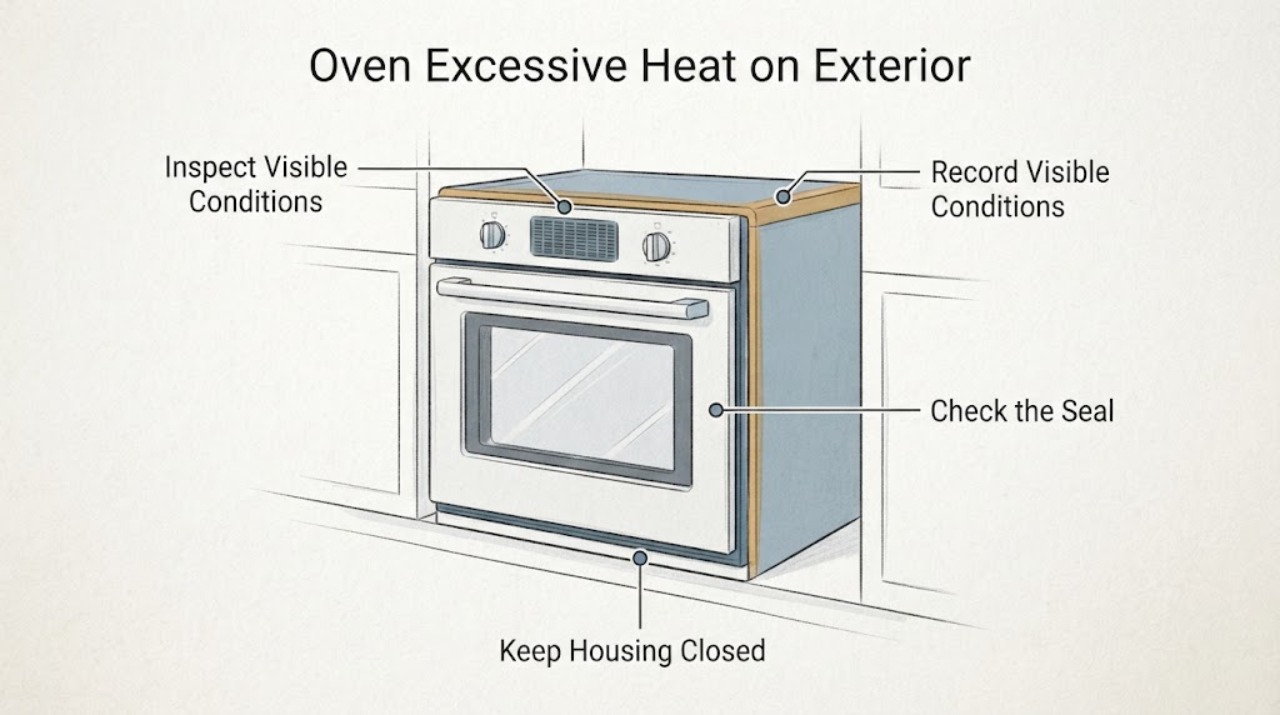
Work through in order
Diagnostic checks
Use only checks that match the exact appliance or system and its official guide.
-
Check 1
Record the complete Thermador model number and note the cooking mode, set temperature, where the heat is noticed, when it begins, how long it remains after shutdown, and whether there is smoke, odor, discoloration or visible damage.
Expected result: The heat is confined to the vent area during or after cooking, or it affects the door, control area, side panels or nearby cabinetry; the appliance may or may not cool after the cycle.
Next step: Keep clear of hot surfaces and use the exact owner manual once the model is known. If smoke, a burning/electrical odor, scorching, melting or damaged glass/trim is present, stop operation and arrange qualified service rather than making another heat test.
Why this matters
Why: The location and timing separate documented vent/cooling behavior from an unscoped exterior-surface or installation concern. Without the model, no universal surface-temperature limit can be inferred.
-
Check 2
From a safe distance during a normal cycle, observe whether warm air or steam exits the oven vent and whether the cooling fan or airflow continues briefly after the oven is switched off; do not touch the vent, door, trim or adjacent surfaces.
Expected result: Warm air or steam is coming from the vent, the area is warm while the oven is operating, and the heat/airflow declines after the cooling period; or there is no cooling airflow and the exterior remains abnormally hot.
Next step: Do not block the vent. If the behavior is limited to normal venting and the appliance cools, follow the model manual. If the exterior stays dangerously hot or a hazard symptom appears, stop using the oven and contact Thermador or qualified appliance service.
Why this matters
Why: Thermador documents warm vent air/steam and cooling-fan operation as normal possibilities, including fan run-on after shutdown in the opened manuals. Lack of a model-matched cooling behavior, persistent abnormal heat or a hazard symptom is not explained by those general sources.
-
Check 3
After the oven is fully cool, visually check that the accessible vent openings are not covered by cookware, foil, packaging or other external material, and check for visible door, glass, gasket, trim or cabinetry damage without removing panels.
Expected result: A visible obstruction or damage is present, or the vent and surrounding area are clear and intact.
Next step: Remove only a loose external obstruction after the appliance is fully cool; do not reach into the vent or disassemble the oven. For damage, repeated overheating or uncertainty about the installation, keep the oven off and arrange service.
Why this matters
Why: Thermador warns that covering oven vents can cause overheating. A clear vent does not prove that an internal fan, heater, insulation or control is working, and visible damage changes the safety decision.
-
Check 4
Observe whether the selected heating mode stops or cycles as expected when the set temperature is reached, without opening the hot oven or trying to feel the surface.
Expected result: The broiler or heater cycles off and on while the oven regulates temperature, or heat continues after the controls are turned off or cannot be stopped normally.
Next step: If the heater cycles and there are no hazard signs, use the exact model manual and keep the vent clear. If heating continues after shutdown, controls malfunction, or smoke/odor/damage appears, stop operation, isolate power only from a safe location and contact qualified service.
Why this matters
Why: Thermador says a broiler can cycle on and off to match the set oven temperature. A heater that stays on, an oven that cannot be stopped, or repeated abnormal heating is a service pattern rather than proof of a particular relay, thermostat or control-board failure.
Use your observations
Decision map
Find the observation that best matches what you see, then follow the next safe action.
-
PATH 01Next step
What you see
Warm air or steam is limited to the documented vent area during or after cooking, there is no burning/electrical odor or visible damage, and the oven cools after the cycle.
Do this next
Keep the vent unobstructed, keep people away from hot surfaces, and use the exact model manual for any family-specific operating guidance.
Why this path and its safety boundary
Why it matters: This is consistent with Thermador's documented cooling and vent behavior; the heat should not be judged by touching the surface.
-
PATH 02Next step
What you see
After the oven is fully cool, a visible external obstruction covers a vent, or the door, glass, trim or surrounding installation appears damaged or unusually close to heat.
Do this next
Remove only a loose external obstruction without entering the appliance. Leave the oven off and obtain model-matched installation or appliance service for damage, clearance concerns or anything that requires panel removal.
Why this path and its safety boundary
Why it matters: Thermador warns that blocked vents can cause overheating, while damage or an installation concern cannot be resolved by assuming the exterior heat is normal.
-
PATH 03Next step
What you see
There is persistent smoke, a burning or electrical odor, scorching, melting, sparks, damaged glass/trim, or a surface that appears unsafe to approach.
Do this next
Stop using the oven, keep clear of the hot appliance, and isolate power from a safe location if this can be done without approaching a hazard. Contact qualified service; do not restart it to reproduce the symptom or open the cabinet.
Why this path and its safety boundary
Why it matters: This is not a normal warm-vent observation and creates a fire, burn or electrical hazard that cannot be diagnosed safely through remote touch or test instructions.
-
PATH 04Next step
What you see
The oven continues heating after the controls are turned off, cannot be stopped normally, or the broiler does not cycle as expected and stays on.
Do this next
Keep the oven off and arrange Thermador or qualified appliance service. Do not bypass controls, disconnect a heating element, or perform energized tests.
Why this path and its safety boundary
Why it matters: Thermador distinguishes normal broiler cycling from a broiler that turns off prematurely and stays off, but a control that cannot stop heating requires service rather than a guessed component diagnosis.
Helpful context
Understand the symptom
What exterior heat can mean
Do not use your hand as a temperature test. Thermador's support page identifies warm air and steam from the oven vent as normal during the cooling process, and the opened owner manuals describe cooling-fan operation during cooking and after shutdown. That evidence applies to the venting and cooling behavior described by those sources; it does not give a single touch-safe temperature for every Thermador oven or prove that a very hot cabinet, trim piece or door is normal.
Use the exact model manual
The task has no model number. Thermador's owner-manual portal requires the appliance model number, and the product-family manuals differ. Record the rating-plate model before applying any model-specific vent, door, cooling or self-clean guidance. Do not copy a temperature, fan behavior or control sequence from a different family.
When heat becomes a service issue
A brief warm vent and a fan that runs after cooking can be normal. A burning or electrical odor, smoke that is not limited to documented initial-use factory-oil smoke, scorching, melting, damaged glass or trim, or continued heating after the controls are off is a stop-and-service condition. Thermador's support material routes persistent oven problems to customer support; it does not support user access to heating, wiring or cooling components.
When checks do not resolve it
Need a professional?
Contact Thermador or qualified appliance service when heat is accompanied by persistent smoke, burning/electrical odor, scorching, melting, damaged glass or trim, or heating that continues after shutdown., Arrange model-matched service when the vent is clear but the exterior remains abnormally hot, cooling behavior is absent, or the symptom cannot be classified from the exact owner manual., Do not touch hot surfaces to measure temperature, block the vent, remove panels, bypass controls, or test heating, wiring or cooling components while energized.
Have this ready
- complete Thermador model number from the rating plate
- cooking mode, set temperature and whether self-clean was involved
- where the heat is observed and whether it continues after shutdown
- whether smoke, burning/electrical odor, scorching, melting or damaged glass/trim is present
- a description or photo taken only after the appliance and surrounding surfaces are fully cool
Common questions
FAQ
Is warm air from a Thermador oven vent normal?
Thermador says warm air and steam from the oven vent can be normal during the cooling process, and its opened manuals describe a cooling fan that can run during cooking and after the oven is off. Do not touch the vent or nearby hot surfaces; keep the vent clear and use the exact model manual.
Should I touch the outside of the oven to see whether it is too hot?
No. A general Thermador source does not provide one touch-safe exterior temperature for every oven. Observe from a safe distance and wait until the appliance is fully cool before any visual check. Burning odor, smoke, scorching, melting or damaged glass/trim is a stop-and-service condition.
Why is the cooling fan still running after the Thermador oven is turned off?
Opened Thermador manuals state that the cooling fan may run after the oven is off. That behavior does not make a damaged, smoking or persistently overheating oven safe; keep clear, do not block the vent, and arrange service for hazard symptoms or abnormal continued heating.
Read the exact guide
Official sources
- Use and Care Manual PRD364WDGU/C, PRD364WIGU/C, PRD366WGU/CBSH Home Appliances / Thermador · Brand-owner-hosted manual for the listed Thermador range models only; corroborates cooling-fan and warm-vent behavior for that family.
- Customer Support, Service, Repair & PartsThermador · Official Thermador support page for product support, troubleshooting resources and service contact routing.
- Oven Troubleshooting for RangesThermador · Official US Thermador troubleshooting page; general oven/range guidance, not a model-specific exterior temperature limit.
- Use and Care Manual ME301WS, MED301WS, MED301LWSBSH Home Appliances / Thermador · Brand-owner-hosted manual for the listed Thermador models only; used to document family-specific cooling fan and vent behavior, not to claim every Thermador model is identical.
- Find Owner ManualsThermador · Official US support portal; requires the appliance model number and directs users to model-matched manuals.
Community feedback
Share a repair observation
Share a plain-text repair observation. Accepted observations are published automatically; this page may take a moment to update.