
On this page
Start here
Quick answer
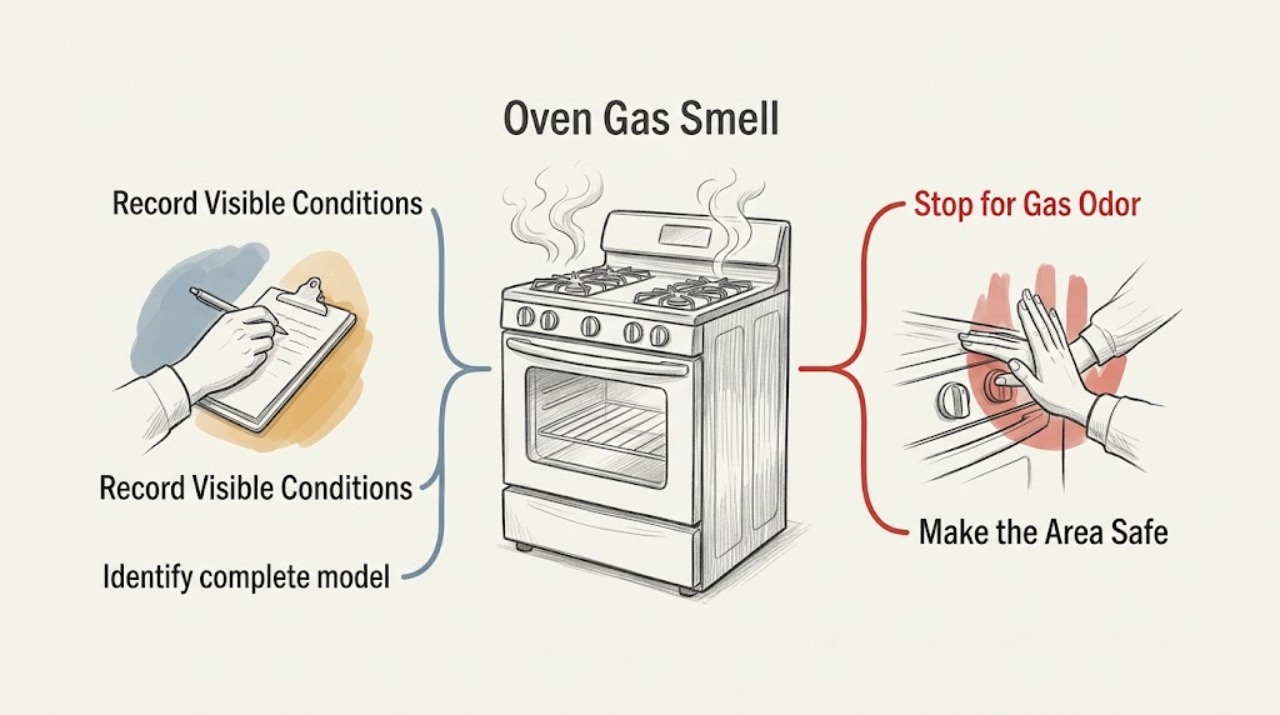
Treat a persistent, strong, unexplained, or returning gas smell from a Thermador oven as a possible leak or incomplete ignition: leave immediately, do not light anything, do not operate switches or appliances, and seek gas or emergency help from outside. Do not search for the leak, relight the oven, or run another test. A brief odor during a known gas-ignition event may be addressed by the exact model instructions, but it is not safe to assume that an oven smell is normal when the duration, source, or fuel configuration is uncertain. After the area has been cleared and qualified help says it is safe, provide the model, timing, operating mode, and any display message for diagnosis.
Work through in order
Diagnostic checks
Use only checks that match the exact appliance or system and its official guide.
-
Check 1
At the first noticeable gas-like smell, stop the oven and leave without operating light switches, controls, plugs, or other electrical equipment in the area; do not ignite a flame.
Expected result: The odor is strong, persistent, spreading, or accompanied by hissing, smoke, a delayed ignition, an unusual flame, or physical symptoms, or it disappears before anyone can safely determine its source.
Next step: Move to a safe location outside and contact local gas or emergency help from there. Do not return to inspect or restart the appliance until qualified help gives the all-clear.
Why this matters
Why: Any unexplained or continuing odor can indicate escaping or incompletely burned gas, and the absence of a visible symptom does not make it safe to investigate indoors.
-
Check 2
From outside the immediate hazard area or from a safe record already available, identify the complete Thermador model, whether the unit is a gas range or another configuration, and whether the odor was at the oven, a surface burner, or elsewhere.
Expected result: The smell is clearly associated with an intentional ignition event, or its location and fuel source are unknown or it returns while the appliance is off.
Next step: Give the model, fuel configuration, odor location, duration, and whether the appliance was operating to the gas or appliance professional; do not perform another ignition test.
Why this matters
Why: A short, known ignition odor may have model-specific guidance, but an unknown, returning, or oven-cavity odor must be treated as unresolved rather than attributed to a surface burner.
-
Check 3
Only after qualified help confirms the area is safe, review the exact Thermador owner guidance for the model and record the operating mode, selected temperature, start time, and whether the oven had completed ignition.
Expected result: The odor occurred during surface-burner ignition, during oven ignition or preheating, after a failed start, or while the oven was off; a display message may also be present.
Next step: Keep the oven out of service and provide the sequence to qualified service. Do not clear a code by repeated resets or restart the oven to compare results.
Why this matters
Why: Timing separates an ignition-sequence concern from a possible supply, burner, control, or combustion fault, but it does not by itself clear the appliance for use.
-
Check 4
If a display shows an E-code or another warning after the odor event, record the exact characters and the mode without entering service diagnostics or repeatedly resetting the control.
Expected result: The code remains, returns after a reset directed by the model manual, or the display is blank or erratic.
Next step: Leave the oven off and give the exact code and model to Thermador or a qualified technician after the gas-safety response is complete.
Why this matters
Why: A returning error or abnormal display supports a control, power, ignition, or heating fault; no code does not rule out a gas hazard.
-
Check 5
After the area is declared safe, report any visible soot, scorch mark, flame discoloration, heat damage, or unusual sound from a safe position; do not touch the burner, cavity, vent, or gas connection.
Expected result: There is soot, an unstable or delayed flame, repeated clicking, a hot or damaged connection, or no visible external sign.
Next step: Do not operate the appliance for comparison; arrange qualified diagnosis and preserve the recorded sequence and observations.
Why this matters
Why: Combustion or ignition evidence needs professional assessment even when the odor has stopped. A clean external view cannot clear an internal gas fault.
-
Check 6
Prepare a service handoff with the exact model, fuel configuration, odor timing and duration, operating mode, display code, spark or ignition symptoms, and whether the appliance has remained isolated.
Expected result: The service provider can match the report to the correct Thermador manual and assess the gas supply, ignition, burner, combustion, and control path.
Next step: Follow the professional's safety and repair instructions and do not resume use until the appliance is declared safe.
Why this matters
Why: Model-specific evidence is required; a part or adjustment cannot safely be selected from the symptom gas smell alone.
Use your observations
Decision map
Find the observation that best matches what you see, then follow the next safe action.
-
PATH 01Next step
What you see
A brief odor occurs only during a known, intended gas-ignition event, stops promptly, and there is no continuing odor, delayed ignition, unusual flame, smoke, or physical symptom.
Do this next
Do not deliberately repeat the ignition to verify it. Record the model and event, and request service if the odor is uncertain, lasts beyond the expected ignition, or returns.
Why this path and its safety boundary
Why it matters: Thermador's gas-ignition guidance allows that a short ignition-related odor can differ from a persistent gas odor, but exact model instructions still control.
-
PATH 02Next step
What you see
The odor is persistent, strong, unexplained, present while the oven is off, or accompanied by hissing, delayed ignition, an unusual flame, smoke, or physical symptoms.
Do this next
Leave immediately, avoid flames and electrical switches, and seek gas or emergency help from outside. Do not return to inspect, relight, or test the appliance.
Why this path and its safety boundary
Why it matters: Treat it as a possible gas leak or unsafe combustion condition.
-
PATH 03Next step
What you see
The smell is accompanied by visible smoke, fire, scorching, a hot or damaged plug or control, or a repeated electrical trip.
Do this next
Leave and use the local emergency route from outside. Do not reset the breaker, touch the appliance, or attempt to extinguish a developing appliance fire unless trained and it is safe to do so.
Why this path and its safety boundary
Why it matters: Treat the event as a fire or electrical emergency in addition to the gas concern.
-
PATH 04Next step
What you see
The odor has stopped, but the oven shows an E-code, will not complete ignition, clicks continuously, or the smell returns after a safe period.
Do this next
Keep the appliance off, record the exact code and sequence, and request qualified Thermador or gas-appliance service.
Why this path and its safety boundary
Why it matters: The underlying ignition, control, supply, or combustion issue remains unresolved.
Helpful context
Understand the symptom
Treat an unexplained odor as a safety event
Gas odor is not a normal invitation to keep testing the oven. If the smell is strong, persists after the ignition event, spreads through the room, returns when the appliance is off, or is accompanied by hissing, a delayed light, an unusual flame, smoke, dizziness, or a headache, leave everyone and pets immediately. Avoid flames, switches, plugs, and other electrical controls while leaving. From outside, contact the local gas or emergency service and follow its instructions.
Why the exact model matters
Thermador sells gas professional ranges and other configurations, and the oven, surface burners, fuel type, ignition sequence, and display behavior vary by model. The gas-cooktop troubleshooting page is useful for recognizing ignition-related clicking and odor boundaries, but it does not make an odor inside every Thermador oven safe. Record the model from a safe location and use the matching owner information after the immediate hazard has been cleared.
Do not look for the leak yourself
Do not move the range, remove panels, disconnect a gas line, apply a flame, or use a switch to illuminate the appliance. Do not return to relight a burner or repeat a bake cycle. A qualified gas or appliance professional can check the supply, ignition, combustion, and controls with the correct equipment.
Safety boundary
Stop conditions
- Stop immediately and leave for a persistent, strong, unexplained, or returning gas odor; hissing; delayed ignition; an unusual or unstable flame; smoke; fire; or suspected carbon monoxide.
- Do not operate switches, plugs, phones, lights, or other electrical equipment in the suspected gas area while leaving; seek help from outside.
- Do not light a flame, relight the oven, run another cycle, search for a leak, move the range, remove panels, disconnect a gas line, or alter a gas connection.
- Stop for scorching, a hot or discolored connection, water near electrical equipment, repeated breaker trips, or any symptom that makes the area unsafe to approach.
Only after diagnosis
Potential parts
- gas igniter or electrode
Consider only if a qualified diagnosis identifies an ignition component as the cause of delayed ignition or an unresolved ignition sequence.
Confirm the complete model and fuel configuration through Thermador or the service technician before any part decision. - gas valve or burner component
Consider only after qualified service identifies a model-specific gas-flow or burner fault; do not infer a valve problem from odor alone.
Gas components require model-specific fitment and qualified installation; do not disconnect or adjust the gas system yourself. - ignition control or wiring
Consider only if a qualified technician links the symptom to the control, wiring, or ignition circuit after the gas-safety assessment.
Electrical diagnosis and replacement require qualified service; never select a component from the odor symptom alone.
When checks do not resolve it
Need a professional?
Seek gas or emergency help immediately from outside for any persistent or unexplained odor, delayed ignition, hissing, unusual flame, smoke, fire, or physical symptoms. Once the immediate hazard is handled, request qualified Thermador or gas-appliance service for any returning odor, ignition failure, continuous clicking, error code, or uncertain cause.
Common questions
FAQ
Is a brief gas smell from a Thermador oven always normal?
No. A brief odor during a known ignition event can have model-specific guidance, but a strong, persistent, returning, or unexplained odor must be treated as a possible gas leak or unsafe combustion condition. Do not repeat the ignition to test it.
What should I do first if I smell gas from the oven?
Leave immediately without operating switches, flames, plugs, or other electrical equipment in the area. Seek gas or emergency help from outside and do not return to inspect or restart the oven until qualified help gives the all-clear.
Can I check the Thermador gas connection myself?
No. Do not move the appliance, search for a leak, disconnect a gas line, apply a flame, or remove panels. Give the model and symptom sequence to qualified gas or appliance service.
What details help diagnose the odor after the area is safe?
Record the complete model, fuel configuration, odor location, timing and duration, operating mode, ignition or clicking behavior, any display code, and any visible flame or soot observation made from a safe position.
Read the exact guide
Official sources
- Gas Cooktop TroubleshootingThermador · Thermador gas cooktop and rangetop ignition, clicking, sparking, flame, and gas-odor troubleshooting
- Oven Error CodesThermador · Thermador oven error-code recording and service escalation
- Appliance Information - Gas Professional Range | PRG304WH/01Thermador · Thermador gas professional range identity, model-specific manuals, parts, and service support
- Certain Older Gas Connectors May Be DangerousU.S. Consumer Product Safety Commission · Household gas-appliance leak emergency actions
- Oven TroubleshootingThermador · Thermador oven operating behavior, model-specific troubleshooting, and service escalation
Community feedback
Share a repair observation
Share a plain-text repair observation. Accepted observations are published automatically; this page may take a moment to update.