
On this page
Start here
Quick answer
A toaster oven can smell during its first heating cycle, but the odor should fade after the documented initial preheat. For an older or returning smell, unplug and cool it, remove crumbs/grease from accessible trays and surfaces, and check for food or plastic touching an element. Stop immediately for burning insulation, smoke that does not clear, sparks, or a damaged cord.
Work through in order
Diagnostic checks
Use only checks that match the exact appliance or system and its official guide.
-
Check 1
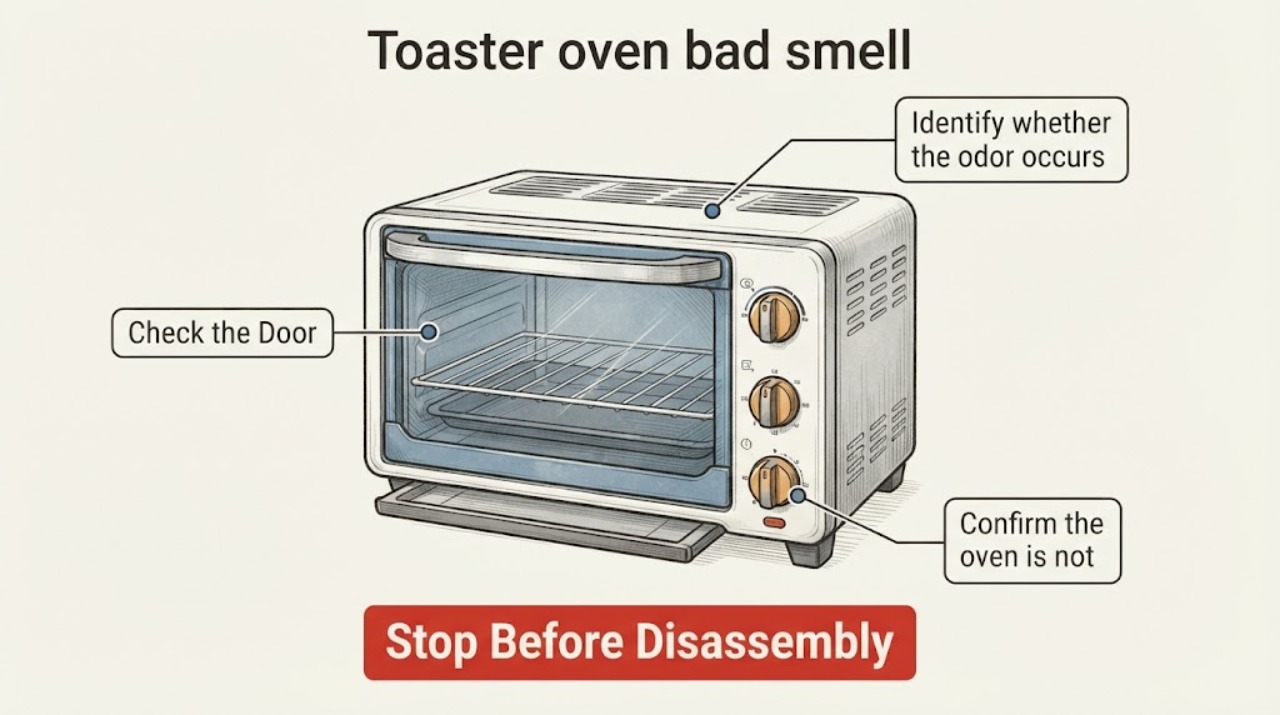
Identify whether the odor occurs only on first use, after food spills, during preheat, or with smoke/burning smell while idle.
Expected result: Mild odor fades during first preheat, food/grease smell is visible, or smell is sharp/burning/worsening.
Next step: For smoke/burning/electrical odor, turn controls OFF, unplug when safe, and let contents cool.
Why this matters
Why: The manual supports a first-use odor that disappears after initial heating; sharp or persistent burning odor is not covered by that normal branch.
-
Check 2
When cool and unplugged, inspect crumb tray, baking pan, rack, door area, and accessible heating-element surroundings for crumbs, grease, packaging, or plastic.
Expected result: Residue/packaging is visible, or accessible interior is clean.
Next step: Remove only loose accessible residue and never touch or bend the heating element.
Why this matters
Why: Residue can smoke or smell during heating; a clean interior shifts concern to control/element/cord diagnosis.
-
Check 3
Confirm the oven is not covered, pressed against flammables, or operated with foil covering the crumb tray; inspect cord/plug for damage.
Expected result: Setup/flammable issue or damaged/hot connection is present, or no issue is visible.
Next step: Correct only the external setup after cooling; leave unplugged for cord/plug damage.
Why this matters
Why: The manual warns of fire from covering/flammables and prohibits damaged supply cords.
-
Check 4
After cleaning and a normal first-use preheat only when no hazard remains, observe one supervised cycle.
Expected result: Odor fades, returns with food/heat, or smoke/sparks persist.
Next step: Stop repeated testing and arrange appliance service for persistent odor or electrical symptoms.
Why this matters
Why: Improvement supports residue/first-use odor; recurrence or warning signs need service.
Use your observations
Decision map
Find the observation that best matches what you see, then follow the next safe action.
-
PATH 01Next step
What you see
Mild odor/small smoke occurs only during first preheat and disappears afterward.
Do this next
Complete the documented preheat with ventilation and supervision, then monitor.
Why this path and its safety boundary
Why it matters: This matches the manual’s normal first-use condition.
-
PATH 02Next step
What you see
Odor follows crumbs, grease, packaging, or food residue and fades after cool cleaning.
Do this next
Keep the tray and interior clean and avoid flammable coverings.
Why this path and its safety boundary
Why it matters: Accessible contamination is likely.
-
PATH 03Next step
What you see
Odor persists after cleaning, appears while idle, or comes with smoke/sparks/heat.
Do this next
Keep unplugged and obtain qualified service.
Why this path and its safety boundary
Why it matters: An internal electrical/heating fault is possible.
-
PATH 04Next step
What you see
Cord/plug is damaged or oven contents ignite.
Do this next
Turn controls off, unplug if safe, keep door closed for an internal fire, and obtain emergency help if needed.
Why this path and its safety boundary
Why it matters: Immediate fire/electrical boundary.
Helpful context
Understand the symptom
The smell’s timing separates normal first-use residue from food/grease buildup or an electrical fault.
Do not use foil, plastic, abrasive metal pads, or internal disassembly to chase an odor.
When checks do not resolve it
Need a professional?
Arrange qualified toaster-oven service when odor persists after the documented cool cleaning, returns without food/residue, or involves heating/control/cord diagnosis.
Common questions
FAQ
Is a smell normal the first time?
The opened manual says first-use odor/smoke can be normal and should disappear after initial preheating. Persistent or burning odor needs service.
How should I clean an odor-causing toaster oven?
Unplug and cool it, then remove accessible crumbs/grease from the tray, rack, and interior as the manual allows.
Can I keep using it if it smells like burning plastic?
No. Unplug when safe and arrange service, especially for smoke, sparks, heat, or cord damage.
Read the exact guide
Official sources
- Proctor Silex Simply-Crisp Air Fry Toaster Oven (31265) - Use & CareHamilton Beach / Proctor Silex · toaster-oven first-use odor/smoke, cleaning and fire safety
Community feedback
Share a repair observation
Share a plain-text repair observation. Accepted observations are published automatically; this page may take a moment to update.