
On this page
Start here
Quick answer
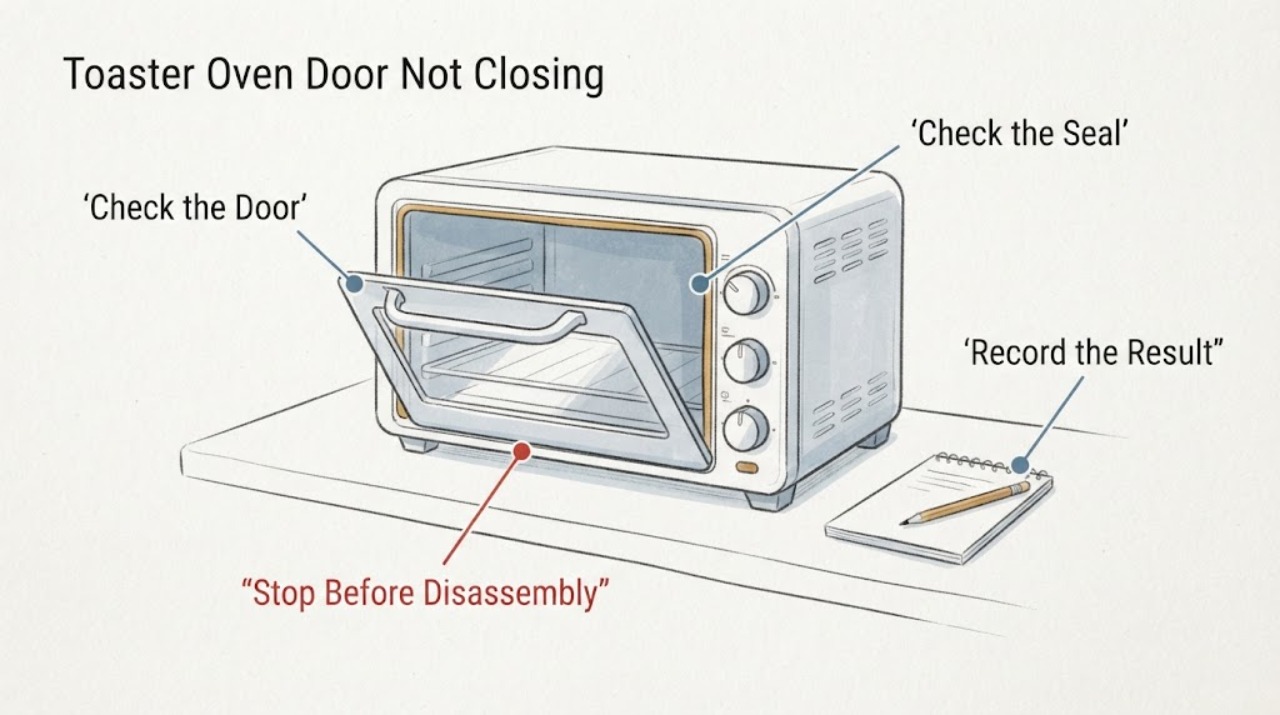
Unplug the toaster oven and let it cool. Remove the rack, pan, crumb tray, or food that projects into the closing path, then inspect the glass, hinges, gasket, and latch. Do not force a hot or damaged door closed or use an oven that leaves a heat gap; bent hardware or cracked glass needs service.
Work through in order
Diagnostic checks
Use only checks that match the exact appliance or system and its official guide.
-
Check 1
Unplug the oven and wait until the cavity, accessories, and door are cool.
Expected result: The door is cool and moves freely, or it is hot/stuck/damaged.
Next step: Keep a hot or damaged unit unplugged.
Why this matters
Why: Heat or damage makes inspection unsafe.
-
Check 2
Remove the rack, pan, basket, crumb tray, and food, then test the empty door gently.
Expected result: The empty door closes flush, or it still stops.
Next step: Reseat accessories only in their guides.
Why this matters
Why: A changed result identifies an accessory obstruction; failure empty points to hardware/seal.
-
Check 3
Inspect the gasket, hinge arms, latch, frame, and glass from outside.
Expected result: Debris is present, or a latch/hinge/glass part is bent or cracked.
Next step: Clean only when cool; service damage.
Why this matters
Why: Debris can obstruct closure; damaged safety parts are not user repairs.
-
Check 4
Reseat the cool tray and rack and close without forcing the latch.
Expected result: The door latches evenly or leaves a gap/rubs.
Next step: Do not bend hardware back.
Why this matters
Why: A gap or rubbing indicates alignment, hinge, latch, or seal trouble.
-
Check 5
Run no heat test unless the door closes flush and is undamaged.
Expected result: A safe short operation is normal or heat escapes/smoke appears.
Next step: Stop use and arrange service.
Why this matters
Why: Escaping heat or smoke means the enclosure is unsafe.
Use your observations
Decision map
Find the observation that best matches what you see, then follow the next safe action.
-
PATH 01Next step
What you see
Door closes after removing or reseating an accessory.
Do this next
Keep guides clean and confirm closure.
Why this path and its safety boundary
Why it matters: An obstruction caused the symptom.
-
PATH 02Next step
What you see
Crumbs obstruct the latch but glass/hardware are intact.
Do this next
Clean unplugged and cool, then retest gently.
Why this path and its safety boundary
Why it matters: Contamination interfered with latching.
-
PATH 03Next step
What you see
Latch, hinge, frame, gasket, or glass is damaged or a gap remains.
Do this next
Keep unplugged and service it.
Why this path and its safety boundary
Why it matters: The oven cannot safely contain heat.
-
PATH 04Next step
What you see
Door closes cold but leaks heat or pops open when operating.
Do this next
Stop use and service.
Why this path and its safety boundary
Why it matters: A heat-related latch/seal fault remains.
Helpful context
Understand the symptom
Unplug the toaster oven and let it cool. Remove the rack, pan, crumb tray, or food that projects into the closing path, then inspect the glass, hinges, gasket, and latch. Do not force a hot or damaged door closed or use an oven that leaves a heat gap; bent hardware or cracked glass needs service.
Identify the symptom before choosing a repair
When checks do not resolve it
Need a professional?
Keep the toaster oven unplugged for cracked glass, bent hinge/latch, smoke, fire, or a door that cannot close and seal.
Common questions
FAQ
What is the safest first check?
Start with the symptom-specific external check in this guide, keep power or fuel isolated when directed, and use the exact model manual for any control or part decision.
When should I stop troubleshooting?
Stop for smoke, burning odor, hot or damaged electrical parts, leaks near electricity, repeated breaker trips, or any condition requiring opening a sealed or energized assembly.
Should I replace a part based on the symptom alone?
No. Confirm the model and diagnostic result first; a symptom can come from several causes.
Read the exact guide
Official sources
- Hamilton Beach Toaster Oven (31523) - Use & CareHamilton Beach · countertop toaster oven door and fire safety
- Oven Door is Not Closing - Checking the LatchKitchenAid · oven door latch and obstruction
Community feedback
Share a repair observation
Share a plain-text repair observation. Accepted observations are published automatically; this page may take a moment to update.