
On this page
Start here
Quick answer
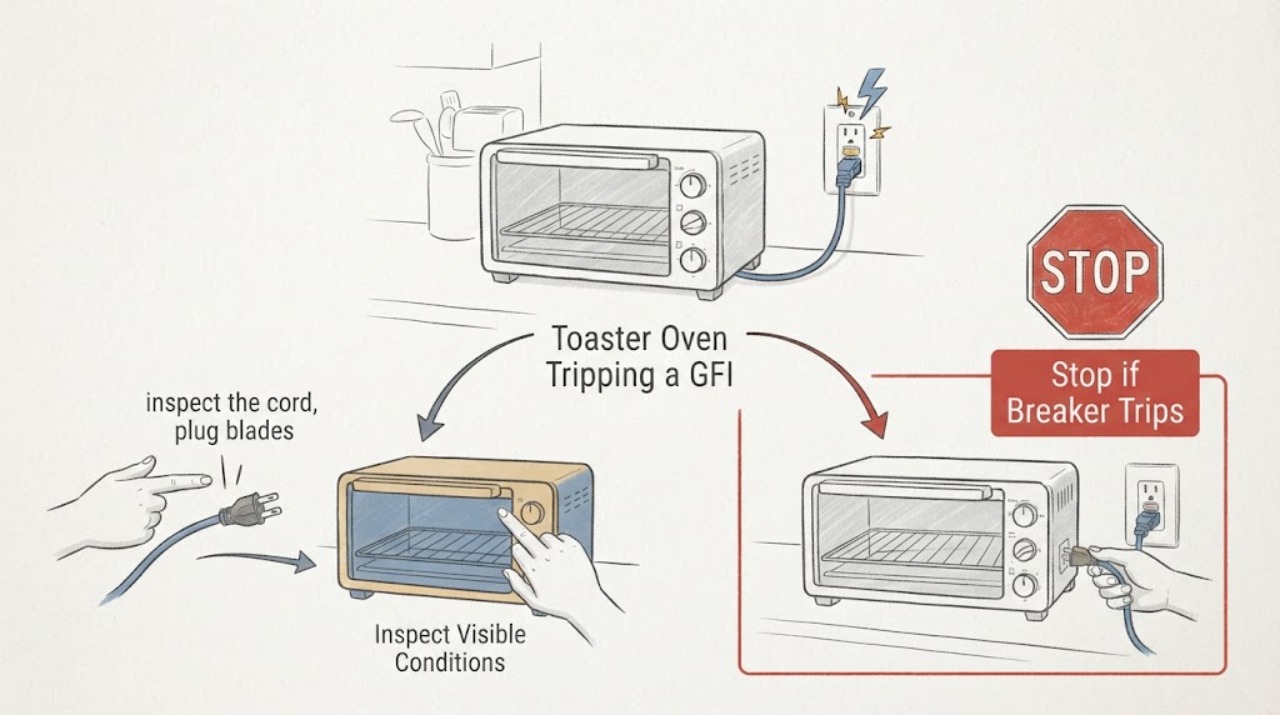
Stop using the toaster oven when the kitchen GFI/GFCI trips and unplug it if the plug and receptacle are accessible without touching water or damaged parts. Do not keep resetting the GFI, bypass the ground, use an adapter or extension cord to defeat the protection, or open the appliance. With the toaster oven disconnected, inspect only the cord, plug, receptacle face and surrounding area for damage, heat, moisture or a loose connection. A trip with the appliance unplugged points toward the receptacle or circuit; a trip that returns when this toaster oven is connected points to the appliance or cord, but neither result identifies a repairable part. CPSC guidance says an appliance that repeatedly trips protection should be unplugged and repaired or replaced, and a warm outlet, shock, damaged cord or water exposure requires the outlet or appliance to remain out of service until qualified electrical or appliance service checks it.
Work through in order
Diagnostic checks
Use only checks that match the exact appliance or system and its official guide.
-
Check 1
Stop the toaster oven, unplug it only if the plug and surrounding area are dry and intact, and leave it disconnected after the GFI trip.
Expected result: The appliance is isolated, or the plug, cord, receptacle or nearby counter is wet, hot, scorched, cracked or otherwise damaged.
Next step: Do not touch a wet, hot or damaged installation. Keep people away, and arrange an electrician for the receptacle/circuit or qualified appliance service for the toaster oven. Do not repeatedly reset the GFI to continue cooking.
Why this matters
Why: Repeated tripping is an unresolved electrical safety condition. Visible heat, water or cord damage increases the reason to keep both the appliance and receptacle out of service.
-
Check 2
With the toaster oven unplugged and the area dry, inspect the cord, plug blades, strain relief and visible appliance inlet from the outside; do not remove covers or probe the receptacle.
Expected result: The cord or plug is frayed, cracked, bent, loose-fitting, discolored or heat-damaged, or it appears intact with no visible damage.
Next step: If damage is visible, do not use or repair the cord yourself; identify the model for qualified service or replacement. If no damage is visible, keep the oven unplugged and use the isolation result in the next decision rather than repeatedly testing it.
Why this matters
Why: CPSC treats damaged cords and loose or hot connections as shock or fire hazards. An intact appearance does not prove that an internal appliance fault or wiring fault is absent.
-
Check 3
Observe the GFI/GFCI receptacle only from the outside: note whether it is warm, loose, cracked, wet, discolored or unable to remain reset with the toaster oven still unplugged.
Expected result: The GFI trips or will not stay reset while the toaster oven is disconnected, or the receptacle feels warm/loose or shows damage; alternatively it remains reset and cool with no visible damage.
Next step: If the GFI will not remain reset or the receptacle is warm, loose or damaged, stop using that outlet and have a qualified electrician check it. Do not remove the faceplate, make a live voltage test or substitute a non-GFI outlet.
Why this matters
Why: A trip with the appliance disconnected makes the receptacle or circuit a leading service boundary; a cool receptacle that remains reset does not clear the toaster oven or prove the circuit safe under load.
-
Check 4
Check the kitchen setup with the appliance disconnected: look for sink splash, leaks, a wet counter, a cord touching a range or other hot surface, an extension cord or adapter, and a defeated or missing grounding path.
Expected result: Water, heat, an extension/adapter, or altered grounding is present, or the area is dry with the original cord and grounding arrangement intact.
Next step: Remove the toaster oven from service until the source of water or heat exposure is corrected and the appliance is assessed. Do not use an adapter, extension cord or broken ground pin to get around the trip; if the setup is unchanged, proceed to qualified service rather than a repeat run.
Why this matters
Why: CPSC warns that water mixed with electricity can cause shock or fire, cords can be damaged by hot surfaces, extension cords are not permanent wiring, and the grounding feature must not be defeated. A dry, unchanged setup still does not identify why the GFI tripped.
-
Check 5
Record the toaster oven's brand/model label if it is safely visible, the outlet or circuit involved, whether the trip happened at plug-in or during heating, any moisture/odor/smoke, and the visible cord or receptacle condition.
Expected result: The event can be tied to this appliance and circuit, or the model/circuit and timing remain unknown.
Next step: Give these details to the qualified service provider and follow the exact appliance manual for the verified model. Keep the toaster oven unplugged until the provider clears it or recommends replacement.
Why this matters
Why: Timing and identity help an electrician or appliance technician separate a circuit-side event from an appliance-side inspection, but they are not proof of a failed heating element, switch or control board.
Use your observations
Decision map
Find the observation that best matches what you see, then follow the next safe action.
-
PATH 01Next step
What you see
The GFI trips or will not stay reset while the toaster oven is unplugged, or the receptacle is warm, loose, wet or visibly damaged.
Do this next
Stop using that outlet and arrange a qualified electrician; do not remove the cover, make a live measurement or keep resetting it.
Why this path and its safety boundary
Why it matters: The receptacle or circuit remains a live safety concern independent of the toaster oven.
-
PATH 02Next step
What you see
The GFI stays reset with the toaster oven disconnected but trips again when this oven is plugged in or operated.
Do this next
Unplug the toaster oven and have it repaired or replaced by a qualified provider. Do not repeat the plug-in or heating test.
Why this path and its safety boundary
Why it matters: The appliance, cord or its interaction with the circuit needs qualified assessment; the trip alone does not identify a specific part.
-
PATH 03Next step
What you see
The cord or plug is damaged, the setup has water exposure, or the grounding feature has been altered or defeated.
Do this next
Keep the appliance out of service, dry and isolate the area without touching damaged parts, and obtain qualified electrical or appliance service.
Why this path and its safety boundary
Why it matters: An external electrical hazard is present even if the GFI later resets.
-
PATH 04Next step
What you see
There is smoke, a burning or electrical odor, arcing, a shock, scorch marks or a hot receptacle.
Do this next
Stop handling the appliance, leave the area if there is active smoke or fire risk, and use the building or emergency process; arrange qualified inspection before any reuse.
Why this path and its safety boundary
Why it matters: The event may involve a fire or shock hazard rather than a routine nuisance trip.
Helpful context
Understand the symptom
A GFI trip is a stop-use signal, not a toaster-oven diagnosis
A GFI/GFCI opens the circuit when it detects a potentially unsafe electrical condition. The trip can involve the receptacle, household wiring, moisture, the toaster oven's cord, or the appliance itself, so a reset result cannot name a failed component. Keep the appliance disconnected while you document what happened and arrange the appropriate service.
Use only external observations
Look at the unplugged cord, plug and accessible receptacle face without removing a cover or making a live measurement. CPSC identifies frayed or cracked cords, hot outlets, loose-fitting plugs, water near countertop appliances and damaged grounding as electrical hazards. These observations help decide whether an electrician or appliance service provider should take over; they do not justify opening the toaster oven or modifying the GFI installation.
Common questions
FAQ
Can I keep pressing reset on the GFI until the toaster oven works?
No. Leave the toaster oven unplugged after a repeat trip. CPSC says an appliance that repeatedly trips protection should be unplugged and repaired or replaced; repeated resets do not diagnose the fault.
Does a GFI trip prove the toaster oven's heating element is bad?
No. The receptacle, circuit, moisture, cord and appliance can all require assessment. A trip with the toaster oven unplugged points toward the receptacle or circuit; a trip that returns when this appliance is connected makes the appliance or cord a service concern, without identifying a part.
Can I use an extension cord, adapter or broken ground pin just to test it?
No. CPSC warns that extension cords are not permanent household wiring and says never to defeat the grounding feature or break the ground pin. Keep the oven out of service until the cause is assessed.
What if the GFI outlet feels warm or will not reset with the oven unplugged?
Stop using that outlet and arrange a qualified electrician. CPSC identifies unusually warm outlets and improperly operating outlets as possible unsafe wiring conditions; do not remove the cover or make a live measurement.
Read the exact guide
Official sources
- HOME ELECTRICAL Safety ChecklistU.S. Consumer Product Safety Commission · Opened CPSC PDF used for external kitchen checks only. It does not identify the cause of this model-unknown toaster-oven trip or authorize internal repair.
- CPSC and NESF Urge Consumers to ""Plug Into Electrical Safety""U.S. Consumer Product Safety Commission · Opened CPSC release used for the model-agnostic safety response to repeated trips, damaged cords and warm outlets. It does not diagnose a toaster-oven component.
Community feedback
Share a repair observation
Share a plain-text repair observation. Accepted observations are published automatically; this page may take a moment to update.