
On this page
Start here
Quick answer
Unplug the vacuum and classify the smell before any cleaning. Damp odor can come from moisture mixed with dust, while electrical burning, smoke, or unusual heat means stop using it; clear only ordinary-access blockages and refit a completely dry filter.
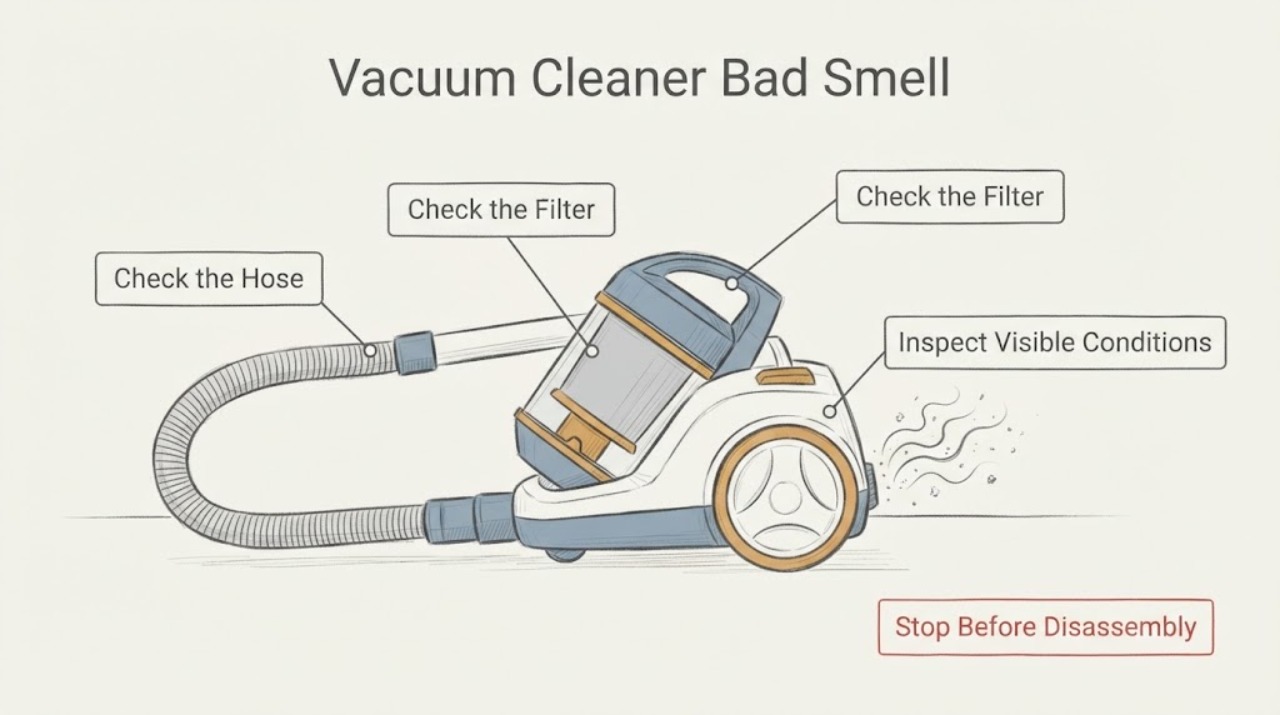
Work through in order
Diagnostic checks
Use only checks that match the exact appliance or system and its official guide.
-
Check 1
Switch off and unplug the vacuum, then identify whether the smell is damp/musty, dusty, hot plastic, or electrical burning.
Expected result: The smell is damp/musty, a burning odor, smoke, or the machine has become unusually hot.
Next step: Do not restart for a burning smell or smoke; let the machine cool only from a safe unplugged state.
Why this matters
Why: Dyson links damp/musty odor to moisture mixed with dust; burning smell or overheating is a stop-use condition.
-
Check 2
Empty the bin and inspect the cyclone, inlet, hose, wand, and cleaner head for hair, dust, or a blockage using ordinary access.
Expected result: A blockage or wet debris is present, or the airflow path is clear.
Next step: Clear only removable debris and keep wet components out of the machine until completely dry.
Why this matters
Why: Moist dust can create odor and a blockage can overload airflow and motor cooling.
-
Check 3
Check the filter according to the exact model guide; if washable, clean it as directed and refit only when fully dry before a supervised test.
Expected result: The filter is clogged or incorrectly fitted, or odor persists with a clean dry filter.
Next step: Stop using it and arrange service for persistent odor, heat, or electrical symptoms.
Why this matters
Why: A restricted or wet filter can contribute to overheating and odor; persistence after airflow checks points to motor or electrical service.
Use your observations
Decision map
Find the observation that best matches what you see, then follow the next safe action.
-
PATH 01Next step
What you see
The smell is damp/musty and wet dust is found in the cyclone or bin.
Do this next
Clean the bin/cyclone per the model guide and allow all parts to dry fully.
Why this path and its safety boundary
Why it matters: Moisture mixed with dust is the likely source.
-
PATH 02Next step
What you see
The smell is electrical/burning, smoke appears, or the body becomes very hot.
Do this next
Keep unplugged and arrange qualified vacuum service.
Why this path and its safety boundary
Why it matters: The motor or electrical system may be overheating and continued operation is unsafe.
Helpful context
Understand the symptom
This guide focuses on vacuum cleaner bad smell and uses each observation to select the next safe check.
When checks do not resolve it
Need a professional?
Arrange qualified service when external checks do not restore operation or when there is damaged wiring, smoke, burning smell, sparking, gas odor, overheating, or repeated breaker trips.
Common questions
FAQ
Can a damp smell come from pet hair?
Dyson says slightly damp pet hair can combine with dust in the cyclone and create a damp or musty smell.
Should I run a vacuum with a wet filter?
No. Dyson requires washable filters to be completely dry before refitting.
When is smell an emergency stop?
Electrical burning, smoke, unusual heat, or repeated cutout means unplug and seek service.
Read the exact guide
Official sources
- Support | TroubleshootingDyson · vacuum cleaner burning smell and overheating
- Support | TroubleshootingDyson · vacuum cleaner bad smell
Community feedback
Share a repair observation
Share a plain-text repair observation. Accepted observations are published automatically; this page may take a moment to update.