
Brand-independent appliance guidance
General Vacuum Cleaner Repair Guides
Brand-independent troubleshooting and repair guidance for common vacuum cleaner problems and maintenance questions.
General vacuum cleaner guides
Use these guides when the problem is not limited to a specific manufacturer.
-
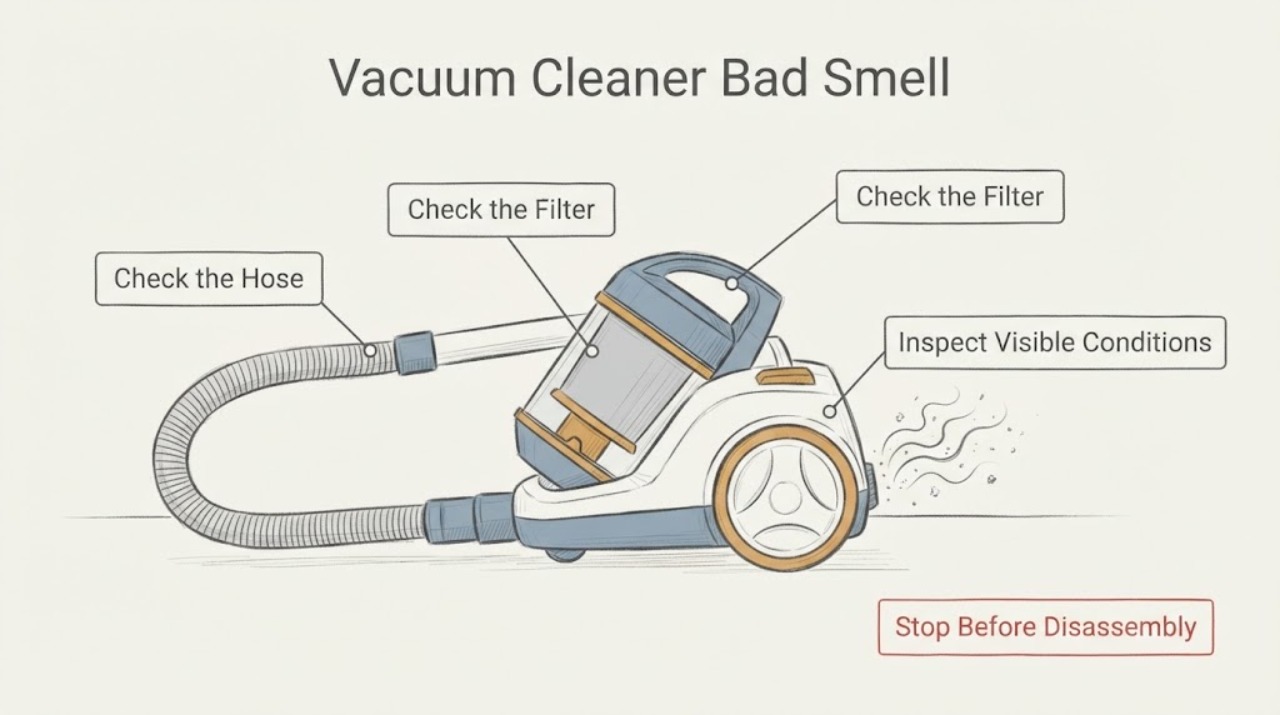
Vacuum Cleaner Bad Smell
Unplug the vacuum and classify the smell before any cleaning. Damp odor can come from moisture mixed with dust, while electrical burning, smoke, or unusual heat means stop using it; clear only ordinary-access blockages and refit a completely dry filter.
-
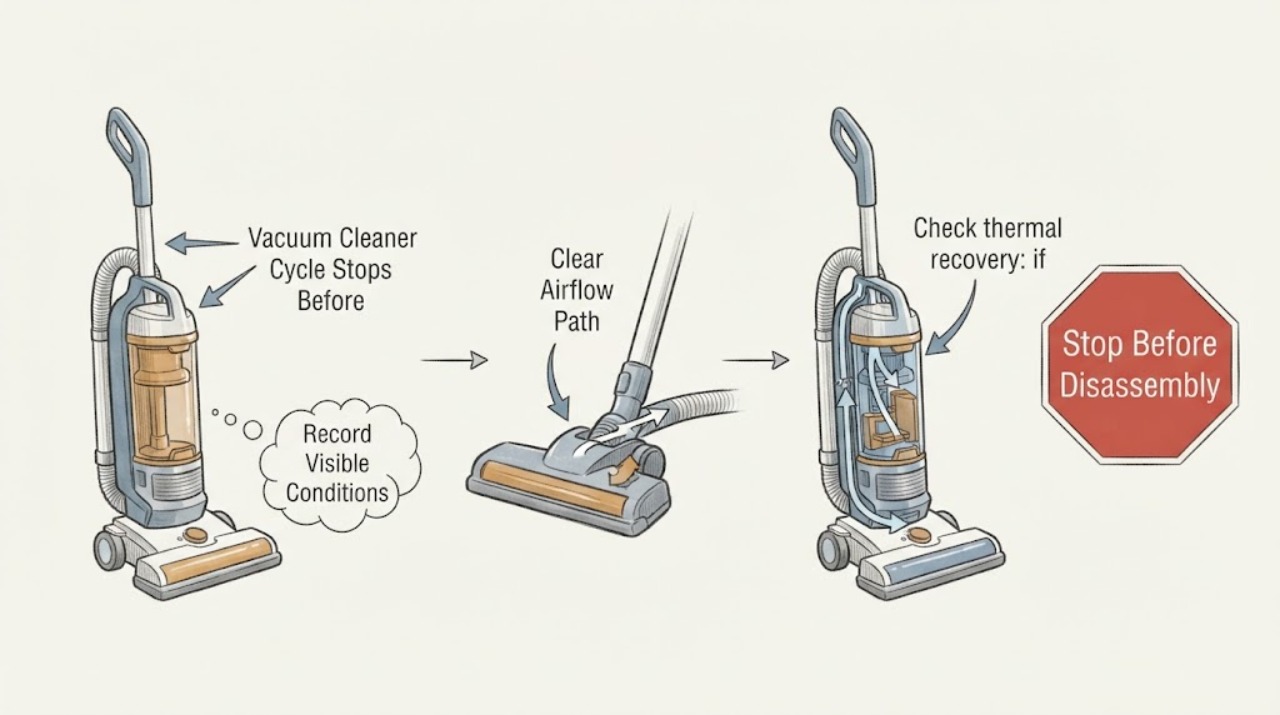
Vacuum Cleaner Cycle Stops Before Completion: Find the Cutout Trigger
A vacuum cleaner that stops before its cleaning cycle finishes is commonly separated by timing: an immediate stop suggests a blockage, brush obstruction, battery or control issue, while a stop after warming points toward thermal protection. Empty the bin, clear accessible airflow and brush obstructions with power isolated, clean the model-approved filter, and retest only after cooling.
-
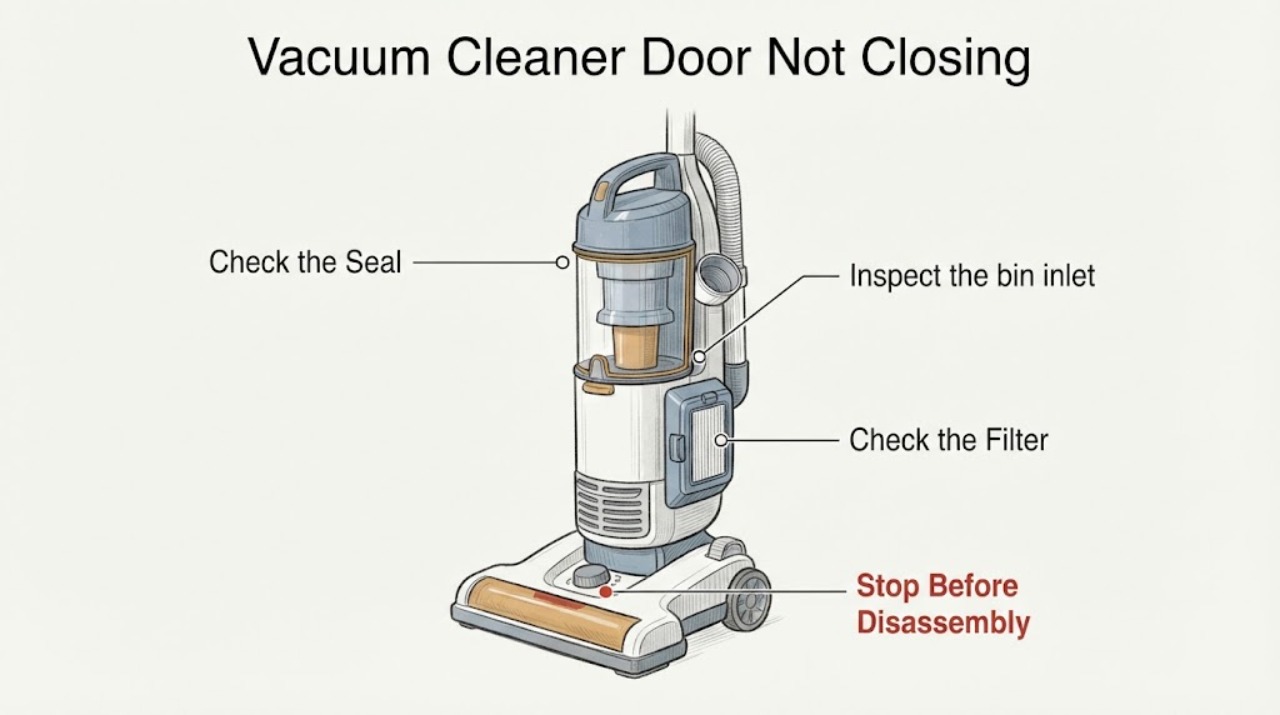
Vacuum Cleaner Door Not Closing
A vacuum cleaner door that will not close usually needs the bin, inlet flap, seal, and latch inspected in that order. Empty the bin, clear lint from the hinge or inlet, and check that the bin is fully seated. Do not force the door or operate the vacuum with an open dust path.
-
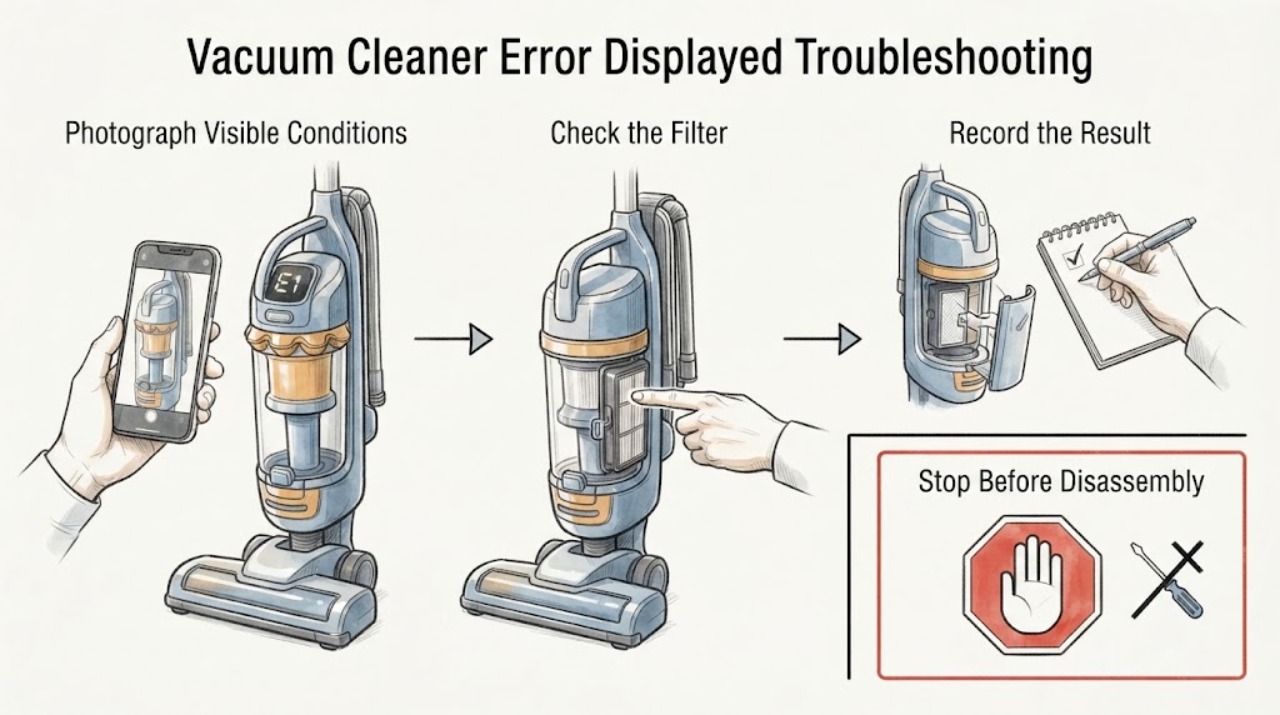
Vacuum Cleaner Error Displayed Troubleshooting Guide
When a vacuum cleaner displays an error, record the exact symbol or light pattern before resetting anything. With the vacuum off and off the charger, check only the accessible wand, head, bin, and filter path using the exact model guide. If the same error returns after the documented correction, or the code cannot be identified, stop repeated testing and contact Dyson or a qualified technician.
-
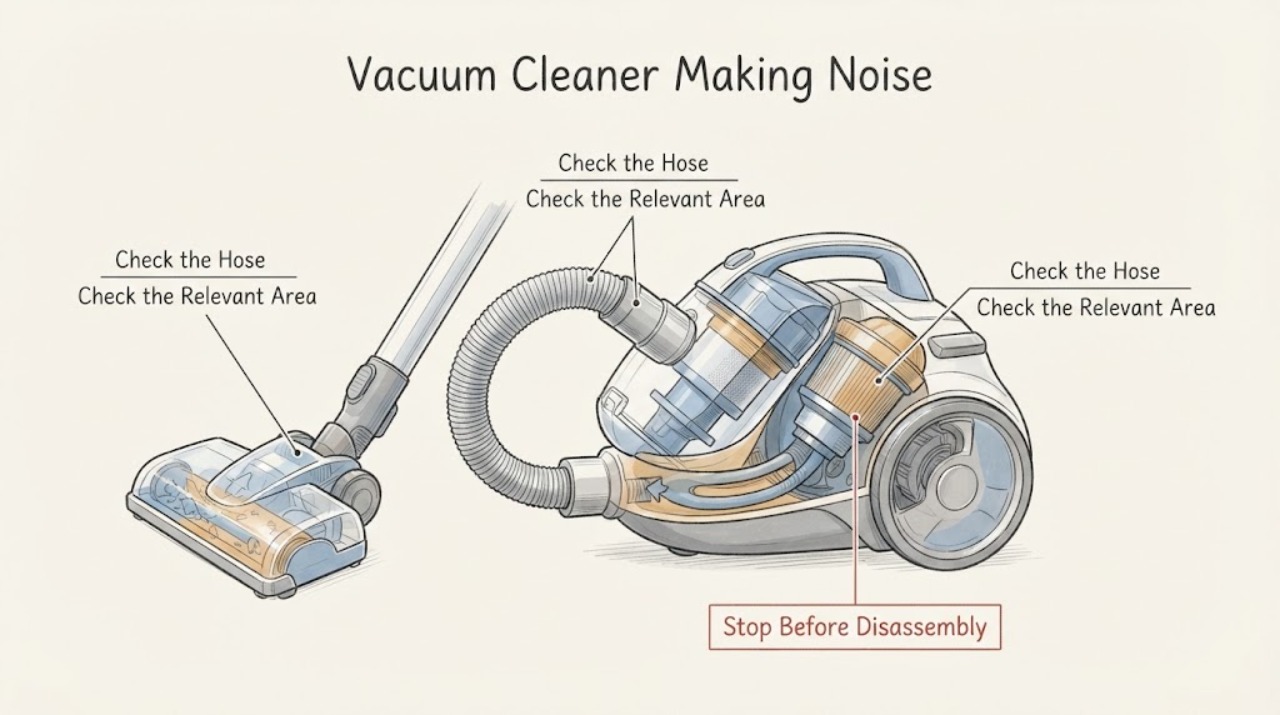
Vacuum Cleaner Making Noise: Find Blockages Before Service
A new rattling, whistling, or grinding sound from a vacuum often follows an airflow restriction, a blocked cleaner head, or a loose part. Switch it off and unplug it before removing hair or checking the head, hose, wand, bin, and filters. Compare suction with and without the floor tool, and stop if the motor pulses, the machine becomes hot, smells burnt, or the noise remains after the air path is clear. Do not run a partially dismantled vacuum.
-
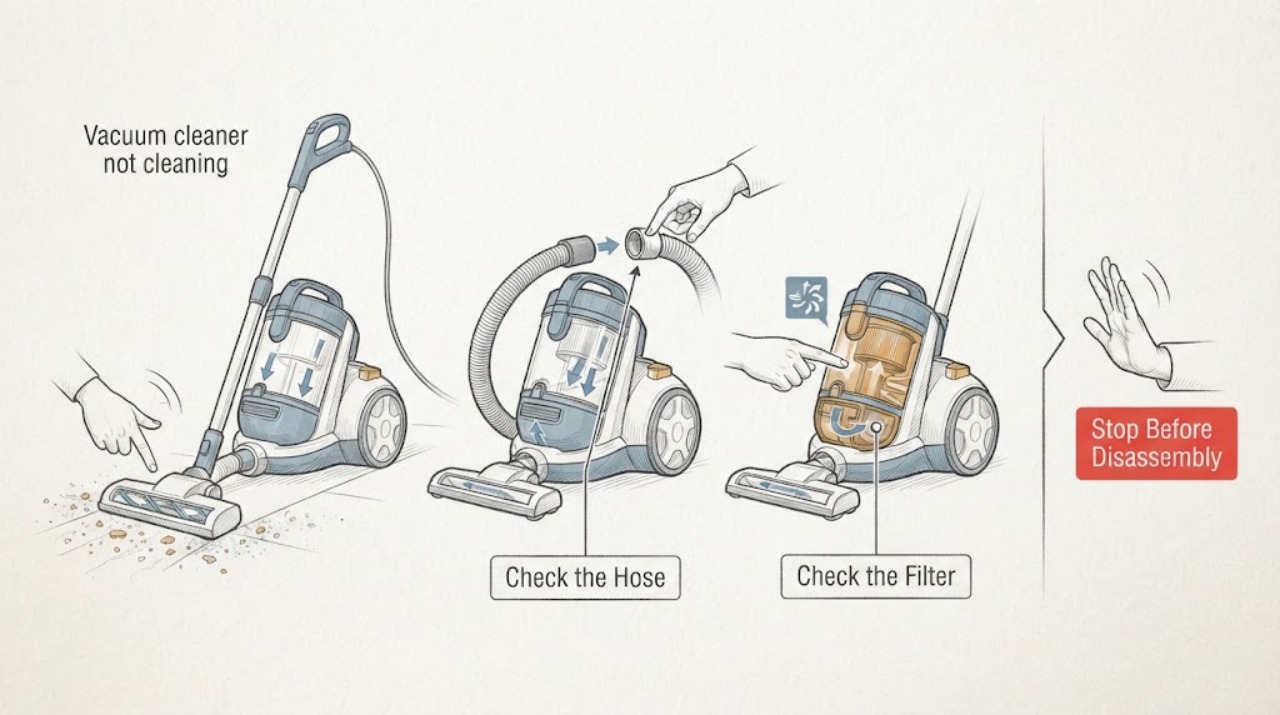
Vacuum cleaner not cleaning
A vacuum cleaner that is not cleaning usually has a full dust cup, blocked hose/nozzle, dirty filter, jammed brushroll, wrong tool/mode, or loss of battery power. Turn it off and unplug or remove the battery before clearing accessible parts. If suction remains poor after filters are fully dry and paths are clear, arrange service.
-
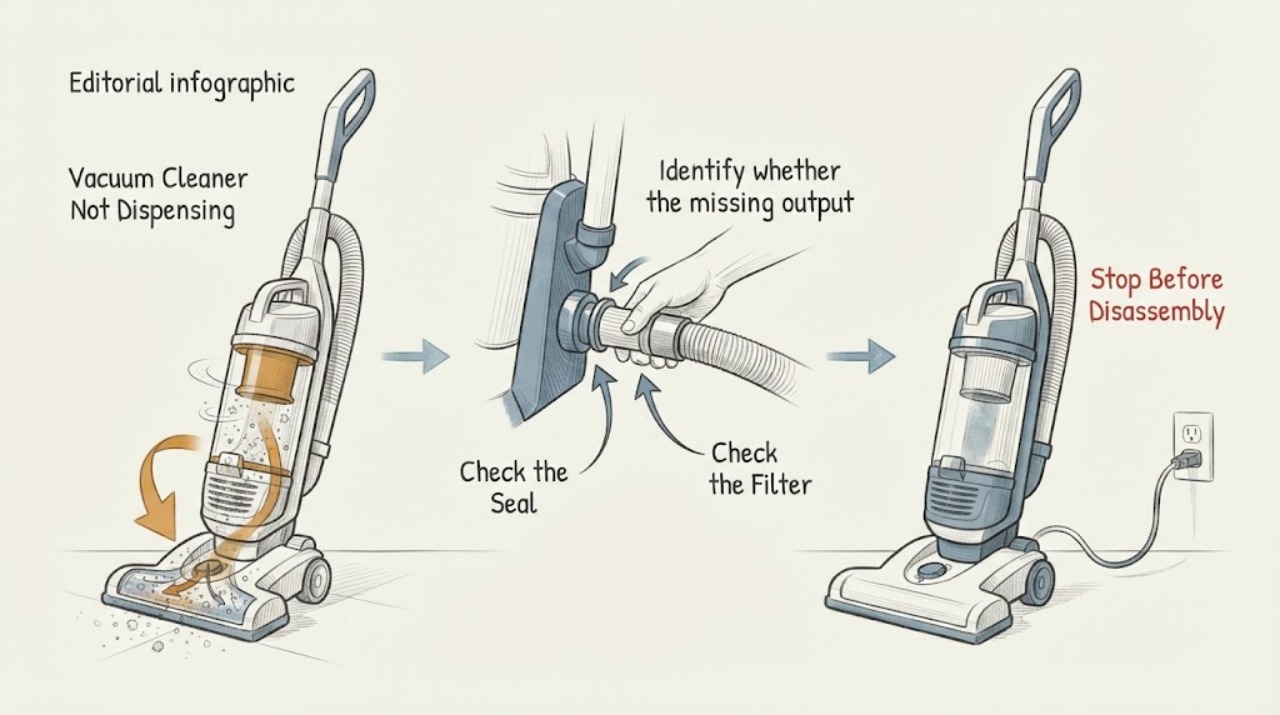
Vacuum Cleaner Not Dispensing
Clarify what the vacuum cleaner should dispense: dry suction, water, cleaning solution, or debris. For a wet-cleaning machine with no spray, unplug it, confirm the clean-water/solution tank is filled and seated, and inspect only the model-approved filter or spray path. If spray reaches the hose but not the floor head, or no spray returns after those checks, stop and arrange service; do not open a pressurized pump or use the cleaner on electrical wetness.
-
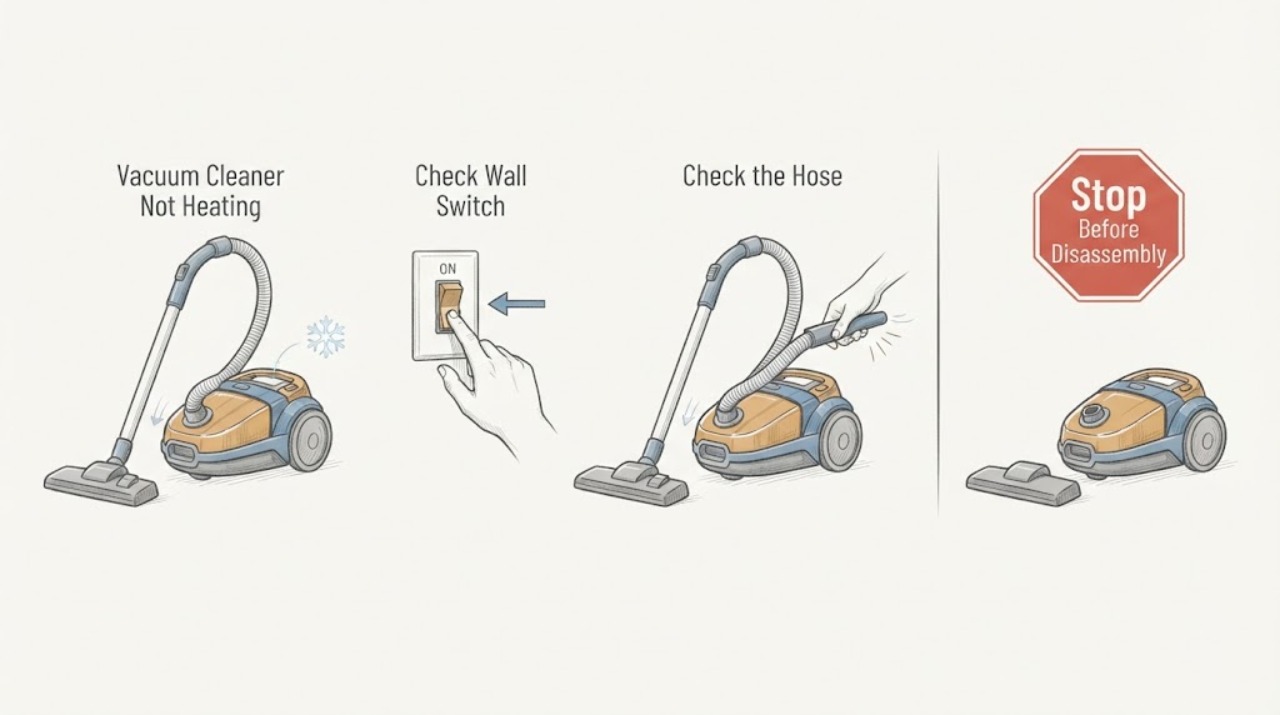
Vacuum Cleaner Not Heating
A vacuum cleaner that feels hot or blows unusually warm air is often protecting itself from restricted airflow. Turn it off and unplug it, let it cool, then clear the floor head, wand, hose, bin path, and user-washable filters according to the model manual. Reassemble only when filters are completely dry; recurring overheating, smoke, a damaged cord, or a hot motor needs service.
-
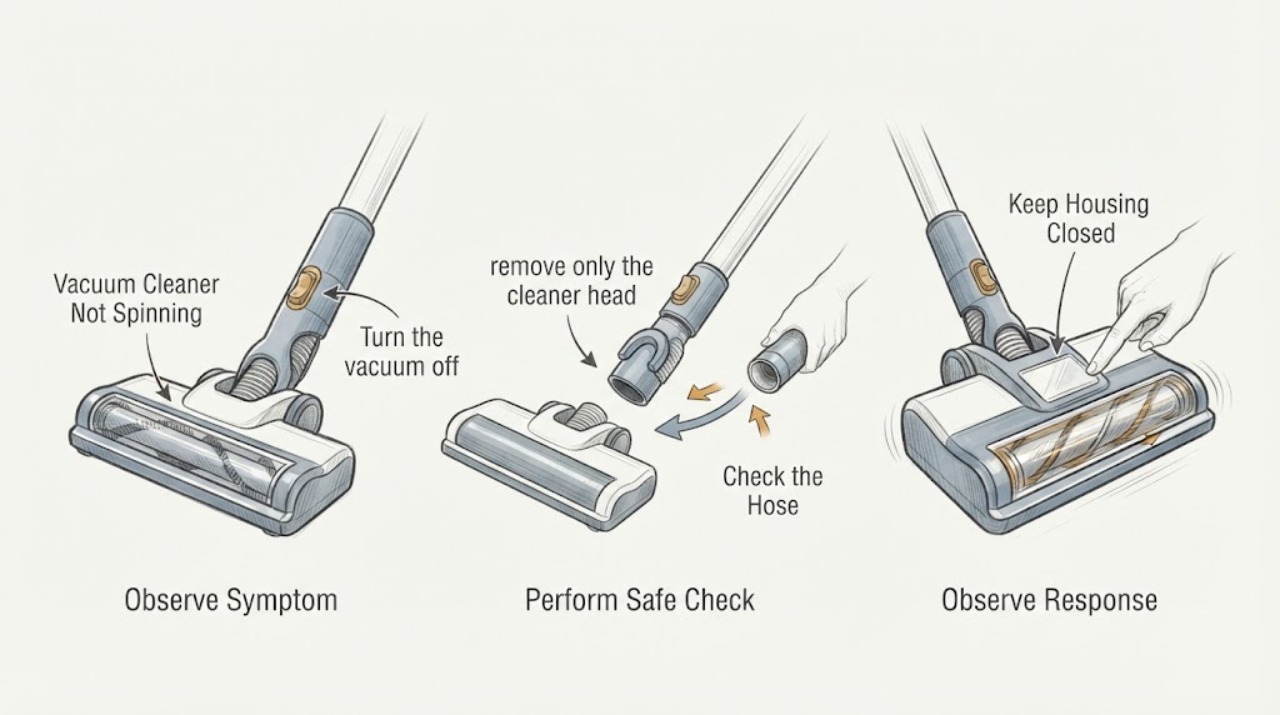
Vacuum Cleaner Not Spinning
If a vacuum cleaner’s brush or floor head is not spinning, first distinguish an upright-position control state from a jam. Turn it off and unplug it before removing hair or debris, then check the cleaner-head connection, brush control, and suction path. If the brush remains stopped, the belt/head is damaged, or the machine cuts out, keep it off and arrange model-specific service.
-
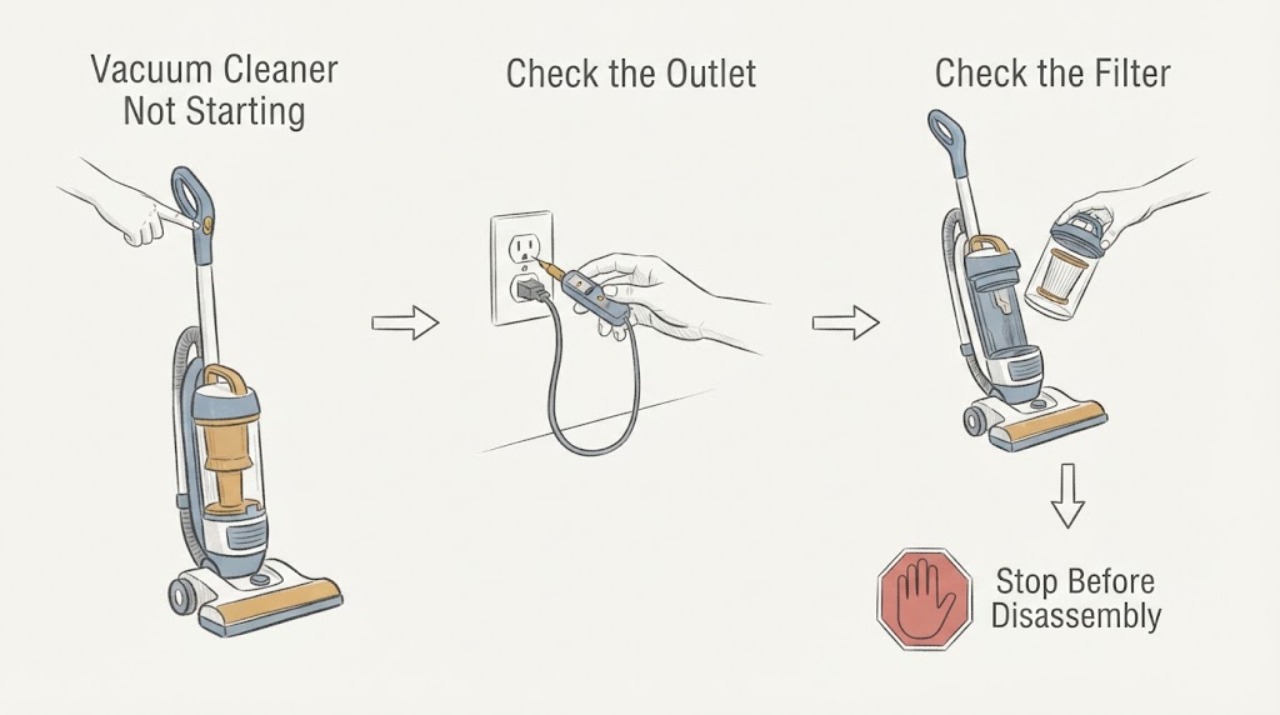
Vacuum Cleaner Not Starting
Check power or charging, then clear ordinary-access blockages and verify the filter is correctly fitted and fully dry. Retry once after cooling; persistent silence, cutout, damaged wiring, or a burning smell requires service.
-
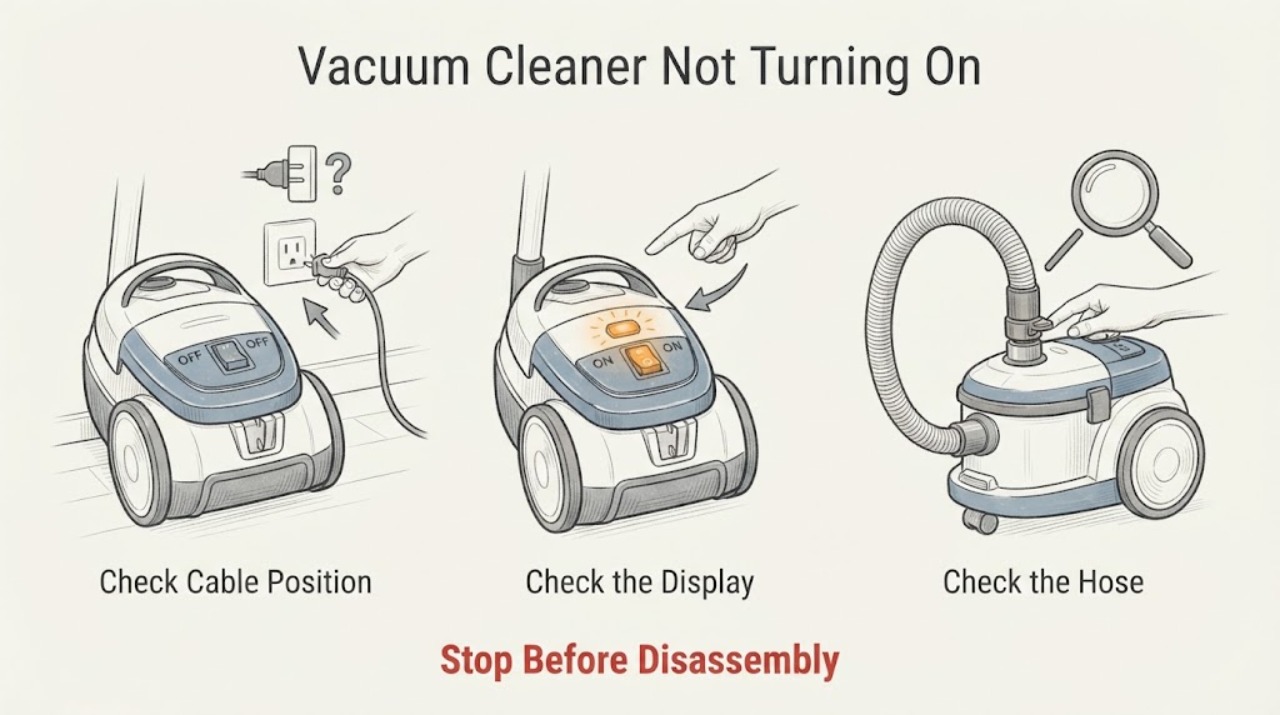
Vacuum Cleaner Not Turning On
For a vacuum cleaner that will not turn on, first separate a supply or battery problem from a blocked-airway safety cutout. Check the outlet, cord, fuse or battery charge from outside, inspect for a cracked battery casing, and clear only accessible blockages with power removed. A damaged cable or battery should not be used.
-
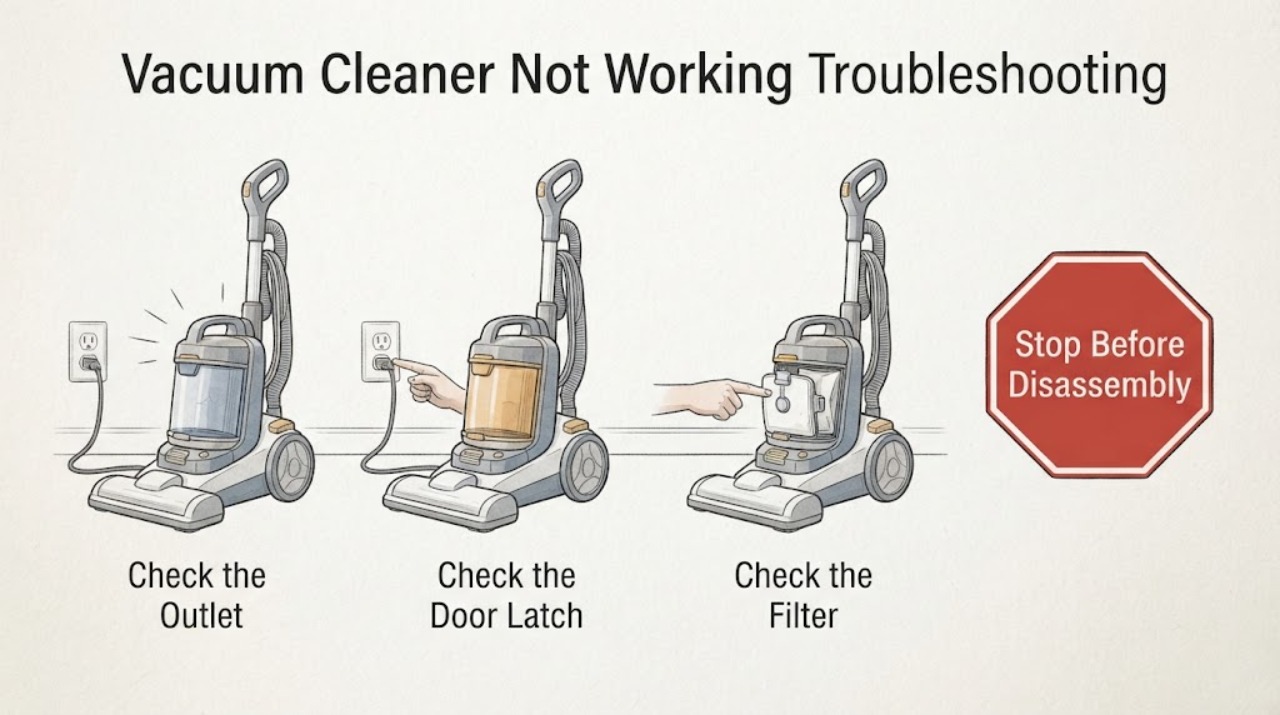
Vacuum Cleaner Not Working Troubleshooting Guide
A vacuum cleaner that will not work should be separated into no power or indication, a protection stop after brief running, and a control that lights but will not start. Check the exact model's power and charging path, then inspect only the accessible wand, head, bin, brush bar, and dry filter for blockage or seating. If it remains dead after those checks, repeatedly stops, or shows heat, odor, or cord or battery damage, stop using it and arrange Dyson or qualified service.
-
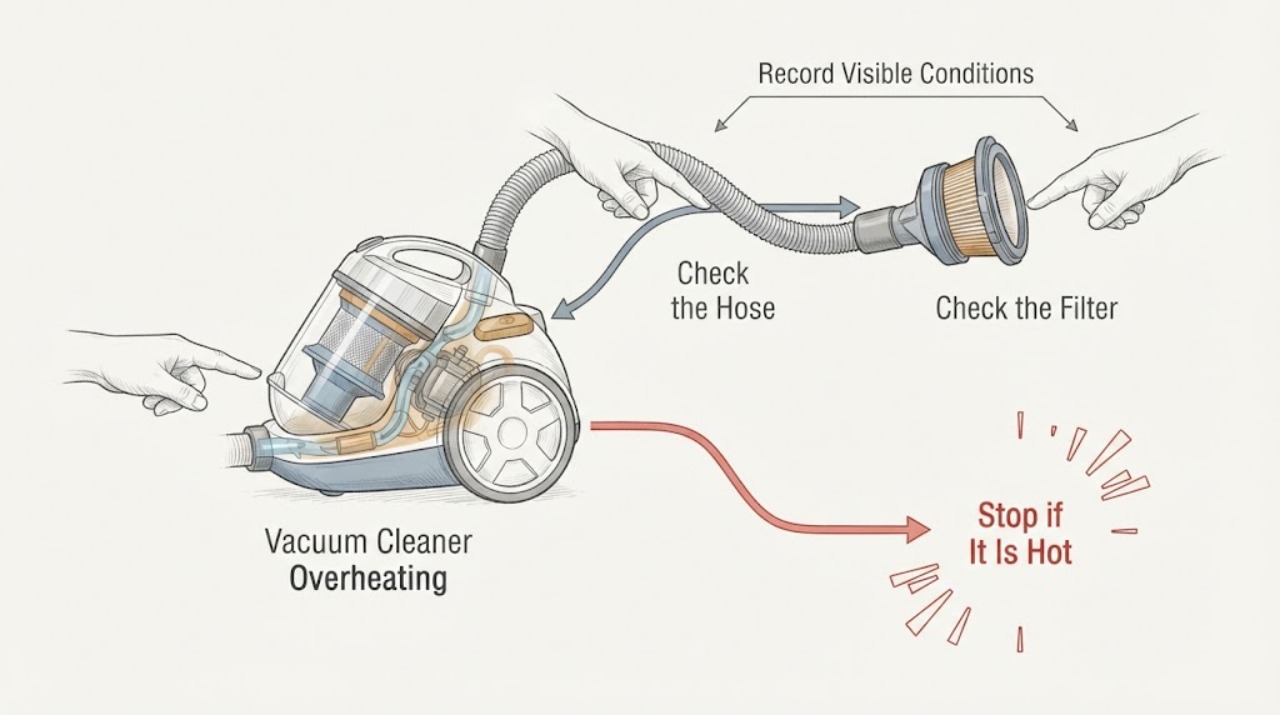
Vacuum Cleaner Overheating: Cool It and Check Airflow Safely
If a vacuum cleaner becomes hot, cuts out, or smells hot, switch it off and disconnect power. Let it cool before checking the bin, cleaner head, hose, wand, and owner-washable filters for blockage or a wet or poorly seated filter. A thermal cutout often protects a vacuum when airflow is restricted, but continued overheating after those checks can indicate an internal fault. Do not run it while partially dismantled or keep restarting it to force a cleaning session.
-
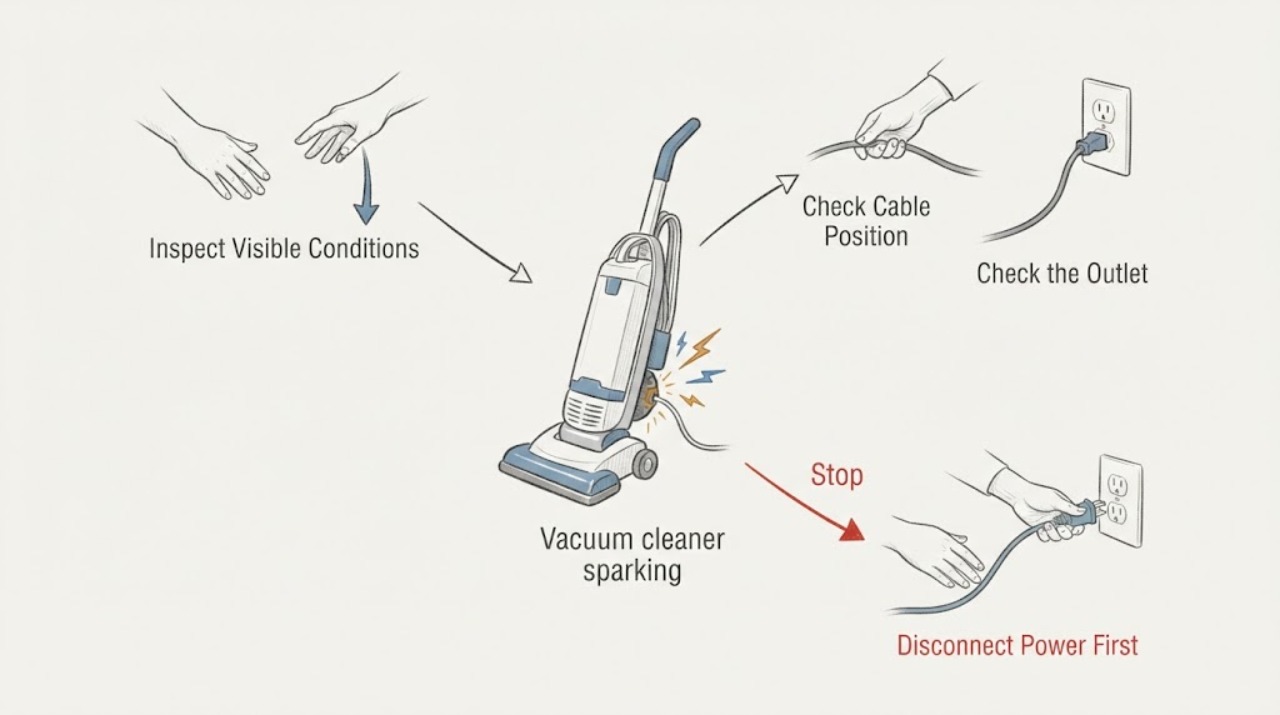
Vacuum cleaner sparking
Sparks from a vacuum cleaner are an immediate stop-use condition. Turn it off, unplug or remove the battery only if safe, and keep it away from combustible material. Do not retry it to locate the source. After it is cool and isolated, record whether sparks came from the plug, cord, motor area, brushroll, or battery and arrange qualified service or manufacturer support.
-
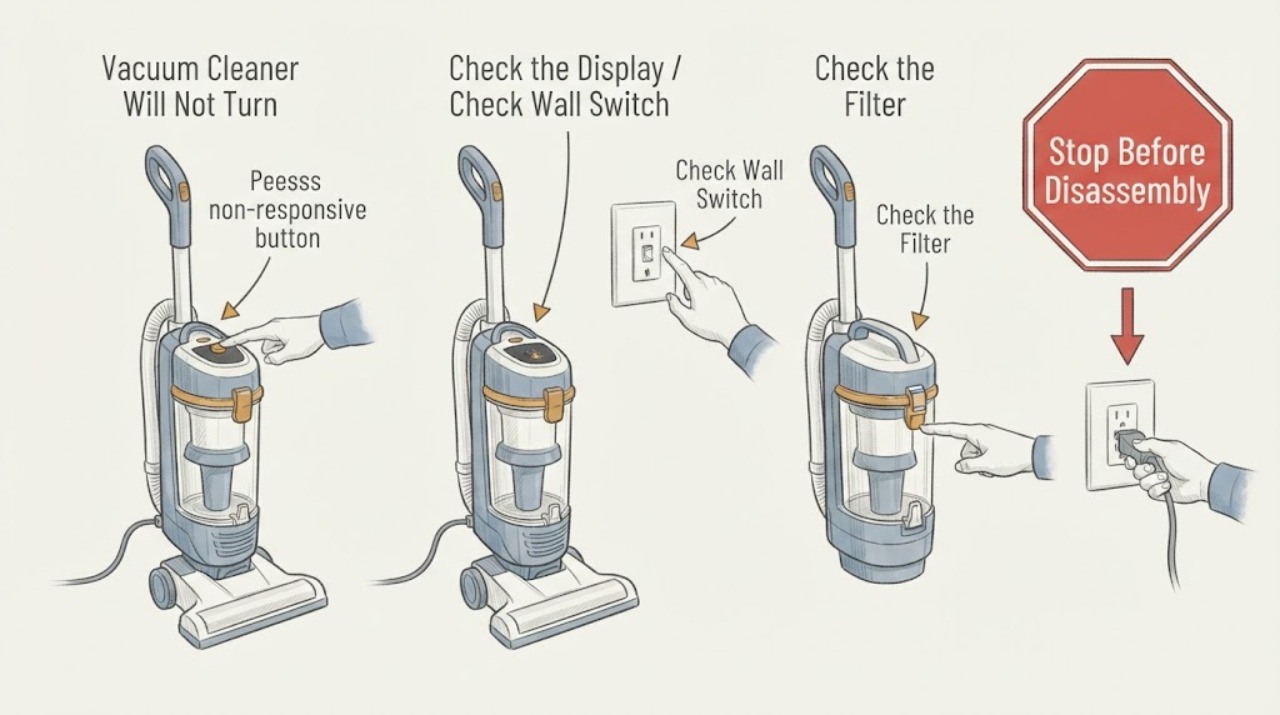
Vacuum Cleaner Will Not Turn Off: Isolate It Safely
If a vacuum cleaner continues running after its control is released, isolate it first using the plug, battery removal, or the manufacturer’s safe stop method. Check only the external switch/control and accessible brush or airflow condition; a persistent run-on points to a stuck control, relay, or electronic fault that needs service.