
On this page
Start here
Quick answer
If a vacuum cleaner becomes hot, cuts out, or smells hot, switch it off and disconnect power. Let it cool before checking the bin, cleaner head, hose, wand, and owner-washable filters for blockage or a wet or poorly seated filter. A thermal cutout often protects a vacuum when airflow is restricted, but continued overheating after those checks can indicate an internal fault. Do not run it while partially dismantled or keep restarting it to force a cleaning session.
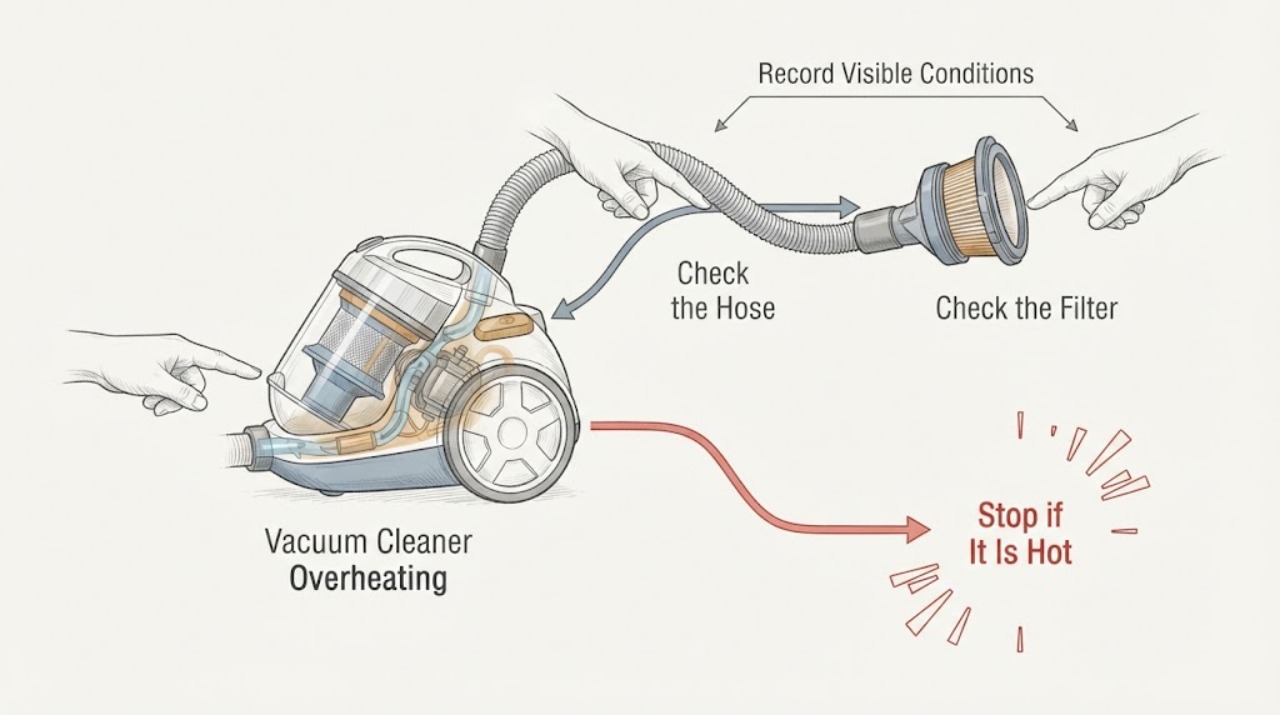
Work through in order
Diagnostic checks
Use only checks that match the exact appliance or system and its official guide.
-
Check 1
Turn the vacuum off and unplug it or remove its battery as soon as it becomes unusually hot, cuts out, or smells hot. Record whether the event followed weak suction, pulsing, or a blocked head.
Expected result: The machine cools normally, remains hot, or has smoke, a burning smell, or visible damage.
Next step: Leave a damaged or smoking vacuum disconnected and arrange qualified service without another test.
Why this matters
Why: A normal thermal cooldown supports protective shutdown; smoke, burning odor, or damage is an immediate stop-use condition.
-
Check 2
After it is cool, empty the bin and inspect the cleaner head, wand, hose, and inlet openings for hair, threads, or lodged debris. Keep the power disconnected during the inspection.
Expected result: A blockage is visible, or the accessible path is clear.
Next step: Clear only owner-removable obstructions, reassemble, and continue to the filter check.
Why this matters
Why: Dyson identifies blockage as a common reason for thermal cutout; a clear visible path means filters and deeper passages still need consideration.
-
Check 3
Check each filter's condition and seating using the exact model instructions. Wash only a filter designated washable and allow it to dry completely before refitting.
Expected result: A filter is clogged, wet, loose, or clean and correctly seated.
Next step: Correct the filter condition as documented. Do not operate with a wet filter or missing filter.
Why this matters
Why: A clogged, wet, or unsealed filter can restrict airflow or allow dust past the filter and may contribute to overheating.
-
Check 4
Once fully cool and assembled, perform one short supervised test only if the model guide allows it. Stop immediately if the motor pulses, heat returns quickly, suction is weak, or the cutout repeats.
Expected result: The vacuum runs normally, or it overheats or cuts out again.
Next step: Keep it disconnected and arrange qualified service for recurring overheating or cutout.
Why this matters
Why: A repeat thermal event after airflow and filter checks indicates the underlying problem remains and should not be tested by repeated cycling.
Use your observations
Decision map
Find the observation that best matches what you see, then follow the next safe action.
-
PATH 01Next step
What you see
The vacuum cools and airflow returns after clearing a visible blockage
Do this next
Use it briefly and maintain the filter and head according to the model guide
Why this path and its safety boundary
Why it matters: Restricted airflow was a plausible trigger for the protective shutdown
-
PATH 02Next step
What you see
A filter is wet, clogged, or not sealed
Do this next
Dry, clean, or reseat it only as the exact model instructions allow
Why this path and its safety boundary
Why it matters: The filter condition can restrict or disrupt airflow
-
PATH 03Next step
What you see
The vacuum overheats or cuts out again after it is clear and assembled
Do this next
Stop use and arrange service rather than repeating the test
Why this path and its safety boundary
Why it matters: The protective system is still detecting an unresolved condition
-
PATH 04Next step
What you see
Smoke, burning odor, melted plastic, or damaged wiring is present
Do this next
Disconnect power if safe and leave the vacuum out of service for qualified inspection
Why this path and its safety boundary
Why it matters: This is a fire or electrical hazard beyond routine filter maintenance
Helpful context
Understand the symptom
Heat is a safety symptom, not a part diagnosis. A blocked air path or filter can make the motor work harder and can trigger thermal protection, while a hot smell, damage, or recurring cutout after cleaning needs service.
Cooling time and filter procedure depend on the model. Follow the owner guide for washable parts and keep all hair, loose clothing, and tools clear when a brief retest is allowed.
When checks do not resolve it
Need a professional?
Leave the vacuum unplugged and seek qualified service for repeat overheating, repeated cutout after safe airflow checks, smoke, burning odor, or electrical damage.
Common questions
FAQ
How long should I let a hot vacuum cool?
Follow the model guide; Dyson's opened troubleshooting flow directs at least two hours for a thermal cutout on the referenced machine.
Can I run it without the filter to test the motor?
No. Refit all required parts and filters before operation.
Why does weak suction matter?
Weak suction can indicate blocked airflow, which can make the motor work harder and trigger thermal protection.
When should I stop after cleaning?
Stop when heat or cutout returns, or whenever there is smoke, burning odor, or visible damage.
Read the exact guide
Official sources
- Support | Troubleshooting | DysonDyson · Dyson vacuum overheating, thermal cutout, blockage, and filter troubleshooting
Community feedback
Share a repair observation
Share a plain-text repair observation. Accepted observations are published automatically; this page may take a moment to update.