
On this page
Start here
Quick answer
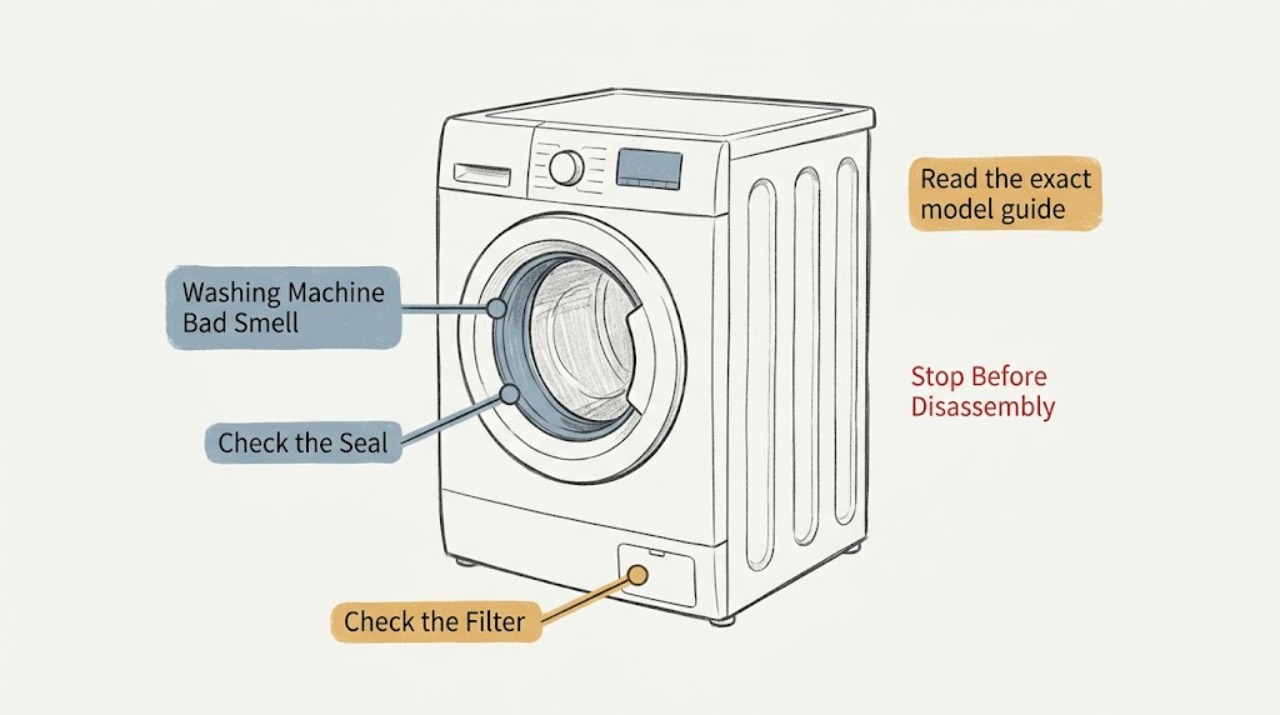
Identify the smell before cleaning. A musty or mildew odor commonly follows trapped moisture, wet laundry left inside, or detergent residue; a sewage-like odor points toward drain-hose, trap, or plumbing conditions. A burning plastic or electrical odor, smoke, sparks, a hot plug, repeated breaker operation, or an odor that becomes stronger while the machine runs is a stop condition, not a cleaning problem. Keep the washer off, avoid mixing cleaning products, and use only the cleaning and filter procedure specified for the exact model.
Work through in order
Diagnostic checks
Use only checks that match the exact appliance or system and its official guide.
-
Check 1
With the washer stopped, identify whether the odor is musty or mildew-like, sour or sewage-like, detergent or chemical-like, or burning and electrical. Note whether it comes from the gasket or tub, dispenser, drain area, plug, or laundry, and whether it appears only during draining or another programme stage.
Expected result: The odor is limited to damp interior areas, follows the drain path, is present at the electrical connection, or is hard to localize.
Next step: For smoke, sparks, burning odor, a hot connection, water near electrical equipment, or a repeat breaker event, stop immediately and keep the washer off. Otherwise continue with the matching low-risk branch.
Why this matters
Why: Moisture and residue suggest a cleaning and drying path; sewage-like odor suggests drain or plumbing conditions; burning or electrical odor suggests a safety fault. The stage and location are more useful than the odor label alone.
-
Check 2
Remove wet laundry promptly when safe, leave the door or lid open between loads, and inspect the accessible gasket, door, tub rim, and dispenser for trapped fabric, lint, standing water, soap residue, or visible surface growth. Use a soft cloth and only a cleaner permitted by the model guide.
Expected result: Moisture, trapped items, residue, or visible surface growth is present, or these areas are clean and dry while the odor remains.
Next step: Dry the accessible surfaces and improve ventilation. If growth is extensive, returns quickly, involves porous material, or follows a leak, stop and obtain appropriate specialist help rather than scraping inside the machine.
Why this matters
Why: Trapped moisture and residue can support a musty odor. A clean, dry accessible area makes a hidden drain, filter, plumbing, or internal issue more likely; it does not justify dismantling the machine.
-
Check 3
Read the exact model guide for detergent type, dose, and any Clean Washer or Tub Clean cycle. If the guide permits a cleaning cycle, run only that procedure with the specified single cleaner and an empty drum; do not mix bleach, vinegar, detergent, or other products.
Expected result: The model has a named cleaning cycle, the guide specifies a manual method, or no suitable method is available or the odor returns after the permitted cycle.
Next step: Rinse or ventilate only as the guide directs. Do not improvise a chemical combination or run repeated hot cycles to mask the smell. Persistent odor needs service or plumbing assessment.
Why this matters
Why: Correct detergent and a model-approved cleaning cycle can address residue and moisture-related odor. A returning odor after correct cleaning can indicate a blocked area, drain issue, leak, or internal contamination rather than a need for stronger chemicals.
-
Check 4
If the smell is sewage-like or strongest during draining, inspect only the visible drain-hose routing and connection without pulling the machine or opening its cabinet. If the model guide describes an accessible pump filter, follow that guide only after power is disconnected and water is cool; prepare for water and stop if the procedure is unclear.
Expected result: The hose is kinked or poorly positioned, water backs up, the filter is model-accessible and contaminated, or the visible drain path appears normal.
Next step: Correct only a safe external routing issue allowed by the guide. For sewage odor that persists, a backup, leak, inaccessible filter, or standing water, stop use and call a qualified plumber or appliance technician.
Why this matters
Why: A drain hose, trap, filter, or household plumbing condition can return odor to the washer. A normal visible path does not clear a concealed trap, vent, drain, pump, or internal hose.
-
Check 5
Inspect the accessible plug, cord, and nearby floor from a dry position without touching a hot, wet, loose, scorched, or melted connection. Note whether the odor appears only when the washer runs, whether the cabinet is unusually hot, or whether a breaker or protective device has operated.
Expected result: There is burning odor, smoke, a spark, a hot or damaged connection, water near electrical equipment, repeated breaker operation, or no electrical symptom.
Next step: Keep the washer off. If safe and dry, isolate power without touching the hazard; otherwise leave it alone and obtain qualified electrical and appliance service. Do not run another cycle to confirm the smell.
Why this matters
Why: These signs can indicate electrical or mechanical overheating and are not resolved by cleaning. No visible damage does not rule out an internal heater, motor, pump, control, or wiring fault.
Use your observations
Decision map
Find the observation that best matches what you see, then follow the next safe action.
-
PATH 01Next step
What you see
The smell is musty or mildew-like and is strongest around the door seal, tub, dispenser, or wet laundry, with no electrical or water hazard.
Do this next
Remove wet laundry promptly, ventilate with the door or lid open, wipe accessible moisture and residue, and use only the model-approved cleaning cycle or method. Do not mix cleaners.
-
PATH 02Next step
What you see
The odor is sour or sewage-like and is strongest at the drain connection or during draining.
Do this next
Check only visible hose routing and the exact manual's accessible filter procedure. If the odor continues, water backs up, or the source is inside the wall or drain, stop use and arrange plumbing or appliance service.
-
PATH 03Next step
What you see
The odor is detergent or chemical-like after cleaning, or more than one cleaner may have been used.
Do this next
Stop adding products, ventilate the area, and follow the model guide for a safe rinse or recovery procedure. Do not mix cleaners or run a cycle until the guide indicates it is safe.
-
PATH 04Next step
What you see
The odor is burning, plastic-like, or electrical, or the smell appears with heat, smoke, sparks, a hot plug, or a breaker event.
Do this next
Stop immediately and keep the washer off. From a dry safe position, isolate power only if there is no contact hazard; do not touch the appliance, reset protection repeatedly, or run another cycle. Obtain qualified electrical and appliance help.
-
PATH 05Next step
What you see
The odor remains after the exact model-approved cleaning and drying steps, or returns quickly with leaks, poor draining, or an error.
Do this next
Stop use and give a qualified technician the model, odor type, source location, cycle stage, cleaning products used, water observations, and any error or leak details.
Helpful context
Understand the symptom
Start with odor type and location
A smell from the door seal, tub, dispenser, or a load left wet usually has a different path from a sewage odor at the drain connection or a hot electrical odor at the plug. Front-load designs can retain moisture in the gasket, while both front-load and top-load machines can collect residue when detergent use and cleaning do not match the model instructions. Note whether the smell is present with the washer off, after a cycle, during draining, or only while the motor or heater runs.
Cleaning is model-dependent
Some machines have a Clean Washer, Tub Clean, or similar cycle; others require a manual procedure in the owner guide. Do not assume a cycle, chemical, temperature, or filter location from another brand. Use one product and one procedure that the exact manual permits, and never combine cleaners.
When odor signals a safety fault
A musty odor may improve with drying and residue control. A burning, solvent-like, or electrical odor can indicate an overheating part or damaged connection and should not be covered with fragrance or tested by another wash. Water near a plug, a hot connection, smoke, sparks, or repeated electrical interruption requires the washer to remain out of service.
Safety boundary
Stop conditions
- Stop immediately for smoke, fire, sparks, arcing, a burning or melting odor, a hot or damaged plug or outlet, repeated breaker operation, or a damaged cord.
- Stop for water near electrical equipment, uncontrolled leaking, standing water, a strong sewage backup, or a hot surface that is not expected for the selected programme.
- Do not mix bleach, vinegar, detergent, drain products, or other cleaners; do not use a stronger chemical because the odor persists.
- Do not open cabinet panels, reach into the pump or motor, pull the machine across a wet floor, or run another cycle to test a burning or electrical odor.
When checks do not resolve it
Need a professional?
Arrange appliance service when odor persists after the exact model-approved cleaning and drying procedure, returns quickly, or is paired with poor draining, a leak, heat, an error, or unusual operation. Arrange plumbing help for a sewage-like odor that follows the drain path or household plumbing.
Common questions
FAQ
Why does my washing machine smell like mildew?
Trapped moisture in a gasket or tub, wet laundry left inside, and detergent or fabric-softener residue are common paths. Ventilate the washer and use only the exact model's cleaning instructions; a returning odor needs service assessment.
Why does my washer smell like sewage?
A drain hose, trap, filter, or household plumbing condition can return a sewage-like odor. Check only visible routing and model-approved access points; if the smell persists or water backs up, call a qualified plumber or appliance technician.
Should I run a hot cycle to remove a bad smell?
Only use a cleaning cycle or temperature that the exact model guide permits, with one approved cleaner. Do not run another cycle for a burning or electrical odor, smoke, sparks, heat, water near electricity, or a breaker event.
Read the exact guide
Official sources
- Appliance Safety TipsElectrical Safety Foundation International · General safety reference for repeated breaker trips, damaged cords or plugs, and water near electrical equipment.
- How to Remove Smells in a Front Load WasherWhirlpool · Cross-brand reference for moisture, gasket, detergent residue, pump-filter, drain, and sewage-like odor branches; exact washer instructions take precedence.
- Front Load Washer - Odor in TubGE Appliances · Cross-brand reference for detergent residue, tub cleaning, accessible pump filters, gasket, and drain-hose odor paths; model manual controls the procedure.
- What are the basic mold cleanup steps?U.S. Environmental Protection Agency · General moisture-control and mold-cleanup boundaries for visible surface growth; appliance manuals and specialist assessment control washer procedures.
Community feedback
Share a repair observation
Share a plain-text repair observation. Accepted observations are published automatically; this page may take a moment to update.