
Brand-independent appliance guidance
General Washing Machine Repair Guides
Brand-independent troubleshooting and repair guidance for common washing machine problems and maintenance questions.
General washing machine guides
Use these guides when the problem is not limited to a specific manufacturer.
-
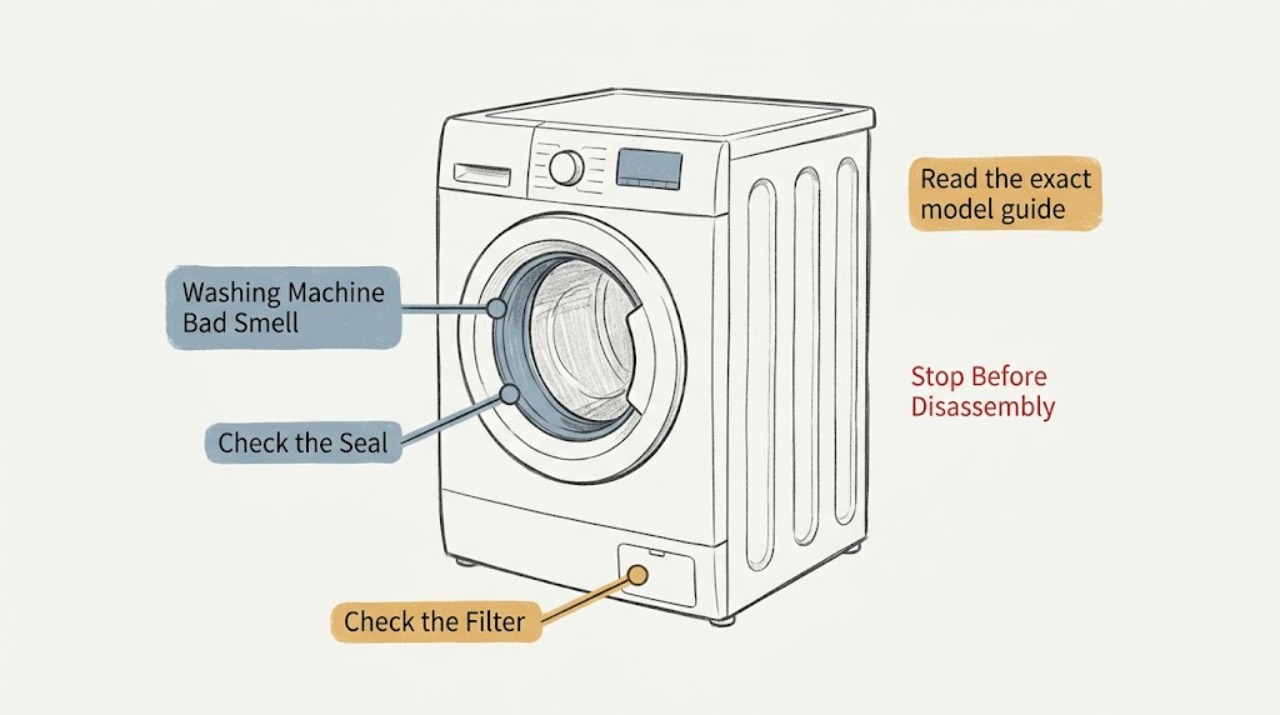
Washing Machine Bad Smell: Identify the Odor Safely
Identify the smell before cleaning. A musty or mildew odor commonly follows trapped moisture, wet laundry left inside, or detergent residue; a sewage-like odor points toward drain-hose, trap, or plumbing conditions.
-
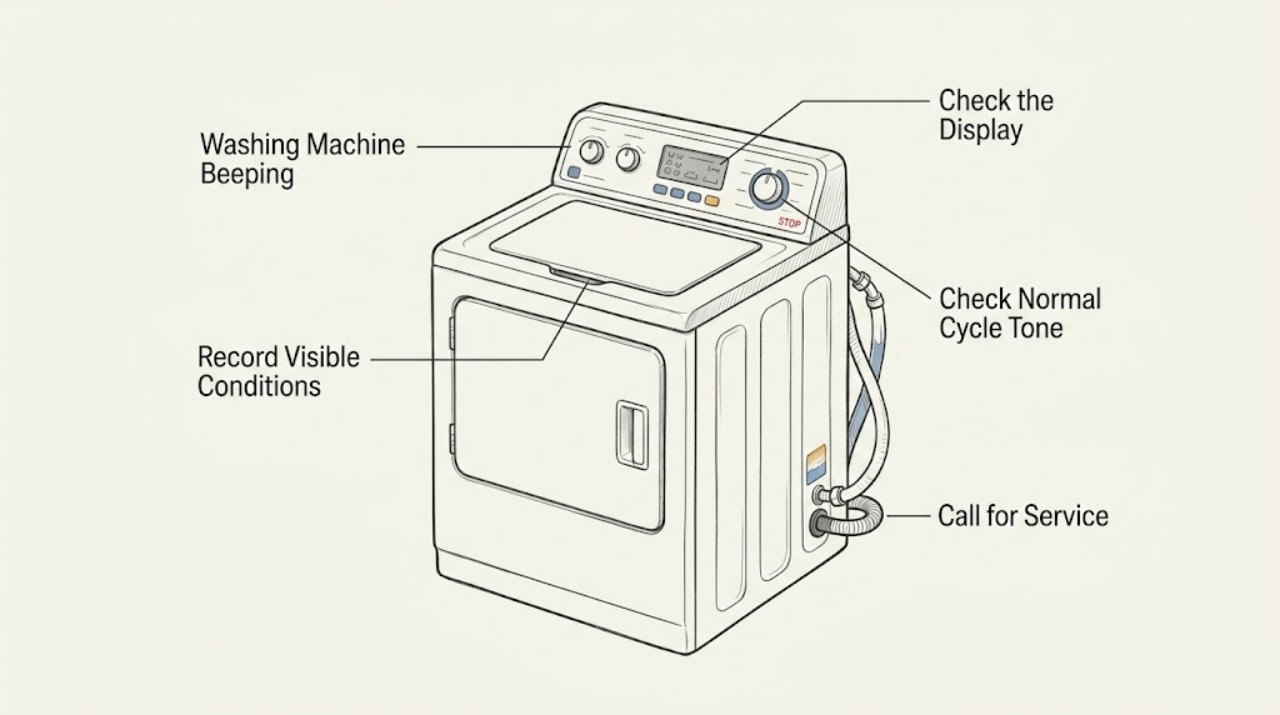
Washing Machine Beeping: Identify the Pattern Before You Reset It
A washing machine beep is not automatically a failure. First record the rhythm, display symbol or exact code, programme stage, and whether the sound occurs when a button is pressed, at cycle end, during filling, during draining, or while the machine is stopped.
-
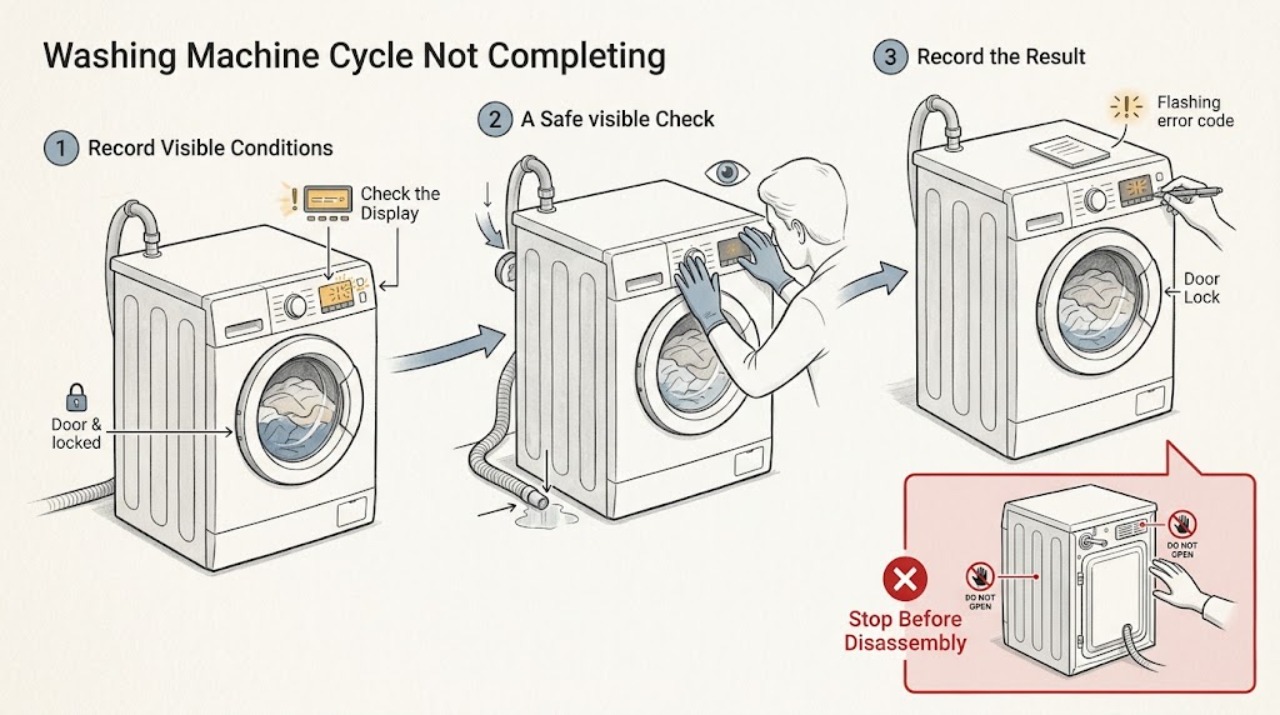
Washing Machine Cycle Not Completing: Find the Stopping Stage Safely
A washer that does not complete a cycle may be paused normally, waiting for water, unable to drain, balancing a load, blocked by a door or lid lock, slowed by excess suds, or reporting a model-specific fault. Record the exact stage where it stops, the display or light pattern, water level, and whether the drum moves.
-
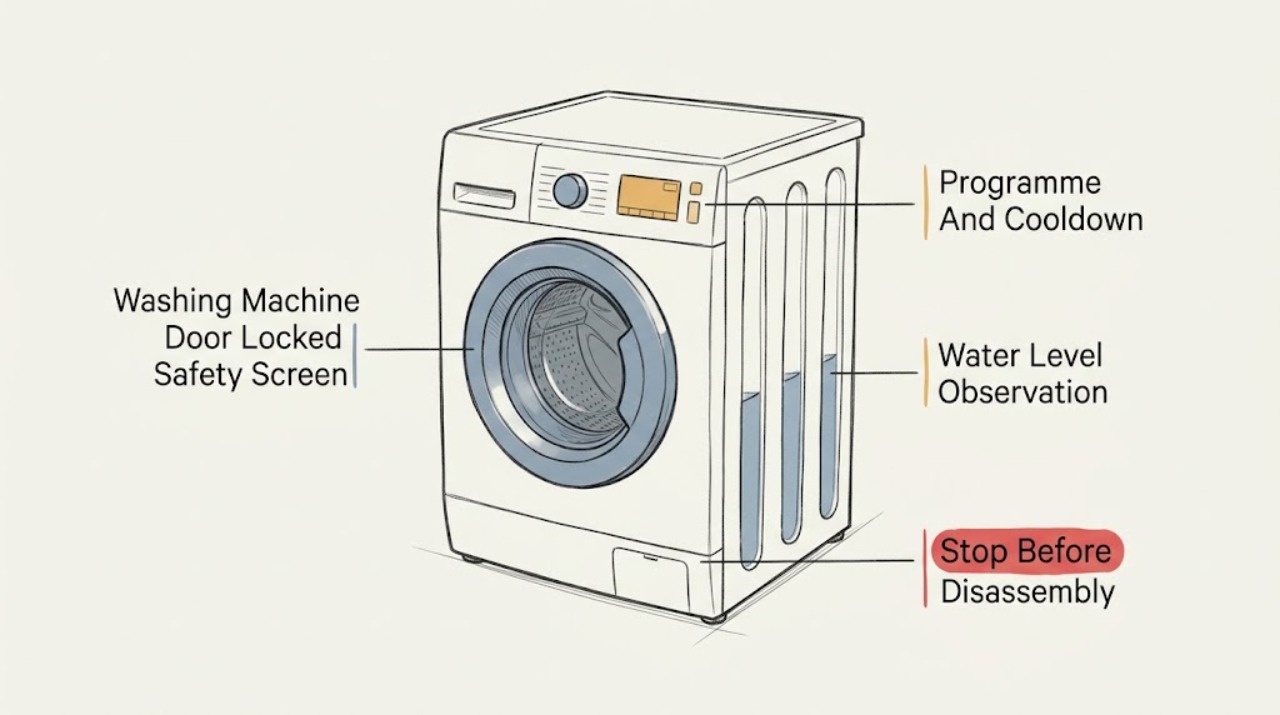
Washing Machine Door Locked
A washing-machine door normally stays locked while the drum is rotating, water remains inside, or the lock is cooling just after a programme ends. Wait for the exact model's normal release period, then check the display for a key or padlock and whether water is visible in the drum.
-
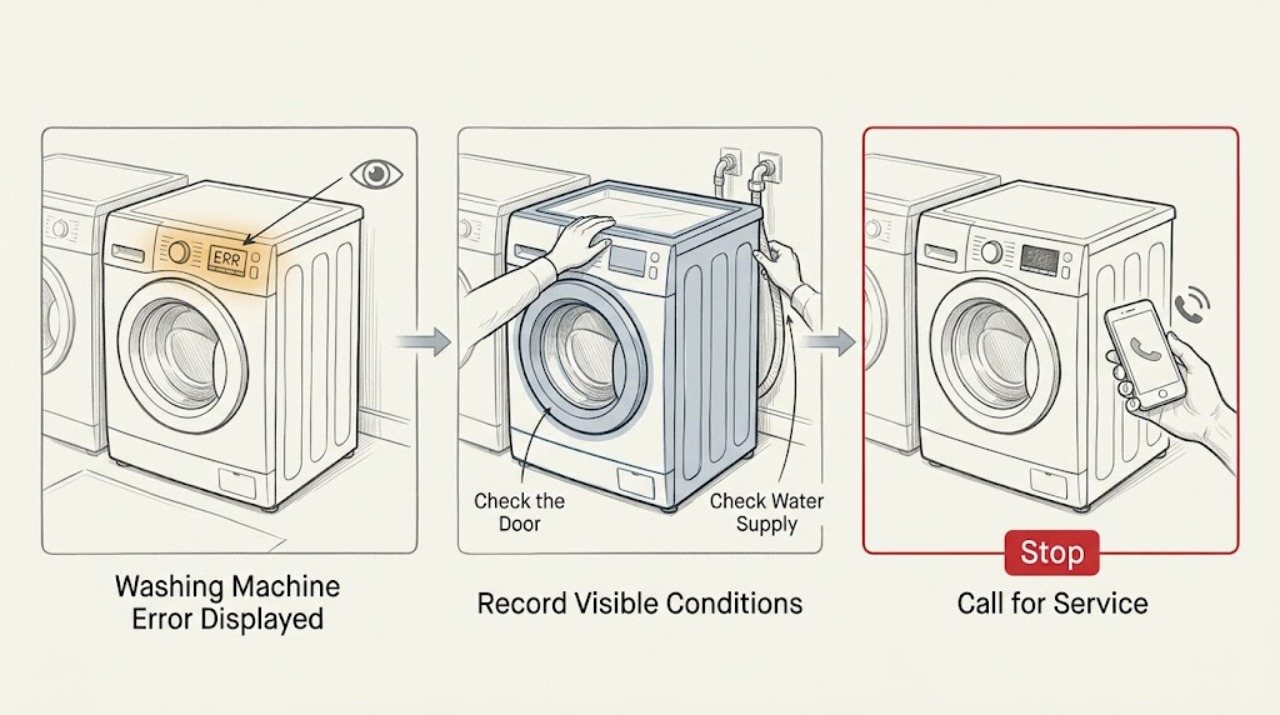
Washing Machine Error Displayed: Read the Code Before Resetting
When a washing machine displays an error, photograph or write down the complete code, flashing-light pattern, model, front- or top-loader layout, programme, and stage before switching anything off. Error codes are not universal: one manufacturer may use a code for draining while another uses it for a door, motor, or power condition.
-
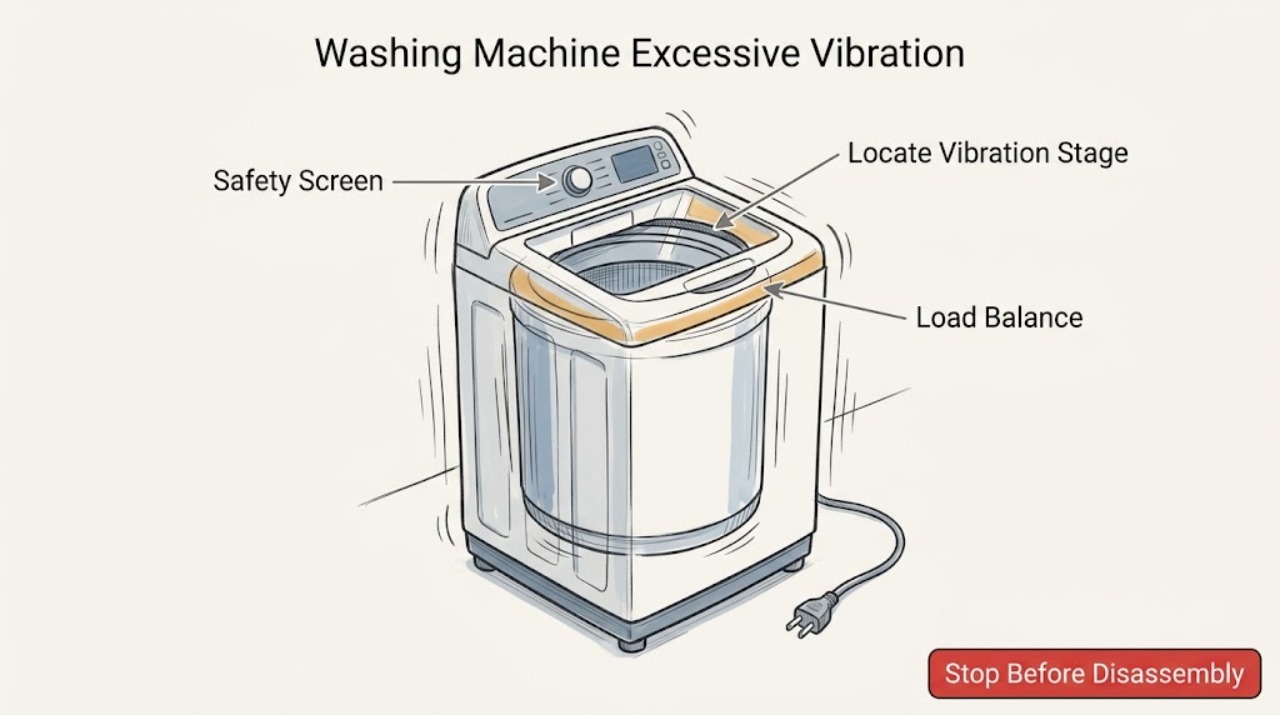
Washing Machine Excessive Vibration
Excessive washing-machine vibration is usually decided by when it occurs and whether the machine stays stable. A single bulky or absorbent item, an overloaded or tangled load, an unlevel machine, an unsuitable floor, loose external hoses, or—only after a new installation or move and when the manual confirms it—transport hardware can cause shaking.
-
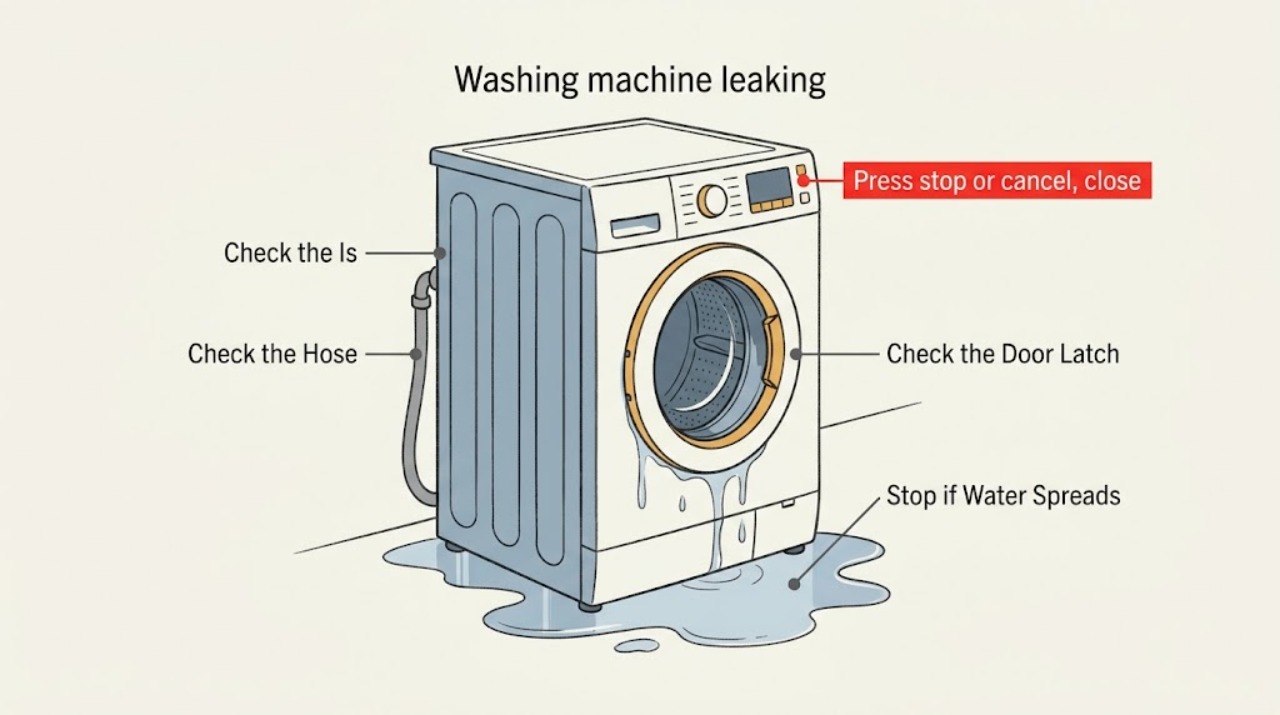
Washing machine leaking: find the first wet point safely
Stop the washer, close its accessible water valves, and keep power connections dry before tracing a leak. Wipe the cabinet and floor, then identify the first wet point: inlet hose or valve, dispenser and suds, door seal, drain hose or household drain, pump-filter area, or the cabinet bottom.
-
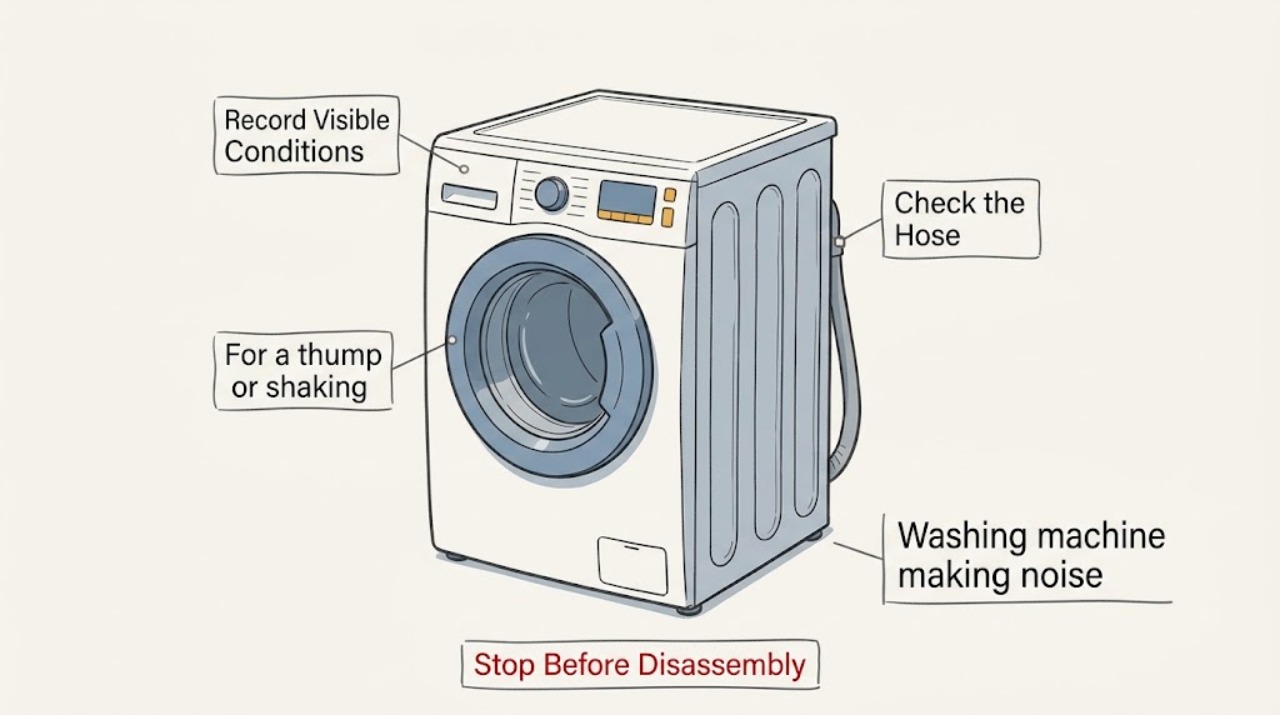
Washing machine making noise: identify the sound by cycle stage
A washing machine can hum, click, gurgle, or shift normally, but a new grinding, metallic scrape, repeated bang, or violent vibration needs a closer check. Note whether the sound occurs during filling, draining, agitation, or spin.
-
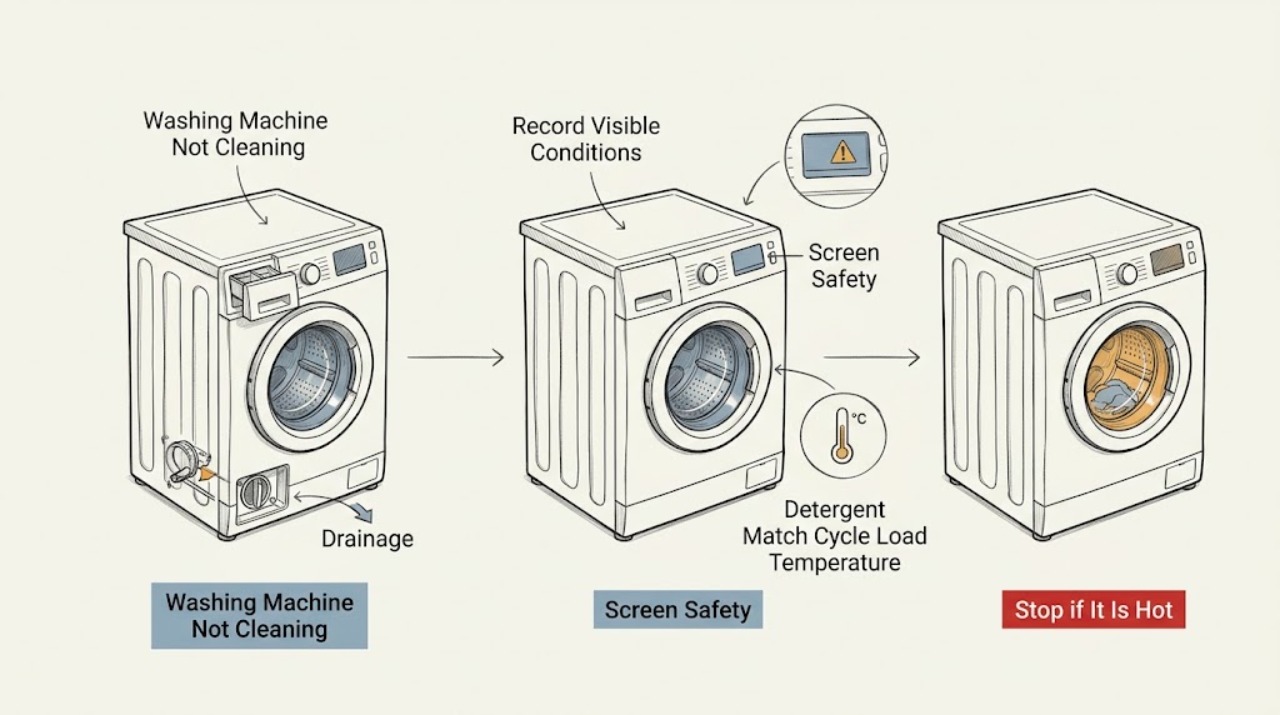
Washing Machine Not Cleaning: Fix the Load, Detergent, and Cycle First
When a washing machine leaves clothes dirty, first separate a cycle or load problem from a water, detergent, dispenser, drainage, or mechanical fault. Use the exact model manual to choose a cycle and a temperature safe for the fabric, load items loosely rather than packing the drum, and use the detergent type and amount specified for that machine and water conditions.
-
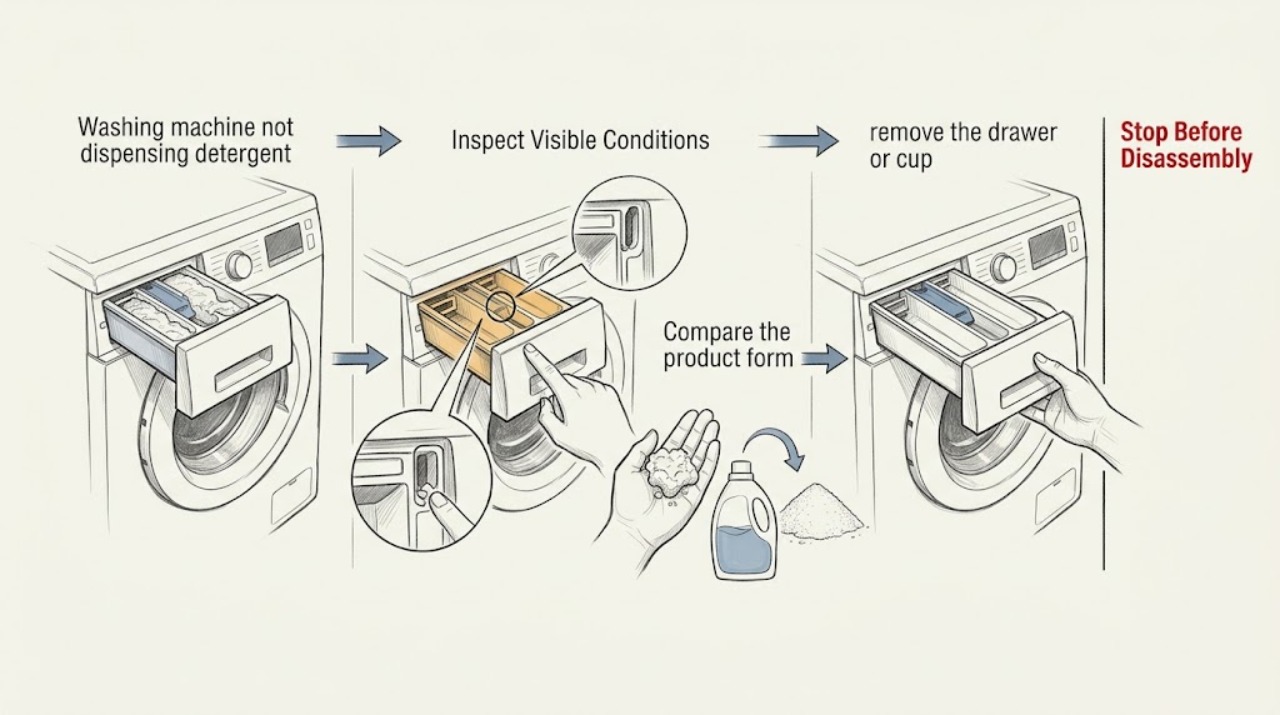
Washing machine not dispensing detergent or softener: check the drawer and water path
First identify which product remains—main detergent, pre-wash detergent, softener, or bleach—and whether it remains in the drawer, enters too early, or never reaches the tub. Use the compartment and insert shown in the exact model manual, stay below its fill mark, and do not put a powder product in a liquid cup or a pod in a drawer unless the manual explicitly allows it.
-
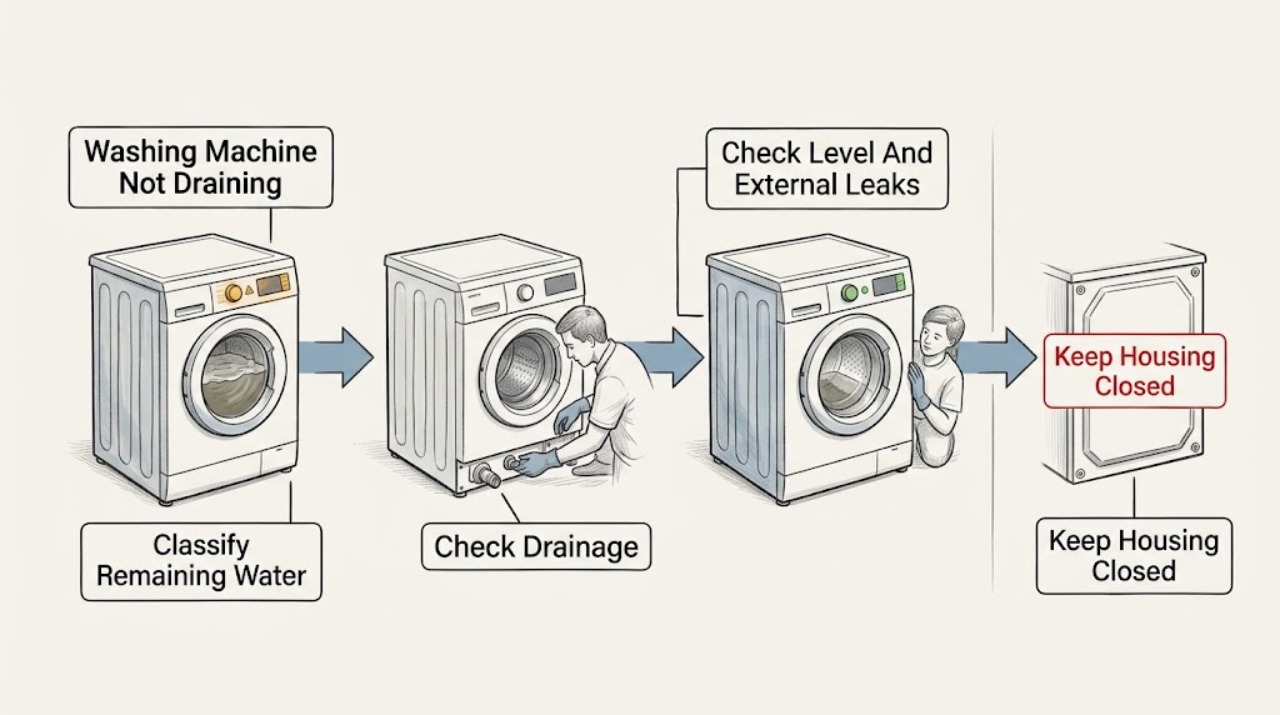
Washing Machine Not Draining: Find the Blockage Without Flooding or Forcing the Door
Stop the cycle and identify whether water remains in the tub, when the cycle stopped, and whether the pump is silent, humming, or moving water. If a hot cycle just ran, let the water cool.
-
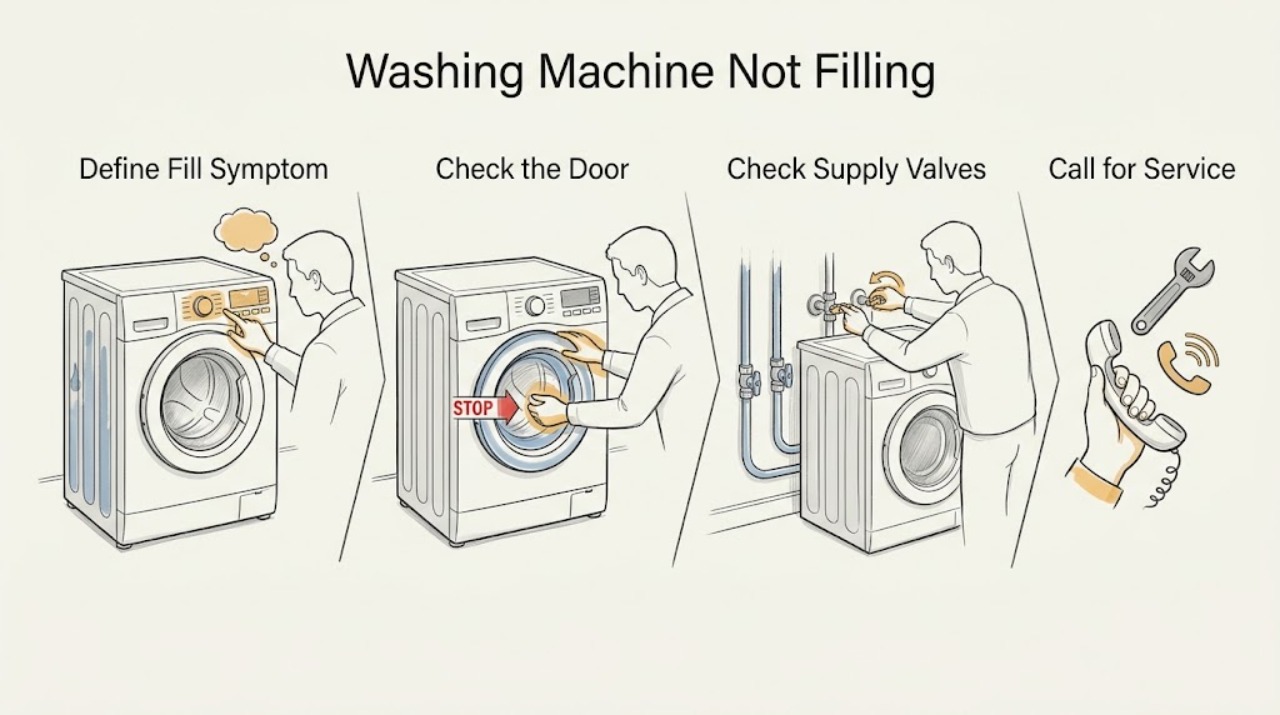
Washing Machine Not Filling: Check Water Supply, Door, and Inlet Path
A washing machine that does not fill is usually waiting for a valid start, a closed and locked door or lid, open water valves, an unrestricted inlet hose, or enough household water flow. First record any display code and confirm whether the machine is completely dry, filling slowly, or filling and then losing water.
-
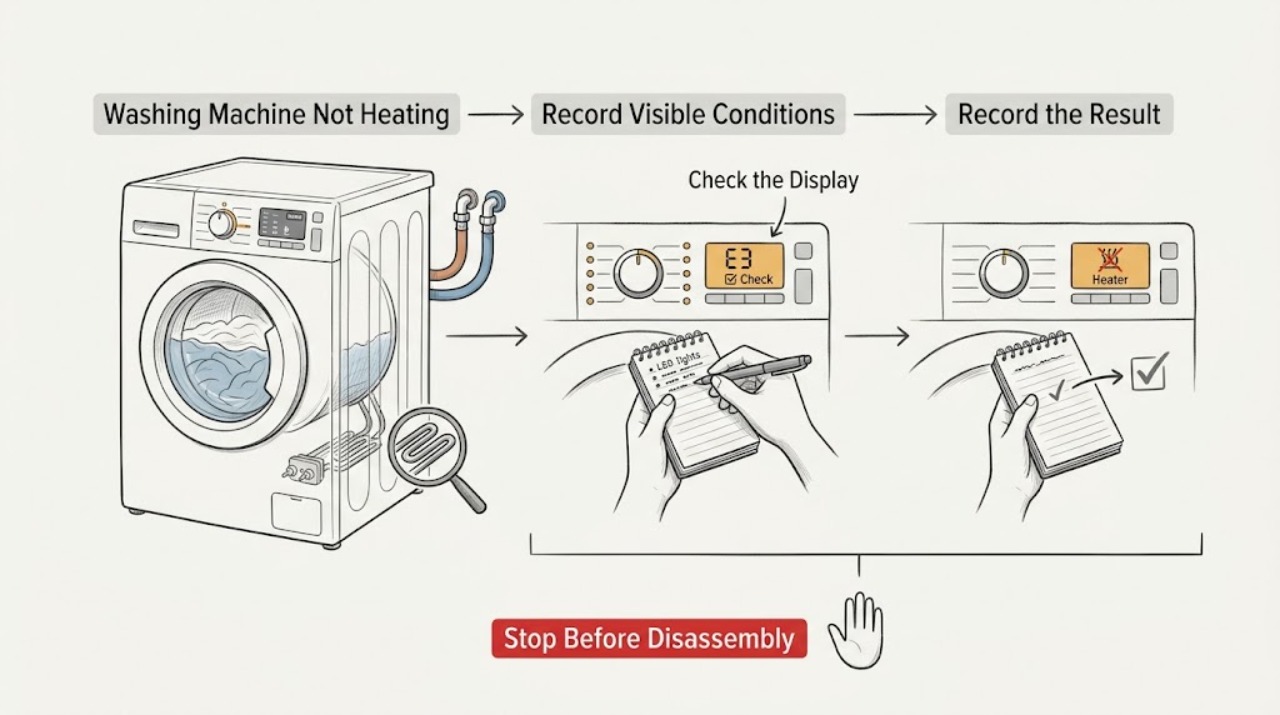
Washing Machine Not Heating: Check the Water Path and Cycle Safely
A washing machine that seems not to heat may be receiving cold water, blending hot and cold water by design, using a low-temperature or rinse phase, or moving on before cold incoming water reaches the selected setting. Some models heat water internally and others rely partly or entirely on the household hot-water supply, so do not assume every washer has the same heater or that a cool door or tub proves a failure.
-
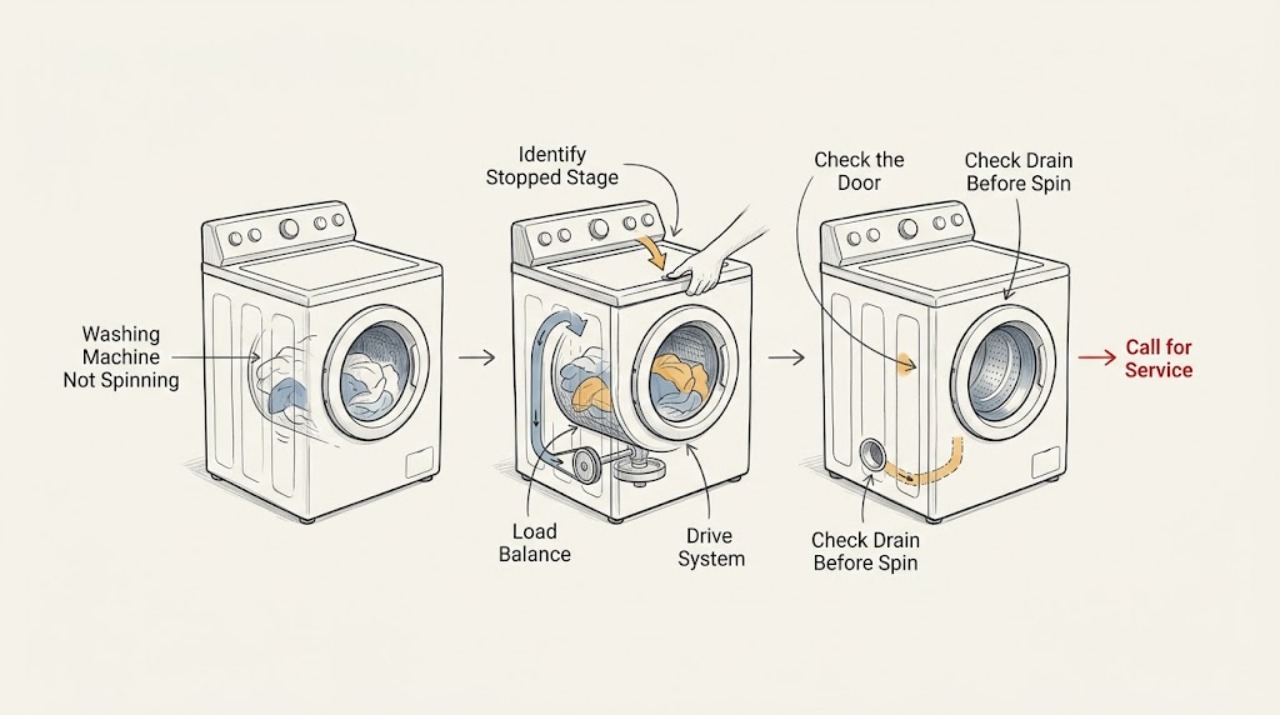
Washing Machine Not Spinning: Check the Cycle, Drain, Load, and Lock
Start by noting where the washer stops and whether water remains inside. Many washers drain before they spin, so a blocked or kinked drain hose, a full pump filter on models that have one, or a household drain problem can prevent the spin step.
-
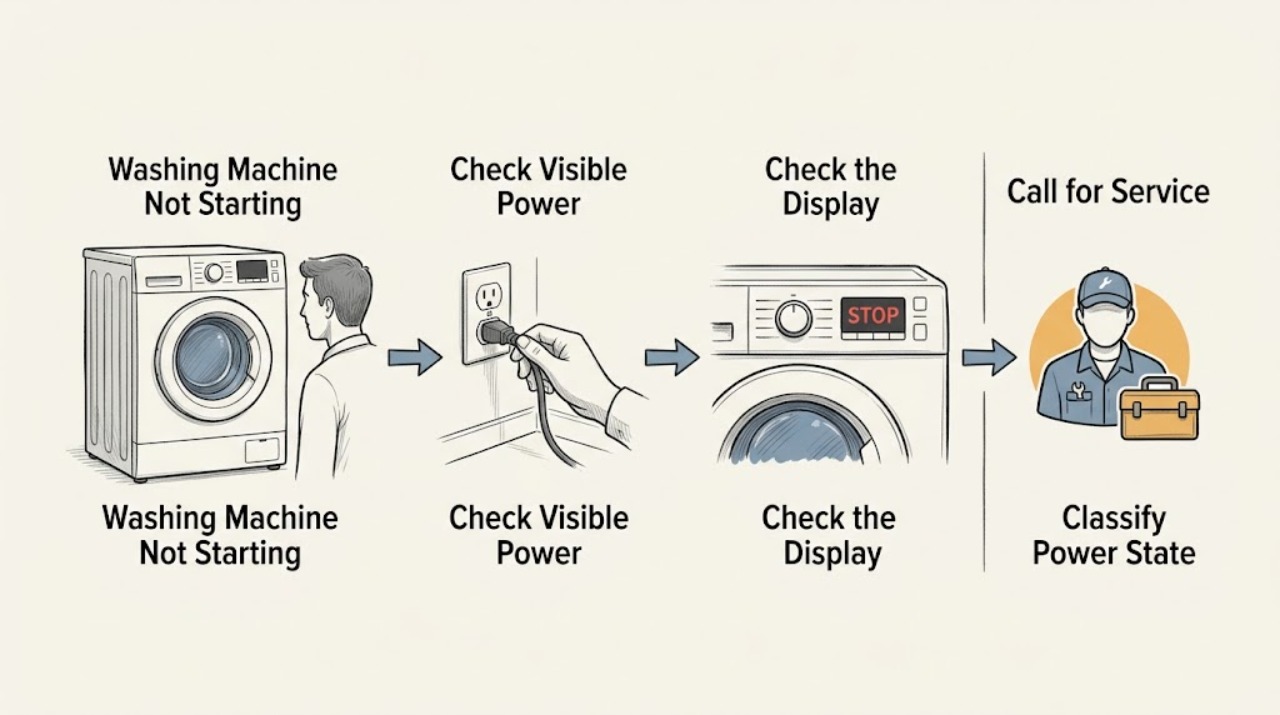
Washing Machine Not Starting: Separate No Power from a Locked or Paused Cycle
First decide whether the washer has no power at all or has power but will not begin a cycle. If the display is dark, check the plug, outlet, breaker, and any safe visible cord damage without opening the appliance.
-
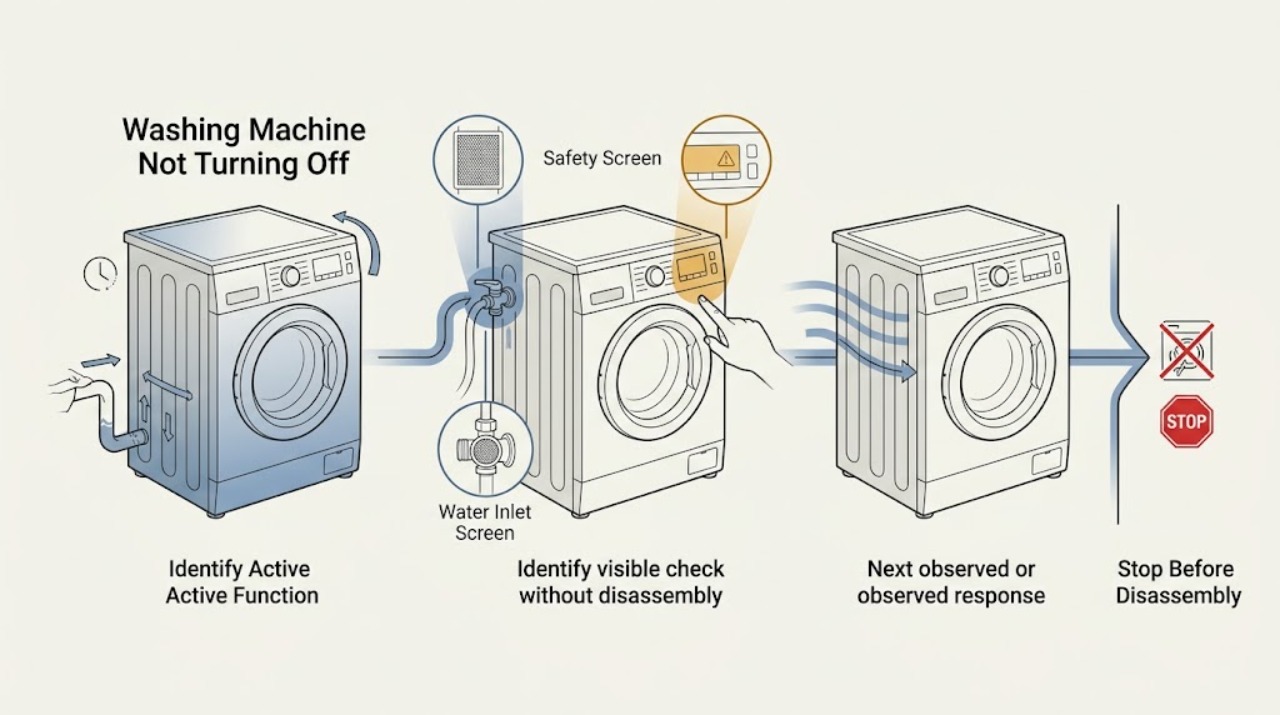
Washing Machine Not Turning Off: Separate Normal Drain Time from a Stuck Cycle
A washing machine may continue briefly after Cancel or End while it drains, cools, spins down, or releases a door or lid lock. Do not force it off until you have noted whether the drum is moving, water is entering, water remains, the pump is running, or the display shows a code.
-
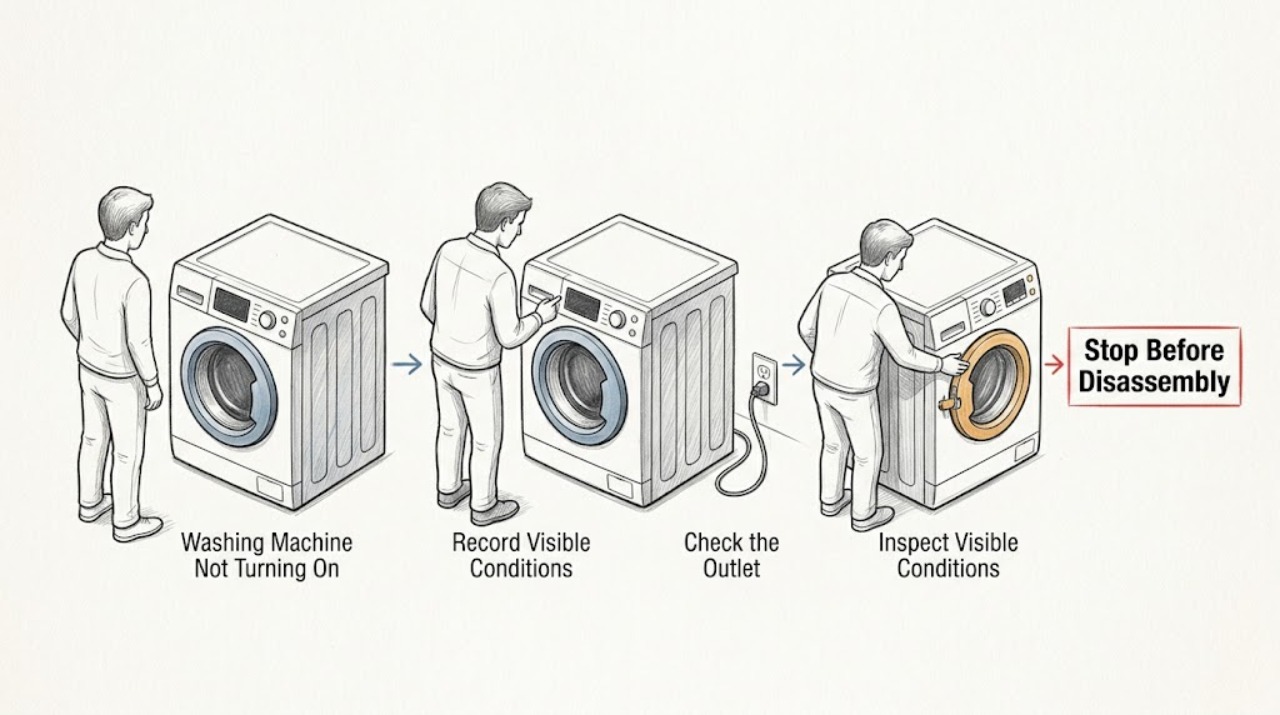
Washing Machine Not Turning On: Safe Checks
If a washing machine will not turn on, first separate a completely blank control from a machine that has lights but will not start. From a dry, safe position, check that the cord is fully seated in the correct grounded outlet, look for an obvious tripped breaker or GFCI, and do not use an extension cord.
-
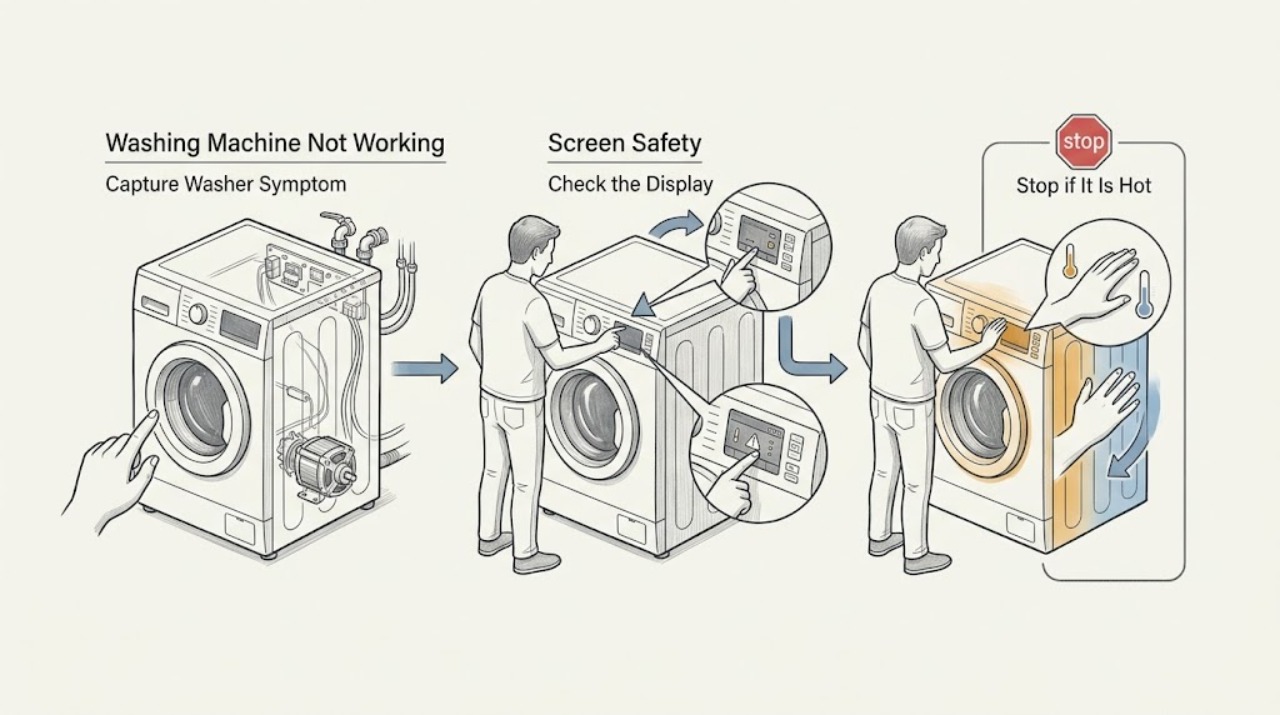
Washing Machine Not Working: Find Whether It Is Power, Water, Drain, or a Lock
“Not working” is not one washer fault. First record whether the machine is completely without power, has a display but will not start, fills but stops, retains water, will not spin, leaks, or shows an error.
-
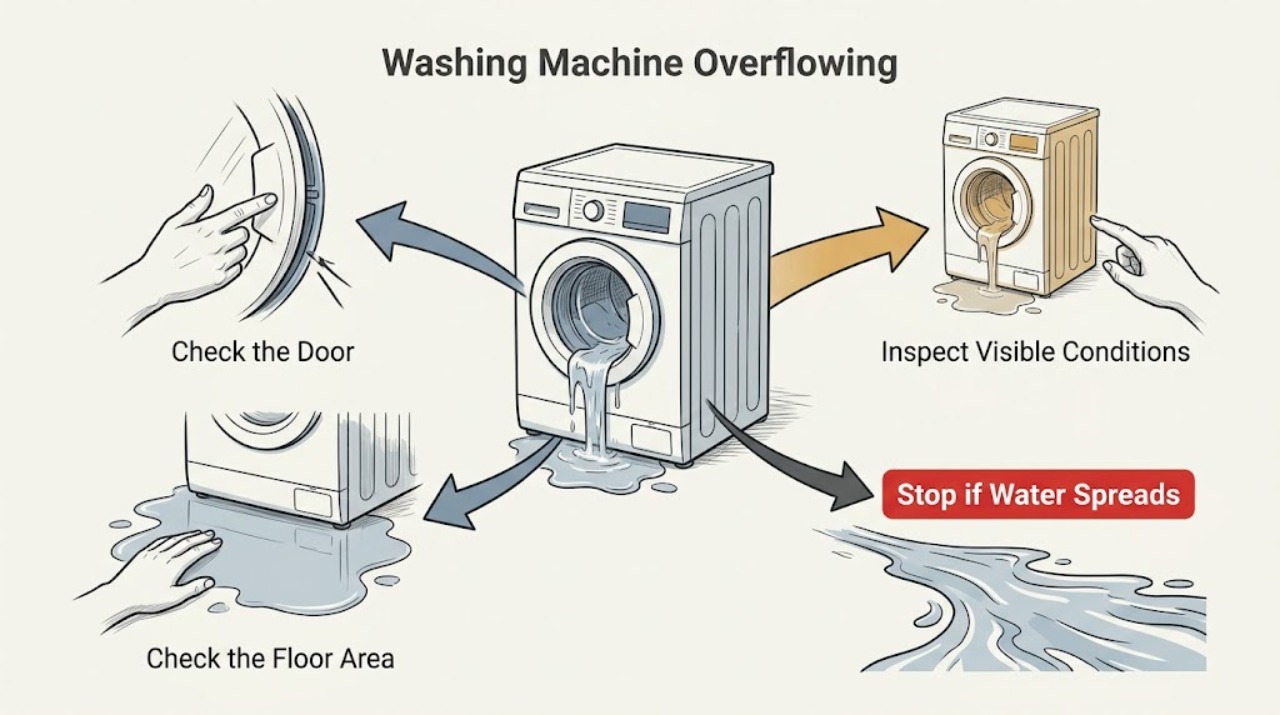
Washing Machine Overflowing: Stop the Water and Find the Safe Branch
Stop the washer immediately and cancel the program. If the hot and cold supply valves are dry and safely reachable, close them; isolate power only from a safe, dry location and never enter standing water to reach a switch or panel.
-
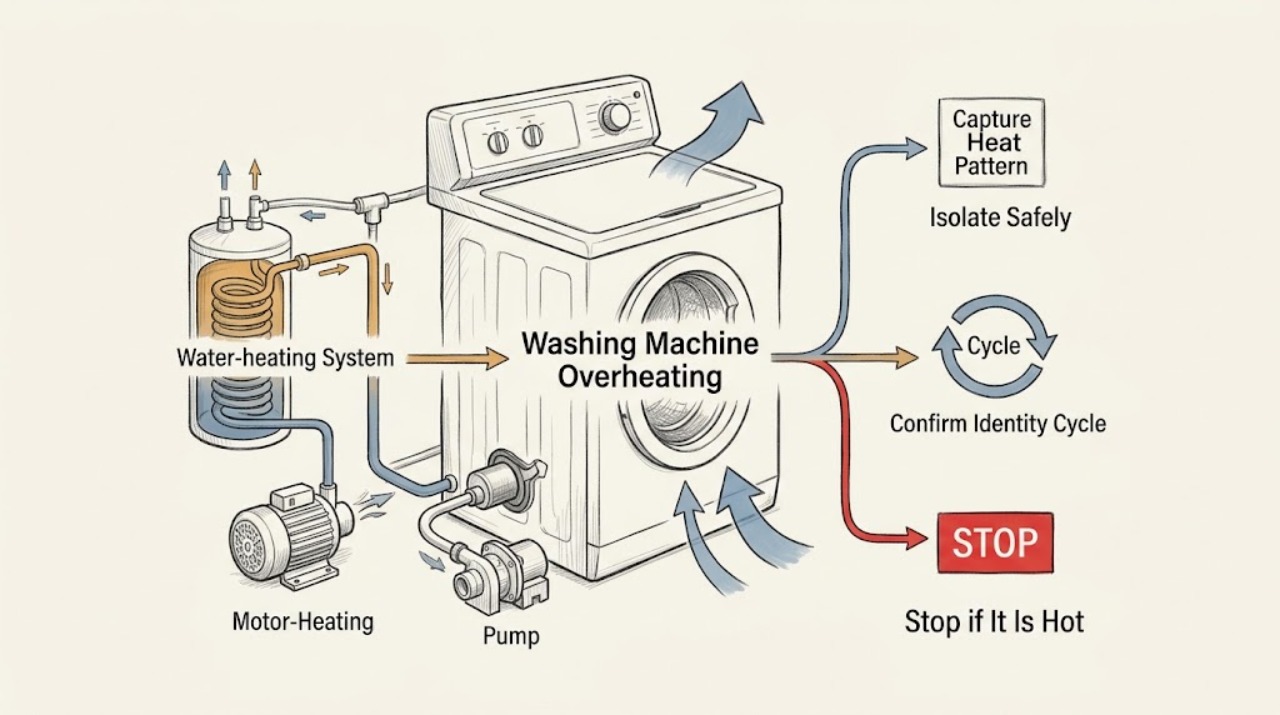
Washing Machine Overheating: What to Check Before Calling for Service
Treat a washing machine that is truly overheating as a safety issue until you know whether you are seeing normal warmth or steam from a high-temperature or washer-dryer cycle. Stop the cycle and keep clear if there is smoke, a sharp electrical or burning-rubber odor, sparking, a hot plug or outlet, a leaking machine near electricity, scalding water, or unusual heat from the cabinet.
-
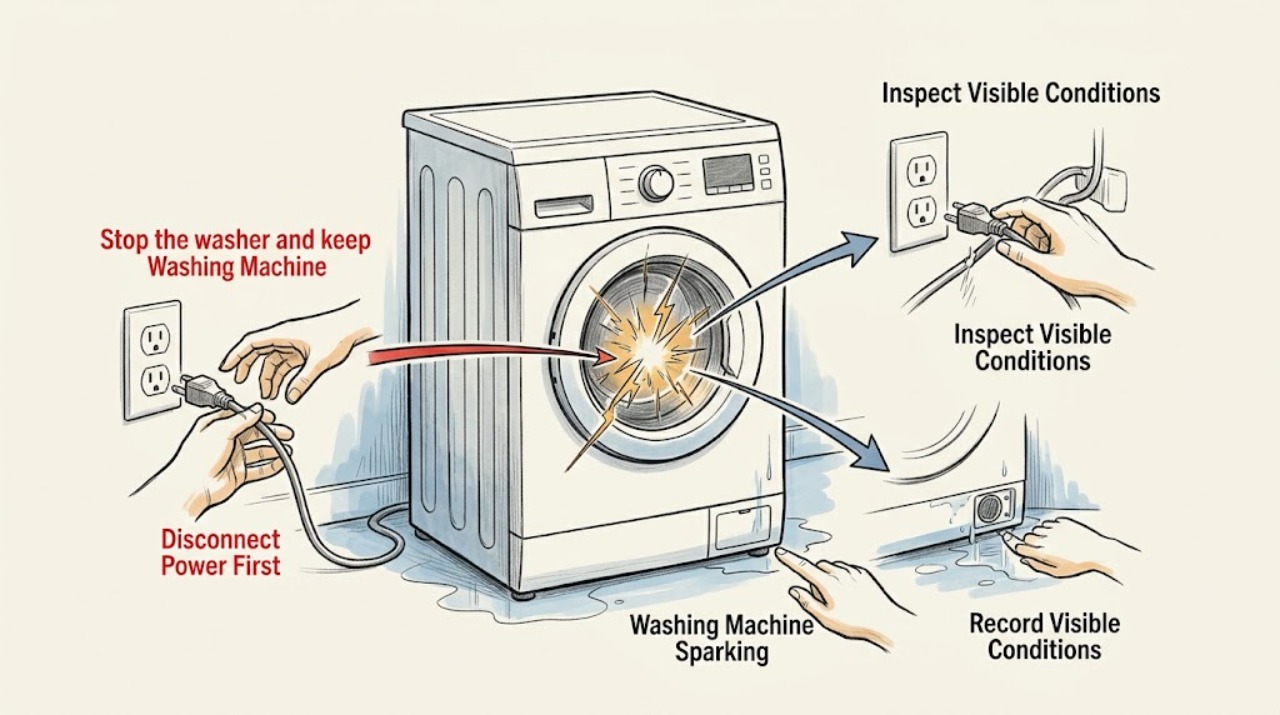
Washing Machine Sparking: Stop Safely and Find the Right Service
Visible sparking from a washing machine, its plug, cord, outlet, controls, or interior is not a normal operating symptom. Stop the cycle and keep people away; use the normal power control only if the area and controls are dry and there is no immediate arc, smoke, heat, flame, shock, or damaged cord.