
On this page
Start here
Quick answer
Classify the smell before restarting the Whirlpool dryer. A new gas or electric dryer can have a temporary oily or semi-burning odor under Whirlpool's first-use guidance, while paint, stain, or varnish in the laundry area can be pulled into the load by the dryer. A musty smell or odor on damp clothes points toward a wet load, residue, lint, drum, or restricted airflow. A burning plastic or rubber smell, hot cabinet, long drying time, smoke, scorch marks, sparks, or a tripped breaker is a stop-use event. If the appliance is a gas model and you smell unburned gas or suspect carbon monoxide, do not operate controls or run another cycle; leave the area and use local emergency or gas-safety procedures from a safe location. Never operate without a lint screen, bypass a safety device, or open the cabinet as an owner test.
Before you begin
Safety first
- This article covers odor classification and ordinary-access observation or cleaning only. Do not open the cabinet, alter gas connections, touch wiring, bypass a safety device, move a connected dryer, or perform live electrical work.
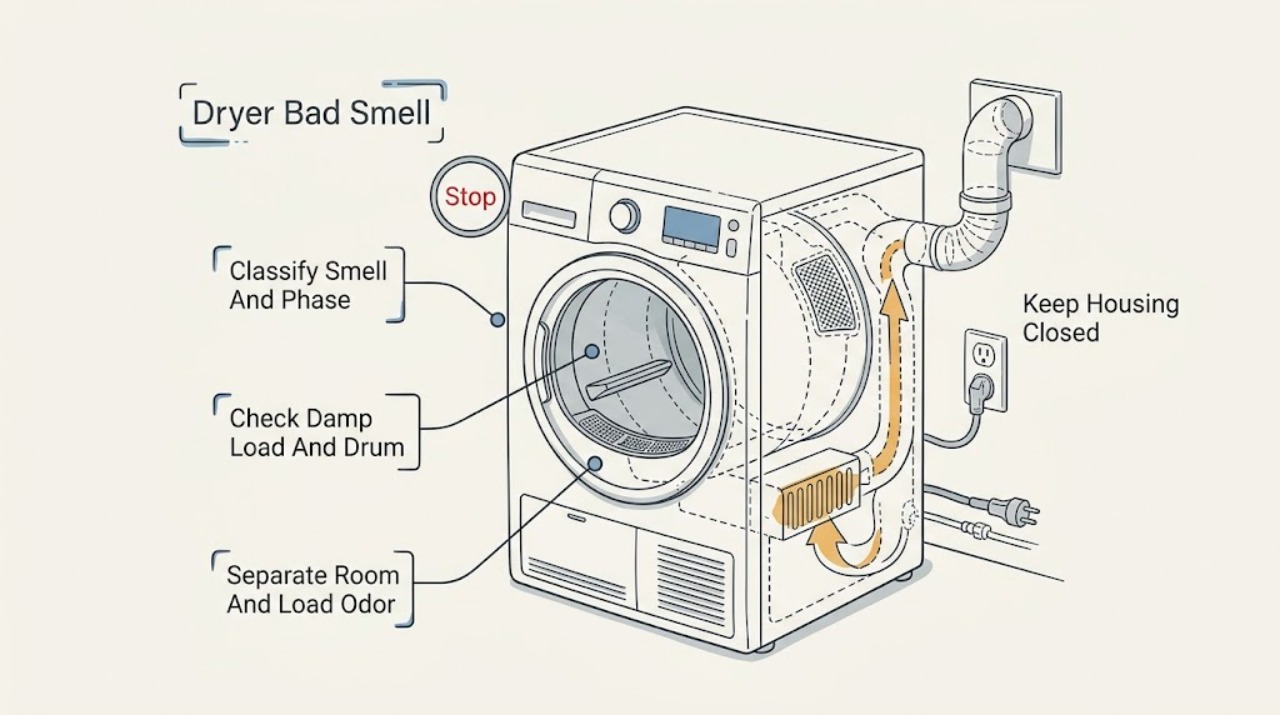
Work through in order
Diagnostic checks
Use only checks that match the exact appliance or system and its official guide.
-
Check 1
From a safe position with the dryer stopped, classify the odor as new-unit oily or semi-burning, musty, room-chemical, burning rubber or plastic, smoky, or unburned gas; note whether it started at startup, during heat, after the cycle, or only on the clothing.
Expected result: The smell is strongest at the drum, lint screen, vent outlet, rear connection, cord or outlet, or across the room; smoke, sparks, heat, damaged clothing, or a gas-like odor may also be present.
Next step: Choose the matching branch below. Stop immediately for smoke, sparks, an electrical burning smell, a hot or damaged cord or outlet, a gas-like smell, a hot cabinet, damaged clothing, or a breaker trip.
Stop if: Do not run another cycle just to reproduce a dangerous odor, sniff closely at a vent or gas connection, or touch a hot, wet, scorched, or sparking connection.
Why this matters
Why: Whirlpool's guidance separates first-use and surrounding-air odors from damp-load or drum odors. Burning, gas-like, smoke, or electrical symptoms take priority over cleaning.
-
Check 2
If the odor began after painting, staining, varnishing, or another room project, stop the dryer, ventilate the laundry area, and compare the room air and an empty, cool drum without starting a heated cycle; remove and rewash affected clothing only after the fumes are gone.
Expected result: The smell is present throughout the room or on the load but not strongest at the machine, or the machine itself retains the odor after the room is ventilated.
Next step: Keep the dryer off until fumes are gone. If the odor remains at the appliance, proceed to drum and lint checks; if fumes return whenever the dryer operates, request qualified service and address the room source.
Stop if: Do not dry clothing in active paint, stain, varnish, solvent, or fuel fumes, and do not use a heated cycle to clear room chemicals.
Why this matters
Why: Whirlpool says a dryer draws surrounding room air into the load, so a room chemical can be transferred to clothing. A machine-local smell is not explained by room air alone.
-
Check 3
For a musty odor, remove the load promptly, inspect the cool drum, door seal, lint-screen area, and visible drum residue, then clean accessible drum surfaces with the exact Whirlpool care guidance and dry the area fully.
Expected result: Damp clothing was left inside, lint or residue is visible, the smell is on the clothing rather than concentrated at the machine, or the drum is clean but the odor remains.
Next step: Rewash and dry an affected load only after no hazard is present and the room source is gone. If the smell returns from the appliance or clothes take longer to dry, continue to the lint and vent check.
Stop if: Do not use flammable cleaners, saturate the drum, run clothing contaminated with fuel or solvent, or continue if clothing is scorched or the drum is unusually hot.
Why this matters
Why: Whirlpool connects wet loads left in the washer or dryer with mildew odor and identifies drum, lint-screen, and door-seal areas as places where lint and grime can collect. A clean drum with a persistent smell shifts attention to airflow or an internal fault.
-
Check 4
With the dryer off and cool, clean the lint screen as directed, inspect the accessible screen housing and visible exhaust path for lint, crushing, damage, or blockage, and check whether the outside vent cover opens during normal operation only when no odor or hazard is present.
Expected result: The screen is clogged or damaged, lint is visible around the housing or rear vent, the duct is crushed or restricted, the outside cover does not open, drying is slow, or the path appears clear.
Next step: Do not operate with a missing, loose, or damaged lint screen. For accessible maintenance, follow the exact model guide; arrange qualified vent or appliance service for a restricted, damaged, concealed, or difficult-to-reach duct, especially when heat or burning scent is present.
Stop if: Stop for a hot cabinet, smoke, burning lint, damaged duct, scorching, unusual heat, or any need to move the dryer or open its cabinet without the model procedure and safe help.
Why this matters
Why: Whirlpool links slow drying, a hot dryer, and burning scent with a possible clogged vent. U.S. Fire Administration guidance identifies a clean lint screen and unobstructed vent as fire-safety measures.
-
Check 5
If the dryer is newly installed and the odor is only a faint oily or semi-burning smell with no smoke, excessive heat, damaged load, gas smell, or electrical symptom, confirm whether it is a Whirlpool gas or electric model and compare the exact Use and Care Guide before any limited first-use step.
Expected result: The odor matches a new-unit context and fades without a hazard, or it persists, becomes stronger, appears on an older unit, or is accompanied by heat, smoke, sparks, gas odor, or a trip.
Next step: If the odor does not clearly fit the new-unit guidance, keep the dryer off and arrange qualified Whirlpool appliance service. Do not use a first-use test to investigate a gas-like, smoky, hot, or electrical smell.
Stop if: Do not alter a gas connection, bypass a door or thermal safety, open the cabinet, or repeatedly restart a dryer with a persistent or hazardous odor.
Why this matters
Why: Whirlpool says a new gas or electric dryer can emit a temporary odor, but that narrow context does not explain persistent or hazardous odor. Gas and electric models have different safety boundaries.
-
Check 6
For burning plastic or rubber, smoke, a gas-like odor, suspected carbon monoxide, sparks, hot wiring, or a breaker trip, turn the dryer off from a safe position, leave the area when needed, and record the symptom only from a safe location; do not restart it.
Expected result: The smell is gone and no hazard is visible, or it persists, worsens, returns at startup or heat, damaged clothing is present, the cabinet is hot, or a safety device has operated.
Next step: Keep the dryer out of use and obtain qualified appliance or electrical service. For unburned gas or suspected carbon monoxide, leave first and follow local emergency or gas-safety procedures from outside the affected area.
Stop if: Do not operate switches in a gas-filled area, use an extension cord, reset a breaker repeatedly, touch hot wiring, remove panels, or perform live electrical or gas work.
Why this matters
Why: A dryer fire, gas-combustion, or electrical risk cannot be cleared by a drum wipe or another cycle. Gas odor or suspected carbon monoxide requires immediate local safety action, while burning and heat require qualified appliance or electrical diagnosis.
Use your observations
Decision map
Find the observation that best matches what you see, then follow the next safe action.
-
PATH 01Next step
What you see
A newly installed Whirlpool gas or electric dryer has a faint oily or semi-burning odor with no smoke, heat damage, gas smell, electrical symptom, or breaker trip.
Do this next
Follow the exact Use and Care Guide and monitor only within its safe first-use guidance. Stop and request service if the odor persists, grows stronger, or changes character.
Why this path and its safety boundary
Why it matters: Whirlpool identifies this as a possible first-use odor context, but it is not a safe explanation for a persistent or hazardous smell.
-
PATH 02Next step
What you see
The odor follows recent painting, staining, varnishing, or refinishing and is present in the room or on the load rather than at a hot or damaged dryer part.
Do this next
Ventilate until fumes are gone, keep the dryer off during the project, then rewash and dry the load. Request service if the machine-local smell remains.
Why this path and its safety boundary
Why it matters: Whirlpool says the dryer pulls surrounding room air through the load, so the room source can transfer an odor to clothing.
-
PATH 03Next step
What you see
The smell is musty and follows damp clothing left in the dryer, lint or residue in accessible drum areas, or an odor concentrated on the load.
Do this next
Remove loads promptly, clean and dry the accessible drum and lint areas according to Whirlpool guidance, and rewash affected clothing after the room is safe. Continue to airflow checks if drying is slow or odor returns.
Why this path and its safety boundary
Why it matters: A wet load or residue is more likely than a heater or gas fault when no heat, smoke, electrical, or gas warning is present.
-
PATH 04Safety boundary
What you see
A burning scent appears with slow drying, a hot cabinet, lint accumulation, a clogged or crushed duct, or an outside vent that does not open.
Do this next
Stop use when heat or burning scent is present. Arrange qualified vent or appliance service for a concealed, damaged, or restricted path; never operate without a sound lint screen.
Why this path and its safety boundary
Why it matters: Whirlpool treats these as possible vent restriction or airflow conditions, and fire-safety guidance makes lint and vent maintenance important.
Safety stop: Do not continue cycles with a hot cabinet, smoke, scorch marks, burning lint, or a damaged duct.
-
PATH 05Safety boundary
What you see
A gas dryer has an unburned-gas smell, unusual combustion symptom, smoke, suspected carbon monoxide, or a smell that is strongest near the gas appliance.
Do this next
Do not operate controls or run the dryer. Leave the area and follow local emergency, gas-safety, and carbon-monoxide procedures from a safe location; qualified personnel must inspect before reuse.
Why this path and its safety boundary
Why it matters: This is a gas-safety or combustion emergency boundary, not a dryer-cleaning problem.
Safety stop: Do not relight, alter, disconnect, or test the gas system, and do not re-enter until the appropriate safety authority says it is safe.
-
PATH 06Safety boundary
What you see
The odor is electrical, burning plastic or rubber, or smoky, or there are sparks, hot wiring, a damaged cord or outlet, damaged clothing, or a breaker trip.
Do this next
Turn the dryer off from a safe position, keep clear, and arrange qualified appliance or electrical service. Leave and use local emergency procedures for active smoke or fire.
Why this path and its safety boundary
Why it matters: The symptom may involve the supply, heater, motor, wiring, lint ignition, or another internal fault and needs a stop-use diagnosis.
Safety stop: Do not restart, repeatedly reset protection, use an extension cord, remove panels, or perform live electrical checks.
Helpful context
Understand the symptom
Odor type and timing determine the safe path
Ask whether the smell is oily or semi-burning on a new installation, musty from damp laundry, chemical from recent painting or refinishing, hot plastic or rubber, smoky, or like unburned gas. Note whether it appears at startup, only while heating, near the drum, at the lint screen, behind the dryer, at the outlet, or throughout the room. A gas-like smell, smoke, sparks, hot wiring, or a rapidly worsening burning odor ends the home diagnosis immediately.
Lint and airflow affect both smell and heat
Whirlpool advises cleaning the lint screen and drum areas, while its vent guidance treats slow drying, a hot dryer, and a burning scent as signs that the vent may be restricted. The U.S. Fire Administration also warns against operating without a lint screen and calls for checking the vent for damage, crushing, or restriction. Inspect only the ordinary-access screen and visible vent outlet unless the exact model guide gives a safe maintenance procedure.
Room air can put the odor on the load
Whirlpool explains that a dryer draws surrounding room air into the drying process. If the laundry room was recently painted, stained, or varnished, ventilate the area and keep the dryer off until fumes are gone, then rewash and dry the load. A smell that remains with an empty drum or comes from the machine itself needs a different branch from an odor transferred from the room or clothing.
Safety boundary
Stop conditions
- Stop use for smoke, sparks, visible arcing, burning plastic or rubber, scorching, damaged clothing, a hot cabinet, a hot or damaged cord or outlet, or a breaker trip.
- For unburned gas or suspected carbon monoxide on a gas model, do not operate controls or run another cycle; leave the area and follow local emergency or gas-safety procedures from a safe location.
- Stop for a restricted, crushed, damaged, or lint-filled vent, and never operate without a lint screen that is present, secure, and undamaged.
- Do not open the cabinet, alter gas connections, bypass a door or thermal safety, repeatedly reset protection, or perform live electrical work.
- Use only ordinary-access and exact model-guide checks; persistent odor, internal heat, or a returning fault needs qualified service.
Only after diagnosis
Potential parts
- dryer lint screen
Consider this category only when the screen is missing, loose, torn, warped, or no longer seals after the exact model is confirmed.
Confirm the exact Whirlpool model and screen design; never operate the dryer without a secure, undamaged lint screen. - dryer exhaust duct or vent component
Consider this category only when a qualified inspection confirms a damaged, crushed, incompatible, or restricted exhaust path after safe visible checks.
Confirm the installation and exact model requirements; concealed vent work may require qualified service and is not a substitute for diagnosing smoke or burning odor. - dryer thermal or airflow safety component
Consider this category only when qualified diagnosis traces persistent overheating or a safety-device fault to the internal thermal or airflow system after the vent path is addressed.
Confirm the exact model and technician diagnosis; do not bypass or replace a safety component as an owner test.
When checks do not resolve it
Need a professional?
Arrange qualified Whirlpool dryer service when the odor persists after the applicable room, load, drum, lint, and airflow checks; when the vent is concealed or damaged; when drying is slow with excess heat; or when the smell comes from inside the appliance. Stop immediately and seek appropriate emergency, gas-safety, appliance, or electrical help for unburned gas, suspected carbon monoxide, smoke, sparks, a worsening burning smell, scorching, a hot or damaged cord or outlet, a hot cabinet, or a breaker trip.
Safety scope: This article covers odor classification and ordinary-access observation or cleaning only. Do not open the cabinet, alter gas connections, touch wiring, bypass a safety device, move a connected dryer, or perform live electrical work.
Common questions
FAQ
Is a smell from a new Whirlpool dryer normal?
Whirlpool says a new gas or electric dryer may emit a temporary semi-burning or oily smell. That explanation applies only when the odor is limited, the unit is new, and there is no smoke, excess heat, gas-like smell, damaged clothing, electrical symptom, or breaker trip. A persistent or worsening odor needs service.
Why does my Whirlpool dryer smell musty?
A damp load left in the dryer, lint or residue in the drum area, or an odor transferred from the laundry room can create a musty smell. Remove loads promptly, clean accessible drum and lint areas using Whirlpool guidance, ventilate the room, and investigate airflow if drying is slow or the odor returns.
Can a clogged vent cause a burning smell?
Yes. Whirlpool links slow drying, a hot dryer, and a burning scent with a possible vent restriction. Stop using the dryer when heat or burning odor is present, and arrange qualified vent or appliance service for a concealed, damaged, or restricted duct. Never operate without a secure lint screen.
What should I do if a gas Whirlpool dryer smells like gas?
Do not run the dryer or operate controls in the affected area. Leave the area and follow local emergency, gas-safety, and carbon-monoxide procedures from a safe location. Qualified personnel must inspect the appliance and gas system before reuse.
Can paint or varnish make laundry smell after drying?
Yes. Whirlpool explains that the dryer pulls surrounding room air through the load, so recent paint, stain, or varnish can transfer fumes to clothing. Ventilate and keep the dryer off until the fumes are gone, then rewash and dry the load.
When should I stop using a Whirlpool dryer for an odor?
Stop for smoke, sparks, visible arcing, burning plastic or rubber, scorch marks, damaged clothing, a hot cabinet, a hot or damaged cord or outlet, an unburned-gas smell, suspected carbon monoxide, or a breaker trip. Keep the dryer off and arrange qualified appliance, electrical, or gas-safety help.
Read the exact guide
Official sources
- Removing Odors or Smells - DryerWhirlpool · Official Whirlpool Product Help guidance for Whirlpool dryers; first-use behavior and controls vary by model.
- Cleaning the Dryer Drum - Product Help | WhirlpoolWhirlpool · Official Whirlpool Product Help guidance for traditional Whirlpool dryers; exact cleaning access and materials vary by model.
- Clothes Dryer Fire SafetyU.S. Fire Administration · Federal fire-safety guidance for household clothes dryers, including gas and electric installations.
- How to clean a dryer vent from inside and outsideWhirlpool · Official Whirlpool care guidance for electric and gas dryers; the exact vent system and safe access depend on installation and model.
Community feedback
Share a repair observation
Share a plain-text repair observation. Accepted observations are published automatically; this page may take a moment to update.