
Whirlpool appliance guidance
Whirlpool Dryer Repair Guides
Troubleshooting and repair guidance for published Whirlpool Dryer problems, symptoms, and maintenance questions.
Published Whirlpool Dryer guides
Choose the guide whose symptom or condition most closely matches what you are seeing.
-
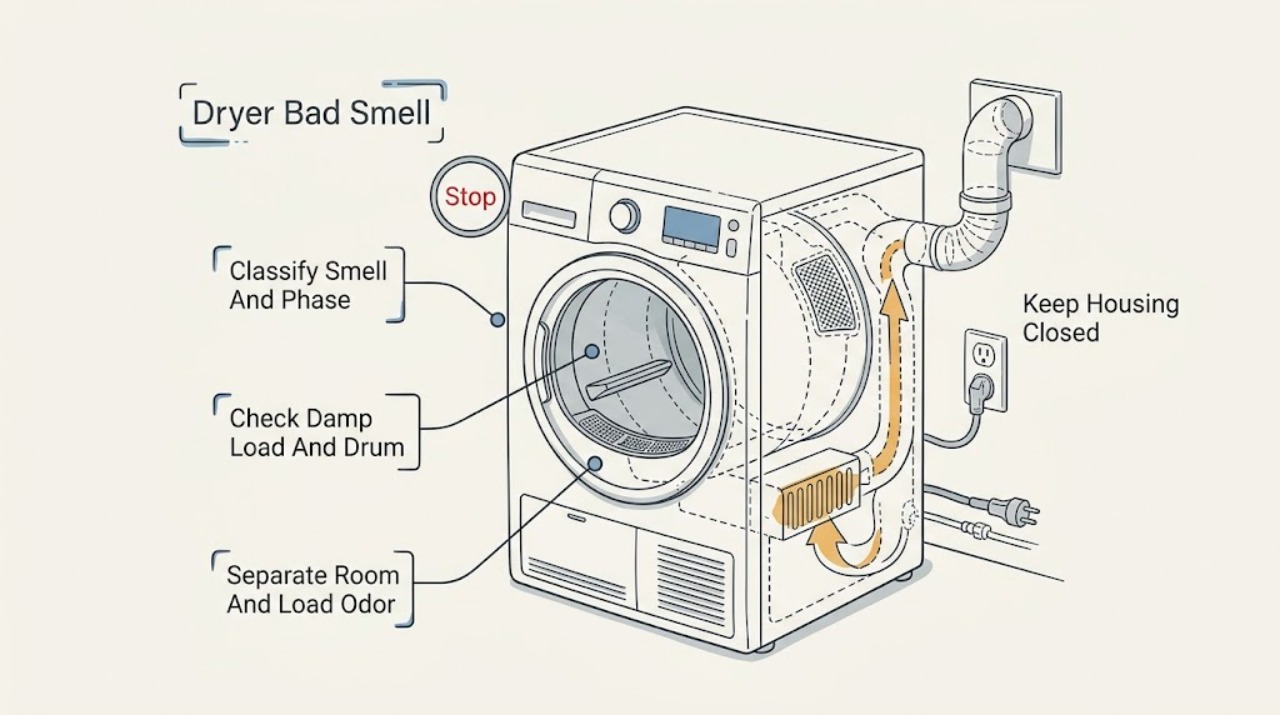
Whirlpool Dryer Bad Smell: Find the Source Before Running Another Cycle
Classify the smell before restarting the Whirlpool dryer. A new gas or electric dryer can have a temporary oily or semi-burning odor under Whirlpool's first-use guidance, while paint, stain, or varnish in the laundry area can be pulled into the load by the dryer.
-
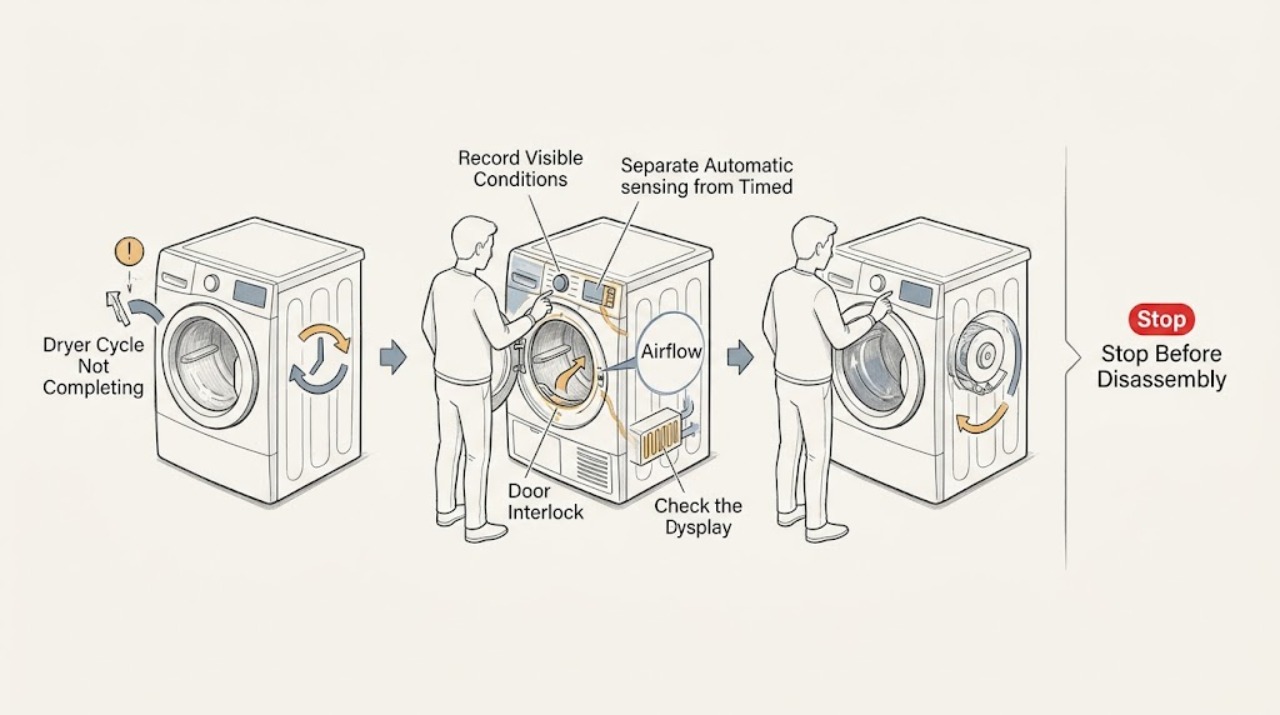
Whirlpool Dryer Cycle Not Completing: Check Sensors, Timers, and Airflow
When a Whirlpool dryer cycle does not complete, first record the cycle type, where it appears to stop or extend, what the display shows, and whether the load or cabinet is still hot. Automatic cycles adjust their estimate from load moisture and dryness, while Timed Dry follows a selected time.
-
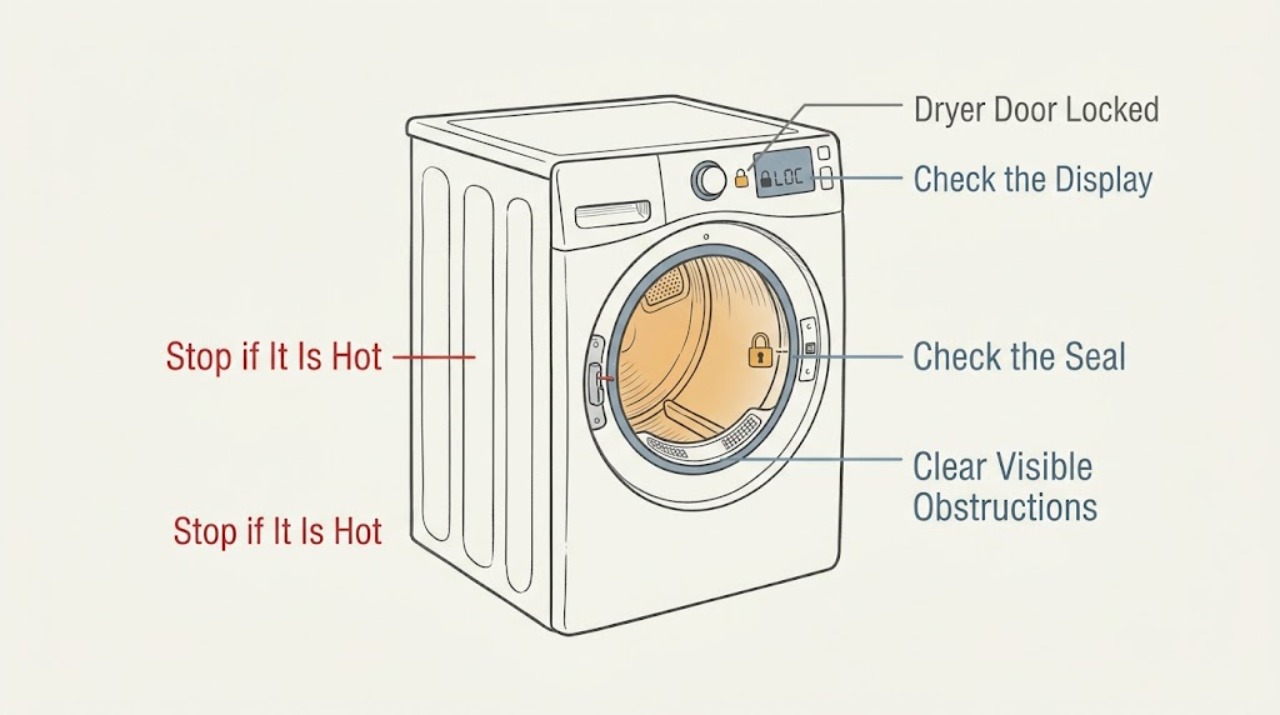
Whirlpool Dryer Door Locked: Identify the Lock Before Forcing It
First decide whether the Whirlpool dryer has a locked control panel or a physically locked door. On an ordinary dryer, Loc usually means Control Lock is enabled: the controls will not respond, but this is not evidence that the door itself is locked.
-
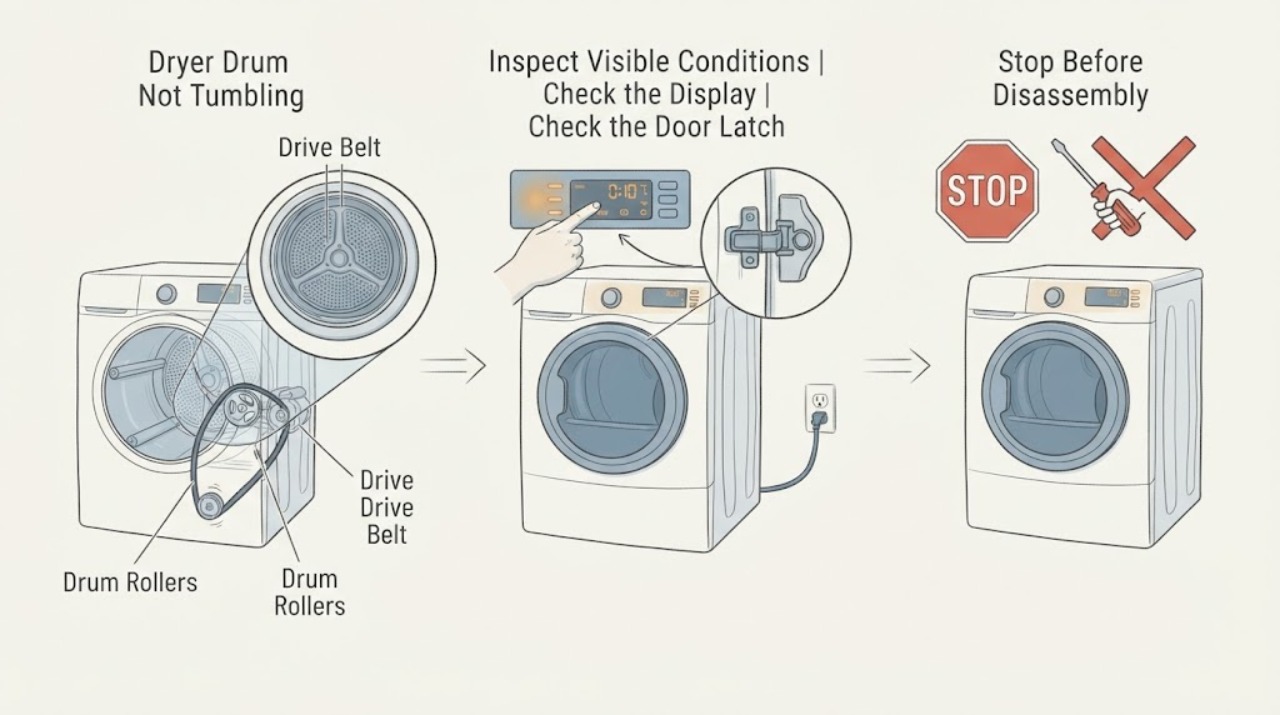
Whirlpool Dryer Drum Not Tumbling: What to Check and What to Do Next
If a Whirlpool dryer drum is not tumbling, stop the cycle and first determine whether the controls or drum light respond. Confirm that the Start command registered, the door is fully latched, the latch is not blocked by clothing or packing material, the control lock is not active, and the selected cycle is a normal drying cycle.
-
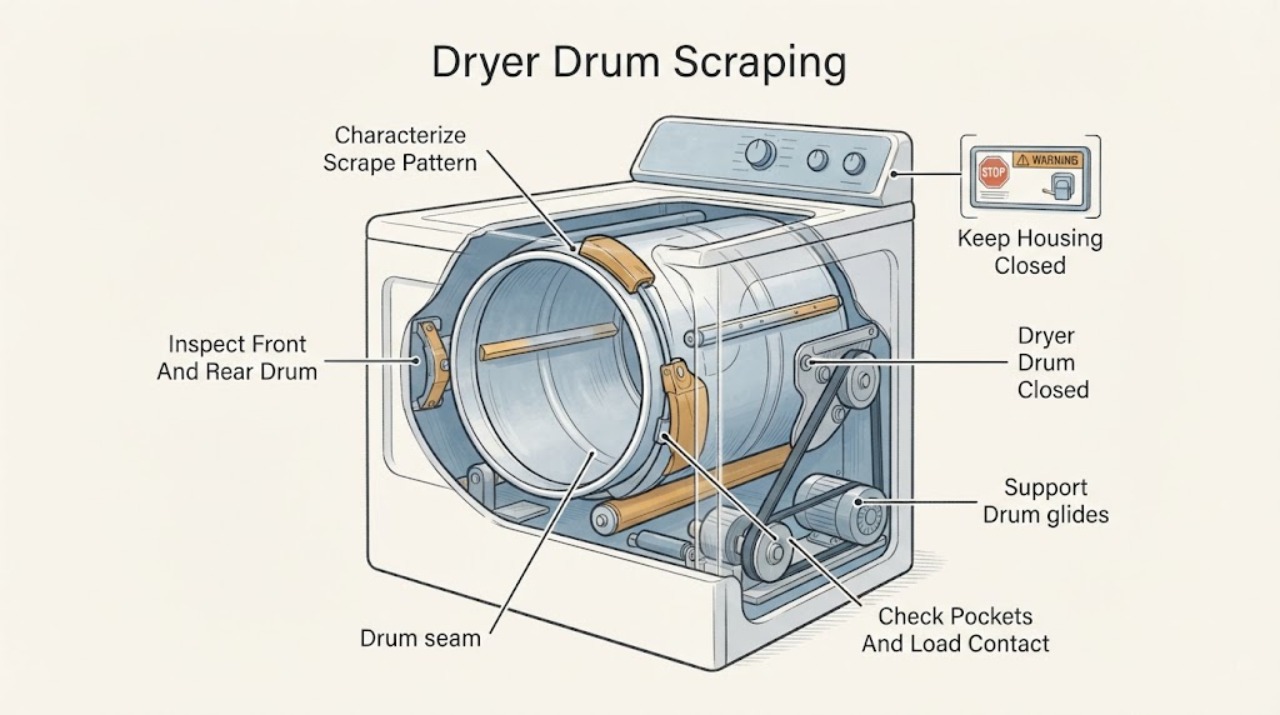
Whirlpool Dryer Drum Scraping: What to Check and What to Do Next
Turn the Whirlpool dryer off before investigating a scraping sound. From the open doorway, inspect the visible front and rear edges where the drum meets the cabinet for a coin, paper clip, safety pin, screw, nail, or other small item caught in the seam; remove only a loose object that is plainly reachable without tools or force.
-
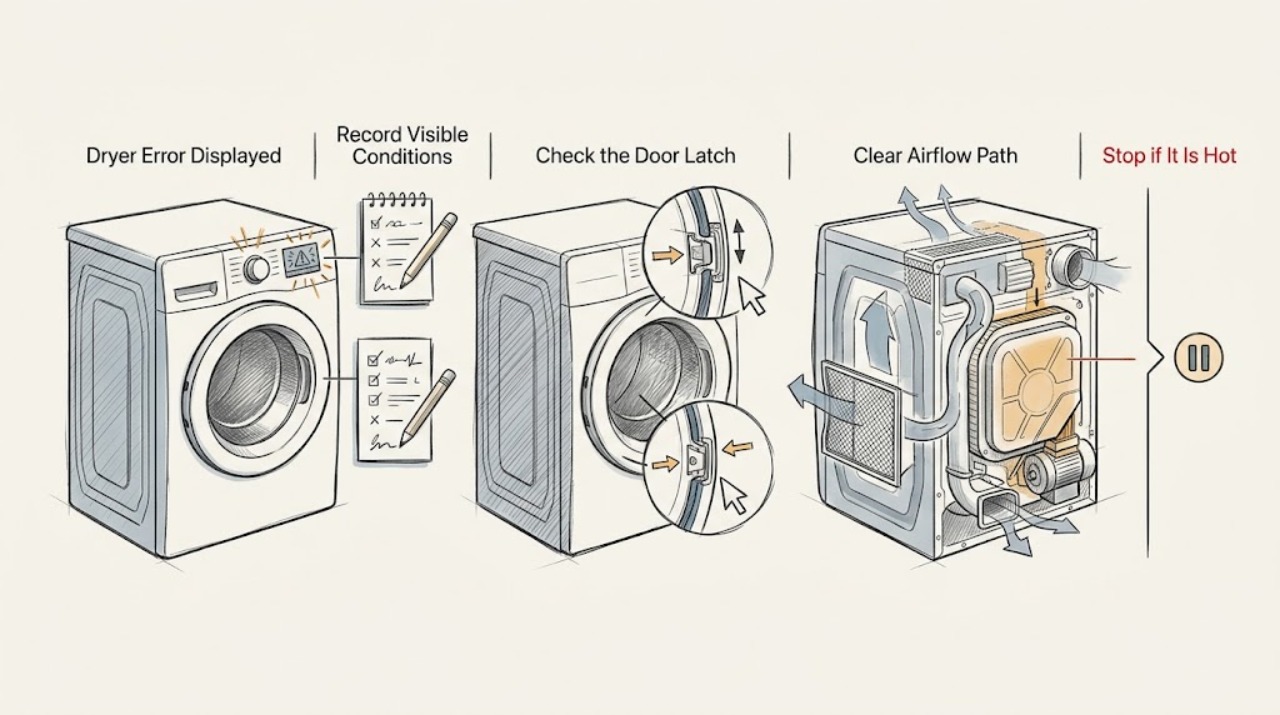
Whirlpool Dryer Error Displayed: Record the Code Before You Reset
Photograph or write the complete Whirlpool dryer code exactly as displayed, including spaces, alternating characters, and any message, then record the model, electric or gas configuration, cycle, and stage. Do not apply the meaning of a code from another dryer family.
-
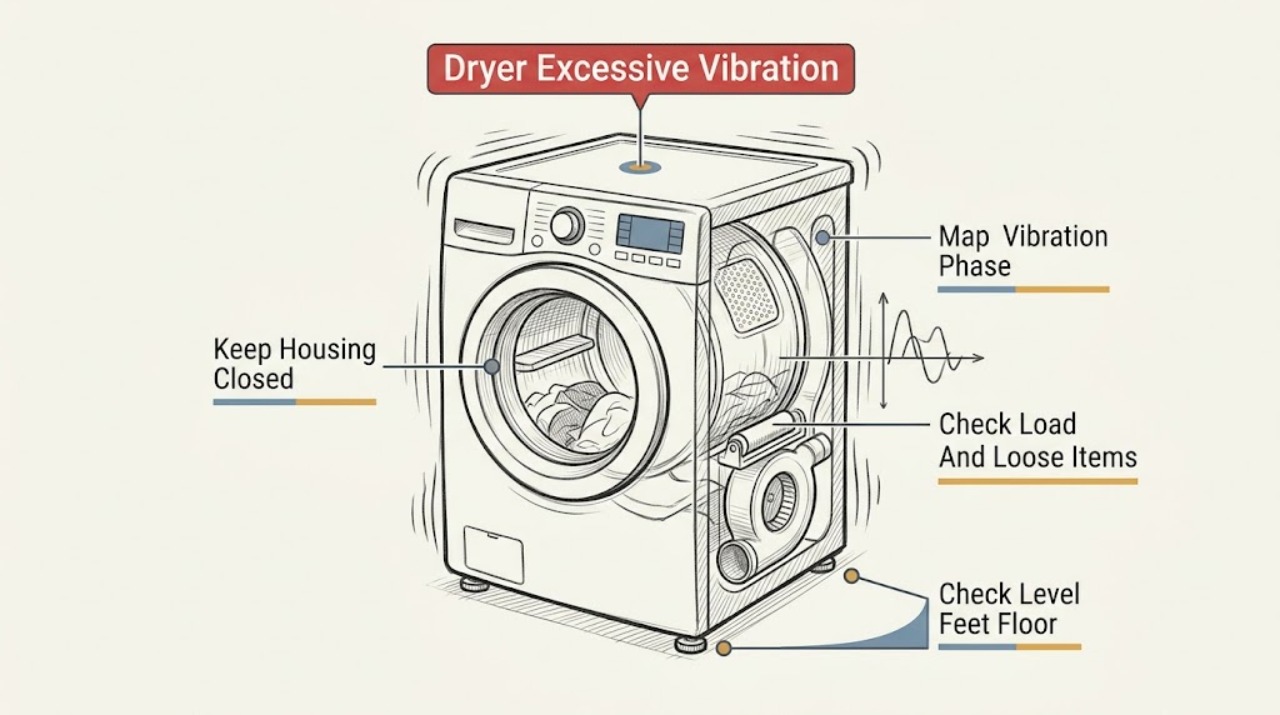
Whirlpool Dryer Excessive Vibration: Trace the Load, Level, and Cabinet
First decide whether the vibration follows a twisted load, a loose object, the dryer cabinet, or the drum. Whirlpool links thumping and shaking with balled or bulky items, shoes, loose hardware, missing or misadjusted legs, objects leaning on the cabinet, pedestal contents, and items in the lint chute.
-
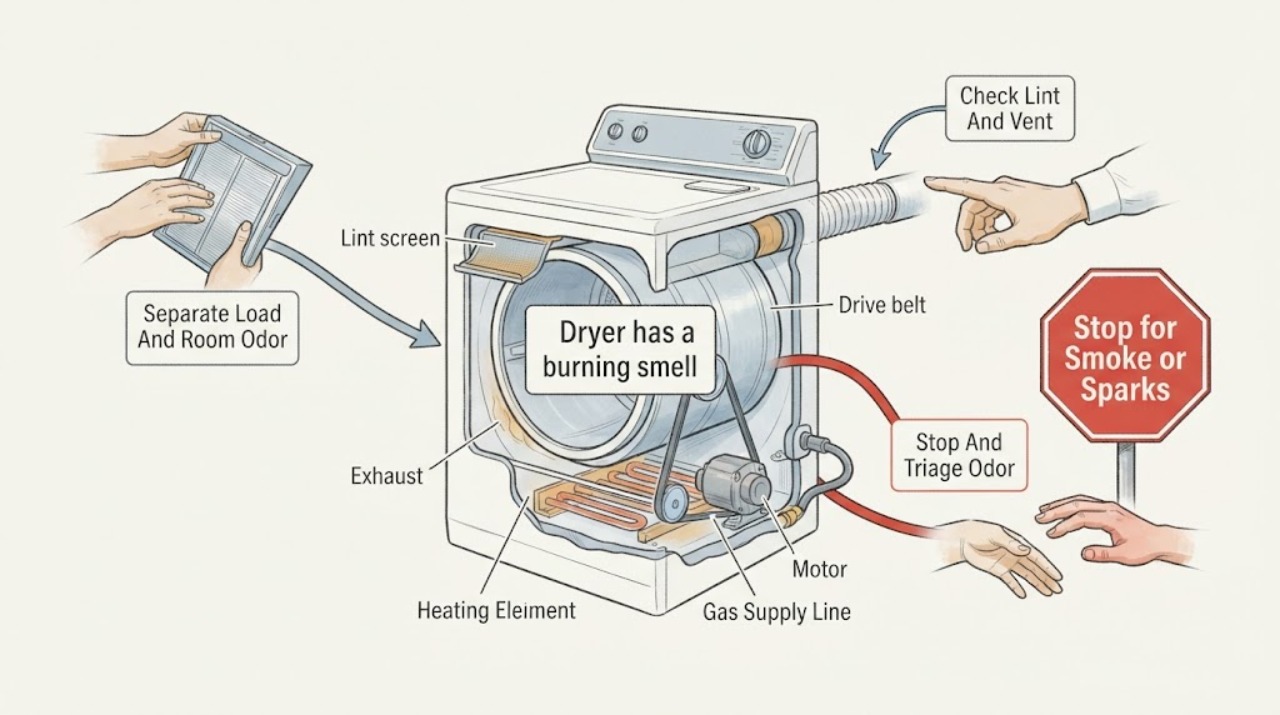
Whirlpool dryer has a burning smell: What to Check and What to Do Next
Treat a burning smell from a Whirlpool dryer as a stop-and-check symptom. Turn the dryer off, remove the load, and do not start another cycle until you know whether the smell came from a new-appliance odor, paint or varnish fumes in the room, contaminated clothing, lint or a restricted vent, or the dryer itself.
-
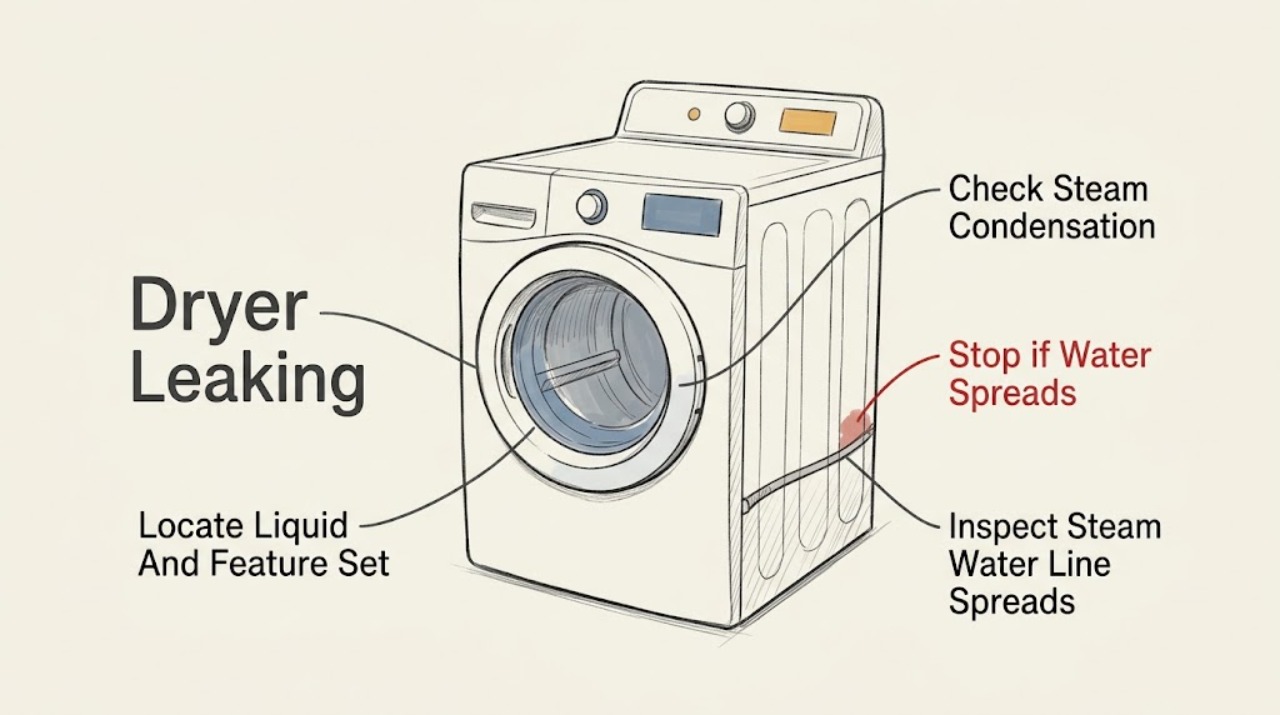
Whirlpool Dryer Leaking
First identify where the moisture starts and whether your Whirlpool dryer has a Steam cycle, a HybridCare or other water-drain system, or neither. On Steam models, a few drips on the door after a small Steam load can be condensation, while water at the rear points to the faucet, Y connector, hose, or dryer inlet connection.
-
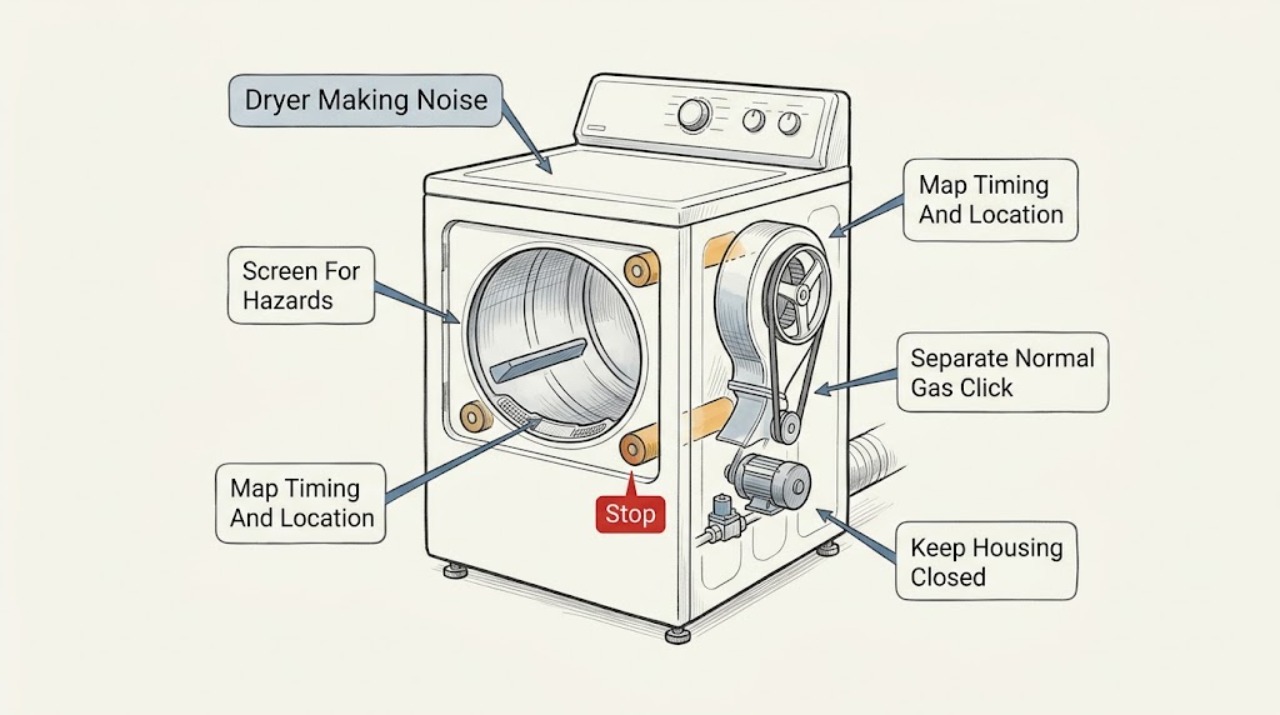
Whirlpool Dryer Making Noise
First identify when and where the Whirlpool dryer makes the sound: a brief light thump at startup or after a long idle period can come from drum-support rollers, a click during a gas dryer's cycle can be the gas valve, and a thump or rattle that follows the load often comes from bunched fabric, shoes, pockets, a pedestal, or objects touching the cabinet.
-
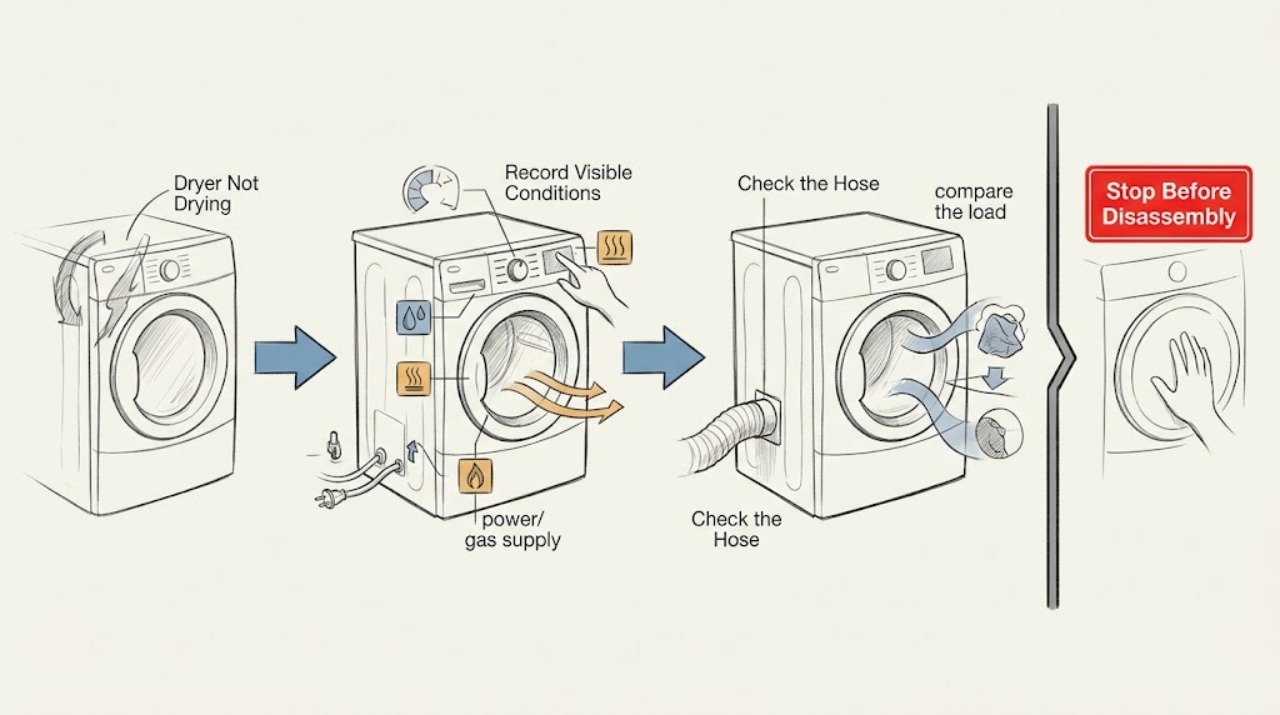
Whirlpool Dryer Not Drying: Find the Cause of Damp or Long Cycles
A Whirlpool dryer that is not drying should be separated into clothes that remain damp, a cycle that runs unusually long, and a dryer with little or no heat. Record the complete model, whether it is electric, gas, vented, or a model-specific ventless or condensing design, then check the selected cycle, load size, lint screen, moisture-sensing surfaces, visible vent path, and supply conditions only as the model guide allows.
-
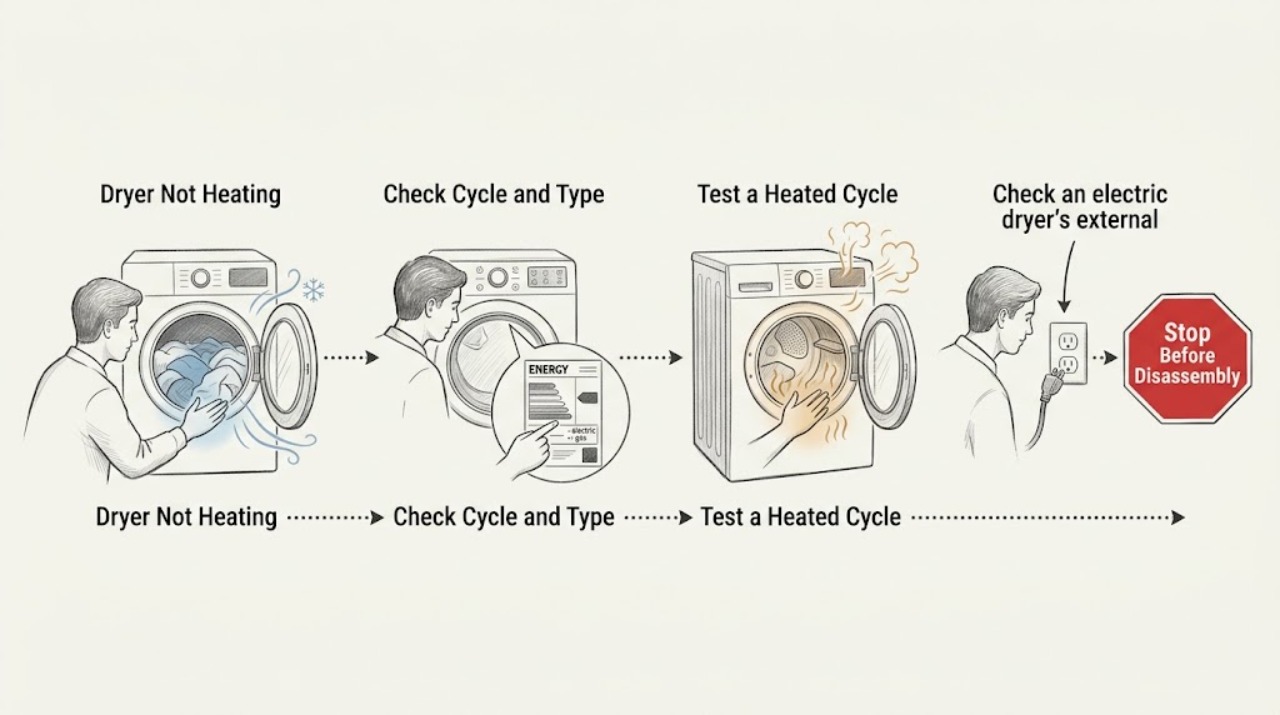
Whirlpool Dryer Not Heating: Check the Cycle, Power, and Airflow
First confirm that the Whirlpool dryer is on a heated cycle rather than Air Only or Air Fluff, and separate a vented electric, vented gas, or heat-pump model. For an electric model, a tripped leg of the two-breaker supply can leave the drum turning without heat; for a gas model, a closed visible shutoff can do the same.
-
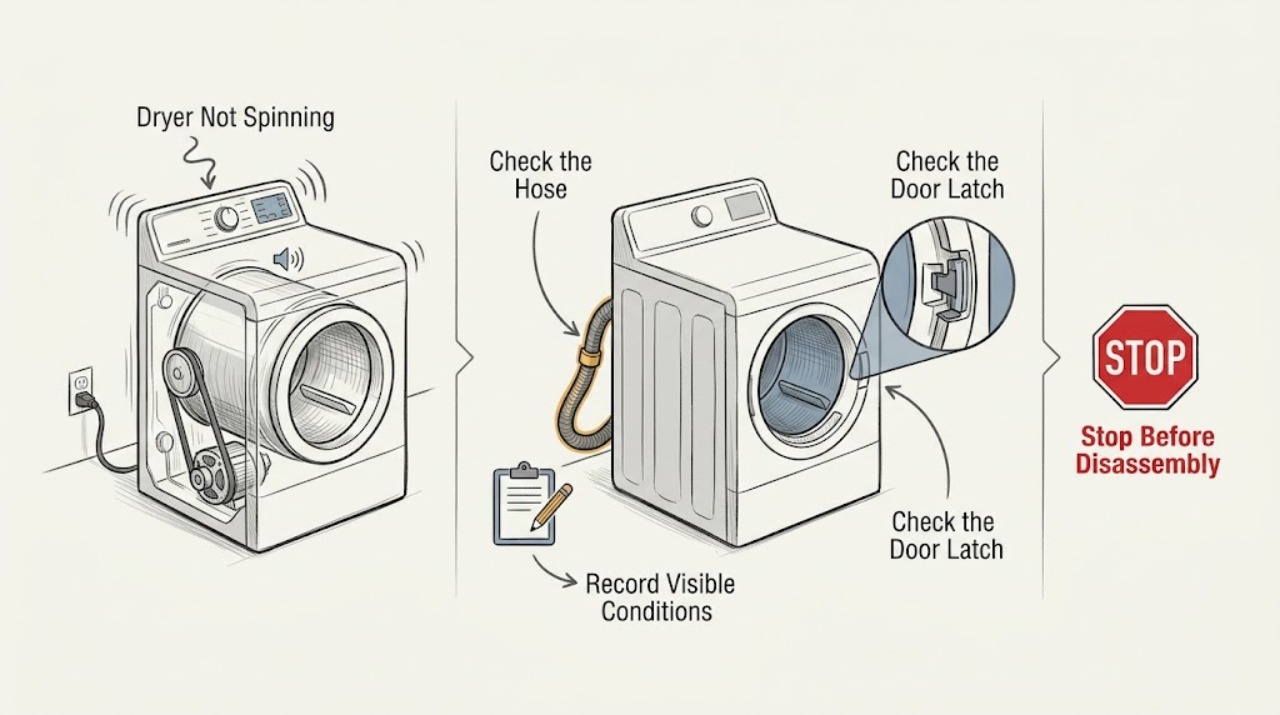
Whirlpool Dryer Not Spinning: Check the Start, Door, Load, and Drum Safely
First decide whether the Whirlpool dryer is completely dead, starts but the drum never moves, or briefly turns and then stops. Check the model-specific cycle, Start command, door latch, control lock, and accessible household supply.
-
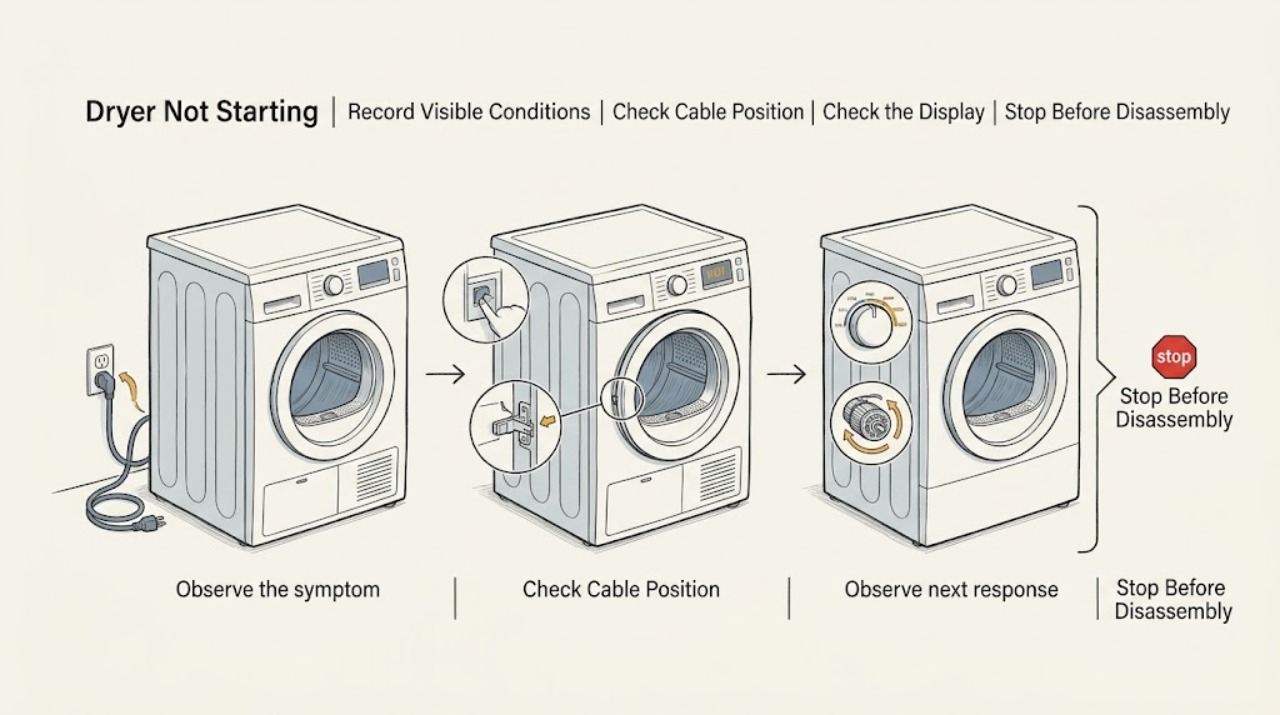
Whirlpool Dryer Not Starting: Separate No Power From a Start or Door Fault
If a Whirlpool dryer will not start, first decide whether the display and drum light are also dead or whether the controls have power but the cycle will not begin. For no power, inspect only the dry external plug, cord, outlet, and applicable household protection; electric and gas dryers use different supply arrangements.
-
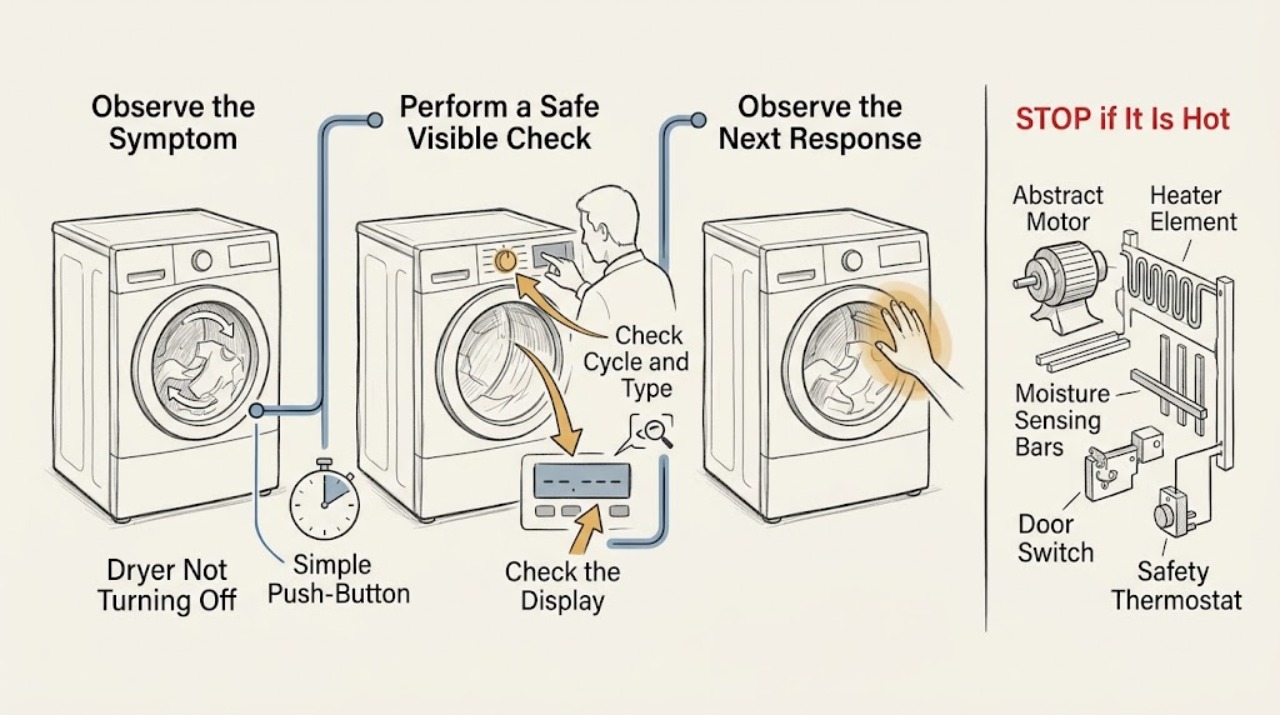
Whirlpool Dryer Not Turning Off: Check Wrinkle Shield and Stop Safely
First determine whether the Whirlpool dryer is truly running continuously or is performing a normal Wrinkle Shield, Wrinkle Prevent, or Wrinkle Guard interval. Whirlpool says these options can turn the dryer off and back on for short periodic tumbles after the normal cycle, and some models can continue this behavior for a model-defined period.
-
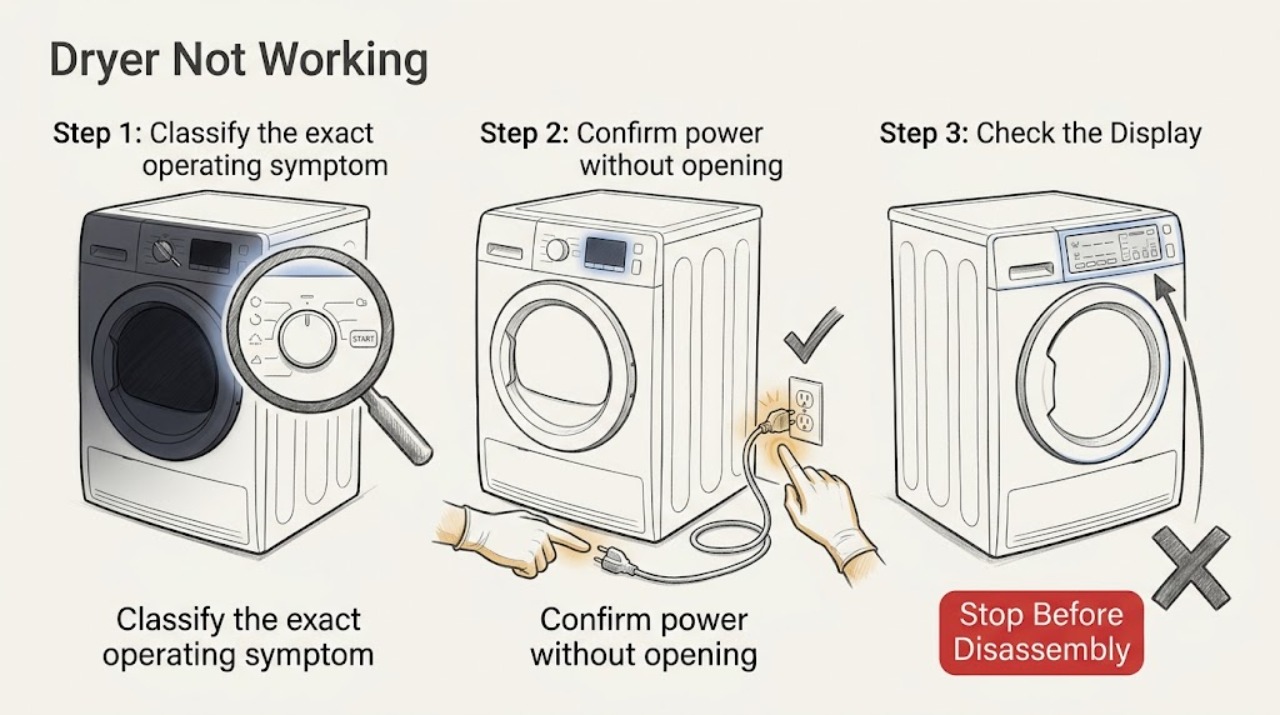
Whirlpool Dryer Not Working: Find the Safe Starting Point
First classify what ‘not working’ means on the Whirlpool dryer: no display or drum light, controls that do not respond, a cycle that will not start, a drum that will not tumble, or a cycle that runs without heat. Check the door latch, control lock, cycle selection, Start button, and visible power condition before anything else.
-
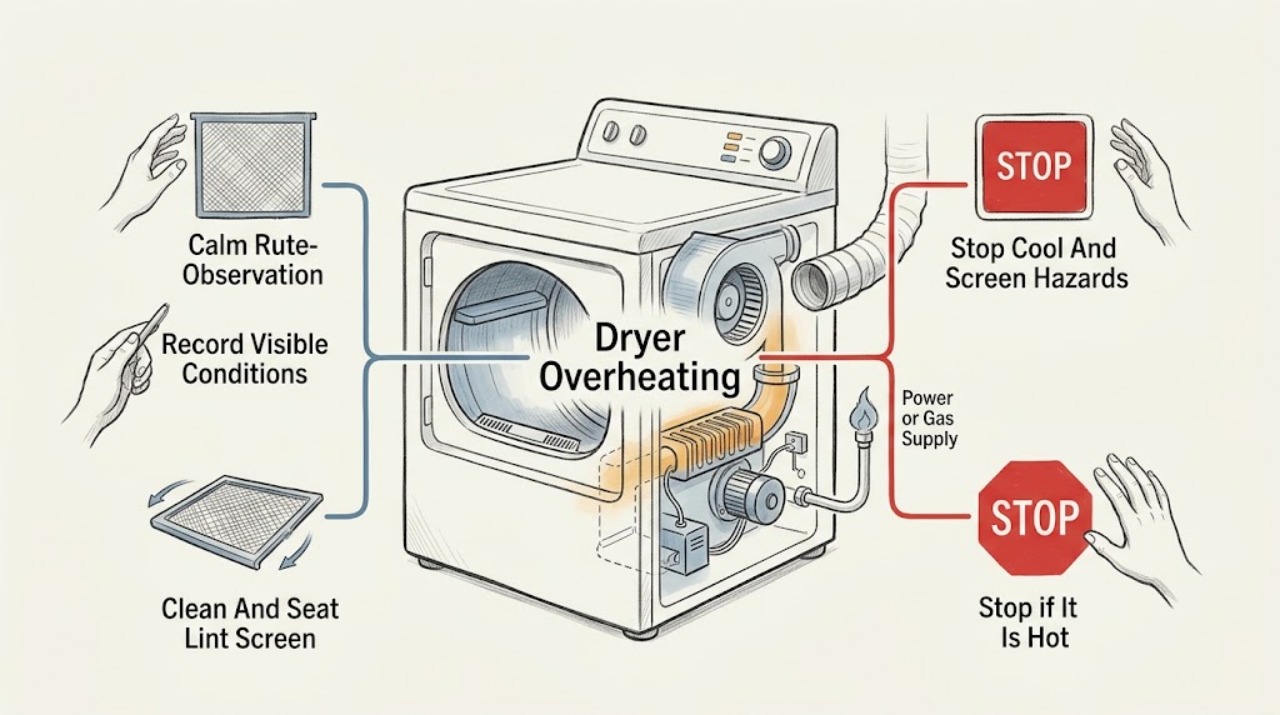
Whirlpool Dryer Overheating: Restore Airflow Before Replacing Parts
Stop the Whirlpool dryer and let it cool if the cabinet, clothes, plug, or exhaust feels abnormally hot. Treat smoke, a burning or melting smell, scorch marks, sparks or arcing, a hot or damaged cord or outlet, a gas smell, a tripped breaker, or a fire as an immediate stop condition; do not run another test.
-
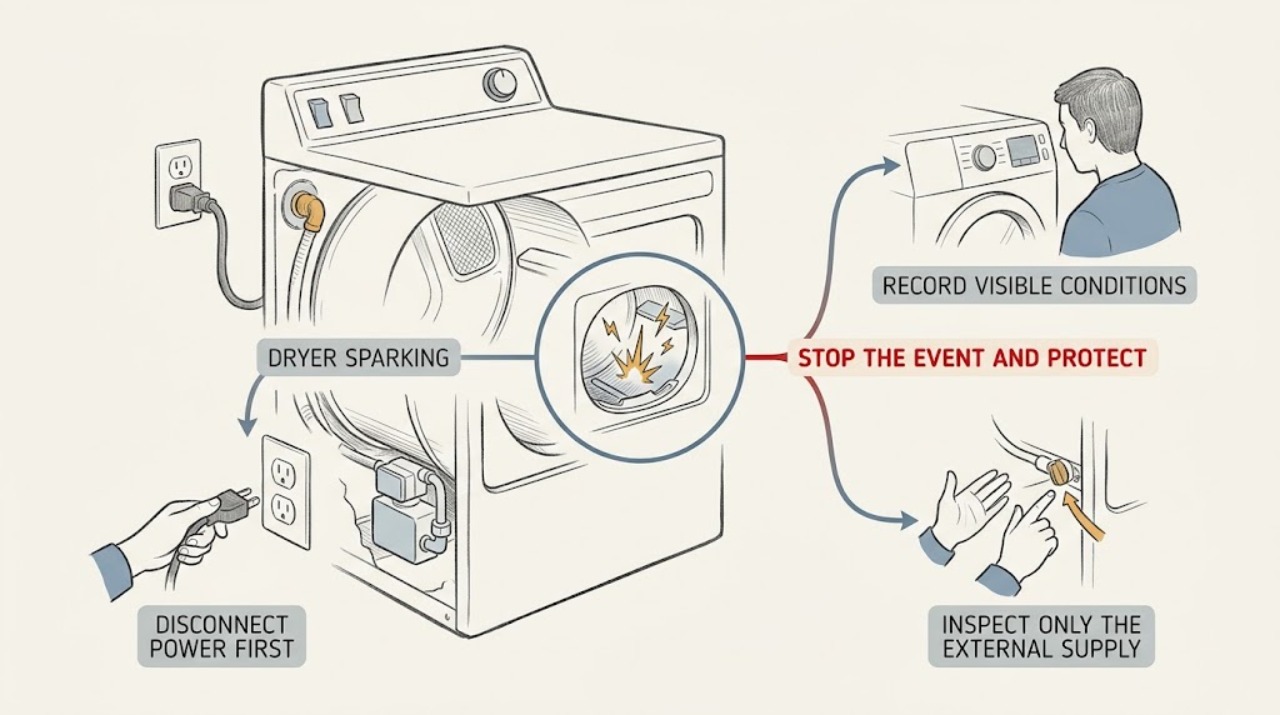
Whirlpool Dryer Sparking: Stop Safely and Find the Right Service Path
Treat any visible spark or arc from a Whirlpool dryer as abnormal. Stop the cycle immediately, keep clear of the drum and damaged connection, and only if it is dry and safe use the normal stop control or an accessible power disconnect; do not run another cycle to reproduce the event.
-
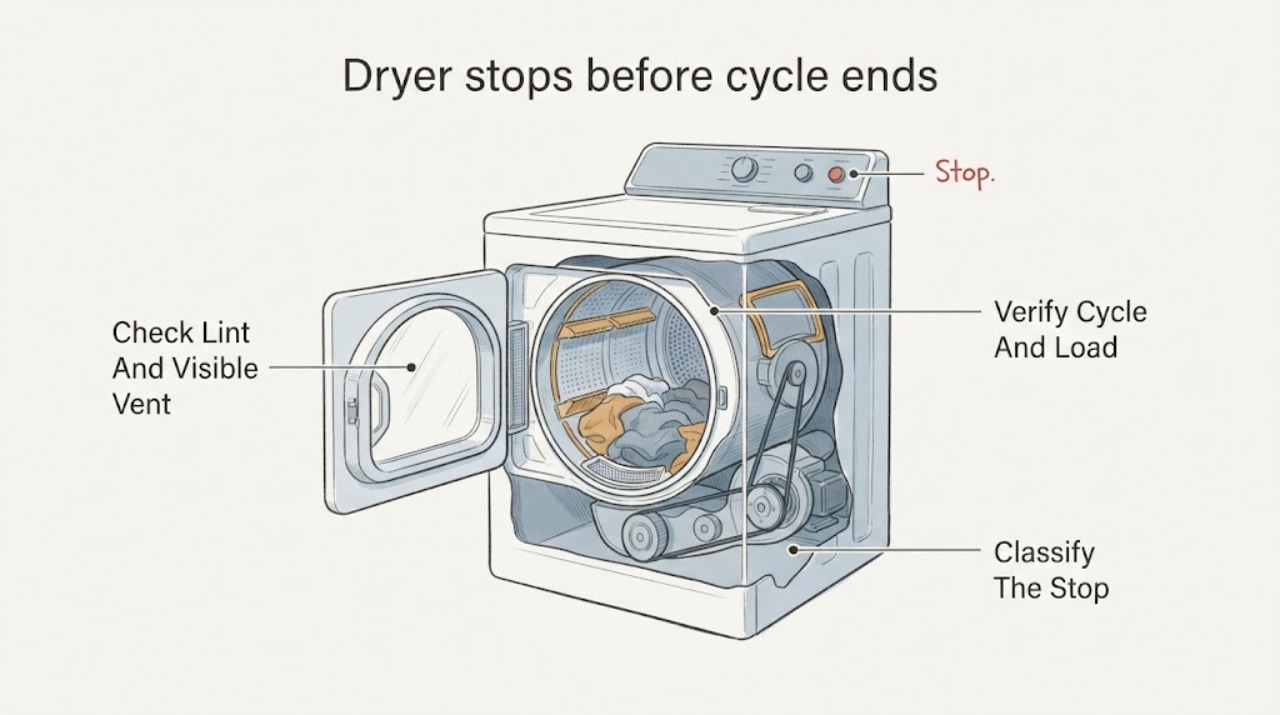
Whirlpool dryer stops before cycle ends: What to Check and What to Do Next
A Whirlpool dryer that stops early may be completing an automatic cycle because the load has reached the selected dryness, especially when the load is small or lightly damp. If clothes are still damp, first record the selected cycle and whether the drum stops hot, check the load and moisture-sensor contact, then clean the lint screen and inspect the visible vent path with the dryer off and cool.
-
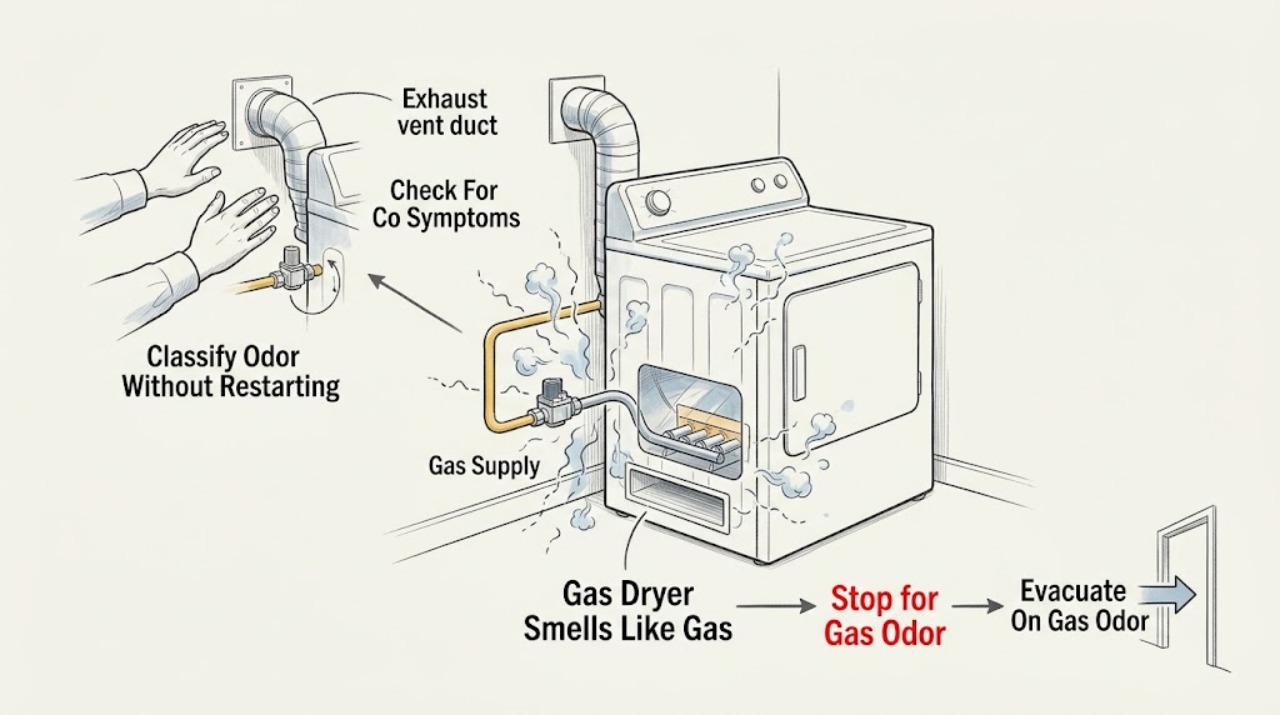
Whirlpool Gas Dryer Smells Like Gas: Stop, Evacuate, and Get It Checked
Treat a strong, persistent, or rotten-egg-like smell near a Whirlpool gas dryer as a possible gas leak or unsafe combustion event. Do not start or stop the dryer, touch light switches, use a phone inside, light a flame, or keep testing the smell.