
On this page
Start here
Quick answer
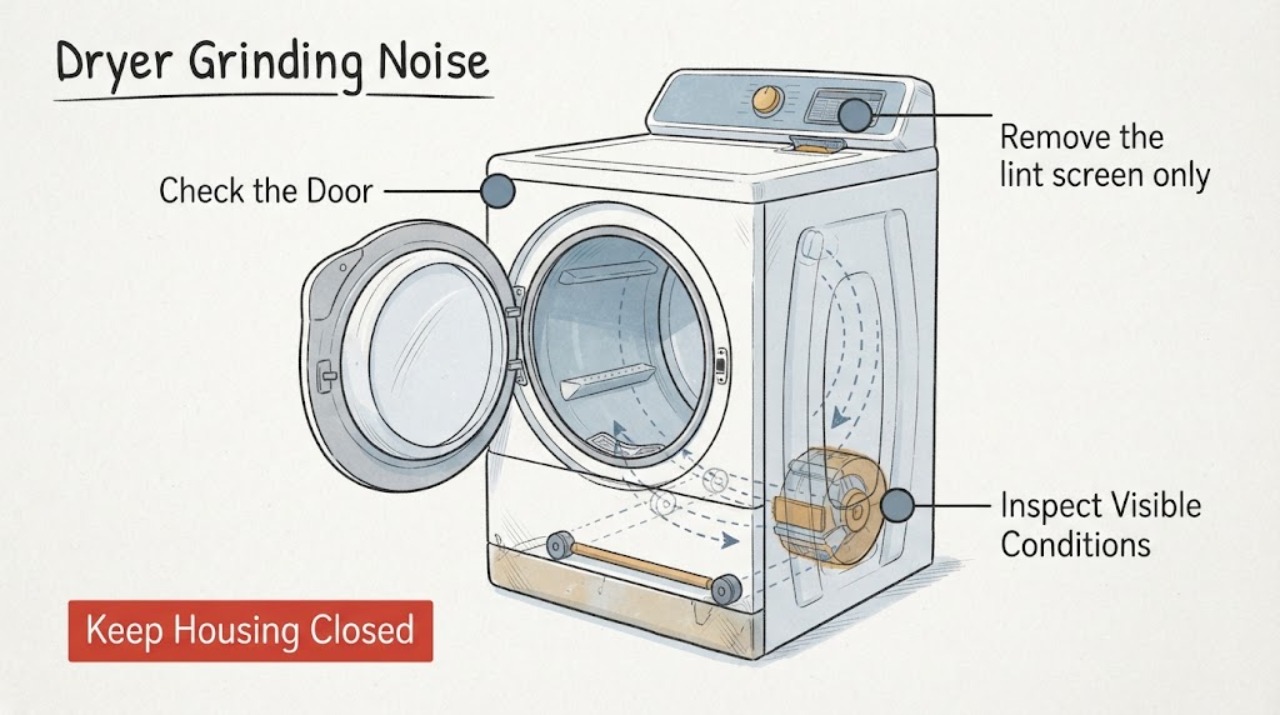
Stop the used Whirlpool dryer and disconnect power before inspecting it; a horrible grinding sound is a reason to avoid running repeated test cycles. Empty the drum and look with a light along the front and rear drum seams for a coin, paper clip, screw or other accessible object, then inspect the lint-screen opening for a visible foreign object without reaching into the blower. Also check from outside that the dryer is level, not touching the washer or wall, and that the vent is not pressed against the cabinet. If the grinding remains, Whirlpool says worn drum bearings or glides may require disassembly and professional help; do not assume the idler pulley, rollers, belt or motor from the sound alone. Because the dryer was bought used, obtain the exact model and serial number and a technician's diagnosis before deciding whether to repair it or replace it.
Work through in order
Diagnostic checks
Use only checks that match the exact appliance or system and its official guide.
-
Check 1
Turn the dryer off, disconnect its electrical power, and wait for the drum and any blower to stop before opening the door or inspecting the lint-screen area. If there is a gas smell, smoke, sparking, a hot cord or visible fire, leave the area and use the appropriate emergency or gas-service response instead of testing the dryer.
Expected result: The dryer is cool and isolated with no odor or visible damage, or there is smoke, gas odor, electrical damage or abnormal heat.
Next step: Keep the dryer disconnected and arrange qualified appliance service for any hazard sign. Do not restart it to reproduce the grinding or reach behind panels while power or gas may be present.
Why this matters
Why: A cool, isolated appliance permits a limited external inspection. Fire, fuel or electrical signs are stop-use hazards and are not a drum-noise diagnosis.
-
Check 2
Empty the drum and use a flashlight to inspect the visible front and rear edges where the drum meets the cabinet. Look for a coin, paper clip, screw, nail, safety pin or other small hardware caught in the seam; remove only an object that is plainly reachable without prying or touching moving parts.
Expected result: A foreign object is visible in a drum seam, or the seams are clear while the grinding remains.
Next step: If an object is safely reachable, remove it with the appliance isolated and recheck only after the drum area is clear. If the seam is clear or the object is trapped, stop and arrange service rather than forcing the drum or dismantling the cabinet.
Why this matters
Why: Whirlpool says small hardware can get caught where the drum meets the front or rear and can create a scraping sound. A clear seam makes that explanation less likely but does not identify an internal bearing, glide or drive fault.
-
Check 3
Remove the lint screen only after power is disconnected and look into the accessible lint-chute opening for a visible coin, sock or other foreign object. Use only a dryer lint brush for an object that is plainly reachable; keep fingers and tools out of the blower path and reinstall the lint screen before any later operation.
Expected result: A visible object is in the lint chute, the opening is clear, or the object cannot be reached without removing a housing.
Next step: Remove only a clearly accessible object with the recommended brush. If the grinding persists or access requires a housing or panel, keep the dryer off and have a technician inspect it.
Why this matters
Why: Whirlpool says small items can fall into the lint-chute housing and hit the blower wheel. A clear opening does not prove that the drum drive or motor is at fault, and an unreachable object needs service access.
-
Check 4
From outside, check that the dryer is level and stable, not leaning against the washer or a wall, not carrying loose objects on top, and not pressed so far back that the exhaust vent touches the cabinet. Do not pull a gas dryer by its gas line or disturb the vent connection while checking clearance.
Expected result: The cabinet rocks, the washer contacts it during spin, an object or pedestal drawer rattles, the vent touches the dryer, or the installation is stable and clear.
Next step: Correct only an accessible placement issue while keeping the dryer disconnected. If the installation is stable or the grinding remains, do not compensate with lubricant or improvised padding; move to model identification and service.
Why this matters
Why: Whirlpool identifies cabinet vibration, loose objects and vent contact as possible noise sources. Correct placement can remove an external vibration but cannot clear a persistent internal grinding sound.
-
Check 5
Find the complete Whirlpool model and serial numbers and record when the grinding occurs, whether the drum turns normally, whether it changes with an empty drum, and whether drying performance or heat changed. Use the exact manual before any cabinet access, and ask a technician to identify the failed component before ordering parts or replacing the used dryer.
Expected result: The noise disappears after an accessible object or placement issue is corrected, or it continues with an empty drum and clear external checks.
Next step: For continued grinding, obtain a model-matched diagnosis and repair estimate. Compare that documented repair path with replacement only after checking safety, age, condition and any available seller or manufacturer coverage; do not make a part diagnosis from the Craigslist purchase history.
Why this matters
Why: A persistent grinding sound with the drum empty is more consistent with a mechanical or blower-area inspection than a loose garment item, but Whirlpool's public guidance still does not prove which internal part has failed.
Use your observations
Decision map
Find the observation that best matches what you see, then follow the next safe action.
-
PATH 01Next step
What you see
A coin or other small object is visibly caught in the front or rear drum seam and the grinding stops when it is safely removed with power disconnected.
Do this next
Keep the lint screen installed, check pockets before future loads and monitor without repeated test cycles; call service if scraping returns.
Why this path and its safety boundary
Why it matters: Whirlpool's scraping guidance fits an accessible foreign-object cause better than a confirmed bearing or motor failure.
-
PATH 02Next step
What you see
The lint-screen opening contains a reachable object or the noise changes after an external placement or vent-contact issue is corrected.
Do this next
Keep the dryer isolated while clearing only the accessible condition, then use the exact model guidance; arrange service if grinding remains or access requires a housing removal.
Why this path and its safety boundary
Why it matters: A blower-path object or transmitted cabinet vibration may explain the noise, but the change does not establish that the drum drive is healthy.
-
PATH 03Next step
What you see
The drum seam and lint opening are clear, the cabinet is stable, and the dryer still makes a horrible grinding sound with an empty drum.
Do this next
Stop using the dryer and arrange model-matched professional diagnosis. Do not open the cabinet, grease the mechanism or order a generic repair kit from the sound alone.
Why this path and its safety boundary
Why it matters: An internal bearing, glide, roller, belt, pulley, blower or motor issue remains possible, but Whirlpool's public guidance does not identify one part from this pattern.
-
PATH 04Next step
What you see
The dryer has smoke, gas odor, sparking, a hot cord, severe overheating or a rubbing sound that is rapidly worsening.
Do this next
Leave the dryer off and clear of use, avoid touching damaged connections, and use qualified appliance or emergency service as appropriate.
Why this path and its safety boundary
Why it matters: The appliance presents a fire, fuel or electrical hazard that is outside a normal noise check.
Helpful context
Understand the symptom
A grinding sound does not identify one dryer part
The used purchase and Craigslist history explain why the model, maintenance history and prior repairs may be unknown; they do not identify the failed part. Whirlpool lists drum bearings or glides as possible grinding sources, while other noise guidance points to objects at the drum seam, a lint-chute object, cabinet vibration or a vent touching the dryer. Treat each as an observation branch and keep internal belt, roller, pulley and motor work for a model-matched procedure or technician.
Protect the dryer before choosing repair or replacement
A harsh grinding sound can worsen during a load and can be accompanied by heat, rubbing or a blocked air path. Whirlpool recommends professional help for repairs that require access inside the cabinet and warns against using combustible lubricant such as WD-40. Document the exact model, sound timing and accessible findings first; then compare a diagnosis and verified parts path with the alternative of replacing the used appliance.
When checks do not resolve it
Need a professional?
Call qualified appliance service when the grinding persists after the drum-seam, lint-opening and placement checks, when the noise requires cabinet disassembly, or when there is any gas, smoke, electrical, heat or rubbing hazard. Whirlpool says grinding may involve drum bearings or glides and recommends professional assistance when disassembly is required.
Have this ready
- Provide the complete Whirlpool model and serial numbers, the used-purchase history, a description or recording of the noise, whether the drum is empty, the cycle timing, whether the drum turns and heats normally, and the results of the accessible-object and placement checks.
Common questions
FAQ
Does a grinding Whirlpool dryer always need a new motor?
No. Whirlpool lists drum bearings or glides as possible grinding sources and separately identifies foreign objects, blower-path objects, cabinet vibration and vent contact as other noise causes. The sound does not select a motor or any other part by itself.
Can I spray lubricant on the noisy dryer parts?
Do not use WD-40 or an unapproved lubricant. Whirlpool warns that WD-40 is combustible and says bearings, pulleys and other internal parts should be handled with professional help.
Is it worth repairing a used Craigslist dryer?
The purchase source does not answer that question. First obtain the exact model and a diagnosis that identifies the failed component and safe repair path. Then compare that documented repair with the condition and safety of the used appliance; do not replace it or buy a part solely from the noise.
Read the exact guide
Official sources
- Dryer - Product HelpWhirlpool Product Help · Whirlpool support index confirming dryer noise categories and directing owners to model-number manuals and service; used only for model-scope and service routing, not as unseen technical evidence.
- 6 Reasons a Dryer is Making Loud NoisesWhirlpool · Whirlpool manufacturer article identifying possible grinding, squeaking, rumbling, rattling and thumping causes and directing internal bearing/glide work to professional assistance.
- How to find the cause of a squeaky dryer and fix itWhirlpool · Whirlpool manufacturer guidance that dryer noise may involve bearings, belt, idler pulley, roller shaft or motor; it says model instructions vary, professional help is recommended for internal parts, and combustible WD-40 should not be used.
- Buzzing Sound - DryerWhirlpool Product Help · Whirlpool support page identifying cabinet contact, washer-to-dryer vibration, pedestal items, vent contact, loose garments and lint-chute objects as external noise checks, with a reminder to reinstall the lint screen.
- Scraping Sound - DryerWhirlpool Product Help · Whirlpool support guidance for turning off the dryer and checking visible front and rear drum seams for coins, paper clips, pins, screws, nails or other small hardware.
Community feedback
Share a repair observation
Share a plain-text repair observation. Accepted observations are published automatically; this page may take a moment to update.