
On this page
Start here
Quick answer
A Whirlpool microwave can make a normal hum or buzz during operation because its power supply switches the magnetron on and off. The useful distinction is whether the sound is the documented steady operating hum or a new harsh noise accompanied by poor heating, arcing, smoke, vibration, or a damaged turntable. Stop immediately for sparks, smoke, burning odor, or damage; persistent abnormal noise needs service rather than a cover removal.
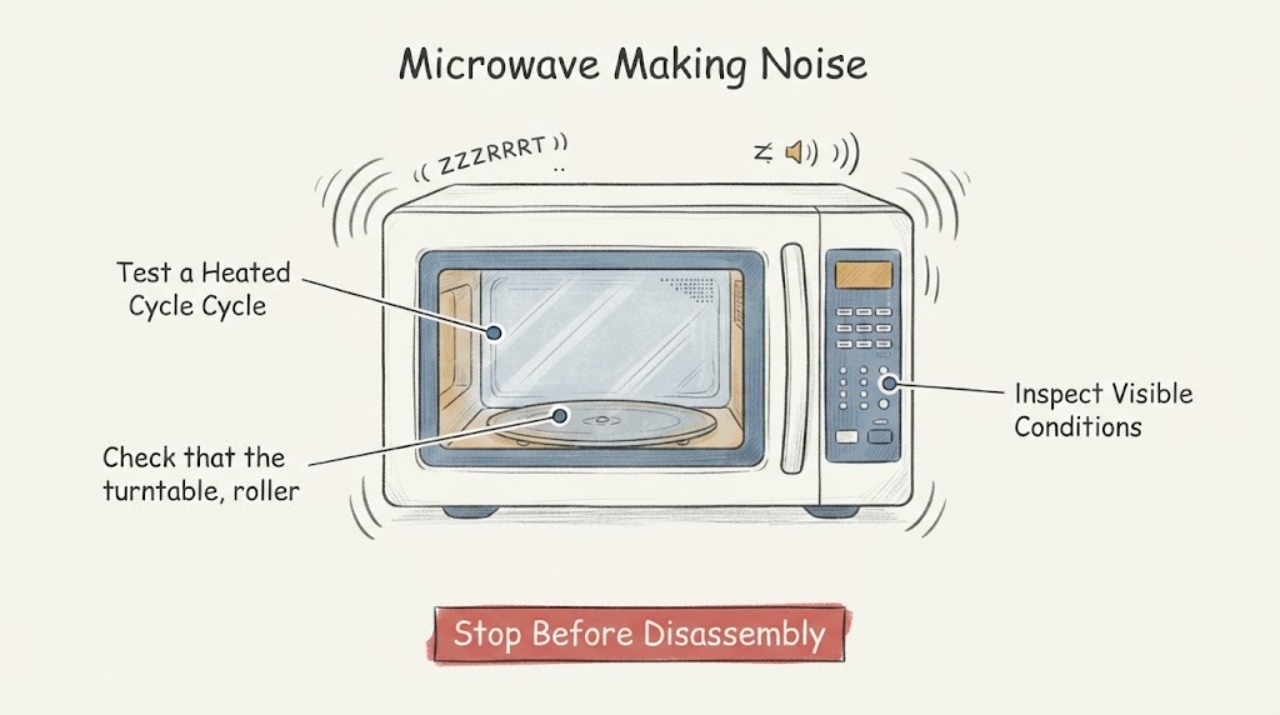
Work through in order
Diagnostic checks
Use only checks that match the exact appliance or system and its official guide.
-
Check 1
Run a short supervised heating cycle with a microwave-safe cup of water and observe whether the sound is a steady hum or a new rattling, grinding, squealing, or crackling noise. Do not run the microwave empty.
Expected result: The sound is a steady operating hum, changes with the cycle, or is harsh or accompanied by arcing.
Next step: Stop the cycle for crackling, arcing, smoke, or a burning smell and do not repeat the test.
Why this matters
Why: A steady hum during heating can be normal; a new mechanical or electrical sound changes the service decision.
-
Check 2
Check that the turntable, roller ring, and removable rack or tray are correctly seated and that no container or utensil is touching the cavity walls.
Expected result: The noise changes when the removable items are reseated, or the items are correctly seated and the noise remains.
Next step: Reseat only removable parts described by the owner manual. Do not remove the outer cabinet.
Why this matters
Why: A loose removable part can rattle; persistent noise with a clear cavity points toward an internal fan or electrical component.
-
Check 3
Observe whether the microwave still heats normally and whether the cooling fan continues briefly after the cycle. Record any display fault or door problem.
Expected result: Heating and controls remain normal, heating is weak or absent, or a fault and noise recur together.
Next step: Contact Whirlpool service for persistent abnormal noise, weak heating, or a recurring fault.
Why this matters
Why: Normal heating with a steady hum supports normal operation; poor heating or a linked fault changes the risk and service boundary.
-
Check 4
Inspect the exterior cord, plug, and cavity for visible damage only after the unit is unplugged and cool.
Expected result: There is scorching, a damaged cord, cracked interior, or no visible damage.
Next step: Keep a damaged unit disconnected and arrange service.
Why this matters
Why: Visible damage can create a shock or fire hazard; a normal exterior does not clear an internal noise fault.
Use your observations
Decision map
Find the observation that best matches what you see, then follow the next safe action.
-
PATH 01Next step
What you see
The microwave makes a steady hum only while heating, heats normally, and has no arcing or damage.
Do this next
Continue normal use while following the owner manual, and monitor for a change in sound or performance.
Why this path and its safety boundary
Why it matters: Whirlpool identifies this operating buzz as potentially normal magnetron power-supply behavior.
-
PATH 02Next step
What you see
The sound is new, harsh, grinding, crackling, or paired with weak heating.
Do this next
Stop using the microwave and schedule service; do not open the cabinet.
Why this path and its safety boundary
Why it matters: The symptom is outside the documented normal hum and may involve an internal component.
-
PATH 03Next step
What you see
A loose turntable or removable item is visibly causing the rattle.
Do this next
Reseat the item according to the owner manual and test once; escalate if the sound returns.
Why this path and its safety boundary
Why it matters: The removable load or support can account for the noise.
-
PATH 04Next step
What you see
There is arcing, smoke, burning odor, or a damaged cord or cavity.
Do this next
Stop the cycle, disconnect power if safe, and arrange service; do not re-test.
Why this path and its safety boundary
Why it matters: The event is an immediate safety stop.
Helpful context
Understand the symptom
Listen during a normal heating cycle and record when the sound starts, whether it changes with the fan or turntable, and whether food still heats. A sound by itself does not identify a fan, magnetron, or transformer.
The Whirlpool product-help page supports a normal operating hum or buzz but sends unresolved concerns to service. Do not open the microwave cabinet to locate the sound.
When checks do not resolve it
Need a professional?
Use Whirlpool service when abnormal noise persists, heating changes, a fault returns, or an internal fan or electrical component is suspected.
Common questions
FAQ
Is a buzzing Whirlpool microwave normal?
A steady hum or buzz during operation can be normal because the power supply switches the magnetron on and off. A new harsh sound, poor heating, arcing, smoke, or odor needs service.
Why is my Whirlpool microwave noisy but still heating?
Check the turntable and removable supports for a visible rattle. If the sound is new or harsh despite correct seating, stop using the unit and arrange service.
Can I remove the Whirlpool microwave cover to find the noise?
No. Leave internal microwave service to a qualified technician. The product-help page provides a normal-sound distinction and a service path, not a consumer cabinet repair.
Read the exact guide
Official sources
- Buzzing Noise - Countertop Microwave - Product HelpWhirlpool · Whirlpool countertop microwave normal humming/buzzing from magnetron power switching and service boundary
Community feedback
Share a repair observation
Share a plain-text repair observation. Accepted observations are published automatically; this page may take a moment to update.