
On this page
Start here
Quick answer
A Whirlpool oven smell can come from new manufacturing materials, packaging, food or grease residue, a liner that traps debris, or a cleaning product. Those possibilities are different from a gas odor, burning electrical smell, smoke, arcing, abnormal flame, or carbon-monoxide concern. Keep the oven off while you identify the odor from a safe position. Clean only a fully cool cavity as directed by the exact manual. If gas is suspected, or there is smoke, flame, a burning odor, arcing, overheating, or an illness or carbon-monoxide concern, stop immediately and get qualified help.
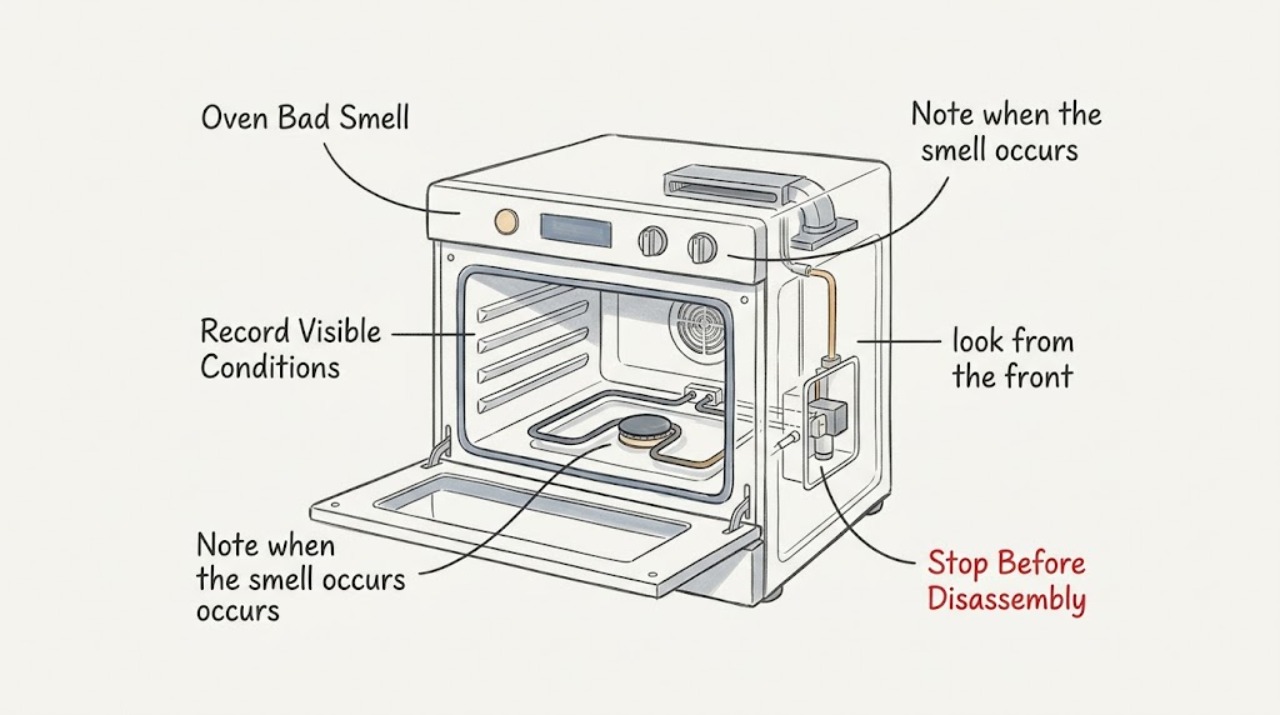
Work through in order
Diagnostic checks
Use only checks that match the exact appliance or system and its official guide.
-
Check 1
Leave the oven off and, from a safe position, describe the odor and record whether there is smoke, visible flame outside the normal burner area, hissing, a gas-like smell, arcing, or a hot electrical smell.
Expected result: The odor is gaseous or rotten-egg-like, there is hissing, smoke, an abnormal flame, arcing, or a burning electrical smell; or it is a mild food, new-material, or cleaning smell with no danger sign.
Next step: For any danger sign, stop and leave the area as appropriate; do not operate switches, light a flame, or restart the oven. For a mild odor, continue to the timing and source checks with the oven off.
Why this matters
Why: Gas and electrical or fire symptoms require an immediate safety response, not further diagnosis. A mild odor without those signs can be investigated with non-invasive, cool-oven observations.
-
Check 2
Note when the smell occurs without deliberately recreating it: only during the first uses, after a spill or cleaning, during preheating, while baking or broiling, after a delayed start, or while the oven is completely off.
Expected result: The smell is limited to initial use, follows a known spill or cleaning, appears only during ignition or preheating, or remains when the oven is off.
Next step: Use the matching branch below. Do not repeat an ignition attempt to compare smells, and treat an odor that remains while off as a gas-safety issue until qualified help rules it out.
Why this matters
Why: Initial-use and residue odors can be temporary. An ignition-linked odor may involve the burner or igniter. A gas odor while off is not expected and can indicate an accidentally lit surface burner or a gas-system problem.
-
Check 3
When the cavity and racks are completely cool, look from the front for remaining packaging, spilled food or grease, foil, a liner, unusual residue, or a wet cleaning product; do not reach into a hot oven or remove gas or electrical parts.
Expected result: Packaging or residue is visible, foil or a liner covers the bottom, a cleaning product remains, or the cool cavity is visibly clean.
Next step: If the manual permits it, remove loose packaging and clean cool surfaces using only its approved method; never mix cleaners. If the odor persists after safe cleaning or the cavity is already clean, request appliance service.
Why this matters
Why: Packaging, trapped residue, and an impermissible liner can produce odors when heated. A clean cavity makes an internal component, venting, gas, or electrical cause more important to rule out.
-
Check 4
If the oven is newly installed and there are no gas, smoke, flame, or electrical danger signs, check the cavity and surrounding area for shipping materials and confirm the exact model's initial-use instructions in the owner's manual.
Expected result: Packaging remains, the smell is limited to the first uses, or the smell persists after the manual's initial-use guidance has been followed.
Next step: Remove packaging only while the oven is cool and follow the model manual's approved initial-use procedure with ventilation. If the smell does not dissipate, stop using the oven and schedule service; do not improvise a cycle.
Why this matters
Why: New parts, insulation, protective oil, or tape can cause a temporary first-use odor. Persistence after the documented break-in process is not a reason to keep heating the oven indefinitely.
-
Check 5
For a gas model with no gas odor and no fire or electrical warning, note whether surface burners, the oven burner, or the broiler show a normal ignition sequence without repeating the start; do not manually light the oven or inspect the gas train.
Expected result: The cooktop works but the oven has delayed ignition, repeated clicking, no ignition, an abnormal flame, or a new gas smell; or the odor is absent during the documented normal sequence.
Next step: Keep the appliance off and request qualified gas-appliance service for any abnormal sequence. Do not move the range, adjust a regulator, use a flame, or try another start to confirm the symptom.
Why this matters
Why: A gas oven can have a separate igniter, gas path, or safety component. Delayed ignition, an abnormal flame, or a new gas smell can release unburned gas and requires professional diagnosis.
-
Check 6
Record the model number, fuel type, odor description, timing, recent installation or cleaning, visible residue, smoke or flame behavior, control messages, and whether the smell remains with the oven off for the service technician.
Expected result: The record supports a temporary new-use or residue branch, or it shows a persistent, ignition-linked, electrical, or unexplained odor.
Next step: Arrange Whirlpool appliance service for a persistent or unexplained smell. Use emergency gas, fire, medical, or electrical help when the corresponding warning signs are present.
Why this matters
Why: The sequence helps a technician distinguish cavity contamination from an igniter, burner, vent, control, wiring, or gas-supply issue without a risky repeat test.
Use your observations
Decision map
Find the observation that best matches what you see, then follow the next safe action.
-
PATH 01Next step
What you see
The oven is new, packaging or protective materials were involved, and the odor is mild and temporary with no smoke, gas, or electrical warning.
Do this next
Follow only the exact manual's initial-use guidance with appropriate ventilation, then stop if the odor persists or becomes stronger.
Why this path and its safety boundary
Why it matters: Whirlpool identifies a small first-use odor or smoke as a possible result of new materials and shipping residue.
-
PATH 02Next step
What you see
A cool-oven inspection finds a spill, baked-on residue, foil, a liner, or cleaning product and the odor is linked to heating.
Do this next
Clean only while cool and only as the model manual permits; never mix products. If the smell or smoke returns, stop using the oven and arrange service.
Why this path and its safety boundary
Why it matters: Trapped debris can smoke or smell, while foil or liners can trap residue and affect airflow or combustion.
-
PATH 03Next step
What you see
The smell is gaseous, remains while the oven is off, is accompanied by hissing, delayed ignition, an abnormal flame, headache, dizziness, or another gas warning.
Do this next
Do not troubleshoot further, light a flame, operate electrical switches, use a phone inside, move the range, or try another ignition. Leave and contact emergency or gas-safety help from a safe location.
Why this path and its safety boundary
Why it matters: This can indicate a gas leak or unsafe combustion; it is not a cleaning or ordinary odor problem.
-
PATH 04Next step
What you see
The smell is sharp or electrical, or there is smoke, arcing, a hot control, repeated tripping, or heating that does not stop normally.
Do this next
Stop using the oven without touching hot or wet electrical parts; if safe and already accessible, leave it unoperated and arrange qualified electrical or appliance service. Use emergency fire help for smoke or flame.
Why this path and its safety boundary
Why it matters: Continued operation can increase fire or shock risk, and the cause is outside a safe cavity-cleaning check.
Helpful context
Understand the symptom
Separate an oven smell from a gas emergency
Ask what the smell resembles, when it occurs, and whether there is smoke or an abnormal flame. A faint, temporary new-oven odor or food residue smell is not the same decision as a rotten-egg or gaseous odor, a sharp burning electrical smell, or visible smoke. If the source could be gas, do not continue comparing causes inside the room.
Why a new Whirlpool oven can smell
Whirlpool's product guidance says new parts, insulation, protective manufacturing oil, and shipping tape can produce a temporary odor or small amount of smoke during initial use. Packaging must be removed, and any break-in cycle must follow the exact model manual. Do not cook food during a manufacturer-directed initial cycle if the manual warns that odor can affect it, and protect birds from fumes.
Why food and liners matter
Baked-on spills can smoke or smell when the cavity heats. Whirlpool also warns that foil or liners can trap spills and debris or interfere with airflow and combustion. Cleaning is a cool-oven task: use only the products and methods allowed by the model manual, and stop if the odor is chemical, electrical, gaseous, or accompanied by smoke.
Safety boundary
Stop conditions
- If you smell gas, hear hissing, see delayed ignition or an abnormal flame, or have headache, dizziness, or a carbon-monoxide concern, stop immediately. Do not light a match, operate switches, use a phone inside, move the range, or search for the leak; leave and contact emergency or gas-safety help from a safe location.
- Stop for smoke, flame outside the normal burner area, a burning electrical or plastic odor, arcing, a hot or damaged cord or outlet, repeated circuit trips, or heating that continues unexpectedly. Do not restart or repeatedly reset the appliance.
- Do not clean a hot oven, mix cleaning products, remove panels, reach into the burner or wiring area, adjust gas components, manually ignite the oven, or run an improvised empty cycle.
Only after diagnosis
Potential parts
- gas oven igniter
Consider this only if a qualified diagnosis links the odor or delayed ignition to a failed igniter for the exact model.
Confirm the model and manufacturer fit information before ordering; gas and electrical replacement work should follow the model service procedure. - oven safety valve or control component
Consider this category only after qualified diagnosis rules out residue, settings, igniter, venting, and supply causes.
Do not infer compatibility from appearance. Confirm the exact model and have gas-system work handled by a qualified professional.
When checks do not resolve it
Need a professional?
Request qualified Whirlpool appliance service when a smell persists after a documented cool-oven cleanup or model-specific initial-use procedure, when the cavity is clean but the smell returns, or when an igniter, burner, vent, control, or wiring issue is suspected. Use emergency gas, fire, medical, electrical, or carbon-monoxide help for the associated danger signs.
Common questions
FAQ
Is a smell from a new Whirlpool oven normal?
A small, temporary odor or smoke during initial use can come from new parts, insulation, protective materials, or shipping residue. Remove packaging and follow the exact model manual; stop if the odor persists or has gas, smoke, or electrical warning signs.
What does a Whirlpool oven smell like when food is burning?
Food or grease residue can smoke or smell when heated, and foil or liners can trap residue. Let the cavity cool and clean only with the model-approved method. A sharp electrical, gaseous, or persistent odor needs service instead.
What should I do if my Whirlpool oven smells like gas?
Stop troubleshooting. Do not light a flame, operate electrical switches, move the range, or try another ignition. Leave the area and contact emergency or gas-safety help from a safe location.
Read the exact guide
Official sources
- Odors or Smells - Wall OvenWhirlpool Product Help · Whirlpool wall-oven product-help guidance; exact initial-use procedure varies by model.
- Certain Older Gas Connectors May Be DangerousU.S. Consumer Product Safety Commission · General U.S. consumer gas-appliance safety; local emergency procedures and contacts vary.
- Routine Oven Cleaning - RangeWhirlpool Product Help · Whirlpool range cleaning guidance; use the exact manual for self-clean or model-specific surfaces.
- What to do if your gas oven is not heatingWhirlpool · Whirlpool residential gas oven guidance; exact controls and service boundaries vary by model.
- Nothing Is Working - No Power - Wall OvenWhirlpool Product Help · Whirlpool wall-oven product-help electrical safety guidance; exact range wiring varies by model.
- Why does my oven smell like gas?Whirlpool · Whirlpool residential oven odor guidance; gas and electric model behavior differs.
Community feedback
Share a repair observation
Share a plain-text repair observation. Accepted observations are published automatically; this page may take a moment to update.