
Whirlpool appliance guidance
Whirlpool Oven Repair Guides
Troubleshooting and repair guidance for published Whirlpool Oven problems, symptoms, and maintenance questions.
Published Whirlpool Oven guides
Choose the guide whose symptom or condition most closely matches what you are seeing.
-
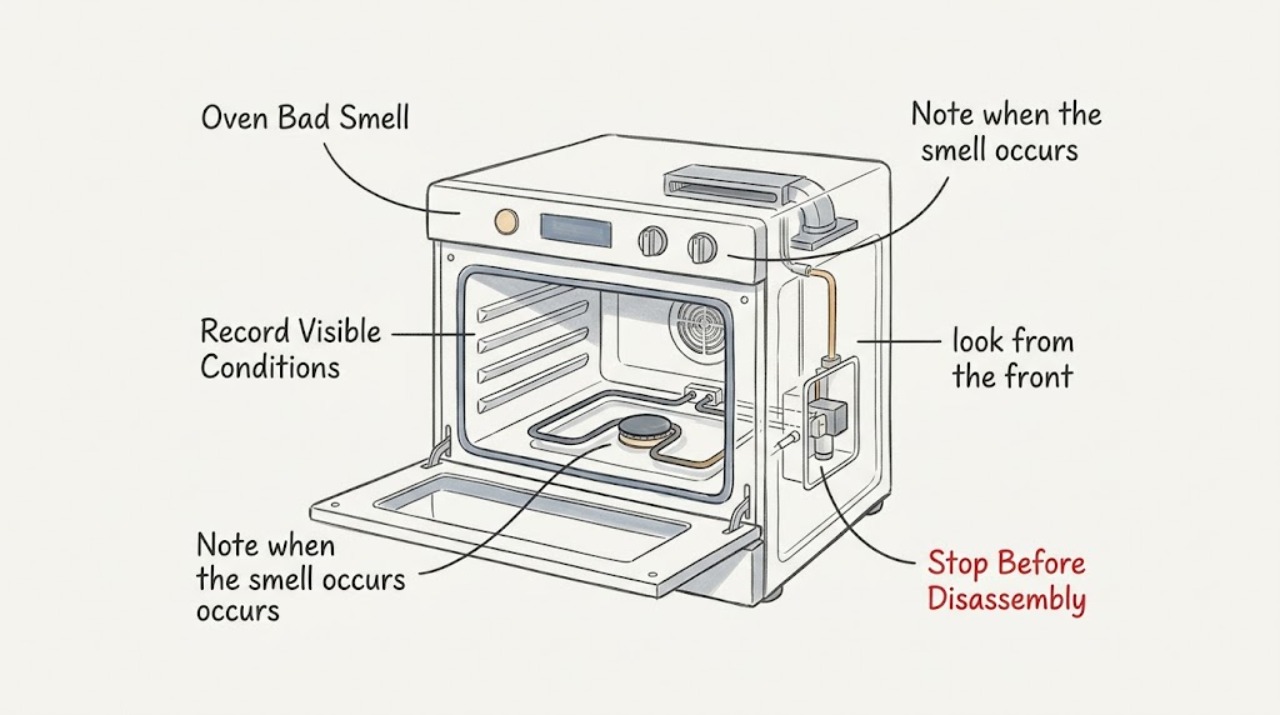
Whirlpool Oven Bad Smell: Identify the Cause Safely
A Whirlpool oven smell can come from new manufacturing materials, packaging, food or grease residue, a liner that traps debris, or a cleaning product. Those possibilities are different from a gas odor, burning electrical smell, smoke, arcing, abnormal flame, or carbon-monoxide concern.
-
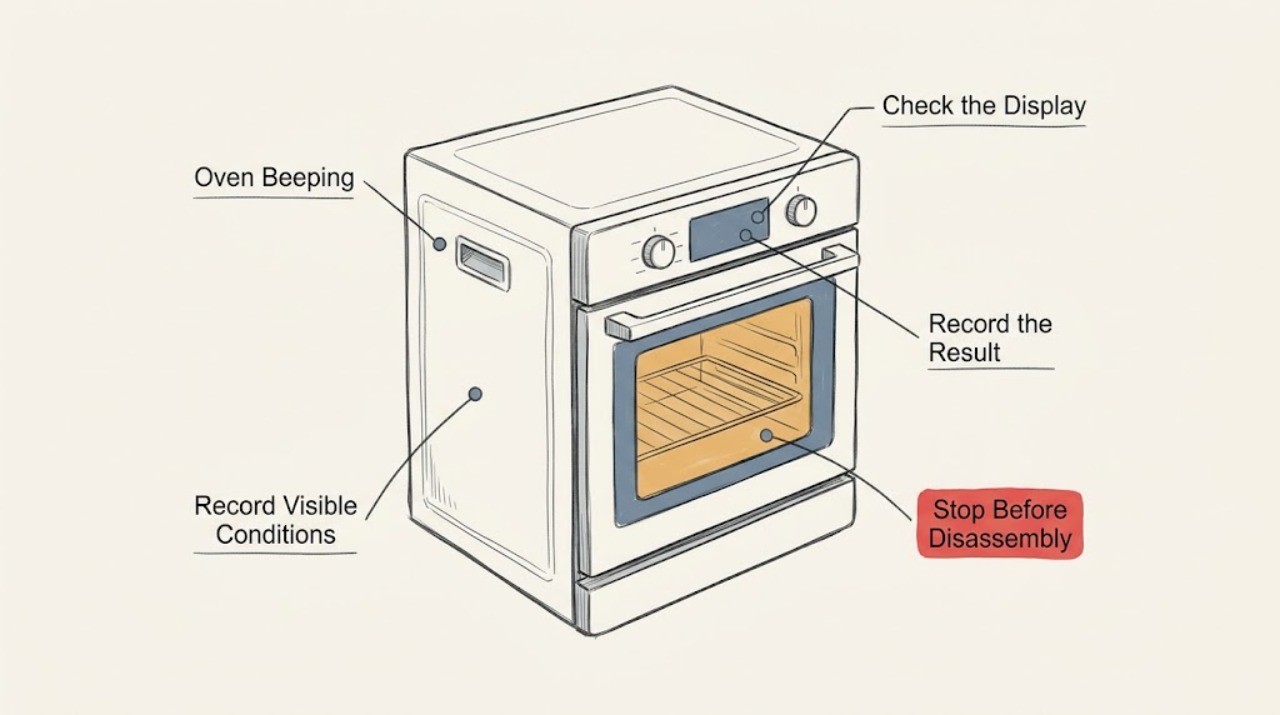
Whirlpool Oven Beeping: Identify the Sound Before Resetting
Do not assume every Whirlpool oven beep means a failed part. First record the full display message, beep rhythm, model, and whether it occurs at a key press, preheat or timer end, during a programme, or while the oven is idle.
-
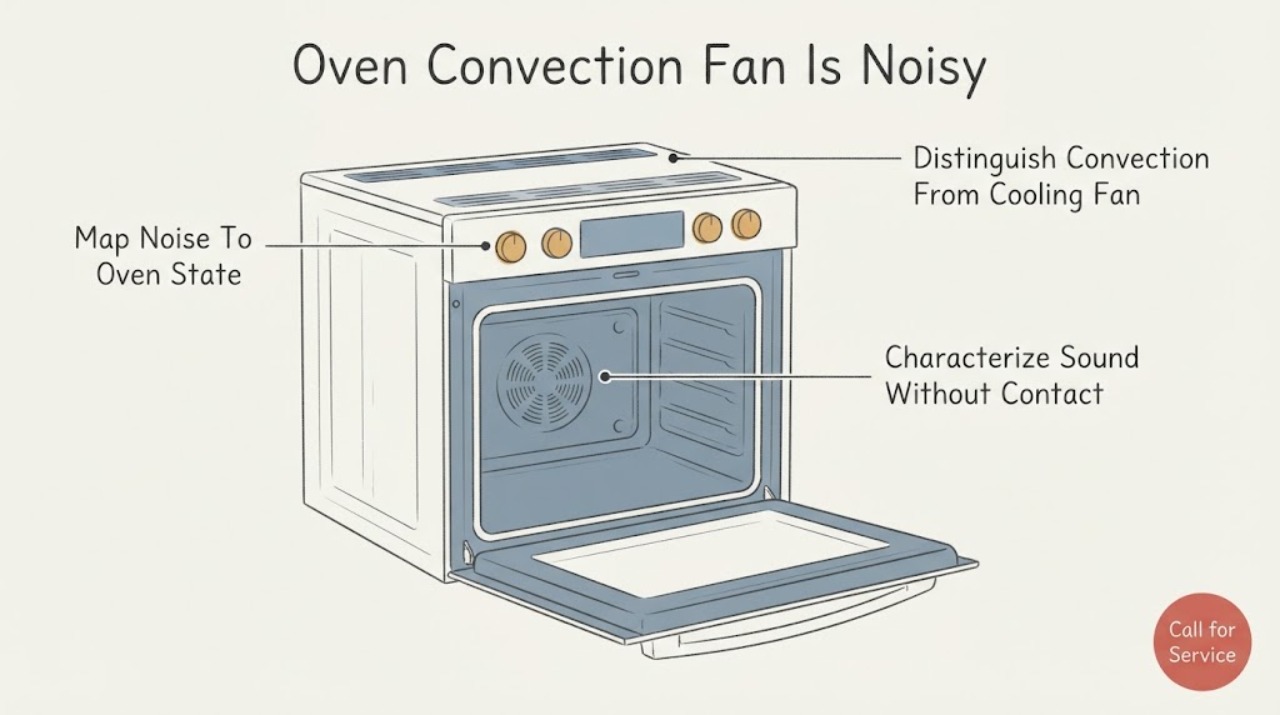
Whirlpool Oven Convection Fan Is Noisy: What to Check and What to Do Next
Some Whirlpool convection-fan noise is normal: the fan may run during preheating, cycle during a cooking function and continue to move air while the oven cools. First identify whether the sound follows the convection fan or the separate cooling fan by noting when it occurs and whether it changes when the oven door is opened only during a safe, cool observation.
-
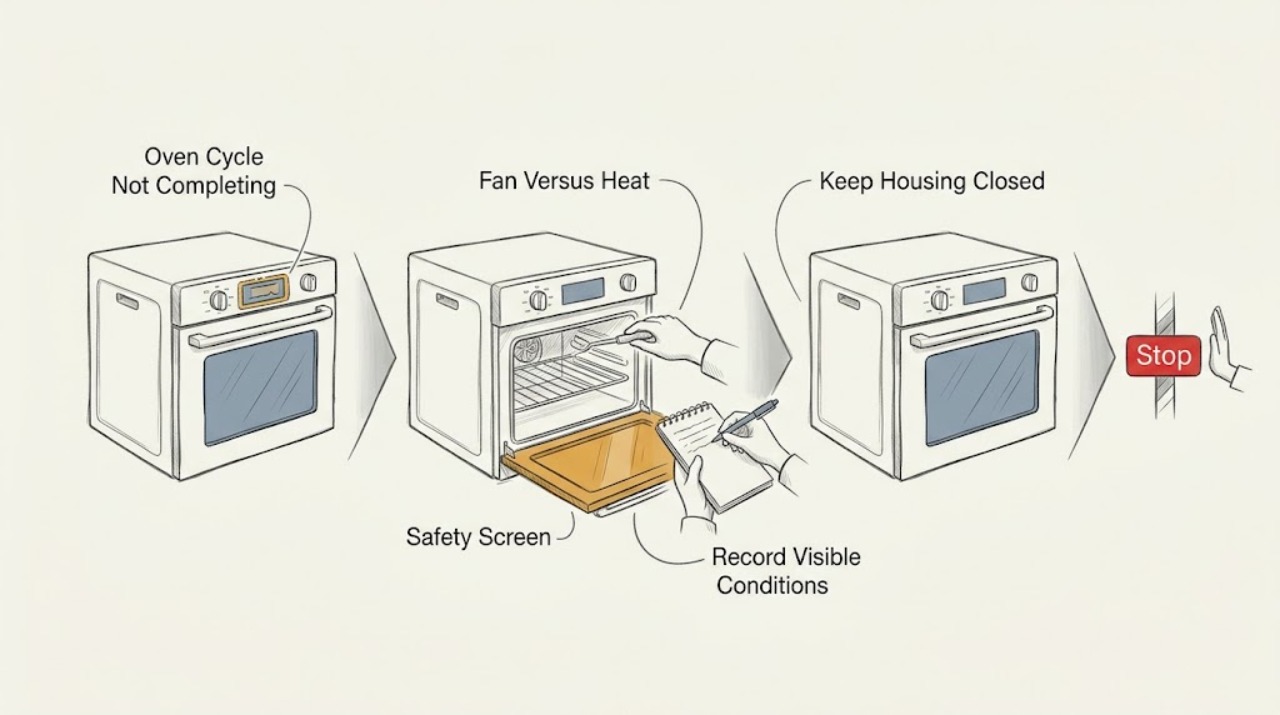
Whirlpool Oven Cycle Not Completing
A Whirlpool oven cycle that does not complete must first be separated into a normal cooling fan, a timed or delayed cycle, a self-clean cool-down, a control or error state, and a genuine failure to heat or stop. Record the mode, display, stage, temperature setting, door state, and what the oven is doing now.
-
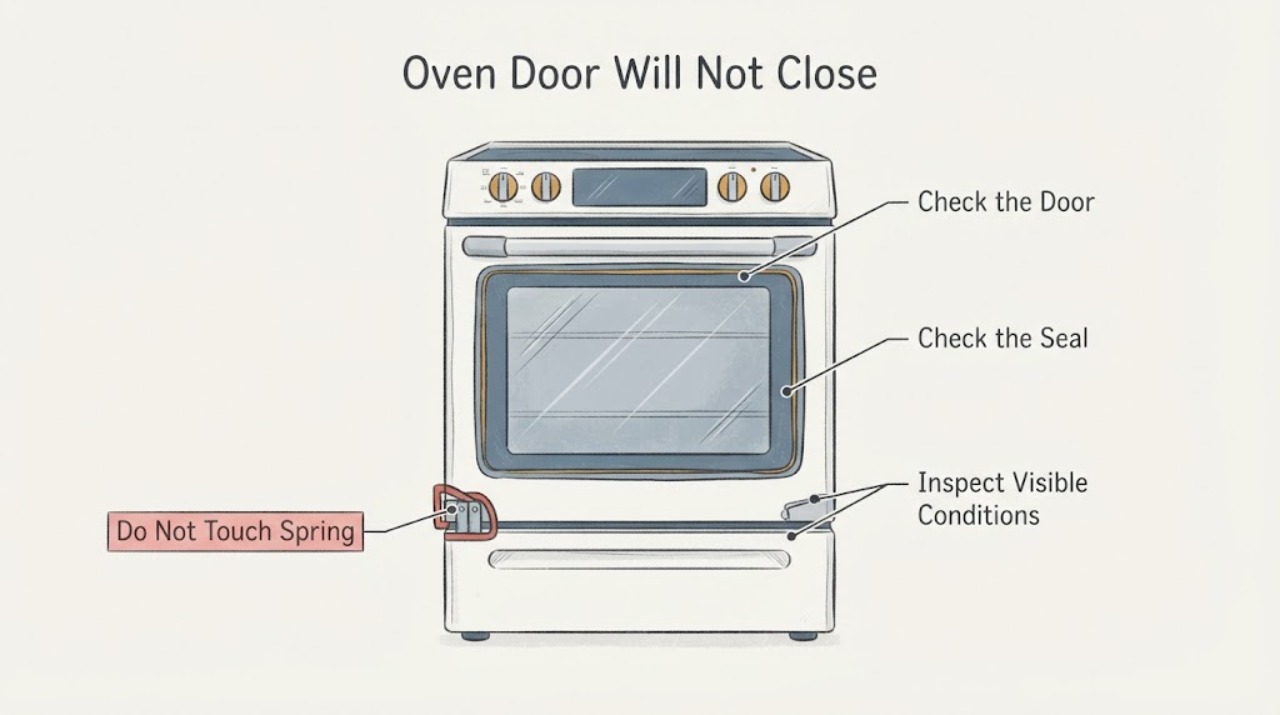
Whirlpool Oven Door Will Not Close: What to Check and What to Do Next
If a Whirlpool oven door will not close, turn the oven off and let it cool, then remove any pan, rack, shipping material, or food debris that is blocking the opening. Check that racks are fully inserted, the door gasket is not folded or displaced, and the latch arm above the gasket is not bent into the closing path.
-
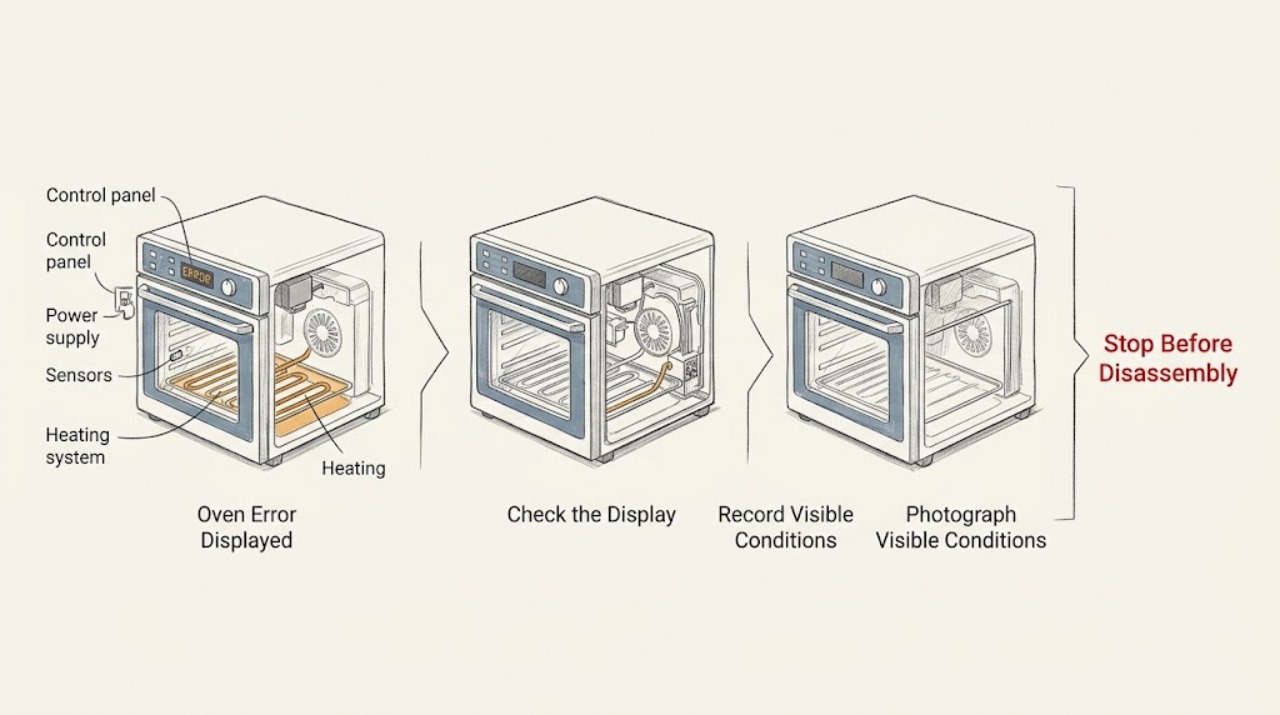
Whirlpool Oven Error Displayed: Record the Code and Choose the Safe Next Step
Do not guess what a Whirlpool oven error means from the letters alone. Record the complete code exactly as shown, the model number, whether the oven is gas or electric, and what the oven was doing when it appeared.
-
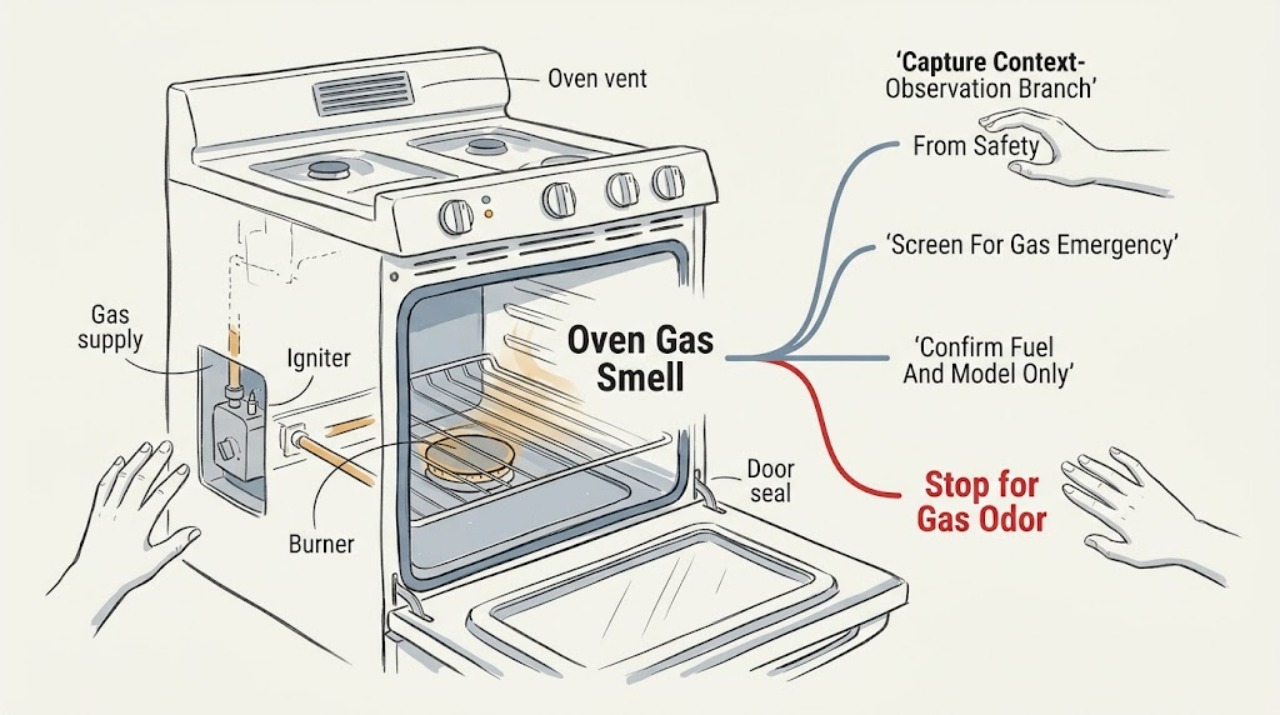
Whirlpool Oven Gas Smell: Know When to Leave and Call for Help
Treat an unexplained or persistent gas smell from a Whirlpool oven as a safety event, not a normal troubleshooting clue. Leave immediately if the odor is strong, continues while the oven is off, returns after a start, or comes with hissing, a delayed whoosh or boom, an abnormal flame, soot, smoke, dizziness, headache, or a carbon-monoxide alarm.
-
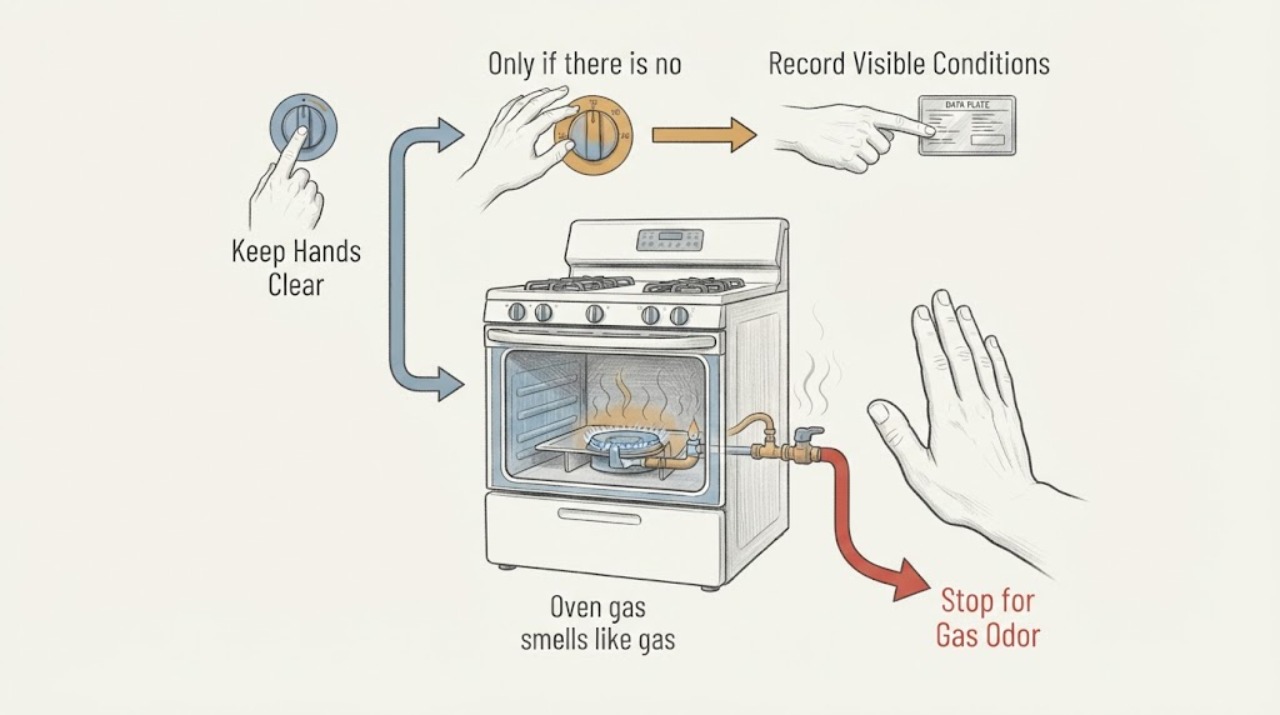
Whirlpool oven gas smells like gas: What to Check and What to Do Next
Treat a strong, spreading, persistent, or rotten-egg-like gas odor as a gas-safety event, not an oven adjustment. If the odor is present while the controls are off, you hear hissing, the flame did not establish, or anyone feels unwell, do not try to ignite the oven or operate electrical switches: leave the area and contact the gas supplier or emergency services from outside.
-
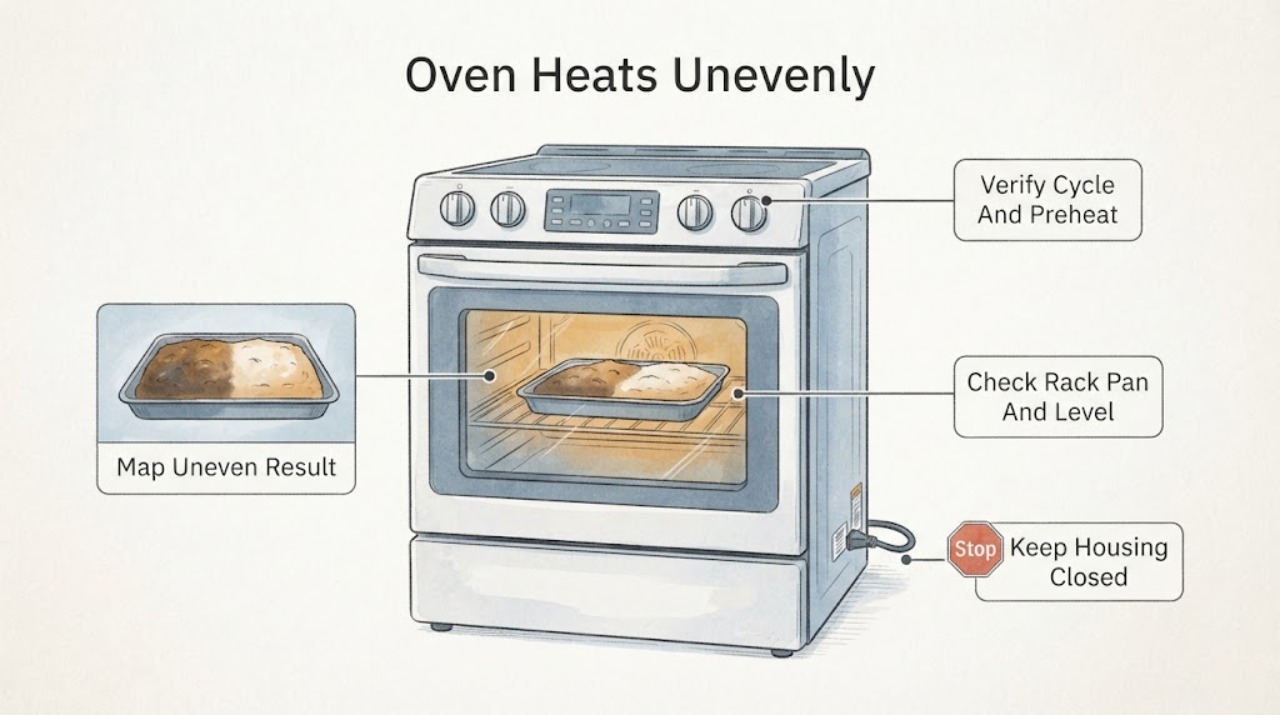
Whirlpool Oven Heats Unevenly: What to Check and What to Do Next
An oven that heats unevenly may have an uneven cooking setup rather than a failed part. First record whether the result is different top-to-bottom, left-to-right, or only on one rack; then use the correct cycle, allow the Whirlpool oven to fully preheat, keep the door closed, and use the rack and bakeware guidance for the food.
-
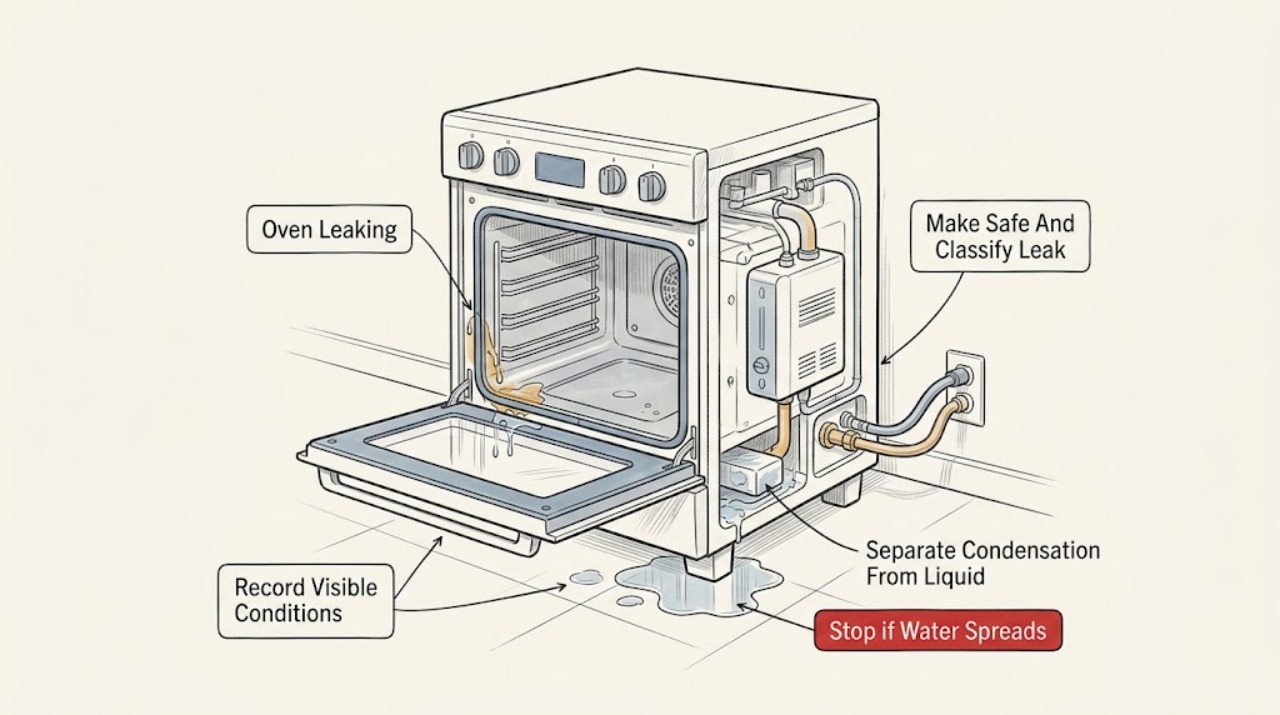
Whirlpool Oven Leaking: Separate Liquid, Steam Condensation, and Gas Risk
First identify what is leaking and when: clear liquid from the cavity or a steam reservoir, moisture or condensation at the door, hot air or steam escaping around the door, or a suspected gas leak. Whirlpool says moisture on the door glass can be normal, especially with gas ovens or high-moisture food, and that a steam-cycle reservoir may retain water after the cycle; that is different from liquid running onto the floor, a damaged door or seal, or a gas odor.
-
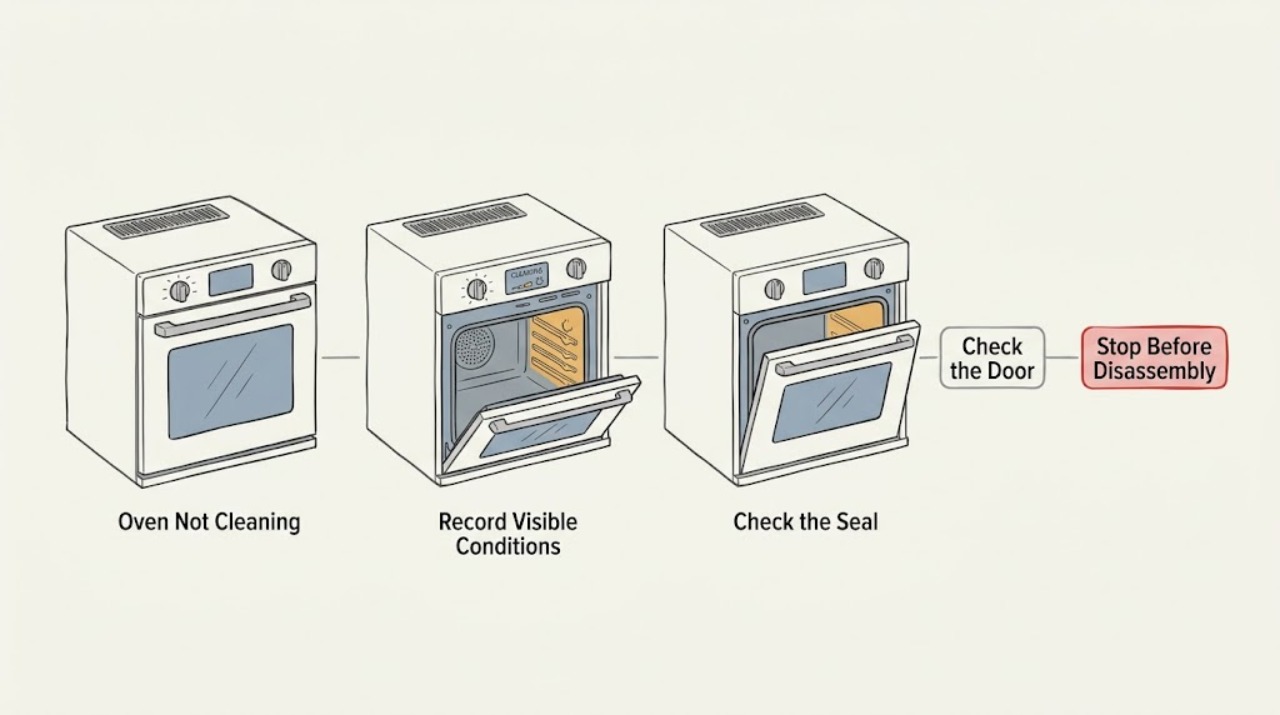
Whirlpool Oven Not Cleaning: Choose the Right Safe Cleaning Path
First identify whether the problem is a hand-cleaned spill that remains, a steam or AquaLift cycle that does not remove heavy soil, or a high-temperature self-clean cycle that will not start or stops. Whirlpool cleaning features are model-specific: the exact manual determines whether the oven has Steam Clean, AquaLift, or high-temperature Self-Clean, what water or cleaner is allowed, and how the door behaves.
-
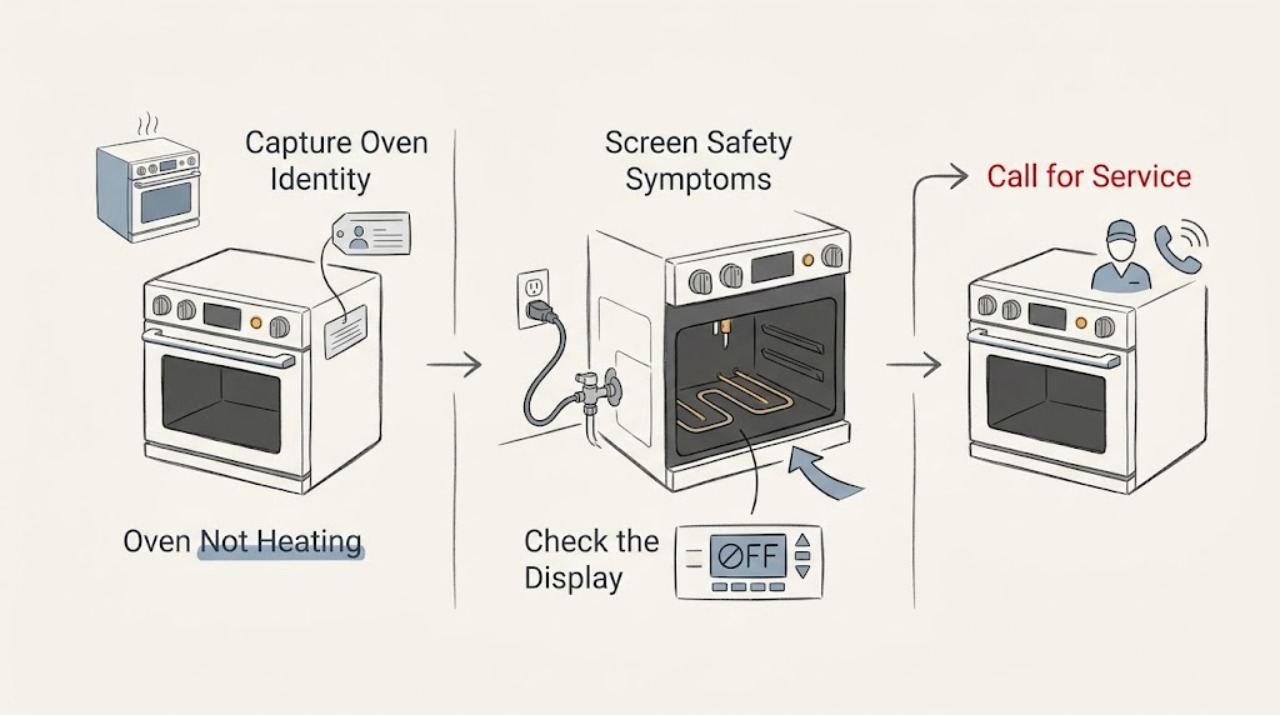
Whirlpool Oven Not Heating: Check the Mode, Supply, and Safety Signs
A Whirlpool oven that is not heating needs a fuel-type and symptom split before any part is suspected. Confirm whether it is electric, gas, or dual fuel, then record whether the display works, whether a normal mode and temperature were selected, whether the door closes, whether preheat is merely slow, and whether an error is shown.
-
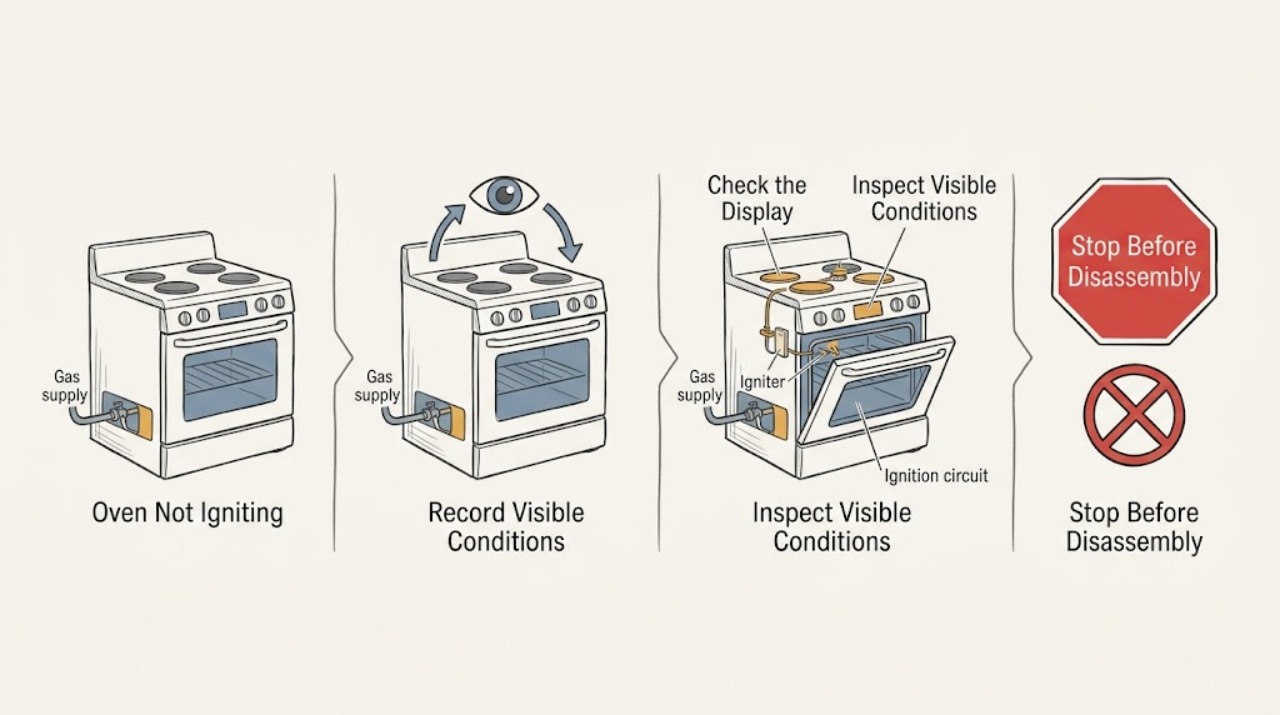
Whirlpool Oven Not Igniting: Check the Gas, Controls, and Ignition Safely
First confirm that this is a Whirlpool gas oven and record whether the display works, the oven starts a countdown, you hear ignition clicking, and a flame appears. A delayed-start or locked control, an open door, a power or grounding problem, a gas shutoff state, or a failed igniter can all look like “not igniting.” Perform only the external, model-manual checks and one normal ignition attempt when there is no gas odor.
-
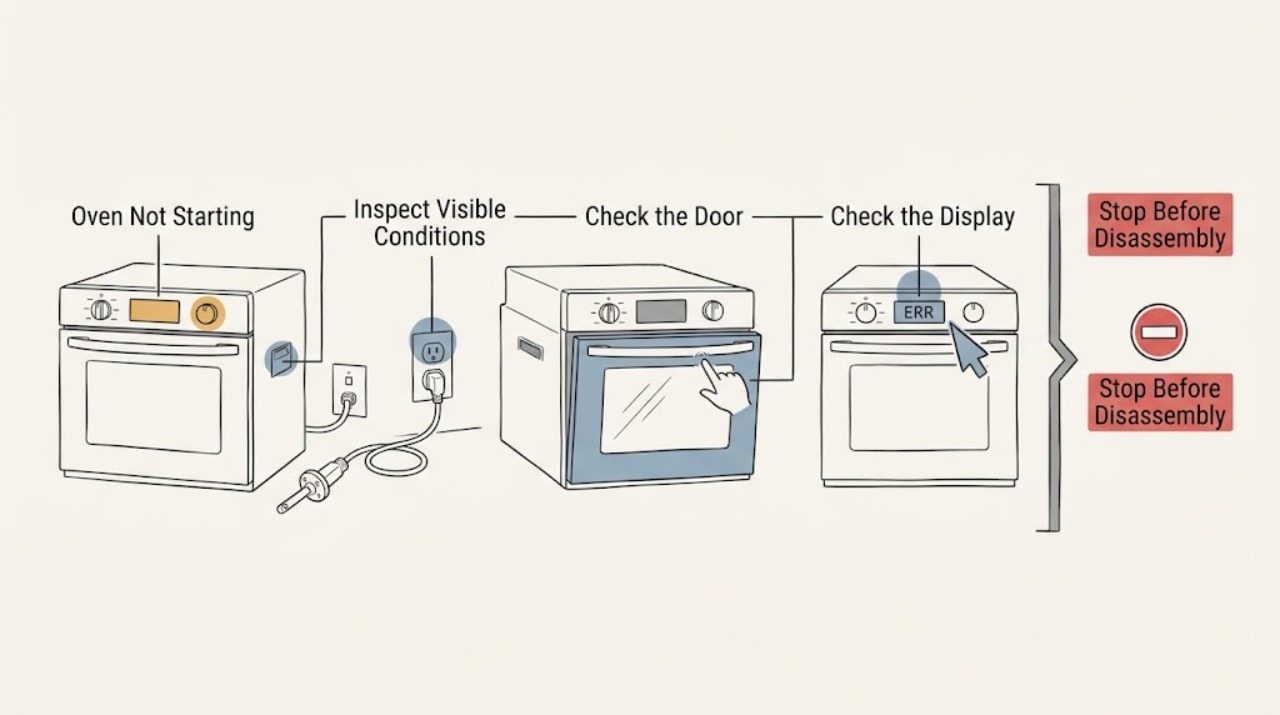
Whirlpool Oven Not Starting: Safe Checks Before Service
If a Whirlpool oven will not start, first decide whether the display is completely blank or the controls are lit but the cook cycle will not begin. Keep the door fully closed, cancel a delayed start, and check for Control Lock, Demo Mode, Sabbath Mode, or a displayed code using the model's Owner's Manual.
-
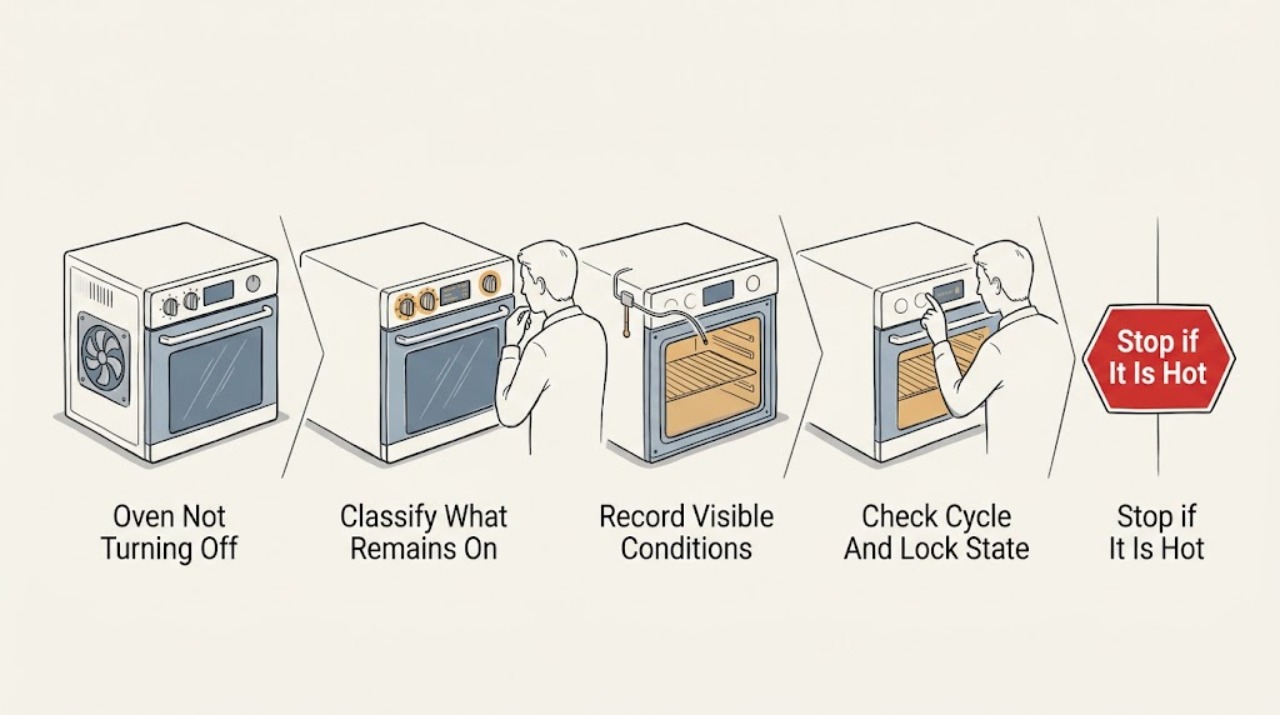
Whirlpool Oven Not Turning Off: Tell a Cooling Fan from Ongoing Heat
First determine what is still running. A Whirlpool oven's cooling fan can continue during or after a bake, broil, or cleaning cycle while the cavity and controls cool, and warm air from the vent can be normal.
-
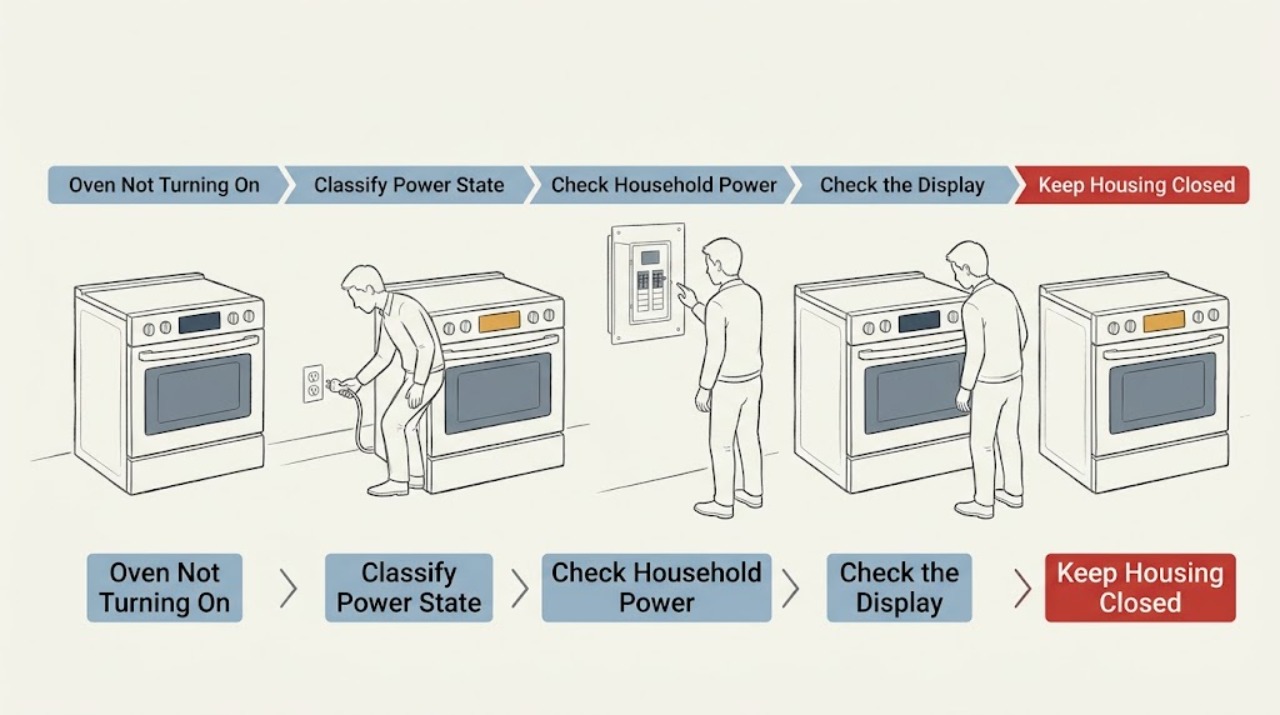
Whirlpool Oven Not Turning On: Check Power, Controls, and Model-Specific Safety Paths
First decide whether the Whirlpool oven is completely without power or has a display that will not start a cooking cycle. From a dry, safe position, check the household breaker or fuse, the display, the control lock, the selected mode, any delayed start or demo mode, and the door.
-
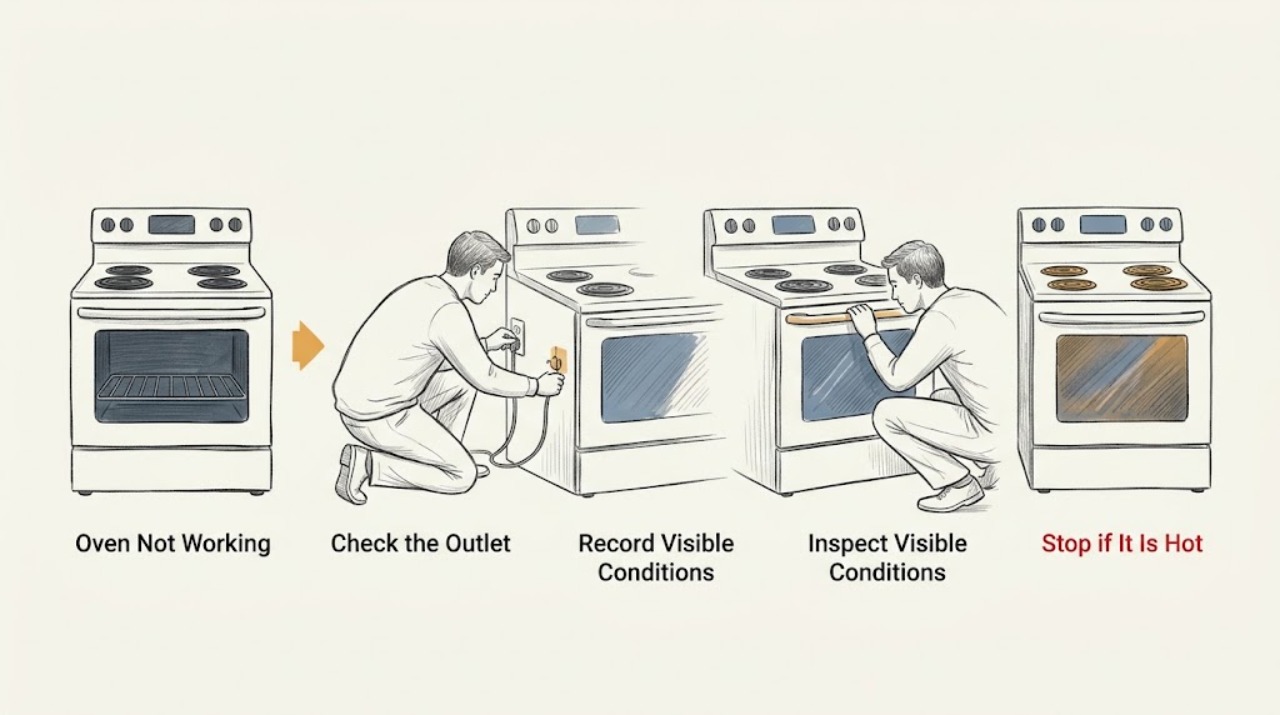
Whirlpool Oven Not Working: Safe Checks Before Service
A Whirlpool oven that is not working can have a power problem, a locked or delayed control, an open-door interlock, an electric heating issue, or a gas-supply or ignition issue on a gas model. First stop for gas odor, smoke, a burning smell, arcing, a hot connection, repeated breaker trips, or uncontrolled heating.
-
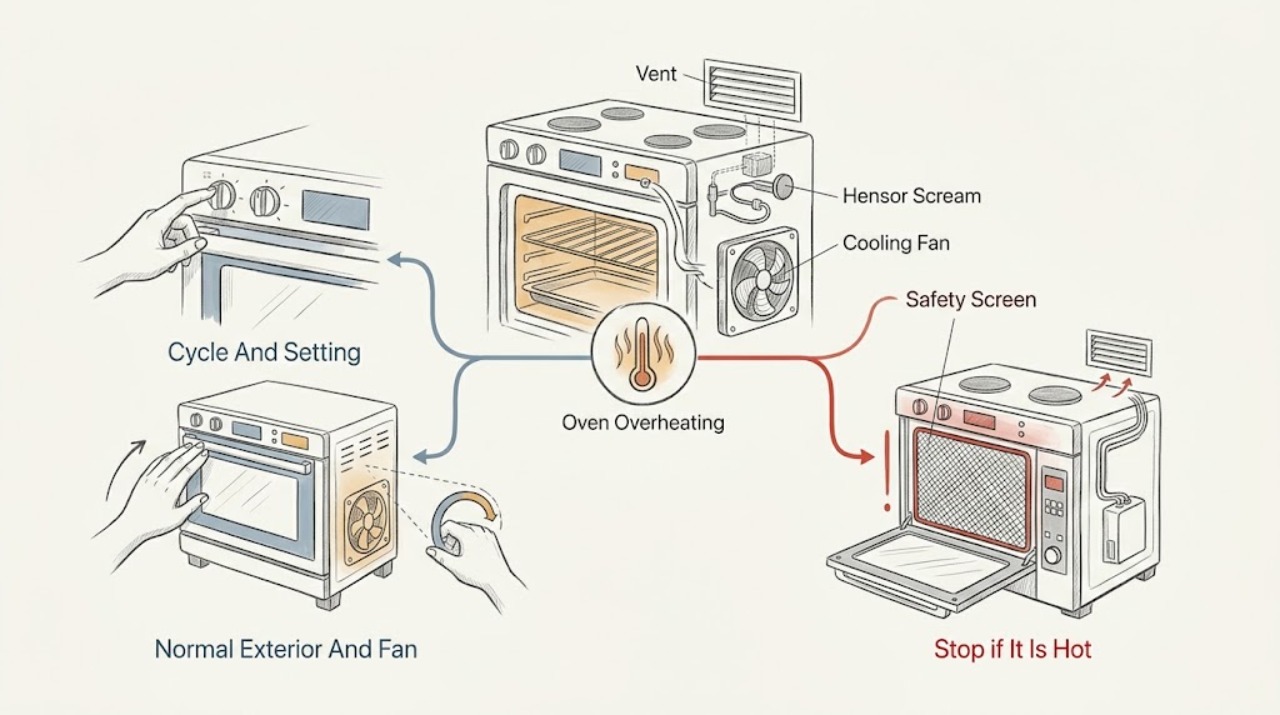
Whirlpool Oven Overheating: Separate Normal Heat from Temperature Runaway
A Whirlpool oven door, window, cooktop, and vent area can become hot during normal operation, and a cooling fan may continue after a cycle while the appliance reaches a safe temperature. Overheating is more concerning when food burns or smokes at a normal setting, the oven keeps heating after it should stop, the display or controls become abnormally hot, or the temperature is consistently higher than the selected setting.
-
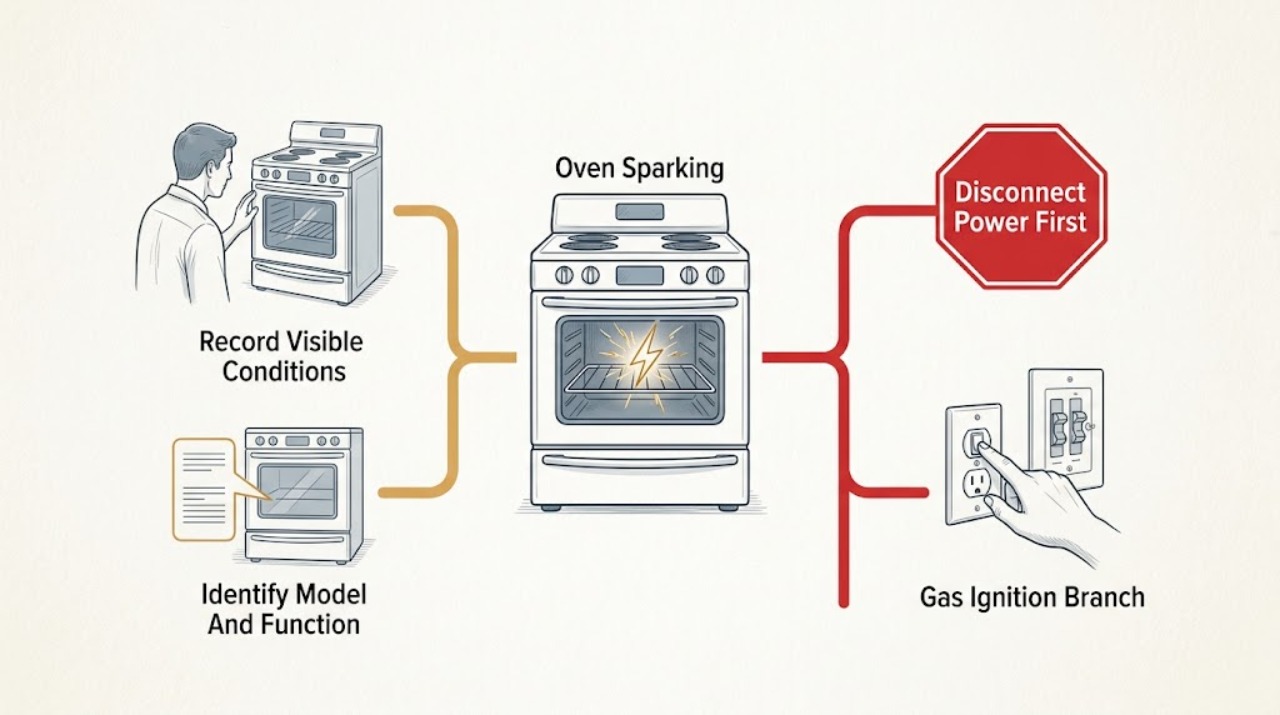
Whirlpool Oven Sparking: Stop First, Then Identify the Safe Branch
Visible arcing or a spark outside the normal gas-ignition sequence is not a keep-testing symptom. Turn the Whirlpool oven off immediately and do not restart it to reproduce the event.