
On this page
Start here
Quick answer
First identify what is leaking and when: clear liquid from the cavity or a steam reservoir, moisture or condensation at the door, hot air or steam escaping around the door, or a suspected gas leak. Whirlpool says moisture on the door glass can be normal, especially with gas ovens or high-moisture food, and that a steam-cycle reservoir may retain water after the cycle; that is different from liquid running onto the floor, a damaged door or seal, or a gas odor. Stop the oven and let it cool before touching spills or water, never use a flame to test a suspected leak, and do not open gas or electrical panels. If you smell gas, see smoke or fire, have uncontrolled liquid, a damaged door or glass, repeated electrical trips, or cannot tell whether the odor is combustion-related, leave the area and follow the appliance's gas-emergency guidance. Otherwise record the model, cooking or cleaning mode, first wet point, and whether the liquid came from food, a steam reservoir, the door, the cavity, or below the unit, then arrange Whirlpool-authorized service for a persistent leak.
Before you begin
Safety first
- This article supports only cool, ordinary-access observation and procedures explicitly authorized by the exact Whirlpool manual. It does not authorize gas-leak testing, flame testing, hot-steam handling, door or panel removal, moving a built-in oven, live electrical work, or internal repair.
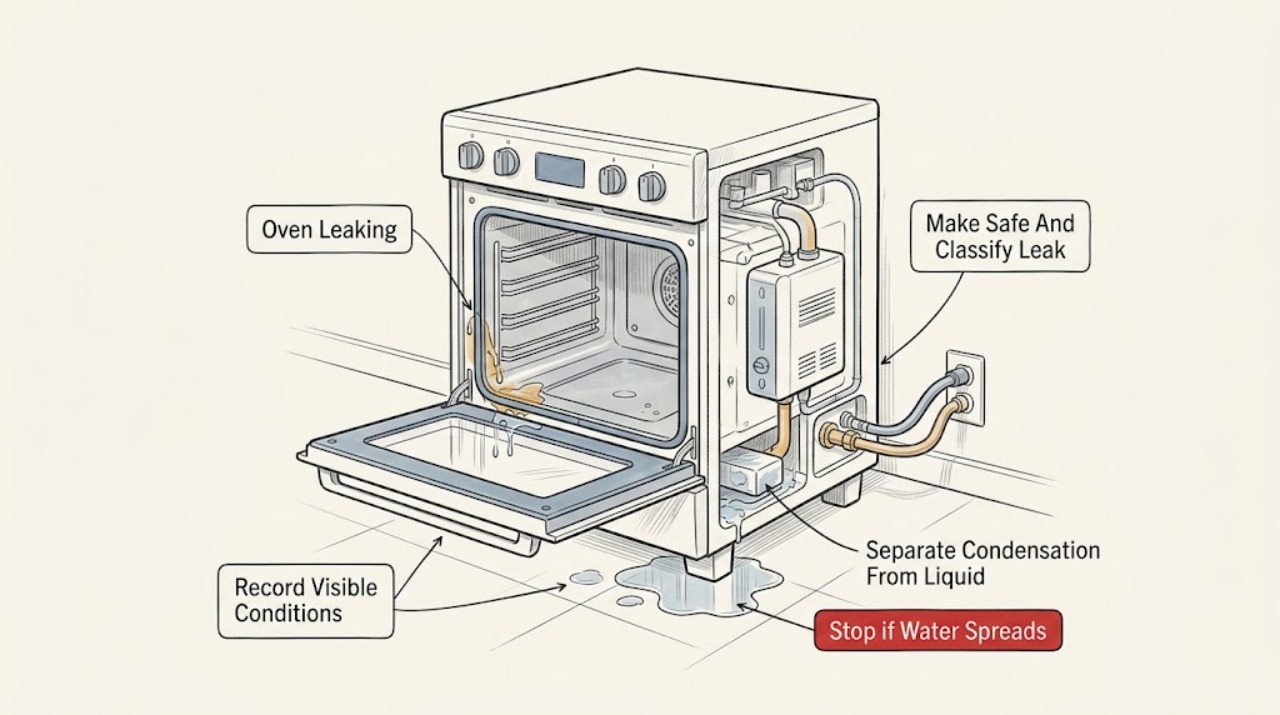
Work through in order
Diagnostic checks
Use only checks that match the exact appliance or system and its official guide.
-
Check 1
Stop the oven or cleaning cycle using the normal control if it responds, keep clear of the door vent and hot surfaces, and observe from a safe position without touching the cavity, reservoir, wiring, or gas fittings.
Expected result: Classify the event as clear liquid, greasy or food liquid, door-glass condensation, visible steam, a fuel-gas odor, smoke or fire, or an unknown odor; note whether the oven is gas, electric, dual-fuel, or unknown.
Next step: Leave the area for gas, smoke, or fire danger and follow emergency guidance; otherwise let the oven cool fully before identifying the first wet point.
Stop if: Do not use a flame to test an odor, touch hot liquid or surfaces, operate an oven with a damaged door or glass, or continue a cycle with uncontrolled leakage.
Why this matters
Why: Condensation or brief steam can be normal in the documented cooking or steam context. Liquid reaching the floor, smoke, fire, a suspected gas odor, or an unknown strong odor is not a routine leak and requires the stop boundary.
-
Check 2
After the oven is cool, record the model number, fuel type, mode, temperature setting, food or cookware used, whether a steam or self-clean function was active, and where moisture or liquid first appeared.
Expected result: Note whether the symptom occurred during preheat, baking, broiling, steam baking, steam cleaning, self-cleaning, cooldown, or after the oven was switched off; record whether the door was opened and whether the moisture dissipated.
Next step: Use the exact model manual and Whirlpool support page for that mode; do not reproduce the spill or add water merely to see whether it leaks again.
Stop if: Do not open a hot door against steam, remove a hot reservoir, or use a cleaning cycle again while the source of liquid or odor is uncertain.
Why this matters
Why: High-moisture food, gas combustion, steam functions, and cleaning functions have different normal moisture paths. A symptom that persists outside the documented mode, appears below the oven, or does not dissipate is less consistent with ordinary condensation.
-
Check 3
Once fully cool, inspect the outside of the door glass, inner door edge, vent area, and floor immediately in front of the oven using a dry cloth only; do not remove the door or gasket.
Expected result: Determine whether the moisture is a thin film that evaporated, droplets between the glass, hot vapor at the vent, liquid running from the door edge, or liquid pooling below the appliance.
Next step: Photograph the cooled door and first wet point, compare it with the manual's door and vent guidance, and request service for a persistent stream, damaged glass, displaced seal, or below-unit leak.
Stop if: Do not operate with cracked glass, a loose door, a torn or displaced seal, liquid entering controls, or a leak that reaches the floor or cabinet.
Why this matters
Why: A temporary film or moisture between glass after high-moisture cooking can match Whirlpool's condensation guidance. Liquid from the door edge, a damaged glass panel, a displaced seal, or liquid below the unit suggests a seal, leveling, cavity, reservoir, or internal leak that needs model-specific assessment.
-
Check 4
If the model has a steam or water-assisted function, read the exact manual and inspect only the cool, user-accessible reservoir, tray, or cavity area after the function has ended; do not drain, remove, or refill a hot container unless the manual explicitly permits it.
Expected result: Record whether water remains in the documented reservoir, the reservoir is overfilled or not seated, the cavity contains residual water, a drain message is shown, or liquid appears outside the intended water path.
Next step: Follow the exact model's cool-down, emptying, and drain instructions once; arrange service if liquid escapes the intended path, the reservoir is damaged, or the symptom recurs.
Stop if: Do not open a hot steam-clean cavity, handle hot water, add chemicals or oven cleaner to a water function, or improvise a drain or hose repair.
Why this matters
Why: Whirlpool says some steam-cycle reservoir water may remain after the cycle and that steam-clean or boiler procedures have temperature and drain conditions. Water outside the reservoir or a recurring leak points to a seal, hose, reservoir seating, drain, or internal fault rather than normal residual water.
-
Check 5
With the oven cool and off, inspect the cookware, racks, cavity floor, door gasket, and visible vent openings for a spill path, excessive food moisture, blocked vent, displaced gasket, or standing liquid without moving a built-in oven or opening panels.
Expected result: Classify the finding as a food or cookware spill, normal condensation after a moist recipe, a blocked or covered vent, a seal or glass defect, liquid at the cavity bottom, or no visible source.
Next step: Clean only cool, user-accessible surfaces as the exact manual permits; leave damaged seals, glass, cavity coatings, vents, and built-in alignment issues for qualified service.
Stop if: Do not scrape a seal, block or remove a vent, use oven cleaner in an unapproved area, or operate with liquid near controls or electrical components.
Why this matters
Why: Food moisture and vent or door condensation can explain a temporary wet door, while standing liquid, damaged sealing surfaces, or a hidden source requires service. A blocked vent can affect circulation and cooling and should not be treated as a harmless leak.
-
Check 6
If the oven is gas or the leak is accompanied by odor, smoke, arcing, heat damage, or a tripped circuit, stop observing from close range and use only the safe external controls described in the appliance manual; do not light, relight, reset repeatedly, or remove any panel.
Expected result: Record whether there is a gas odor, delayed ignition or unusual flame, carbon-monoxide alarm, smoke or fire, a hot or damaged cord, arcing, or a repeated electrical trip.
Next step: For gas odor, leave without operating switches or flames and contact the gas supplier or fire department from a safe location; for fire or electrical danger, leave and contact emergency services or a qualified electrician. For a cooled, hazard-free appliance, arrange authorized appliance service.
Stop if: Do not test gas with a flame, touch switches in a gas-odor situation, use water on an oil or grease fire, or reconnect an appliance with electrical damage or repeated trips.
Why this matters
Why: Whirlpool's gas safety instructions treat gas odor as an evacuation and emergency-contact event. Smoke, fire, arcing, repeated trips, or heat damage is an electrical or fire-service boundary, not an ordinary leak check.
-
Check 7
After the oven is cool, dry, and free of safety symptoms, perform only the single user-authorized check in the exact Whirlpool manual, then observe the oven during one attended, normal cycle without adding water or opening panels.
Expected result: Note whether the moisture dissipates as Whirlpool describes, whether liquid reappears from the same point, whether the door and vent remain intact, and whether any odor, smoke, abnormal heating, or electrical symptom returns.
Next step: Document the mode, timing, first wet point, photographs, and safety symptoms, then request Whirlpool-authorized service for recurrence or any unresolved leak.
Stop if: Do not repeat cycles to chase a leak, leave the oven unattended, bypass a door or gas safety device, or continue operation after a hazard appears.
Why this matters
Why: Temporary condensation that dissipates in the documented mode can be normal. Recurring liquid, a persistent hot-air leak, damaged door or gasket, smoke, gas odor, or electrical symptom confirms that further use should stop.
Use your observations
Decision map
Find the observation that best matches what you see, then follow the next safe action.
-
PATH 01Safety boundary
What you see
The oven is cool and intact, moisture is limited to the door glass or vent area, it follows high-moisture food or gas-oven operation, and it dissipates as the oven heats or cools.
Do this next
Follow the model manual, keep vents clear, and monitor without adding water or disassembling the door.
Why this path and its safety boundary
Why it matters: Whirlpool describes this as a normal condensation pattern rather than a liquid leak.
Safety stop: Stop if moisture becomes a stream, reaches the floor, persists between cycles, or appears with damaged glass, door, or seal.
-
PATH 02Safety boundary
What you see
Water remains in a documented steam reservoir or cavity after a steam or cleaning function, with no liquid outside the intended path and no safety symptom.
Do this next
Wait for the exact manual's cool-down condition and follow its emptying or drain procedure once; call service if water escapes the intended reservoir or returns unexpectedly.
Why this path and its safety boundary
Why it matters: Whirlpool documents residual water and temperature-dependent drain or emptying behavior for some steam functions.
Safety stop: Do not handle hot water, open a hot steam cavity, or add cleaners or unapproved additives.
-
PATH 03Safety boundary
What you see
Liquid runs from the door edge, cavity, reservoir connection, floor, cabinet, or below the oven, or the door gasket or glass is damaged.
Do this next
Stop the oven, let it cool, isolate water or power only when safe and according to the manual, and arrange authorized appliance service.
Why this path and its safety boundary
Why it matters: This is not established as ordinary condensation and may involve a seal, reservoir, drain, leveling, cavity, or internal component.
Safety stop: Do not operate with a damaged door or glass, remove the door or seal, move a built-in oven, or open an internal panel.
-
PATH 04Safety boundary
What you see
A gas-model oven has a gas odor, suspected leak, delayed ignition, unusual flame, or a carbon-monoxide alarm.
Do this next
Do not light an appliance or touch switches; leave the building and contact the gas supplier or fire department from a safe location. Do not re-enter or reuse the oven until cleared.
Why this path and its safety boundary
Why it matters: The appliance manual's emergency gas boundary applies; this is not a condensation or liquid-leak troubleshooting branch.
Safety stop: Do not use a flame to search for the leak, operate controls, use a phone inside, or remove gas components.
-
PATH 05Safety boundary
What you see
There is smoke, fire, arcing, a hot or damaged cord, repeated electrical trips, or liquid contacting electrical controls.
Do this next
Leave the area and contact emergency services or a qualified electrician as appropriate; do not resume use until the appliance is assessed.
Why this path and its safety boundary
Why it matters: The event exceeds appliance leak troubleshooting and may involve fire, shock, or equipment damage.
Safety stop: Do not use water on an oil or grease fire, touch wet electrical equipment, repeatedly reset a breaker, or open a panel.
-
PATH 06Safety boundary
What you see
The source remains unknown, the leak recurs after the exact cool-down and manual checks, or the symptom appears in more than one mode.
Do this next
Keep the oven out of service and request Whirlpool-authorized diagnosis with the model, fuel type, mode, timing, photographs, and first wet point.
Why this path and its safety boundary
Why it matters: A hidden seal, reservoir, drain, cavity, vent, door, control, or internal component fault is possible and cannot be established safely from external observation.
Safety stop: Do not keep running cycles, add water to reproduce the fault, or replace a seal or component by guesswork.
Helpful context
Understand the symptom
A wet door is not automatically a leaking oven
Whirlpool identifies moisture on the door glass as normal in many gas-oven and high-moisture-food situations because steam condenses on cool glass and then dissipates as the oven heats. The same visible moisture becomes a service concern when it is a stream of liquid, reaches the floor or cabinet, persists between cycles, appears with a damaged seal or glass, or is accompanied by a control, heating, electrical, or gas symptom.
Steam and liquid need different checks
A steam or condensation complaint should be tied to the food, cooking mode, and door area. A water complaint after a steam or cleaning function should be tied to the reservoir, drain procedure, cavity bottom, and the exact model instructions. Do not pour additional water into a cavity or reservoir to reproduce a leak, and do not treat a hot reservoir as safe to empty until the manual says the cycle and temperature allow it.
Gas odor is an emergency branch, not an oven-leak experiment
Only gas models have a fuel-gas branch. Whirlpool's range safety manual says not to light an appliance, touch an electrical switch, or use a phone in the building when gas is smelled; leave the area and contact the gas supplier or fire department from a safe location. Never try to locate a gas leak with a flame or by removing an oven panel.
Safety boundary
Stop conditions
- Stop for gas odor, delayed ignition, unusual flame, a carbon-monoxide alarm, smoke, fire, arcing, a hot or damaged cord, or repeated electrical trips.
- Do not test a suspected gas leak with a flame, touch electrical switches during a gas-odor event, use a phone inside, or remove gas or electrical panels.
- Do not open a hot oven or steam-clean cavity, handle hot liquid, or empty a reservoir before the exact manual's cool-down and drain conditions allow it.
- Stop using the oven for liquid reaching the floor or cabinet, a damaged door or glass, a displaced or torn gasket, liquid near controls, or an uncontrolled leak.
- Do not add water or cleaners to reproduce a leak, block or remove vents, move a built-in oven, or replace a seal or internal part by guesswork.
- Treat temporary door condensation as normal only when it matches the documented mode and dissipates; persistent or recurring liquid requires service.
When checks do not resolve it
Need a professional?
Arrange Whirlpool-authorized appliance service for liquid outside the intended cavity or reservoir path, recurring moisture that does not dissipate, a leaking or damaged door or gasket, liquid below the unit, a blocked or damaged vent, an unknown source, or any issue requiring panel, door, gas, electrical, reservoir, drain, or internal access. For gas odor, leave the area and contact the gas supplier or fire department from a safe location. For fire, smoke, arcing, flooding, or immediate electrical danger, use emergency services.
Safety scope: This article supports only cool, ordinary-access observation and procedures explicitly authorized by the exact Whirlpool manual. It does not authorize gas-leak testing, flame testing, hot-steam handling, door or panel removal, moving a built-in oven, live electrical work, or internal repair.
Common questions
FAQ
Is moisture on a Whirlpool oven door a leak?
Not necessarily. Whirlpool says steam from gas combustion or high-moisture food can condense on cool door glass and dissipate. Treat it as a leak when liquid runs outside the intended path, reaches the floor or cabinet, persists between cycles, or appears with damaged glass, door, seal, or controls.
Why is there water after a Whirlpool steam or cleaning cycle?
Some models retain water in a steam reservoir or require a documented drain or emptying step, and Whirlpool warns that water in a steam-clean cavity can be hot. Wait for the exact manual's safe condition and follow its procedure once; water outside the reservoir or a recurring leak needs service.
What should I do if a Whirlpool gas oven smells like gas?
Do not light an appliance, touch electrical switches, use a flame, or use a phone inside the building. Leave immediately and contact the gas supplier or fire department from a safe location. Do not reuse the oven until it has been cleared by the appropriate qualified service.
Can I replace the Whirlpool oven door gasket when it leaks?
Do not assume the gasket is the cause. First let the oven cool and identify the first wet point and the exact model. A damaged or displaced gasket may need model-specific service, but liquid from a reservoir, cavity, drain, vent, or below the unit needs a different diagnosis.
Read the exact guide
Official sources
- Moisture On Door - Range - Product HelpWhirlpool · Official Whirlpool Product Help for ranges; the exact model manual controls the installed appliance.
- Empty and Refill Water Container - Wall Oven - Product HelpWhirlpool · Official Whirlpool Product Help for steam wall ovens; only apply to models equipped with the described container.
- Condensation on Inner Window - Wall Oven - Product HelpWhirlpool · Official Whirlpool Product Help for wall ovens; use the exact model instructions for a particular installation.
- FREESTANDING GAS RANGE OWNER’S MANUALWhirlpool · Official Whirlpool owner's manual for the identified freestanding gas-range manual; apply gas-specific instructions only to compatible gas models.
- Display Changes After Opening DoorWhirlpool · Official Whirlpool Product Help for wall-oven display concerns; exact model controls the installed appliance.
- Using the Steam Clean Function - Product HelpWhirlpool · Official Whirlpool Product Help for steam-enabled ovens; functions and controls vary by model.
Community feedback
Share a repair observation
Share a plain-text repair observation. Accepted observations are published automatically; this page may take a moment to update.